With The Killer, David Fincher created a masterpiece of cinematic storytelling.
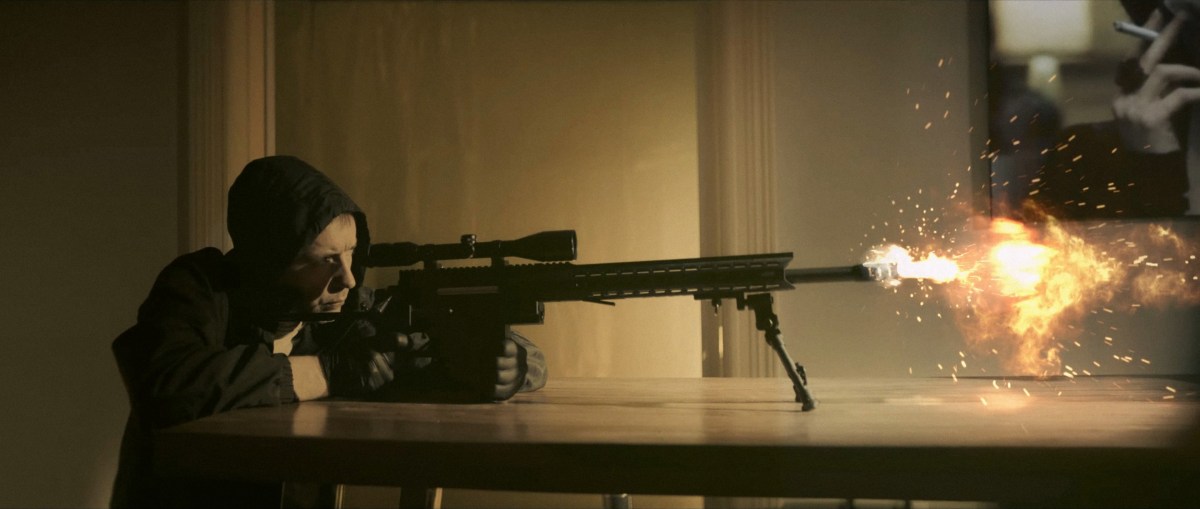
In the first act – the Paris hit – Fincher and his team combined three sets in post. They also added typical artifacts like horizontal flares and distortions to give The Killer an anamorphic vibe.
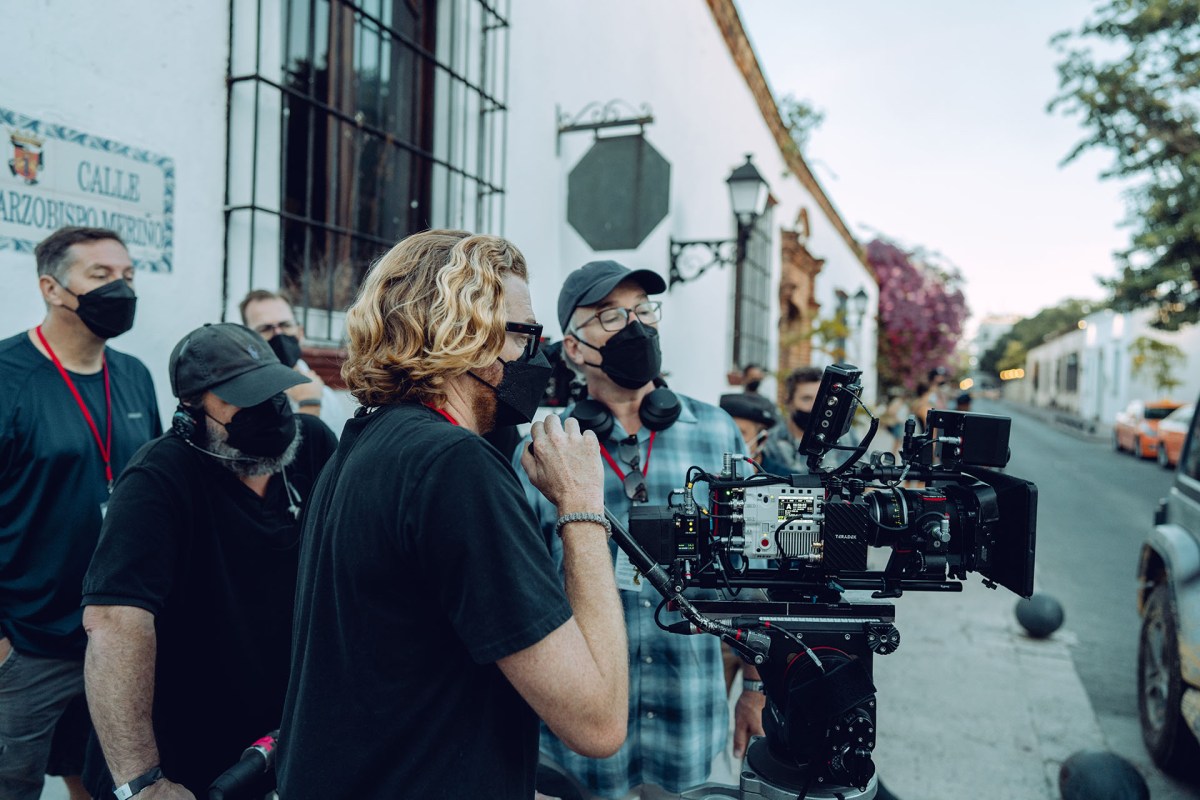
To learn and explore, we set out to recreate the climax of the first act of The Killer, BUT to do it for real: One real location and real anamorphic lenses. We even developed a way to do film through a real rifle scope – anamorphic of course.
This was possible as DZO just introduced three new focal lengths to their awesome PAVO lineup of 2x anamorphic lenses, a 135mm, a 180mm, and a 65mm Macro. This new focal length and the general short minimum focus distance of the PAVO made them the ideal companions to shoot our short.
We take you behind the scenes, share our experiences with you, and, of course, show you the result: “The Killers” gives the original a slightly different spin…
Disclaimer: We collaborated with DZOfilm and got the full PAVO set of 9 lenses to shoot our short. As always, we strive to give you our honest opinion based on our experience and tests.
00:00: Intro & Contents 02:48: The Killer / A Cinematic Masterpiece 03:44: Subjective Camera Movement 05:00: Subjective Sound Design 05:41: Subjective Edit 06:25: Paris: A Real Fake Location 10:08: Faking the Anamorphic Look| 12:14: Reimagining The Killer 15:49: Gear: The Lenses 23:18: The Rifle Scope 25:01: Gear: The Cameras 27:45: Feature: The Killers 31:08: A Second Killer & Verdict 33:16: Thank You 34:02: Member Shout Out
Paramounthas just made David Fincher’s Zodiac (2007) available in 4K Digital on Apple TV, Vudu, Kaleidescape, and more. Given the amount of effort Fincher puts into his remasters, we believe it’s safe to assume that Zodiac will be coming to physical 4K Ultra HD from Paramount sooner than later as well.
Zodiac, it should be remembered, was shot mostly in 10-bit RAW in 1080p HD (4:4:4) using the Thomson Viper FilmStream camera, along with some footage in 35 mm photochemical film (Super 35 format). But anyone who doubts that it could look great upscaled and remastered in 4K would do well to take a look at HBO’s Game of Thrones: The Complete First Season in 4K UHD. The advantages of high data rate and low compression, combined with an HDR grade, really make a difference. Zodiac in particular was very well lit and photographed.
And it looks good! The color grade in particular is excellent. HDR is subtle, but it makes a difference. There’s obviously not as much detail as you’d see in native 4K, but the image is very dimensional. Color is really lovely. Should make a good UHD disc. Definitely an improvement over the Blu-ray. The best this film has ever looked.
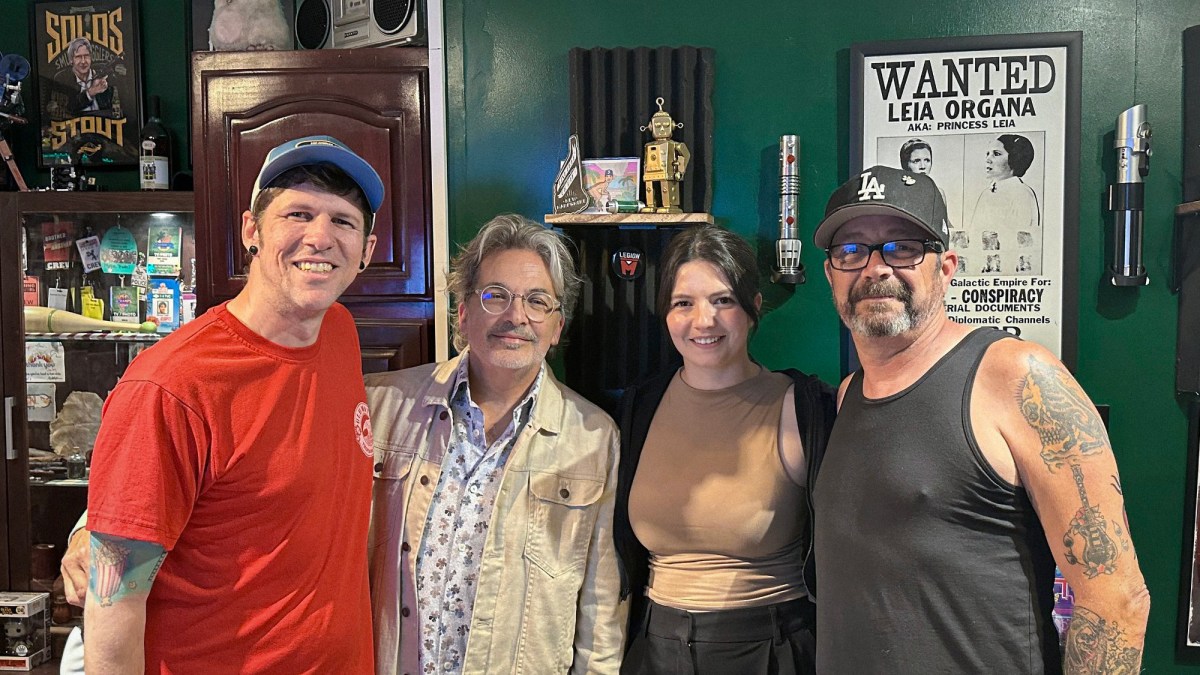
On this episode of Prop Talk, we sit down with PMG member and Local 44Property MasterJames Eddy and his daughter, Local 44 member Assistant Property Master Kelsi Eddy, to discuss their relationship and experiences working for Directors like David Fincher in Mindhunter and The Killer.
Hosts: Chris Call, PMG Founding Member & Local 44 Property Master with Michael Trudel, PMG Secretary & Local 44 Property Master.
In David Fincher’s Netflix darkly comic thriller The Killer, Michael Fassbender is the nameless assassin who goes on an international hunt for revenge while insisting to himself that it isn’t personal.
The film marks the second Fincher-directed feature shot by Erik Messerschmidt ASC, following the Citizen Kane drama Mank, for which he won the 2020 Academy Award for Best Cinematography.
It is also the latest in a long line of Fincher movies since The Social Network to be shot on RED.
“There was not a conversation about using another camera system – there never is with David,” Messerschmidt says. “RED as a partner have been enormously collaborative with us in terms of helping us develop new ideas and solve problems. RED is absolutely creative partners to David’s process and certainly to me.”
The singularity of cinema lies in its unprecedented capacity to transform the energies of the other arts into an integrated audiovisual experience. This synthesis makes cinema particularly engaging, immersive, and resonant, although, precisely because the constituent elements are organically fused together, it can easily be taken for granted. Film Secession creates new ways of exploring the ideas and artistic currents that have shaped different filmmakers, periods, and art forms. Subscribers will discover nonlinear pathways through the histories of the arts, be able to watch rare films provided by the world’s preeminent studios, production companies, and archives, and have special access to events held worldwide.
The Vienna Secession is a key inspiration. Created at the very moment of cinema’s emergence (1897-1905), its motto was, “To every age its art, to every art its freedom.” By fostering deeper understanding of our cinematic heritage and revitalizing our shared creative legacies, Film Secession will similarly provide opportunities to reimagine the future.
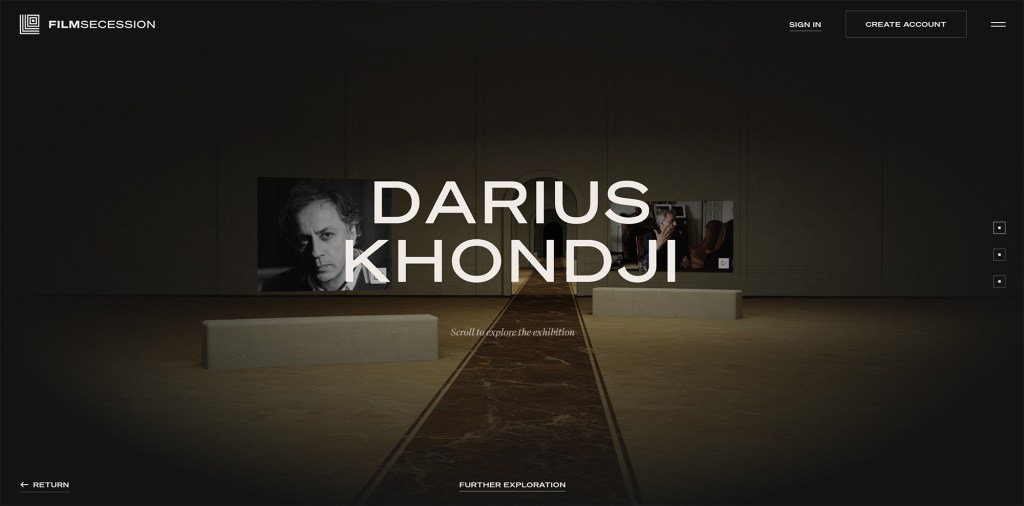
Darius Khondji is one of the most acclaimed and influential cinematographers working today. This exhibition explores Khondji’s work – especially his approach to light, color, space, and framing – and the larger question of the role of the cinematographer as a shaping agent in the overall style of a film.
Meet Beverly Wood, an innovator in color technologies for major motion pictures. She began working as an analytical chemist in the early 1980s before moving from the east coast of the U.S. to the west coast—a move which greatly influenced the trajectory her work. Her specialized knowledge of chemistry, engineering, and filmmaking led to her award-winning contributions to the creation and development of Color Contrast Enhancement (CCE) and Adjustable Contrast Enhancement (ACE) motion picture processes.
During this live online interview, you will be inspired by the story of Wood’s career, helping cinematographers, like Darius Khondji and Roger Deakins, to achieve their visual goals, and guiding them through the transition from chemical to digital technology, which changed how we see films today.
Master of creating imagery that illustrates beyond the narrative, Erik Messerschmidt is an Academy-Award-winning cinematographer and long-time David Fincher collaborator equipped with a captivating photographic eye and razor-sharp instinct. Messerschmidt’s expertise lies in the visceral experience, the intricacy of his lens causing hairs on the backs of necks to stand to attention while Fincher’s protagonists face a run-in with death, and chests to pound amid the thrill of a car chase – all thanks to the cinematographer’s ability to deliver a sucker-punch to the senses.
After starting out as gaffer on Fincher’s 2014 thriller Gone Girl, Messerschmidt was the guiding visual eye behind the auteur’s chilling Netflix series Mindhunter, his monochromatic ode to 1940s cinema, Mank (for which Messerschmidt won the Oscar for Best Cinematography), and most recently The Killer, stalking the dark psyche of a trained assassin. Having developed an instinctive shorthand with Fincher, Messerschmidt’s ongoing intention is to ensure the viewer is immersed in a world that is palpable in our own. Messerschmidt switched lanes for his most recent project, as Michael Mann’s cinematographer for his acclaimed high-speed epic, Ferrari, bringing to life the tumultuous rise of Enzo Ferrari’s automotive empire in Northern Italy.
Frame & Reference is a conversation between Cinematographers hosted by Kenny McMillan. Each episode dives into the respective DP’s current and past work, as well as what influences and inspires them. These discussions are an entertaining and informative look into the world of making films through the lens of the people who shoot them.
In this episode, we’re joined by my friend Michael Cioni to talk about his new company Strada (YouTube).
Michael is a serial entrepreneur whose career includes numerous awards for his creative work and technical achievements. He is an accomplished director, cinematographer, musician, four-time Emmy winner, member of the Motion Picture Academy, and Associate Member of the American Society of Cinematographers.
A U.S. patent holder of digital cinema technology, Michael was the founder and CEO of the post house Light Iron where he pioneered tools and techniques that emerged as global workflow industry standards. After Light Iron was acquired by Panavision, Michael served as product director for Panavision’s Millennium DXL 8K camera ecosystem.
He then joined the cloud startup company Frame.io where he served as Senior Vice President of Global Innovation. After Frame.io was acquired by Adobe, Michael led numerous workflow innovations including the breakthrough Camera to Cloud technology program as Senior Director of Global Innovation.
He continues to be motivated by the desire to democratize professional workflows and focuses his efforts on inventing new ways for filmmakers to create through his technology. Michael is a well-known and gifted speaker, advocate for the community, and serves as a mentor and educator throughout the global media industry.
Mark Laurila, retired teacher of English and Film at California State University August 21, 2023 (Updated in June 2025) Marechal1937 (YouTube)
“My aesthetic has always been tied to the Gordon Willises of the world, the Jordan Cronenweths, the Conrad Halls, the James Wong Howes… the people who took risks.”
David Fincher ‘Seven‘ Criterion Laserdisc commentary, 1996
“With all our modern technology, there is no one who can match James Wong Howe’s ability to control light in the service of story.”
James Wong Howe ASC was a legendary Hollywood cameraman who remains too little known today, despite having been nominated ten times for Academy Awards (and winning twice). A master of black and white, he brought his characteristic, nuanced control of darkness, and light to cinematography.
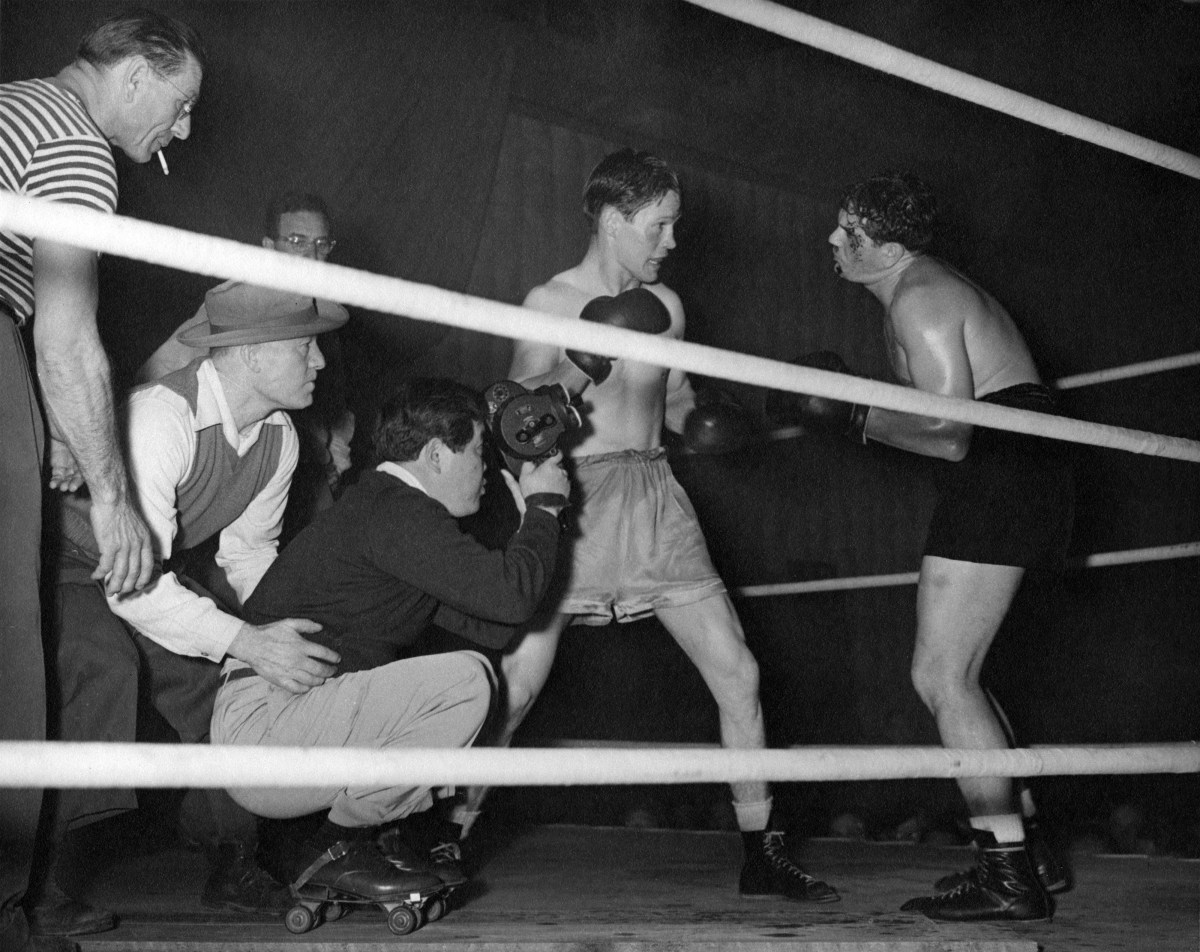
He loved to tell the story of how he put on roller skates and picked up a handheld camera in order to capture the excitement of the climactic boxing match in the classic Film Noir Body and Soul (1947), starring John Garfield. The footage Wong Howe captured inside the ring became a major inspiration for Martin Scorsese when he made Raging Bull (1980). How exactly was Wong Howe’s approach so different from what had come before? This video shows examples of earlier boxing movies, such as Golden Boy (1939) and They Made Me a Criminal (1939), and compares them to Wong Howe’s achievement in Body and Soul.
The resulting analysis is surprising and will likely change perceptions of the film and of Chinese-born/American-raised James Wong Howe. Regarding the film, the innovative camerawork combines the smoothness of the Mitchell BNC with the instability of the handheld Eyemo. Regarding Wong Howe, racism was a constant presence in his life, as he experienced racist movie crews, was denied citizenship because of the Chinese Exclusion Act, and was barred from marrying the writer Sanora Babb because she was white. Additional Wong Howe movies referenced here include Sweet Smell of Success (1957), The Prisoner of Zenda (1937), Yankee Doodle Dandy (1942), Transatlantic (1931), Air Force (1943), He Ran All the Way (1951), Hud (1963), Peter Pan (1924), and The Heart is a Lonely Hunter (1968).
Best of James Wong Howe: The Thin Man (1934)
This video presents the highlights of Wong Howe’s cinematography in the 1934 Comedic Mystery The Thin Man, an adaptation of the novel by Dashiell Hammett. William Powell and Myrna Loy play Nick and Nora Charles, a famous detective and his heiress wife who team up (with the help of their dog Asta) to solve the mystery behind a murder and a missing suspect.
The video demonstrates Wong Howe’s brilliance in several modes: Revealing the Main Characters (in which the characters are first seen from behind, with a moving camera allowing their surprising actions to help define them), Shadowy Characters (in which Wong Howe employs the kind of light and dark that he would use in future Films Noir), Pioneering Whip Pans (in which he uses the ultra-fast panning that would become best known decades later in the films of the French New Wave), The Artful Close-up (which shows the painstaking, glamorous lighting techniques that made him so in demand among the era’s leading ladies…and men) and Character Motivates Camera Movement (which shows how Wong Howe preferred to move his camera only if it had the purpose of better showing characters’ actions).
The success of The Thin Man resulted in the production of five (less-effective) sequels between 1936 and 1947.
Best of James Wong Howe: Body and Soul (1947)
This video presents the highlights of Wong Howe’s cinematography in the 1947 John Garfield Film Noir boxing drama Body and Soul. The movie shows how money, along with sex, can lead to corruption, a theme often found in Garfield’s movies.
The video demonstrates Wong Howe’s brilliance in several modes: Emotion and the Moving Camera (in which emotions are enhanced through the choice to move the camera through space), Romance Night and Day (showing how the mood could be created differently, depending on the time), Picturing Lust (in which he used a composition to suggest objectification), Noir Style, Deep Focus, and Pioneering Hand-held Camera.
Body and Soul was created through Garfield’s own independent production company and resulted in a Best Actor Academy Award nomination for Garfield. It won for Best Editing by Robert Parrish. The film co-stars Lili Palmer, Hazel Brooks, William Conrad, Canada Lee, and Lloyd Gough (billed here as Lloyd Goff).
The film’s director Robert Rossen, its screenwriter Abraham Polonsky, and Garfield were all eventually targeted by HUAC, the House Committee on Un-American Activities, during the Hollywood Blacklists in the 1950s. Because of his blacklisting, Garfield’s career was destroyed, and he soon died of a heart attack at the age of 39.
Best of James Wong Howe: He Ran All the Way (1951)
This video presents the highlights of Wong Howe’s cinematography in the 1951 crime melodrama Film Noir He Ran All the Way, which contains the final on-screen performance by John Garfield.
The video demonstrates Wong Howe’s brilliance in several modes: Introducing a Character (which involves a fast pan, a startling push-in, and reframing to emphasize a gun), Darkness and Light (showcasing Wong Howe’s mastery of Film Noir style), Camera Placement in Pool (in which Wong Howe put on swim trunks and lowered his camera into Long Beach’s Plunge to get the play of light off the water and onto the actors’ faces), All in a Single Shot (virtuosic, and always helpful on a low budget movie), High-Angle Vulnerability (nearly a God’s Eye View looking down on human weakness), Trapped Inside Frames (fitting for a hostage story), and John Garfield’s Final Scene on Film (a collaboration with an actor that Wong Howe had loved and worked with since the 1930s).
The script was mostly written by Dalton Trumbo, but because of his blacklisting and impending prison sentence, his name was removed from the credits. The film’s director, John Berry, was also blacklisted, and he left the U.S. in order to continue working in Europe.
Best of James Wong Howe: Picnic (1955)
This video presents the highlights of Wong Howe’s cinematography in the 1955 Cinemascope and Technicolor classic Picnic, directed by Joshua Logan and based on the play by William Inge.
By the time this film was made, nearly half of all Hollywood feature films were still being shot in black and white. Wong Howe’s reputation still largely rests on his black and white work, but by the 1950s, studios increasingly chose to make films in color, pushing Wong Howe outside his comfort zone. The Technicolor company required DPs to be “assisted” by a supposed Technicolor expert who would try to dictate color use and lighting. But Wong Howe resisted, making enemies at Technicolor. He continually aimed to use less high key and more low key light than the Technicolor engineers pushed for, and he was always ready to desaturate the colors to give a more earthbound look, rather than a gaudy Hollywood one.
Picnic was the movie that made Kim Novak a star, and William Holden became a major sex symbol for his many shirtless scenes and for the sexual chemistry between him and Novak. Although most of the interiors were shot on Columbia Pictures sound stages in Hollywood, the many exteriors were shot on location in several small Kansas towns. Wong Howe loved the challenge of location shooting. And in this case, he also loved that the director, Joshua Logan, was mostly a New York stage director. As Todd Rainsberger writes, “Haskell Wexler, a Howe assistant at the time, says that Logan was not cinematically inclined and relied heavily upon Howe to visualize the story.” As Logan himself wrote in a letter to Jimmie, “If I have been a successful director in this picture, it is enormously due to the encouragement, ideas and editing that you gave to me so generously…” Wong Howe, known in the industry as a “frustrated director,” loved the opportunity to put his imprint on the movie’s look.
Best of James Wong Howe: Sweet Smell of Success (1957)
This video presents the highlights of Wong Howe’s cinematography in the 1957 Film Noir masterpiece Sweet Smell of Success. Burt Lancaster plays powerful and ruthless New York newspaper columnist J.J. Hunsecker who manipulates Press Agent-on-the-make Sidney Falco, played by Tony Curtis, into doing his bidding, breaking up his younger sister’s romantic relationship.
The video demonstrates Wong Howe’s brilliance in several modes: Sidney Falco and the Restless Camera (in which the constantly moving camera emphasizes the press agent’s non-stop hustling), Faces in Darkness (often suggesting hidden intentions and toxic influence), and EXT. NEW YORK CITY – NIGHT (in which Wong Howe’s mastery of location and night shooting astonishes).
Sweet Smell of Success began as a short story by Ernest Lehman, best known for writing Alfred Hitchcock‘s North by Northwest. Lehman wrote the first script, but after the director Alexander Mackendrick was hired, playwright Clifford Odets rewrote much of it, and the film’s famous acidic dialogue seems overtly Odetsian.
“Sweet Smell of Success is a crazy movie. You know, directors look at films in a pretty special way. We all have a kind of lexicon. For us, shots are common nouns and verbs that, together, form sentences or paragraphs, a language. And this language is constantly evolving. Sweet Smell of Success is part of my lexicon. It is there even when I don’t consciously refer to it. I love it because it stays true to its concept all the time. It never stops to take you by the hand, it pulls you in, period.”
This video presents the highlights of Wong Howe’s cinematography for Hud, the 1963 adaptation of a Larry McMurtry novel that showcased one of Paul Newman’s most iconic performances and that won Patricia Neal her Academy Award for Best Actress. Wong Howe won the Academy Award for Best Cinematography.
This video demonstrates Wong Howe’s brilliance in several modes: Ultra Widescreen Panavision for Dynamism, Making a Cadillac Emblematic of a Reckless Man (which shows how the pictorial qualities involving Hud’s pink Cadillac were used to reveal personality and, simultaneously, excite audiences), Tracking Two-Shots that Emphasize Connection…And Ultimate Disconnection (which shows how Wong Howe developed a motif over the course of the film), Filters Remove Clouds for a Stark, White-Hot Sky (which shows the use of light-blue filters to create an effect that Wong Howe bragged about in almost every interview he gave after this), Location Night Shooting Enhances Emotion and Realism (which actually benefits from the local bugs attracted to the photo floods), Wide Angle Lens (25mm) and Slow Pan Underlines the Isolation of a Barren Landscape (which shows one unbroken, high angled shot that made the surrounding farms look much farther away than they actually were), Matching a Location’s Bare-Bulbed Lighting for Small Town Authenticity (an instance in which Wong Howe proclaimed he resisted any use of his “special touch” with light), Mid-Gray, Rather than High Contrast to Create a Hot and Drab Environment (which shows how “Low Key Howe” stifled his favored mode for the sake of what was most appropriate for the story), Unglamorous Lighting to Suggest a Hard Life (which shows several scenes with Patricia Neal’s character, Alma), and One Virtuosic, Continuous Shot to Give Finality to a Character’s Arc (giving the kind of big send-off that couldn’t have hurt Neal’s chances on Oscar night).
Hollywood Stunt Coordinator & VFX Artist Dave Macomber discusses pre-visualizing the fight sequence for David Fincher’s The Killer and his new Unreal Engineproject.
Dave Macomber is an award-winning stunt/fight coordinator and second-unit director in the film industry. With a passion for Visual Effects (VFX), Dave seamlessly incorporates VFX elements into his stunt visualizations, providing a comprehensive template for directors and the rest of the crew.
Having worked on iconic blockbusters like Transformers, HBO‘s Watchmen, and numerous Marvel Cinematic Universe films, Dave’s expertise shines through. Just a glance at his IMDB page showcases his impressive portfolio.
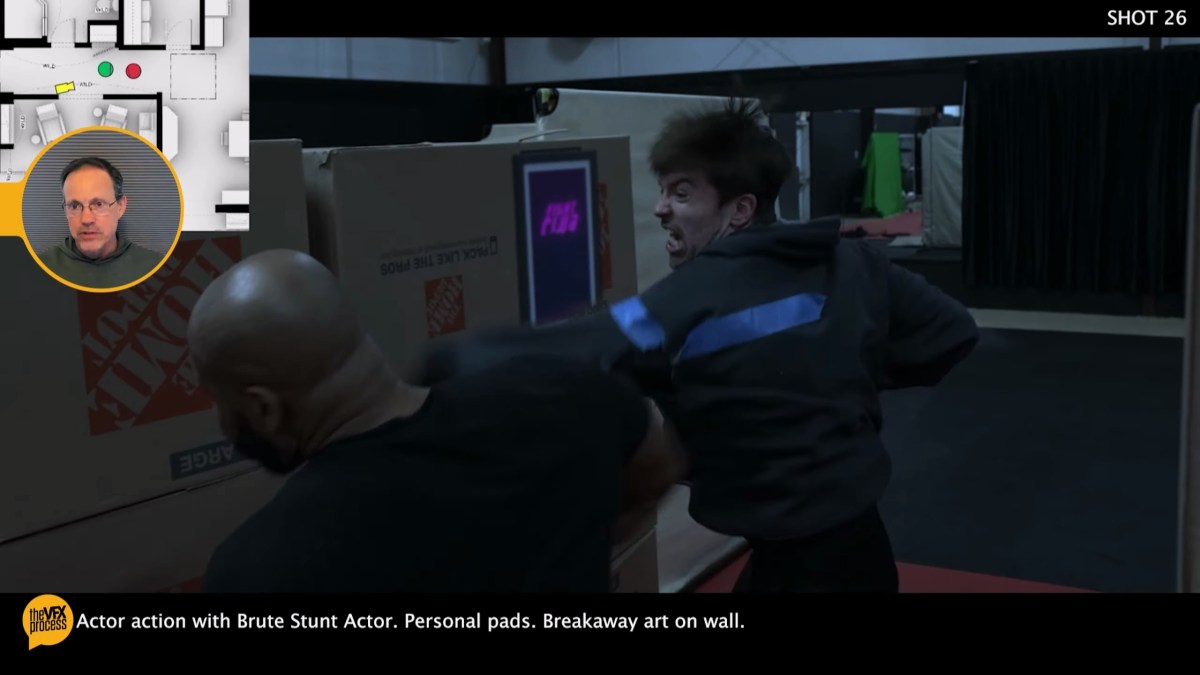
In his latest project for David Fincher‘s The Killer, Dave coordinated a gripping 6-minute fight sequence shot mostly in darkness. Join him as he shares insights into working with David Fincher, revealing that Fincher is an extremely collaborative director, and how his background as a VFX artist dictates his approach to photographing sequences in his movies.
‘Killer vs Brute’ exemplifies Dave’s mastery in delivering high-impact action sequences. Even though the scene turned out to be a success, Dave states that it was “the most intimidating thing I’ve ever done in my career.”
Venturing into Unreal Engine filmmaking during his spare time, Dave’s creativity knows no bounds. Last year, he unveiled The Ronin, his first Unreal Engine short film, showcasing a fight scene performed entirely by himself, using Rokoko Motion Capture technology. Now, with The Widow: Assassins Highway, Dave enlists a team of Marvel stunt performers to help him capture the stunts and elevate the action.
This episode offers a captivating glimpse into the VFX pipeline, the Hollywood stunt process, and Unreal Engine filmmaking.
Listen to the extended version of the conversation as a podcast:





 The Fincher Analyst