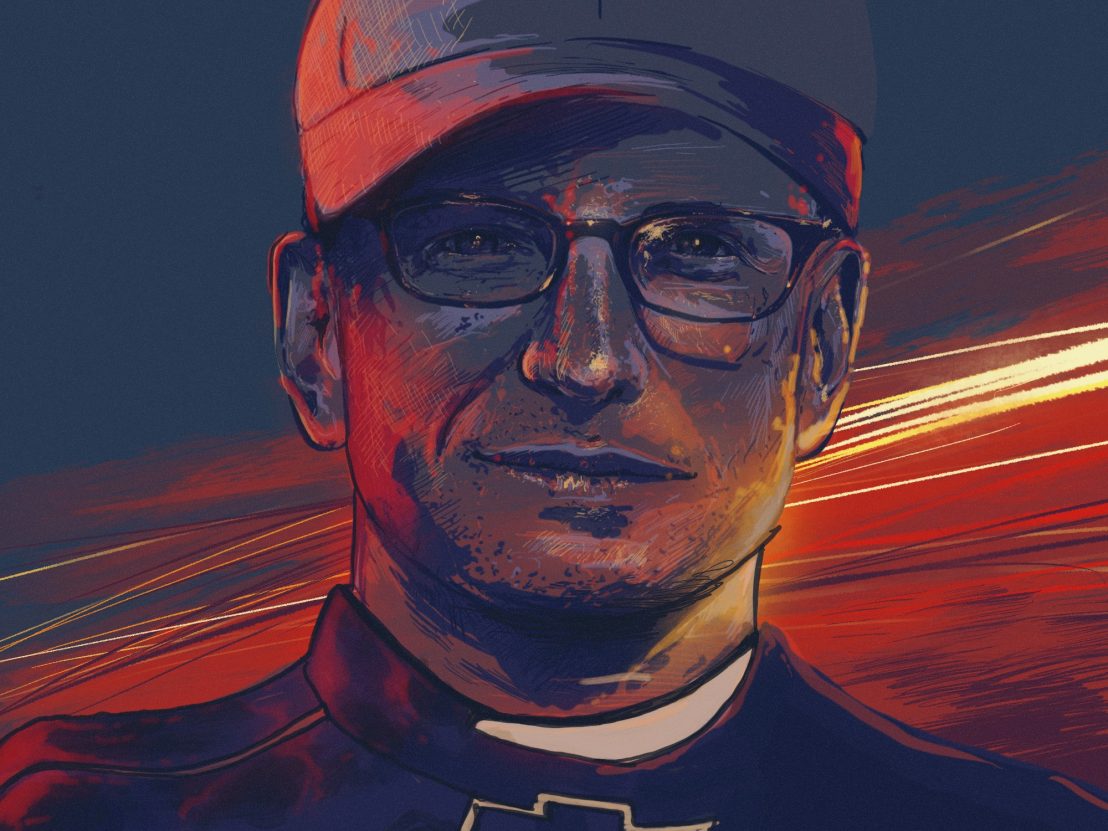
Exclusive: DP Claudio Miranda on ‘Only the Brave’, Shooting Fire, and David Fincher Stories

By Adam Chitwood
October 12, 2017
Collider

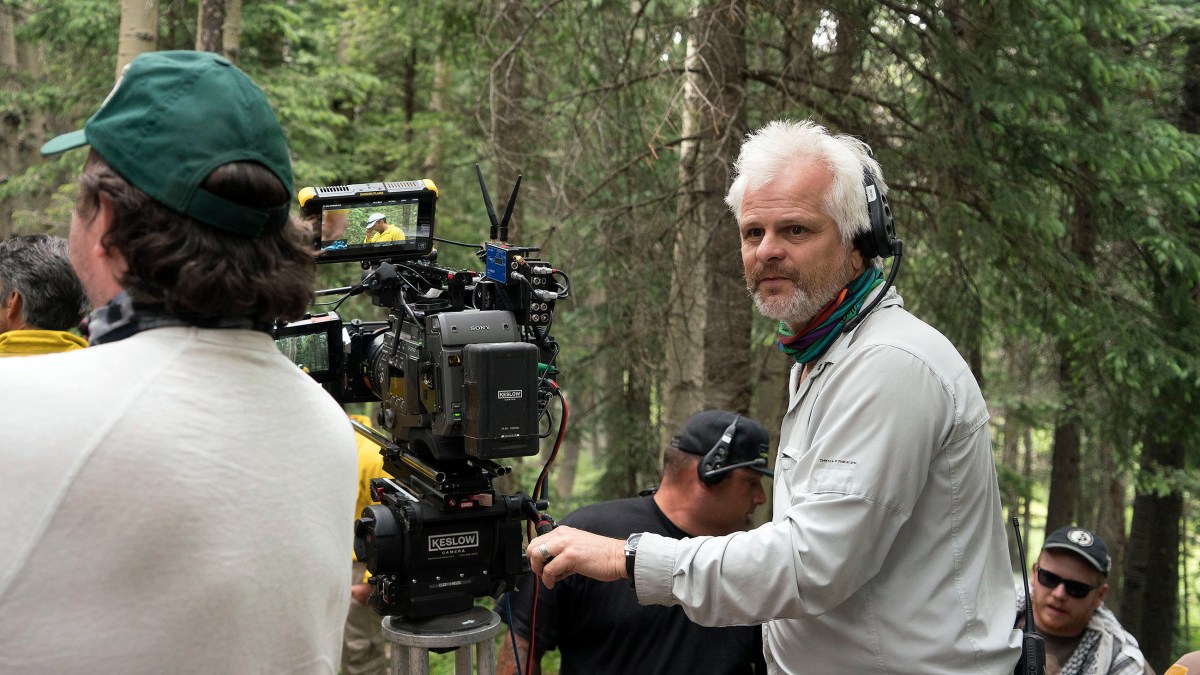
Claudio Miranda has had an interesting career thus far. After working as a gaffer on films like Se7en and Fight Club, filmmaker David Fincher (with whom he’d worked on a few commercials and music videos as a cinematographer) asked him to serve as the cinematographer for the wildly ambitious 2008 film The Curious Case of Benjamin Button. That VFX-intensive effort scored Miranda an Oscar nomination and led to him then shooting visually breathtaking movies like Tron: Legacy and Oblivion, and of course Life of Pi, for which he won the Best Cinematography Oscar.

Miranda’s latest film reteams him with director Joseph Kosinski for the third time and also marks something of a departure—the true story drama Only the Brave. The film revolves around one unit of local firefighters who battled the Yarnell Hill wildfire in 2013 to tragic results. Josh Brolin leads a cast that includes Miles Teller, Jeff Bridges, James Badge Dale, Taylor Kitsch, and Jennifer Connelly.

With Only the Brave hitting theaters on October 20th, I recently got the chance to have an extended conversation with Miranda about his work on the film. He talked about his working relationship with Kosinski, the challenges of capturing real fire onscreen, shooting on location, and his approach to shooting realistic visual effects.

But I’m also a big fan of Miranda’s work in general, so the conversation veered off into his early days working as a gaffer for Fincher, and we discussed his “trial by fire” experience shooting Benjamin Button as well as what it’s like to work with Fincher and how his gaffer work with other cinematographers like Harris Savides and Dariusz Wolski has shaped his approach. Finally, with Kosinski next set to direct the Top Gun sequel Top Gun: Maverick, I asked Miranda what the prep has been like on that movie so far.

It’s a wide-ranging and refreshingly candid conversation that hopefully admirers of Miranda’s work, or just those curious about cinematography in general, will find illuminating. I certainly had a great time chatting with the talented DP.

Read the full interview

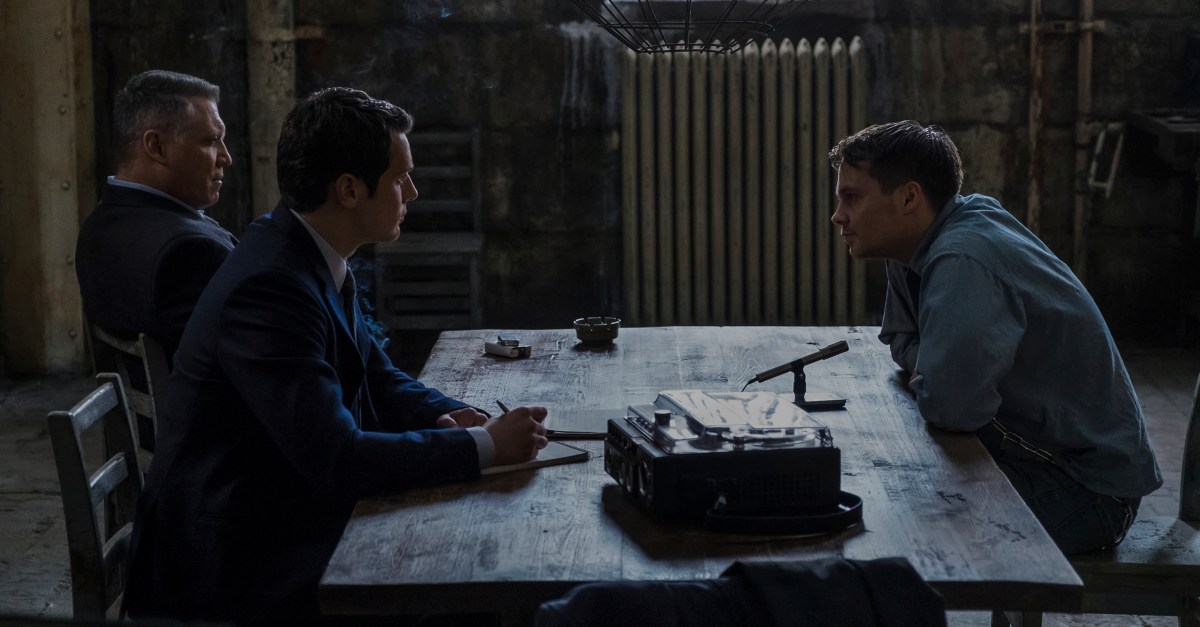
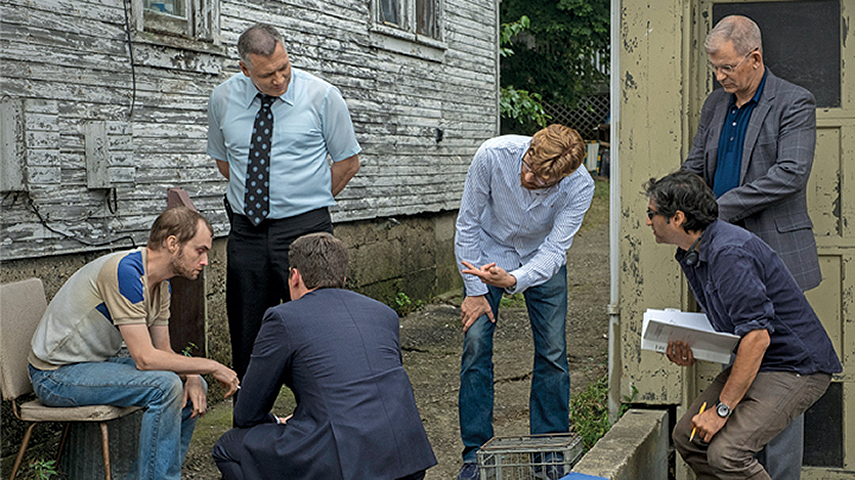
‘Mindhunter’ DP Recounts Rise From ‘Gone Girl’ Gaffer to Cinematographer on Netflix Series

(Merrick Morton, Netflix)

Valentina I. Valentini
October 12, 2017
Variety

When Erik Messerschmidt stepped into the role of David Fincher’s cinematographer on “Mindhunter” — a series centered on an elite FBI serial crime unit that premieres on Netflix on Oct. 13 — he and the director were already in sync.

“David and I see the world in a similar way,” says Messerschmidt, who was Fincher’s gaffer on “Gone Girl.” “I felt like I had a lot of freedom to try things visually and take some calculated risks. He was a huge supporter of that.”

Read the full profile

A little behind the scenes teaser for Mindhunter

Christopher Probst (Instagram)

“75,000 feet of Rushes Discovered in a Vault”

George Michael – Freedom ’90 Music Video Outtakes

George Michael VEVO
Published on 26 Sep 2017
YouTube

Thanks to Joe Frady


TRAILER | George Michael: Freedom | Coming Soon

Channel 4
Published on Sep 15, 2017
YouTube

The documentary will air on October 16 on Channel 4 and on October 21st on Showtime.


George Michael – Freedom! ’90 (Official Video)

George Michael VEVO
Published on Oct 2, 2009
YouTube

Directed by David Fincher
Director of Photography: Mike Southon, BSC

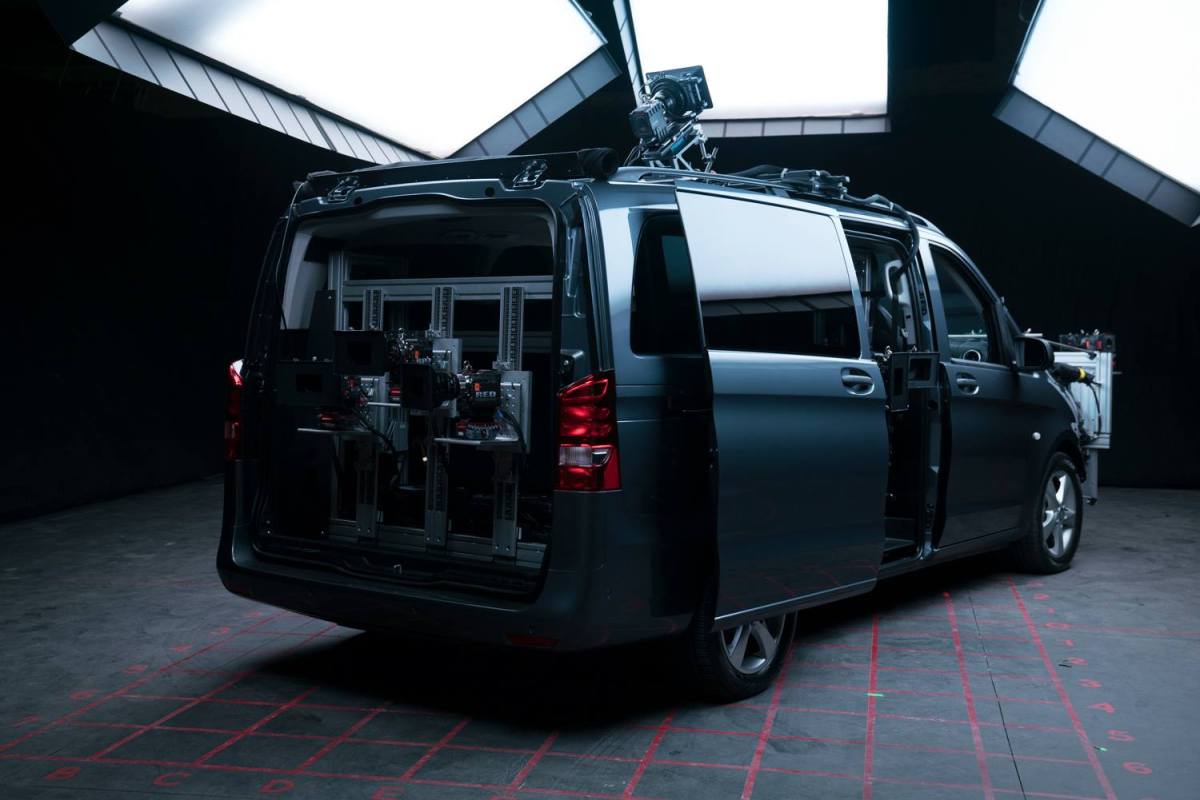
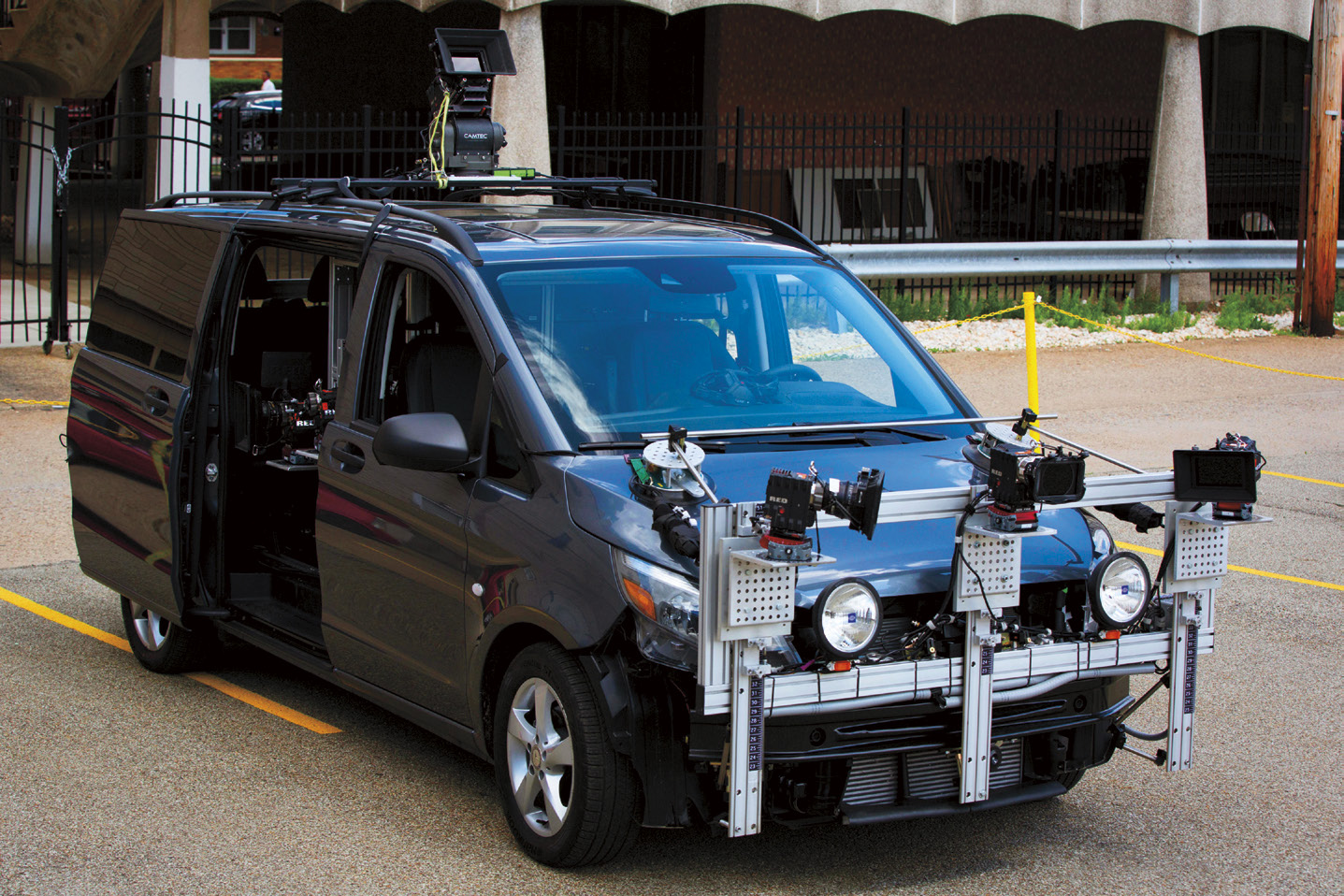
The Ultimate Plate Van for MINDHUNTER

From Jarred Land (Facebook) with Matthew Tremblay (Facebook), and Christopher Probst (Instagram)

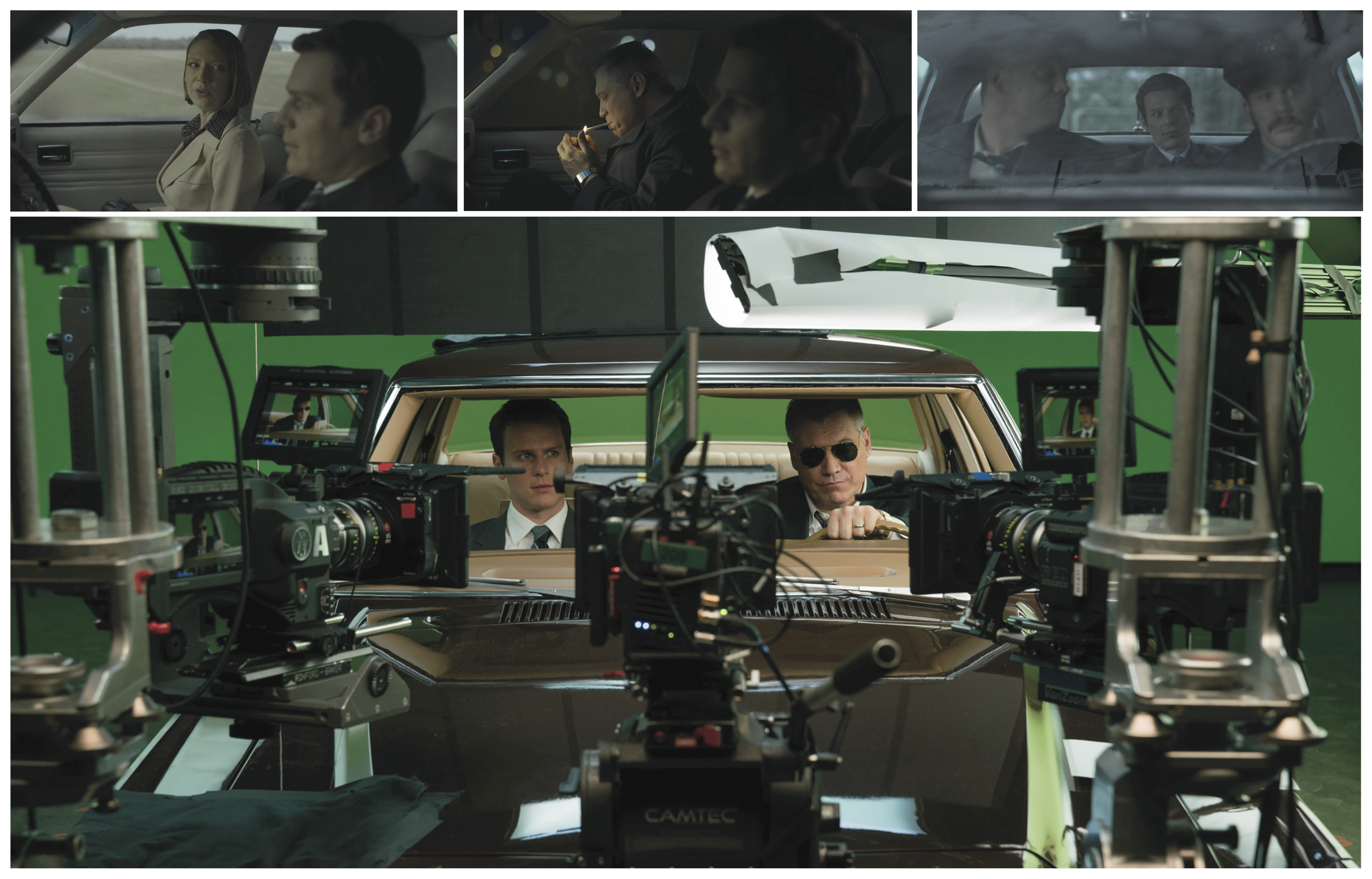
Mindhunter - Green Screen Car Scenes
Christopher Probst: “The idea behind the setup is, 11-12 cameras are rolled simultaneously covering all pre-determined angles, focal lengths, heights and degrees of tilt that will be shot of the actors in the corresponding picture car on our custom greenscreen process stage.”

Jarred Land (President at RED):

David Fincher‘s insane Plate Van for Mindhunter. 11 Epic Dragons on Global Dynamics United Tilt Plates all triggered by one detonator. Great Design Colab between Fincher, Myself and Christopher Probst.

All things considered, this wasn’t actually as expensive as it would seem.

I had a bunch of the 80/20 extrusions left over from previous projects and those Black Magic monitors I bought for super cheap online. My engineers built the 11 camera trigger out of a left over battery shell for about $40 in parts.

The initial design process was super efficient because 80/20 has plugins for SolidWorks so Fincher and I spent a lot of time on the computer pre-visualizing everything and we could figure out the weak links very quickly before we even had the van.

The GDU low profile bombproof tilt plates which Fincher, Matthew Tremblay and I designed we built just for this (which became the GDU tilt plates) seemed exotic but was actually way more cost effective than buying or renting dutch or tango heads that were expensive and not really made for what we were using them for. Remember this is a multi-year show so they actually are saving a ton of money designing it and building it rather than just renting everything for such a long period of time… it likely has already paid for itself.

This is just the prototype of something Fincher and I have been working on for a few years now and it’s going to get way way more badass as time goes on.

2018-04 ICG Magazine - Mindhunter 11 (Patrick Harbron)
Patrick Harbron / Netflix

Christopher Probst:

Click to enlarge and read descriptions

Steven Soderbergh: ‘There’s no new oxygen in this system’

The American director discusses his long-awaited return to feature filmmaking with Logan Lucky.

Interview: Matt Thrift
Illustration: Robert Manning
Little White Lies

It’s been four years since Steven Soderbergh announced his retirement from filmmaking, slamming the door on his way out with an impassioned cri de coeur on the state of the industry at the San Francisco Film Festival. In the event, it turned out to be more of a working-vacation, what with his 2013 TV movie, Behind the Candelabra, and two seasons of The Knick released in the interim. Now he’s back on the big screen with Logan Lucky, one of his best films to date, bringing with it a new fight against the system with the film’s experimental distribution model. We sat down for a long chat with American cinema’s most restless workaholic, the original Sundance Kid.

Read the interview

Thanks to Joe Frady

The Game and Fincher’s Perfect Lonely Protagonist

Christopher Aguiar
August 31, 2017
Audiences Everywhere

Much is said about David Fincher’s obsession with detail, every frame having to believably exist in the world he has created. Furthermore, this attention to detail extends beyond visual narrative storytelling. It also commands every protagonist Fincher has ever brought to life.

One character in particular most mirrors Fincher’s own obsession with perfection—Michael Douglas’ Nicholas van Orton. In The Game, Douglas portrays a character so seduced by the compulsion to maintain his lavish lifestyle that he has subjected himself to a lonely state of living.

It is within the character of van Orton that Fincher brings to life his most honest portrayal of loneliness. Whereas in Gone Girl we were shown loneliness through the prism of married life, or within Fight Club by the shackles of a consumerist society, The Game projects loneliness in its truest form. Unless others place themselves in the same vicinity as van Orton, our protagonist never engages with humanity. He is as internally isolated as he is externally.

Read the full article

Mr Nerdista
Published on Aug 30, 2017
YouTube

Watching the Music Videos of David Fincher

Posted by Sean W. Fallon | Aug 30, 2017
Audiences Everywhere

David Fincher has developed a very distinct style over the years as he has cemented himself as one of our most impressive technical filmmakers. Fincher has a great hold on characters and story, but he stands out because his mechanical, almost robotic, style of filmmaking is so recognisable and effective. His movies are distinguishable by a number of trademarks and signature moves. Fincher likes washed-out colours with lots of metallic blues and greys along with crushed blacks, which makes his movies seem as though they’re being projected to us on a piece of frozen metal. He also avoids handheld camera work, opting instead for a locked down camera that pans and pivots around a scene with balanced, unnatural movement, which enhances the feeling of an omniscient camera that is operating independently of a human being and not subject to control. He also enjoys locking the camera in place and filming wide, stationary shots as though we are watching the action play out on a stage at a theatre.

Read the full article

Seven: The Violence of a Cinematic Hellscape

Posted by David Shreve | Aug 29, 2017
Audiences Everywhere

There are less than 20 gunshots fired in David Fincher’s 1995 film Seven, each exchanged between David Mills and John Doe. If you don’t count Detective Somerset’s late face slap, there is only one wounding act of violence committed onscreen. It’s an oft-shared description offered by cinephiles and aspiring screenwriters and critics: Seven is, in the most basic sense, a non-violent film, even as watching it feels like a very violent viewing experience. For most of its run-time, Seven, which this week celebrates its 20th anniversary, is a noir- serial killer thriller built around already murdered corpses rather than murderous acts. Yet, this basic quantifiable description feels misleading to anyone watching or re-watching the film, anyone caught within or recently escaped from the spiraling trap of the film’s increasingly unsettling, malicious scenes.

Seven is widely credited for displaying influence from prior detective films and inspiring several films of comparable serial killer concern, but few films in either comparative line have less character violence and yet even fewer give as distinct an impression of having witnessed something truly violent.

Read the full article

How a Thinking Filmmaker Films Thinking: The Shot-By-Shot Slow Burn of David Fincher

Posted by Brandi Blahnik | Aug 28, 2017
Audiences Everywhere

One of the most challenging aspects of storytelling is showing a character thinking. It might sound like a straightforward task, but think about what you look like while studying. Ever watched someone complete a puzzle? It’s a quiet, meditative task marked by trial and error. In reality, there’s remarkably little head-scratching or furrowed brows. Visually, it’s rather unimpressive.

So how does a creator reveal thinking—poring over material, investigative work, head-buried-in-clues research—without absolutely boring the audience? How does a director reinvent frustration, the false lead, the maddening search, particularly over a two-hour film?

David Fincher has made a career of chronicling that very process.

Not only has Fincher produced some of the most haunting detective sequences in film—Se7en, Zodiac, The Girl with the Dragon Tattoo—but you’d be unlikely to find criticism calling his films boring. He’s a master at tension-building and unapologetic about his resolutions. Perhaps this is why so many of his characters fall prey to their own obsessive madness. The unraveling of a character is something Fincher portrays with patience and deliberateness.

Read the full article