

Rian Johnson
November 15, 2023
Netflix: Behind the Streams
Director David Fincher and actor Michael Fassbender discuss making The Killer with moderator Rian Johnson at The Academy Museum in Los Angeles.
Watch The Killer on Netflix
Rian Johnson
November 15, 2023
Netflix: Behind the Streams
Director David Fincher and actor Michael Fassbender discuss making The Killer with moderator Rian Johnson at The Academy Museum in Los Angeles.
Watch The Killer on Netflix
Just what is required to deliver a fight of real ferocity? The Killer team worked in tandem for the battle with The Brute.
Nev Pierce
September 2023
Netflix (Press Notes)
The violence in The Killer isn’t indiscriminate, or extensive, but it has impact. And as much as Michael Fassbender’s hitman often works with a gun, sometimes things required more intimacy than that.
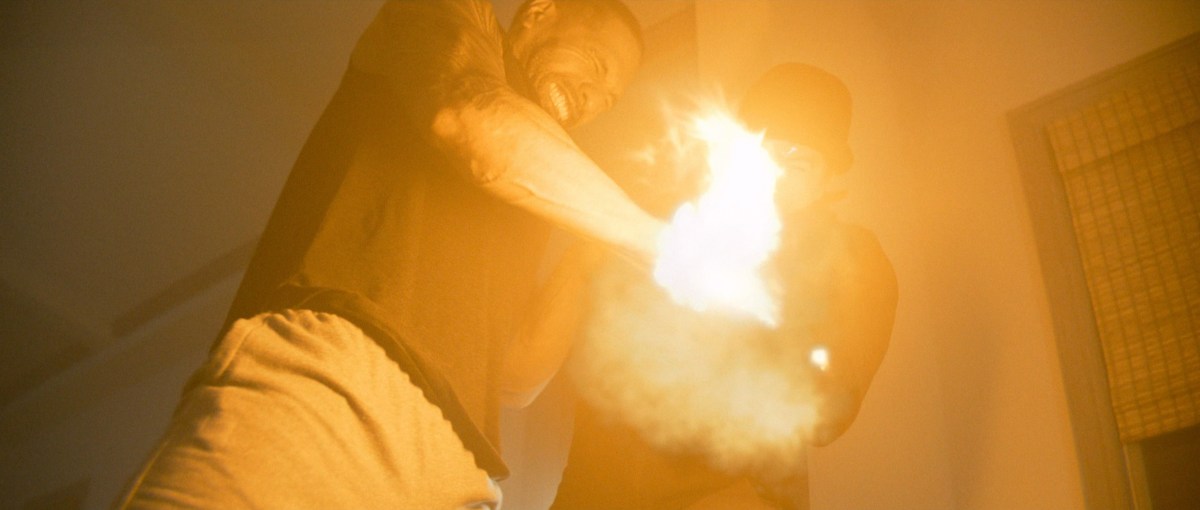
His journey to dispense his brand of justice takes him to Florida to find The Brute (Sala Baker), a mountainous fellow assassin. In the dead of night, he decides to steal into his house – when all hell breaks loose.
“The Brute represents somebody who may have done horrible things to somebody close to him,” says David Fincher, setting the scene. “He’s come to get his retribution. But I always loved the idea that everyone’s plan works… till you get punched in the face.”
The confrontation grows and grows and would require the utmost effort from the cast, stunt team and other heads of department. “It’s full on,” says Michael Fassbender, who does his fair share of stunt work himself, but is clear who is taking the major beating. “It’s the most physical [this sequence]. Not so much for me, as for the two boys. The fight is messy, it’s intense.”
Before battle could commence, the stage needed to be set. Producer William Doyle had found the exterior of The Brute’s house, while the interior was built in a studio space in New Orleans, with production designer Don Burt having to consider what was right for the character, the story and the stunts.
“The set was built in conjunction with the whole design of the fight itself,” says Burt. “There were a couple of instances, like, ‘Let’s put the door here, to the left instead of the right, so that works better for flowing through to the next room.”
Burt talks highly of fight coordinator Dave Macomber, who worked for months prior to the production to help design the conflict. “He did a video of the action, set up boxes to simulate the rooms and things that would have to be broken, and he would send us specific notes on what would happen.”
There was then time dedicated to a walkthrough rehearsal on the set. “Ceán [Chaffin, producer] made sure that happened early enough so there would be time for the art department to rebound!”
Alongside Burt and Macomber, cinematographer Erik Messerschmidt worked to establish the geography of the house for the audience. “We had to think about how to explain the space, while simultaneously shooting a fight scene,” says Messerschmidt, who points out how they carefully considered the staging with a view to story and commonsense, rather than amping the natural chaos of a fight.
This extended to how the scene was lit with a view to reality. “The sequence is hard, the camera is moving all over the place, the actors are moving all over the place, and it’s fast,” says Messerschmidt. “So we have to think about how we’re going to stage it for the light.”
This meant discussions with the art department about finding sources, from lights fitted under the kitchen cabinets, to establishing streetlights outside. “We decided we wanted hard, artificial street light through the windows,” says Messerschmidt, which meant erecting lights on the exterior location to match that. “In terms of the scope of the movie, a tremendous amount of energy went into just figuring out that fight.”
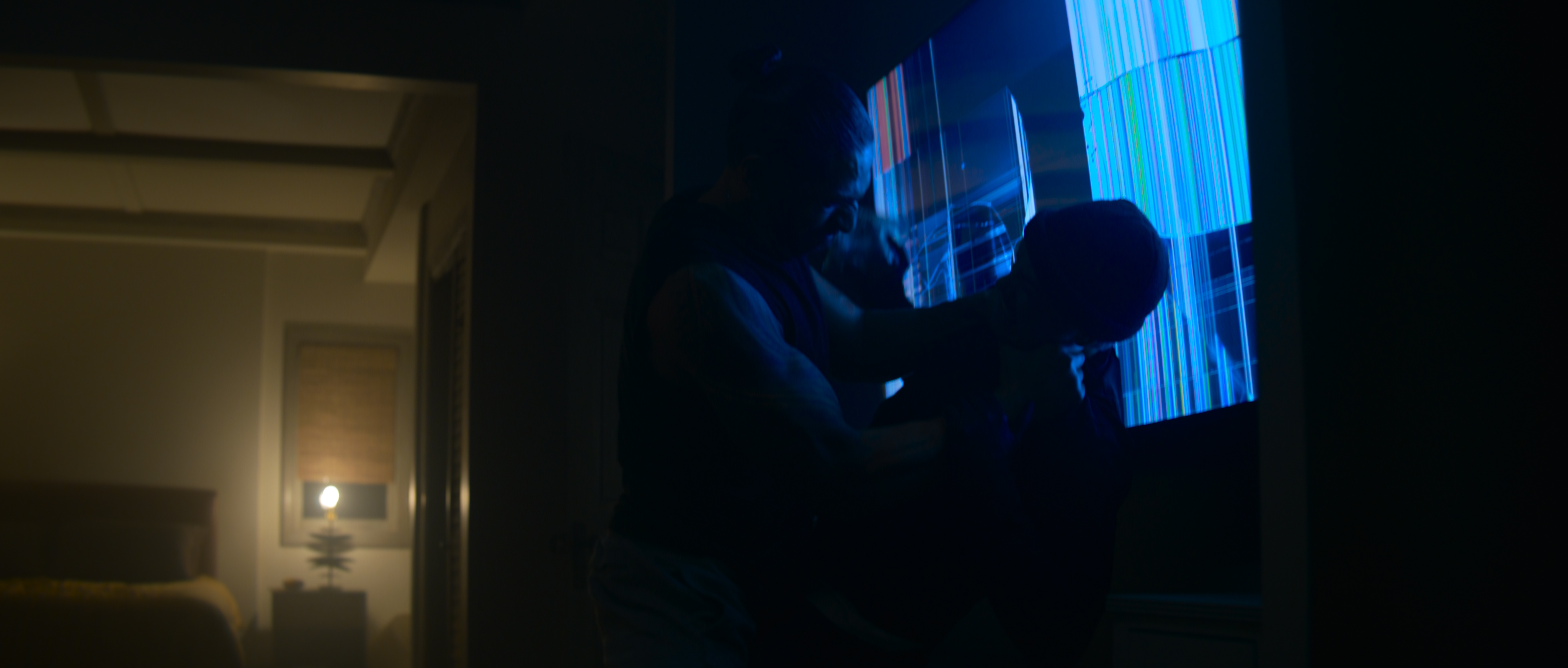
For fight coordinator Dave Macomber, whose stunt credits include HBO’s Watchmen (2019) and Avengers: Endgame (2019), working with Fincher was a unique experience. “He’s different from any other director I’ve worked with,” says Macomber. “His approach to things, all the intricacies, being able to do the number of set ups he does at the speed that he does.”
He regards the director as being able to predict, or foresee, elements which only become obvious to others in retrospect. “It takes a second to go, ‘Okay, he wants this in order to be able to achieve that!’ Most people only see that when they’re looking at their movie.”
It would be easy to imagine a fight as simply a blizzard of blows, but Macomber sees the possibilities of revealing character in the carnage. “I’ve always thought of fight moves as kind of ‘action dialogue,’” he says. “So whenever we’re creating these kinds of sequences, I’m always trying to keep in mind the motivation of the person within the scene.”
Macomber recalls long conversations with Justin Eaton, the stunt double for Fassbender, as they choreographed the sequence, checking “Does that really make sense?” For Eaton, who has worked with Macomber several times, it was a hugely positive experience, not least because he saw his friend given license to explore what was best for the material. “Fincher gave Dave a lot of freedom, to kind of audition what he thought would be the best way to capture things. Dave was blown away, because Fincher is one of his favorite directors. He’s been like a kid in a candy shop working on this.”
“The way the fight is designed, it’s like each piece goes into the next piece,” says Sala Baker, whose work as a stunt performer and actor goes back to playing the physical incarnation of Sauron in The Lord of the Rings. “David is such a particular mind,” says Baker, who really enjoyed how curious and open the director was, exploring suggestions and ideas to the full. “If you say anything, he’s going to really get into it. And Michael is so easy to work with, fun and open to adjustments.”
Baker also stresses how well-looked after everyone is, however bruising their scenes might be. “It’s such an amazing working environment to have that kind of care.” Pain, of course, when you’re delivering stunts, is part of the job. As Dave Macomber explains, “The way I think about it is there’s a difference between pain and injury. And there’s a difference between injury and debilitating injury. We accept the fact that things are going to be painful!”
“I feel sorry for those guys,” says Fincher, reflecting on the reality of staging the fight, although it all aids the experience on screen. “I like the idea of the audience rooting for this confrontation,” says Fincher. “And then it goes on and on and on. And you’re kind of going, ‘Good God, it’s awful what they’re doing to each other!’”
Eren Celeboglu (IMDb, Twitter, Instagram)
July 3, 2023
Because We Love Making Movies (Instagram, Facebook)
Because We Love Making Movies is an ongoing conversation with filmmakers who work behind the scenes to make the movies we love. These are the invisible warriors we don’t think of: Production & Costume Designers, Cinematographers, Editors, Producers, and the whole family of artists who make movies with their hands and hearts.
Today, I speak with Monika Gossmann (Instagram), an incredible actor, director, and acting teacher, who I first became of aware of after seeing her wonderful performance in David Fincher’s Mank. We discuss her collaboration with Fincher, Gary Oldman‘s inspiring professionalism and generosity, as well as the crucial role of Producer Ceán Chaffin in the creation of a nurturing working environment. We talk about how actors are storytellers and filmmakers, how she discovered her calling as an artist, and how she feeds her soul as an artist.
Listen to the podcast:
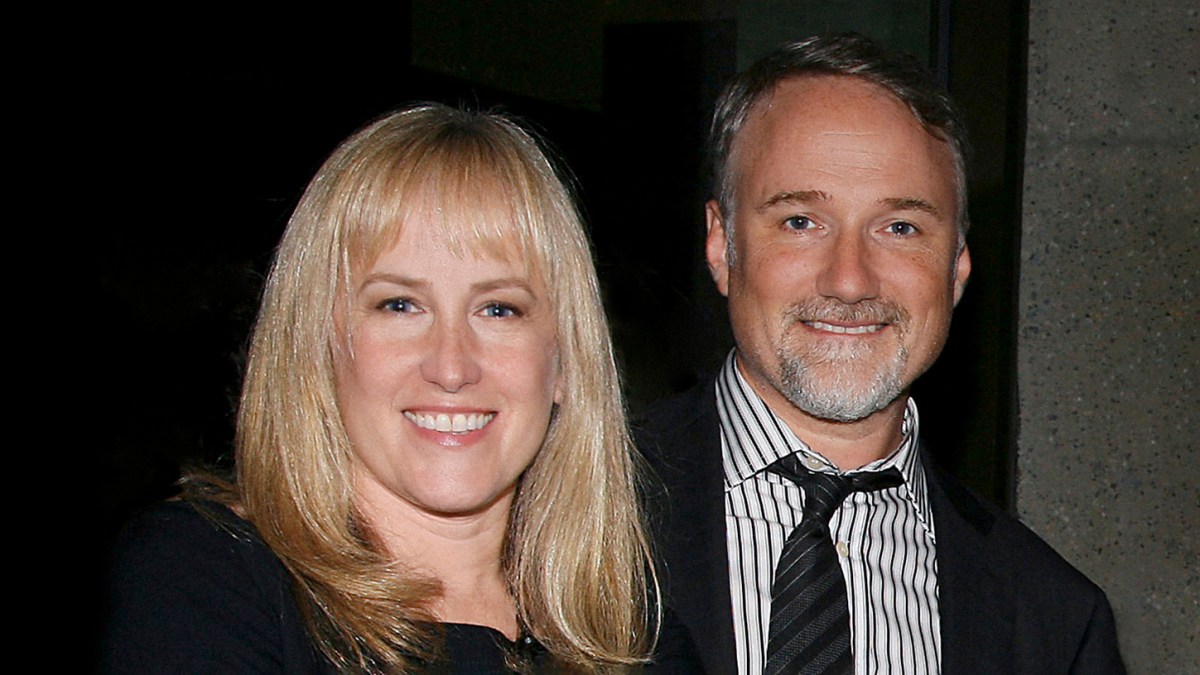
Born in Los Angeles, California, on June 26, 1957, Ceán Chaffin is a film producer who has mostly collaborated with her husband, director David Fincher.
I started out in commercials, at the bottom. PA-ing, 2nd AD-ing, the whole route into line producing. (1)
She joined Propaganda Films in 1992 and worked as a producer for several commercial directors, handling a diverse group of accounts that took her to 13 countries before accepting a job on a Japanese Coca-Cola commercial that was directed by David Fincher: Coca-Cola: Blade Roller (1993, filmed in December 1992). (2) (3) (4) (5)
I started working with difficult directors at Pytka and Propaganda Films.
It wasn’t a conscious choice but with those guys, I just learned more. Someone dared me to work for Fincher and partly because he was younger than me, I thought, “That little punk?” But I figured I’d give it a shot, and I learned more than I’d ever learned before. (1)
That project led to an association with Fincher on other commercials and such notable music videos as the Rolling Stones’ Grammy Award-winning Love is Strong (1994).
She also produced the music videos directed by Mark Romanek, Madonna’s Bedtime Story (1995), and Michael Jackson’s Scream (1995), for which she earned a second Grammy. (4)
Propaganda offered me a movie; they had moved other commercial producers into films, but I believe I was their first female producer. So I was offered this film with David, but he signed up first to make Seven, which I wasn’t hired to do. I prepped it but they wouldn’t hire me because I had never line-produced a feature before. Which drove me crazy and still does, that Catch-22. It was a film for Polygram, which owned Propaganda; the budget was $69 million, and it was called The Game. (1) (2) (4)
Chaffin and Fincher became a couple in 1995 and they married in 2013. (6) (7) (8) (9)
Producer Arnold Kopelson (Seven, 1995):
Ceán is very supportive of David. She makes it possible for him to be totally enmeshed in his life of making movies. (8)
Director Jamie Babbit (script supervisor on The Game, 1997):
I would say [the people who influenced my career the most are] David Fincher and Ceán Chaffin. They are the power couple, director-producer combo that I worked with at the beginning of my career. They really taught me how amazing it is to marry a producer, and I feel like they’re the best compliment to a director in love and in life. I’m currently married to a producer. (10)
(1) “Case Study. Walking the Line” (Produced By, October 2009)
(2) “Entrevista de El curioso caso de Benjamin Button” (Ceán Chaffin) (Cine PREMIERE, YouTube, January 19, 2009)
(3) Nev Pierce – “Interview” (Mank, The Unmaking, 2021)
(4) “Cean Chaffin” (Panic Room, Production Notes. Sony Pictures, 2002)
(5) Benoît Marchisio – Génération Propaganda (Playlist Society, 2017)
(6) Nev Pierce – “The Devil Is in the Detail” (Total Film, March 26, 2007)
(7) Nev Pierce – “In Conversation with David Fincher” (Empire, January 2009)
(8) Stephen Galloway – “David Fincher. Punk. Prophet. Genius” (The Hollywood Reporter, February 9, 2011)
(9) Nev Pierce – “Essay” (Mank, The Unmaking, 2021)
(10) Danny Edwards – On My Radar: Jamie Babbit (shots, March 3, 2026)
Interview with David Fincher’s Producer Ceán Chaffin on The Curious Case of Benjamin Button
January 19, 2009
Cine Premiere (Mexico)
Case Study. Walking the Line
September 2009
Produced By
Quotes from Ceán Chaffin:
“I feel that being a line producer is an honor. I’m really proud of that. When you talk to somebody in the business and you say you’re a line producer, I think you get more respect then when you say, ‘Oh, I’m a producer.’ I think that I watch a director’s back better than anyone else, and that’s why David forces me into a Produced By credit. At first I was really hesitant because there’s a part of Hollywood that I kind of hide from. I really love directors, and I love what they do. But I also think that we all walk that line of supporting these filmmakers, while at the same time doing that job for the studio, because they’re financing it. We walk that line, and I don’t see anybody else willing to do that. How else are you going to deliver on all these different levels?”
“I think there’s too much hung on the creative idea; people’s egos are too attached to it or something. Because what we in this room all do couldn’t support the creative process more. Fincher is a very smart director; he gets that. I didn’t survive those early years with him because I had a different philosophy than he does. He feels the same way, so much so that one of the things he says to his fellow directors is “you gotta have your producer skills.” You need to understand what these people are doing for you because if they’re not doing it for you, you’re screwed.”
“Very rarely does anyone get upset when we say, ‘the money goes on the screen.’ That is our mantra. We don’t lie, and the money goes on the screen. When there are a lot of producers on a show, you sometimes have everyone in trailers … there are drivers, assistants, the whole entourage. And so, very gently, I hope, we ask: let’s put that on the screen instead. There aren’t a lot of bells and whistles and bling for everybody; when we have a Fincher project, it goes on the screen. We’re very serious about it. It’s not an easy question to ask some people, but you do.
You can look at dailies now online and on demand, so having some place to do that work is important, but it can be anywhere. It can be the AD’s trailer, wherever…”
“They will suss it out in a nanosecond if you’re not being honest. It’s so important. That’s probably number one.
I take ‘no’ from the director. And I understand the firm ‘no’ from the maybe-I-canchange-his-mind-later ‘no.’ That’s another skill.
We have our own opinions too. We’re not always going to agree with either the director or the studio. And that can get in the way.”
“We feel very strongly, both of us, that we have to make things work within the envelope that we promised… partly because that’s an expectation with the kind of movies that he makes. It’s a different beast that way. When you’ve got a Transformers, they’re willing to spend a little differently. So we give the bad news up front. We know that David asks for more days than most people do, but that’s the way he works. The studio once actually asked me, ‘How are you shooting 80 days on Panic Room when we’re at 80 days on Spider-Man?’ I said, ‘Well, who do you think is lying?’ [laughs]”
“It’s a wonderful little thing you get from commercials and music videos, which we still do, though not as much these days. But they’re a great opportunity to try out new DPs, new equipment… It’s a chance to push the edge, a little bit. It’s like a date. You get to date your crew, and then when you make a feature, you get to run a marathon with them.
You have to have visual effects knowledge as a producer or line producer. I haven’t had a job, including commercials, in probably 18 years that hasn’t used VFX. You have to know this stuff.
You just have to show up; that’s how we all learn. I didn’t know what a telecine was when I first started, 25 or 30 years ago. So I showed up. You go and you learn, and you go to all the meetings with the visual effects groups. And it’s a big time commitment, but I don’t see any other way of doing it. I actually get tired of chasing David, sometimes, because he is so curious. But you go, and you visit RED, and you meet with Viper, S.two, engineers… It’s all part of the job.”
“The audience has changed, our economy has changed, clearly technology has changed, and the delivery system is still changing. So between all those things, it does have an impact on everybody in the film business. And that’s why it is important, I think, that we embrace the change. Change ultimately can be a good thing. It almost always is, if you look at it historically. People always prefer their past to their present, but I think once you embrace the change, there’s another curve out here that can be a positive one.”
Conference Spotlight: Ceán Chaffin and David Fincher
July 2014
Produced By
One of the most anticipated sessions of the 2014 Produced By Conference was its “Conversation with Ceán Chaffin and David Fincher” — a rare look into the process of the producing and directing team behind some of the most provocative films of the last 20 years, including Fight Club, The Social Network, The Girl with the Dragon Tattoo and the upcoming Gone Girl.
In order to keep the discussion candid and open, members of the press were not allowed into the session, but Ms. Chaffin and Mr. Fincher graciously agreed to sit down with Producedby for a brief interview just before taking the stage.
Many of your films feel more like independent or even art films, given their challenge and complexity, and yet you’ve been able to make them within the major studio system. What’s your secret?
David Fincher: We’ve been pretty lucky. You have to have people within those bureaucracies who are fervent believers. We could not have made Fight Club without Laura [Ziskin] and Bill [Mechanic]. They bought the material. They had it before I had it. So I think you have to look for like-minded perverts within those bureaucracies to convert. And you have to do what you say you’re going to do.
Ceán Chaffin: And do it time and time again, so they start believing. It takes a while for that trust to be built up so you have a reputation that you can do what you say you’re going to do.
Wasn’t Seven famously a script that everyone said couldn’t be made?
Fincher: No, they just didn’t want to make it as written. They wanted to take out all the things that were disturbing. When it came down to whether there was going to be a head in the box at the end, my argument was: This movie is known around town as the ‘head in the box’ movie — so taking it out makes no sense. It’s like taking the wizard out of The Wizard of Oz. I don’t think it’s a question of unmakeability as much as it’s just people saying, “this could be too offensive.”
Chaffin: But they’re happy to make “too offensive” if it’s the right price.
Fincher: [With Seven], it was 11 drafts in development, and by the time I got it from Mike De Luca, I said, “Let’s go back to draft one.” So it’s finding the…
Chaffin: The champion.
Fincher: …the fellow pervert!
Chaffin: The like-minded people.
Working on projects with successful, popular source material often means that there are other producers attached. How do you stay true to your vision while collaborating with other producers?
Chaffin: It depends on the competence level and ego of each person. People know that David and I come together as a team, and I fill a space that they don’t [always] want to fill. [Other producers] have so much respect for David, and by this point they appreciate how we work, and they just want to be there when we need support. But a lot of people don’t want to do the things that we do and work how we work.
Let’s talk about that. What are those things?
Chaffin: We come from working on short-format together, and in that world you do everything from start to finish — and we just moved that over to films. I also line produce. You just wear more hats when you come from commercials and music video. So there’s more of an immersion in the whole process.
Fincher: I also think that the assembly-line nature of our industry encourages specialization, but I really have an aversion to that. So the people I am naturally going to turn to are people who can think about it from multiple facets. So for me, what Ceán brings to it is… for my job, I have to be out there, not trying to fail, but certainly exposed to failure. And I need someone behind me saying, “You need to keep in mind that if this goes horribly awry, that’s three days of shooting.” You need that balance. Or when it comes to music, like the Pixies song at the end of Fight Club — that’s Ceán saying “Listen to this.”
Chaffin: That’s not true. I just listen to a lot of music…
Fincher: Well, it is true. Or when we were casting Dragon Tattoo, Ceán was there right at the beginning saying, “I think Rooney [Mara] might be able to do it.” She has a legacy of experience, and I have that with 10 or 12 people that I continue to go back to because I know that they’re not going to try to talk me out of things that discomfort the audience.
Chaffin: But creative input — that’s not something I focus on with David. To me it’s all about watching the director’s back. And you’re in the position that you’re also working for the studio, and it’s very important that there’s somebody out there trying to work with both sides. It’s not just “us against them.”
Speaking of conflict, how often do you fight, what are the fights about, and who generally wins?
Chaffin: [Long pause] I don’t know.
Fincher: We don’t fight, we disagree. We disagree about a lot of things. Usually it’s because we’re looking at it from diametrically opposed [places]. I’m looking at it in terms of mortality, and she’s looking at it more in terms of feasibility. What can we guarantee? What can we expect from someone hanging from wires for nine hours?
Chaffin: We’ve worked together longer than we’ve been a couple, and we found early on that we have the same philosophy. That’s so much better, because if you don’t have that same care, it’s really tough, and can be dangerous, and can be dishonest, and that’s not comfortable for me. And with David, I have that. Then it was about…
Fincher: Not making you cry.
Chaffin: [Laughs] He made me cry on the first job; that’s true. But he makes everybody cry. I didn’t take it personally. His old person said, “Don’t worry, everyone cries.” [Fincher nods in agreement.] I’m kidding. But it’s not just with David, it’s all the people [we work with] who are so talented. You have to learn what their process is. Because when you don’t understand that, it can create conflict. It’s not about being right, it’s about making the whole work, and if you don’t understand each individual’s process, you can’t really be that person that moves [things] along, makes deadlines, makes budgets. I think that’s the part that keeps us from knocking heads — as a producer, sitting back and asking, “How does this person work? Let’s observe how they behave.” And then you support them.
Mouloud Achour
March 8, 2023
Clique TV (Canal+)
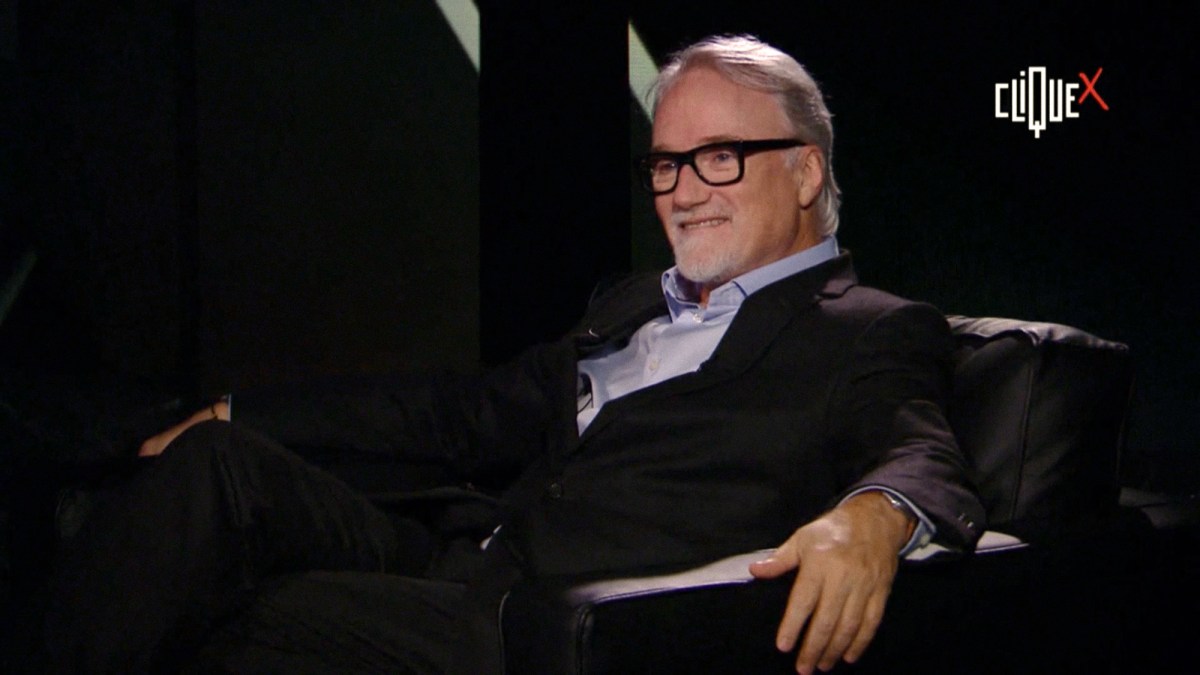
The immense director David Fincher granted us a 90-minute exclusive interview with Mouloud Achour. This new Clique X is a masterclass from the American genius about the secrets of his filmography that has become so emblematic over the years: Seven, Fight Club, Zodiac, The Social Network…
In English with subtitles in French.
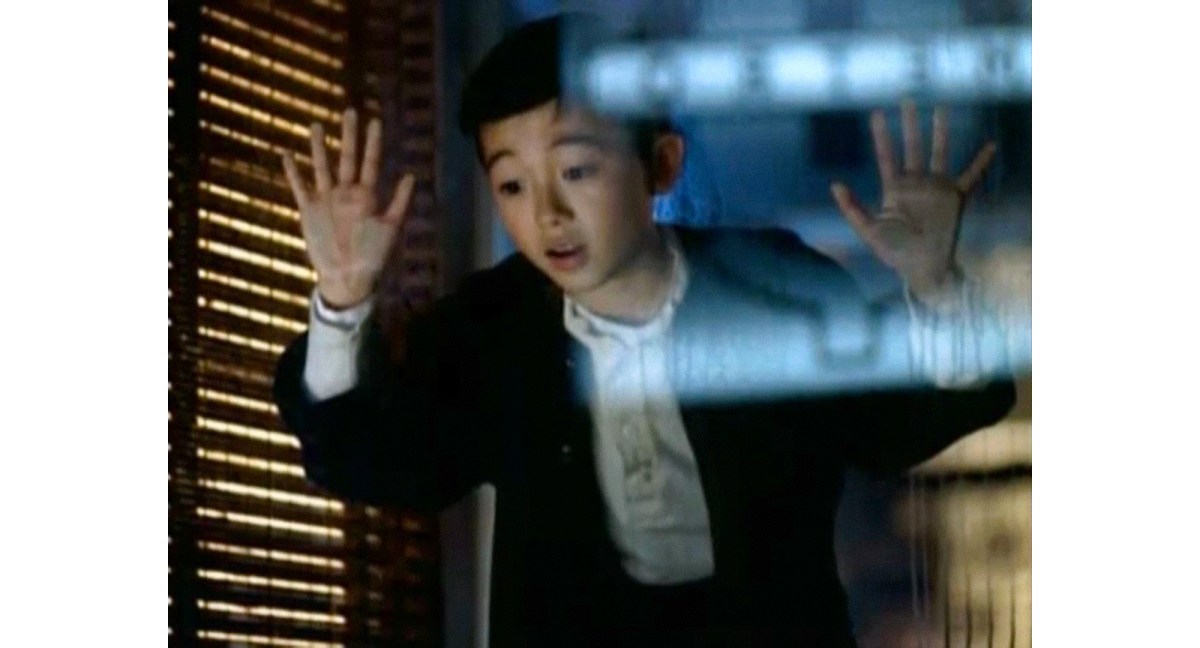
In 2021 AD, the futuristic megalopolis of ZERO-CITY is under martial law. When the authorities try to enforce a curfew, a gang of renegade “Blade Rollers” defy it rollerblading daredevil-style through the deserted rain-slicked streets.
For this stylistic homage to Blade Runner (Ridley Scott, 1982), director David Fincher recruited the cinematographer of the classic film, Jordan Cronenweth, ASC, one of his all-time heroes.
It was also the first collaboration between Fincher and Producer Ceán Chaffin.
Watch all the versions of the commercial and read The Fincher Analyst dossier:
Has there ever been a movie director who has taken more advantage of new technology than David Fincher? We look back on how digital production benefitted his movies so much.
Julian Mitchell
November 28, 2022
The Beat (Premium Beat)
When digital cinematography was in its infancy, around 2005, it was like the Wild West; new cameras were appearing seemingly every week, whether from University’ concept’ programs or start-ups with a movie making a revolution on their minds.
In this white heat of technology, director David Fincher started to craft his movie-making skills. He was a risk taker with new technology but driven by the promise it gave him. As much as Fincher and his crew were proud of the films they made, they were also proud of how they made them.
Zodiac’s Digital Gamble
Fincher had already used digital cinematography for his commercials and decided to commit early to this technology for his movies. But his long-time producer Ceán Chaffin brought some hard business sense to brace against his pioneering creative decisions.
Ceán had been involved more in costing this digital workflow out and had looked at introducing digital for a feature before Zodiac but found that it wasn’t cost-efficient at that time; Zodiac was different. “At the moment of Zodiac, storage was so cheap that we could push it; it was also about the savings at that point. The sticking point was really about storage for us up to Zodiac.”
Glenn Whipp
April 3, 2021
Santa Barbara International Film Festival (SBIFF)
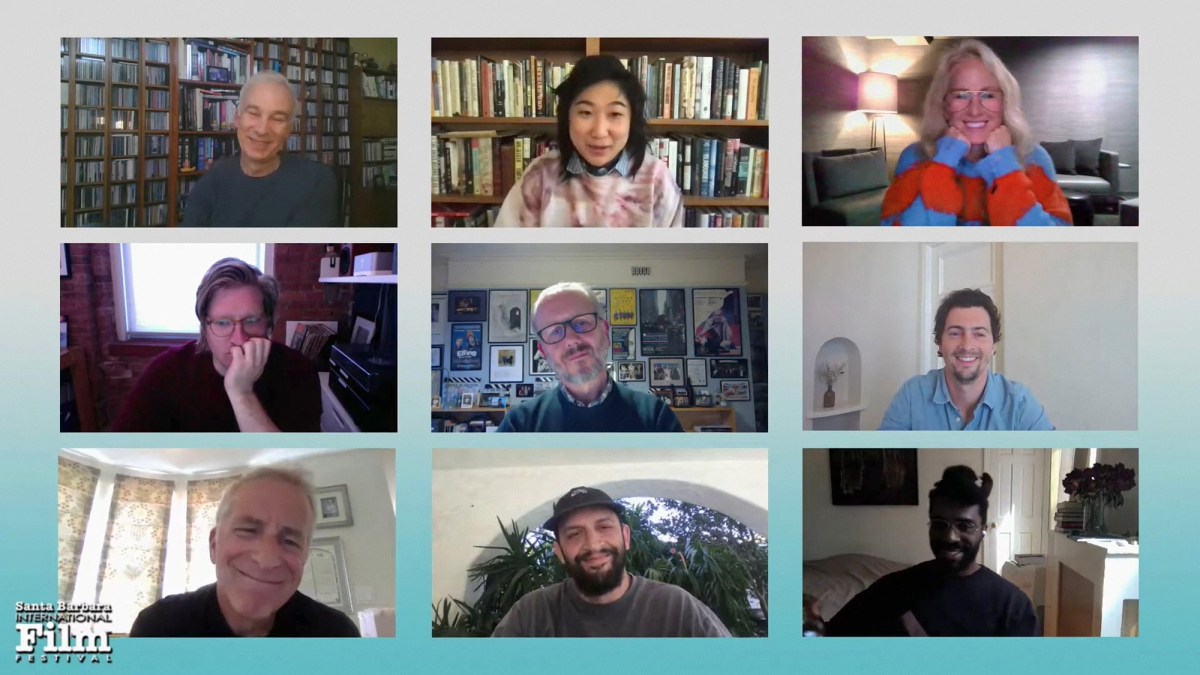
The Santa Barbara International Film Festival annual Producers Panel moderated by the Los Angeles Times’ Glenn Whipp, assembles top producers to dig into the business and creative sides of producing the year’s top films. Panelists include multi-hyphenate Shaka King (“Judas and the Black Messiah“), Christina Oh (“Minari“), Ceán Chaffin (“Mank“), Dan Janvey (“Nomadland“), David Parfitt (“The Father“), Josey McNamara (“Promising Young Woman“), Marc Platt (“The Trial of the Chicago 7“), and Sacha Ben Harroche (“Sound of Metal“).
The Oscar-winning screenwriter discusses his work on David Fincher’s Netflix movie and shares some candid thoughts about a writer’s role in the craft of filmmaking.
Adam Chitwood
April 15, 2021
Collider
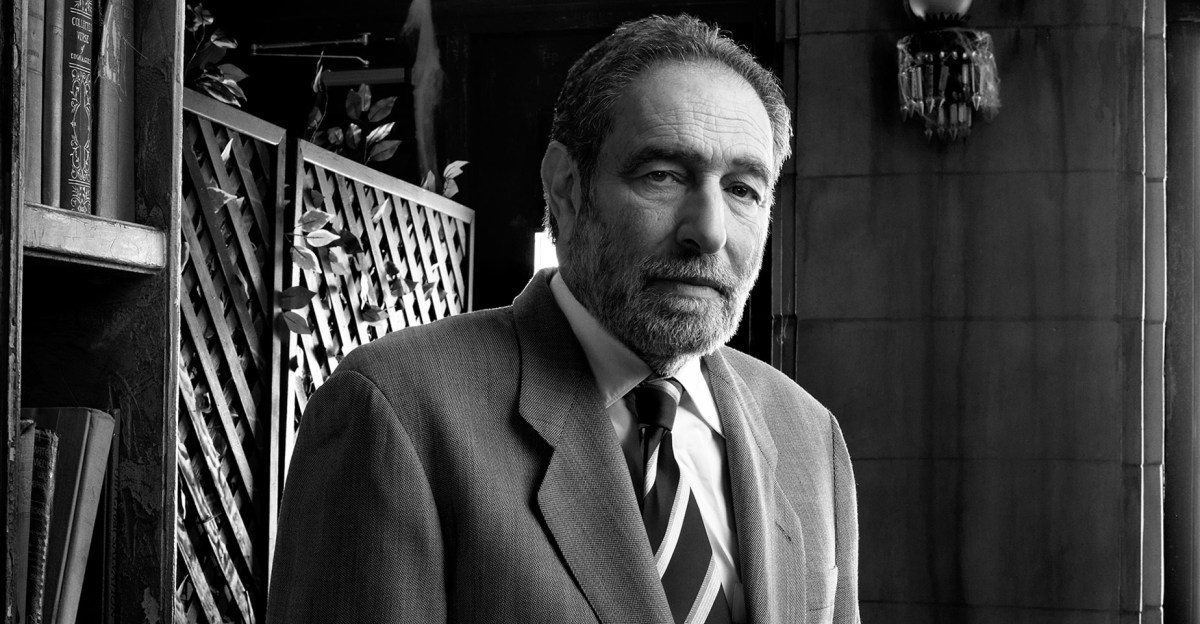
Eric Roth knows a thing or two about screenwriters. And more specifically, the relationship between a screenwriter and a director. He’s been a working writer in Hollywood for decades, and has collaborated with directors as varied and accomplished as Steven Spielberg, Robert Zemeckis, Michael Mann, Martin Scorsese, and Bradley Cooper. He’s been nominated for six Oscars, and has won once (for Forrest Gump). He’s had massive hits and disappointing bombs. Plenty of ups and downs. And at 76 years of age, you can hear in his voice that he still has the enthusiasm and love for the craft of moviemaking of an up-and-coming screenwriter bowled over by the magic of Hollywood.
Which is why, when David Fincher got the chance to make the film Mank at Netflix, one of his first calls was to Roth, with whom he had worked on The Curious Case of Benjamin Button and House of Cards. The story of Mank traverses well-worn territory – it chronicles the writing of the original screenplay for Citizen Kane by alcoholic screenwriter Herman J. Mankiewicz (played wonderfully by Gary Oldman). The film doesn’t delve into the credits debate that ensued after Mank finished the screenplay, but instead it’s a story about a talented writer who’s been slumming it in Hollywood as a script doctor and finally decides he’s going to shoot his shot with a controversial, thinly veiled story inspired by his real-life acquaintance William Randolph Hearst (played in the film by Charles Dance).
What made Mank extra tricky to pull off was the fact that the script was written by Fincher’s father Jack Fincher, who died in 2003. David and Jack had worked together to develop the screenplay throughout the 90s, but failed to find a studio willing to finance the film – at least the way Fincher wanted to make it (in black-and-white with a 1930s Old Hollywood feel). When Roth got the call from Fincher, he was asked not to rewrite the screenplay as is normally his task, but to instead come onboard the film as a producer and work with Fincher to make surgical changes here and there to get the script in tip-top shape as they headed into production.
It’s a somewhat extraordinary situation, as Roth was tasked with honoring what Jack Fincher had put together while also making small alterations here and there. And, of course, consulting with David to bring his decades of experience as a working screenwriter to the table, which would then inform what the movie has to say about Hollywood and the writer-director relationship.
So I jumped at the chance to speak with Roth about his involvement in Mank recently for an exclusive interview. While the discussion was pegged to Mank, it really went many different places as Roth elegantly and intelligently dove into the complicated relationship between a writer and a director, and why he believes a script can only take you so far and it’s up to the director to decide the direction it will take as it becomes a film. He talked about his relationship with Fincher, his specific role in bringing Mank to the screen, and why he feels it’s a true work of art.
We also talked about the craft of screenwriting in general and why Roth doesn’t feel like it’s an artform in and of itself, and he spoke enthusiastically about collaborating with Scorsese on Killers of the Flower Moon and Denis Villeneuve on Dune. It’s a wide-ranging conversation with a true Hollywood legend, and you’ll very quickly see that his passion for movies and moviemaking is infectious.
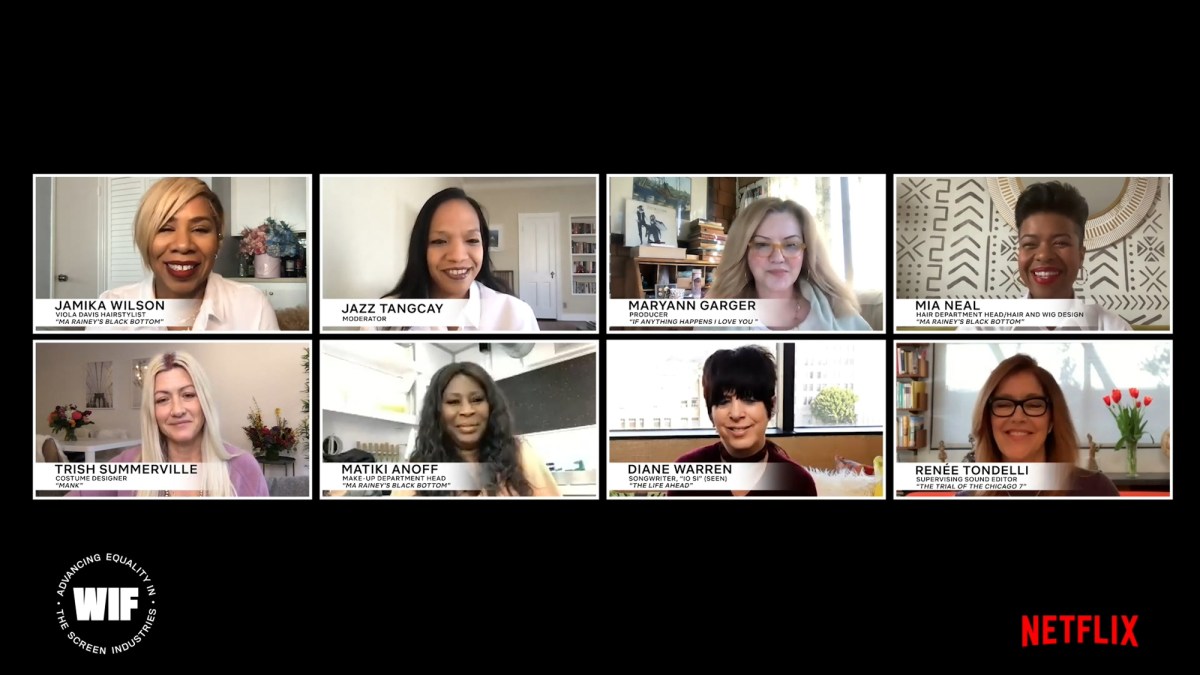
Jazz Tangcay, Senior Artisans Editor at Variety
March 24, 2021
Netflix Film Club (YouTube)
Join a who’s who of behind-the-scenes talent for a Women in Film discussion about their work on Netflix‘s Oscar®-nominated slate this year, including:
 The Fincher Analyst