
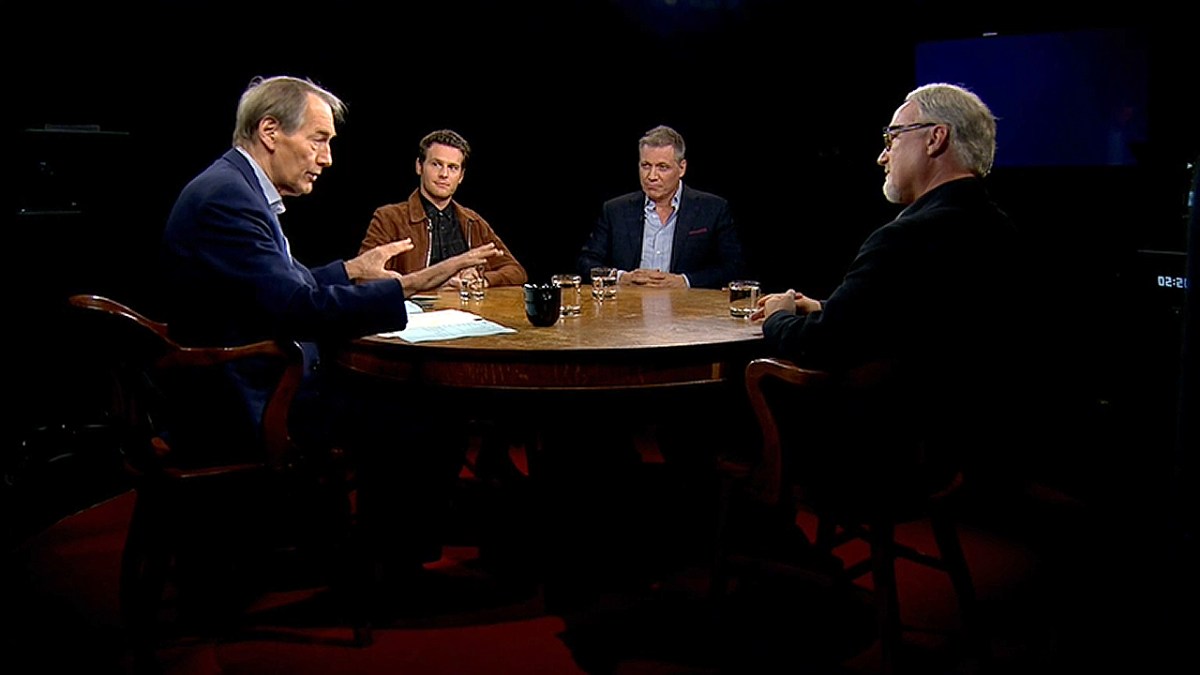
Charlie Rose
10/05/2017
A discussion of the Netflix series “Mindhunter” with executive producer and director David Fincher and two stars from the show, Jonathan Groff and Holt McCallany.
Watch the full conversation (21:43)
Charlie Rose
10/05/2017
A discussion of the Netflix series “Mindhunter” with executive producer and director David Fincher and two stars from the show, Jonathan Groff and Holt McCallany.
Watch the full conversation (21:43)
Spotted by Joe Frady, Fashion and Decor Expert
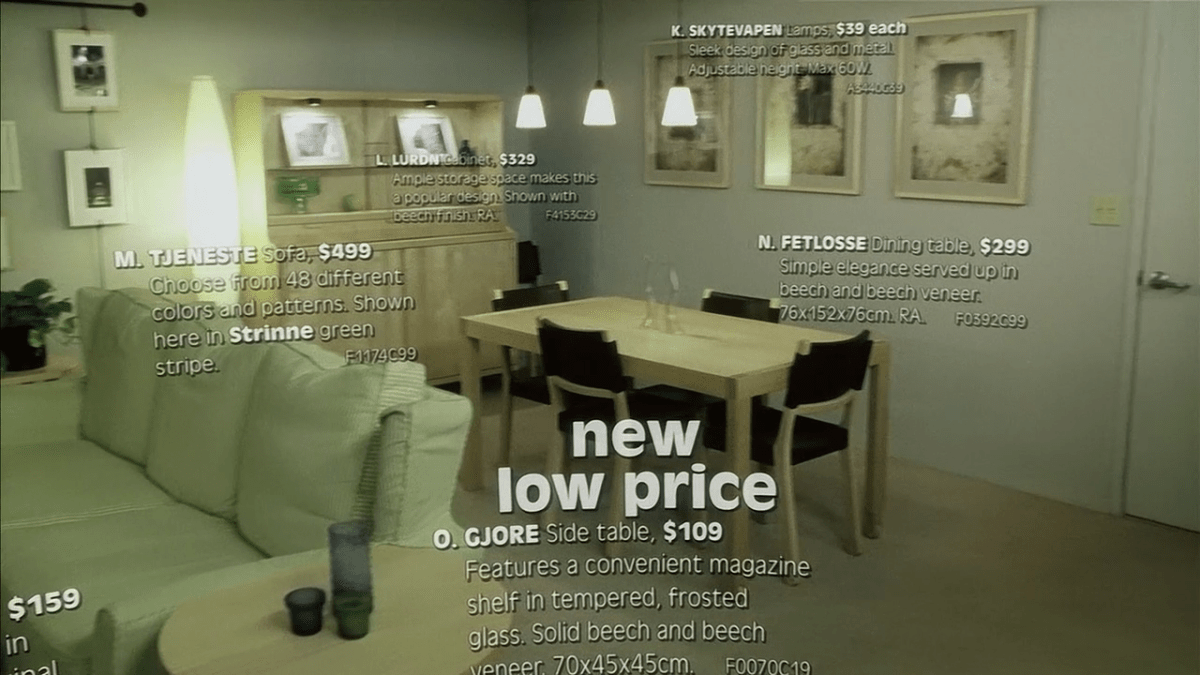
Until you blow it all up, you can dress your apartment with some exclusive items from The Official ChuckPalahniuk.net Shop, like this awesome “Enjoy Fight Club” Duvet:
Do you know what a duvet is?
Welcome to Random Roles, wherein we talk to actors about the characters who defined their careers. The catch: They don’t know beforehand what roles we’ll ask them to talk about.
The actor: Over two decades of big- and small-screen work, John Carroll Lynch has become one of Hollywood’s consummate “that guy” character actors, capable of punching up the margins of whatever he’s in. Theatrically trained, the Colorado native made his first big impression as eternally supportive husband Norm Gunderson in the Coen brothers’ Oscar-winning Fargo, before scoring a reoccurring role as crossdressing older brother Steve on The Drew Carey Show. Since then, he’s carved out an eclectic body of film and television supporting performances, playing his imposing stature for both paternal, Gundersonian decency (such as during a moving one-episode appearance on The Walking Dead) and for supreme, skin-crawling creepiness (like in Zodiac or The Invitation). Lynch has also worked with several major directors, from Martin Scorsese to Clint Eastwood to John Woo. Recently, he’s picked up the filmmaking bug himself; his directorial debut Lucky, starring the late Harry Dean Stanton in one of his final roles, opens in New York and Los Angeles this Friday, before expanding into further markets.
[…]
Zodiac (2007)— “Arthur Leigh Allen”
First thing’s first. Is Arthur Leigh Allen the Zodiac Killer?
JCL: No, and the reason I don’t think so is twofold. First, in performing the role, David Fincher asked me to play it as an innocent man. [Pauses.] Until the end. [Laughs.]
AVC: Until that last scene with Robert Graysmith.
JCL: And then the other thing was… and this is going to sound like a weird defense, but… Arthur Leigh Allen was a pedophile. To get to be a pedophile, to really choose to do that, consciously in your life, it’s my belief that you have to run through some really severe walls of societal norms and morals. It has to be a mania, an obsession, of such grand proportions for you to ignore the health and safety of children to do it—I don’t see how you go, “I want to sleep with children and kill people.” The only way I can think of it not being that way is if he molested children—[Aside.] this is a horrible answer—and he realized that wasn’t it. He just thought it was. But I find that hard to believe. Now, that’s a terrible defense of Arthur Leigh Allen. He wasn’t the Zodiac Killer, he wasn’t a serial killer, because he was a pedophile. But I will say that the circumstantial evidence that Graysmith presented, and that David Fincher expanded upon during the making of the movie, is pretty overwhelming.
AVC: But there have been so many suspects over the years. People have made these iron, convincing cases against several people.
JCL: Sure. That’s what the movie’s about, isn’t it? I think that movie is about the virus of obsession. And I don’t think that’s stopped. The Zodiac isn’t the first one to do that, obviously. The first one I can think of us is the guy here [in Chicago]. The Devil In The White City.
AVC: Oh, right, with the death hotel. Holmes?
JCL: Yes, H.H. Holmes. That guy may be the first recorded one. Although Jack The Ripper was before that. But it’s like the myth of vampirism. There’s just something attractive to people about these men who see themselves as above humanity. To be released from the constraints of moral society. We might be seeing that play out in other ways.
AVC: David Fincher has this reputation as an intense perfectionist, sometimes demanding 50 takes to get a scene right.
JCL: As a person who came from the theater, I love that. It doesn’t bother me at all. The fact that he wanted to do it again was perfectly fine with me. I was also aware of it, so I didn’t take it personally. I didn’t think, “I suck now” because we were on 50. I think if you get to 50 with Clint Eastwood, you’re doing something wrong. [Laughs.] But Fincher is meticulous. He’s like the other masters I’ve worked with. They understand filmmaking to a degree that I could only dream of. And they are following their passion. This is a poor analogy, but Picasso was a cubist and went through a wide variety of movements in his career. He could have drawn figures better than anyone if he wanted to. He didn’t want to. So that’s what it’s like working with David Fincher. He’s after something. And it takes him 50 takes to get it.
AVC: He knows what he wants.
JCL: He knows what he’s looking for, and he knows how to get it. I also think he likes the performances of exhausted actors. He finds something interesting about that.
By Jason Fraley
September 26, 2017
wtop
Podcast: 28:04 min
WASHINGTON — He’s one of the most prolific character actors in Hollywood history, from “Cool Hand Luke” (1967) to “Alien” (1979), from “Paris, Texas” (1984) to “Repo Man” (1984).
Now, just days after his death at age 91, Harry Dean Stanton gives his final performance in the indie dramedy “Lucky,” marking the directorial debut of actor John Carroll Lynch (“Fargo”).
[…]
Who can forget his suspect in David Fincher’s “Zodiac” (2007)? His acting chops are on display in two scenes: first as he’s called into the police station where the cops remark, “Nice watch.” They don’t seem to notice the clue right under their noses: the watch is a “Zodiac” brand.
“[Fincher] did a great job,” Lynch said. “That [acting] foursome — Elias Koteas, Anthony Edwards, Mark Ruffalo and I — had one of the best days on set that I’ve ever had.”
His final scene is just as brilliant, as Jake Gyllenhaal’s Detective Robert Graysmith enters Lynch’s hardware store, engaging in a silent staredown that suggests he’s the killer.
“Graysmith so desperately needs to know,” Lynch said. “The scene is written like the end of ‘Moby Dick’ where Ahab is tied to the whale. Melville writes, ‘The whale looks at Ahab, and Ahab looks at the whale.’ That’s how I saw it. They recognize each other in that moment.”
George Michael – Freedom ’90 Music Video Outtakes
George Michael VEVO
Published on 26 Sep 2017
YouTube
Thanks to Joe Frady
TRAILER | George Michael: Freedom | Coming Soon
Channel 4
Published on Sep 15, 2017
YouTube
The documentary will air on October 16 on Channel 4 and on October 21st on Showtime.
George Michael – Freedom! ’90 (Official Video)
George Michael VEVO
Published on Oct 2, 2009
YouTube
Directed by David Fincher
Director of Photography: Mike Southon, BSC
2014. “She” cover for the Gone Girl Teaser Trailer
Produced, arranged and mixed by Jason Hill. Featuring Richard Butler on vocals.
2015. Music for Videosyncrasy
6 tracks. Written, Performed, Produced and Mixed by Jason Hill.
2017. Mindhunter (Netflix)
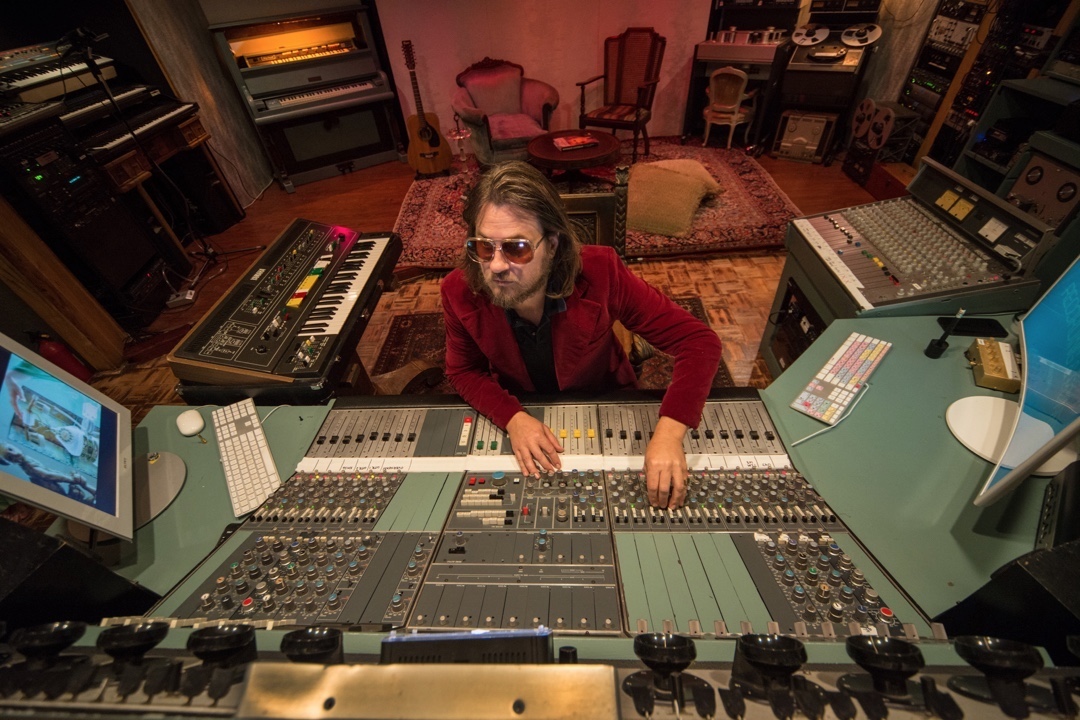
Newcomer Jason Hill (front) landed a plum assignment, composing music for David Fincher’s new Netflix series Mindhunter.
By Paula Parisi on August 3, 2017
Max the Trax
Unknown yesterday, Jason Hill has landed in the Hollywood music mix with a bang, landing composer duties on David Fincher’s new Netflix series Mindhunter, premiering Oct. 13. Multi-instrumentalist Hill has spent the past 15 years kicking around the rock scene, performing with members of The Killers and The New York Dolls in various configurations, led his own band, Louis XIV, and was also in Vicky Cryer.
Thanks to Dante
Alex Gollner
13 September 2017
Alex4D
It was tough ask for Adobe Premiere to tackle the needs of David Fincher‘s ‘Gone Girl‘ feature film in 2014. In recent months, it has been used on a bigger project: ‘Mindhunter’ – a 10 hour David Fincher exec-produced high-end TV series soon to be available on Netflix.
Instead of a single team working on a two hour film, TV series have multiple director-cinematographer-editor teams working in parallel. In this case the pilot was directed by David Fincher. The way TV works in the US is that the pilot director gets an executive producer credit for the whole series because the decisions they make define the feel of the show from then on. Fincher brought along some of the team who worked on Gone Girl. While they worked on the pilot post production, other teams shot and edited later episodes in the series.
The fact that the production company and the studio were happy for the workflow to be based around Premiere Pro CC is a major step up for Adobe in Hollywood.
The high-end market Adobe is going for is too small to support profitable software development. Even if they sold a subscription to all professional editors in the USA, that would not be enough to pay for the costs in maintaining Adobe Premiere. Its use in high-end TV and features is a marketing message that Adobe must think contributes to people choosing to subscribe to the Adobe Creative Cloud – even if renters will never edit a Hollywood film or TV show.
[…]
Adobe Unveils Breakthroughs in Video and Film Production
Editing Feature Films in Premiere Pro
Jonny Elwyn, Film Editor
September 14, 2017
Jonny Elwyn, Film Editor
October 7, 2014
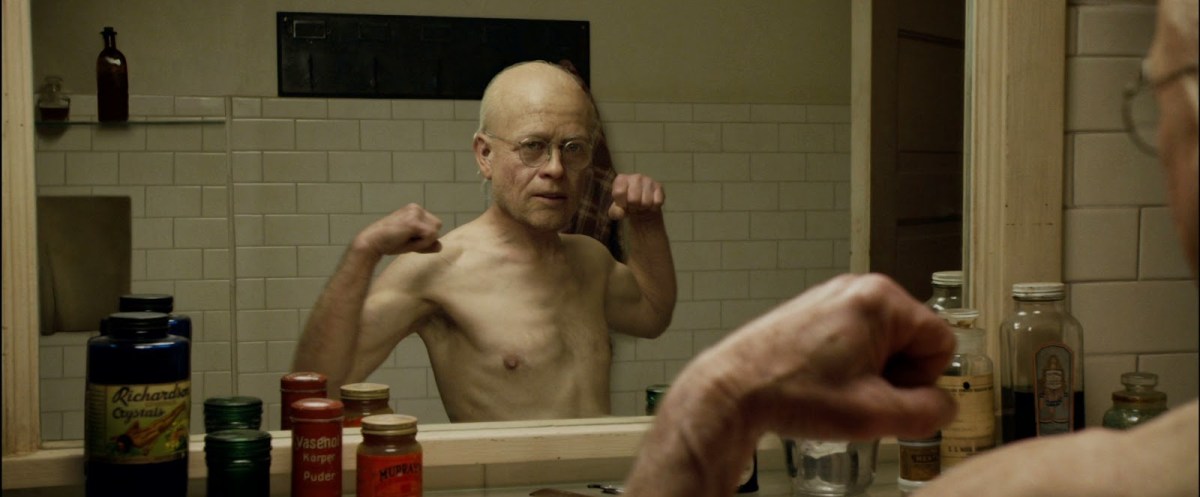
10 years after releasing the “VES 50: The Most Influential Visual Effects Films of All Time“, a list voted by its members, the Visual Effects Society (VES) has celebrated its 20th anniversary with an expanded list (of 72 films in total, due to ties), which now includes The Curious Case of Benjamin Button (2008):
300 (2007), 2001: A Space Odyssey (1968), 20,000 Leagues Under the Sea (1954), A Trip to the Moon (1902), The Abyss (1989), Alien (1979), Aliens (1986), An American Werewolf in London (1981), Apollo 13 (1995), Avatar (2009), Babe (1995), Back to the Future (1985), Blade Runner (1982), Citizen Kane (1941), Close Encounters of the Third Kind (1977), The Curious Case of Benjamin Button (2008), Darby O’Gill and the Little People (1958), The Day the Earth Stood Still (1951), District 9 (2009), E.T. the Extraterrestrial (1982), The Empire Strikes Back (1980), Ex Machina (2015), Fantastic Voyage (1966), The Fifth Element (1997), Forbidden Planet (1956), Forrest Gump (1994), Gertie the Dinosaur (1914), Ghostbusters (1984), Godzilla (1954), Gravity (2013), Inception (2010), Independence Day (1996), Jason and the Argonauts (1963), Jaws (1975), Jurassic Park (1993), King Kong (1933), King Kong (2005), Life of Pi (2012), The Lord of the Rings: The Fellowship of the Ring (2001), The Lord of the Rings: The Return of the King (2003), The Lord of the Rings: The Two Towers (2002), The Lost World (1925), Mad Max: Fury Road (2015), Mary Poppins (1964), The Mask (1994), The Matrix (1999), Metropolis (1927), Pirates of the Caribbean: Dead Man’s Chest (2006), Planet of the Apes (1968), Raiders of the Lost Ark (1981), Return of the Jedi (1983), Rise of the Planet of the Apes (2011), The Seventh Voyage of Sinbad (1958), Sin City (2005), Snow White and the Seven Dwarfs (1937), Star Wars (1977), Starship Troopers (1997), Superman: The Movie (1978), The Ten Commandments (1956), The Terminator (1984), Terminator 2: Judgment Day (1991), The Thing (1982), Titanic (1997), Total Recall (1990), Toy Story (1995), Tron (1982), Transformers (2007), Young Sherlock Holmes (1985), The War of the Worlds (1953), The Wizard of Oz (1939), What Dreams May Come (1998), Who Framed Roger Rabbit (1988).
VES Board Chair Mike Chambers said:
“The VES 70 represents films that have had a significant, lasting impact on the practice and appreciation of visual effects as an integral element of cinematic expression and storytelling.”
“We see this as an important opportunity for our members, leading visual effects practitioners worldwide, to pay homage to our heritage and help shape the future of the global visual effects community. In keeping with our mission to recognize and advance outstanding art and innovation in the VFX field, the VES 70 now forms a part of our legacy that we can pass down to future generations of filmmakers as a valuable point of reference.”
Visual Effects Society (vimeo)
September 11, 2017
vimeo
Joshua Meyer
September 12th, 2017
/Film
More than any other mainstream filmmaker, David Fincher is the one who has had his finger on the pulse of our generational concerns. If you Google Fincher’s name and the word “zeitgeist,” it will immediately turn up countless think pieces talking about how his films — especially Fight Club and The Social Network — have captured the zeitgeist, reflecting the spirit of their time the way The Graduate did for the 1960s.
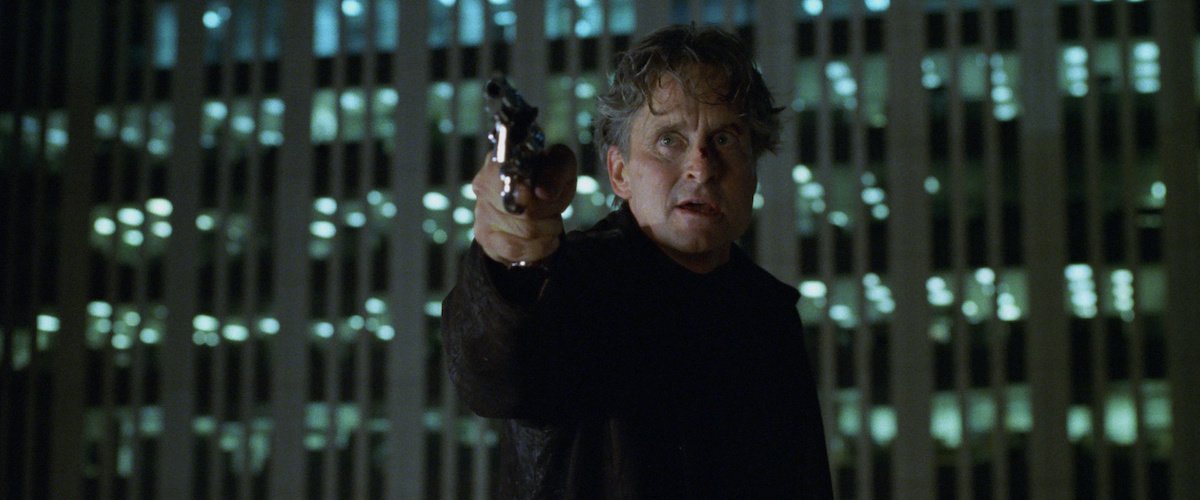
But The Game, Fincher’s 1997 thriller starring Michael Douglas, was a necessary primer for Fight Club. With this film, Fincher took the actor who played Gordon Gekko ten years earlier, and he gave that ‘80s zeitgeist figure a light makeover and put him in a post-grunge ‘90s movie.
The Game turns 20 today (it hit theaters on September 12, 1997), so let’s take a look back at what makes it so special: not only for the way it marked a turning point in Fincher’s early career, but also for the way it takes a high-concept story and manages to bake in a fair amount of subtext.


 The Fincher Analyst