Between the global pandemic, studio mergers, and the overwhelming onslaught of content flooding streaming services, it has never been easier for a movie to slip through the cracks. Years from now, we will no doubt look back on an entire generation of great films that were lost to the ever-shifting chaos of the industry over these past few years. What does feel safe to say is that when we are discussing the great works lost to this strange time, 2020’s The Empty Man will be in the conversation.
If you’re interested in the details of its tumultuous production, director David Prior has been remarkably candid about the process in recent interviews: 1, 2, 3. Long story short: The film, a very loose adaptation of Cullen Bunn and Vanesa R. Del Rey’s comic series of the same name, was marred by reshoots, recuts, the Fox–Disney merger, a constantly shifting release date, and losing its original producer in the middle of production. After sitting on a shelf for years, it was tossed into theaters in the middle of the pandemic, grossed a paltry $4 million worldwide, and was quickly forgotten. It is currently only available to rent via Amazon, and as of the writing of this story, there are no plans for a DVD/Blu-ray release.
To be fair, even if theaters were open for business as usual, one could be forgiven for chalking The Empty Man up as skippable after its first trailer, which, in one of the more damning marketing moves in recent memory, dropped about a week before the film hit theaters. The film’s borderline nonexistent marketing paints the James Badge Dale vehicle as a sort of Slender Man–adjacent creepypasta horror, the sort of bland Blumhouse rip-off designed to come and go with as little noise as possible. Its initial critical reception was middling at best, though it even went underseen in that respect — its current 50 percent score on Rotten Tomatoes is based on 14 official reviews. It’s the sort of perfect storm that renders a film nonexistent in the cultural consciousness.
And that’s a shame, because The Empty Man very much warrants a place there.
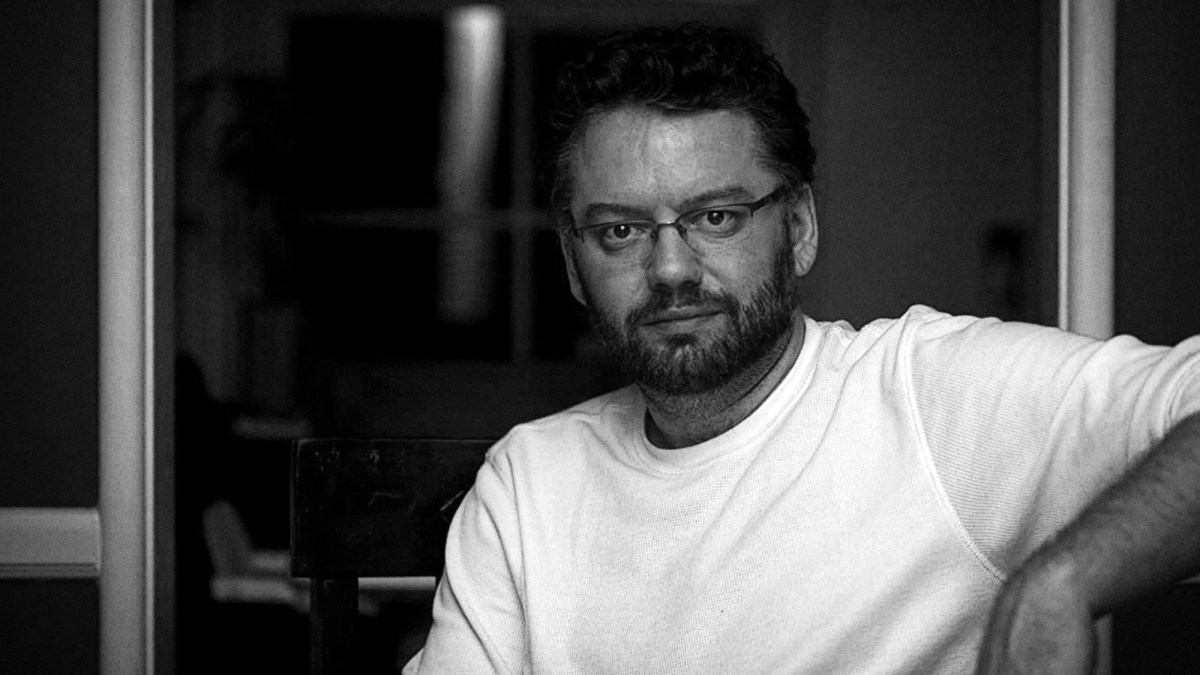
For this very special edition of Bonus Features, Jacob and Marten talk to David Prior, the writer/director behind last year’s criminally underseen horror picture The Empty Man. Over the course of our lengthy chat, David dives into his career as a special features pioneer during the the early days of DVD, and just what happened to his future cult classic at Disney/Fox.
When the twist-filled cosmic horror mind-bender The Empty Manwas unceremoniously dumped in theaters last October, its writer and director David Prior wasn’t even sent a link to the final version of the film by the studio. More than four years before, he’d pitched the movie to 20th Century Fox, a perhaps unconventional home for such a strange project, and, after the company was acquired by Disney in 2019, Prior’s debut feature slipped through the corporate cracks. In the middle of a global pandemic, The Empty Man was released with one misleading trailer, which marketed the two-hour-plus saga as another urban legend-inspired teen thriller, and minimal promotional fanfare. Unsurprisingly, it bombed, grossing just over $4 million worldwide. Prior transmitted and almost no one received.
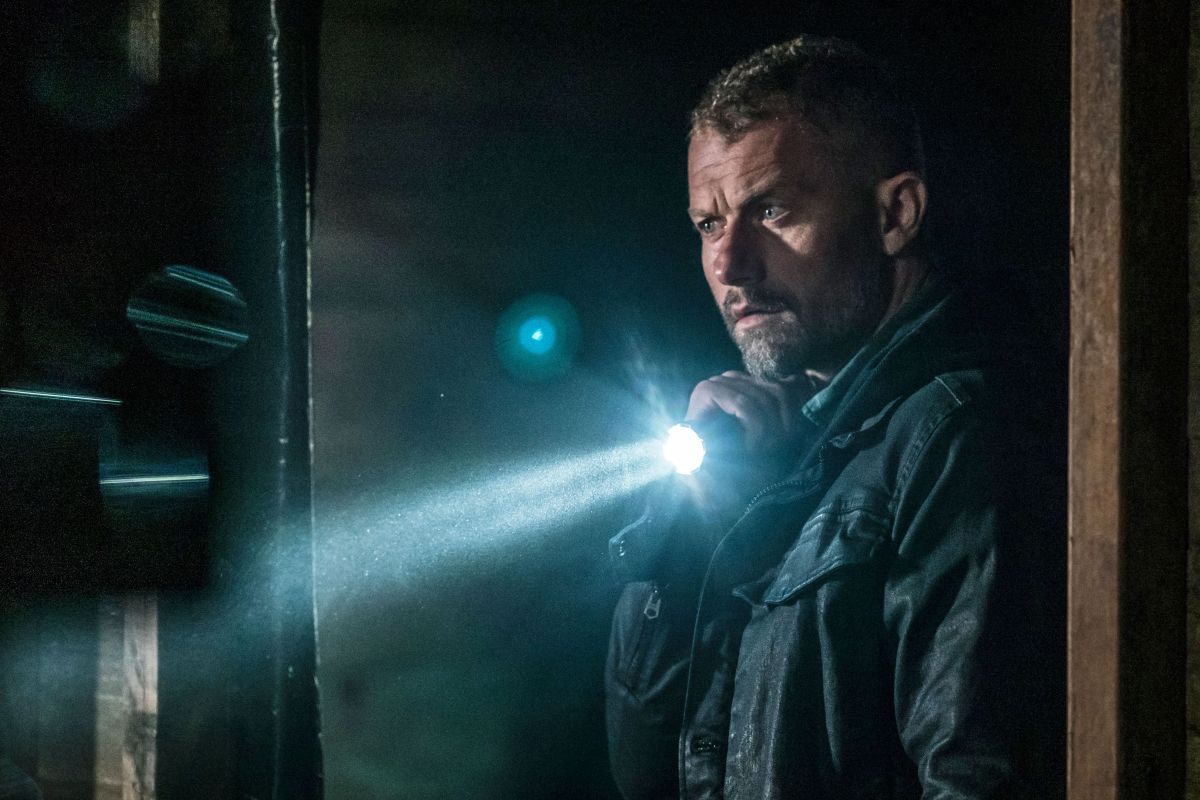
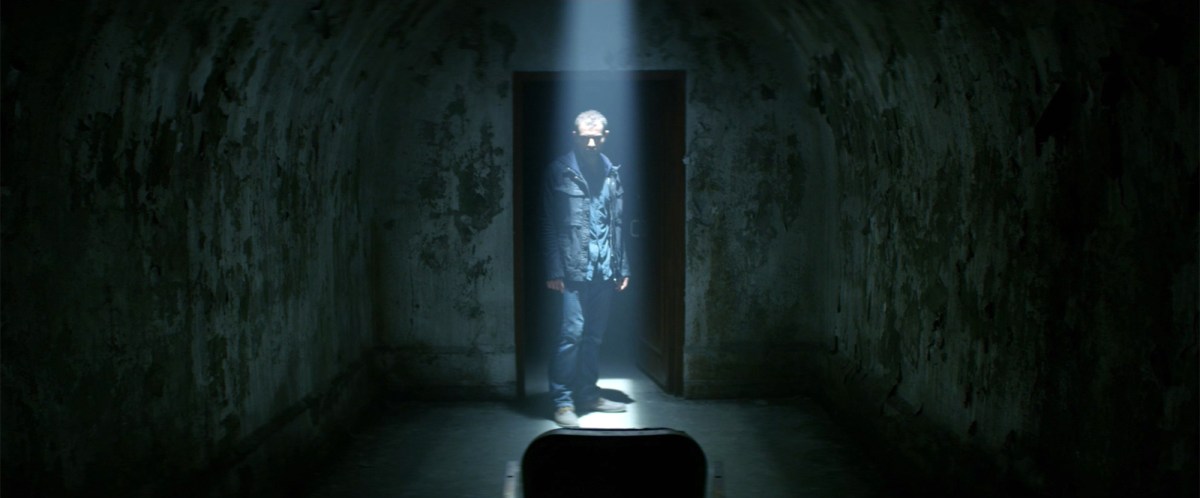
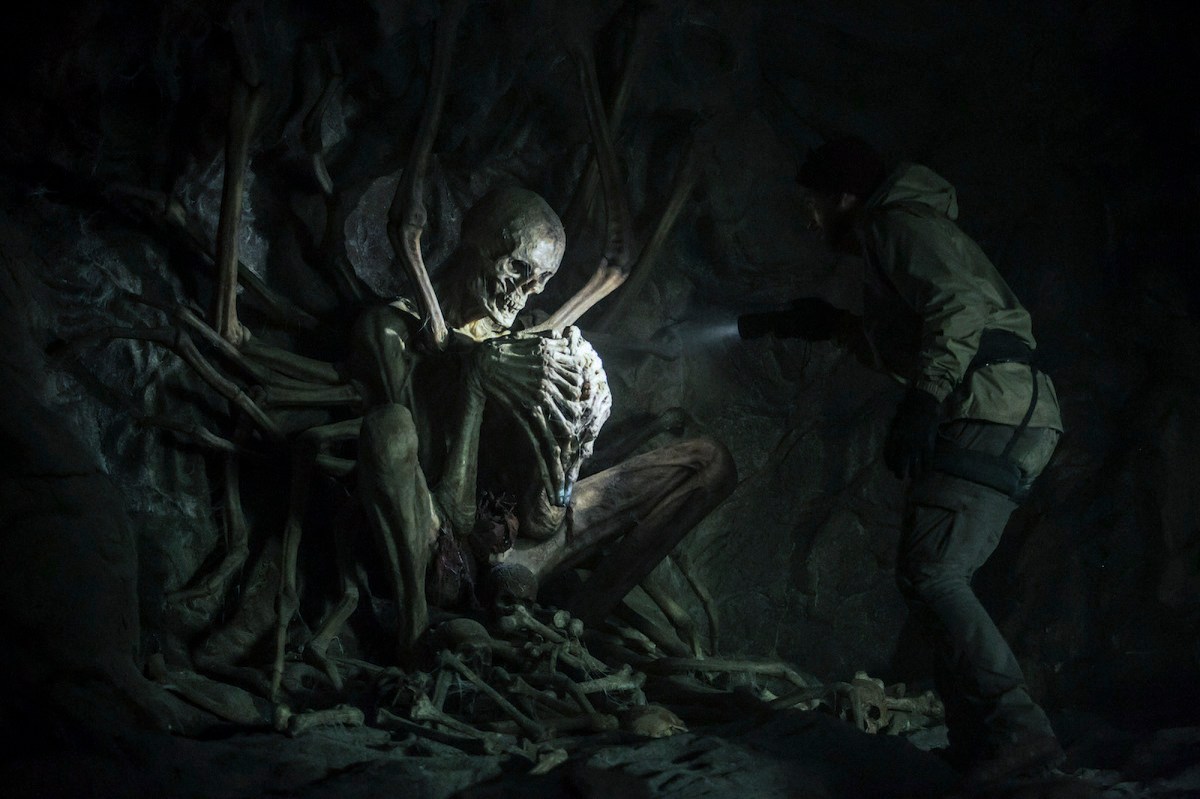
Adapted from a Boom! Studios comic by the writer Cullen Bunn and artist Vanesa R. Del Rey, The Empty Man was initially sold to Fox in 2016 as a stylish horror mystery infused with thematic ambiguity, existential dread, and a dash of Lovecraftian terror. James Badge Dale plays ex-detective James Lasombra, a grief-stricken widower whose friend Nora (Marin Ireland) enlists him to help find her daughter Amanda (Sasha Frolova) after she disappears. Amanda and her teenage friends may or may not have summoned the Empty Man, a mystical entity with an odd connection to a cult-like organization called the Pontifex Institute, led by a charismatic leader played by Stephen Root of Office Space and Barry. (I’ve been describing it to friends as The Girl with the Dragon Tattoo meets The Ring.) In his early conversations with executives, Prior compared it to Mulholland Drive rather than something in The Conjuring universe or the Blumhouse arsenal. In the writing stage, executives even encouraged him to expand the film’s lengthy opening, a snowbound tale of hikers in Bhutan’s Ura Valley who stumble upon a sinister cave.
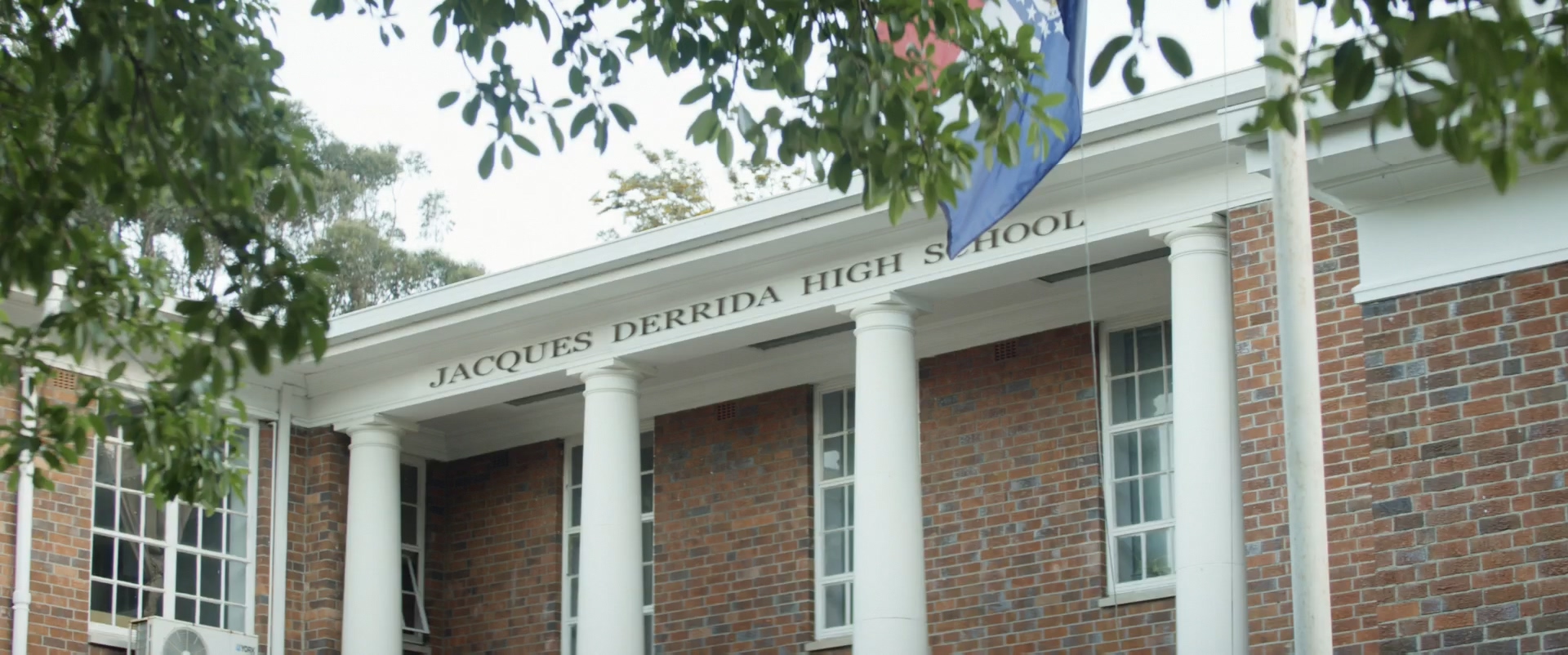
The Empty Man‘s journey to the big screen quickly unraveled. In some ways, the story has all the hallmarks of classic Hollywood fiasco: a shoot plagued by bad weather, disastrous test screenings, fights over runtime, studio meddling, a breakdown in communication, and an ambitious first-time director threading potentially alienating material into familiar genre fare. (Not many horror movies have a prominent shot of a high school named after a famous French philosopher.) In other ways, it’s a uniquely modern tale of mounting corporate neglect, expiring tax rebates, confusing IP mismanagement, and slow-building social media advocacy.
Are audiences hungry for movies like The Empty Man? The movie’s box office performance would suggest a definitive no, but, since becoming available as a digital rental in 2021, the film has taken on a second life online, where podcast hosts and viewers on platforms like Twitter and Letterboxd have sung its praises, turning it into the rare 21st century studio project that earns the over-used descriptor of “cult movie.”
Prior, who began his career working on a DVD of the 1999 horror movie Ravenous and later directed special features for David Fincher films like Zodiac and The Social Network, has a keen awareness of how his movie plays into certain narratives. Over a Google Hangout, he spoke with the combination of weary cynicism and wounded pride that often accompanies someone who has been through an ordeal. “It’s amazing how trenchant Barton Fink is about the way the Hollywood system really works,” he noted early in the conversation.
As the Coen Brothers screenwriter protagonist knows, the “life of the mind” can be painful. While unpacking the jargon-heavy mythology of his debut and the turmoil-packed narrative of its production, Prior repeatedly emphasized how grateful he was that the movie has found an audience and often laughed at the absurdity of its fate. Who can be blamed for what happened to The Empty Man? As one of the movie’s grizzled detectives remarks in the film, “We can’t indict the cosmos.”
Welcome to the Rock ‘n Roll Ghost Podcast. On this episode, the Ghost speaks with musician and composer Jason Hill about his career dating back to his days in the bands Convoy, Louis XIV and Vicki Cryer. As well as his work with The Killers and producing/touring with the New York Dolls and the recent passing of Sylvain Sylvain. Hill also talks about his late career turn towards film and TV composing. He has worked closely with director David Fincher on projects such as Fincher’s Gone Girl and the Netflix series Mindhunter. It’s a pretty wide ranging, fun interview with someone I go back nearly twenty years with.
Also, starting April 1st, Hill will be hosting Film Composing and Music production masterclasses. Check out the Department of Recording and Power‘s website for more information.
Last October, a horror movie came and went. It wasn’t the first time a Hollywood studio dumped a horror movie in the middle of Halloween; given the ongoing pandemic, few films with a theatrical release could have moved the needle in 2020. But in the case of David Prior’s The Empty Man, this release was just the tip of the iceberg, the near-final act in a first-time filmmaker’s multi-year struggle to bring his vision to the screen.
In this conversation, Prior explains how he went from being David Fincher’s protégé to the director of 2020’s most ambitious — and most abandoned — horror film. We also explore how a perfect storm of production problems and studio politics nearly killed the film, and how a passionate audience has already started to turn The Empty Man into a future cult classic.
From DVDs to David Fincher
History doesn’t repeat itself, but it often rhymes. If The Empty Man survives its troubled production and halfhearted theatrical release to become a household name for genre fans, then perhaps this story will serve as a fitting beginning to Prior’s career as a feature filmmaker. For years, Prior worked as a production documentarian for filmmakers such as David Fincher and Peter Weir, but one of his big breaks came with Antonia Bird’s Ravenous, itself a studio disaster that took years to find a passionate audience.
In the years before Ravenous’s theatrical release, Prior had built relationships in 20th Century Fox’s home video department thanks to his contributions to the isolated score track on the Alien DVD release. So when Prior stumbled across Ravenous in theaters — despite a trailer that he describes as a “piss-poor representation of the movie” — he saw an opportunity to build on those connections and bring some much-deserved love to Bird’s film.
His gamble worked. According to Prior, the special-edition release of Ravenous sold three times its initial projections, forcing 20th Century Fox to rush extra copies of the film into production. With his credentials established, Prior was given his pick of future home video releases, and his decision resulted in one of the most influential relationships of Prior’s professional career. “I said, ‘I don’t know what Fight Club is, but I really want to meet David Fincher, so I’ll do that one. And that led to a relationship with Fincher that goes on to this day.”
Over the next decade, Prior became a powerhouse in behind-the-scenes documentaries, shooting features for such films as Master and Commander, Zodiac, and The Social Network. It proved to be a successful and stable career, just not the one that Prior had in mind when he went to Hollywood. “I remember at the time thinking, ‘This is gonna be something where if I’m not careful, ten, fifteen years of my life is going to go by doing this instead of what I’d rather be doing,’” the director says. So Prior took another gamble, this time using some of his own money to produce the short film that would eventually land him his role with The Empty Man.
“In 40 short minutes, David Prior shows why he is one of the most promising directors I’ve ever seen. People always ask me what to do for a ‘calling card’ in Hollywood. Well do something like this, and try to do it half as well.”
A disillusioned screenwriter in old Hollywood gets a shot at redemption in Director David Fincher’s biographical comedy-drama, Mank.
Fincher’s film takes place as film 24-year-old wunderkind Orson Welles hires scathing social critic and alcoholic screenwriter Herman J. Mankiewicz to write the screenplay for his masterpiece, Citizen Kane.
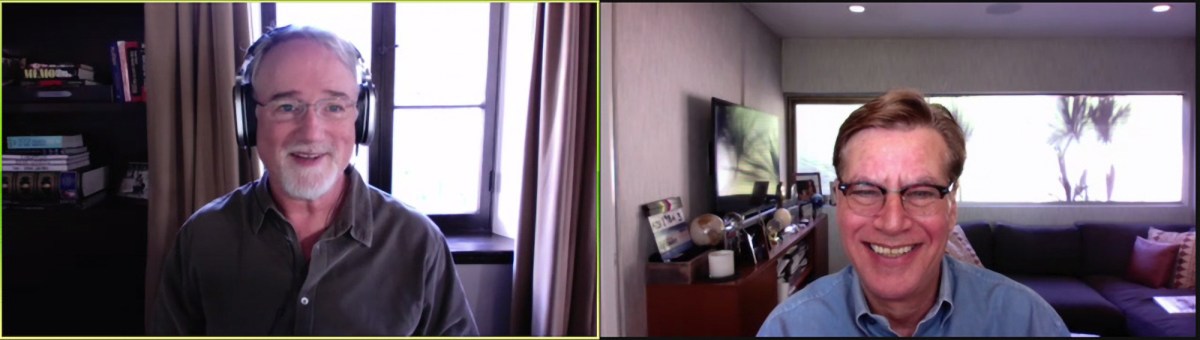
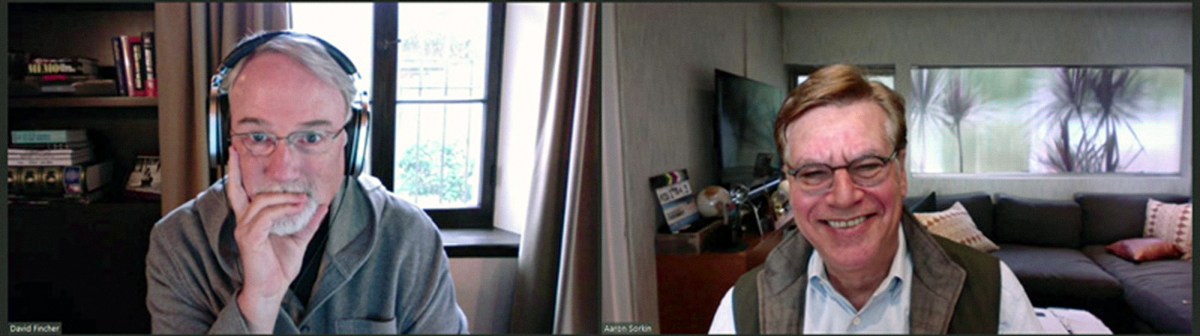
On February 6, Fincher discussed the making of Mank in a DGA Virtual Q&A moderated by Director Aaron Sorkin (The Trial of the Chicago 7).
During their conversation, Fincher spoke about his love for “the altar of cinema,” the communal aspect that can come through film. “For me, what I love about cinema is going into a big dark room with 700 people and through their laughter and through their surprise and through their shock and through their reactions you realize, I’m not alone. I’m the same. I’m wired into this group in the same way just organically and I’m picking up on all these other cues. That is what makes the cinema, or a great grand theater, an almost cathedral-like experience.”
Fincher’s other directorial credits include the feature films Se7en, The Game, Panic Room, Zodiac, Gone Girl; episodes of the television series House of Cards and Mindhunter; and countless commercials and music videos. He has been nominated for the DGA Award for Outstanding Directorial Achievement in Theatrical Feature Film for The Curious Case of Benjamin Button, The Social Network and The Girl with the Dragon Tattoo. In 2013, he was nominated for the DGA Award for Dramatic Series for House of Cards, “Chapter 1” and has twice been nominated for the DGA Award for his Commercial work with Anonymous Content in 2003 and 2008, winning the Award in 2003 for Beauty for Sale (Xelibri Phones), Gamebreakers (Nikegridiron.Com) and Speed Chain (Nike).
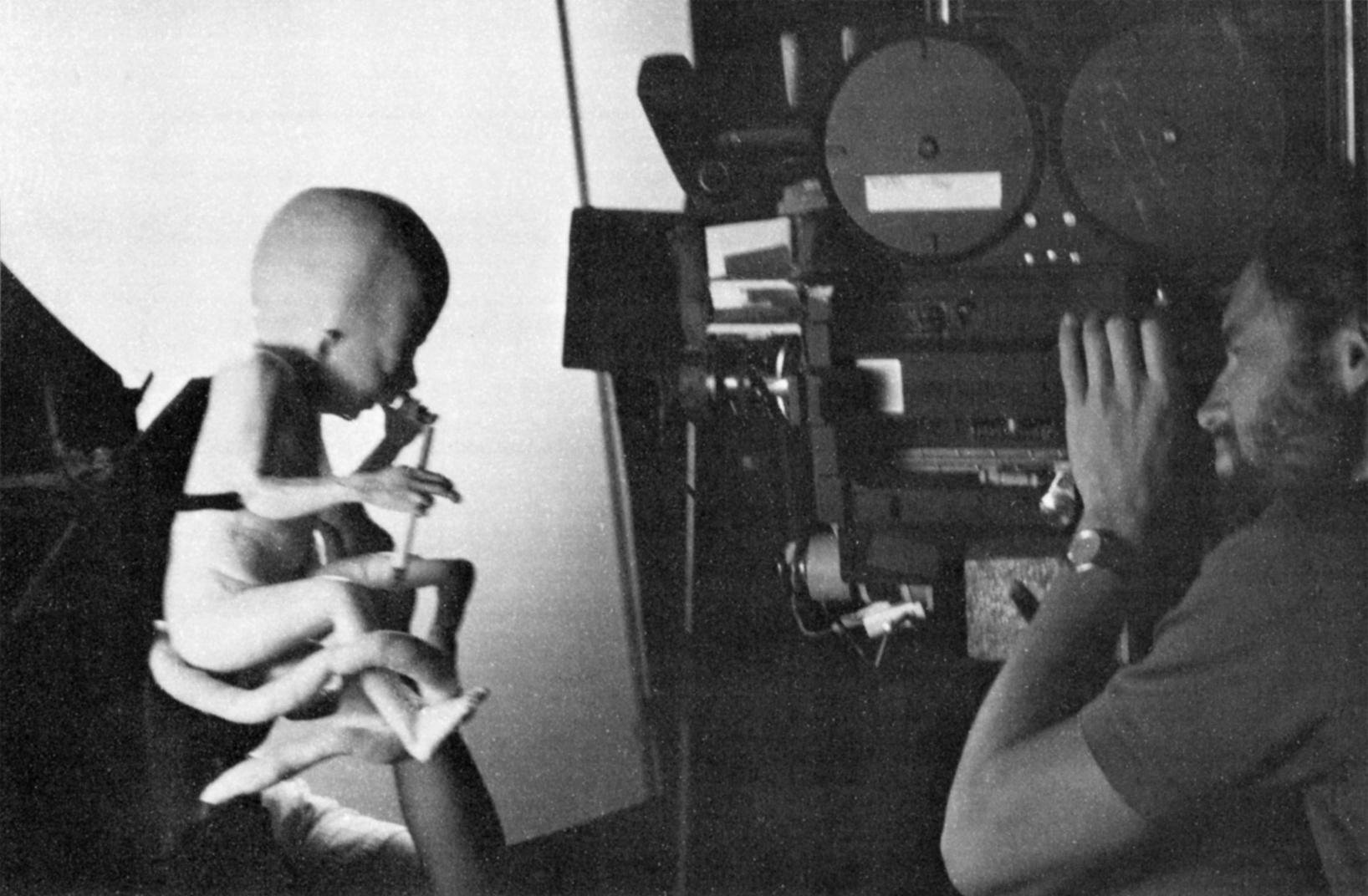
Tony McVey sets up his sculpture in front of the motion-control camera.
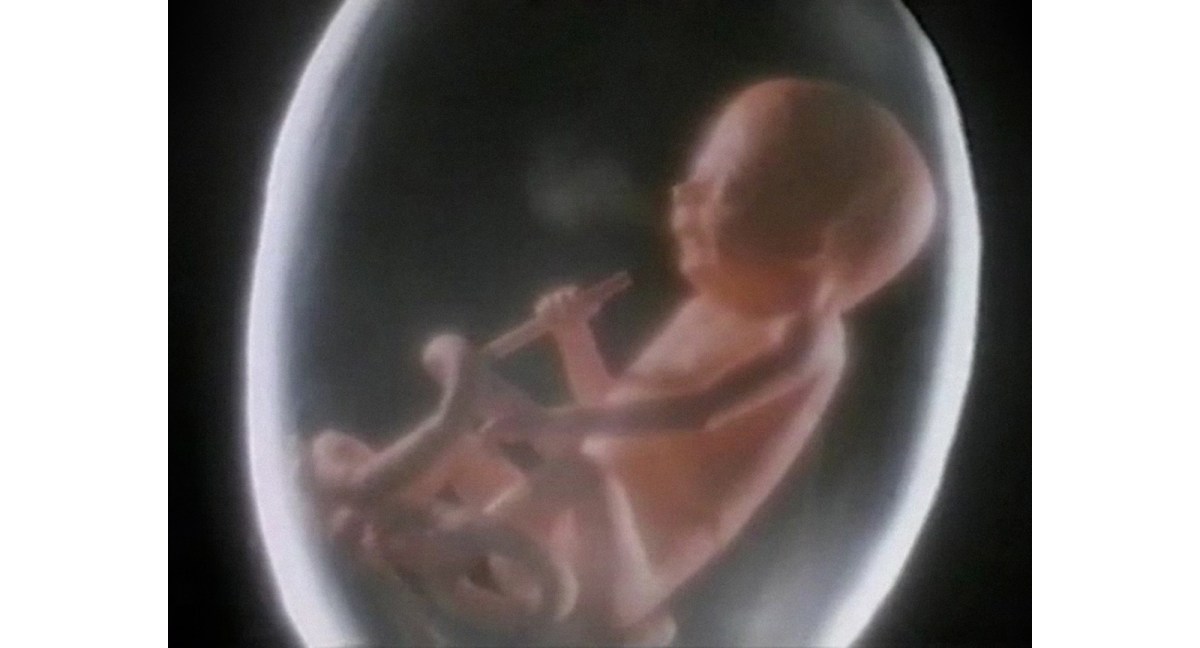
The sound of a heartbeat is heard. A human fetus fades up on the television screen in close-up and a voiceover begins: “Would you give a cigarette to your unborn child?” The camera pans and dollies back to reveal an entire fetus existing serenely in the womb of its mother. “You do every time you smoke when you’re pregnant.” At this point, the fetus slowly brings a lit cigarette to its lips and takes a puff, exhaling the smoke into the glowing placenta it lives in. And the voiceover finishes: “Pregnant mothers, please don’t smoke.”
The 30-second spot was produced for the American Cancer Society by a talented and relatively untapped group of San Francisco Bay area filmmakers, modelmakers, and computer specialists brought together by producer Joseph Vogt (Rick Springfield’s “Bop ’Till You Drop”). With a film and conceptual design education behind him, Vogt organized the majority of his film crew from the ranks of Industrial Light and Magic. It was with the abundant talents of these production people — director David Fincher, Midland Productions, and Monaco Labs — that Vogt brought life to a most creative and technically challenging public service announcement.
Director of photography Michael Owens at the Mitchell GC ready to shoot the prepped sculpture.
Jerry Angert, director of broadcasting with the American Cancer Society, described the ad as “one of the most powerful we have done… We considered the fact that it would be controversial and the networks might not show it, but counted on the local stations to take it.” And that’s exactly what transpired. NBC and CBS chose not to air the graphic spot while CNN (Turner Broadcasting), ABC and its affiliates and affiliates of NBC and CBS elected to show it.
CBS and NBC claim the spot is too graphic. An NBC spokeswoman cited “general taste considerations” as a deterrent to airing the spot. “It was the sight of the fetus that was especially shocking and we felt it was potentially offensive to our viewers,” she was quoted as saying. A CBS spokesman said the network agreed with the “importance of the intent of the message,” but said that the spot was “far too graphic for broadcast on CBS.” An ABC spokesman, however, said the message put forth by the spot was “important for pregnant mothers to understand.” The network felt that. while it was “different visually” from the usual fare viewed on TV, it contained no material that warranted its ban from the airwaves.
The counterculture movement of the 1960s clashes with the hostile Nixon administration in Director Aaron Sorkin’s historical drama, The Trial of the Chicago 7.
Set in the aftermath of what happened after a peaceful protest turned into a violent encounter with the police at the 1968 Democratic National Convention in Chicago, Sorkin’s film recounts the infamous 1969 trial of seven political activists – that included moderate Students for a Democratic Society led by Tom Hayden, militant Yippies led by Abbie Hoffman and Jerry Rubin, and Bobby Seale of the Black Panthers – who were all charged with conspiracy in an unfair trial that transfixed the nation and sparked a conversation about mayhem intended to undermine the U.S. government.
On January 23, Sorkin discussed the making of The Trial of the Chicago 7 in a DGA Virtual Q&A session moderated by Director David Fincher (Mank).
During the conversation, Sorkin spoke about how he came up with a plan to shoot the riot scenes despite his budgetary limitations.
“I find a constraint like that forces you to get creative,” said Sorkin. “It forces you to have an idea. So we came up with this plan, we were going to get a few wide shots and we were going to take advantage of the tear gas. We got smoke everywhere. I discovered what happens when you shoot light through smoke so I wanted smoke in every scene. I could not get enough smoke. It didn’t matter where we were.”
In addition to his directing work on The Trial of the Chicago 7, Sorkin was nominated for the 2017 DGA Award for Outstanding Directorial Achievement in First-Time Feature for his debut film, Molly’s Game. He was also part of the producing team (which includes DGA President Thomas Schlamme) that won multiple Emmy awards for “Outstanding Drama Series” for their work on the series The West Wing. Sorkin also took home an Academy Award for “Best Writing, Adapted Screenplay” for David Fincher’s feature The Social Network.
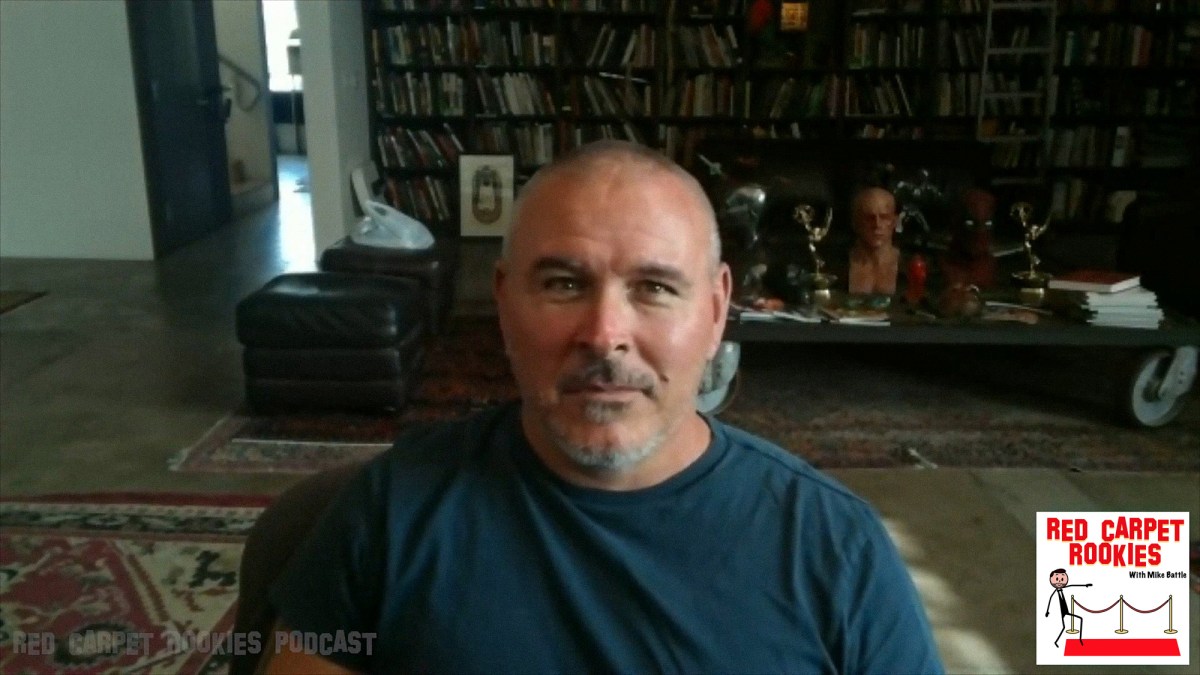
Tim discusses his beginnings in animation, his journey to directing his first live action movie at 50 and why he’s glad that for all the challenges that came along the way. If that wasn’t enough, he shares thoughts on why his Netflix collaboration with David Fincher works, why film studios will be ‘fossils’ if they don’t keep up with the streamers, and what to expect from Love, Death & Robots Series 2!
Red Carpet Rookies guests are recorded over Zoom. All efforts are made to get the best quality possible but we are victim to the connection!





 The Fincher Analyst