David Fincher’s Impossible Eye

David Fincher by Jack Davison

With ‘Mank,’ America’s most famously exacting director tackles the movie he’s been waiting his entire career to make.

Jonah Weiner
November 19, 2020
The New York Times

Six years ago, after I contacted David Fincher and told him I wanted to write an article about how he makes movies, he invited me to his office to present my case in person and, while I was there, watch him get some work done. On an April afternoon, I arrived at the Hollywood Art Deco building that has long served as Fincher’s base of operations, where he was about to look at footage from his 10th feature film, Gone Girl,” then in postproduction. We headed upstairs and found the editor Kirk Baxter assembling a scene. Fincher watched it once through, then asked Baxter to replay a five-second stretch. It was a seemingly simple tracking shot, the camera traveling alongside Ben Affleck as he entered a living room in violent disarray: overturned ottoman, shattered glass. The camera moved at the same speed as Affleck, gliding with unvarying smoothness, which is exactly how Fincher likes his shots to behave. Except that three seconds in, something was off. “There’s a bump,” he said.
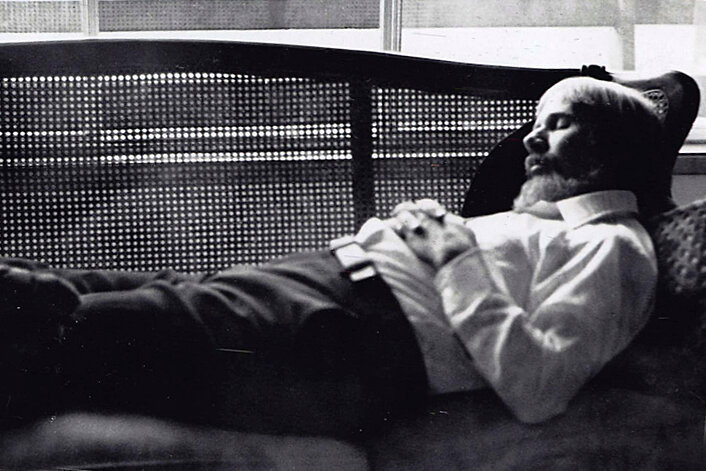
Jack Fincher photographed by David Fincher in 1976, when he was 14.
“That’s why it’s out of focus”.

No living director surpasses Fincher’s reputation for exactitude. Any account of his methods invariably mentions how many takes he likes to shoot, which can annoy him, not because this is inaccurate but because it abets a vision of him as a dictatorially fussy artiste. Fincher, who is 58, argues that this caricature misses the point: If you want to build worlds as engrossing as those he seeks to construct, then you need actors to push their performances into zones of fecund uncertainty, to shed all traces of what he calls “presentation.” And then you need them to give you options, all while hitting the exact same marks (which goes for the camera operators too) to ensure there will be no continuity errors when you cut the scene together. Getting all these stars to align before, say, Take No. 9 is possible but unlikely. “I get, He’s a perfectionist,” Fincher volunteered. “No. There’s just a difference between mediocre and acceptable.”

Read the full profile

Mank director David Fincher breaks down a pivotal scene in the Hollywood drama

In telling the story of screenwriter Herman J. Mankiewicz, Mank director David Fincher worked from a script by his late father, Jack Fincher.

Maureen Lee Lenker
November 19, 2020
Entertainment Weekly

The project had been in the family for decades: Jack conceived of the script in the late 1980s, and his son has been emotionally tied to the material since his father first showed him Citizen Kane at age 12. “It was only over time and with many, many conversations that we agreed there was something in this idea of a man finding his voice,” Fincher, 58, tells EW. “His voice was his entrée into Hollywood, and his voice was the thing that he was convinced didn’t really matter. How do we dramatize for the audience this dawning awareness of somebody who is self-immolating? That seemed like a ripe area of the garden to plant in.”

Fincher worked on the project with his father on and off for many years before his death in 2003, as can be seen in this exclusive annotated story sequence outline that arose from their countless conversations. “The pages are pre the draft,” the director says. “This is the outline from 1990 and has all of Jack’s scribblings on it as we were talking on the phone once a week and saying, ‘Well, what about if this happened?’ You can see the story was very different. It was a more complicated thing.”

Read the full scene breakdown

How Mank costume designer Trish Summerville recreated classic Hollywood

Recreating the look of Hollywood’s golden age was far from black-and-white for costume designer Trish Summerville.

Maureen Lee Lenker
November 20, 2020
Entertainment Weekly

For David Fincher‘s new movie Mank — which chronicles screenwriter Herman J. Mankiewicz‘s efforts to craft Citizen Kane, as well as the personal baggage behind the film — Summerville was tasked with bringing the Tinseltown of the 1930s and ’40s back to life.

In some cases, she was recreating the looks of classic stars, including Marion Davies (Amanda Seyfried) and Orson Welles (Tom Burke). But for the most part, the film (and Summerville) opted for grit over glitz. “It’s not super-glamorous,” she tells EW. “We’re really focused on the daily life of Mank [played by Gary Oldman]. So we were looking for authentic pieces and nothing too over-the-top. We want it to be authentic in the shapes, what fabrics were used, the silhouettes, the colors, that kind of thing — and then translate that into black and white. It has to be subtle.”

On the surface, it was a perfect fit for Summerville, who previously worked with Fincher on projects like Gone Girl and The Girl With the Dragon Tattoo. “Normally I don’t use a lot of color; I use a really muted palette,” she says. “For Dave’s films, it is always pretty muted.”

Read the full profile

How the Mank cast tackled the behind-the-scenes story of Citizen Kane

Gary Oldman, Amanda Seyfried, Lily Collins, and Charles Dance break down their Old Hollywood epic Mank.

Devan Coggan
November 18, 2020
Entertainment Weekly

There’s a moment in MankDavid Fincher’s incisive portrait of Herman J. Mankiewicz, where the irascible Hollywood genius is weighing the task before him. Already an accomplished screenwriter, Mankiewicz (played by Gary Oldman) has been tapped to script Orson Welles’ first film, an ambitious screenplay about newspaper titan William Randolph Hearst — the basis for Citizen Kane, now widely considered the greatest film of all time. “You cannot capture a man’s entire life in two hours,” Mankiewicz muses. “All you can hope is to leave the impression of one.”

It’s an apt commentary on Hearst and Kane, of course — but it’s also a mission statement for Mank itself: How do you tell the story of one of the greatest storytellers in Hollywood history?

Fincher’s sweeping black-and-white epic attempts just that, starting with its stylistic homage to the era. The long-gestating script, by Fincher’s late father, Jack Fincher (who worked as a journalist and died in 2003), follows the acerbic and alcoholic screenwriter throughout his career. And it was up to Oldman to breathe life into Mankiewicz’s story. “There is not a lot to work with in bringing Herman to life,” Oldman, 62, says. “However, we knew two things: We knew what he did, and we knew what others thought of him. Here was a man regarded as the smartest, the wittiest, and the best writer by the most notable writers of his day.”

Mank follows its protagonist as he struggles to complete what would become his Oscar-winning magnum opus, assisted by stenographer Rita Alexander (Lily Collins). As he writes, he reflects on his career throughout the 1930s, with flashbacks detailing his meetings with Hearst himself (Charles Dance) and Hearst’s longtime mistress Marion Davies (Amanda Seyfried).

Read the full profile

‘Mank’ DP Erik Messerschmidt on How He Added Luster to B&W Images for David Fincher’s Tale of Hollywood’s Golden Age

Jazz Tangcay
November 19, 2020
Variety

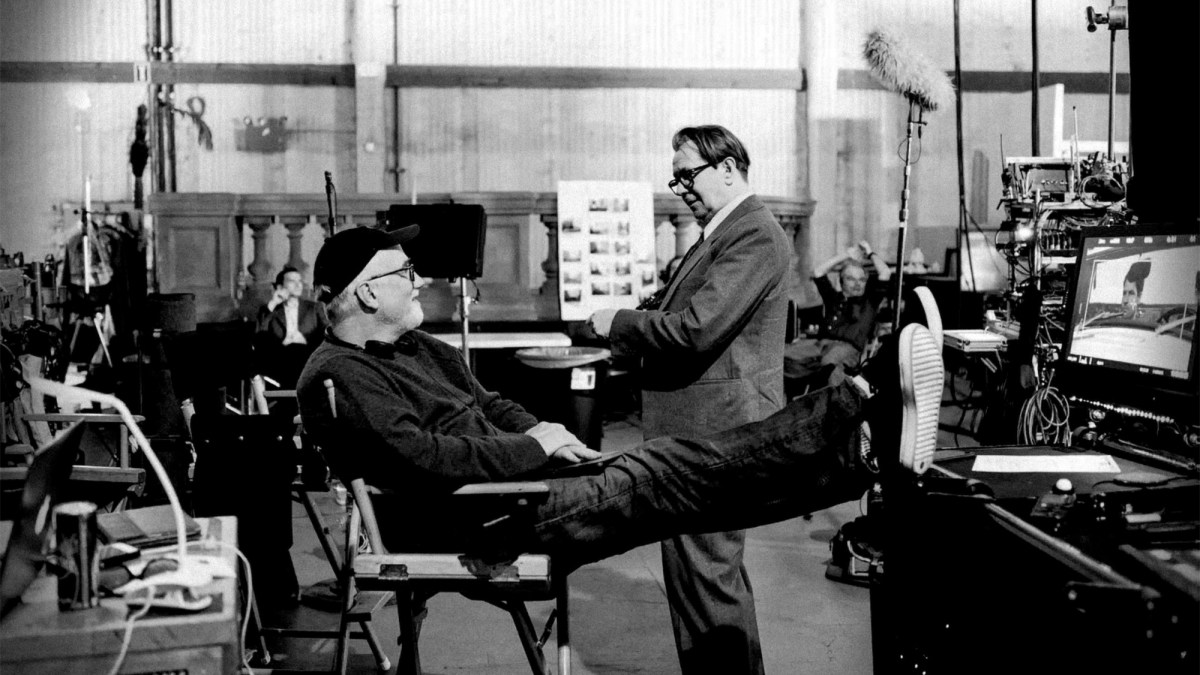
Mank” cinematographer Erik Messerschmidt and director David Fincher have a shorthand way of communicating: They worked together on Netflix’s “Mindhunter,” and Messerschmidt served as gaffer on 2014’s “Gone Girl.”

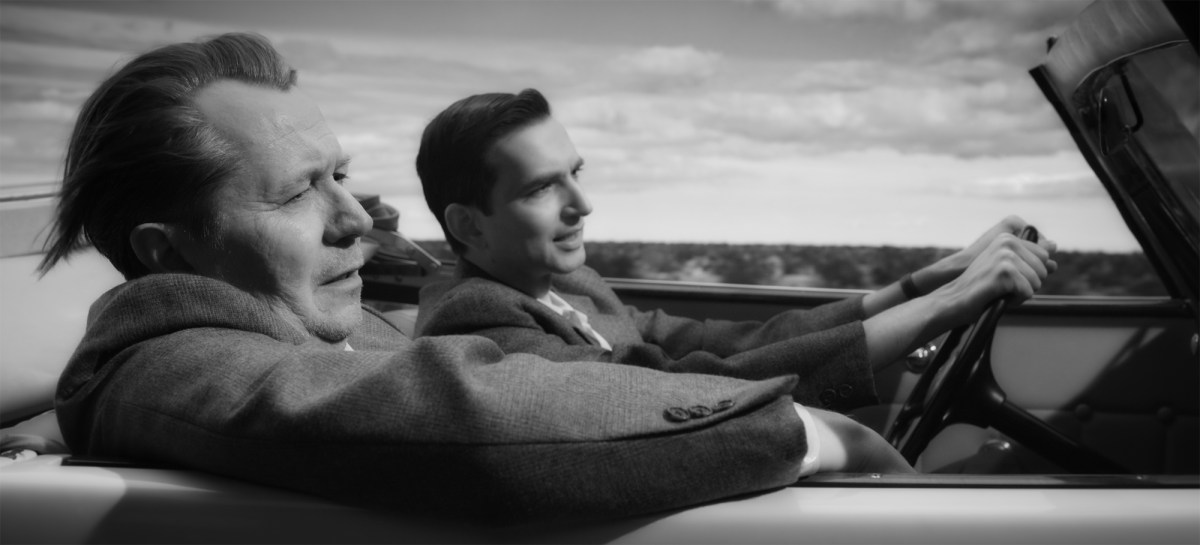
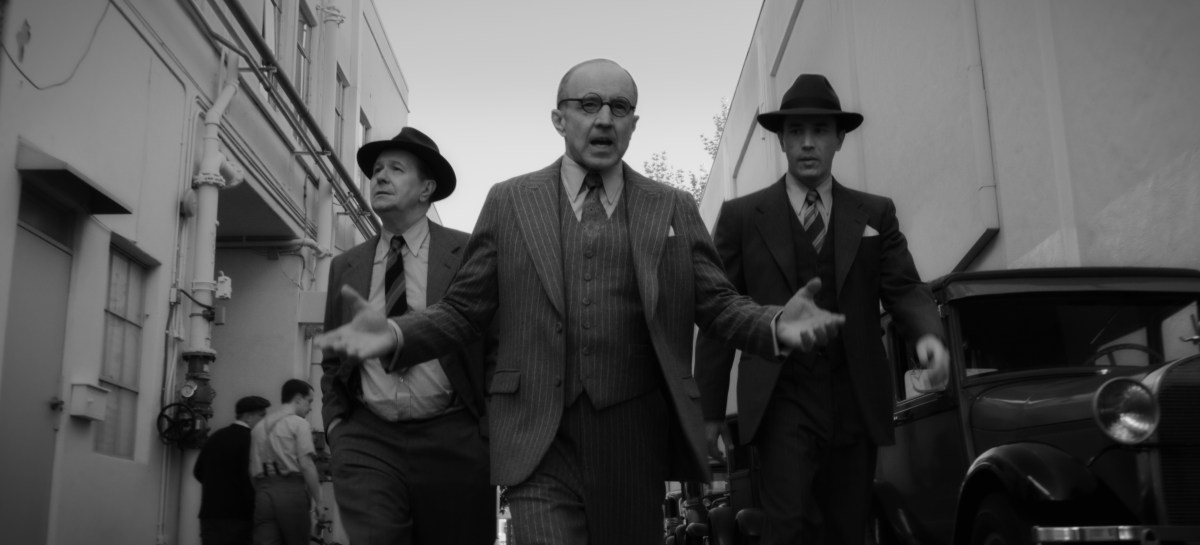
Messerschmidt makes his feature film debut as director of photography on “Mank,” the story of screenwriter Herman J. Mankiewicz’s stay on a secluded ranch, where he works on the masterpiece that will eventually be “Citizen Kane.” Continuous shots and chiaroscuro lighting contribute to the film’s noir vibe.

Fincher and Messerschmidt always intended the movie to be in black and white, but also tested shooting on digital in color converted to monochrome before settling on black and white directly to achieve the luscious framing and silvery monochromatic effect that recalls Hollywood’s Golden Age.

Messerschmidt breaks down two key scenes from the movie and how lighting and VFX played key parts

‘Mank’ DP Erik Messerschmidt on Influence of Gregg Toland, Working With David Fincher

Will Tizard
November 17, 2020
Variety

‘Mank,’ ‘Miami’ and Other Rising Cinematographers Talk Inspirations

Jazz Tangcay
November 24, 2020
Variety

Magnificent Obsession: David Fincher on His Three-Decade Quest to Bring ‘Mank’ to Life

Brent Lang
November 18, 2020
Variety

Mank” is the gripping story of the brilliant but troubled artist behind “Citizen Kane,” often considered to be the greatest movie ever made.

No, it’s not about director Orson Welles. Instead, it pushes Herman J. Mankiewicz, the alcoholic writer for hire who is responsible for bringing the film’s revolutionary, non-linear narrative structure and corrosive portrait of wealth and power, to the center of the frame.

“He was one of those voices that charted the way,” says David Fincher, the director who labored for nearly 30 years to bring “Mank” to life. “My hope is that people will be entertained watching a generational wit, who is in some ways forgotten and never got his due.”

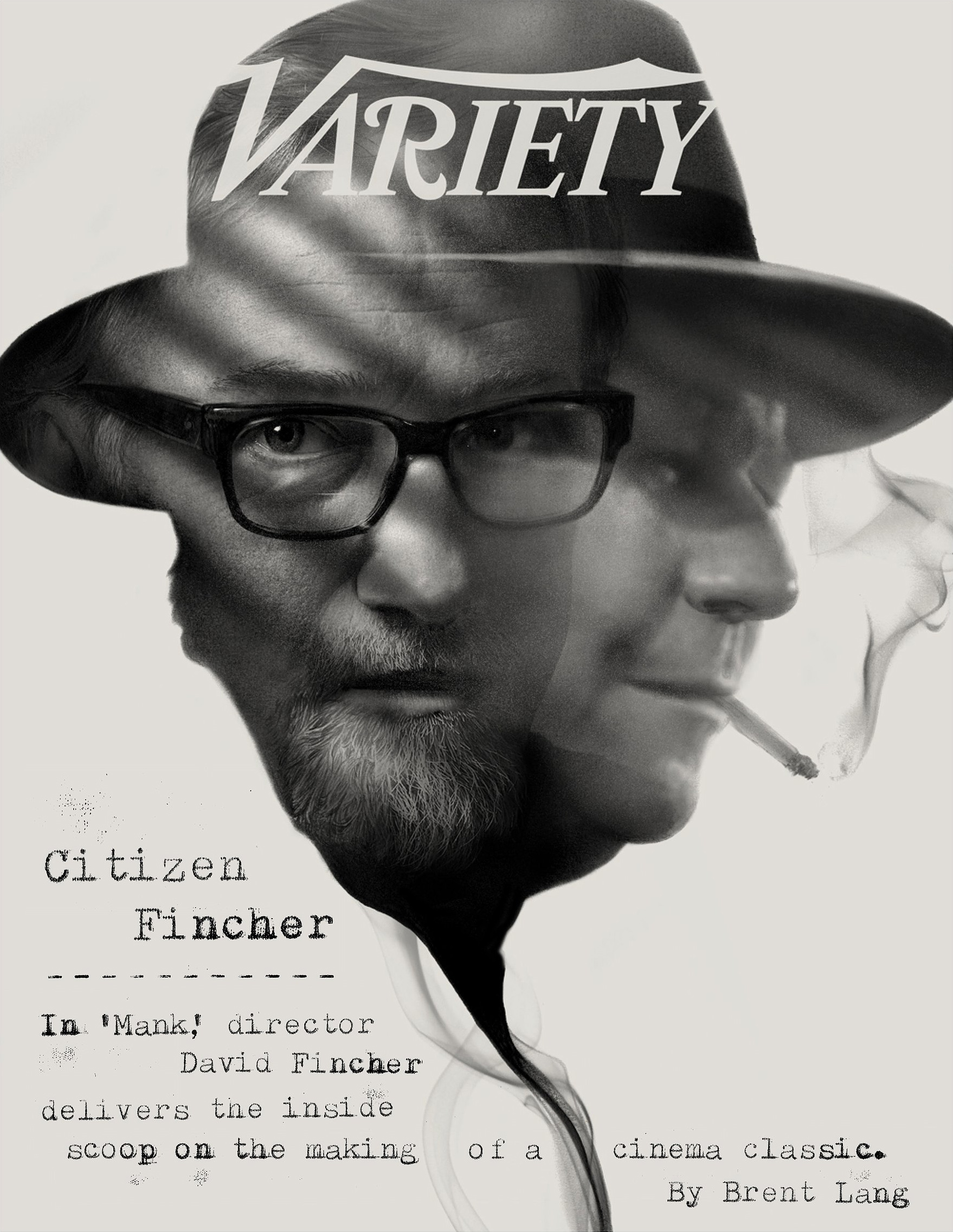
Gatefold print cover designed by Dan Benesch

Mank,” which Netflix will debut Dec. 4, is also likely to reignite a fierce debate around the concept of auteurism. If film is truly a director’s medium, then who gets the credit for a masterpiece? It’s an argument about authorship that has swirled around “Citizen Kane” almost from the time it hit theaters in 1941. That’s largely due to the fact that Welles not only starred in the movie: He also directed, produced and co-wrote it while still just a 24-year-old wunderkind.

Others disagree about the extent of Welles’ contributions. As Pauline Kael’s controversial 1971 essay “Raising Kane” and now “Mank” make clear, “Citizen Kane” was greatly informed by Mankiewicz’s friendship with William Randolph Hearst (the newspaper baron who inspired Kane), as well his personal experience with media and politics.

You might think that Fincher, a revered visual stylist, whose perfectionism can drive film crews and actors to the breaking point, would be a subscriber to the Great Man theory at the heart of auteurism — the idea that some talents are so outsize they seep into every shot or beat of a movie. You’d be wrong though.

Read the full profile

Cover illustration by Greg Ruth; Fincher image reference by Frank Ockenfels

David Fincher on ‘Mindhunter’: ‘I Don’t Know if It Makes Sense to Continue’

Brent Lang
November 18, 2020
Variety

How Variety Covered the Era of ‘Citizen Kane’ and Herman J. Mankiewicz

Tim Gray
November 18, 2020
Variety

David Fincher: film studios ‘don’t want to make anything that can’t make them a billion dollars’

Robbie Collin, Film Critic
November 14, 2020
The Telegraph

An hour or so into the 1999 premiere of Fight Club, David Fincher slipped outside for some air. The director hadn’t known exactly what to expect when his brutally violent black comedy was selected for the Venice Film Festival, but whatever the dream scenario had been, this wasn’t it. The walkouts had started early, and become a steady stream. The only audience members laughing were his leading men, Brad Pitt and Edward Norton – though in fairness, the two had shared a joint beforehand. The first review off the presses had described Fincher’s film as “an inadmissible assault on personal decency” with a fascist bent, and the festival crowd weren’t noticeably any more enthused.

“The resounding thuds every scene landed with just became too much,” Fincher, now 58, tells me from home via Zoom. He recalls sitting on the steps outside and watching half a dozen disgusted older women file past: “all wearing at least one item of leopard print, like six Anne Bancrofts in The Graduate.” One evidently recognised the American enfant terrible and hissed something to her companions, who looked across and shook their heads in sync. “It was then I knew that what we’d done was wrong,” he says, beaming with pride.

Fincher’s tremendous latest film – his first since Gone Girl in 2014 – is unlikely to cause many viewers to storm home, not least because they’ll already be there when they watch it. Mank is a Netflix production, filmed just before the pandemic struck, but edited, polished and due to be released under lockdown conditions. Set in the Golden Age of Hollywood and shot in silvery monochrome, it follows the political chicanery and personal vendettas that led to the writing of Citizen Kane: a film released in 1941, and still widely considered the greatest ever made. Mank’s hero isn’t Orson Welles, Kane’s startlingly young director and star (he was 25 when it was released), but Gary Oldman’s Herman J Mankiewicz – a wildly talented screenwriter and incorrigible gambler and drunk, whom Welles enlisted to ghostwrite the script.

Read the full interview [Only for subscribers – 1-month free trial]

Mank: Interviews. Charles Dance

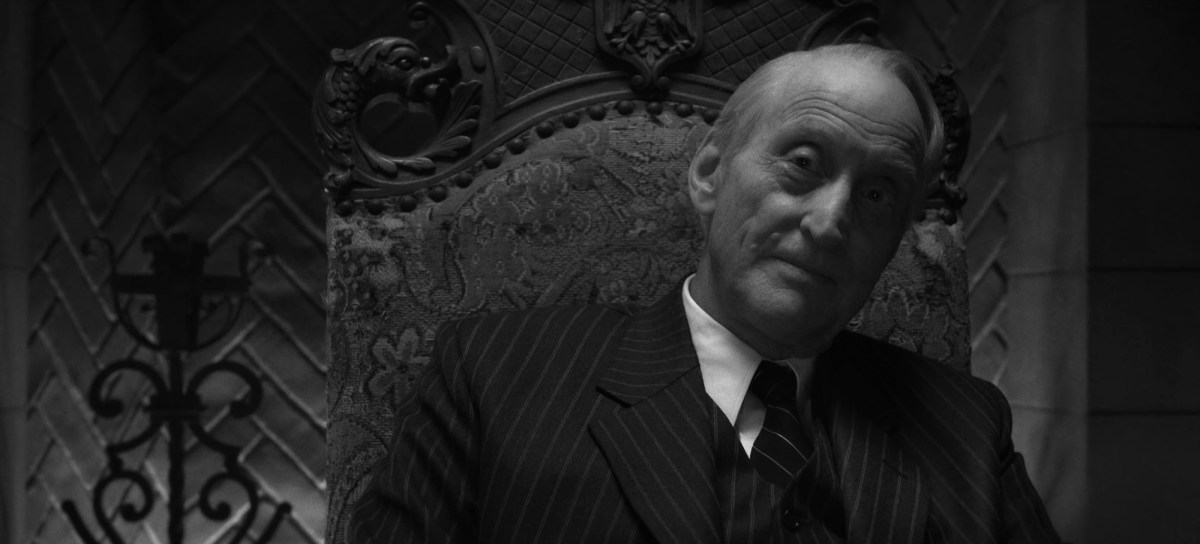
Charles Dance plays newspaper tycoon William Randolph Hearst in Mank.

Dance appeared as prison doctor Clemens in Fincher’s first film Alien3 (1992):

“First of all, I’m a huge fan of his. And I don’t say that about all directors that I’ve worked with. But when I first worked with David, the minute he walked onto the set and started to talk, I thought ‘right, this guy is clever'”.

“Mank”: Charles Dance im Interview

CINEMA-Magazin (YouTube)
November 13, 2020

Pop Culture Confidential: Arliss Howard (“Mank”)

Christina Jeurling Birro
November 13, 2020
Pop Culture Confidential

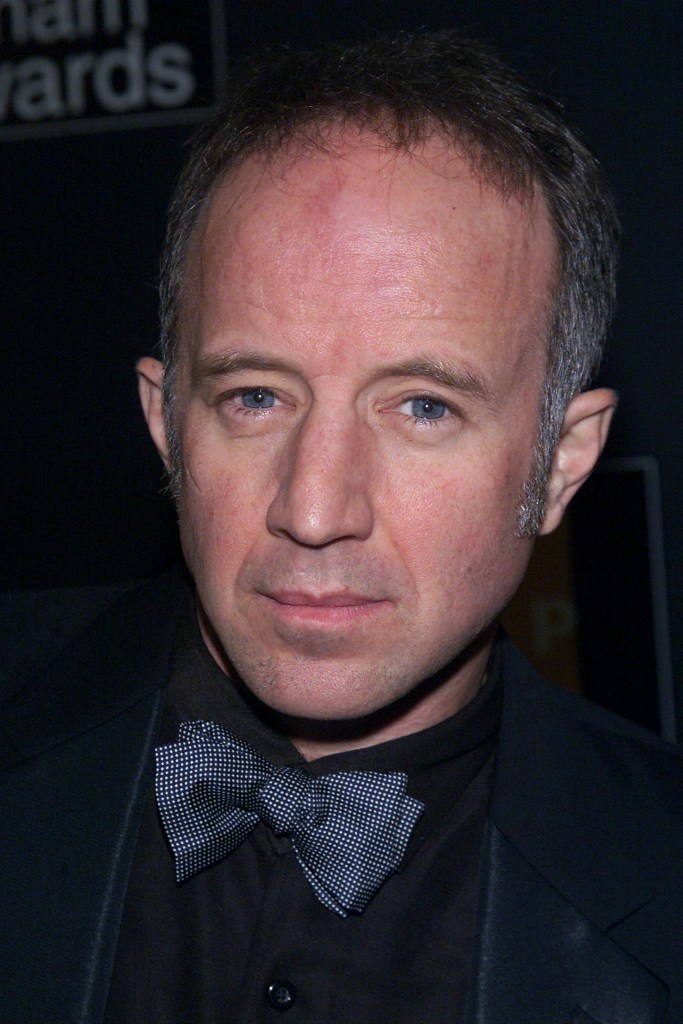
Don’t miss this exclusive and compelling conversation with actor, writer, and director Arliss Howard (Full Metal Jacket, Natural Born Killers, The Lost World: Jurassic Park, Amistad, Moneyball, Manhunt)

A journey into his process, his brilliant performance as MGM’s Louis B Mayer in David Fincher’s new epic feature ‘Mank’, working with Fincher, Kubrick, Spielberg and Stone and so much more!

Mank’ premieres theatrically in some territories on Nov 13th. On Netflix Dec 4.

Listen to the podcast:

Apple Podcasts

Arliss Howard (2001, Evan Agostini)

Lensing Creativity Goes Remote

The pandemic has accelerated many technical trends that were already underway

David Heuring
November 11, 2020
Variety

Necessity is the mother of invention, and nothing proves this proverb more true than the evolution of film and television production technology in the age of COVID-19. While the field has always changed rapidly even in normal times, the pace of change and adaptation has accelerated over the past six months.

This adjustment has posed many questions. Beyond personal protective equipment, mandatory testing, on-set safety monitors, walking lunches and corona contingency fees, will the pandemic have enduring effects in the creative, collaborative endeavor that is filmmaking? The technology to work remotely has essentially been in place for some time, but will the pandemic finally push us over into a new normal?

Numerous existing technology trends are being suddenly supercharged by the necessities imposed by the coronavirus. Shooting close to home has never been more appealing, and that impulse aligns neatly with ongoing advancements in LED backings and virtual production. In the world of image processing, connectivity solutions such as those offered by Moxion, Frame.io and Sohonet were already bringing immediacy and super-high resolution to a wide variety of devices without regard to location — and now those virtues are suddenly in much higher demand. And remote collaboration solutions including PIX are looking positively prescient.

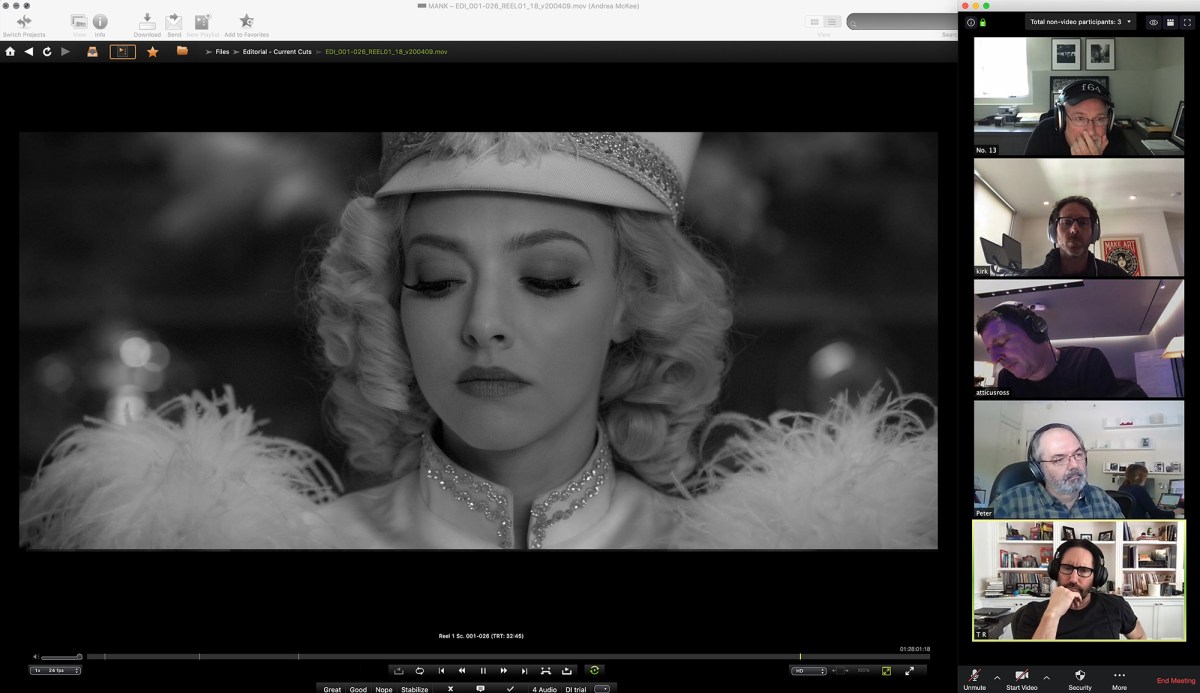
Director David Fincher’s team found that the PIX production backbone, a tool they’ve helped develop over the years, facilitated safe group creativity but also enhanced efficiency on the forthcoming Mank.

Read the full article