The Cinematography Podcast: Jeff Cronenweth

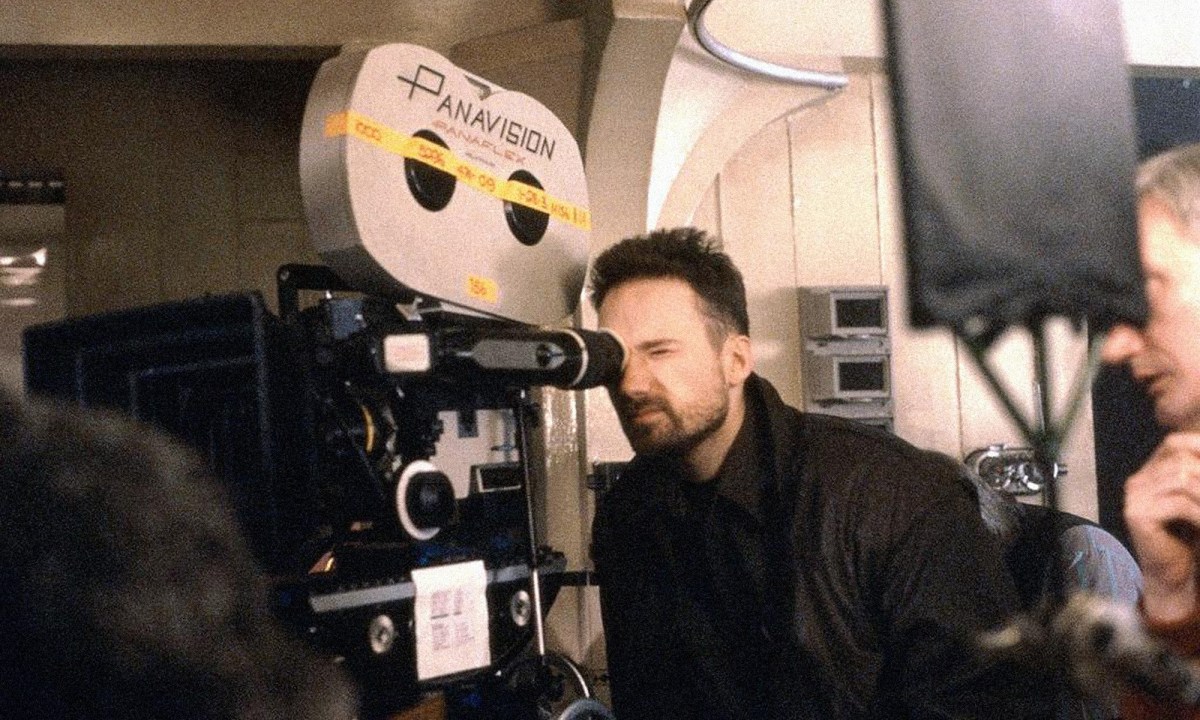
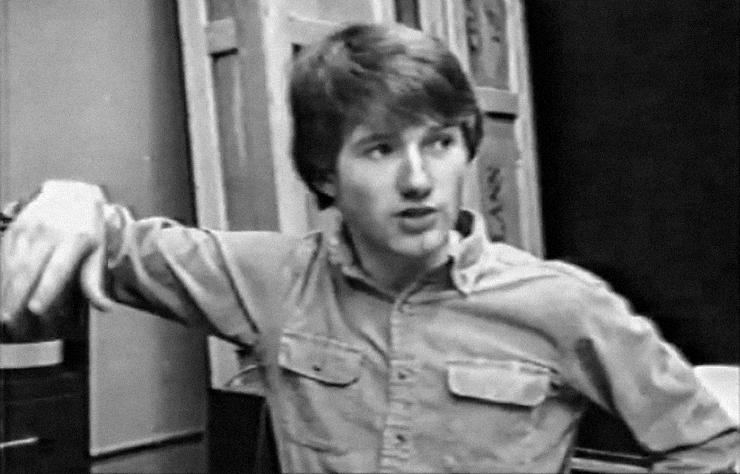
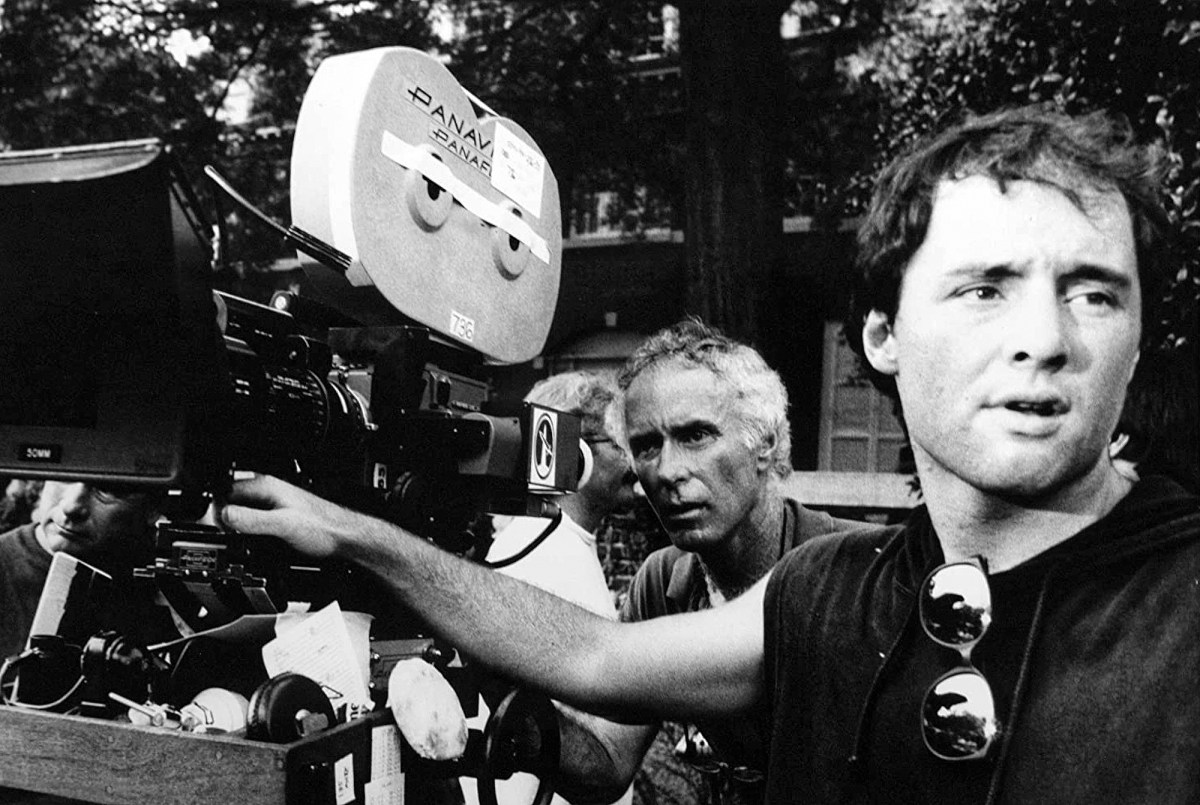
Jordan and Jeff Cronenweth on the set of Francis Ford Coppola‘s Gardens of Stone

Jeff Cronenweth, ASC on David Fincher, Fight Club, growing up in Hollywood, music videos, Mark Romanek, One Hour Photo, Gone Girl, The Social Network and the new Amazon series Tales from the Loop.

Ben Rock & Illya Friedman
April 22, 2020
The Cinematography Podcast (Cam Noir)

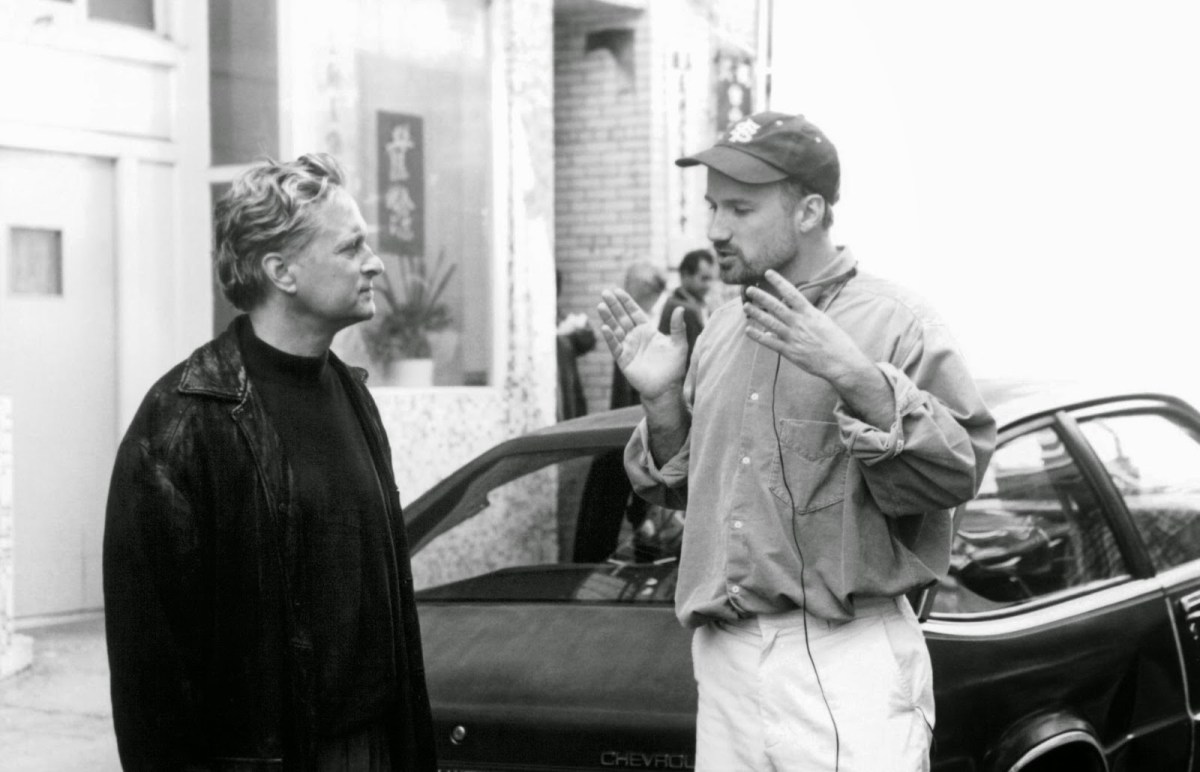
Jeff Cronenweth comes from three generations in the film business and followed his father, cinematographer Jordan Cronenweth (Blade Runner) into a career as a director of photography. Growing up on film sets and working alongside his father enabled Jeff to take a hands-on role in the camera department. He started as a loader and camera assistant, getting into the union while attending USC. He met David Fincher while working on the Madonna music video “Oh Father” as a camera assistant. Fincher gave Jeff his first opportunity to DP for the film Fight Club. Jeff’s collaboration with Fincher later earned him two Oscar nominations- one for The Social Network and one for The Girl with the Dragon Tattoo. He also began working with director Mark Romanek on music videos, such as Eels “Novocaine for the Soul” and Nine Inch Nails’ “The Perfect Drug.” Jeff and Romanek also worked together on the feature film, One Hour Photo starring Robin Williams. The film presented many lighting challenges since the bulk of it takes place inside a store with flat white lights before the darker undertones of the movie are revealed.

Jeff also shot the pilot for Tales from the Loop with director Mark Romanek, streaming now on Amazon Prime.

Listen to the podcast:

Cam Noir
Apple Podcasts

LIKE AND FOLLOW US, send fan mail or suggestions!: Facebook, Instagram, Twitter

Podcast Credits:

Sponsored by Hot Rod Cameras (Instagram)
Editor in Chief: Illya Friedman (Instagram)
Ben Rock (Twitter, Instagram)
Producer: Alana Kode
Editor: Ben Katz
Composer: Kays Alatractchi

Follow Jeff Cronenweth, ASC Archives on Twitter
Reconsidering David Fincher’s ‘The Game,’ a great San Francisco film

“The Game” adds to the cinematic pedigree of a great movie town.

Peter Hartlaub
June 14, 2019
Datebook (San Francisco Chronicle)

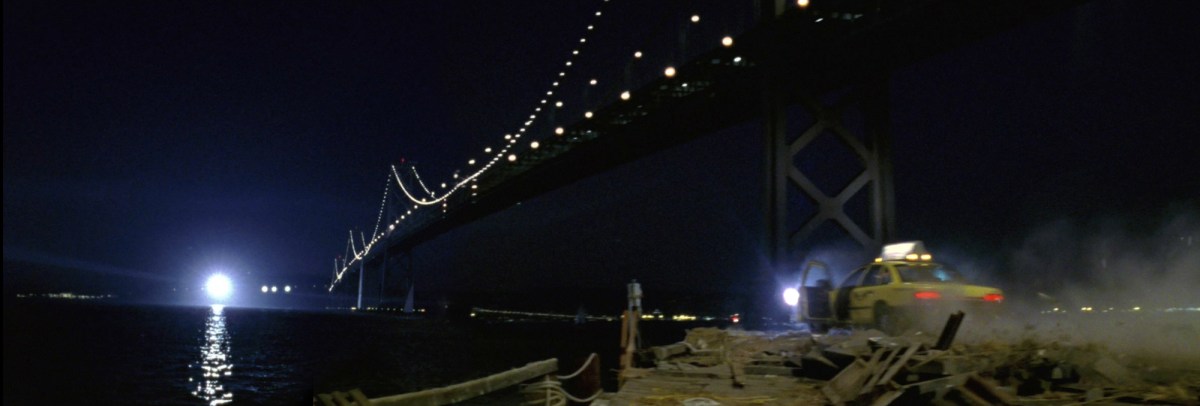
The manic 1997 thriller “The Game” doesn’t appear on many “best San Francisco films” compilations. And that apparently includes director David Fincher’s list.

The filmmaker, who directed “Zodiac” and “The Game” in the city, told an Indiewire reporter in 2014 that he probably shouldn’t have made the latter movie.

“We didn’t figure out the third act,” Fincher told Indiewire. “And it was my fault, because I thought if you could just keep your foot on the throttle it would be liberating and funny.”

Perhaps Fincher, like many of us, needs to give the movie another chance. “The Game” isn’t quite a masterpiece, a label applied to just a handful of San Francisco films, including “Vertigo” and “The Conversation.” But it’s one of the most nakedly entertaining pieces of cinema that has been shot in San Francisco. And it has aged incredibly well. Time has vaulted the movie to must-see status.

Read the full article and listen to the podcast

For the Man Who Has Everything: Close-Up on “The Game”

David Fincher’s serpentine thriller exists in a dangerous, hermetic world of chicanery and artifice.

Greg Cwik
March 26, 2019
Notebook (MUBI)

“…from any given body of fictional text, nothing necessarily follows, and anything plausibly may.”

—William H. Gass, “The Concept of Character in Fiction”

What is The Game?

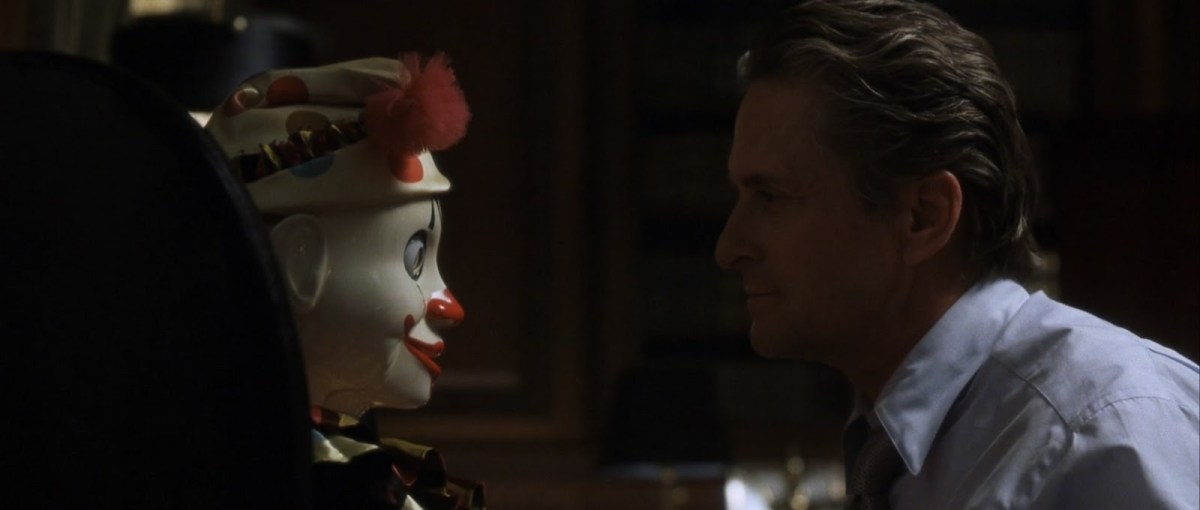
“The eternal question,” an unnamed character intones, when he is asked this by its newest player, Nicholas van Orton (Michael Douglas), a middle-aged millionaire unaccustomed to befuddlement. Mainstream critics, who similarly dislike being perplexed, didn’t quite know what to make of the film when it premiered in 1997: responses were tepid and noncommittal, and, despite its $100 million box office draw, it has long been considered a minor work in David Fincher’s oeuvre, ensconced between the seminal Se7en (1995) and the belatedly-loved Fight Club (1999). It is a film that is at once subtle and silly, whose perfunctory reputation belies the virtuosic craftsmanship evident in every shot, and the careful, studious attention paid to diminutive, seemingly insignificant details. The serpentine thriller exists in a dangerous, hermetic world of chicanery and artifice, a solipsistic world of glass towers that glint like grand statements and businessmen with flatlined lips—men who have everything but understand nothing. Nicholas, a successful man in a gray suit, receives a surprise birthday visit from his cut-up brother, Conrad (Sean Penn). Conrad, who wryly goes by the pseudonym “Seymour Butts,” gives Nicholas a special gift, a certificate for an enigmatic “game,” the rules of which are obtuse, and whose purpose is nebulous. What else do you get the man who has everything except something that he can’t understand? Conrad is, essentially, gifting Nicholas with confusion, something with which Nicholas, who lives a sealed-off life, is unfamiliar. The Game is run by a company called Consumer Recreation Services (CRS), whose logo is a Penrose triangle, an intangible object, though this fact goes unmentioned. (The film is replete with such keen minutiae.) Figuring out the object of The Game is the object of The Game, but luxuriating in the details of The Game is the purpose of Fincher’s film.

Read the full article

Close-Up is a feature that spotlights films now playing on MUBI. David Fincher‘s The Game (1997) is showing March 23 – April 22, 2019 in many countries around the world.

Fincherphilia & Beyond

Cinephilia & Beyond - Logo

Just a small sample of all the precious filmic resources bestowed by Cinephilia & Beyond:

1993. Alien3 01

Alien3: “Take all of the responsibility, because you’re going to get all of the blame”

1995. Se7en

Se7en: A Rain-Drenched, Somber, Gut-Wrenching Thriller that Restored David Fincher’s Faith in Filmmaking

1995. The Game

Downwards Is the Only Way Forwards: Welcome to David Fincher’s The Game

1999. Fight Club

Fight Club: David Fincher’s Stylish Exploration of Modern-Day Man’s Estrangement and Disillusionment

2007. Zodiac

Fincher’s Zodiac As Easily One Of The Best Thrillers Of The Millennium So Far

1982. David Fincher at ILM

Playing ‘The Game’ on Its 20th Anniversary – David Fincher’s 1997 Film Still Holds Up

Joshua Meyer
September 12th, 2017
/Film

More than any other mainstream filmmaker, David Fincher is the one who has had his finger on the pulse of our generational concerns. If you Google Fincher’s name and the word “zeitgeist,” it will immediately turn up countless think pieces talking about how his films — especially Fight Club and The Social Network — have captured the zeitgeist, reflecting the spirit of their time the way The Graduate did for the 1960s.

But The Game, Fincher’s 1997 thriller starring Michael Douglas, was a necessary primer for Fight Club. With this film, Fincher took the actor who played Gordon Gekko ten years earlier, and he gave that ‘80s zeitgeist figure a light makeover and put him in a post-grunge ‘90s movie.

The Game turns 20 today (it hit theaters on September 12, 1997), so let’s take a look back at what makes it so special: not only for the way it marked a turning point in Fincher’s early career, but also for the way it takes a high-concept story and manages to bake in a fair amount of subtext.

Read the full article

20 Years Later, ‘The Game’ Is Still David Fincher’s Most Underrated Movie

Colin Biggs
September 12, 2017
ScreenCrush

“I don’t care about the money. I’m pulling back the curtain. I want to meet the wizard.”

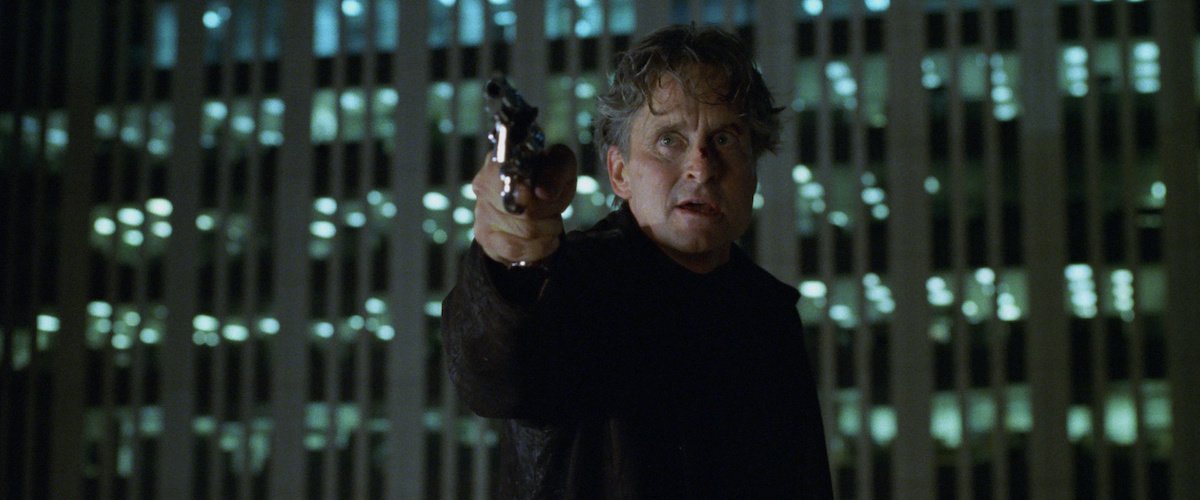
Michael Douglas’ disheveled Nicholas Van Orton is one of the most powerful men in the United States, so why is he holding a man hostage and demanding answers? When David Fincher’s The Game came out in 1997, it was received as a control freak’s nightmare. A vision that could only have come from the mind of one of cinema’s most talented young directors. Today, Consumer Recreation Services could be any company on the street. With unlimited access to data from social media and emails, a small group of technicians could manufacture their own reality. In a time of alt-facts, when the nature of truth is constantly up for debate, The Game feels far more significant than its reputation as middle-tier a David Fincher project.

Read the full article

Fear Itself: David Fincher’s THE GAME At 20

Twenty years later, Jacob revisits the master filmmaker’s technically accomplished dissertation on anxiety and desire.

Jacob Knight
Sep. 12, 2017
Birth. Movies. Death.

When David Fincher was pitching his adaptation of Spider-Man during the ’90s, the key element that ruled out his take with studio execs was the refusal to execute another feature length origin tale. In Fincher’s version, our friendly neighborhood web-head was going to have his backstory explained via an opening mini-operetta, which would get his superhero coming of age out of the way so the fastidious Hollywood technician could tell the story he wanted to tell. This idiosyncratic approach rubbed suits the wrong way, but was repurposed for The Game (’97), Fincher’s Hitchcockian follow-up to the smash bit of serial killer morbidity, Seven (’95).

We’re introduced to Nicholas Van Orton (Michael Douglas) via a series of home movies. It’s Nicholas’ birthday party at his family’s lavish estate, and the kid is all half-assed smirks, the sparks of candles placed on an unseen cake illuminating his face like fireworks. Yet whenever his father is around, Nicholas tenses; the patriarch’s distant gazes and unsubtle grimaces casting a long shadow over what should’ve been a festive day. This is all foreshadowing; letting us know exactly what type of man Nicholas is going to turn out to be. There’s no radioactive spider, or magical transformation. Genes are all that’s required to transmute Mr. Van Orton into a shadow of his soon to be suicidal father – an ultimate, and probably unavoidable, fate.

Read the full article

David Fincher’s “The Game” Turns 20

Chris Evangelista
September 7, 2017
RogerEbert.com, Balder & Dash

Investment banker Nicholas Van Orton has come to Christine’s home for answers. His entire life is coming apart at the seams, ever since he signed up for a life-altering game courtesy of the mysterious Consumer Recreation Services. He thinks Christine, a waitress he met seemingly by accident, might know something. With endless resources and a borderline ludicrous number of extra players, CRS has made Nicholas untrusting of nearly everything and everyone. Once inside Christine’s home, Nicholas slowly begins to realize the apartment is not really an apartment at all, but a set. The lamp still has a thrift store tag on it; the books on the shelves are false fronts; the water line isn’t hooked up. It’s all been staged for his benefit.

On the commentary track for the Criterion Collection release, director David Fincher reveals that when reading the script, this exact moment is what sold him on making the film. “That’s when I said, ‘I gotta see this, I gotta make this movie.’”

Read the full article

The Game Turns 20: A Retrospective of David Fincher’s Overlooked Gem

Rory Cashin
September 5, 2017
JOE

In the grand scheme of David Fincher’s career, The Game is the one that gets forgotten about the most.

Not an odd misfire like Alien 3 or Benjamin Button, not one of his killer thrillers like Se7en, Gone Girl or Dragon Tattoo, not one of his instant classics like Zodiac or Fight Club, and not one where he just felt like shown off like Fight Club or Panic Room.

Read the full article