A craftsman with a camera and an artist with a vision. Frank W Ockenfels 3 takes us through his detailed story of his close relationship with the late David Bowie. A master of light and one of the industry’s most prolific photographers, this is ‘Magic Hour.’
Click for a full screen view:
The Curious Case of Benjamin Button (Design by P+A / Mojo, Photography by Frank Ockenfels 3)
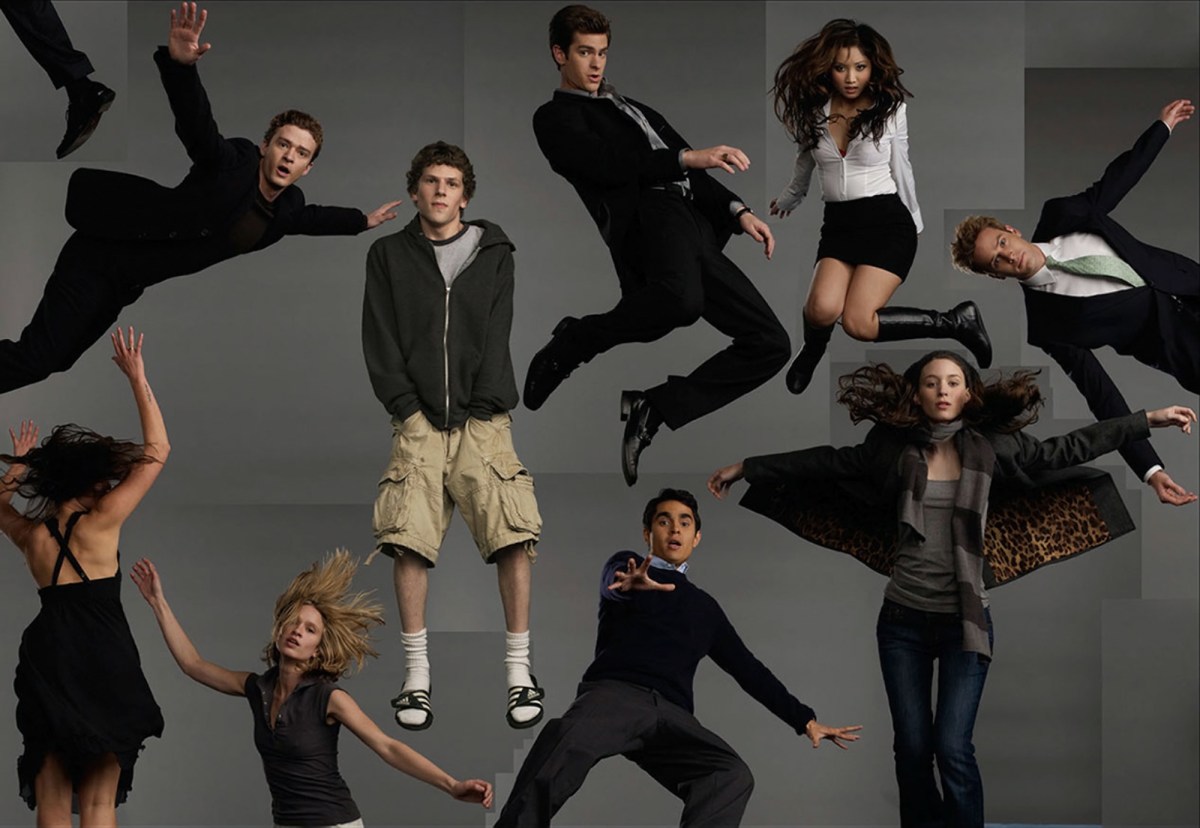
The Social Network (Design by Neil Kellerhouse, Photography by Frank Ockenfels 3)
The Social Network (Frank Ockenfels 3)
The Social Network (Design by Neil Kellerhouse, Photography by Frank Ockenfels 3)
The Social Network (Frank Ockenfels 3)
2011-02-09. The Hollywood Reporter (Photography by Frank Ockenfels 3)
2011-02-09. The Hollywood Reporter (Photography by Frank Ockenfels 3)
2011-02-09. The Hollywood Reporter (Photography by Frank Ockenfels 3)
2011-02-09. The Hollywood Reporter (Photography by Frank Ockenfels 3)
Hard working Background Casting Director Jennifer Nash, from Mindhunter Extras Casting, continues to make the rounds looking for the literally thousands of background actors of all ages and ethnicities, especially African-American, that Mindhunter is going to need for its second season. Last May, she paid a visit to The Burgh Boyz and asked for their help:
“Season one took to film about 11 months. And there’s some pre-production too.”
“We’ve just started shooting season two.”
“[We’ll be here] at least until Christmas, very possibly until March of 2019.”
“Costumes are such an important part of this. Our team of customers is award-winning. If you checked out their resumes, and our hair and makeup, you would just go: “Oh, my goodness!”. They’re the best in the business. As is David Fincher, our incredible Director and Executive Producer, who is directing this first episode, which is epic. So, if you want to be on Mindhunter and work with David Fincher, get in now, get in now! You’ll be working with him!”
“David Fincher handpicks about 90% of all of the background actors in the episodes that he directs. He is so specific and detail-oriented. Makes my job Super Duper hard but you’re not just a crowd. You’re always hand chosen by everybody for that specific role.”
“I’ve been able to cast television shows and movies in New York from the beach in L.A. Not this one. This one I am like hustling hustling, because I need real people that have real jobs. In season one I’ve cast Dental Hygienist, a literal Rocket Scientist, I’m not even joking, Professors, College Students, Uber and Lyft Drivers, Waiters, Waitresses, Bartenders, ex-Military, ex-Police, Sheriff’s, everybody who looks like you [one of the hosts] for FBI…”
“This summer in Wilkinsburg, we have scenes coming up where I need thousands of background actors, thousands per day. We are going to be like the circus comes to town, to Wilkinsburg, and that community can use all of the business that we bring, we’re going to bring a lot of business to that community. And it’s going to be iconic scenes there, in my opinion from reading the scripts, the standout scenes of the entire season two. I’m not supposed to really tell, give the story away, but it gives me goosebumps just to think about these scenes. And it’s mostly African-American that I need for those scenes that are going to be very dramatic.”
“I’m looking for background actors of all ages, no experience needed. I need babies to 106 years old. Last season our age range was six months to 96, so this season I’m putting out the challenge, just push it a little. All colors of the rainbow. In fact, some colors of the rainbow are hard to find in Pittsburgh, not a huge Latino community here. All you Latino beautiful people, I need you, and everybody else. And thousands of background actors in Wilkinsburg this summer, thousands, for iconic scenes that you will never forget. Promise.”
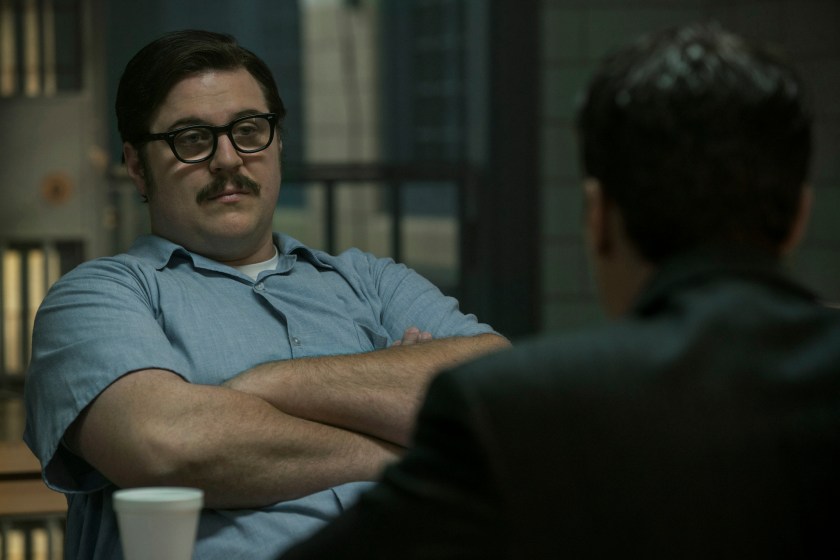
Breaking through with his first guest star role on David Fincher’s Netflix crime drama Mindhunter, where he would play terrifying serial killer Edmund Kemper, Cameron Britton found both an incredible artistic opportunity and a challenge that would daunt any actor, coming face to face with one of the industry’s most formidable auteurs.
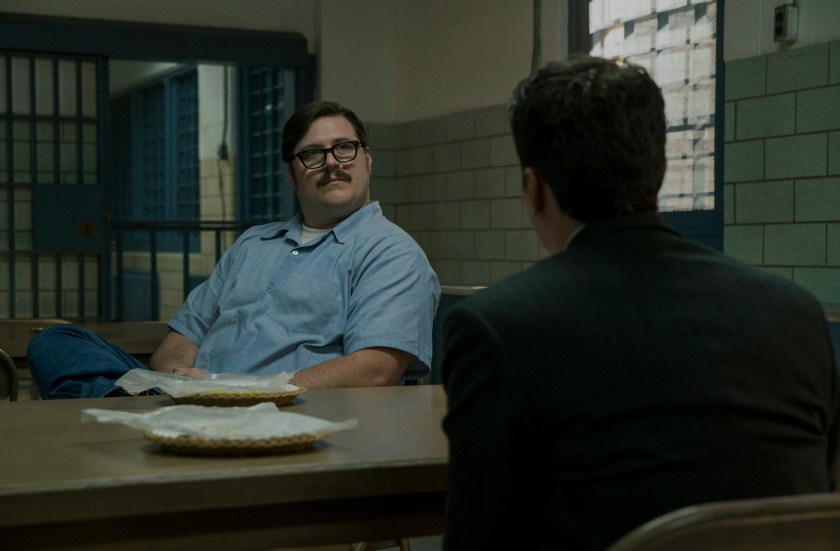
In his first experience playing a real-life figure, Britton couldn’t have found a more deliciously complicated character than Kemper, who is still alive, living out his remaining years at California Medical Facility. Towering over his victims at 6’9” (Britton is 6’5”), Kemper’s dominance wasn’t only physical. Murdering 10 people, including his mother and his paternal grandparents—before desecrating their bodies—Kemper also possessed great intelligence and a knack for manipulation that made him a nightmare for his opponents, in life and in prison, where FBI agents (played in the series by Jonathan Groff and Holt McCallany) tried to come to grips with his psychology.
“What drew me to the role was this dynamic where he’s this horribly violent, narcissistic, selfish person with no remorse, and yet he’s well spoken, he’s polite, he’s engaging,” Britton explains. “That sort of ‘Speak softly and carry a big stick’ concept, it’s always been interesting to me. If you are threatening and your opponent knows it, why flaunt it? Why not offer them the path of least resistance?”
To play Kemper effectively, Britton would have to dig uncomfortably deep into the psyche of a murderer who viewed himself as the hero of his own story, figuring out what it was that baffled psychologists—what made him tick.
Cameron Britton Breaks Through Playing Real Life Serial Killer Ed Kemper in Mindhunter
Hugh Hart
June 14, 2018 MPAA (Motion Picture Association of America), The Credits (Profiles Below the Line)
Netflix true crime drama Mindhunter moves efficiently in tracking the origins of forensic science as experienced through FBI odd couple (Jonathan Groff and Holt McCallany) until midway through its second episode. Then, Cameron Britton makes his entrance. Playing real-life 70’s-era serial killer Ed Kemper, Britton strolls into an interrogation room and takes the show in utterly unnerving new direction through his embodiment of folksy evil incarnate.
If you’ve seen classic David Fincher films like Seven, Zodiac, or even The Girl with the Dragon Tattoo, you know the infamously exacting director has a type: the obsessive who tries to solve a crime in the library or the archives, nimbly combing through databases and warehouses full of forgotten evidence. The Fincher obsessive starts their work unblemished—but by the end, it has upended their lives.
In the case of Fincher’s 10-episode Netflix series Mindhunter, that obsessive is Holden Ford, played by Tony-nominated actor Jonathan Groff. Holden starts as a textbook Groff character: neat, bookish, pretty, an F.B.I. choirboy who becomes a teacher and researcher after a hostage situation goes wrong. But soon, alongside behavioral scientist Bill Tench (Holt McCallany) and anthropologist Wendy Carr (Anna Torv), Holden falls down the rabbit hole of a new line of thinking about killers, one that brings him a little too close to the murderers themselves.
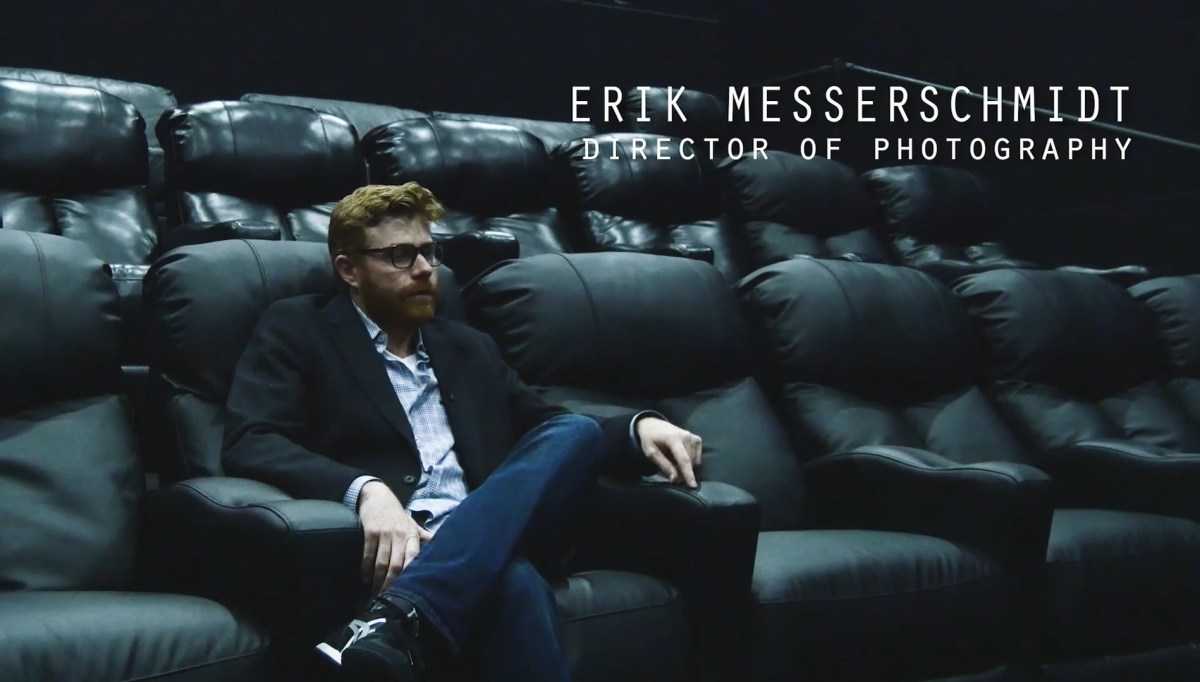
Erik Messerschmidt first worked with David Fincher as a Gone Girl gaffer—in collaboration with DP Jeff Cronenweth. But Messerschmidt got his chance to mine the auteur’s rich, iconic aesthetic as cinematographer of Netflix’s crime drama Mindhunter.
Created by Joe Penhall, with Fincher on as a director and executive producer, the 1970s-set series follows two FBI agents (played by Jonathan Groff and Holt McCallany) who look to expand criminal science by delving into the psychology of murder, coming uncomfortably close to the real-life monsters who would later be deemed “serial killers.”
Messerschmidt has been praised this season for the striking, atmospheric visuals he brought to Mindhunter—his first full series as a DP— though he prefers that his work remain invisible, operating beneath the surface:
“The second the audience is aware that a human is operating the camera, subconsciously there’s an awareness that someone else is in the room. Hopefully, the audience doesn’t notice the operating, they don’t notice my work, they are only seeing what’s happening on-screen between the characters. That’s the goal.”
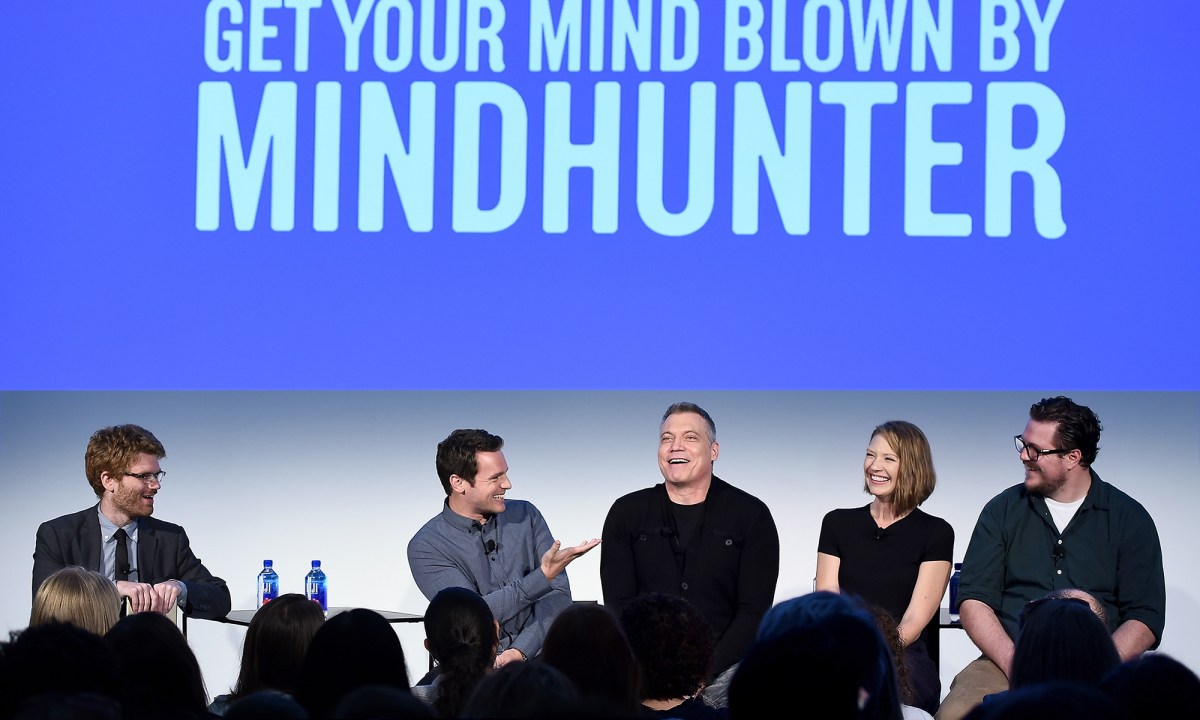
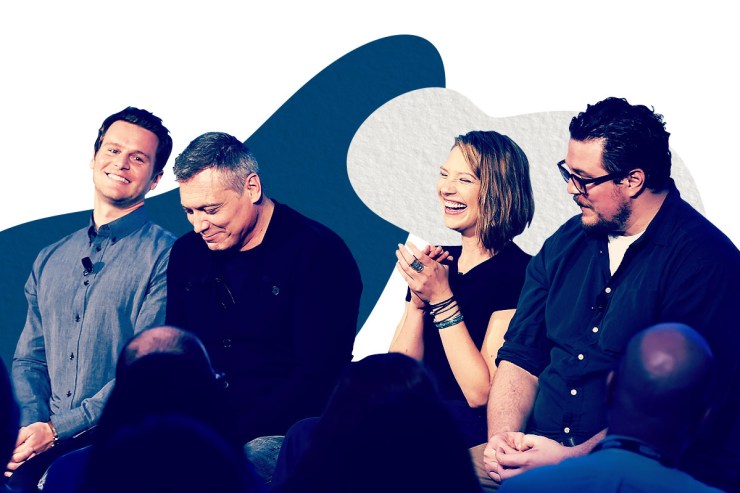
Jonathan Groff, Holt McCallany, Anna Torv, and Cameron Britton sat down with Vulture‘s Abraham Riesman for a conversation about the critically acclaimed series’ first season, the series’ real-life inspirations, and exactly what level of creepiness fans can look forward to enjoying in season two.
Despite being a 1970s period piece, Mindhunter feels eminently of the present moment. We’re living in the midst of a true-crime renaissance, and the David Fincher–helmed Netflix series stands out not only as a (heavily fictionalized) example of the genre, but as a critique of it. As FBI agents Holden Ford (Jonathan Groff) and Bill Tench (Holt McCallany) and psychologist Wendy Carr (Anna Torv) delve into the brains and motivations of serial killers — especially real-life murderer Ed Kemper (Emmy nominee Cameron Britton) — we’re given a window into why humans have such a fascination with individuals who engage in death and destruction. But just as interesting as the tales on the screen are the tales of what it takes to tell them, as an audience learned during a panel discussion with Groff, McCallany, Torv, and Britton at this year’s Vulture Festival. Over the course of the conversation, the actors talked about Fincher’s notorious obsessiveness, whether Ford is a sociopath, and how Britton learned to play Kemper partially thanks to his own time as a schoolteacher.
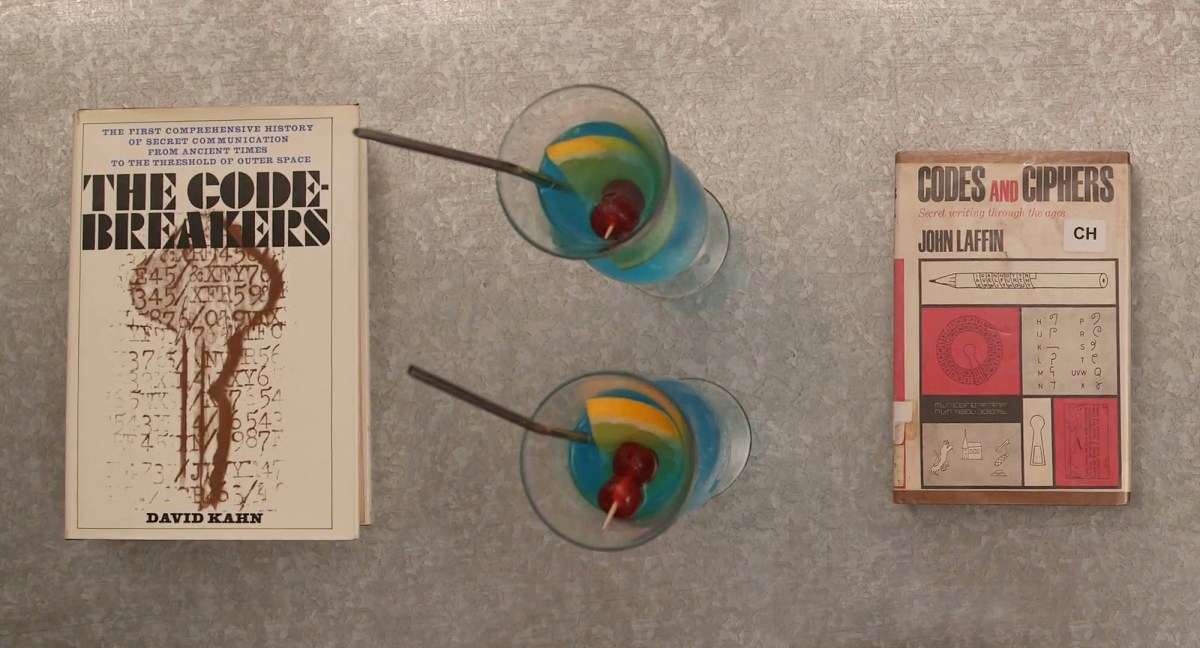
–Yertle the Turtle and Other Stories (1958) by Dr. Seuss –The Code Breakers (1967) by David Kahn –Codes and Ciphers: Secret Writing Through the Ages (1964) by John Laffin –Secret Writing: The Craft of the Cryptographer (1970) by James Raymond Wolfe –The Beast from 20,000 Fathoms (1953) film directed by Eugene Lourie –Dick Tracy Lunchbox, 1967 – Animal Crackers (cookie) –The Most Dangerous Game (1932) film directed by Irving Pichel and Ernest B. Schoedsack –Hair, original musical poster, show debut in 1967 –They Laughed When I Sat Down: An Informal History of Advertising in Words and Pictures (1959) by Frank Rowsome, Jr. –McElligot’s Pool (1947) by Dr. Seuss –TIME Magazine “Race and Reform on Campus,” Volume 93 No. 16, April 18, 1969 –The Asphalt Jungle (1950) film directed by John Huston –The Wrong Man (1956) film directed by Alfred Hitchcock –The Celebrated Cases of Dick Tracy, 1931-1951 (Anthology, 1970) by Chester Gould –Fox in Socks (1965) by Dr. Seuss –Curtain and The Mysterious Affair at Styles (1975) by Agatha Christie –An Artist in America (1951) by Thomas Hart Benton –Drawing: Seeing and Observation (1973) by Ian Simpson –Drawing the Female Figure (1975) by Joseph Sheppard –Mainstreams of Modern Art: David to Picasso (1961) by John Canaday –Homicide Investigation (first published 1944) by Lemoyne Snyder –Rescued in the Clouds (1927) by Franklin W. Dixon –LIFE Magazine “Confrontation in Harvard Yard,” Vol. 66 No. 16, April 25, 1969 – Slinky Toy Commercial from the 1960s – Slinky Toy –I Died A Thousand Times (1955) film directed by Stuart Heisler –Star Trek, Season 3 Episode 4 “And the Children Shall Lead” (1968) guest starring Melvin Belli, portrayed by Brian Cox in Zodiac – Aquavelva (alcoholic drink) – Reprise: The Code Breakers (1967) by David Kahn – Reprise: Codes and Ciphers (1964) by John Laffin –Richard Nixon Presidential Campaign Button, 1968 – “I Am Not Avery” button – 6 extremely rare first edition covers of Ian Fleming James Bond Novels: Dr. No (1958), For Your Eyes Only (1960), Moonraker (1955), On Her Majesty’s Secret Service (1963), You Only Live Twice (1964), The Spy Who Loved Me (1962) –Six Crises (1962) by Richard M. Nixon –San Francisco (first published 1969) edited by Jack McDowell and Dorothy Krell –The Selling of the President, 1968 (1969) by Joe McGinniss –Rubber Life Magazine, Vol. 01, No. 01, (1972) –Dirty Harry (1971) film directed by Don Siegel –Pong (1972) video game by Atari – I Looked and Listened: Informal Recollections of Radio and TV (1970) by Ben Gross – The Crime Vaccine: How to End the Crime Epidemic (1996) by Jay B. Marcus –The FBI in Our Open Society (1969) by Harry & Bonaro Overstreet – Kidnap: The Story of the Lindbergh Case (1961) by George Waller –The Property Man (1914) film directed by Charlie Chaplin – McCall’s Sewing Book (1968) by McCall Corporation – Them! (1954) film directed by Gordon Douglas –Illegal (1955) film directed by Lewis Allen – The World Almanac – Centennial Edition (1968) – The Rink (1916) film directed by Charlie Chaplin – Conquest (1937) film directed by Clarence Brown and Gustav Marchaty –Key Largo (1948) film directed by John Huston – Zodiac: The Shocking True Story of the Nation’s Most Bizarre Mass Murderer (1986) by Robert Graysmith
Zodiac (2007) Credits:
Directed by David Fincher
Production Design by Donald G. Burt
Art Direction by Keith Cunningham
Set Decoration by Victor J. Zolfo
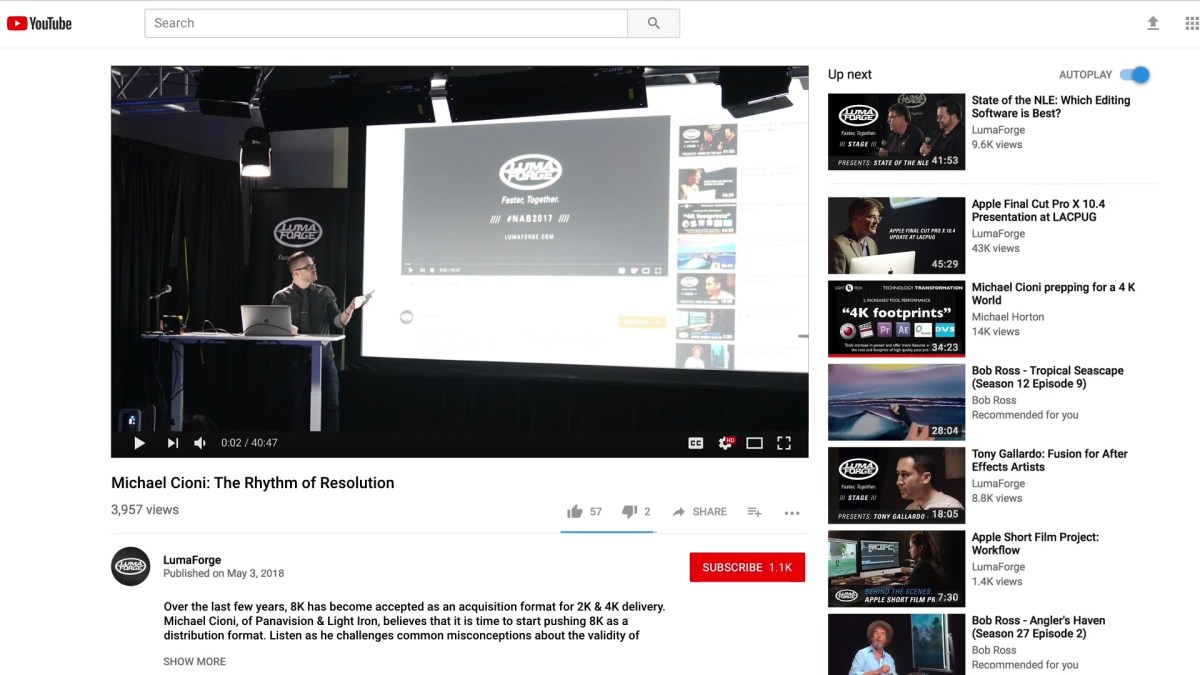
Over the last few years, 8K has become accepted as an acquisition format for 2K & 4K delivery. Michael Cioni, of Panavision & Light Iron, believes that it is time to start pushing 8K as a distribution format. Listen as he challenges common misconceptions about the validity of 8K exhibition.
Cioni uses Moore’s Law to explore the idea that the resolution of our capture and delivery of video will continue to grow far into the future. In the early years of Light Iron, Michael and his team faced many challenges in moving from a 2K to 4K digital intermediate for their customers. But they overcame those challenges and are now working toward supporting 8K distribution.
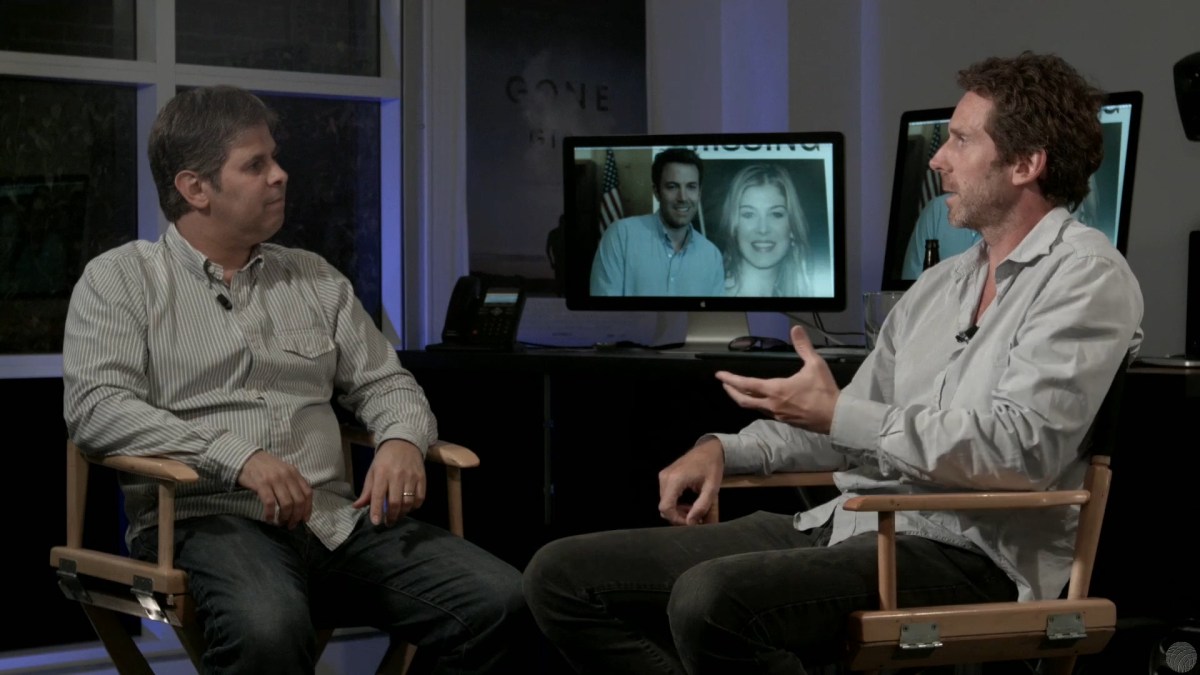
A homage to one of my favourite David Fincher films: Gone Girl! In this summary tutorial, I’ll show you how I recreated the lounge room from Gone Girl.
I loved the lighting and cool palette of Gone Girl, and wondered if there was any “secret” to making it look like this. So as a learning exercise, I recreated the lounge room entirely in Blender and rendered with Cycles.
Took about 30 hours to create in total + another 49 hours for the tutorial.