Front Row: David Fincher

John Wilson
December 17, 2020
Front Row (BBC, Radio 4)

Visionary director David Fincher on Mank, his new film about 1930s Hollywood, as seen through the eyes of screenwriter Herman J. Mankiewicz (Gary Oldman) as he races to finish Citizen Kane with Orson Welles.

Mank‘s screenplay is by Fincher’s father Jack Fincher, who started writing it in the early 1990s and died in 2003.

David Fincher’s other films, which have earned thirty Oscar nominations, include Fight Club, Se7en, The Zodiac, The Social Network, The Curious Case of Benjamin Button, Gone Girl, and Panic Room.

Fincher also talks about the future of cinema, streaming, and his early career as a director of iconic music videos such as Madonna‘s Vogue and George Michael‘s Freedom.

Mank is released on Netflix.

Presenter: John Wilson
Producer: Timothy Prosser
Studio Manager: Emma Harth

Listen to the podcast:

Front Row (BBC, Radio 4)
BBC Sounds

The People Who Can See Inside David Fincher’s Head

The famously meticulous Mank director is surrounded by collaborators tasked with turning his most ambitious ideas into reality.

David Sims
December 9, 2020
The Atlantic

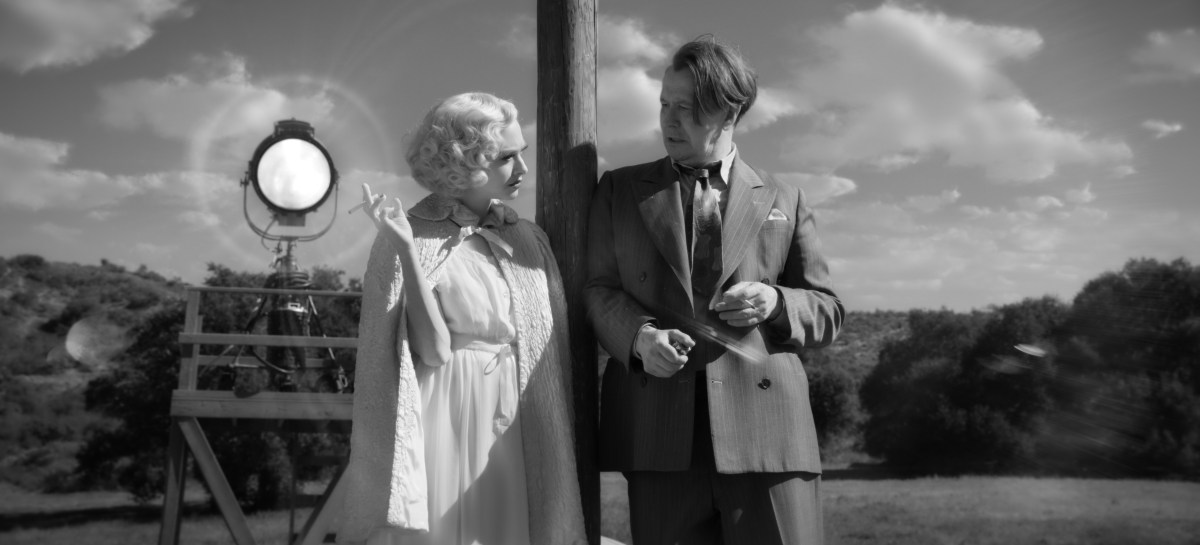
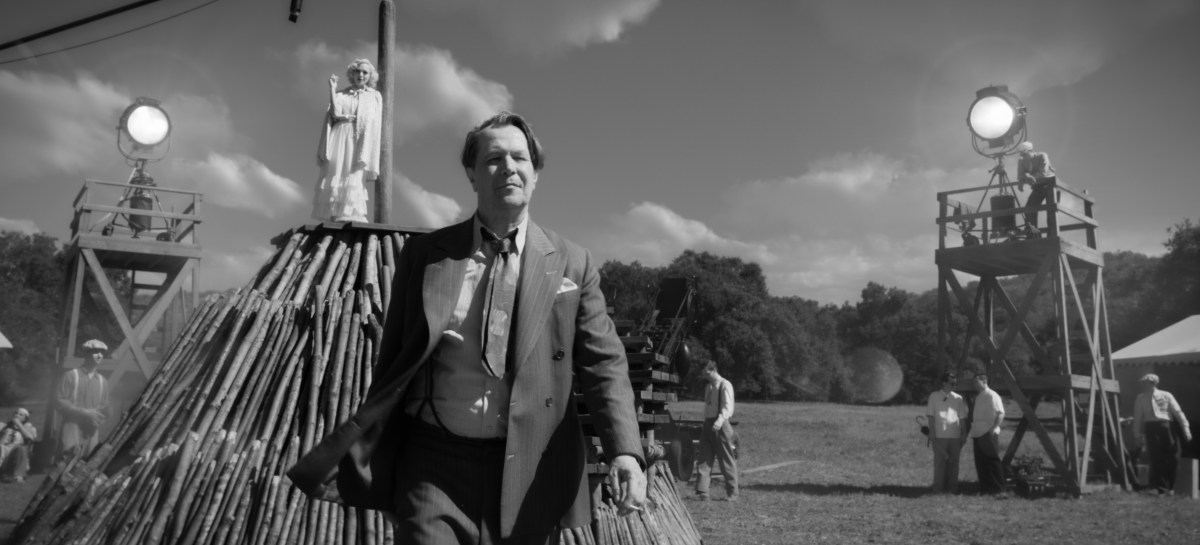
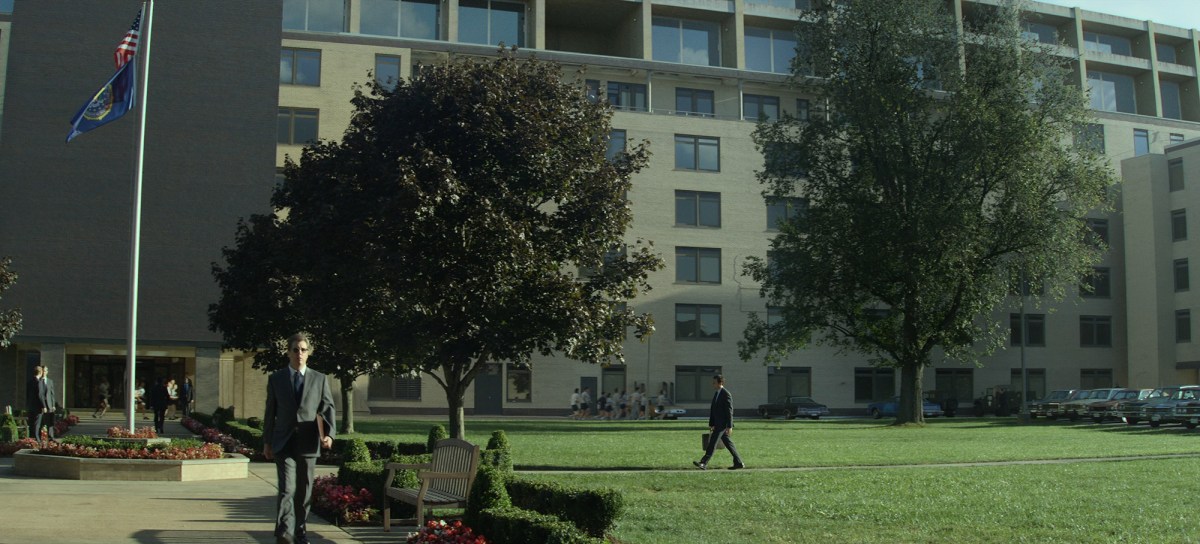
Early in Netflix’s Mank, the screenwriter Herman J. Mankiewicz (played by Gary Oldman) ambles onto an outdoor movie set, where he bumps into an array of glamorous characters. In a scene full of repartee with real-life figures such as the actor Marion Davies, the film honcho Louis B. Mayer, and the mogul William Randolph Hearst, the visual details of the environment might seem unimportant. But to Mank’s director, David Fincher, they mattered. “The grass was not to David’s liking, and the sky was not to his liking, so all that’s been replaced,” Peter Mavromates, his co-producer, told me. When making a movie, Fincher literally controls heaven and earth.

That example sums up the capricious-sounding, godlike power of a director, especially in the age of digital filmmaking, which allows for total command of every frame. But as with all of his movies, Fincher’s vision for Mank was realized by a group of dedicated collaborators, most of whom have worked with the director for many years across projects. This film, which Fincher mulled for nearly three decades, is unlike anything he has made before. An unusual-looking-and-sounding film set in the Golden Age of Hollywood, Mank reflects the aesthetic of the 1930s with its black-and-white cinematography; an echoey, old-fashioned sound mix; and a brassy, orchestral score. But Fincher also wanted it to be a distinctly modern film, which posed many unique and fascinating technical challenges to the creators charged with bringing his lofty ideas to life.

Read the full profile

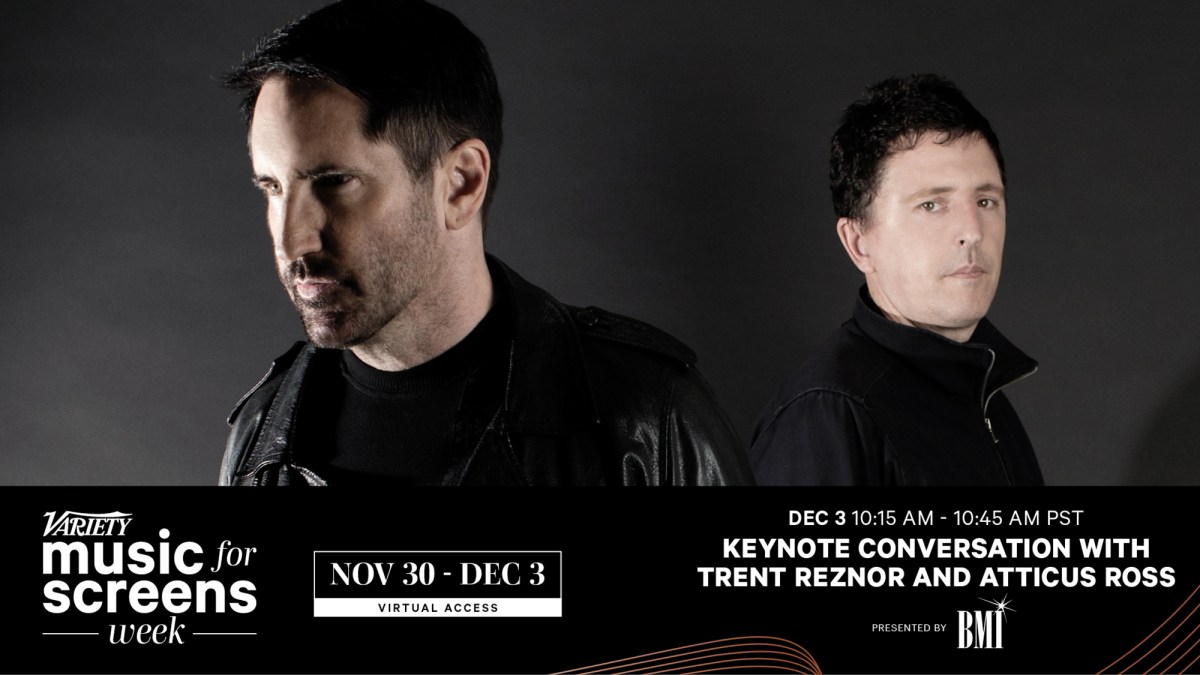
Variety’s Music for Screens Week: Keynote Conversation with Trent Reznor and Atticus Ross

Shirley Halperin, Executive Editor of Music at Variety
December 3, 2020
Variety

Scoring Films Allows Writers to Explore a Range of Styles

Members of Nine Inch Nails produce more than just rock content. During the keynote conversation with Trent Reznor and Atticus Ross, moderator Shirley Halperin dug into their scoring success on a range of film projects, from “The Social Network” to “Watchmen,” “Soul” and “Mank.”

Writing music for the screen has given the artists their fair share of challenges, the most recent being composing big band and orchestral scores. But without the opportunity to score films, the band members said they’d miss out on exploring the various realms of music.

“We feel really proud to be involved, and proud of the journey that we were put on,” Reznor said. “That’s one of the things that’s great about working on films. In our life in Nine Inch Nails, we kind of don’t know what to expect — we have a pretty good idea of what road we’re going to go down or what the future might hold. With film, it’s like you’re on a finite, intense journey that might lead you down paths that in our other lives we wouldn’t get to go on.”

Watch the Keynote Conversation with Trent Reznor and Atticus Ross:

Watch the full video

‘Mank’ Production Team on Creating a Feast for the Eyes and Ears for the Netflix Period Film

Jazz Tangcay
December 4, 2020
Variety

In David Fincher’s “Mank,” bowing Dec. 4 on Netflix, a key sequence takes place at Hearst Castle, when Gary Oldman’s Herman J. Mankiewicz shows up drunk and unannounced at a lavish dinner party thrown by newspaper tycoon William Randolph Hearst, played by Charles Dance.

Filming is normally not allowed at the actual estate, with Lady Gaga’s “G.U.Y.” video the rare exception. So production designer Donald Graham Burt and Fincher spent months tracking down locations around Los Angeles that could stand in for the grand mansion. Interiors and exteriors were shot at a Pasadena estate, the Huntington Gardens, in Malibu and on soundstages, all carefully decorated to give the feel of San Simeon if not the exact details.

It was up to sound mixer Ren Klyce to capture the extravagance that Fincher sought when filming those scenes. Klyce reverse-engineered the mix — distorting sounds, lowering the dynamic range and limiting the high frequency to take audiences back to 1930s Hollywood and the “Citizen Kane” era.

Burt and Klyce break down how they re-created the estate and captured the aura of wealth.

Mix Magazine 2020: The Music in Sound with Ren Klyce

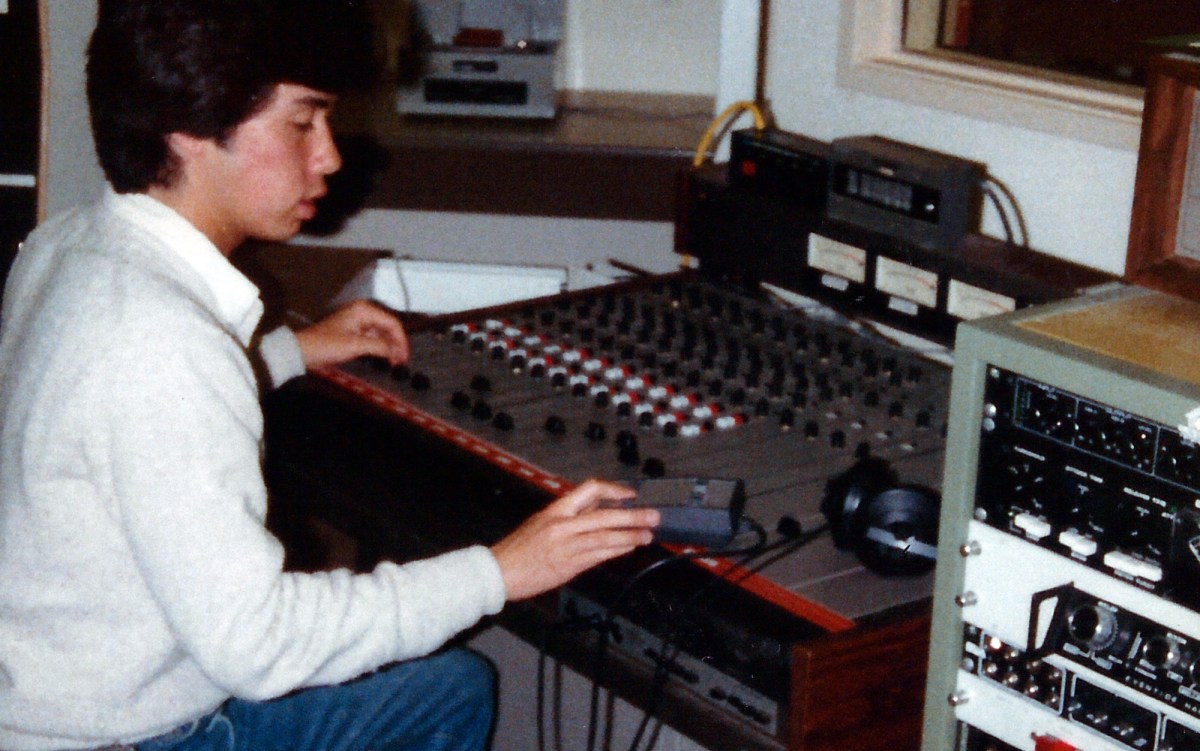
Ren Klyce in Peter Elsea’s Studio (1984)

Larry Blake
November 5, 2020
Mix Magazine / SoundWorks Collection

Animated short for Sesame Street (January 17, 1984) produced by John Korty. Sound and music by Ren Klyce:

SoundWorks Collection: The Sound of MindHunter

Glenn Kiser, Director of the Dolby Institute
July 2, 2020
SoundWorks Collection / The Dolby Institute

Cinema director David Fincher created one of the first original streaming series with House of Cards, and his innovative spirit infuses the Netflix original series Mindhunter, now in its second season.

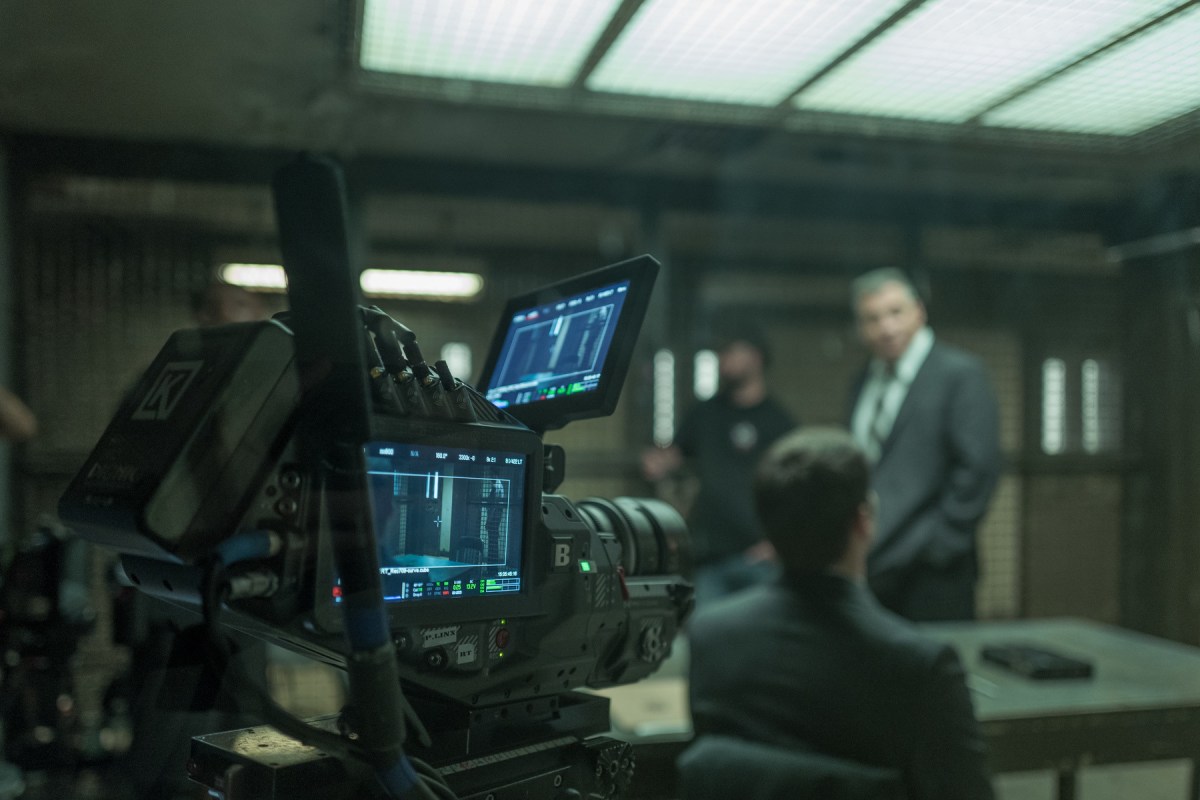
In this podcast episode, the sound team discuss Fincher’s unique approach to the sound of serial killer interrogation scenes, a hallmark of this fascinating, dark series. The team discuss setting the acoustic tone of the series, including the oppression of the FBI agents’ basement office (and a very special door), why it was important to Fincher to always hear trainee agents at Quantico at target practice, and the joy of receiving Fincher’s incredibly detailed mix notes.

Steve Bissinger – Sound Effects Editor
Scott Lewis – Re-Recording Mixer
Stephen Urata – Re-Recording Mixer

Listen to the SoundWorks Collection podcast on:

Apple Podcasts
Spotify

SoundCloud
Stitcher

How Crafts Amplified Berkowitz, Watson, & Manson Scenes in ‘Mindhunter’ Season 2

A look at the crafts behind the killer interrogations, including cinematography, sound editing, prosthetics, editing, and rerecording mixers.

Megan McLachlan
June 20, 2020
Awards Daily

Awards Daily’s Megan McLachlan and the technical team behind Netflix’s Mindhunter Season 2 (cinematography, sound editing, editing, prosthetics, and rerecording mixers) break down why each killer interview is completely different.

Mindhunter Season 2 starts with a “doozy” of a sequence.

“You’re not sure where you are,” said Mindhunter re-recording mixer Scott Lewis.

The opening sequence reacquaints us with the mind of a killer—in this case, specifically the BTK Killer (Sonny Valicenti), who we’ve been following in Season 1 through vignettes. BTK’s wife comes home to discover him tying himself up in the bathroom while wearing a mask. Lewis and his re-recording mixer partner Stephen Urata went back and forth about how the sound of the door, bumping from BTK’s aggression, was supposed to sound from down the hall.

“[Director] David [Fincher] gave some vague directions for that,” said Urata. “We tried to keep it really mysterious. We started with really dreamy, big reverb, did some fabbing, and [the wife] starts picking up on those knocking sounds. We took our liberties with it. The knocking sounds probably wouldn’t be that loud.”

It had to compete with Roxy Music’s “In Every Dream Home a Heartache,” something they had to find the right timing for with the knocks. When it came to editing the sequence with the music, editor Kirk Baxter felt like he was working on a music video.

“The track was predetermined, so I could plot everything to the music, when it was gonna hit,” said Baxter. “So much of the reaching, the hand, it was based around being stretched so the door opened at the exact beat I needed it to. To me, it was like a Christmas present. When you’ve got all of the angles and coverage, you can expand the tension and manipulate the hell out of it.”

The Crafts Behind the Madness of Mindhunter Season 2

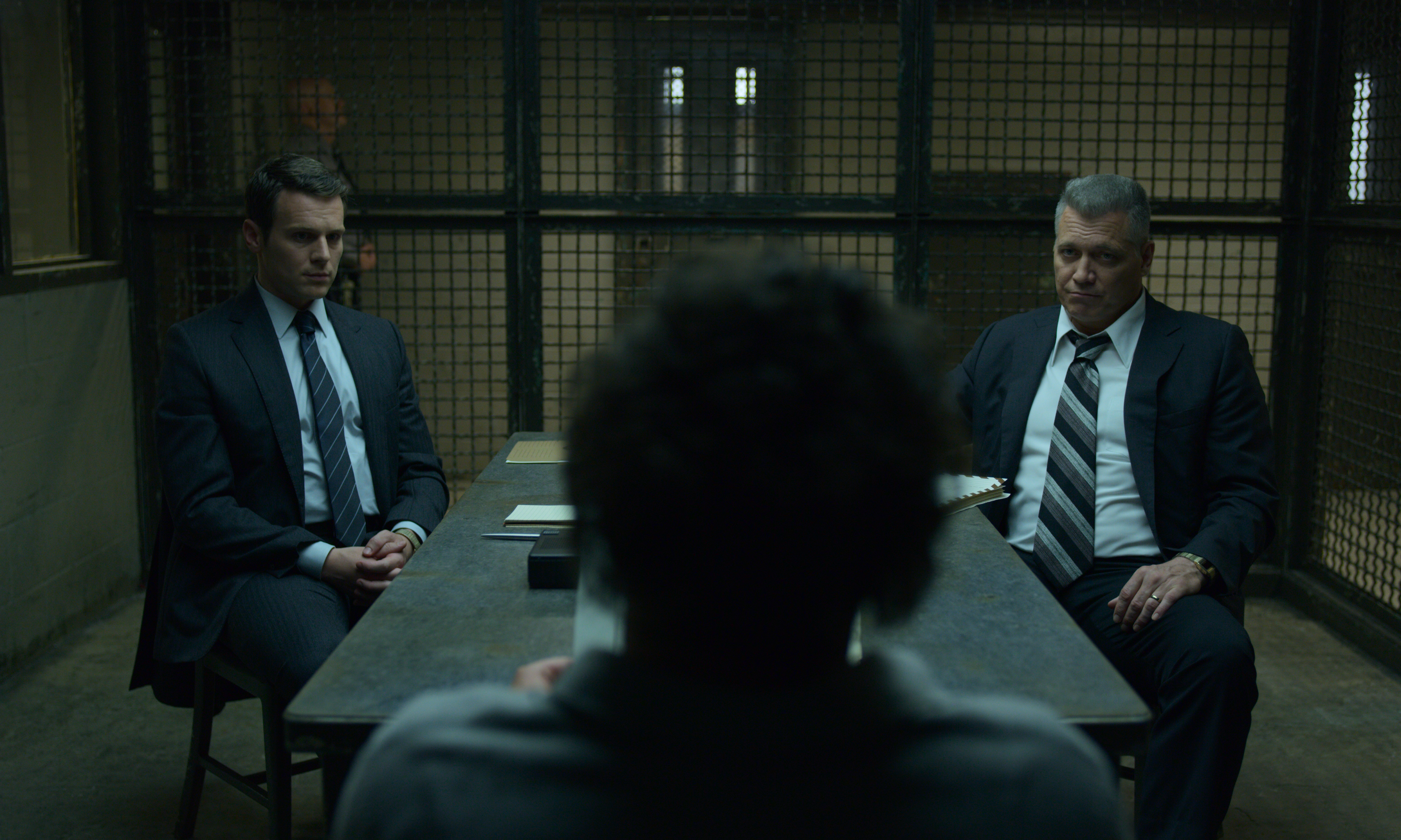
It’s specific technical details like this that take Mindhunter to a new level of creepy with each episode. And though these elements are subtle, they add so much to each and every scene, especially when Holden (Jonathan Groff) and Tench (Holt McCallany) interview the killers.

While they might seem like they’re similar in format, each interrogation scene is completely different and tells you so much about the killer they’re questioning, with precise engineering and great care that goes into them. Let’s look at how Berkowitz, Tex Watson, and Manson are all completely different from each other.

Featured crafts:

Kirk Baxter, editing
Kazu Hiro, prosthetics
Scott Lewis & Stephen Urata, rerecording mixers
Erik Messerschmidt, cinematographer
Jeremy Molod, sound editor

Read the full profile

Creating Mindhunter’s Calculated Sound

Director David Fincher’s Mindhunter series on Netflix is as calculated as the serial killers it fictionalizes. Fincher locks down all the details on a nanoscopic level, including the sound. Here, Skywalker Sound supervising sound editor Jeremy Molod talks about his collaboration with Fincher and how they deliver a finely-crafted show.

Jennifer Walden
May 20, 2020
A Sound Effect

Having spent so much time as a Foley editor in his early career, award-winning supervising sound editor Jeremy Molod, at Skywalker Sound, appreciates the value of that performance art, as does his long-time collaborator director David Fincher. So much so, that Fincher even requests samples of potential footstep sounds for his characters before the Foley is shot. With all the details that a director has to attend to, it’s rare that one allocates so much attention to sound — even down to the Foley footsteps.

In Season 2, Ep. 2 of Netflix’s Mindhunter series — which is up for Emmy consideration for sound editing and mixing — Fincher and Molod used Foley and sound design to communicate the nervousness and discomfort of BTK-survivor Kevin Bright (Andrew Yackel) as he recounts details of the attack to detectives Tench (Holt McCallany) and Drowatzky (Jeb Kreager). Kevin is in the backseat of Drowatzky’s truck, and because of the camera angle and depth-of-field, he’s not clearly seen by the audience. His movements are implied through Foley, and those increasingly agitated movements reflect Kevin’s emotional state.

Here, Molod discusses the sound team’s work on Mindhunter, focusing on several key scenes in Season 2, Ep. 2, and their use of Foley and loop group as a storytelling tool that adds unique detail to the soundtrack.

How has your experience of working on Mindhunter Season 1 impacted your approach to Season 2? Any lessons learned on that first season that sparked ideas for this new season?

Jeremy Molod (JM): Once we got through the first season, our crew had a rhythm down. That made things a lot easier for Season 2 just in terms of our workflow and how we do it.

We didn’t take a new approach to the second season. We treated Season 1 and Season 2 as one long, huge movie. We continued exactly what we were doing before. David [Fincher] would give us his spotting notes and we’d work on it and then he would give us notes on what he liked and didn’t like. We just proceeded that way.

Since you’ve worked with David Fincher before, did he just give you general notes and let you do your thing?

JM: No. He’s very hands-on, more so than any other director I’ve worked with. He cares about every little aspect. Before we start working on it, he’ll tell us what he has in mind sound-wise, but every single day he is chiming in with more information, more detailed notes, and more ideas of things he’d like us to try. It’s a back-and-forth all the time. I send things to David almost every day for him to listen to and make notes on. It’s a very collaborative effort.

Often directors are so busy handling everything else that they don’t have time for sound collaboration. It’s good to hear he’s very involved in that…

JM: Absolutely. It’s a rare thing for a director to be this involved in sound, but that’s one of the reasons his movies are so good. He cares about every little aspect of it.

Read the full interview

Netflix’s Mindhunter: Skywalker’s audio adds to David Fincher’s vision

Patrick Birk
March 26, 2020
postPerspective

I was late in discovering David Fincher’s gripping series on serial killers, Mindhunter. But last summer, I noticed the Netflix original lurking in my suggested titles and decided to give it a whirl. I burned through both seasons within a week. The show is both thrilling and chilling, but the majority of these moments are not achieved through blazing guns, jump scares and pyrotechnics. It instead focuses on the inner lives of multiple murderers and the FBI agents whose job it is to understand them through subtle but detail-rich conversation.

Sound plays a crucial role in setting the tone of the series and heightening tension through each narrative arc. I recently spoke to rerecording mixers Scott Lewis and Stephen Urata as well as supervising sound editor Jeremy Molod — all from Skywalker Sound — about their process creating a haunting and detail-laden soundtrack. Let’s start with Lewis and Urata and then work our way to Molod.

Scott Lewis, Stephen Urata, and Jeremy Molod

How is working with David Fincher? Does he have any directorial preferences when it comes to sound? I know he’s been big on loud backgrounds in crowded spaces since The Social Network.

Scott Lewis: David is extremely detail-oriented and knowledgeable about sound. So he would give us very indepth notes about the mix… down to the decibel.

Stephen Urata: That level of attention to detail is one of the more challenging parts of working on a show like Mindhunter.

Working with a director who is so involved in the audio, does that limit your freedom at all?

Lewis: No. It doesn’t curtail your freedom, because when a director has a really clear vision, it’s more about crafting the track to be what he’s looking for. Ultimately, it’s the director’s show, and he has a way of bringing the best work out of people. I’m sure you heard about how he does hundreds of takes with actors to get many options. He takes a similar approach with sound in that we might give him multiple options for a certain scene or give him many different flavors of something to choose from. And he’ll push us to deliver the goods. For example, you might deliver a technically perfect mix but he’ll dig in until it’s exactly what he wants it to be.

Urata: Exactly. It’s not that he’s curtailing or handcuffing us from doing something creative. This project has been one of my favorites because it was just the editorial team and sound design, and then it would come to the mix stage. That’s where it would be just Scott and me in a mix room just the two of us and we’d get a shot at our own aesthetic and our own choice. It was really a lot of fun trying to nail down what our favorite version of the mix would be, and David really gave us that opportunity. If he wanted something else he would have just said, “I want it like this and only do it like this.”

But at the same time, we would do something maybe completely different than he was expecting, and if he liked it, he would say, “I wasn’t thinking that, but if you’re going to go that direction, try this also.” So he wasn’t handcuffing us, he was pushing us.

Read the full interview