Shot Talk: Mank, with Director David Fincher and Cinematographer Erik Messerschmidt

Lawrence Sher, ASC
April 18, 2021
Shotdeck

We’re extremely excited to share with you the latest addition of our Shot Talk interview series. Legendary filmmaker David Fincher and his incredible cinematographer Erik Messerschmidt sit down with cinematographer Lawrence Sher to discuss their 10x Oscar-nominated film Mank.

This episode has the kind of technical deep-dive discussions that you’re not gonna get anywhere else, including the philosophy of black and white vs. color cinematography, detailed FX breakdowns on several important scenes from the film, and why Fincher avoids Steadicam at all costs.

Along with the interview, we’re also releasing a bunch of great shots from the film, so you can start adding them to your decks and getting inspired right away!

But before you dive in and watch the filmmaking mini-masterclass above… make sure to go check out Mank, streaming now on Netflix.

Sign up for an account at ShotDeck, the world’s first fully-searchable film image database. It’s an invaluable research and educational resource that makes life easier for anyone in Film, Media, Advertising, and Education.

If you are creative, Shotdeck is the place to get inspired and discover new films and talented artists through our meticulously tagged database of still images, all while saving you time.

Search by film title, keyword, location, color, or a dozen other criteria to quickly find the exact “shots” you need to communicate your vision for your next project.
Shotdeck also on: YouTube, Instagram, Twitter

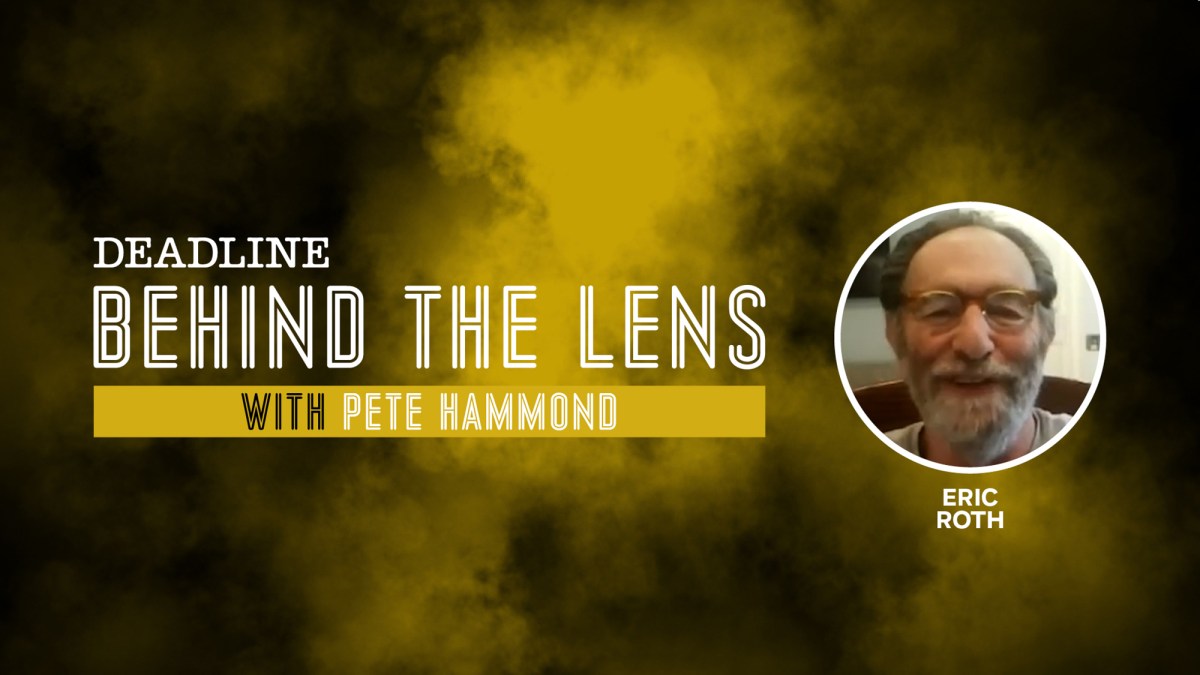
Behind the Lens: Eric Roth on Life as a Top Screenwriter

Working With Everyone From Scorsese To Spielberg To Fincher, And How He Became A Producer On ‘Mank’

Pete Hammond
April 16, 2021
Deadline

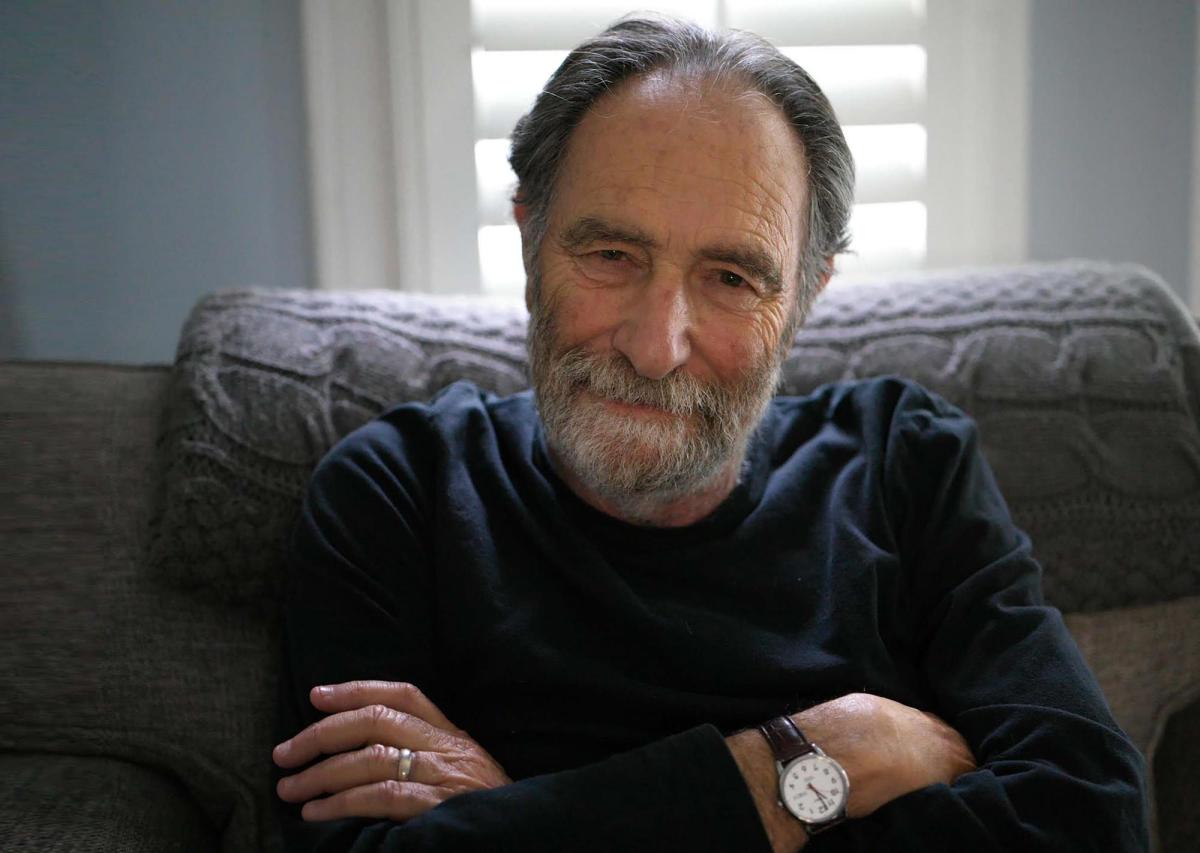
If you are in the mood for a master class in what it takes to be a successful screenwriter in Hollywood, look no further than this week’s episode of my Deadline video series Behind the Lens, where I go deep into the making of Mank with one of its producers, Eric Roth. This happens to be Roth’s first feature film producing credit, and he still laughs at the thought of it because in his heart he isn’t really a member of that tribe. The man is a writer through and through; while Mank has brought him his sixth Oscar nomination, it’s his first in the Best Picture category.

Roth is one of the most prolific writers in movies, having previously been Oscar nominated for scripts on Munich, The Insider, The Curious Case of Benjamin Button, A Star Is Born and Forrest Gump, for which he actually won the Academy Award. He talks about all of them, what it takes to make a successful movie, the many directors he has worked with, as well as actors, and so much more. Scorsese, Spielberg, Fincher, Mann, Zemeckis — the list is just so very long.

We actually start our interview talking about one big name he worked with that made him very proud, and that was Akira Kurosawa. Not bad. He also has high praise for his Mank director David Fincher, and tells how the director brought him into the project as a producer, but to also carefully parse the screenplay without rewriting it. In other words, he and Fincher went over it line by line and Roth was probably the best kind of sounding board you could ever hope for. Fincher’s late father Jack Fincher died in 2003 but gets sole credit. In that regard we also talk about how a film about a film about a screenwriter could gather a leading 10 nominations yet not get one for its writing (!) It baffles him, but that is what happened. Mank details the creation of the certified 1941 classic Citizen Kane as well as how writer Herman Mankiewicz and Orson Welles managed to jointly create an all-timer, sharing the film’s only Oscar for Best Screenplay.

Roth’s other credits include scripts for The Good Shepherd, Ali, The Postman, The Horse Whisperer, Extremely Loud and Incredibly Close, the upcoming Killers of the Flower Moon for Martin Scorsese, whom he praises mightily, and Denis Villeneuve’s Dune, among others. When I produce a preview card for one of his earliest credits, The Nickel Ride, which I saw at a sneak in 1974, he went right down memory lane and tells the story of his first job on a big film, rewriting The Drowning Pool for Paul Newman who greeted him on the set by saying, “Here comes our savior.” Indeed.

Watch the full conversation

Producer Eric Roth on ‘Mank’, David Fincher, and the Relationship Between Writers and Directors

The Oscar-winning screenwriter discusses his work on David Fincher’s Netflix movie and shares some candid thoughts about a writer’s role in the craft of filmmaking.

Adam Chitwood
April 15, 2021
Collider

Eric Roth knows a thing or two about screenwriters. And more specifically, the relationship between a screenwriter and a director. He’s been a working writer in Hollywood for decades, and has collaborated with directors as varied and accomplished as Steven SpielbergRobert ZemeckisMichael MannMartin Scorsese, and Bradley Cooper. He’s been nominated for six Oscars, and has won once (for Forrest Gump). He’s had massive hits and disappointing bombs. Plenty of ups and downs. And at 76 years of age, you can hear in his voice that he still has the enthusiasm and love for the craft of moviemaking of an up-and-coming screenwriter bowled over by the magic of Hollywood.

Which is why, when David Fincher got the chance to make the film Mank at Netflix, one of his first calls was to Roth, with whom he had worked on The Curious Case of Benjamin Button and House of Cards. The story of Mank traverses well-worn territory – it chronicles the writing of the original screenplay for Citizen Kane by alcoholic screenwriter Herman J. Mankiewicz (played wonderfully by Gary Oldman). The film doesn’t delve into the credits debate that ensued after Mank finished the screenplay, but instead it’s a story about a talented writer who’s been slumming it in Hollywood as a script doctor and finally decides he’s going to shoot his shot with a controversial, thinly veiled story inspired by his real-life acquaintance William Randolph Hearst (played in the film by Charles Dance).

What made Mank extra tricky to pull off was the fact that the script was written by Fincher’s father Jack Fincher, who died in 2003. David and Jack had worked together to develop the screenplay throughout the 90s, but failed to find a studio willing to finance the film – at least the way Fincher wanted to make it (in black-and-white with a 1930s Old Hollywood feel). When Roth got the call from Fincher, he was asked not to rewrite the screenplay as is normally his task, but to instead come onboard the film as a producer and work with Fincher to make surgical changes here and there to get the script in tip-top shape as they headed into production.

It’s a somewhat extraordinary situation, as Roth was tasked with honoring what Jack Fincher had put together while also making small alterations here and there. And, of course, consulting with David to bring his decades of experience as a working screenwriter to the table, which would then inform what the movie has to say about Hollywood and the writer-director relationship.

So I jumped at the chance to speak with Roth about his involvement in Mank recently for an exclusive interview. While the discussion was pegged to Mank, it really went many different places as Roth elegantly and intelligently dove into the complicated relationship between a writer and a director, and why he believes a script can only take you so far and it’s up to the director to decide the direction it will take as it becomes a film. He talked about his relationship with Fincher, his specific role in bringing Mank to the screen, and why he feels it’s a true work of art.

We also talked about the craft of screenwriting in general and why Roth doesn’t feel like it’s an artform in and of itself, and he spoke enthusiastically about collaborating with Scorsese on Killers of the Flower Moon and Denis Villeneuve on Dune. It’s a wide-ranging conversation with a true Hollywood legend, and you’ll very quickly see that his passion for movies and moviemaking is infectious.

Read the full interview

‘Mank’ writer-producer Eric Roth on working with Fincher, ’Dune’, Scorsese’s next project

Oscar-winning screenwriter Eric Roth served twin roles on Mank — punching up Jack Fincher’s screenplay and as producer. Mark Salisbury talks to him about his 50-year career, including upcoming films for Denis Villeneuve and Martin Scorsese

Mark Salisbury (Twitter)
April 14, 2021
Screen Daily

Back in the early 1990s, when David Fincher was still best known for his Madonna videos and had yet to direct a feature, he challenged his father Jack, who had recently retired as a Life magazine journalist, to write a screenplay. He even suggested a subject matter: Herman J Mankiewicz, who penned Citizen Kane for Orson Welles, but whose authorship had been controversially overlooked, not least by Welles, until an extended essay in 1971 by the late New Yorker critic Pauline Kael reclaimed it.

Fincher tried in vain to set Mank up for the best part of a decade, but his desire to shoot in black and white proved a sticking point with financiers. Until, that was, Netflix, for whom Fincher had produced House Of Cards and Mindhunters, asked what he wanted to do next. Did he, they wondered, have a passion project he had always wanted to direct? Fincher took down his father’s script from the shelf, and Netflix agreed.

Jack died in 2003 so Fincher called on Eric Roth, with whom he had collaborated on The Curious Case Of Benjamin Button and House Of Cards, to help him finesse the script. “David and I are very close,” says Roth, “and I’ve lent my eye, a point of view, on a few of his other movies. He has a group of us, including Bob Towne, Steven Soderbergh and Spike Jonze, that looks at all of his movies at some point in a cut and you’re allowed to tell him whatever you feel about it. So I’ve been involved in a number of those. He came to me a couple of years ago and asked if I would like to get involved with this.”

Read the full profile

The Nick Taylor Horror Show: The Empty Man, Writer/Director David Prior

Nick Taylor (Twitter)
April 1, 2021
The Nick Taylor Horror Show

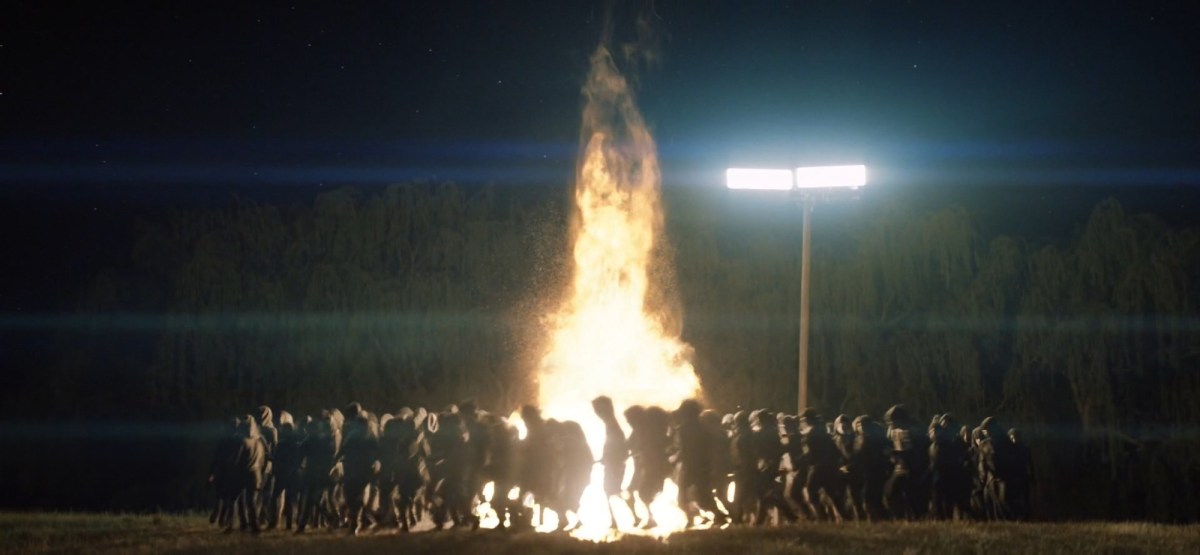
David Prior is an American writer and director who made his feature directorial debut with The Empty Man, an epic in the world of horror, one of the most criminally overlooked horror movies of 2020, and one of the most ambitious horror movies of recent years . It has the scope and execution of a Chris Nolan movie while mixing elements of cults, quantum horror, and creepypastas into an extremely unique mythology that is all its own.

The story behind the making of The Empty Man is very harrowing. In the middle of shooting in South Africa, it was temporarily shut down due to weather conditions, during which a key studio executive who greenlit the film left the studio, essentially leaving the movie abandoned. If that wasn’t enough, once the movie finally got finished, David had to endure a series of calamities, including negative test screenings and studio interference which kept the movie in limbo for years. If that wasn’t enough, once the movie was finally released, it was in theatres during the height of the pandemic only to get largely negative Rotten Tomato reviews (which were very unjust) and thus be completely buried.

However, as of the past few weeks, The Empty Man has been seeing a major resurgence as a number of outspoken critics have been singing the praises of the movie and thus causing it to get the attention it deserves. The story behind The Empty Man brings to light the many issues that can befall a movie but also shows the power of the internet to champion a movie when it belongs in the spotlight. I’m personally thrilled that The Empty Man is getting the viewership that it has been; it’s a must-see, and I’m convinced it will be considered a horror epic for years to come.

In this conversation with David, we got into the whole story behind The Empty Man, his directorial processes, and what he learned observing directors like David Fincher, Tim Burton, and Peter Weir when he visited them on set while producing special features for multiple DVD titles. All of this and so much more on today’s episode of The Nick Taylor Horror Show.

Read the full article and listen to the podcast:

The Nick Taylor Horror Show
Apple Podcasts
Spotify
YouTube
Stitcher
Audible (Amazon)

Watch The Empty Man

The Empty Man Is the Next Great Cult Horror Film

Vulture Recommends

Tres Dean
April 6, 2021
Vulture

Between the global pandemic, studio mergers, and the overwhelming onslaught of content flooding streaming services, it has never been easier for a movie to slip through the cracks. Years from now, we will no doubt look back on an entire generation of great films that were lost to the ever-shifting chaos of the industry over these past few years. What does feel safe to say is that when we are discussing the great works lost to this strange time, 2020’s The Empty Man will be in the conversation.

If you’re interested in the details of its tumultuous production, director David Prior has been remarkably candid about the process in recent interviews: 1, 2, 3. Long story short: The film, a very loose adaptation of Cullen Bunn and Vanesa R. Del Rey’s comic series of the same name, was marred by reshoots, recuts, the FoxDisney merger, a constantly shifting release date, and losing its original producer in the middle of production. After sitting on a shelf for years, it was tossed into theaters in the middle of the pandemic, grossed a paltry $4 million worldwide, and was quickly forgotten. It is currently only available to rent via Amazon, and as of the writing of this story, there are no plans for a DVD/Blu-ray release.

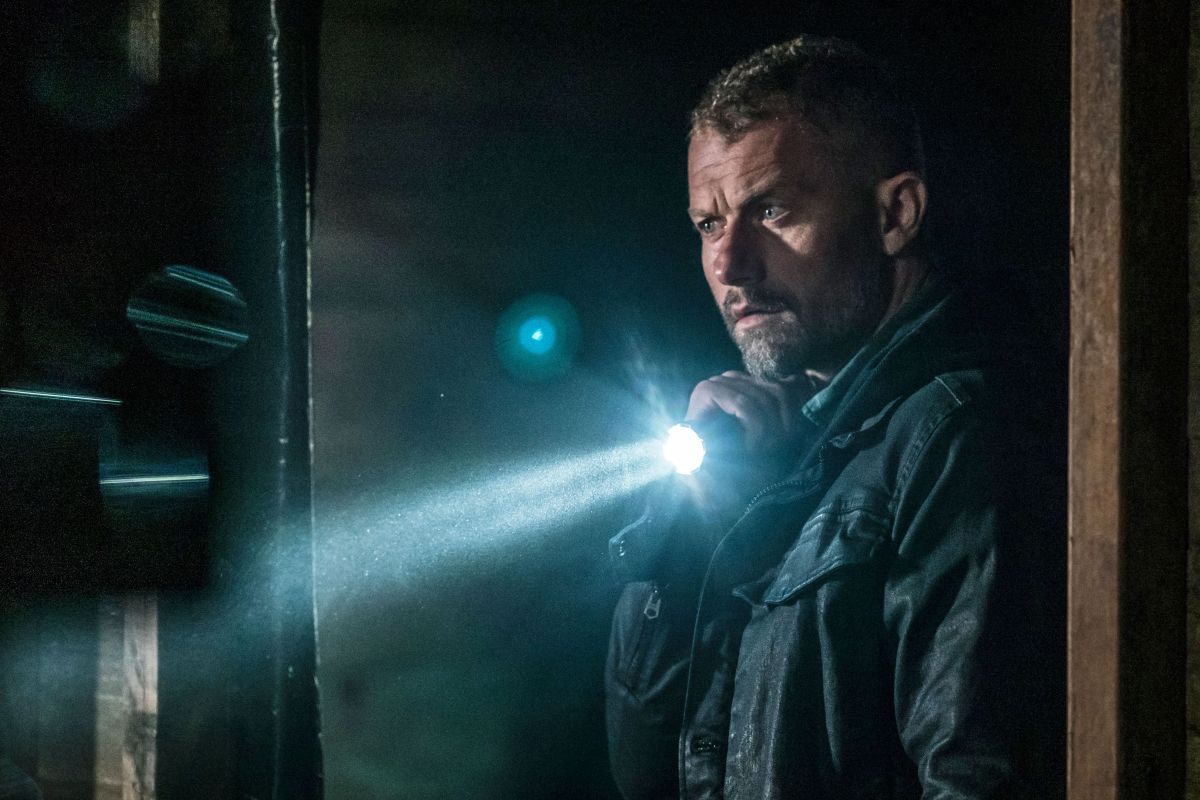
To be fair, even if theaters were open for business as usual, one could be forgiven for chalking The Empty Man up as skippable after its first trailer, which, in one of the more damning marketing moves in recent memory, dropped about a week before the film hit theaters. The film’s borderline nonexistent marketing paints the James Badge Dale vehicle as a sort of Slender Man–adjacent creepypasta horror, the sort of bland Blumhouse rip-off designed to come and go with as little noise as possible. Its initial critical reception was middling at best, though it even went underseen in that respect — its current 50 percent score on Rotten Tomatoes is based on 14 official reviews. It’s the sort of perfect storm that renders a film nonexistent in the cultural consciousness.

And that’s a shame, because The Empty Man very much warrants a place there.

Read the full article

Watch The Empty Man

‘Mank’ producer Eric Roth on his 1st time as a Best Picture nominee and his BIG upcoming 2021 films

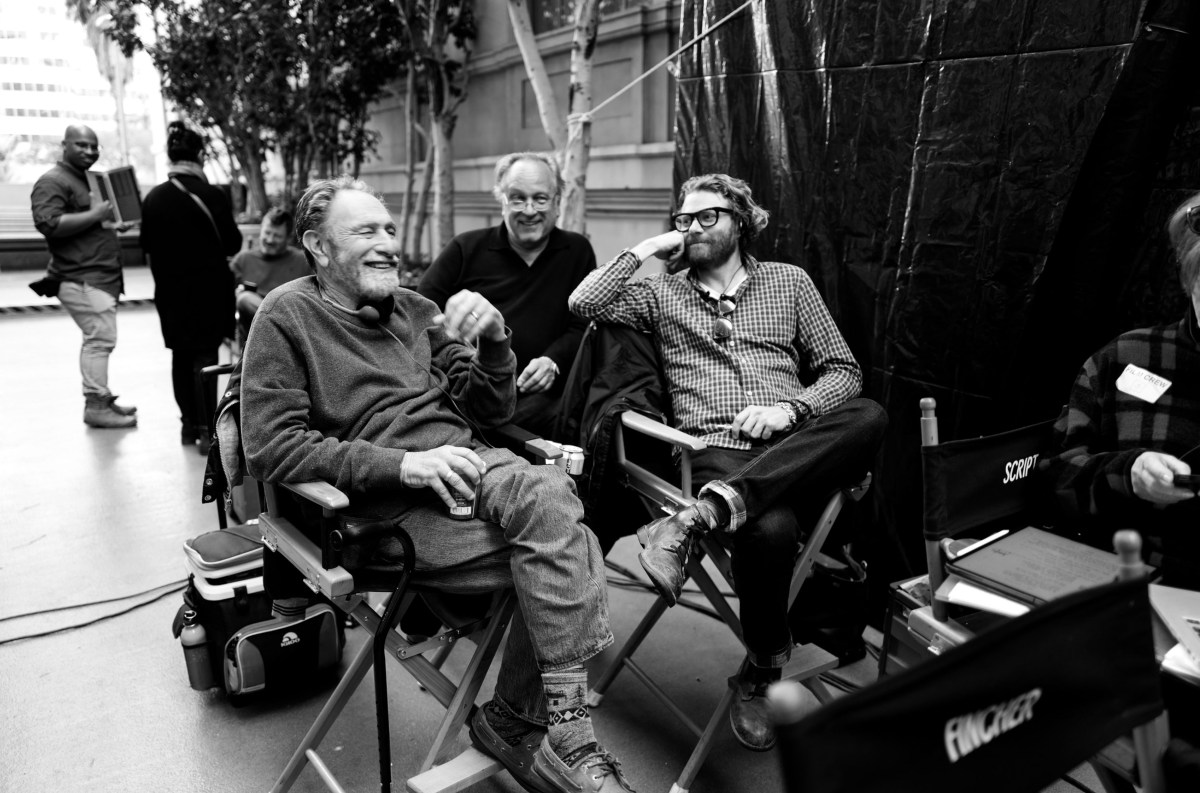
Eric Roth with co-producer Douglas Urbanski and cinematographer Erik Messerschmidt on the set of Mank (Gisele Schmidt-Oldman / Netflix)

Riley Chow
April 6, 2021
Gold Derby

“It’s going to be a short entrance and probably exit, not that I didn’t enjoy it,” laughs Eric Roth in his exclusive interview with Gold Derby about his foray into film producing with “Mank” for Netflix. Roth is such an industry veteran that he won the Writers Guild of America’s lifetime achievement award back in 2012. With screenplay credits going back five decades, including his Oscar-winning screenplay for 1994’s “Forrest Gump” and 2018’s “A Star is Born” earning him his fifth Best Adapted Screenplay nomination, “Mank” represents 76-year-old Roth’s debut as a film producer. He now has his first Oscar in the Best Picture category for his first time in contention.

Read the full article

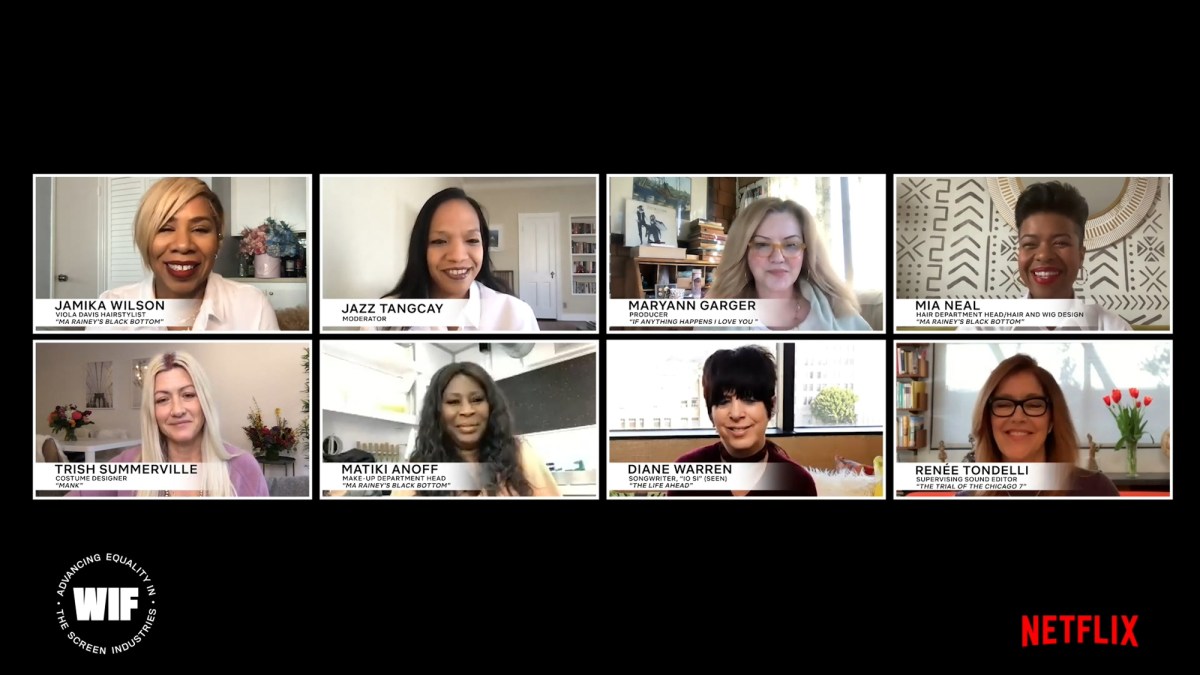
Netflix Presents a Women in Film Conversation

Jazz Tangcay, Senior Artisans Editor at Variety
March 24, 2021
Netflix Film Club (YouTube)

Join a who’s who of behind-the-scenes talent for a Women in Film discussion about their work on Netflix‘s Oscar®-nominated slate this year, including:

  • Animated Short Producer Maryann Garger (If Anything Happens I Love You)
  • Costume Designer Trish Summerville (Mank)
  • Hair-and-Makeup Artisans Mia Neal, Matiki Anoff and Jamika Wilson (Ma Rainey’s Black Bottom)
  • Songwriter Diane Warren (“Io Sí” from The Life Ahead)
  • Supervising Sound Editor Renée Tondelli (The Trial of the Chicago 7)

Roundtable with the 2021 Nominees for Outstanding Producer of Theatrical Motion Picture. PGA Awards

March 22, 2021
Producers Guild of America

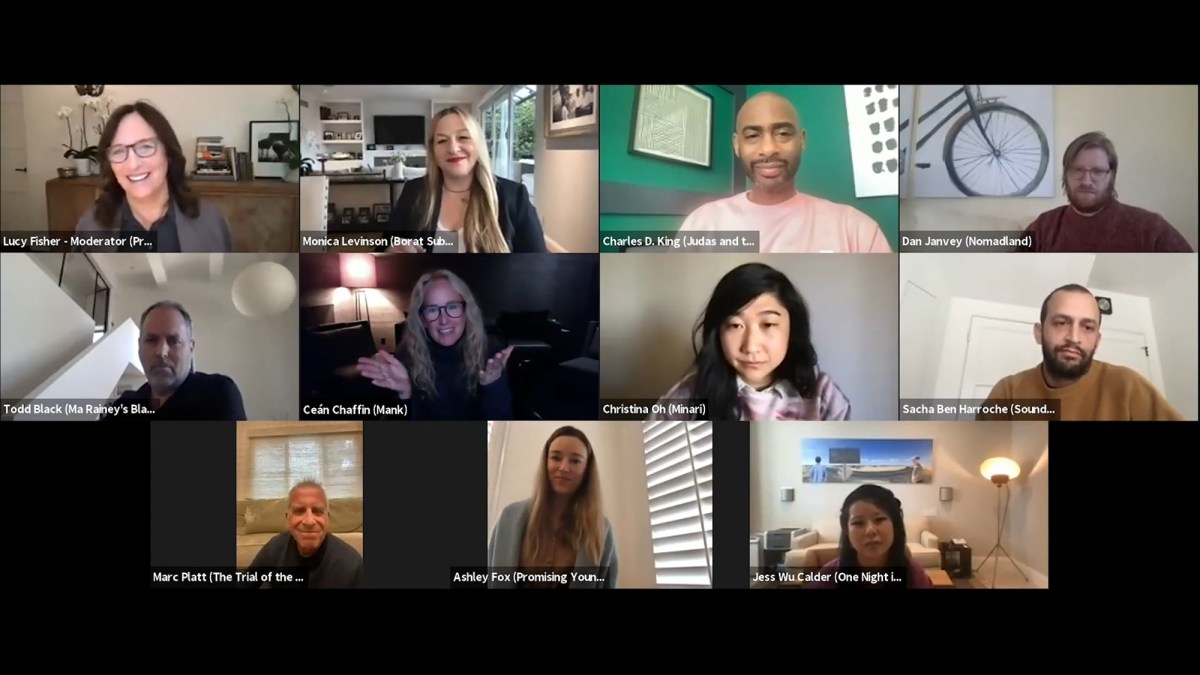
This illuminating roundtable features the 2021 nominees for the Darryl F. Zanuck Award for Outstanding Producer of Theatrical Motion Pictures.

Participants include: Monica Levinson (Borat Subsequent Moviefilm), Charles D. King (Judas and the Black Messiah), Todd Black (Ma Rainey’s Black Bottom), Ceán Chaffin (Mank), Christina Oh (Minari), Dan Janvey (Nomadland), Jess Wu Calder (One Night in Miami…), Ashley Fox (Promising Young Woman), Sacha Ben Harroche (Sound of Metal) and Marc Platt (The Trial of the Chicago 7).

Moderated by PGA President Lucy Fisher.

Our nominated producers discuss how their films, whether long in development or securing financing on the cusp of production, were driven by a sense of authenticity to their subjects and in some cases, an urgency to reflect the current cultural and political climate.

Recorded live on Saturday, March 20, 2021 during ‘A Day with the PGA Awards Nominees.’

Presented by The Hollywood Reporter. Additional sponsors include: General Motors, Greenslate, Honolulu Film Office, Panavision, Light Iron and Produce Iowa.

The Producers Guild of America is a non-profit trade organization that represents, protects and promotes the interests of all members of the producing team in film, television and new media. The Guild invests in its core values that benefit the industry at large. These values are rooted in facilitating employment of its members, advocating for sustainable practices in production that minimize human and environmental harm, ensuring a set culture that advances safety and creates viable pathways into the guild for the next generation of producers, particularly those from populations under-represented in the industry. Year-round it hosts a number of educational, mentoring and professional networking programs.

Follow the PGA: Facebook, Instagram, LinkedIN, Twitter, YouTube.

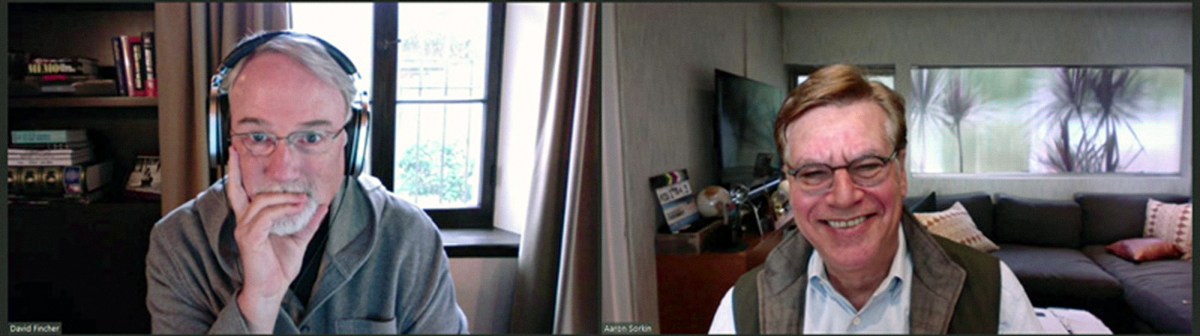
Director Aaron Sorkin discusses The Trial of the Chicago 7 with David Fincher

A DGA Virtual Q&A

January 23, 2021
The Director’s Cut. A DGA (Directors Guild of America) Podcast

The counterculture movement of the 1960s clashes with the hostile Nixon administration in Director Aaron Sorkin’s historical drama, The Trial of the Chicago 7.

Set in the aftermath of what happened after a peaceful protest turned into a violent encounter with the police at the 1968 Democratic National Convention in Chicago, Sorkin’s film recounts the infamous 1969 trial of seven political activists – that included moderate Students for a Democratic Society led by Tom Hayden, militant Yippies led by Abbie Hoffman and Jerry Rubin, and Bobby Seale of the Black Panthers – who were all charged with conspiracy in an unfair trial that transfixed the nation and sparked a conversation about mayhem intended to undermine the U.S. government.

On January 23, Sorkin discussed the making of The Trial of the Chicago 7 in a DGA Virtual Q&A session moderated by Director David Fincher (Mank).

During the conversation, Sorkin spoke about how he came up with a plan to shoot the riot scenes despite his budgetary limitations.

“I find a constraint like that forces you to get creative,” said Sorkin. “It forces you to have an idea. So we came up with this plan, we were going to get a few wide shots and we were going to take advantage of the tear gas. We got smoke everywhere. I discovered what happens when you shoot light through smoke so I wanted smoke in every scene. I could not get enough smoke. It didn’t matter where we were.”

In addition to his directing work on The Trial of the Chicago 7, Sorkin was nominated for the 2017 DGA Award for Outstanding Directorial Achievement in First-Time Feature for his debut film, Molly’s Game. He was also part of the producing team (which includes DGA President Thomas Schlamme) that won multiple Emmy awards for “Outstanding Drama Series” for their work on the series The West Wing. Sorkin also took home an Academy Award for “Best Writing, Adapted Screenplay” for David Fincher’s feature The Social Network.

Sorkin has been a DGA member since 2016.

Listen to the podcast:

DGA.org
Apple Podcasts
Spotify
YouTube