David Fincher’s Theory of Moviemaking

“If you think that you can direct a movie and not in some way show your hand as to who you are, you’re nuts,” the Mank filmmaker told The Atlantic.

David Sims
December 4, 2020
The Atlantic

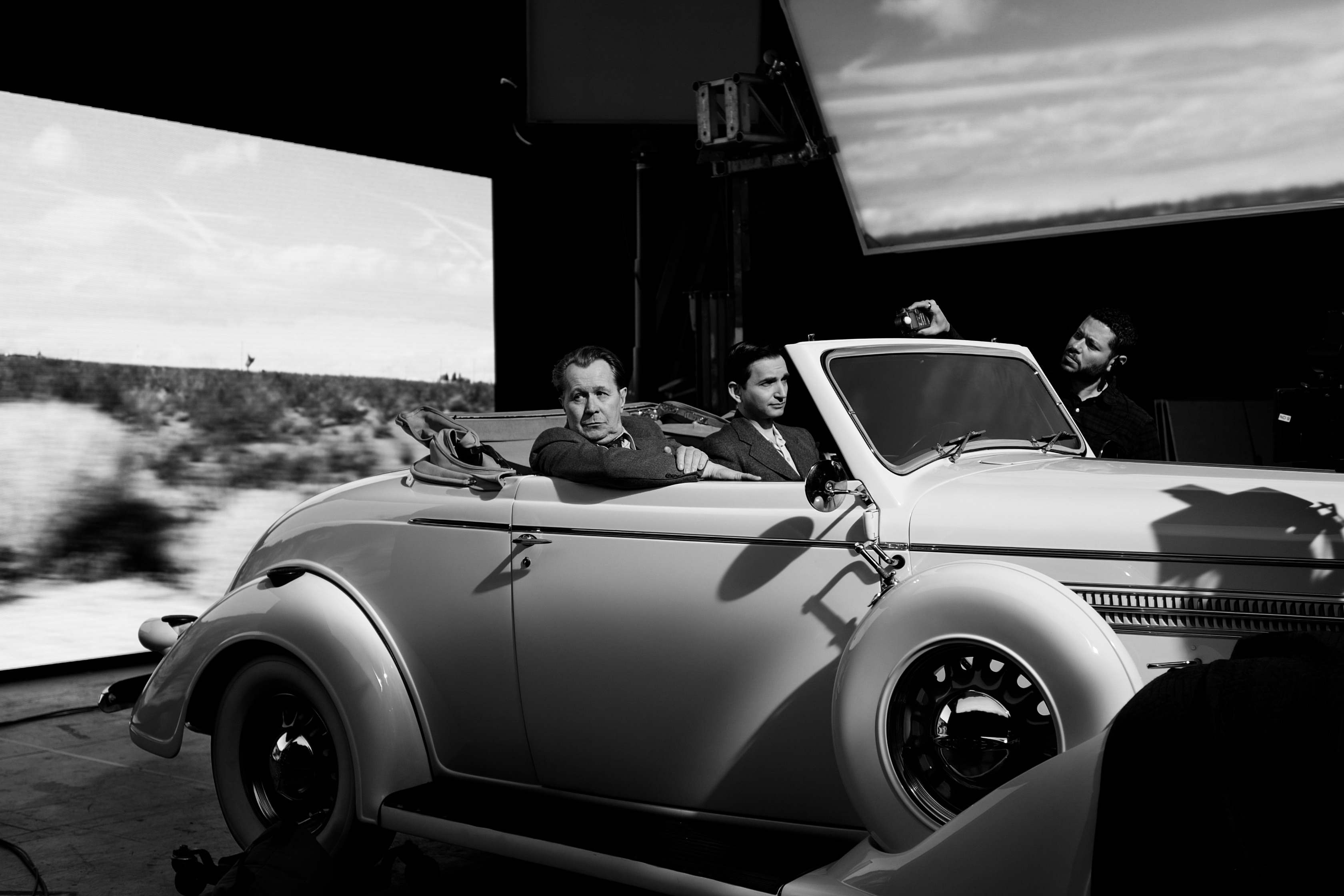
David Fincher’s new film, Mank,begins with a title card announcing the arrival of one of cinema’s first real auteurs. “In 1940, at the tender age of 24, Orson Welles was lured to Hollywood by a struggling RKO Pictures with a contract befitting his formidable storytelling talents,” it reads. “He was given absolute creative autonomy, would suffer no oversight, and could make any movie, about any subject, with any collaborator he wished.” Then the score’s ominous piano notes kick in, as if Hollywood is greeting this proclamation of artistic control with dread.

Mank, however, isn’t about the famed director who went on to make Citizen Kane. It’s about a man who spent a short but pivotal time in Welles’s orbit: Herman J. Mankiewicz, the co-writer of Citizen Kane. A lowly scriptwriter might seem like a curious subject for Fincher, one of cinema’s best-known filmmakers, whose reputation for exacting attention to detail and on-set rigor is unmatched. And there’s a sweet sort of irony to the fact that this modern-day auteur’s first film about moviemaking spotlights a Hollywood gadfly who had to fight to be recognized for his contribution to a masterpiece. But in some ways, Fincher has been waiting almost 30 years to make Mank, which feels steeped in his observations of, and grievances with, the movie industry.

The genesis of Citizen Kane has long been a matter of furious debate among cinephiles, a proving ground for arguments about directorial auteurism versus greater collaboration. But that thread is of secondary importance to Mank, which debuts on Netflix today. “I was never interested in the idea of who wrote [Citizen Kane],” Fincher told me. “What interested me was, here’s a character who, like a billiard ball or pinball, sort of bounced around in this town that he, by all accounts, seemed to loathe, doing a job that he seemed to feel was beneath him. And then for one brief, shining moment, he stood his ground because—and I feel that this is entirely due to Welles—he was given an opportunity to do his best work.”

Read the full profile

“Building the Character a Closet”: Costume Designer Trish Summerville on the 1930s Hollywood Style of David Fincher’s Mank

Tomris Laffly
December 4, 2020
Filmmaker

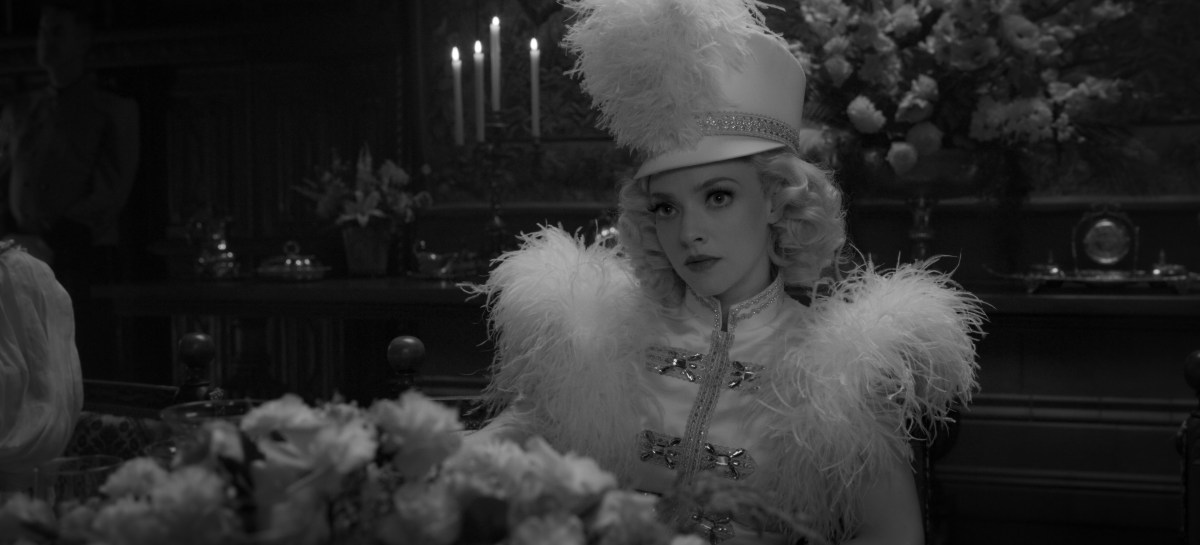
A repeat David Fincher collaborator after The Girl with the Dragon Tattoo (2011) and Gone Girl (2014), multi-award winning costume designer Trish Summerville has been signing her name onto numerous challenging film and TV projects throughout her storied, genre-spanning career, including the likes of The Hunger Games: Catching Fire and Red Sparrow. But Mank—Fincher’s meticulous creation of the Golden Age of Hollywood through the story of Herman J. Mankiewicz’s writing of Citizen Kane—and working in black-and-white presented a new challenge for the artisan, who had only done small projects in monochrome previously. “We were lucky; we were able to do a lot of camera tests prior to shooting,” explains Summerville. During the prep, her process included placing period-specific garments in various settings and taking black-and-white photographs of them on her phone, just to see how the colors would translate. “I was figuring out what’s going to be the closest to the lighting and the [shooting] style,” she recalls. “And then [focusing on] the details you see: what colors read well in black and white, what completely disappears, goes flat or absorbs too much light. I was looking for things that fit different scenes and have reflective qualities.”

Summerville went wide and varied for her detailed research of the era, reaching for magazines and looking at real-life photographs and cinematic references as much as possible. She kept a close eye towards representing every walk of Hollywood life, in order to project a complete and credible vision of the time. “As a costume designer, I don’t want to just have a fashion show,” Summerville says. “I’m into character development. I really enjoy working with actors, helping them get to that character, letting them have a new adventure in a new journey.”

Summerville recently spoke with Filmmaker, breaking down the intricate details of her work on Mank.

Read the full interview

‘Mank’ Production Team on Creating a Feast for the Eyes and Ears for the Netflix Period Film

Jazz Tangcay
December 4, 2020
Variety

In David Fincher’s “Mank,” bowing Dec. 4 on Netflix, a key sequence takes place at Hearst Castle, when Gary Oldman’s Herman J. Mankiewicz shows up drunk and unannounced at a lavish dinner party thrown by newspaper tycoon William Randolph Hearst, played by Charles Dance.

Filming is normally not allowed at the actual estate, with Lady Gaga’s “G.U.Y.” video the rare exception. So production designer Donald Graham Burt and Fincher spent months tracking down locations around Los Angeles that could stand in for the grand mansion. Interiors and exteriors were shot at a Pasadena estate, the Huntington Gardens, in Malibu and on soundstages, all carefully decorated to give the feel of San Simeon if not the exact details.

It was up to sound mixer Ren Klyce to capture the extravagance that Fincher sought when filming those scenes. Klyce reverse-engineered the mix — distorting sounds, lowering the dynamic range and limiting the high frequency to take audiences back to 1930s Hollywood and the “Citizen Kane” era.

Burt and Klyce break down how they re-created the estate and captured the aura of wealth.

Costume Designer Trish Summerville Breaks Down the Looks of ‘Mank’

Framing the Scene: Costume Designer Trish Summerville on Designing for Black and White

Jazz Tangcay
December 4, 2020
Variety

When it came to designing the costumes of David Fincher’s “Mank,” both costume designer Trish Summerville and production designer Donald Graham Burt used the noir and monochromatic filters on their iPhones to see how color would convert for Fincher’s black and white film.

The film, which tells the story of Herman J. Mankiewicz and how he developed the script for Orson Welles’ “Citizen Kane,” was shot on digital and filmed in black and white, rather than converted after shooting. That meant Summerville had to use wardrobe colors that would pop onscreen.

In looking at photos from the ‘30s, Summerville says she found that the Hollywood executives and glamorous actresses dressed in salmon hues, greens and aubergine, which she used to build texture when it came to dressing Amanda Seyfried and Gary Oldman.

“We wanted to show the varying degrees and levels of socioeconomic status in Hollywood at the time,” says Summerville, who breaks down key costumes from “Mank,” now streaming on Netflix.

Read the full profile

Best of 2020 (Behind the Scenes): Why Mank recreated the ‘Rosebud’ shot from Citizen Kane

Maureen Lee Lenker
December 04, 2020
Entertainment Weekly

From its unique sound profile to its lush black-and-white cinematography,  Mank is a love letter to the Golden Age of Hollywood and one of its most enigmatic raconteurs, Citizen Kane screenwriter Herman J. Mankiewicz. The fingerprints of the era are everywhere, but nowhere is the homage more noticeable than in a shot of Mank with an empty Seconal bottle that perfectly mirrors that of Charles Foster Kane holding a snow-globe in the opening moments of Citizen Kane

Here, director David Fincher reveals the personal history behind the shot.

Curating Reality: Cinematographer Erik Messerschmidt and “Mank”

Mank BTS (Miles Crist)

An in-depth conversation with “Mank” DP Erik Messerschmidt about his detailed work on the film.

Nicolas Rapold
December 4, 2020
Notebook (MUBI)

It’s impressive when a Director of Photography’s first fiction feature is with David Fincher, notorious for his exacting eye in terms of both working methods and stringent aesthetics. But before Mank—Fincher’s passion project on Herman J. Mankiewicz and the writing of Citizen KaneErik Messerschmidt had been a part of Fincher’s team on both seasons of Mindhunter and even earlier as a gaffer on Gone Girl for DP Jeff Cronenweth. On Mindhunter, Messerschmidt’s camera infused the bloodless institutional interiors of its serial-killer/FBI interview set pieces with subtly vulnerable undertones, hewing to a Fincher playbook of visual control that telegraphs barely contained chaos.

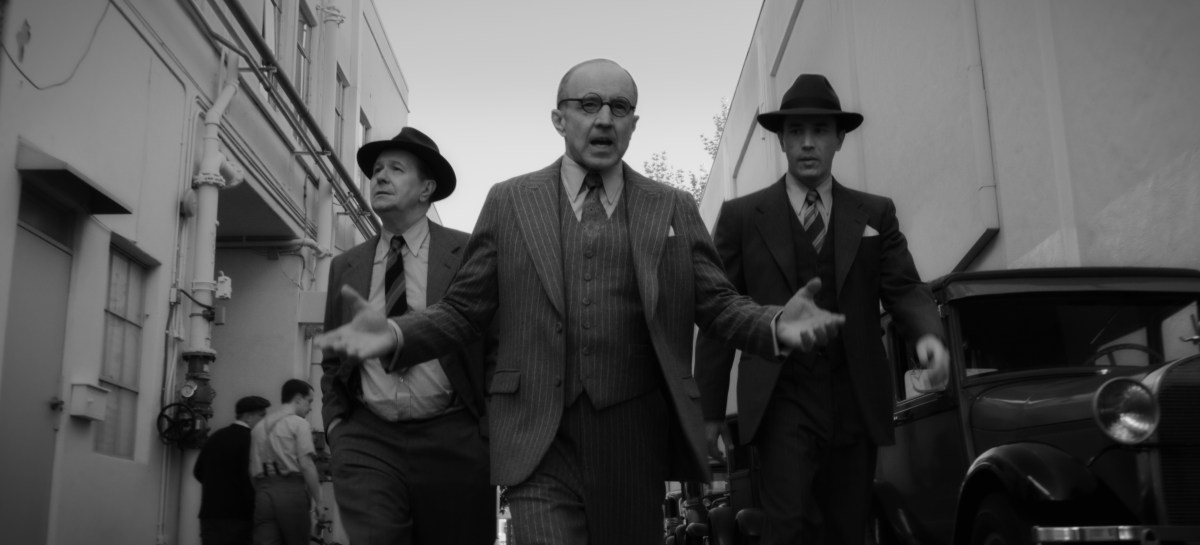
Mank posed its own challenge with the director’s dream of making a black-and-white period picture in 2020, a vision of authenticity that is something of a chimera in cinema’s digital age. The story shuttles between Mankiewicz (Gary Oldman) writing Citizen Kane in 1940 and his preceding years of experience with the people and society that inspired him, including Davies (Amanda Seyfried) and William Randolph Hearst (Charles Dance). Mank does not simulate the look of any single movie made in the 1940s but rather comprises a gentle pastiche of styles and signifiers (no office seems without slatted shades). Standout scenes include the banquets in cavernous Hearst Castle, where Mank dunks on the assembled high-flown guests; bull sessions in the screenwriter’s Mojave Desert bungalow as he hems and haws and bangs out the screenplay for Citizen Kane; a glitzy-weary 1934 election party for California’s gubernatorial contest, celebrating Republican Frank Merriam’s victory over Upton Sinclair; and anything featuring Seyfried as Davies, remarkably the sole true star in a film set in 1930s and ’40s Hollywood.

Speaking with Messerschmidt, I zeroed in on the feelings and associations within the look of Mindhunter, and the particular technical choices that went into creating Mank’s Hollywoodland.

Read the full interview

Behind the Scenes: Mank

Erik Messerschmidt, ASC, reveals the techniques behind Mank, David Fincher’s digitally dexterous emulation of Hollywood’s classic era.

Adrian Pennington
December 3, 2020
IBC

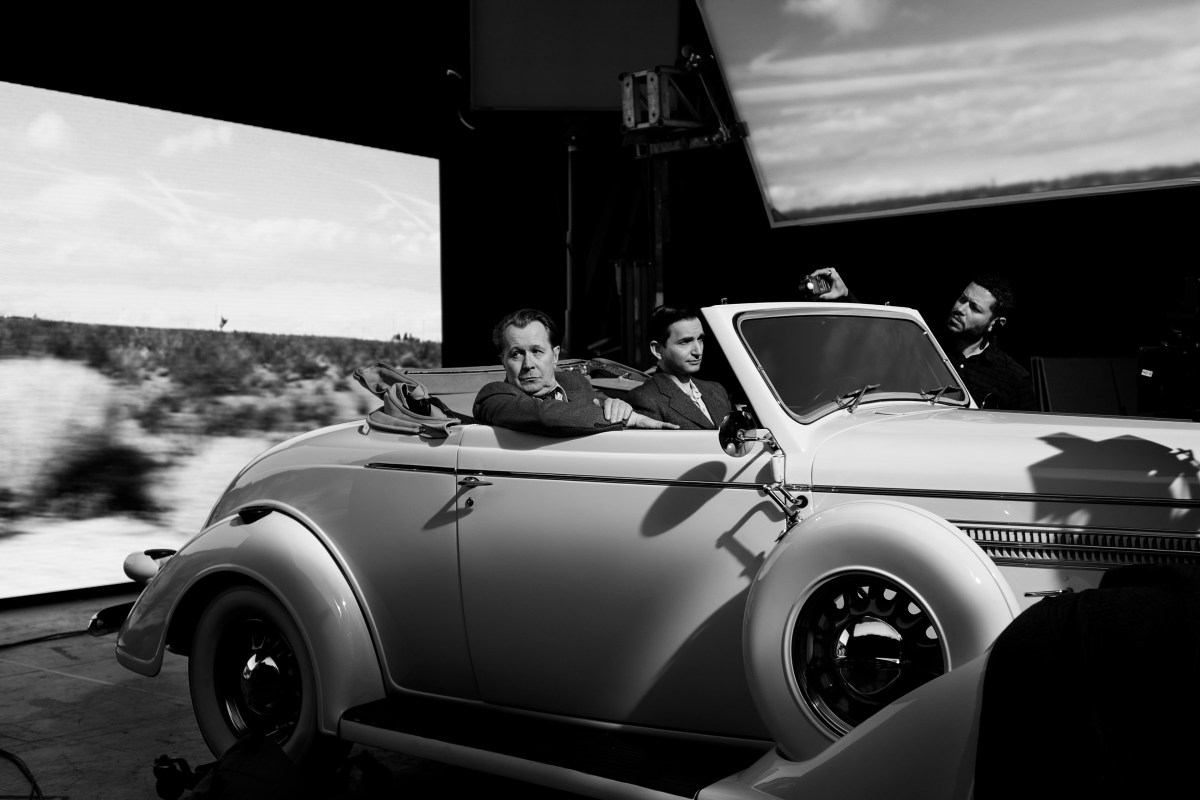
David Fincher’s passion project about the Citizen Kane screenwriter Herman J. Mankiewicz looks, as intended, like a love letter to 1930s cinema. The filmmakers employ sophisticated digital techniques to pay homage to the cinematic bravura that helps Orson Welles’ masterpiece regularly top the list of all-time classics. 

It’s a film the director originally intended as the follow-up to his 1997 thriller The Game, shortly after his father Howard, a journalist at LIFE magazine, wrote the script. For one reason and another, and reports suggest it was Fincher’s insistence on shooting in black and white, Mank was delayed until Netflix greenlit production late last year. Principal photography finished in February, just days before California went into lockdown. 

Fincher of course kickstarted the streamer’s original content by masterminding House of Cards. He has subsequently made two series of serial killer investigation Mindhunter, all sixteen episodes shot by Erik Messerschmidt ASC who is Fincher’s collaborator here.

Mank follows the ‘scathing social critic and alcoholic’, played by Gary Oldman as he races to finish the Kane screenplay for Welles. It also stars Charles Dance as newspaper tycoon William Randolph Hearst and Amanda Seyfried as Heart’s girlfriend Marion Davies, satirized by Welles and Mankiewicz as Charles Foster Kane and mistress Susan Alexander. The connection with Hearst is strengthened by the fact that Mankiewicz was a frequent guest of Davies at Hearst’s fabulous California castle, dubbed Xanadu in Kane. 

As a homage to WWII-era Hollywood the decision to emulate the look pioneered by cinematographers like Gregg Toland in digital format is a bold one.

“For this movie we wanted to shoot very deep focus photography for most of the film and then be very specific about where we used shallow focus,” says Messerschmidt. “Shooting on film would have significantly limited our creative choices, particularly with focus and depth of field.”

Read the full interview

It’s All True: A Conversation with David Fincher

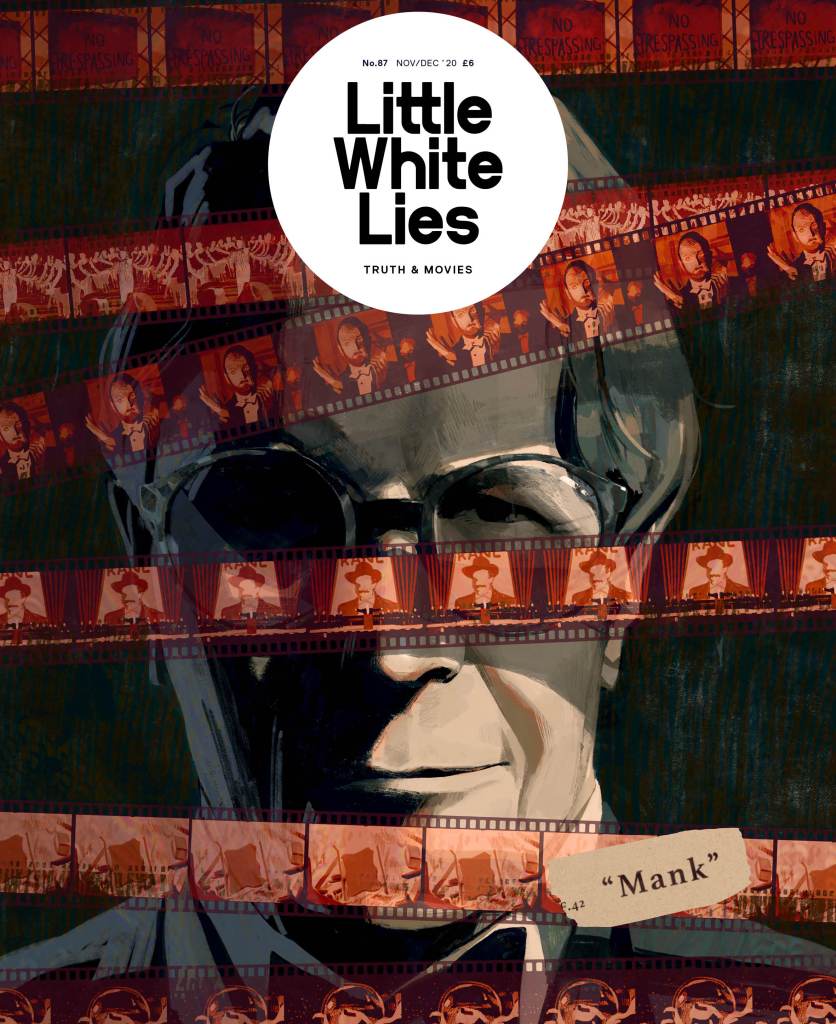
Illustration by Rumbidzai Savanhu

The master filmmaker behind Mank on Orson Welles, Pauline Kael and realising a passion project after a 30-year wait.

David Jenkins
December 2, 2020
Little White Lies

From the pen of Jack Fincher comes Mank, the story of how perma-soused Hollywood hack Herman J Mankiewicz happened to write one of the greatest screenplays of all time. Sadly, Jack didn’t live long enough to see the words he had written transformed into sound and light, but it’s something that his son David had wanted to realise for close to three decades.

It’s been six years since Fincher Jr’s last feature film, 2014’s Gone Girl, and in the interim we’ve had two series of Rolls Royce TV drama in the form of Mindhunter. For someone who has already made a tech bro riff on Citizen Kane (2010’s The Social Network), and a melancholic homage to his late father (2008’s The Curious Case of Benjamin Button), Mank combines these two career poles, while also posing such existential hypotheticals as, what makes a man? And not only that, what makes a writer, and what makes a director?

LWLies: Let’s go on a quick flashback to the early days and the creation of this amazing script by your father, Jack. He was a journalist and author by trade. Did he pivot to screenwriting later in life?

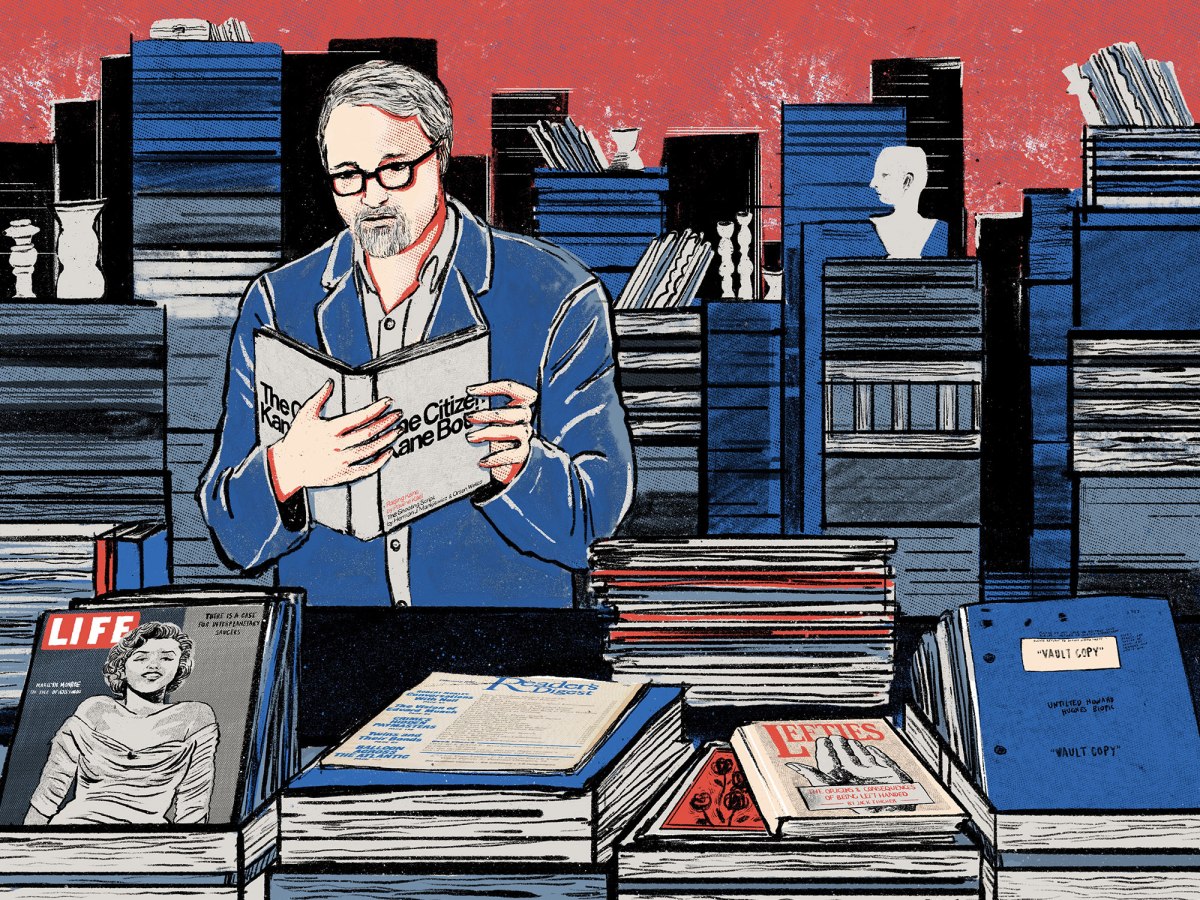
Fincher: I think he wrote a screenplay that was optioned and Rock Hudson wanted to do it – this was in the late ’60s. That fizzled out. Then he wrote spec screenplays in the ’60s, ’70s and ’80s, and then when he retired in the ’90s, he came to me and said, ‘I’m going to have all this time on my hands, what do you want to read a script about?’ I said I had always been interested in ‘Raising Kane’ which I was exposed to in middle school. I had read Pauline Kael’s essay on microfiche in the school library, and then I noticed a copy of it in my father’s library, and we talked about it. Then, 12 years later, I was about to go off to do Alien3, and he was retiring and wanted a new challenge.

Read the full interview

More in Little White Lies 87: The Mank Issue

Mank: Interviews. Ferdinand Kingsley

Ferdinand Kingsley plays film producer Irving Thalberg in Mank.

Sam Cook In An Interview With | Ferdinand Kingsley (Mank)

Sam Cook (YouTube)
October 21, 2020

Ferdinand Kingsley “An Actor Despairs” Interview

Ryan Perez
November 30, 2020
An Actor Despairs (YouTube)

Ferdinand Kingsley on David Fincher’s Mank with Gary Oldman

Stefan Pape
November 30, 2020
HeyUGuys (YouTube)

DAVID FINCHER’S MANK | Ferdinand Kingsley lives the dream in Netflix Original Mank (2020)

Film Forums (YouTube)
December 3, 2020

Mank Star Ferdinand Kingsley Talks Netflix Film, Love Of Aston Villa & Passion Of Black & White Film

Switchbox TV (YouTube)
December 4, 2020

MANK Interview: Ferdinand Kingsley On Working With David Fincher

FilmSpeak (YouTube)
December 7, 2020

Ferdinand Kingsley: Up Close and Personal About His Family and Fame

The Katz Walk with Joseph Katz (Evergreen Podcasts)
January 14, 2021

Mank: Interviews. Tom Pelphrey

Tom Pelphrey plays screenwriter Joseph L. Mankiewicz, Herman’s younger brother, in Mank.

Tom Pelphrey: intervista ai protagonisti di Mank di David Fincher

Cinefilos_it (YouTube)
November 28, 2020

Tom Pelphrey MANK Interview | Netflix

kinowetter (YouTube)
December 2, 2020

Tom Pelphrey Talks “Mank” (& “Ozark”)

Sarina Bellissimo (YouTube)
December 3, 2020

MANK | Entrevista a Amanda Seyfried, Lily Collins y Tom Pelphrey

SensaCine (YouTube)
December 2, 2020

‘Mank’ Interviews with Amanda Seyfried, Lily Collins, Tom Pelphrey

CinemaBlend (YouTube)
December 2, 2020

Cinema | Mank: il nostro incontro con Amanda Seyfried e Tom Pelphrey

BadTaste.it (YouTube)
December 3, 2020

Mank Actor Tom Pelphrey on His 90-Minute Zoom Audition with David Fincher

Collider Interviews (YouTube)
December 9, 2020

Amanda Seyfried and Lily Collins On Going Old-School in Mank (plus Tom Pelphrey)

John Fardy
November 27, 2020
Screentime (Newstalk Podcast)

‘Mank’ Star Tom Pelphrey on Saying One of Cinema’s Most Famous Words

Brian Davids
December 2, 2020
The Hollywood Reporter