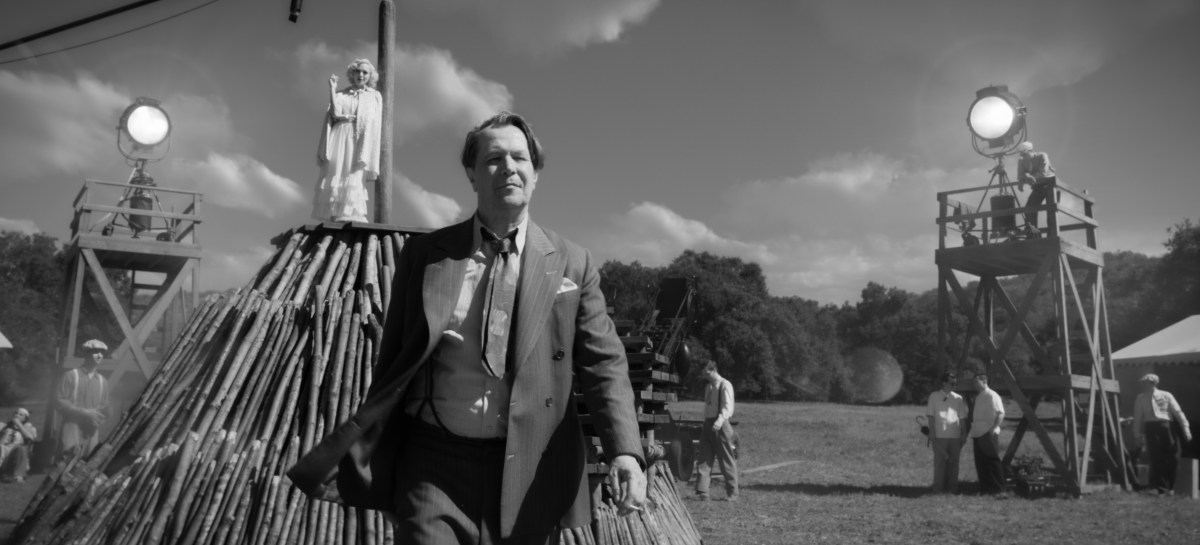
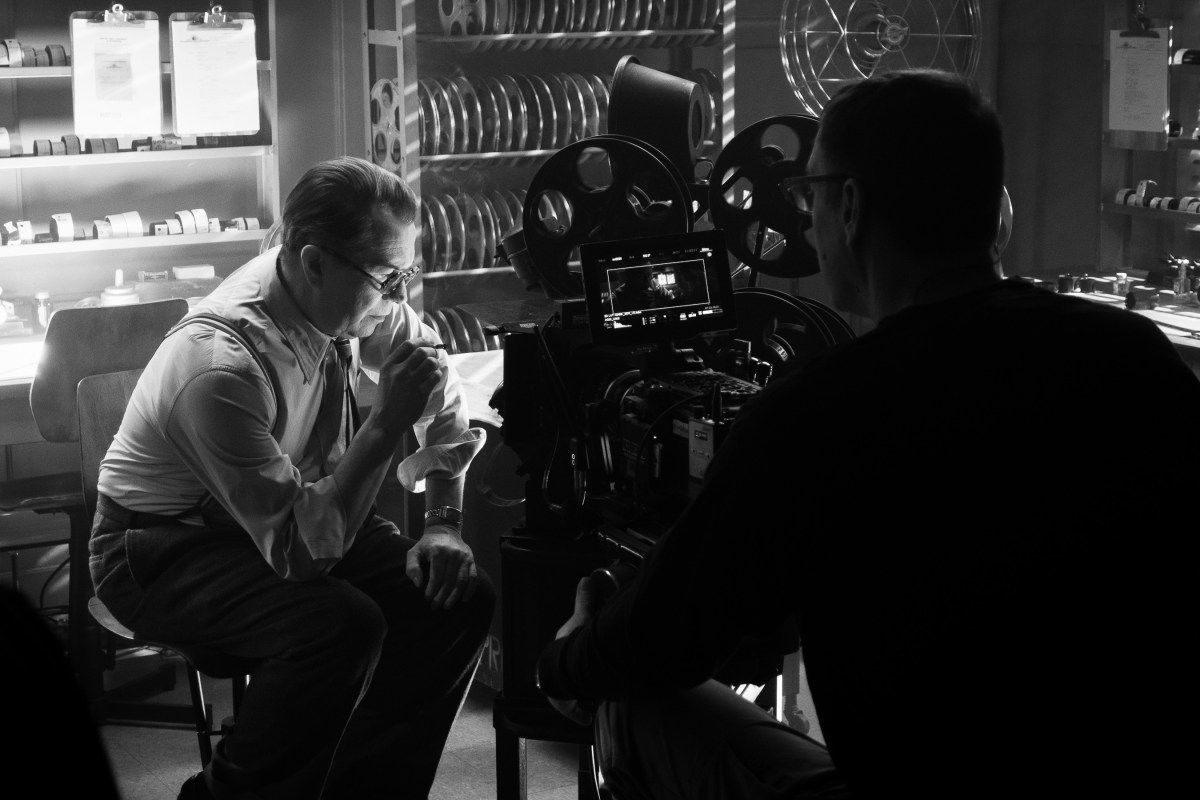
I recently had the chance to ask Territory Studio about their visual effects work for Mank, which involved the re-creation of Wilshire Blvd from the 1930s. Like those shots, so much of Mank’s VFX work was invisible, involving subtle augmentations to tell the period story.
Overseeing these visual effects shots was director David Fincher himself, alongside co-producer Peter Mavromates, and the film’s art department. Fincher and Mavromates co-ordinated an outside effort, also, led by four VFX supervisors at different studios: Artemple (Wei Zheng), Territory Studio (Simon Carr), Savage(John Pastorious) and ILM (Pablo Helman).
In this befores & afters conversation, Mavromates discusses the various VFX work—from sky replacements to matte paintings, to CG animals and what he calls ‘body-and-fender’ shots—that helped tell Mank’s tale.
The Art of the Cut podcast brings the fantastic conversations that Steve Hullfish has with world renowned editors into your car, living room, editing suite and beyond. In each episode, Steve talks with editors ranging from emerging stars to Oscar and Emmy winners. Hear from the top editors of today about their careers, editing workflows and about their work on some of the biggest films and TV shows of the year.
On this episode of the Art of the Cut Podcast, Steve talks with editor Ben Insler about his work on the new Netflix Film “Mank.” Ben has edited multiple series including the Netflix series “Mindhunter.” In this episode Steve dives deep into the work flows and technology used to cut this film including the challenges of finishing a film remotely due to COVID-19.
On a future episode, Steve will also be talking with editor Kirk Baxter about leading the “Mank” editing team. Make sure to keep a look out for that episode!
This episode of the Art of the Cut Podcast is brought to you by Filmtools.com, Hollywood’s trusted one-stop shop for all things production and post.
Want to read/ listen to more interviews from Steve Hullfish? Check out The Art of the Cut Archive for more than 200 interviews with some of the top film and TV editors of today!
The Fincher Takes It All is a limited series podcast reflecting on and celebrating the filmography of director David Fincher ahead of the release of his next film, Mank.
Film journalist and filmmaker Nev Pierce joins me to discuss Mank, David Fincher’s latest film which is now available to watch on Netflix and in select cinemas.
Following screenwriter Herman J. Mankiewicz as he races to finish the screenplay for Citizen Kane, the film takes a look at Hollywood and politics.
Me and Nev discuss the film’s analysis of Hollywood liberalism, what it has to say about the idea of the auteur, how Fincher made it feel like an old classic and whether it really does have anything to do with Citizen Kane.
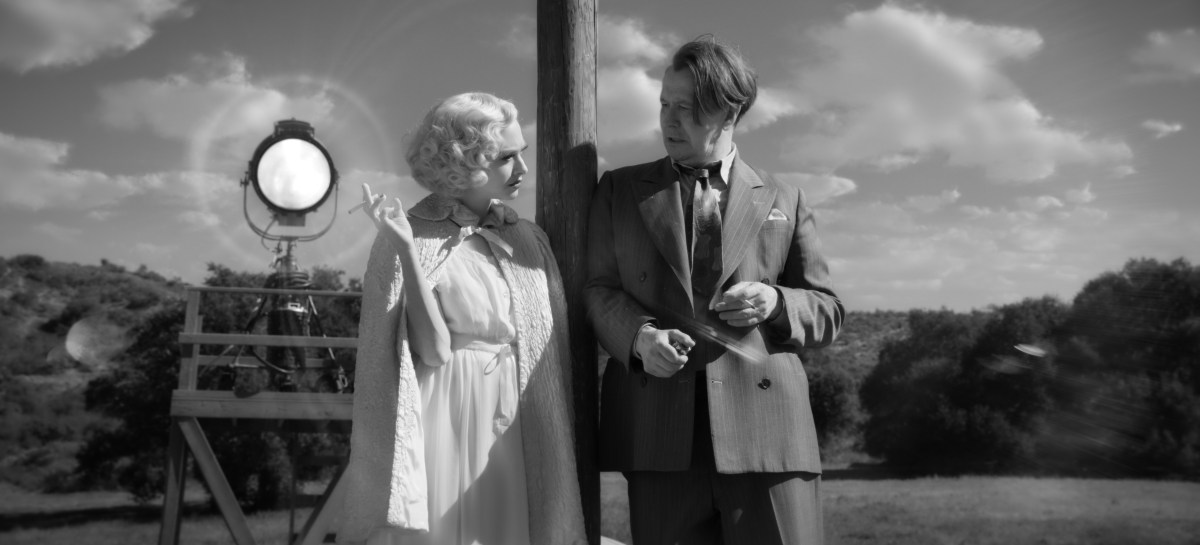
Early in Netflix’s Mank, the screenwriter Herman J. Mankiewicz (played by Gary Oldman) ambles onto an outdoor movie set, where he bumps into an array of glamorous characters. In a scene full of repartee with real-life figures such as the actor Marion Davies, the film honcho Louis B. Mayer, and the mogul William Randolph Hearst, the visual details of the environment might seem unimportant. But to Mank’s director, David Fincher, they mattered. “The grass was not to David’s liking, and the sky was not to his liking, so all that’s been replaced,” Peter Mavromates, his co-producer, told me. When making a movie, Fincher literally controls heaven and earth.
That example sums up the capricious-sounding, godlike power of a director, especially in the age of digital filmmaking, which allows for total command of every frame. But as with all of his movies, Fincher’s vision for Mank was realized by a group of dedicated collaborators, most of whom have worked with the director for many years across projects. This film, which Fincher mulled for nearly three decades, is unlike anything he has made before. An unusual-looking-and-sounding film set in the Golden Age of Hollywood, Mank reflects the aesthetic of the 1930s with its black-and-white cinematography; an echoey, old-fashioned sound mix; and a brassy, orchestral score. But Fincher also wanted it to be a distinctly modern film, which posed many unique and fascinating technical challenges to the creators charged with bringing his lofty ideas to life.
Jack Fincher retired from journalism right around the time his son, David, was moving from directing music videos for the likes of Madonna and George Michael to making his first feature film, “Alien 3.” Jack, a lifelong movie fan, told David he’d like to try writing a screenplay. David encouraged him to delve into the story of Herman Mankiewicz, the co-writer (or, perhaps, sole writer) of Orson Welles’ 1941 landmark “Citizen Kane.” Jack wrote eight drafts of the screenplay, homing in on the journey of the self-sabotaging Mankiewicz as he stops betraying his talents and paints his one masterpiece (relatively) late in life.
Father and son could never quite crack the script, and Jack died in 2003 of pancreatic cancer. Those eight drafts of “Mank” sat on a shelf in David’s office for years until Netflix executives Ted Sarandos and Cindy Holland asked Fincher about his dream unmade project. That was two years ago, and “Mank” has consumed most of Fincher’s waking hours since.
The black-and-white movie, starring Gary Oldman in the title role, premiered in a handful of theaters last month and arrives on Netflix today. It figures to be a force in this year’s awards season, such as it is. It’s certainly the warmest movie Fincher has made in a career founded on the notion that “people are perverts.”
Fincher called the other morning. He was disarmingly polite, by turns generous and evasive, and full of the sardonic humor that courses through his films. “I’m a little groggy,” he said, noting that he didn’t get much sleep the previous night, “but hopefully I know the answers to these questions.”
There was never any doubt that David Fincher was going to shoot “Mank” in black-and-white. His biopic about alcoholic and acerbic screenwriter Herman J. Mankiewicz (Gary Oldman) struggling to churn out a first draft of “Citizen Kane” cried out for monochromatic treatment. And yet Fincher and cinematographer Erik Messerschmidt (“Mindhunter”) were not about to indulge in a “Kane”-like re-enactment, or be confined to shooting on film, or composing in the period accurate aspect ratio of 1.37:1. Not with Fincher’s digital prowess and penchant for the 2.39: 1 widescreen format.
So Fincher and Messerschmidt struck a balance between retro and modern, taking advantage of the director’s efficient digital workflow to approximate the look of a movie made around the time of “Kane” in 1940 yet “Photographed in Hi-Dynamic Range” (as the title card proclaims).
“Filmmaking has always been a medium where we selectively employ the techniques that are available on the day,” Messerschmidt said. But shooting in black-and-white was a lot to unpack for the cinematographer, who had only done a few music videos and commercials outside of still photography and film school projects.
Technically, “Mank” is the story of how the script for what’s often considered the greatest movie ever made, “Citizen Kane,” may have been written. But there’s a lot more to David Fincher’s deep-focused, black-and-white, flashback-filled Netflix movie, which starts streaming on the service Friday, Dec. 4.
Built on a screenplay written by the director’s father, the late Bay Area journalist Jack Fincher, “Mank” is a speculative swirl of 1930s Hollywood and California history. The new film has already rekindled the controversy over whether veteran screenwriter Herman Mankiewicz (played by Gary Oldman) or 25-year-old, first-time director/star Orson Welles (Tom Burke) was the primary author of “Citizen Kane.”
The main show, however, revolves around alcoholic Mankiewicz’s memories. Some of those involve his friendship with the actress Marion Davies (Amanda Seyfried) and, at more of a remove, her powerful lover, newspaper baron William Randolph Hearst (Charles Dance). The model for Welles’ fictional Charles Foster Kane, Hearst — whose company owned the San Francisco Examiner at the time and now runs The Chronicle — famously exerted his considerable clout to have “Citizen Kane” squelched before it was released in 1941.
Speaking to The Chronicle by phone from Los Angeles, the Marin County-raised Fincher responded nimbly when informed he was talking to a Hearst publication.
When costume designer Trish Summerville first started working on David Fincher’s new Netflix film Mank, “even people in my crew and friends were like, ‘This would probably make things so much easier.” That’s because the film is shot in black and white. In fact, though, the opposite was true. “It actually made it a bit more difficult,” says Summerville. “When you shoot in color, you have all these different shades and tones you can work with and you can do stuff that’s tone on tone.”
What she found out — while researching the period and visiting costume rental houses, where she took photos of garments in black and white — is that not only are many options are no-go but that other problems present themselves.