Killer Instinct

With six unique locations, grading The Killer was never going to be simple. Colourist Eric Weidt shares how he captured David Fincher’s meticulous hitman.

Katie Kasperson
January 2024
Definition

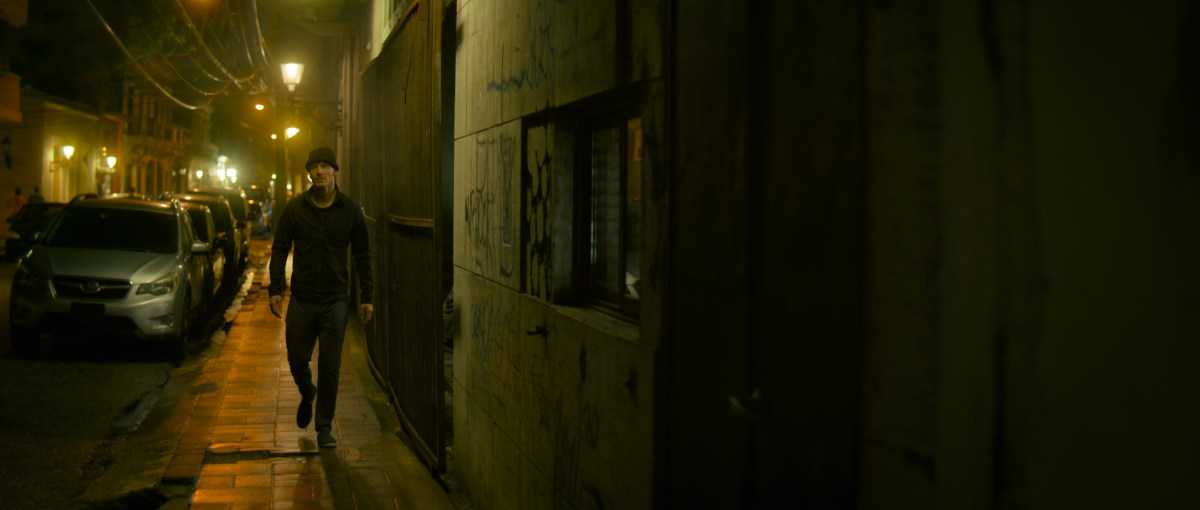
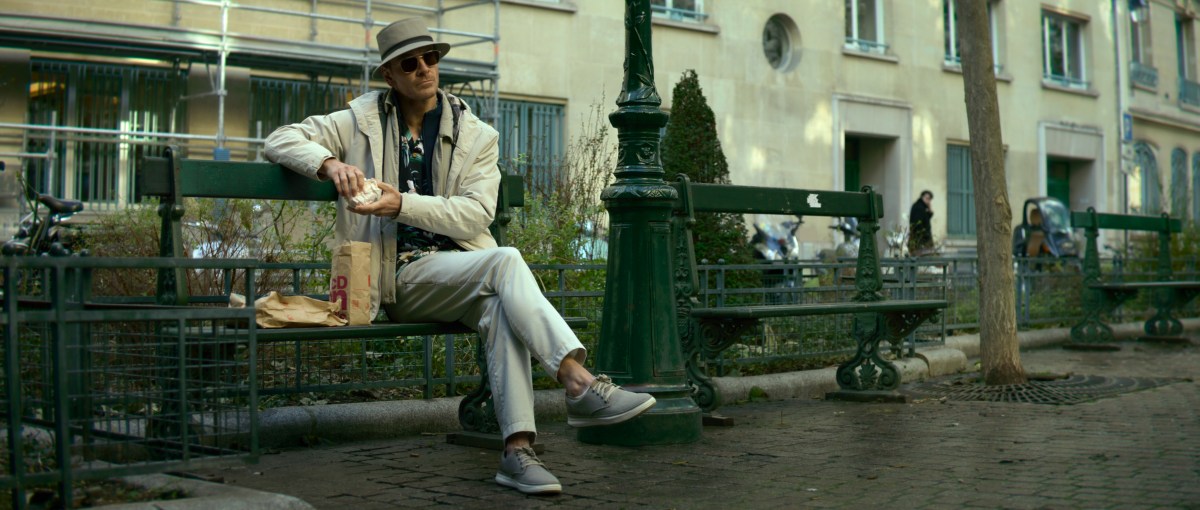
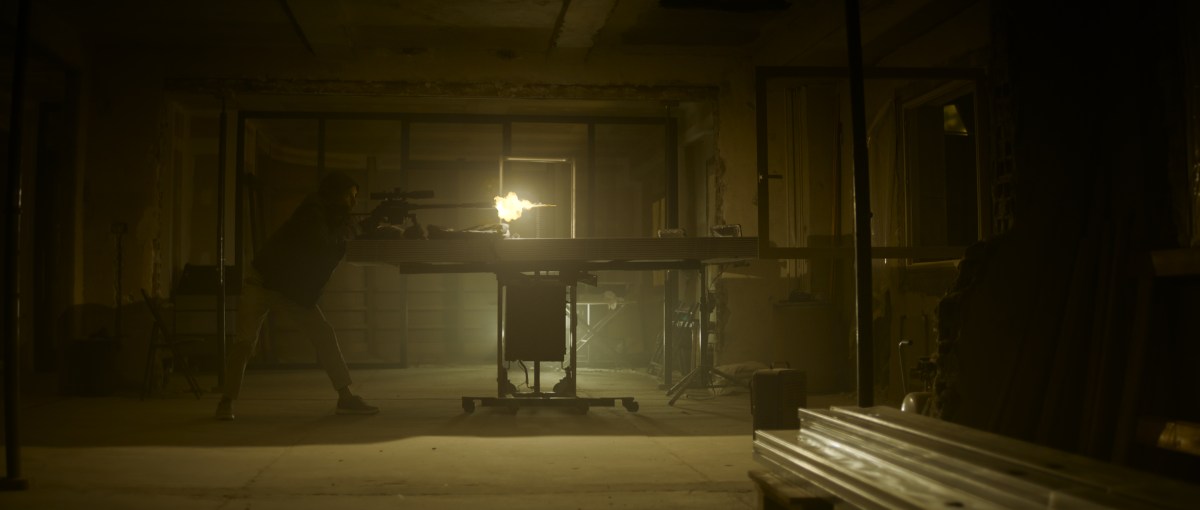
The latest film from David Fincher, The Killer, sees Michael Fassbender play the titular assassin – a Smiths-loving cynic who embarks on an international chase after a high-profile job goes awry. The story takes our anti-hero from hazy Paris to humid Florida to wintry New York, with each location taking on its own challenge – both for the Killer and the film’s colourist Eric Weidt.

GOING INTERNATIONAL

Based on Alexis Matz Nolent’s graphic novel series and inspired by Jean-Pierre Melville’s Le Samourai, The Killer combines a fast-paced plot with moody yet bold colours. “I think Fincher is a big comic book fan,” begins Weidt, “especially in the art of framing to impart the beats of a story. Working in film, he brings that to movement as well – he’s seeking a visual rhythm that makes you forget it is highly constructed.

“David likes to push and pull colours, but always strikes an unconscious balance,” he continues. Weidt began working on The Killer while it was still at the pre-production stage, developing lookup tables alongside cinematographer Erik Messerschmidt ASC, who had previously worked with Fincher on Mank, for which he won an Academy Award.

Read the profile and the full January 2024 issue of Definition magazine

Read the website version of the profile

I Will Survive

Seth Emmons
November 2023
Cinematography World / Leitz Cine

American cinematographer Erik Messerschmidt ASC reunited with director David Fincher for The Killer, the pair’s third collaboration following the Academy Award-winning feature film Mank (2020) and the critically-acclaimed series Mindhunter. The new Netflix Original neo-noir thriller is adapted from the eponymous graphic novel by French writer Alexis “Matz” Nolent and follows an unnamed assassin played, by Michael Fassbender, on a global hunt for revenge, only to find himself the subject of an international manhunt after a after a hit goes wrong.

Principal photography on the film began in November 2021 and wrapped in March 2022, with filming taking place in Paris, Dominican Republic and New Orleans, Louisiana, and St Charles in Illinois. Messerschmidt is quick to point out that The Killer is not a caper, but an exercise in observing the journey of a fascinating character, a professional who considers himself separate from the masses. But, when his meticulous planning goes wrong, the framework of his world gets knocked off balance as well.

The Killer exemplifies the decisive filmmaking style that Fincher has become known for and Messerschmidt embraces this methodology when working together.

The Killer is probably the most precise movie I’ve ever worked on,” he says. “There’s something to be said for spontaneity and the moments between the moments that you capture in an unexpected way, and I would never want to detract from the value of that. But, to me the most satisfying way of filmmaking is trying to be as sublime as possible. It’s hard work and you have to know where you’re going at every step to achieve it. It’s all about previsualisation and the pursuit of those ideas.”

“Sculpture is a great metaphor for how David works. He strips away anything extra – from the camera movement to the performance to the set dressing – and focusses on what the audience needs to learn from each scene. There’s no showing-off because it’s all about telling the story in the clearest, most effective way. The artistry presents itself in the micro decisions. This frame or that frame? Should the camera be here, or a foot further back? It becomes much more nuanced.”

Read the full profile on the Leitz Cine website

Read the full profile on Cinematography World (soon)

Bringing life to ‘The Killer’

October 30, 2023
FilmLight / British Cinematographer

The Killer is David Fincher’s latest action/thriller movie based on the French graphic novel series of the same name, by Alexis “Matz” Nolent. Starring Michael Fassbender and Tilda Swinton, the film follows an assassin who gets embroiled in an international manhunt after a hit goes wrong.

The movie, which made its premiere at the 80th annual Venice Film Festival and will be available on Netflix from 10 November, saw another successful collaboration between cinematographer Erik Messerschmidt ASC, director David Fincher and colourist Eric Weidt. Weidt has been working with David Fincher since 2014 and the trio previously joined forces on Mank (2020) and the Mindhunter series (2017-2019).

A US and French citizen, Weidt is a renowned freelance colourist who spent 15 years in Paris working with fashion photographers and filmmakers (Vogue, Bazaar, Pop).

“I began with Fincher doing beauty work in Nuke in 2014,” explains Weidt. “I showed him a reel of colour work I’d done working in fashion in Paris, and I think he figured that squared perfectly with the kind of precision he wanted to get into by grading his own projects in-house.”

Read the full case study on FilmLight and British Cinematographer

Dead Reckoning

Oscar-winner Erik Messerschmidt, ASC, draws a bead on the mind of an assassin in David Fincher’s The Killer.

Kevin Martin
October 26, 2023
ICG Magazine

Consider this promotional material for the 1969 assassin-at-a-crossroads film Hard Contract: “Everything they do is 97 percent control and 3 percent emotion.” Compare that with the mantra from the nameless lead character in The Killer, director David Fincher’s newest feature for Netflix, shot by Oscar-winner Erik Messerschmidt, ASC. “Stick to your plan. Anticipate, don’t improvise. Trust no one. Never yield an advantage. Fight only the battle you’re paid to fight.”

It sounds pretty much the same, right? Both help illustrate the heart of a broad subgenre of films that includes Anton Corbijn’s The American (shot by Martin Ruhe, ASC), the aforementioned Hard Contract (shot by Jack Hildyard, BSC), The Eiger Sanction (shot by Frank Stanley, ASC, former IATSE Local 659 president) and Fred Zinnemann’s The Day of the Jackal (shot by Jean Tournier.) The common locus revolves around the assassin as a high-functioning sociopath, able to operate effortlessly in various circles without being found out. Given the inherent complexity of such a character type, it is easy to see how Fincher was able to attract Michael Fassbender to take the lead role.

Derived from a long-running graphic novel series by author Alexis “Matz” NolentThe Killer had been in gestation by Fincher for close to fifteen years. Depicting a murder-for-hire gone awry and its aftermath, the film is viewed through the eye of a seasoned assassin (Fassbender), who now finds himself a target and must seek out not only his erstwhile employers but also those they have deployed against him.

Messerschmidt’s history with Fincher began as Chief Lighting Technician on Gone Girl [ICG Magazine October 2014] before going on to shoot his Mindhunter series and then, in 2021, winning the Oscar for Mank. Messerschmidt had also shot episodes of FargoLegion and Raised by Wolves, and, more recently, the WWII aerial epic Devotion [ICG Magazine December 2022]. “What I initially found interesting about the script was how it is almost wholly absent of dialog,” Messerschmidt describes. “There is a significant amount of voice-over, a lot of which was present in the first script, but very little is spoken on screen – so in a sense, it’s like a silent film. This meant the way we told the story with the camera was that much more important. It’s an adaptation of a graphic novel, which are told in a similar way. I was fascinated by that kind of challenge.”

Read the full profile

2023 Tribeca Festival Directors Series: David Fincher with Steven Soderbergh

A compilation of quotes and transcriptions from all available sources.

June 15, 2023

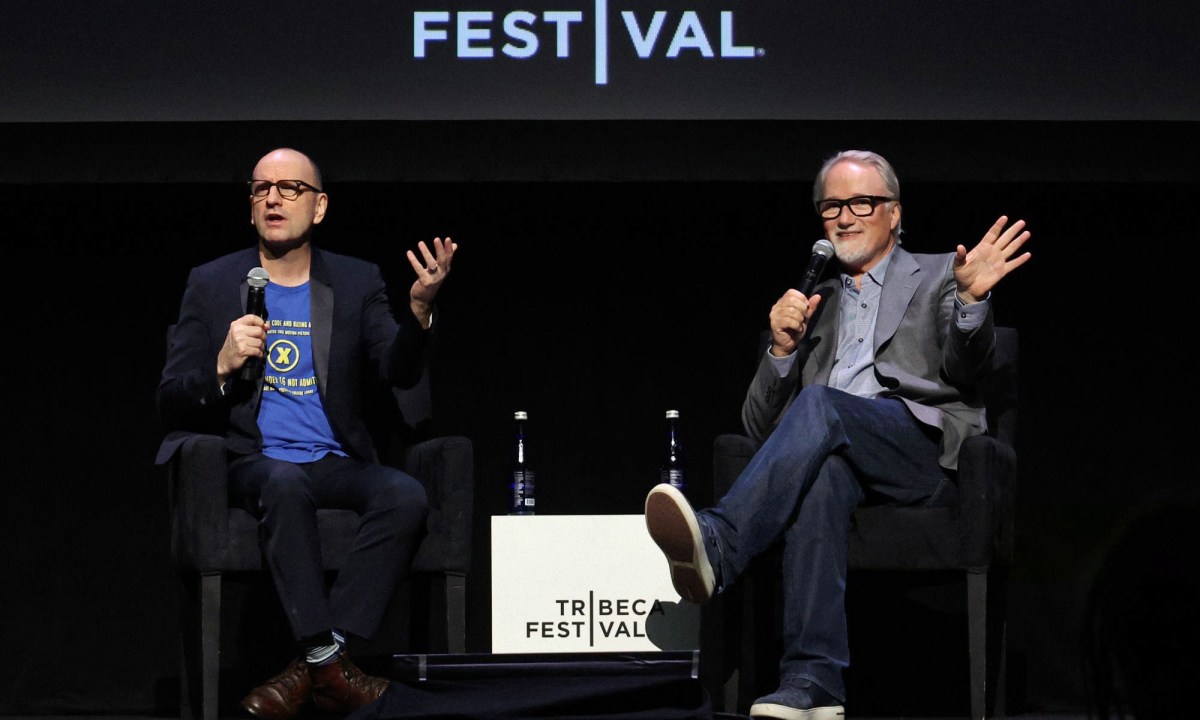
As part of the 2023 Tribeca Festival “Directors Series” live conversations, David Fincher discussed his career, filmmaking process, and philosophy with his fellow director and longtime friend Steven Soderbergh, before an audience in the Indeed Theater at Spring Studios in New York.

Fincher and Soderbergh first met 32 years ago, just after Fincher had been fired for the second time from the troubled production of his first film, Alien3 (he was later fired once more):

I came out of a truly fucked-up situation and kind of swore that I would never make the same mistake. I made a lot of brand-new ones, but I’d never start something that didn’t have a script that I didn’t believe in or that I didn’t understand or that I couldn’t articulate to people. And I’d also very much learned that I wanted to make all my own mistakes instead of inheriting them from other people.

The two explained that they have been talking about twice a week for the past 20 years, and that they regularly show each other rough cuts of their works in progress for feedback.

Soderbergh: I think the next time we saw each other, I was doing an episode of Fallen Angels [in 1994], the second season of a noir series that was on Showtime. You were going to do one. And I saw you in the office one day. And then you weren’t able to do one because you Seven got greenlit. And you went and did that thing.

Fincher: Yeah, it was one of those. It was a strangely rushed pre-production on that. Michael De Luca basically said, ‘if you can be up and making this movie in six weeks, we’ll greenlight it.’ So that was one of those, ‘okay, let me shut down the rest of my life.’

Fincher revealed how he approached shooting Music Videos as his film school:

I really went at it going, ‘I don’t want to spend my own money trying all this stuff out, so let’s see if Madonna will finance it.’

Soderbergh: You’re one of the few people who came out of the 80’s whose visual sense was matched by the importance of performance, and the understanding of a two-hour movie narrative… a lot different than a commercial or music video.

On The Social Network:

It was a pretty tight script. And part of getting it made was saying, ‘we’re gonna get this in under two hours, even if it’s 178 pages or whatever it is, we’re just gonna have everybody talk really fast.’

Fincher has learned over the years that it’s best to first discuss every aspect of film production with the cast and crew.

When I was younger, when an actor pushed back at me it felt like they were calling out the quality of my interpretation. I don’t feel that way anymore. It’s fun to get into that dialogue. It’s fun to find different avenues to explain how you see something evolving.

There’s no such thing as my editor, or my cameraman. It’s the people we’re lucky enough to get. And if you really do feel that you’re lucky enough to get the costume designer that you want, it’s incumbent upon you to squeeze them for everything that they have. It’s more on you to get their best. Because it is Darwinism. The best ideas not only will win out, they should win out, and everybody’s there to help you.

Soderbergh asked Fincher to break down a montage in Fight Club which, by Soderbergh’s estimate, involved 75 to 80 shots. Although the montage created the illusion that the Narrator played by Edward Norton was traveling across the country, everything was actually filmed within five or six blocks of LAX:

I really love a good montage. I love the montage because it’s pure cinema, it’s inference. It’s like, this goes against this, as quickly as we can possibly make a point and get the fuck out of Dodge. Then the question is where do people’s eyes need to be.

Soderbergh observed that Fincher seems happiest while imagining a project versus actually being in production, and felt that he’s seen the movies Fincher didn’t even make because of the way he has laid them out in his office. 

I have enough of a reputation as a misanthrope that I don’t need to feed into that.

Shooting for me is a lot of indigestion and reality. They just keep seeping into everything you’re trying to do. So that part of it is difficult. And I think the first couple of times I had stuff fall apart even for the right reasons.

Asked by Soderbergh what he considers the “fun part” of filmmaking:

I love rehearsal. I love talking to people about the intention. I love haggling over every single word, and what the script means, and listening to people read it, and hearing their ideas. I love casting, I love the casting process. I love designing the movie. I love sitting with the production designer, and the director of photography, and all the art directors. And talking about what do we want to say, and where do we want people’s attention, and what are the things that we have to underline.

By the time it gets to the shooting… I don’t enjoy shooting. I find it to be unnecessary. I would much rather love to just workshop it, and then have someone else take it over, after all those conversations, and bring it home. But you got to be there.

I remember debating Francis Coppola and the Silverfish. And the idea of working over with a microphone over a P.A. system ‘okay, pan A camera left.’ And I don’t think you can… I think movies require you to impress upon people the amount that you’re sweating it, the amount that you care. They have to see it in your face. They have to see it in your eyes.

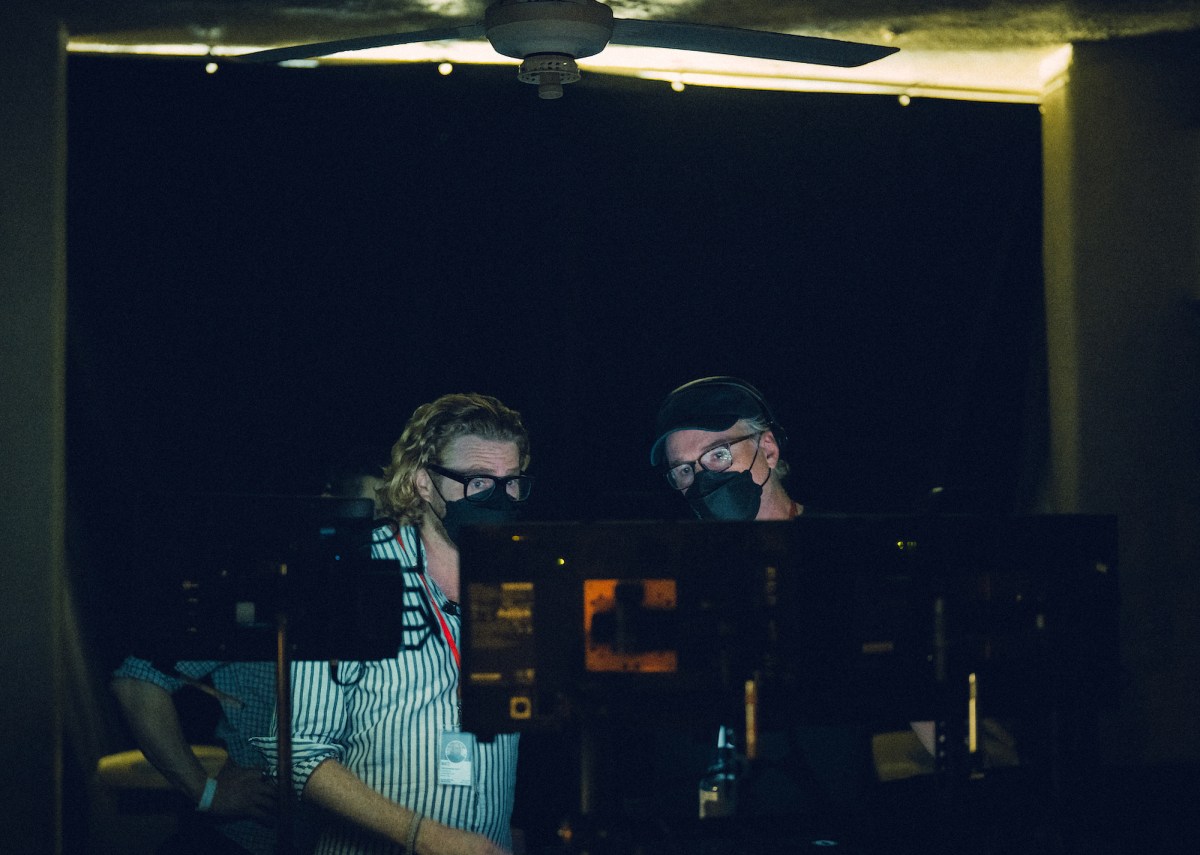
There was a really interesting thing last year, shooting a movie [The Killer] with all of the COVID protocols, working through a mask and a visor. I had no idea how much I was imparting with making faces and sound effects. It was a completely different experience.

On the stress of directing:

Directing is storytelling through a medium that requires an awful lot of personnel to just support what you’re doing technically and what you’re doing just from a logistical standpoint. That can be extremely distracting, and it can create an enormous amount of stress and pressure. You feel it every day. You only have so much time to get this many shots. The sun is moving as it continues to do to this day. And you can’t negotiate with that.

After half an hour, the couple turned it over to the audience for questions. Asked by an audience member about whether he rewatches his old work:

I don’t. I’m not brave. I’m fundamentally like, look, no, I can’t. It’s like looking at middle school pictures. I don’t want to even acknowledge that. But I do find myself having to adjust, you know.

On remastering Seven in 4K HDR:

We’re doing Seven right now. And we’re going back and doing it in 4K from the original negative. And we overscan it, oversample it, doing all of the due diligence. And there’s a lot of shit that needs to be fixed because there’s a lot of stuff that we now can add because of high dynamic range. You know, streaming media is a very different thing than 35 mm motion picture negative in terms of what it can actually retain. So, there are, you know, a lot of blown-out windows that we have to kind of go back and ghost in a little bit of cityscape out there.

While many issues may not be noticeable, on a 100-inch screen, you’ll look at it and go, ‘What the fuck, they only had money for white cardboard out there?’ So that’s the kind of stuff on print stock, it just gets blown out of being there. And now you’re looking at it, going ‘I can see, you know, 500 nits of what the fuck.’

But I’m fundamentally against the idea of changing what it is. You can fix, you know, three percent, five percent. If something’s egregious, it needs to be addressed. But, you know, I’m not gonna take all the guns out of people’s hands and replace them with flashlights.

Soderbergh: David sees things that not a lot of people see. He once invited me to a session while he was working on a film. David’s got a laser pointer and it’s frozen on the shot and he’s like, ‘I want that part of the wall a quarter of a stock darker. I walked out and laid down on a couch in the lobby because of what torture it is to see that.

On film projects involving real people, including ones who are still alive, like the subjects of his Facebook origins film, The Social Network, and the inspirations behind his Mindhunter series:

There was so much flak after Zodiac came out about people saying, ‘Why didn’t you go down this rabbit hole? Why did you only go down the Graysmith rabbit hole?’ That’s the book that we bought. We didn’t buy everyone’s book about the Zodiac.

You have a responsibility to make sure that you are saying what you want to say because chances are they can deck you in an airport. So, you want to be conscious and be smart about it. Making movies about things that are ripped from headlines is a slippery slope. I think it’s important to be responsible, and by the same token, you also have to entertain an audience.

Asked about unfinished projects like the Millenium trilogy and Mindhunter, Fincher only replied about The Girl with the Dragon Tattoo:

I was offered Dragon Tattoo long before the first movie was made and was in the middle of something else. And I was like, “lesbian hacker on a motorcycle? I don’t think so.’  And then, the thing went on to be a huge deal, and it came back around.

And so, I thought, well, it would be interesting to see if you took this piece of material that has millions and millions of people excited, and you did it within an inch of its life, could it support the kind of money that it would take to do?

And we had pledged early on that we wanted to make a movie that was not embarrassing to its Swedish heritage. We didn’t want it to seem like we just came, you know… And when they said, ‘well, can you shoot in Atlanta?’, I said, ‘no! Atlanta for Sweden? I don’t know.’ And we didn’t want to transpose it. We wanted it to be true to its essence.

And so, you shoot in Sweden. You are shooting eight-hour days, nine-hour days if you’re lucky. And so, the movie took 140 days to shoot.

And I was proud of it. I thought we did what we set out to do. I mean, I have the same reservations about whether or not, a long dead Nazi story on a remote island in the north of Sweden, would really be a gripping, ripping yarn.

But we did it the way that we could. And then when people said it cost too much for what the return on the investment was, ‘okay, swing and miss.’

An aspiring filmmaker in the audience asked about compromise and weathering disappointment in an increasingly complicated landscape:

Stick to it. It’s easier to make something now, something that looks really good, for not a lot of money. But it’s harder to get it seen. It’s harder to get bought. When I started a long time ago, it was really hard to get the money to make something, even cheaply. Because film costs money. It was hard to make stuff cheap and look good. But if you did manage to do that you had a better shot at people actually seeing it or buying it.

Another one asked for advice on how to get an independent film out in the world. Fincher deferred to Soderbergh as better suited to answering the question:

I’m a slave. I’m essentially going to beg for an inordinately huge amount of money.

Soderbergh: You have to remember everybody that you’re trying to get to, that you’re coming up against this barrier of representation, at some point got there because they were probably really good in an independent film. All you do is to continue to make something that you care about and try and get other people involved and hope that some alchemy takes place that will vault you for a moment into the space that you want to be in. It’s better now than it was. It’s not good enough. Where the democratization of technology has resulted in the fact that it’s easier to make something now, something that looks really good for not a lot of money, but it’s harder to get it seen.

And what does David Fincher watch on TV?

In terms of interfacing with movies, I think I’m like probably everybody in here, I’m the guy going through all the landing pages at Max, or Apple +, going [mimes scrolling with the remote] ‘No’, ‘Did it’, ‘Saw it!’…

I was with a friend. We meet on the weekends. And there’s a theater that we have access to, massive, great screen. And we finish watching a movie, and lights came up, and he turned to two other friends, and he goes ‘I think we’ve come to the end of content.’

Sources:

David Fincher Talks ‘Alien 3’ Mistakes, Career Evolution with Steven Soderbergh
Martin Tsai. The Wrap

David Fincher on Remastering ‘Seven’, His Least Favorite Part of Moviemaking & Why He Loves the Montage
Jill Goldsmith. Deadline

David Fincher Is Remastering ‘Seven,’ but He’s ‘Against the Idea of Changing’ What the Movie Is
Ryan Lattanzio. IndieWire

David Fincher reflects on Girl with the Dragon Tattoo: ‘Swing and a miss’
Shania Russell. Entertainment Weekly

David Fincher Opens Up About Challenges Remastering ‘Seven’ in 4K
Hilary Lewis. The Hollywood Reporter

We Can Kinda Thank Madonna for The Social Network
Jennifer Zhan. Vulture

Tribeca (Twitter)

Luz (Twitter)

Alexandra Samton (Instagram)

Patrick Tomasso (Twitter)

Masters of Color: Eric Weidt

Cullen Kelly
December 2, 2021
Lowepost & Ravengrade

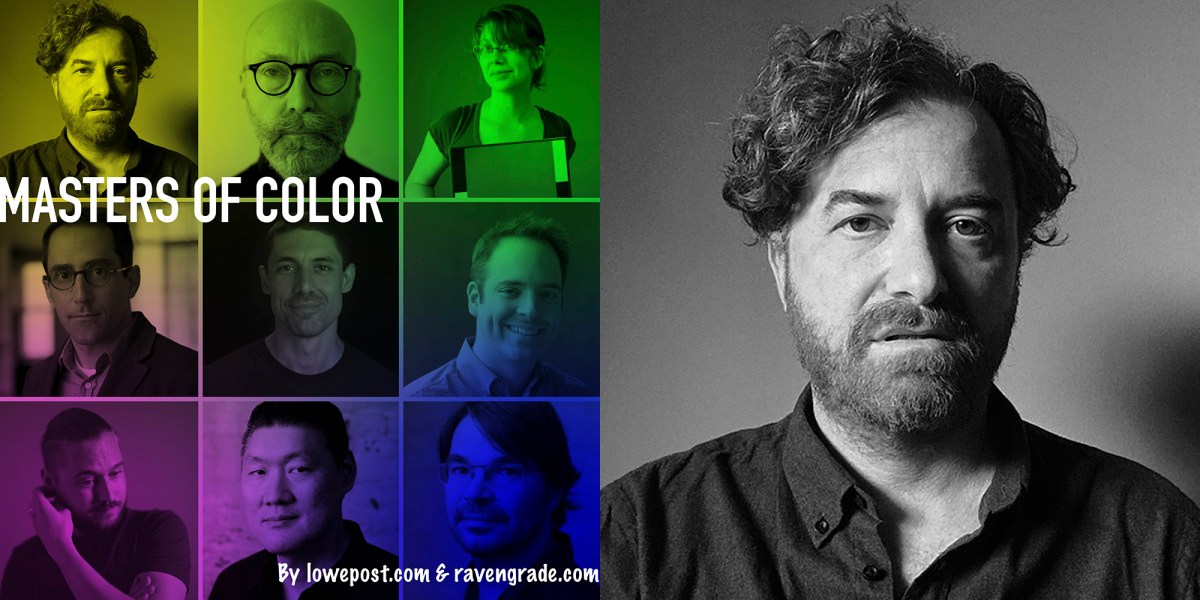
In this episode, we talk with director David Fincher’s favorite colorist Eric Weidt about the art and craft of color grading.

Eric has an incredible list of credits that includes Mank and Mindhunter. His works on these projects extend far beyond traditional tasks of color grading, incorporating complex look modeling and incredibly detailed adjustments on virtually every frame.

The techniques and insights he shares in this episode are unique and includes topics such as how to sculpt the viewers experience with textural and spatial tools, the lens treatment techniques used on Mindhunter, the process and swan curve treatment behind the day-for-night shots on Mank, advanced grain work and so much more.

This episode is sponsored by Pixelview, an industry standard and affordable streaming solution for editors and colorists.

Listen to the podcast:

Apple Podcasts
Spotify
Amazon Music
Google Podcasts
Lowepost (Premium membership videos)

The Evolution of Immersive Content in Dolby

June 8, 2021
Dolby Professional (Dolby)

Conversation Markers:

00:00:00: Introduction
00:06:41: Conversation with Victoria Alonso, EVP, Production at Marvel Studios
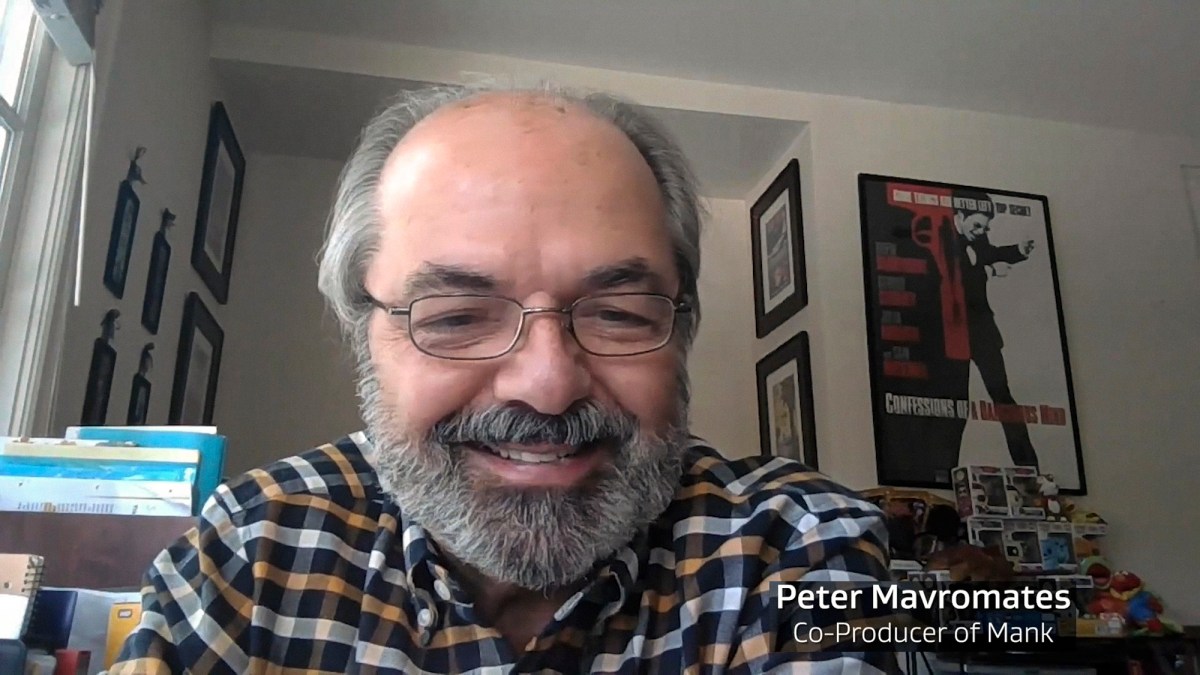
00:22:51: Conversation with Peter Mavromates, Co-Producer of Mank
00:36:18: Conversation with Aaron Lovell, SVP of Post Production at Boardwalk Pictures
00:45:49: Conversation with Florian Schneider, Producer of Freaks: You’re One of Us, Stephan Kuch, Colorist at PANOPTIMO, Andreas Rudroff, Sound Mixer at Orange Sound Studio
00:58:31: Conversation with Jessie Schroeder, VP, Post Production at Pixar Animation Studios and Kori Rae, Producer at Pixar Animation Studios

Thanks to all of those that joined Dolby and our special industry guests as we discussed the evolution of entertainment and explored how world-renowned content creators are using Dolby technologies to expand their creative palette and empower immersive storytelling.

This PGA members-only event was the first in a series of events designed to both inspire and educate producers in film, television, and new media to create future-forward, immersive experiences in Dolby Vision and Dolby Atmos. We hope those who attended the live event found it valuable. For those who were unable to attend or would like to see it again we have provided a recording of the event.

Learn more on how to Produce your amazing content in Dolby

Connect with DolbyFacebookTwitterInstagramLinkedIn

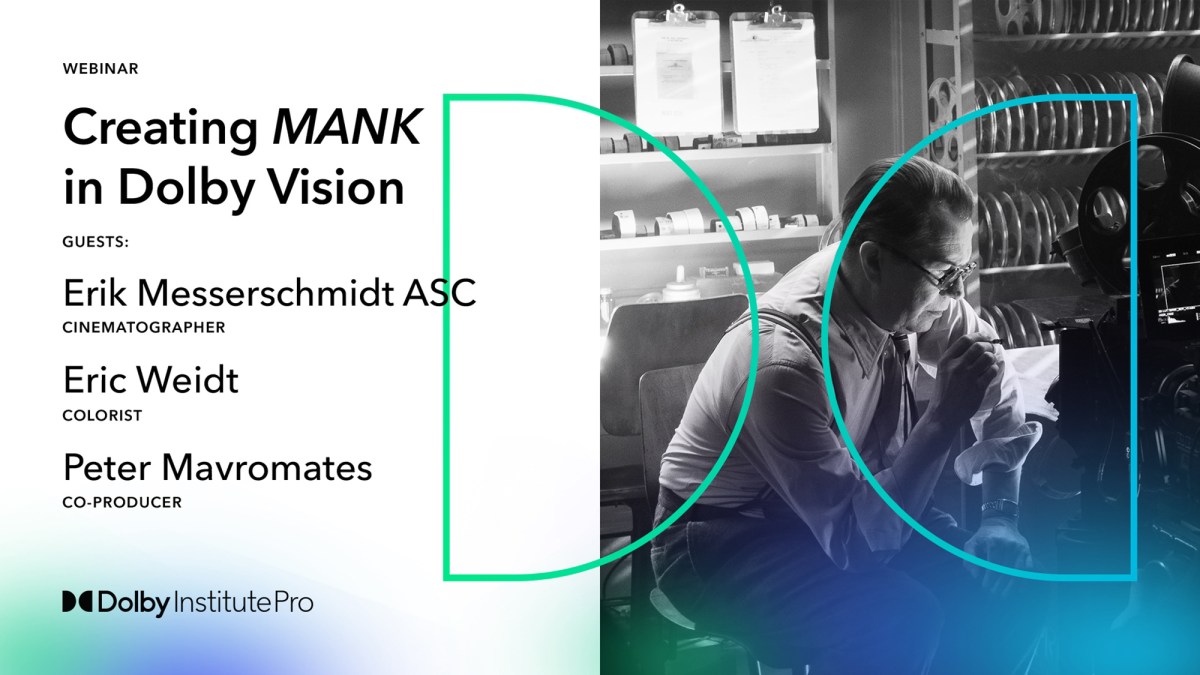
Creating Mank in Dolby Vision

Tom Graham, Head of Dolby Vision Content Enablement. Dolby Laboratories
April 3, 2021
Dolby Professional (Dolby)

Hear from Cinematographer Erik Messerschmidt ASC, Colorist Eric Weidt, and Co-Producer Peter Mavromates as they share their insights and experiences creating the stunning visuals for David Fincher’s Oscar nominated movie Mank in Dolby Vision HDR. This session provides insights into their methodology and workflow for creating this stunning black-and-white Hollywood epic Netflix movie.

Connect with Dolby: Facebook, Twitter, Instagram, LinkedIn

Erik Messerschmidt ASC / Mank : Masterclass in Monochrome

Black-and-white biopic Mank sees another successful collaboration between cinematographer Erik Messerschmidt ASC and director David Fincher as they craft an authentic portrayal of Hollywood’s golden age and explore the turbulent development of the script for Citizen Kane.

Zoe Mutter
April 12, 2021
British Cinematographer

“This was not an offer I had to consider; the answer was an immediate yes,” says cinematographer Erik Messerschmidt ASC when thinking back to the moment he was asked to film director David Fincher’s Mank which depicts the life of screenwriter Herman J. ‘Mank’ Mankiewicz (Gary Oldman) as he develops the script for director Orson Welles’ 1941 classic Citizen Kane.

“I was thrilled when David called me,” he says. “I was nervous too of course as I felt a tremendous responsibility to be considerate and respectful to the film, but it’s a cinematographer’s dream to get the opportunity to make a movie like this.”

As Citizen Kane is widely regarded as one of cinema’s masterpieces, the pressure was on to capture the essence of Gregg Toland ASC’s cinematography and to faithfully encapsulate the distinctive mood, lighting and composition reminiscent of a golden era of filmmaking.

Mank, which received a limited theatrical release before streaming on Netflix, is based on a script written by Fincher’s late father, the journalist and writer, Howard “Jack” Fincher which focuses on the controversy surrounding who had creative ownership of Citizen Kane – Welles or Mankiewicz.

The film uses flashback sequences to explore the prolific talent of Mank as well as his alcoholism and tumultuous relationships with Hollywood executives such as film producer and MGM Studios co-founder Louis B. Mayer (Arliss Howard) and Irving G. Thalberg (Ferdinand Kingsley) and publishing tycoon William Randolph Hearst (Charles Dance), who is widely claimed to be the inspiration for Citizen Kane’s protagonist.

Fincher was clear from the beginning that the film would be shot in black-and-white. “We never even considered what the movie would look like in colour,” says Messerchmidt. “Part of David’s intent was to transport the audience back to the classic ‘30s and ‘40s Hollywood era. Black-and-white was an excellent way to do that.”

Ensuring black-and-white was used as a homage or a pastiche rather than a parody was a priority. “When they approach black-and-white, cinematographers can tend to reach for noir as they are excited by its gestured, stylised lighting which you don’t get to use very often when shooting in colour,” adds Messerschmidt.

Read the full profile

ASC Insights Premieres

Jay Holben
February 17, 2021
The American Society Cinematographers

In a new series of in-depth interviews with Society members, ASC Insights provides the cinematographer’s perspective on today’s most pertinent topics. The first two episodes cover High Dynamic Range (HDR) from the director of photography’s view.

Episode One discusses the implementation of HDR in postproduction as a deliverable and features the insights from Markus Förderer, ASC, BVK; Polly Morgan, ASC, BSC; and associate member and colorist Dave Cole. The episode examines scenes from Independence Day: Resurgence, the F/X series Legion and the short film Mandy. 

Episode Two examines the implementation of HDR throughout the entire workflow from set to post and features thoughts from Erik Messerschmidt, ASC; Marshall Adams, ASC; and colorist Dave Cole. The members discuss scenes from Netflix’s Mindhunter and El Camino: The Breaking Bad Movie

For both episodes, ASC associate member and American Cinematographer contributing editor Jay Holben discusses the ins and outs of HDR, the benefits and pitfalls and how important it is for the cinematographer to be involved in the postproduction implementation of HDR. The key to the format is in expanding the palette of creative intention for the filmmakers, not in merely delivering a brighter picture.  

Watch both episodes now right here.