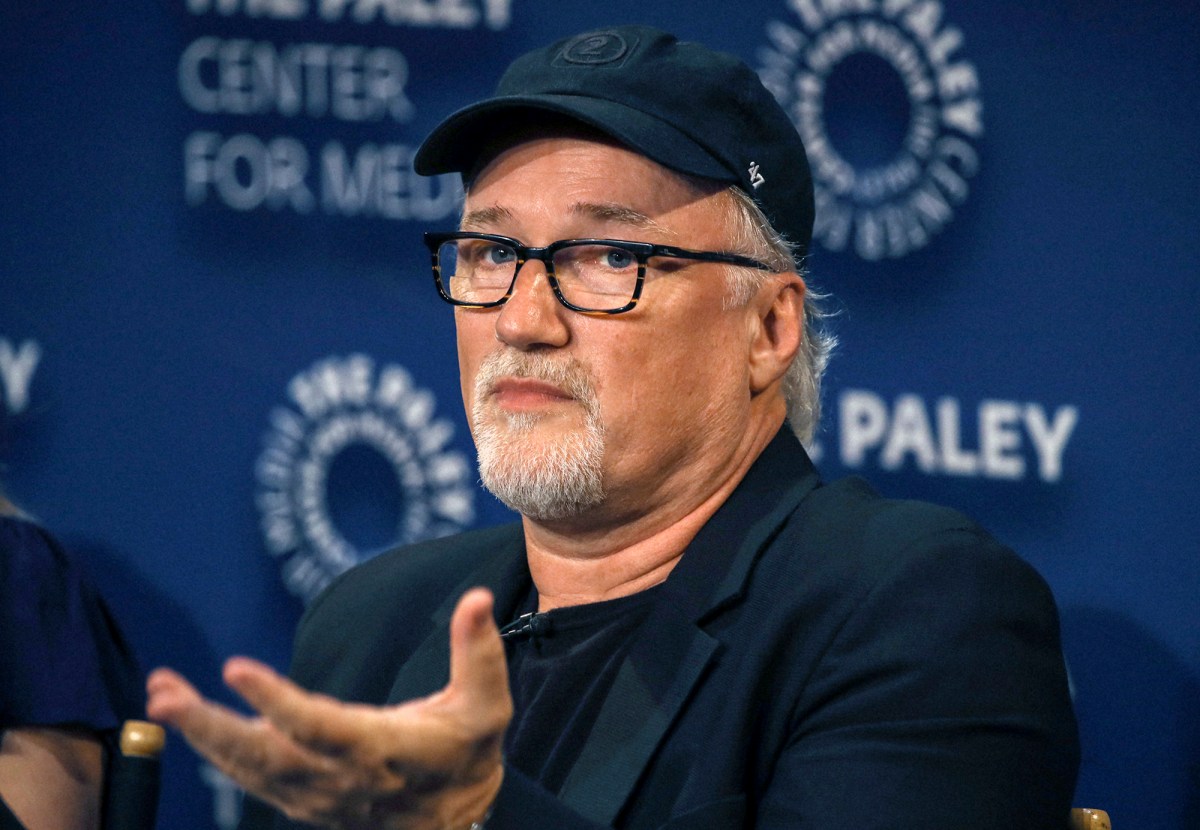
After nearly 40 years in the entertainment business, 3-time Oscar-nominee, David Fincher, has seemingly done it all. From his early years directing music videos for Madonna and Aerosmith, crafting memorable films like Seven and The Social Network, and working on acclaimed TV shows such as House of Cards and Mindhunter, Fincher’s resume appears to be complete. But what about animation?
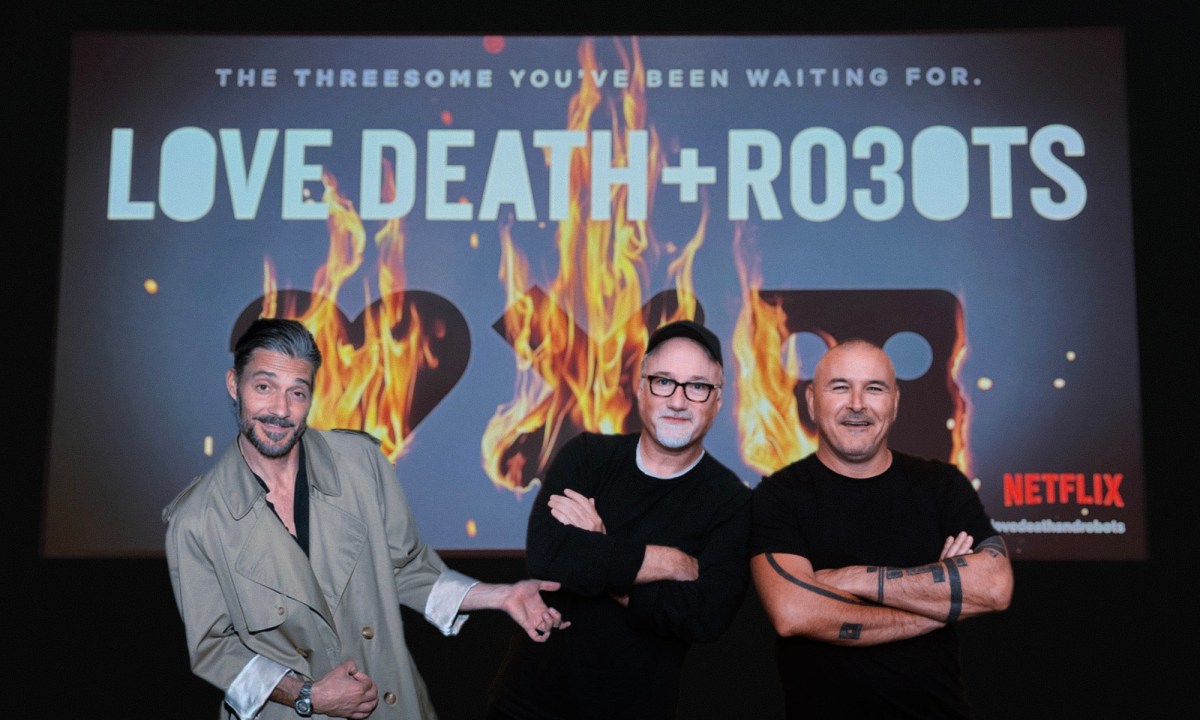
With the launch of Volume 3 of Netflix‘s mind-bending Love, Death and Robots anthology series, Fincher can finally check animation off his bucket list with his episode, titled “Bad Travelling.” In this seafaring horror story, a group of Jable shark hunters on a far-away planet are attacked by a giant crustacean. With the sailors’ lives in jeopardy, chaos and mutiny ensue.
Although Fincher has decades of experience working behind the camera on live-action projects, we wanted to know if animation brought any new challenges to the seasoned director.
“Ultimately, directing comes down to understanding context and sculpting time, light, and behavior with that innate understanding,” Fincher told IGN. “In some cases, like in the case of motion capture, there are people in onesies with ping pong balls hanging off them, and you’re going, ‘Okay, now remember the ship is rocking and all…’ You’re there to add a little imagination sauce to all the other shit that they’re trying to keep in their heads. I mean, it does tend to look a little like Saturday Night Live. It’s a ridiculous thing to be asking somebody to do a one-act play, dressed in pajamas. So that aspect of it, it’s the same thing. You’re playing dress up, right? And you’re trying to say, ‘Look, from the audience’s standpoint, this needs to happen a little faster here, a little… This can go a little slower. Find that word.’ It’s all the same shit.”
It’s not often that we as viewers and lovers of television get an inside scoop on what the future of a favorite show would have been — especially once it’s canceled. In the case of Netflix’s Mindhunter, which released its second season back in 2019, the series technically wasn’t canceled so much as a possible third season was put on “indefinite hold” per David Fincher, though the series’ executive producer has also confirmed in interviews since that Season 3 likely isn’t happening, partly due to the fact that it would have required an even steeper budget than the previous one. Now, thanks to Season 2 director Andrew Dominik, we have even more of a sense of why Mindhunter‘s dead-in-the-water third season would’ve had a higher price tag.
In speaking with Collider‘s own Steve Weintraub in a long-spanning interview about his documentary about Nick Cave and Warren Ellis, This Much I Know to Be True, the director also briefly touched on not only his experience with directing two of Mindhunter‘s Season 2 episodes, but also what the third season would have entailed in terms of its main story — as well as which real-life figures the FBI Behavioral Science Unit team consisting of Holden Ford (Jonathan Groff), Bill Tench (Holt McCallany), and potentially even psychologist Wendy Carr (Anna Torv) would have crossed paths with.
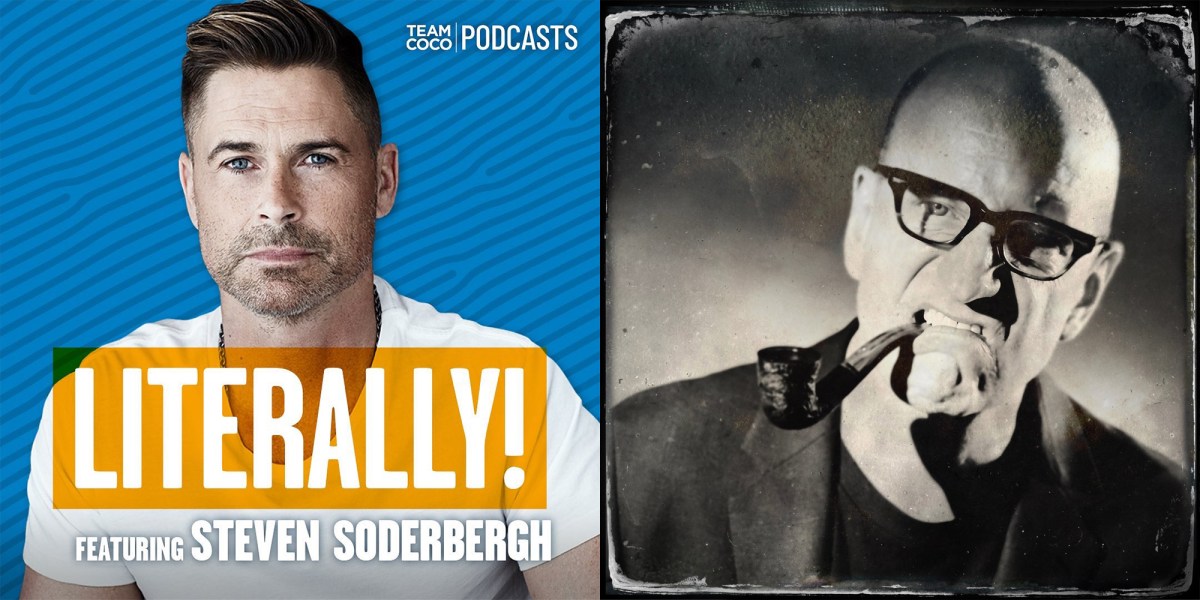
It’s Showtime! When Steven Soderbergh joins Rob, the two friends get to ask the questions they’ve never asked one another. In this episode find out about Steven’s new film Kimi, and how he thinks Sex, Lies, and Videotape now feels like a Jane Austen novel.
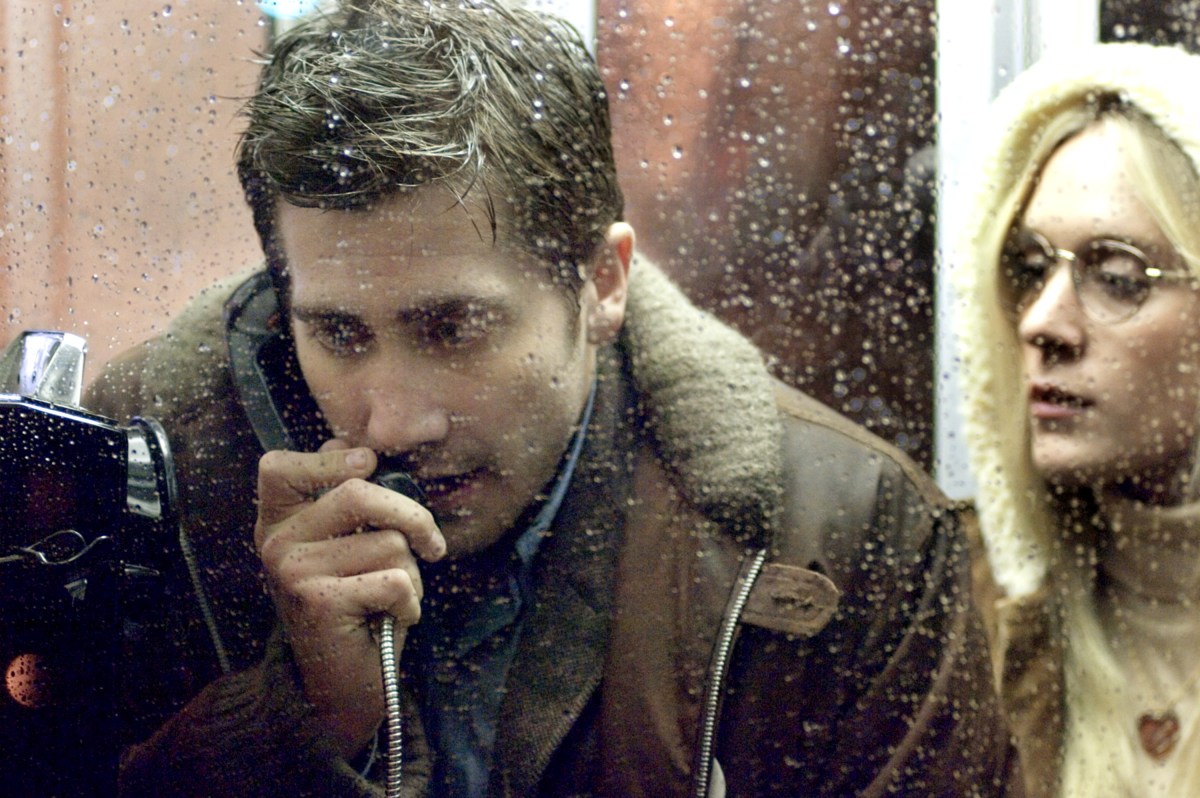
This week marks 15 years since “Zodiac” was released in theaters, and save for the actors looking 15 years younger than they do now, the film still feels like it could be released today. If anything, “Zodiac” feels more like a product of 2022 than 2007. The country is more obsessed with serial killers than ever before, with true crime podcasts and documentaries continuing to draw massive ratings, Zodiac killer memes being used in presidential primaries, and the latest Batman movie taking the form of a serial killer drama.
That makes it a great time to revisit “Zodiac,” as well as a good opportunity to take a deep dive into the making of the film. “Zodiac” attracted as much attention for its painstaking production process as it did for the finished product, as the always detail-oriented David Fincher went above and beyond to make sure everything in his film was historically accurate. Sometimes his methodical process hurt his relationships with the cast, but one thing is for certain: They made a great movie.
In Reunited, Awards Insider hosts a conversation between two Oscar contenders who have collaborated on a previous project. Here, we speak with Lost Daughter actor Dakota Johnson and Tick, Tick…Boom! star Andrew Garfield, who previously appeared together in the 2010 drama The Social Network.
The Social Network,David Fincher’s 2010 drama about Mark Zuckerberg and the creation of Facebook, has remained firmly part of the cultural conversation—after all, the influence of the social media network on our lives and politics has only increased. But this year also brings an opportunity to celebrate two of its stars who are making their way through the awards circuit: Andrew Garfield, who played Eduardo Saverin, and Dakota Johnson, who, in her first film role, played Amelia Ritter.
The 32-year-old Johnson, who went on to lead the Fifty Shades franchise, plays a conflicted young mother in Maggie Gyllenhaal’s The Lost Daughter. And Garfield, 38, who went on to don the Spider-Man suit for two films before diving into more auteur-driven fare like Hacksaw Ridge and Silence, delivers a career-best performance as Rent creator Jonathan Larson in Lin-Manuel Miranda’s Tick, Tick…Boom!
Their current projects could not be more different, but their paths to get to them, from the early days of TheSocial Network to leading big franchises (and the fandom that comes with that), have been eerily similar. Vanity Fair reunited the two in Los Angeles for a conversation about filming with Fincher, dealing with the spotlight of fame, and the “rotten fish” of social media.
Chapters: 00:00 Intro — How David Fincher became a Filmmaker 02:01 Early Career & Return of the Jedi 03:18 Shot Composition and Blocking 06:19 “Relentless” Number of Takes 11:02 Directing with Precision 13:43 Color Theory & Creating the Look 15:48 Create a Feeling (Production Design & Music) 19:35 Final Takeaways
David Fincher is a director’s director. His reputation for having complete control over his work is well-known but many directors have had similar power. So, what makes his approach to film directing so captivating? In this David Fincher video essay, we’ll let the man speak for himself. Through a collection of interviews from throughout his career, Fincher guides us through some of the strongest characteristics of his directing style.
To date, over the past four decades, David Fincher has directed a plethora of music videos, commercials, and 11 feature films. Along the way, he has refined his directing style which can be summed up in two words: precise and purposeful. When watching any David Fincher movies, you would be hard-pressed to find an out-of-place camera movement, or a lazy frame composition. One lesson we learned from Fincher is how he balanced and imbalanced the frame during Nick and Amy’s first meeting in Gone Girl to show the “push and pull” of their flirting.
Another well-known staple of the David Fincher directing style is his predilection for shooting multiple takes. He famously shot 99 takes of the opening scene in The Social Network, for example. But there’s a method to his madness — he wants the actors to move “beyond muscle memory” especially in their domestic environments. In Fincher’s logic, when the actor sits on their couch, they need to have sat in it a hundred times to make it look like they’ve sat in it a hundred times.
Fincher also explains how he creates mood and tone with lighting, color, and music. With a darker frame, desaturated color, and the brooding tones of Atticus Ross and Trent Reznor, there certainly is a distinct experience watching David Fincher films. While all of this sounds extreme, the proof that he’s doing something right is visible on-screen.
♬ Songs used:
“Father / Son” — Makeup and Vanity Set “Subdivide” — Stanley Gurvich “Switchback” — Nu Alkemi$t “Battle in the Forest” — Charles Gerhardt – National Philharmonic Orchestra “Chasing Time” – David A. Molina “Sugar Storm” – Trent Reznor & Atticus Ross “Soul Sacrifice” – Santana “Graysmith Obsessed” – David Shire “Intriguing Possibilities” – Trent Reznor & Atticus Ross “Wendy Suite” – Jason Hill “Under the Midnight Sun” — Trent Reznor & Atticus Ross “14 – Ghosts II” – Nine Inch Nails “Corporate World” – The Dust Brothers “Appearances” – Trent Reznor & Atticus Ross “With Suspicion” – Trent Reznor & Atticus Ross “What Have We Done to Each Other” – Trent Reznor & Atticus Ross “Cowboys and Indians” – Trent Reznor & Atticus Ross “San Simeon Waltz” – Trent Reznor & Atticus Ross “Fool” – Ryan Taubert “Where Is My Mind” – The Pixies
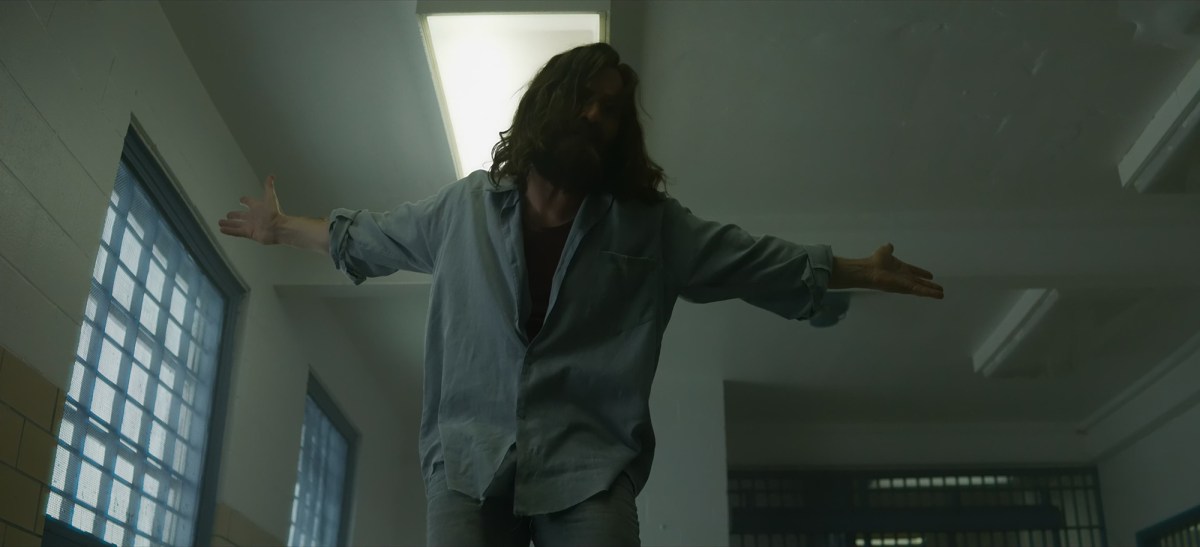
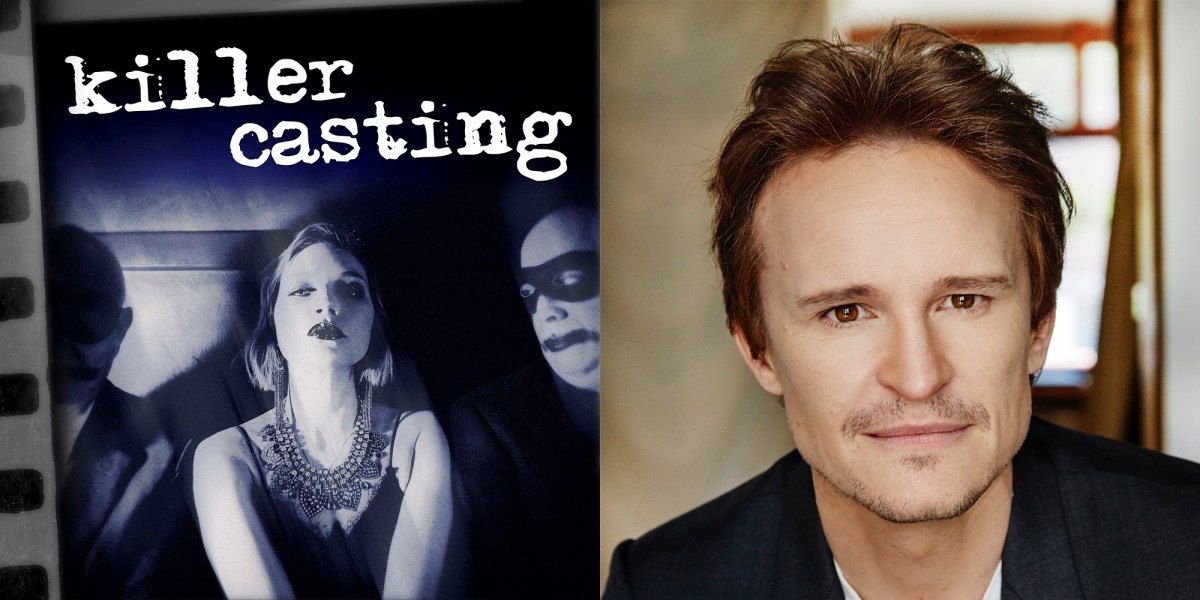
We are so psyched to welcome transformational actor Damon Herriman to the show! Mr. In Between fans will know him as Freddy the Strip Club owner, but there rest of the world knows him for tons of other roles including playing Charles Manson (twice) in Mindhunter and Once Upon A Time in Hollywood, Dewey from Justified, Kim from Secret City and so many others. Damon talks about working with Scott Ryan and Nash Edgerton, about his background growing up in the business as a child actor and so much more!
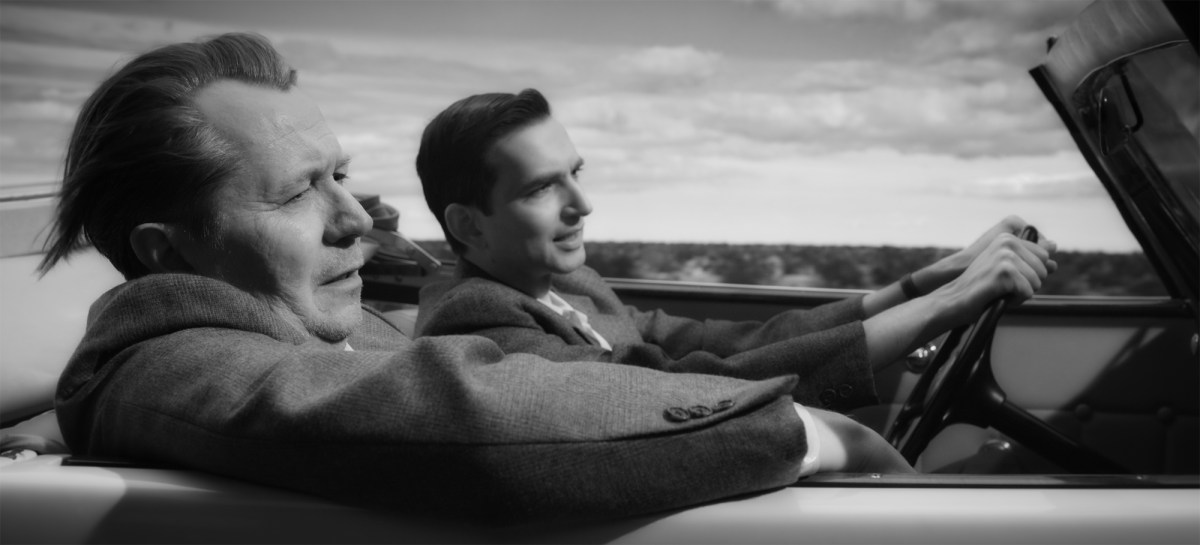
Catch Ian, Liam, Ellie, Ethan, and Georgia (who was only in about 90% fangirl mode) as we were lucky enough to sit down with an extremely talented actor, writer, and producer whose credits range from Mank to Shipwrecked Comedy to podcasting and even all the way to Cougar Town. Revelations from the interview include:
Hearing how Sean got his start in Los Angeles
Sean talks about the development of the podcast he does with his sister, Sinead: Make Sean & Sinead Love Movie
Sean discussing the difference between being a producer on his own material and a day player on a big tv or film project
A small anecdote about what Gary Oldman is really like
Sean discusses his writing process and how it differs depending on the project
We learn about how to shoot in black and white
The BFE lot pitch their own film choices that most people hate but we can’t help but love
Sean reveals his best film ever and cuts down someone for hating a classic film
Whether Sean would turn down a call from Marvel boss, Kevin Feige
Pets on both side of the video call make their presence known
Sean teases a big announcement dropping for Shipwrecked Comedy on June 15th
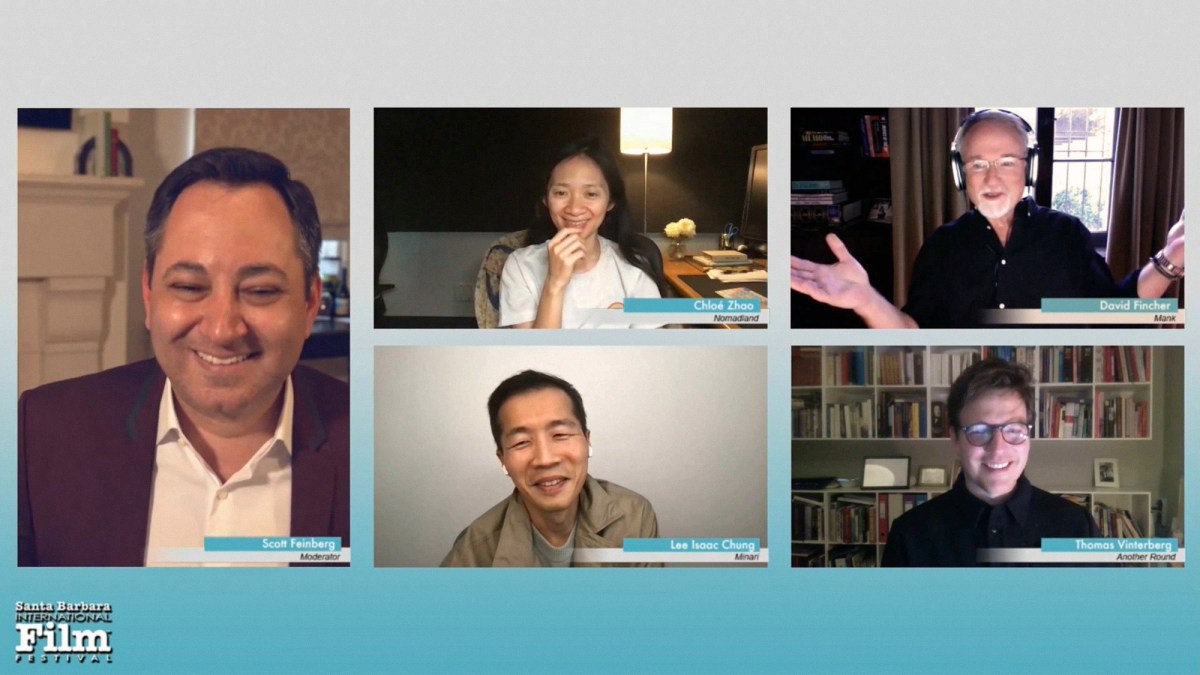
The Santa Barbara International Film Festival Outstanding Directors of the Year Award is given to directors not afraid to push the envelope in the cinematic world, with an expertise that is both gracious and bold.
Moderated by The Hollywood Reporter Awards Columnist Scott Feinberg, the recipients are:
Chloé Zhao (Nomadland) David Fincher (Mank) Lee Isaac Chung (Minari) Thomas Vinterberg (Another Round)




 The Fincher Analyst