In Conversation: Behind the Crafts of Mank

Wendy Mitchell
April 3, 2021
Netflix Awards FYC

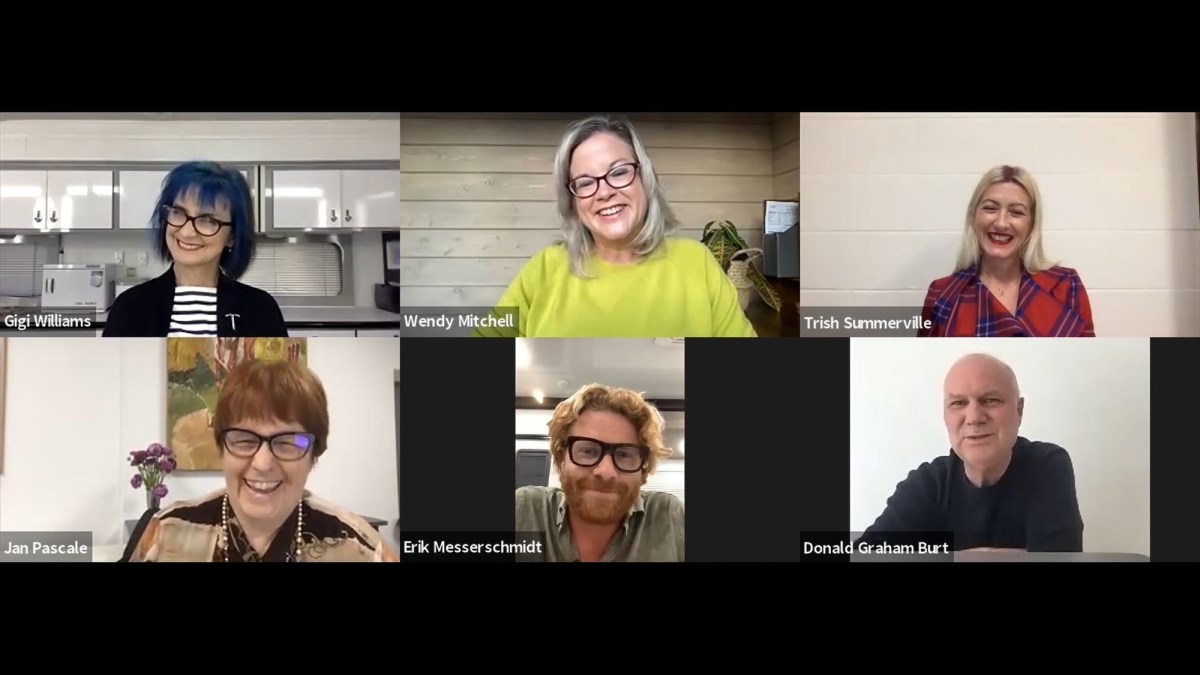
A conversation with Cinematographer Erik Messerschmidt, ASC, Production Designer Donald Graham Burt, Set Decorator Jan Pascale, Costume Designer Trish Summerville, and Makeup Department Head Gigi Williams on behalf of Mank. Moderated by Wendy Mitchell.

The Filmmakers Podcast: The Making of David Fincher’s “Mank”

Cinematographer Erik Messerschmidt, Make Up Designer Gigi Williams, Production Designer Don Burt & Costume Designer Trish Summerville

Giles Alderson, Andrew Rodger, Phil Hawkins
April 2, 2021
The Filmmakers Podcast

We are delighted to bring to you our SPECIAL bumper episode on the Making of David Fincher’s BAFTA & OSCAR nominated ‘Mank’.

We start with Giles Alderson and Andrew Rodger having a chat with ‘Mank’ Cinematographer Erik Messerschmidt about going from Gaffer on Fincher’s Gone Girl to DoP on Mank and how he made the transition to make his debut feature film.

He talks pre-production, how he works with Fincher especially during the repeated takes, what the process was to shooting in black and white and the camera they used.

Co host Phil Hawkins then joins Giles to chat to Make Up designer Gigi Williams about her process, the difference between shooting on digital vs. film. What she works on first how she collaborates with the HOD team and gives some brilliant Make Up tips.

We then chat to Production Designer and Art Director Donald Graham Burt AKA Don Burt about designing the film from preparation through the shooting. He explains why listening is so important in film-making, how he researches a project and how he created the 1930/s & 1940 style and look. And how you don’t have to appease to get ahead.

Finally we chat to Costume Designer Trish Summerville about how she created the look and feel of Mank through her costumes. She talks about working in teams, how to collaborate with actors to help create the characters and how to use colours and patterns to portray certain emotions!

Listen to the podcast:

The Filmmakers Podcast
Apple Podcasts
Spotify
YouTube

Mank’s Monochrome Effects

Mike Seymour
March 14, 2021
fxguide

Mank is nominated for 10 Academy awards in this year’s 93rd Oscars in categories such as Best Picture, Lead Actor, and Best Director. It is also nominated for the VES award for Outstanding Supporting Visual Effects in a Photoreal Feature. The film follows screenwriter Herman J. Mankiewicz’s tumultuous development of Orson Welles’ iconic masterpiece Citizen Kane (1941).

There were several VFX supervisors nominated, Simon Carr (Territory Studio), Wei Zheng (Artemple), James Pastorius (Savage VFX), along with Peter Mavromates. In many respects, director David Fincher could have also been nominated for VFX. The director is himself an expert in visual effects and was a very active contributor to the film’s effect work. Peter Mavromates is a long-time collaborator with David Fincher and was officially the Co-producer, Post Supervisor and VFX Producer on the film. Additionally, Pablo Helman at ILM was key in creating the CG animals at the San Simeon zoo.

The film had its roots going back over 20 years. “We had a false start about 20 years ago, around 1999. The script had been written at that time but it never happened for a number of reasons,” Mavromates comments. “Probably a contributing factor was that it was black and white and if you weren’t Woody Allen in the 90s, you couldn’t shoot black and white. Even Mel Brooks had to change producers for Young Frankenstein because the studio wouldn’t let him shoot black and white and he had to find another studio.”

The movie finished filming about 2 weeks before the W.H.O. declared the COVID pandemic in Feb 2020. This meant nearly all the VFX was done using remote protocols at each of the VFX vendors.

Read the full profile

Oscar-Nominated Cinematographer Erik Messerschmidt on “Mank”

Matt Hurwitz
March 31, 2021
The Credits (MPA)

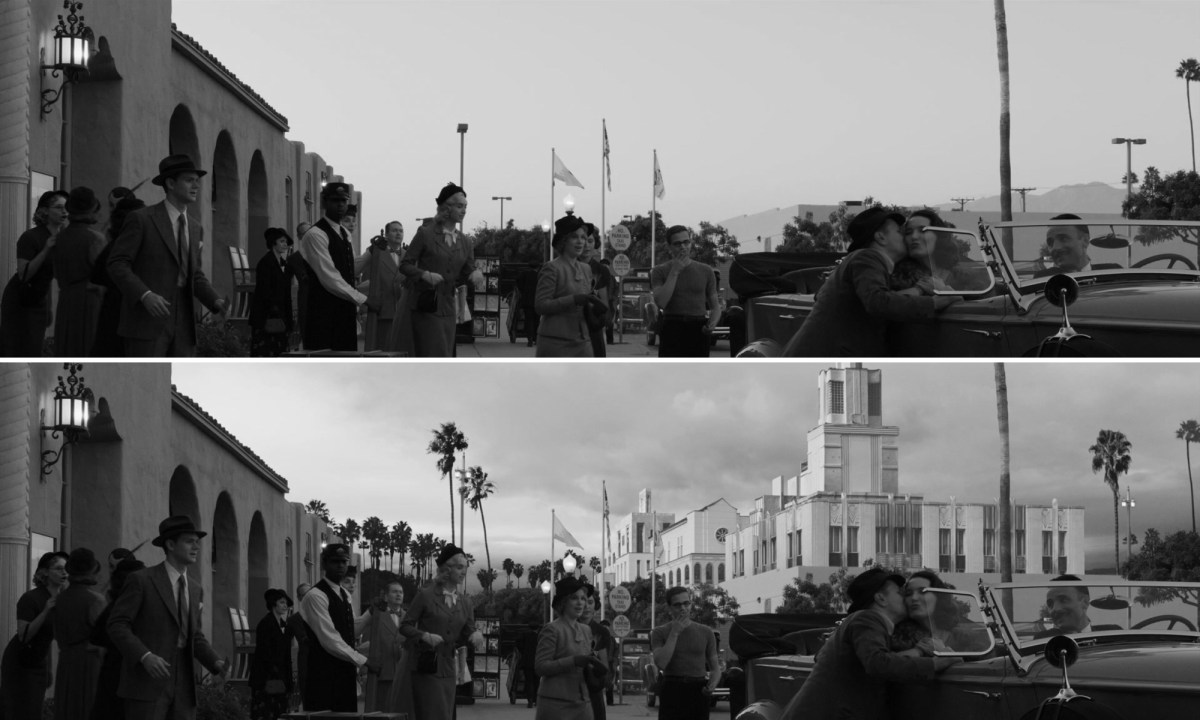
Actors Gary Oldman and Amanda Seyfried go for their characters’ leisurely evening stroll outside San Marino’s Huntington Library, which is subbing in for William Randolph Hearst’s Hearst Castle at San Simeon.  The only thing is, it’s not night – and the actors are wearing custom-tinted contact lenses to help them avoid squinting, due to the additional bright lights director of photography Erik Messerschmidt has added to make his day-for-night photography appear correct in the final image.

Day-for-night is not the only classic technique the Oscar-nominated cinematographer utilized on David Fincher’s Oscar-nominated movie, Mank. The film, which tells the tale of screenwriter Herman J. Mankiewicz’s path to writing the screenplay for 1941’s Citizen Kane, pays homage not only to Mank himself but to that film’s legendary cinematographer, Gregg Toland. And while the two made use of some of Toland’s techniques, they did so with great care.  “We refused to allow ourselves to think of Toland exclusively,” says Fincher. “We didn’t want to ape – we wanted to inhabit.”

He and Messerschmidt have worked together over two seasons of the director’s intriguing crime series, Mindhunter, and Fincher had mentioned the film project, written by his father Jack Fincher, to his DP on occasion. The two were prepping another film, World War Z 2, but when the project came to halt, Messerschmidt went off to South Africa to shoot several episodes of HBO Max’s Raised by Wolves. While there, he says, “David e-mailed me and said, ‘Hey, I’m gonna do this movie, Mank, about Herman Mankiewicz. Would you like to do it?’” The answer, of course, was yes.

Read the full profile:

Part I
Part II

The ‘Mank’ scene that best encapsulates its 10 Oscar nominations

Christopher Rosen
March 30, 2021
Gold Derby

No movie received more Oscar nominations in 2021 than David Fincher’s “Mank,” a Hollywood throwback about Herman Mankiewicz (Best Actor nominee Gary Oldman), Marion Davies (Best Supporting Actress nominee Amanda Seyfried), and the writing process behind Orson Welles’ “Citizen Kane.” With 10 total nominations — including Best Picture, Best Director for Fincher, Best Actor for Oldman, Best Supporting Actress for Seyfried, Best Cinematography, Best Production Design, Best Editing, Best Costume Design, Best Hair & Makeup, Best Sound, Best Visual Effects, and Best Score — the lavish black-and-white Netflix film is just the 96th feature in Academy Awards history to receive double-digit citations and the second-most lauded Fincher effort behind only “The Curious Case of Benjamin Button.”

With a project comprised of so many academy-endorsed contributions, it might be difficult to imagine one single scene representing the sum of the whole. But nestled within the complex structure of Jack Fincher’s time-hopping screenplay is a sequence that combines all 10 of the “Mank” nominations and shows how each department and performance elevated the next: Mank and Marion’s stroll through San Simeon.

Read the full profile

Industry Insights: Erik Messerschmidt on recreating old Hollywood using modern cinematography in Netflix’s Mank

The director of photography behind Oscars frontrunner Mank discusses his background in stills, collaborating with David Fincher, and reimagining black-and-white cinema using contemporary technique

Flossie Skelton
March 25, 2021
1854

In 2020, Erik Messerschmidt made his feature film debut as director of photography (DOP) on David Fincher’s Mank. A love letter to Hollywood’s “Golden Age”, the sumptuous black-and-white film – which leads this year’s Oscars hype with 10 nominations – follows alcoholic screenwriter Herman J. Mankiewicz (Gary Oldman) through the 1930s and 40s as he races to finish the cinematic masterpiece that would eventually become Citizen Kane. But rather than simply emulating the iconic imagery pioneered by Gregg Toland – one of film’s most legendary cinematographers, in large part due to his work on Kane – Fincher and Messerschmidt set out to leave a masterfully modern mark on the story.

“I felt like it was quite possible – and I’ve seen it before, with black-and-white in particular – for the images to become almost a parody,” says Messerschmidt, speaking over the phone from LA. “And parody was the last thing we wanted.” The pair were wary of leaning into a cinematic style that would draw “too much” attention to the period, thereby detracting from the authenticity of the narrative; rather, they hoped to transport viewers to old Hollywood in a less contrived way.

Read the full profile

Cinematographer Erik Messerschmidt: ‘Photography doesn’t have to take the front seat’

Riley Chow
March 23, 2021
Gold Derby

“I didn’t want the movie to be a parody of black and white,” reveals “Mank” director of photography Erik Messerschmidt in an exclusive interview with Gold Derby about the greyscale cinematography of the period biopic on Netflix. “I was concerned that that could absolutely happen and if we leaned into it too heavily that the audience would be distracted by the fact that they were watching a black-and-white film,” continues Messerschmidt. He muses, “In many cases, by the way, the photography doesn’t have to take the front seat.” Messerschmidt concludes, “I adored the experience of shooting in black and white. It was fantastic and it was a challenge that I’ve never really had before.”

Read the full article

Losing color opens a whole new world to “Mank” cinematographer

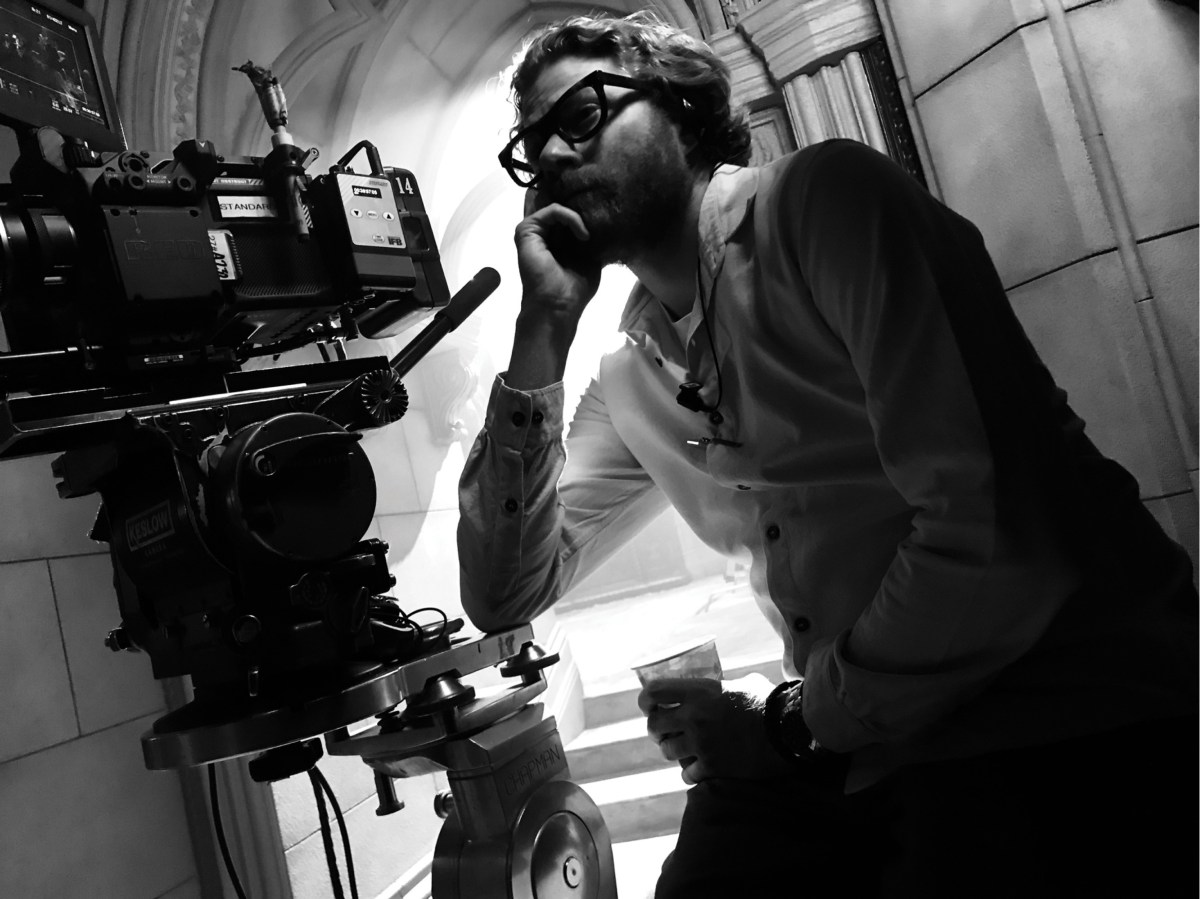
Erik Messerschmidt on the set of “Mank” (Ceán Chaffin/Netflix)

Hugh Hart
March 15, 2021
Los Angeles Times

A couple of years ago, David Fincher’s go-to director of photography, Erik Messerschmidt, described the muted palette of the TV series “Mindhunter” as a product, in part, of the pair’s shared “aversion for magenta.” Color palette proved to be a nonissue during the making of “Mank,” since the movie depicts “Citizen Kane” writer and Hollywood bad boy Herman J. Mankiewicz (Gary Oldman) and his coterie in period-correct black and white. Speaking from Georgia, where he’s prepping the Korean War movie “Devotion,” Messerschmidt half-joked, “The great luxury of black and white is that any nausea [over color] that we might otherwise be dealing with, we didn’t have to worry about for ‘Mank.’”

Previous to filming “Mank,” Messerschmidt, who met Fincher seven years ago while working as a gaffer on “Gone Girl,” had barely shot anything in black and white. “I’d dabbled in still photography as a hobby and shot a couple of very simple music videos, but no features,” he says. “When David called me to do ‘Mank,’ black and white was a foregone conclusion.”

Read the full profile

A New Lens for Netflix’s Mank with Cinematographer Erik Messerschmidt, ASC

Nodding to Citizen Kane’s art while exploring fresh perspectives in David Fincher’s Mank.

March 2, 2021
Musicbed Blog

It’s long been debated whether Shakespeare actually authored all of his acclaimed writings or if, instead, Christopher Marlowe was responsible for a significant amount of his body of work. And in the early 70s, a similar thesis developed: that co-screenwriter Herman Mankiewicz was in fact the primary writer on Orson Welles’ Citizen Kane. Though it’s solidly refuted by Kane scholars, the myth continues to flourish.

And now, Director David Fincher arrives with Mank: a screenplay by his late father about Herman Mankiewicz and his development of the screenplay for Citizen Kane. After a six-year feature film hiatus, Fincher tapped Erik Messerschmidt, ASC to DP, after working with Erik on Gone Girl as a gaffer and cinematographer for both seasons of Mindhunter.

Mank’s visual aesthetic is subtle, but not to be overlooked. Upon its release, the film’s cinematic elements were overwhelmingly acknowledged by critics and audiences alike. It’s an approach owing much to Erik, who saw the value in referencing the artistic quality of Citizen Kane while also developing a fresh lens through which the classic story could be seen.

Here, we talk with him about his work on Mank.

Scene at The Academy: Mank

Oscars (YouTube)
March 6, 2021

Mank director David Fincher, actors Gary Oldman and Amanda Seyfried, the cinematographer Erik Messerschmidt, production designer Donald Graham Burt and sound designer Red Kyle walk you through a boisterous San Simeon house party sequence and the recreation of William Randolph Hearst’s famed zoo.