How David Prior’s ‘The Empty Man’ Survived the Perfect Hollywood Storm

We talk to the filmmaker about the unfortunate fate of his ambitious horror fIlm.

Matthew Monagle
March 2, 2021
Film School Rejects

Last October, a horror movie came and went. It wasn’t the first time a Hollywood studio dumped a horror movie in the middle of Halloween; given the ongoing pandemic, few films with a theatrical release could have moved the needle in 2020. But in the case of David Prior’s The Empty Man, this release was just the tip of the iceberg, the near-final act in a first-time filmmaker’s multi-year struggle to bring his vision to the screen.

In this conversation, Prior explains how he went from being David Fincher’s protégé to the director of 2020’s most ambitious — and most abandoned — horror film. We also explore how a perfect storm of production problems and studio politics nearly killed the film, and how a passionate audience has already started to turn The Empty Man into a future cult classic.

From DVDs to David Fincher

History doesn’t repeat itself, but it often rhymes. If The Empty Man survives its troubled production and halfhearted theatrical release to become a household name for genre fans, then perhaps this story will serve as a fitting beginning to Prior’s career as a feature filmmaker. For years, Prior worked as a production documentarian for filmmakers such as David Fincher and Peter Weir, but one of his big breaks came with Antonia Bird’s Ravenous, itself a studio disaster that took years to find a passionate audience.

In the years before Ravenous’s theatrical release, Prior had built relationships in 20th Century Fox’s home video department thanks to his contributions to the isolated score track on the Alien DVD release. So when Prior stumbled across Ravenous in theaters — despite a trailer that he describes as a “piss-poor representation of the movie” — he saw an opportunity to build on those connections and bring some much-deserved love to Bird’s film.

His gamble worked. According to Prior, the special-edition release of Ravenous sold three times its initial projections, forcing 20th Century Fox to rush extra copies of the film into production. With his credentials established, Prior was given his pick of future home video releases, and his decision resulted in one of the most influential relationships of Prior’s professional career. “I said, ‘I don’t know what Fight Club is, but I really want to meet David Fincher, so I’ll do that one. And that led to a relationship with Fincher that goes on to this day.”

Over the next decade, Prior became a powerhouse in behind-the-scenes documentaries, shooting features for such films as Master and Commander, Zodiac, and The Social Network. It proved to be a successful and stable career, just not the one that Prior had in mind when he went to Hollywood. “I remember at the time thinking, ‘This is gonna be something where if I’m not careful, ten, fifteen years of my life is going to go by doing this instead of what I’d rather be doing,’” the director says. So Prior took another gamble, this time using some of his own money to produce the short film that would eventually land him his role with The Empty Man.

Read the full profile

“The Empty Man” Clip

Watch The Empty Man

Watch AM1200 (2008)

David Fincher:

“In 40 short minutes, David Prior shows why he is one of the most promising directors I’ve ever seen. People always ask me what to do for a ‘calling card’ in Hollywood. Well do something like this, and try to do it half as well.”

Cinematographer Interview: Shooting Darkness for “The Empty Man”

PremiumBeat chats with director of photography Anastas Michos about shooting with the RED Monstro 8K on his latest feature. Dive in.

Jourdan Aldredge
November 13, 2020
The Beat (PremiumBeat by shutterstock)
Mank’ DP Erik Messerschmidt On the Importance of Precision and Preparation


Jazz Tangcay

March 4, 2021
Variety

Erik Messerschmidt calls David Fincher’s process “precise.” And it is the greatest compliment. That precision is what Fincher is renowned for, his detail. He prefers the wider shots as he relays his character’s environments, but it’s what’s within the frame; that detail that gets the greatest performances out of actors, and gives audiences a full understanding of what is happening.

“Mank,” a love letter to Hollywood’s golden age, is no different. Messerschmidt has collaborated with Fincher before on “Mindhunter,” and is no stranger to the Fincher process, but this was their first feature together.

Messerschmidt reflects on how Fincher works and how they collaborated on the black-and -white drama.

Read the full profile

David Fincher: Maestro of Mank


Netflix Film Club (YouTube)
February 27, 2021

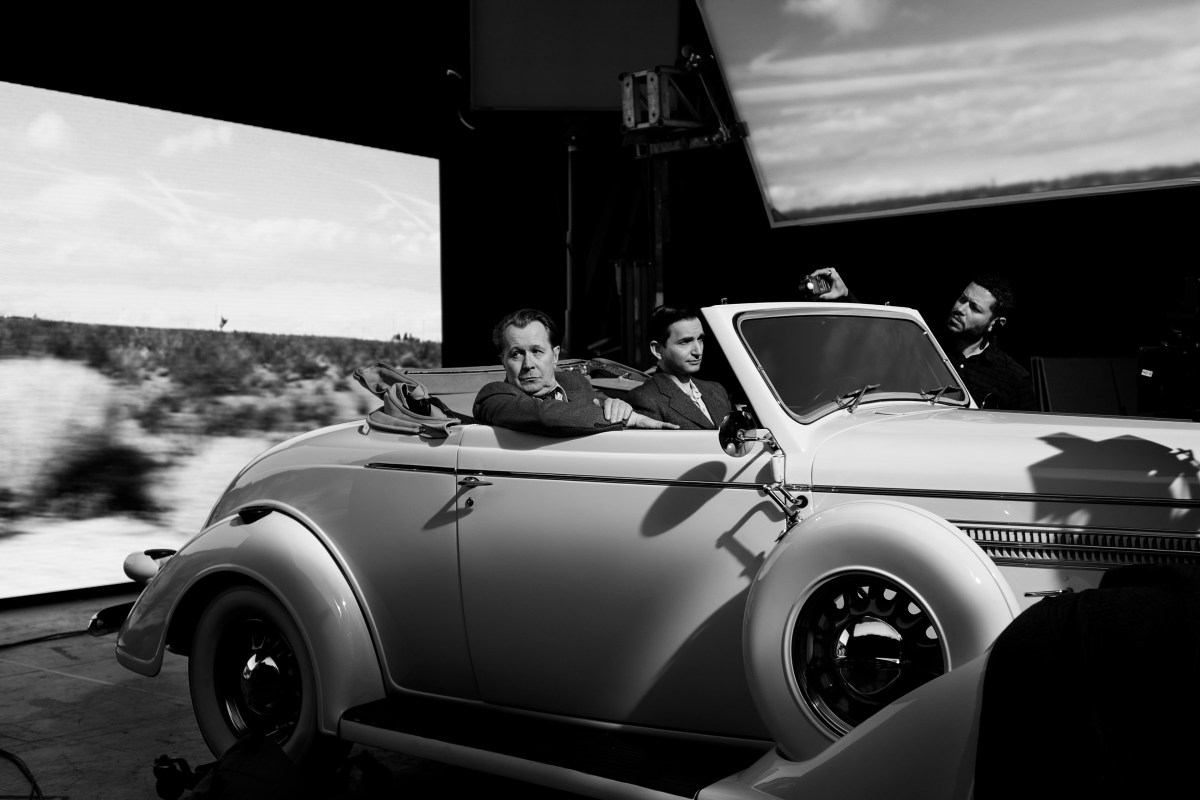
The cast and crew of Mank, including costume designer Trish Summerville and actors Gary Oldman, Amanda Seyfried, Tom Pelphrey and Charles Dance, speak to the focus and concentration that a David Fincher set demands. The acclaimed filmmaker himself, meanwhile, takes you through the process of crafting his examination of Hollywood’s Golden Age.

Writing the Look for Mank

Erik Messerschmidt, ASC channels cinematographic legend Gregg Toland, ASC to recreate classic era Hollywood for David Fincher

Adrian Pennington
March 1, 2021
RED Digital Cinema

Shot in black and white and often in deep focus, David Fincher’s Mank evokes 1930s classic cinema with rigorous attention to digital detail. Made for Netflix, this biographical drama stars Gary Oldman as Citizen Kane screenwriter Herman J. Mankiewicz as he races to finish the Kane screenplay for Orson Welles.

Famously, Fincher was among the first A-list directors to embrace digital filmmaking. Since the groundbreaking production The Curious Case of Benjamin Button (2008), he hasn’t deviated from using RED cameras and Mank was no exception. Fincher had always envisioned the screenwriter’s story being told in black and white.

“It would be a crime not to make this movie in black and white,” says Erik Messerschmidt, ASC, who recently earned an Emmy® nomination for shooting Fincher’s Netflix series Mindhunter. “Digital was just right for this project for all manner of reasons.”

Read the full profile

The Magic of the Movies: Behind the Scenes of David Fincher’s Mank


Netflix Film Club (YouTube)
February 28, 2021

Join acclaimed director David Fincher, actors Gary Oldman and Amanda Seyfried, and the cast and crew of Mank, for a peek behind the curtain of Netflix’s black-and-white ode to Hollywood’s Golden Age.

Insights Into The Lensing of “Mank,” “The Prom,” “Malcolm & Marie”

Cinematographers Erik Messerschmidt, Matthew Libatique, Marcell Rév discuss respective films, collaborating with directors David Fincher, Ryan Murphy, Sam Levinson

Robert Goldrich
February 26, 2021
Shoot

Mank (Netflix) marks cinematographer Erik Messerschmidt’s first narrative feature. It continues a series of firsts for the DP in collaboration with director David Fincher.

Messerschmidt, who earned ASC membership distinction last year, got a major break back in the day while serving as a gaffer for cinematographer Jeff Cronenweth, ASC, most notably on the Fincher-directed Gone Girl. During the course of that movie, Fincher had Messerschmidt do some promotional still work for Gone Girl and the two struck up a rapport. This eventually led to Messerschmidt becoming the DP on Fincher’s Mindhunter, the thriller series centered on an FBI agent’s quest to track down serial killers in the late 1970s.

Last July, Messerschmidt garnered his first career Emmy nomination for his lensing of Mindhunter. He’s shot the lion’s share of Mindhunter episodes, representing his first major TV gig as his DP endeavors prior to that were primarily in commercials and other short-form fare. 

Fincher then further expanded Messerschmidt’s reach–this time into the feature realm with Mank which centers on screenwriter Herman J. Mankiewicz (portrayed by Gary Oldman) as he races to finish the script for director Orson Welles’ Citizen Kane on a tight timetable, secluded in a bungalow in a desert town miles removed from Los Angeles as he recuperates from a car accident in 1940. Attending to him are his secretary Rita (Lily Collins) and his German nurse (Monika Grossmann).

In the process, through Mankiewicz’s worldview–marked by his abiding social conscience and wit, at times caustic–we are introduced to not only Hollywood but life in the 1930s, ranging from the struggle of the rank and file during the Great Depression to the grandeur of Hearst Castle and high society. We also become privy to Mankiewicz’s own inner struggles with alcoholism, as well as a professional battle with Welles (played by Tom Burke) over screen credit for what became the classic Citizen Kane. The Mank cast also includes Charles Dance (as William Randolph Hearst), Amanda Seyfried (as Marion Davies, Hearst’s wife), Tuppence Middleton (as Sara Mankiewicz, Herman’s wife), Arliss Howard (as Louis B. Mayer), Sam Troughton (as John Houseman), Tom Pelphrey (as Joe Mankiewicz, Herman’s brother), Toby Leonard Moore (as David O. Selznick) and Ferdinand Kinsley (as Irving Thalberg).

Read the full profile

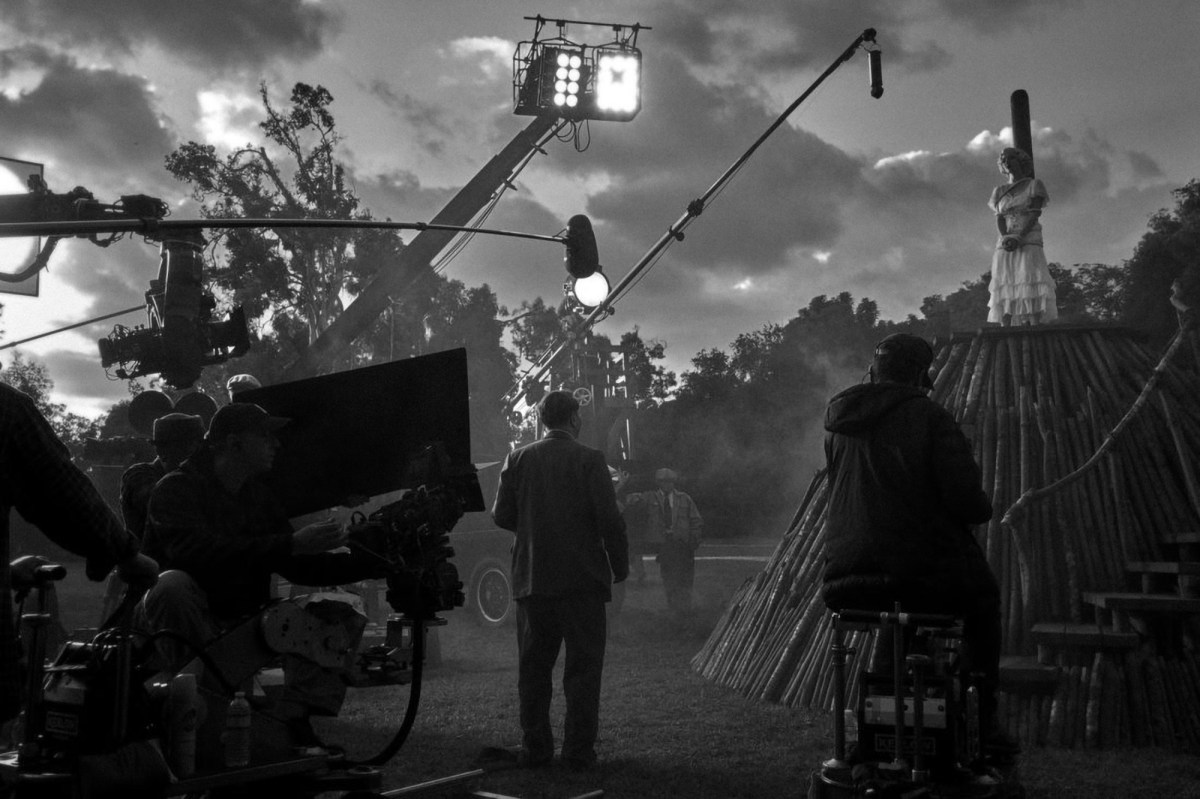
Mank: Rosebud…

Photo by Nikolai Loveikis

An Interview with Camera Operator Brian S. Osmond, SOC

Kate McCallum
February 2021
SOC Camera Operator (Society of Camera Operators)

Mank is an American biographical drama film about screenwriter Herman J. Mankiewicz and his battles with director Orson Welles over screenplay credit for Citizen Kane (1941). The film is directed by David Fincher, based on a script written by his father Jack Fincher, with Gary Oldman in the title role.

Read the full interview:

‘Mank’ Cast and Crew on Jack Fincher’s Script and Shooting in Black and White

Antonio Ferme
February 22, 2021
Variety

While Netflix’s Oscar contender “Mank” was directed by David Fincher, the script was written by his father, Jack Fincher, prior to his death in 2003. Gary Oldman, who starred in the film as “Citizen Kane” screenwriter Herman Mankiewicz, said Fincher’s script was one of the best he had read in a long time.

“It is fun to be a detective and go off and read things and find out things and all of that,” Oldman said. “That’s great fun, but I felt that the work had really been done by Jack.”

In the Variety Streaming Room, hosted by deputy awards and features editor Jenelle Riley, the cast and crew of “Mank” discussed how Jack Fincher’s script was able to capture the extensive legacies of some of the icons from the golden age of Hollywood, as well as the challenges of shooting in black and white.

Amanda Seyfried, who portrayed William Randolph Hearst’s mistress Marion Davies, said that Fincher’s script infused new life into the cinema starlet’s legacy.

“None of what I read in my investigation was different from what the sense that I had gotten of her,” Seyfried said. “The essence was captured in that script right off the bat. So if I had nothing, I would have been okay.”

Aside from a handful of music videos and commercials, “Mank” was the first project cinematographer Erik Messerschmidt had ever filmed in black and white. He said the crew bounced many ideas off of each other when it came to figuring out what colors would look like on set.

“It becomes this very exciting kitchen of ideas, which is a very special thing to participate in,” Messerschmidt said.

When it came to fitting photos, costume designer Trish Summerville said she only sent them to Fincher in black and white. She said she did a lot of her research on what worked as far as which colors, prints and patterns translated well.

“Some things became really contrast-y and too kind of like confetti,” Summerville said. “Once we got to do the camera test, which I think helped us all greatly with seeing what the lighting was going to be, it helped with hair, with makeup, with clothes. It was a big tool for us.”

Watch the full conversation

Artist Spotlight: Mank Production Designer Donald Graham Burt

Edward Douglas
February 18, 2021
Below the Line

Continuing Below the Line’s look at the crafts behind David Fincher’s Mank, we spoke to Production Designer Donald Graham Burt, his sixth go-round with Fincher after the first worked together on 2007’s Zodiac. A year later, Burt would win the Oscar for Production Design for his work on Fincher’s The Curious Case of Benjamin Button. Besides performing those duties for six Fincher films, Burt also played a significant role in the designs for Fincher’s Golden Globe-winning Netflix series, House of Cards.

Burt’s definitely a bit of an old school Hollywood vet, going back to some of his work in the ‘90s like The Joy Luck Club and Dangerous Minds. Still, Mank offered Burt a number of new challenges, the first one being the fact that the film would be shot entirely in black and white, the second would be how it would task Burt and his team to recreate some of Hollywood’s most iconic locations from the ‘30s and ‘40s. You only have to watch the movie or look at some of the images below to agree that Burt and his art department came through with flying colors… even without having any actual color.

Below the Line spoke with Burt over the phone for the following interview.

AFI Awards: Mank Cinematographer Erik Messerschmidt on Making the Film

February 18, 2021
AFI Movie Club

Mank cinematographer Erik Messerschmidt sat down to talk about shooting one of the most outstanding films of the year, which is about the greatest film of all time.

AFI Movie Club: AFI AWARDS Honoree MANK