In David Fincher’s Netflix darkly comic thriller The Killer, Michael Fassbender is the nameless assassin who goes on an international hunt for revenge while insisting to himself that it isn’t personal.
The film marks the second Fincher-directed feature shot by Erik Messerschmidt ASC, following the Citizen Kane drama Mank, for which he won the 2020 Academy Award for Best Cinematography.
It is also the latest in a long line of Fincher movies since The Social Network to be shot on RED.
“There was not a conversation about using another camera system – there never is with David,” Messerschmidt says. “RED as a partner have been enormously collaborative with us in terms of helping us develop new ideas and solve problems. RED is absolutely creative partners to David’s process and certainly to me.”
Having been in development since 2007, David Fincher’s adaptation of the French comic series The Killer arrives as a slick, stylish, and darkly funny film about a professional assassin desperately trying to project an image of cold, exacting competence, all the while struggling to keep his head above water in the aftermath of a job gone wrong.
With its solo protagonist who goes for long stretches of the film without saying aloud a single word, The Killer often resembles a silent film as much as anything else. Camera Operator had the opportunity to talk with A camera operator Brian Osmond, SOC, about working with Michael Fassbender in this unique role, the camera as “straight man” for the film’s sly comedy, and the professional relationship he’s developed with director David Fincher over the past seven years.
With no name and no background to go on, we meet “The Killer” in Paris, France, in the midst of his preparations to assassinate a similarly unnamed target. After days of meticulous planning, the moment finally comes with the target in sight, ready to take the shot, and he misses! Our mysterious assassin is left trying to pick up the pieces of this botched assassination all the while the situation continues to spiral out of control. The Killer is directed by David Fincher from a screenplay by Andrew Kevin Walker and stars Michael Fassbender, Arliss Howard, Charles Parnell, Kerry O’Malley, Sala Baker, Sophie Charlotte, and Tilda Swinton.
Camera Operator: Let’s talk about the first 20 minutes of the movie. That’s the part that really stuck in my head after the movie. That long, slow burn setup to what’s kind of the movie’s main punch line: him missing the shot after all that meticulous buildup and preparation. Can you talk a little bit about what went into shooting that sequence?
Brian Osmond: Yeah, it is a slow burn, isn’t it? It’s a bit painstaking, but ultimately I really like the sequence. His meticulous nature is obviously on display, and when it finally comes to the moment to pay it all off, he misses! And that sets up the rest of the movie. Shooting it was a lot of work, as you can imagine. The entire sequence, structurally, was made from three pieces: there was the Paris work, there was the stage work with Michael, and there was the stage work for everything across the street, and those are seamlessly combined with compositing and editing.
A pair of films shot by Erik Messerschmidt, ASC premiered at the Venice International Film Festival last August, and both were collaborations with leading directors: David Fincher’s The Killer and Michael Mann’s Ferrari. Messerschmidt recently spoke with AC from Spain about his work on each production.
The Killer | A Devil of a Job
Fincher and Messerschmidt didn’t discuss the look of The Killer as much as its tempo and structure.
Adapted from a graphic-novel series, the film follows a methodical, nameless assassin (played by Michael Fassbender) whose life spirals out of control after a job goes horribly wrong in Paris. He tries to restore a sense of order by punishing those responsible.
Messerschmidt won an Academy Award for Fincher’s Mank (AC Feb.’21), and his collaborations with the director span the Netflix series Mindhunter and the feature Gone Girl — with Messerschmidt serving as gaffer for Jeff Cronenweth, ASC (AC Nov. ’14) on the latter.
“David is fastidious,” he says. “He is very prepared, but very collaborative and considerate of what it is everyone’s bringing to the project. He shares his goals for the film with you, and he shares the techniques that he wants to use in a really elegant way. So, you begin to understand quite quickly what he’s looking to achieve on a given shot, a given scene or even on a given film.
“On this film, David was particularly interested in exploring The Killer’s state of mind through the camera’s perspective,” recalls Messerschmidt. “The Killer in his natural state is very much in control of his environment — nothing surprises him, and we wanted the audience to immediately connect to his confidence.”
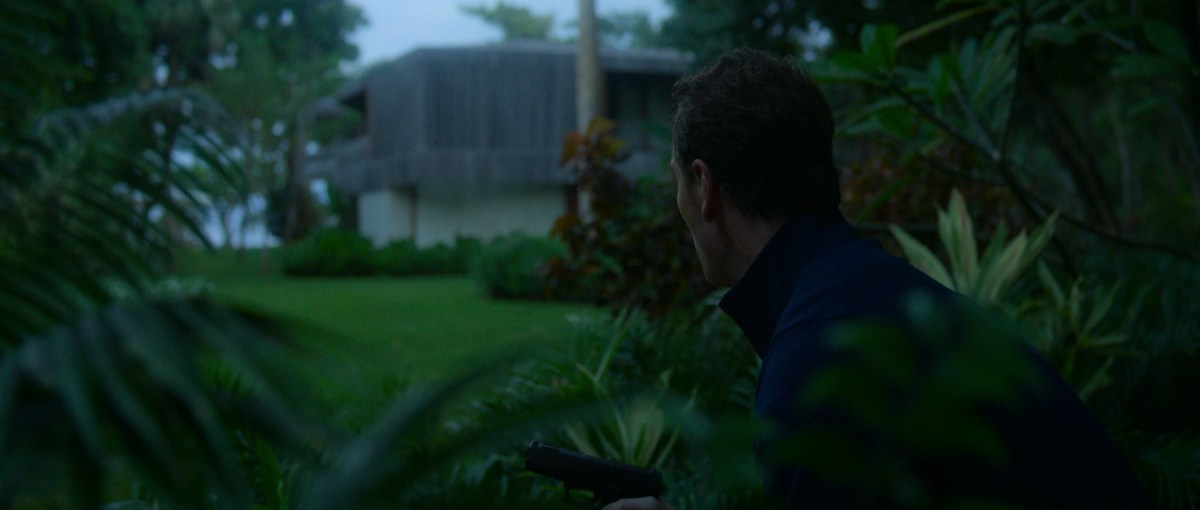
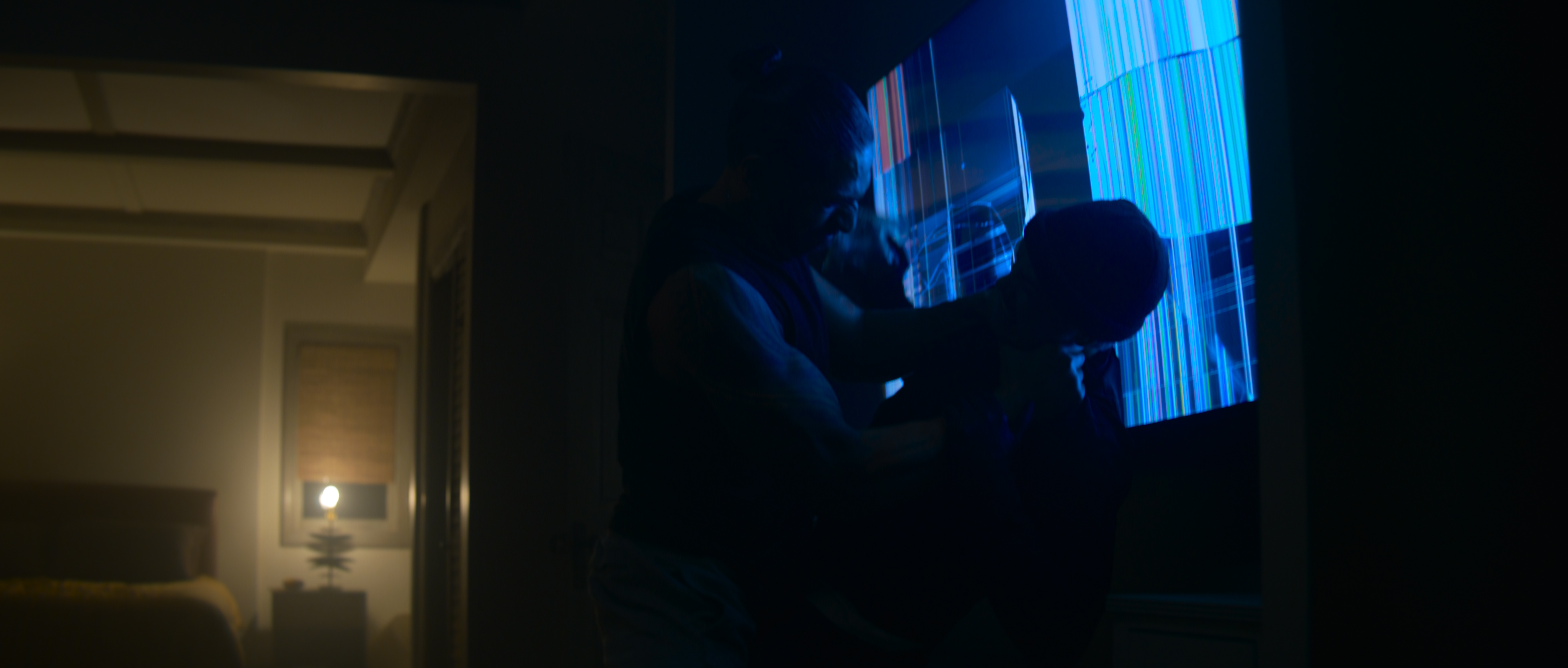
Notice the VFX foliage in the out-of-focus foreground.
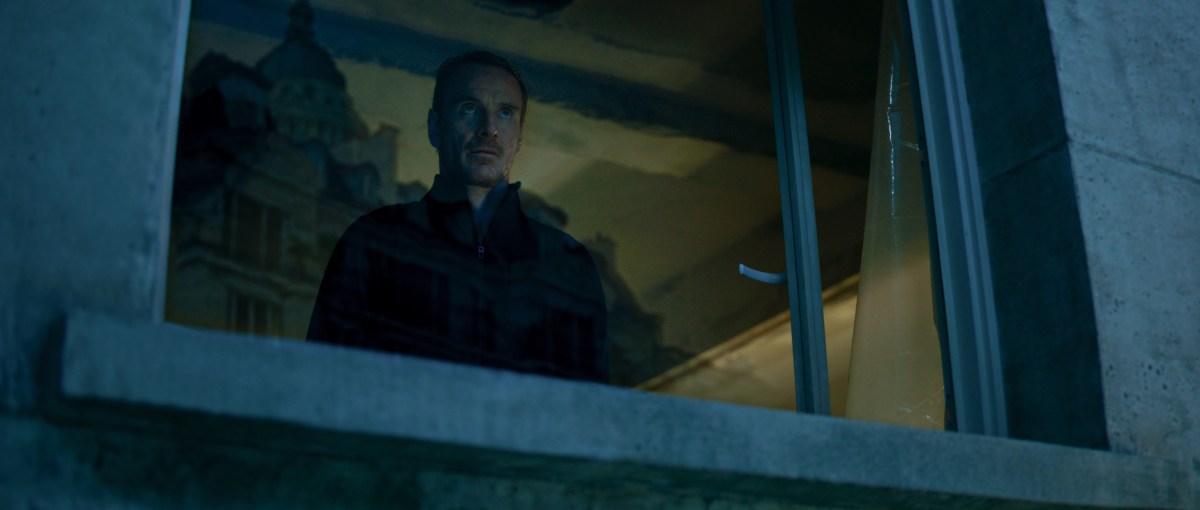
The Killer: Michael Fassbender
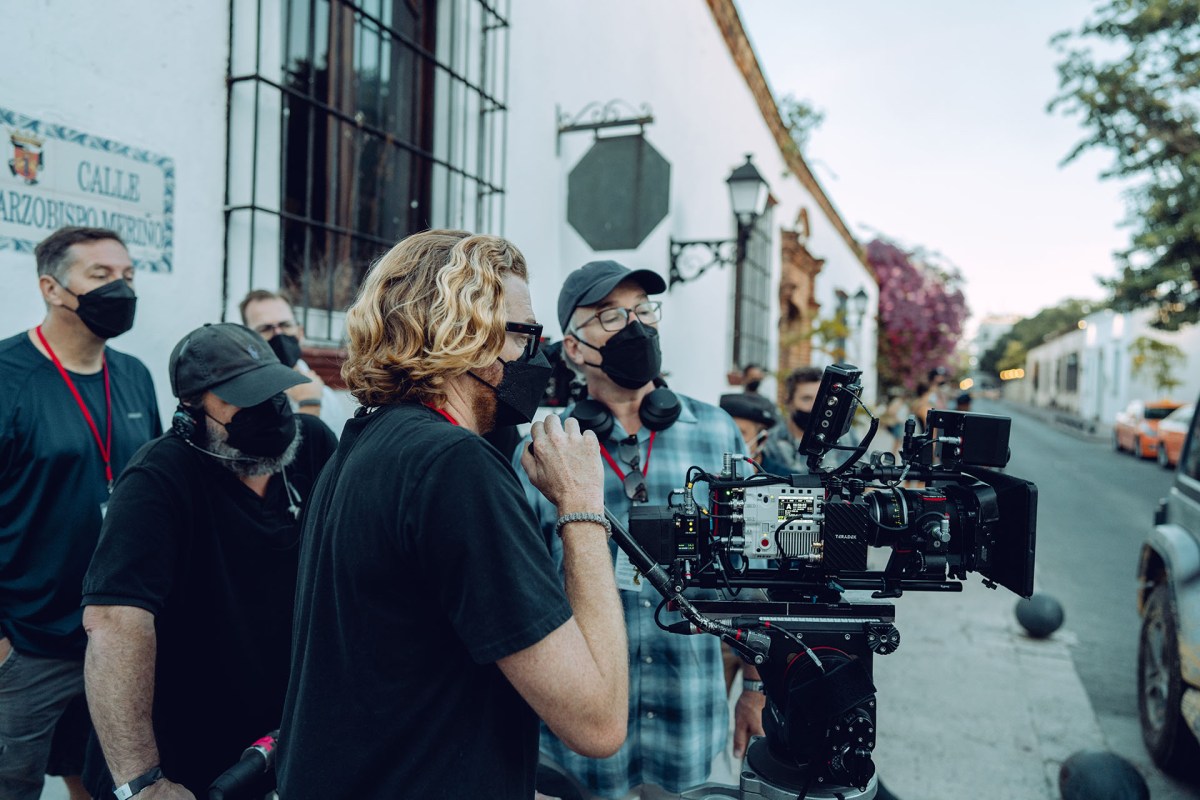
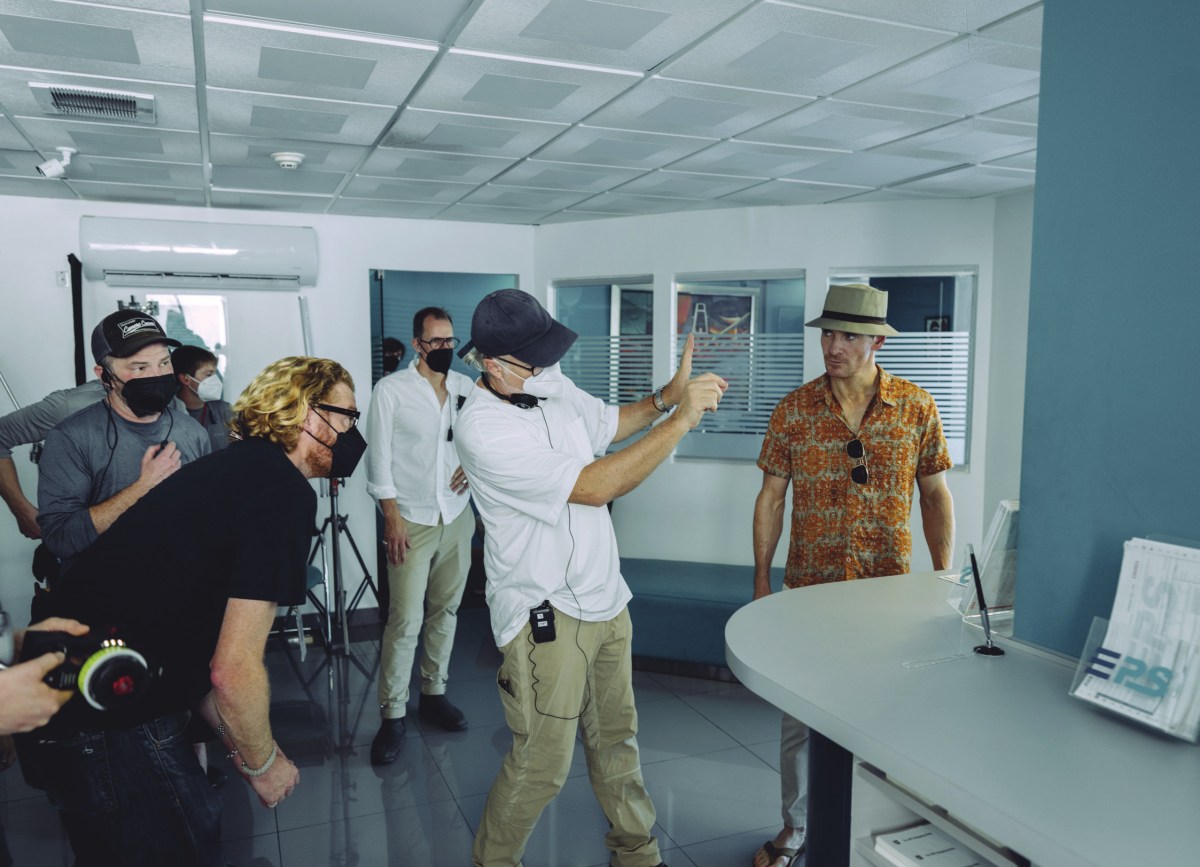
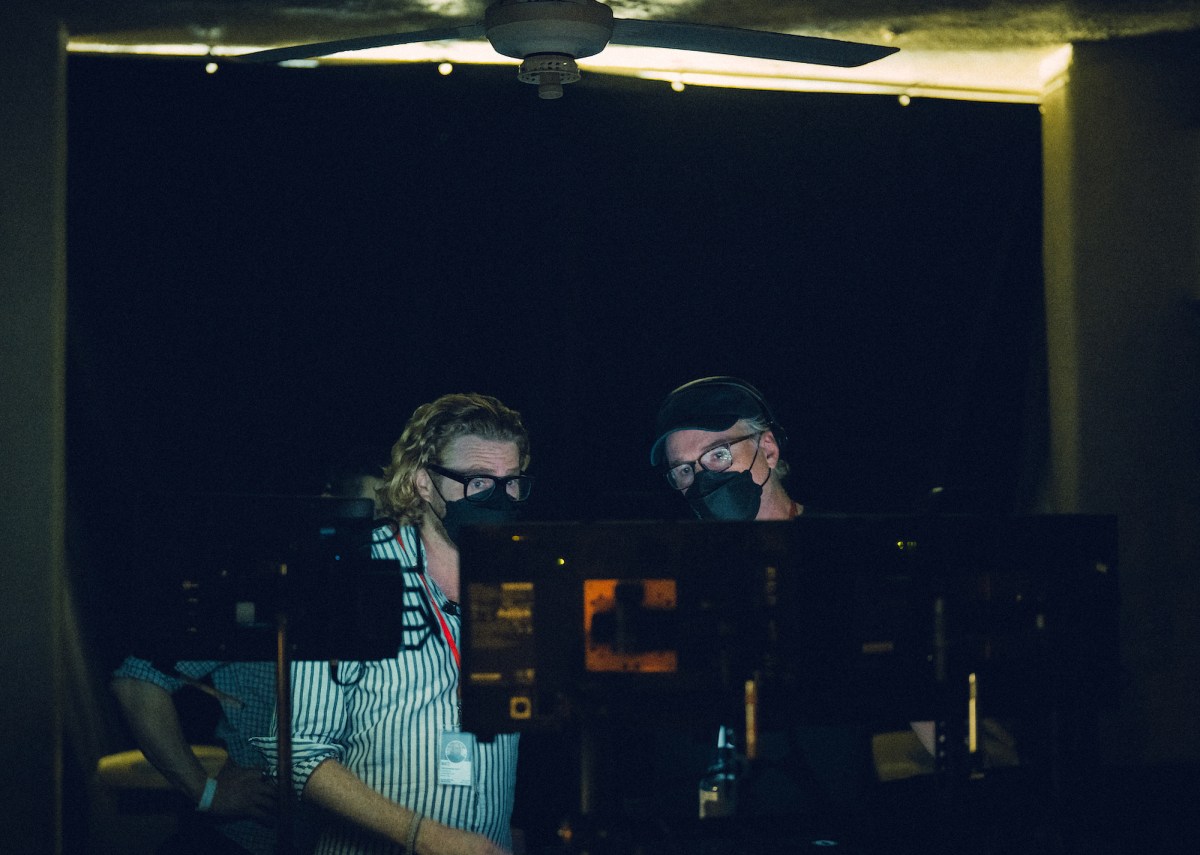
DOMINICAN REPUBLIC UNIT Director of Photography: Erik Messerschmidt, ACE A Camera Operator: Brian S. Osmond A Camera First Assistant: Alex Scott B Camera First Assistant: Brian Wells A Camera Second Assistant: Jonathan Clark B Camera Second Assistant: Matt Gaumer A Dolly Grip: Dwayne Barr B Dolly Grip: Mike Mull
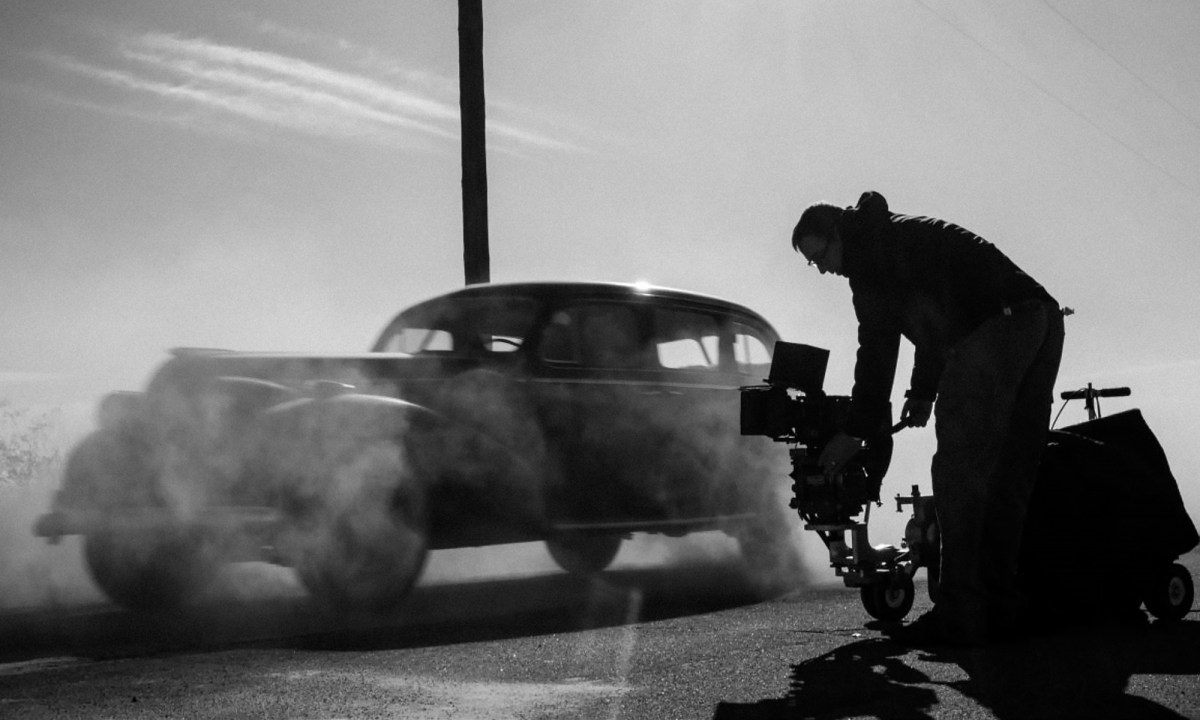
Idea and BTS Video: Cate Adams, Costume Designer Location: Dominican Republic Editor: Leonard Zelig (The Fincher Analyst)
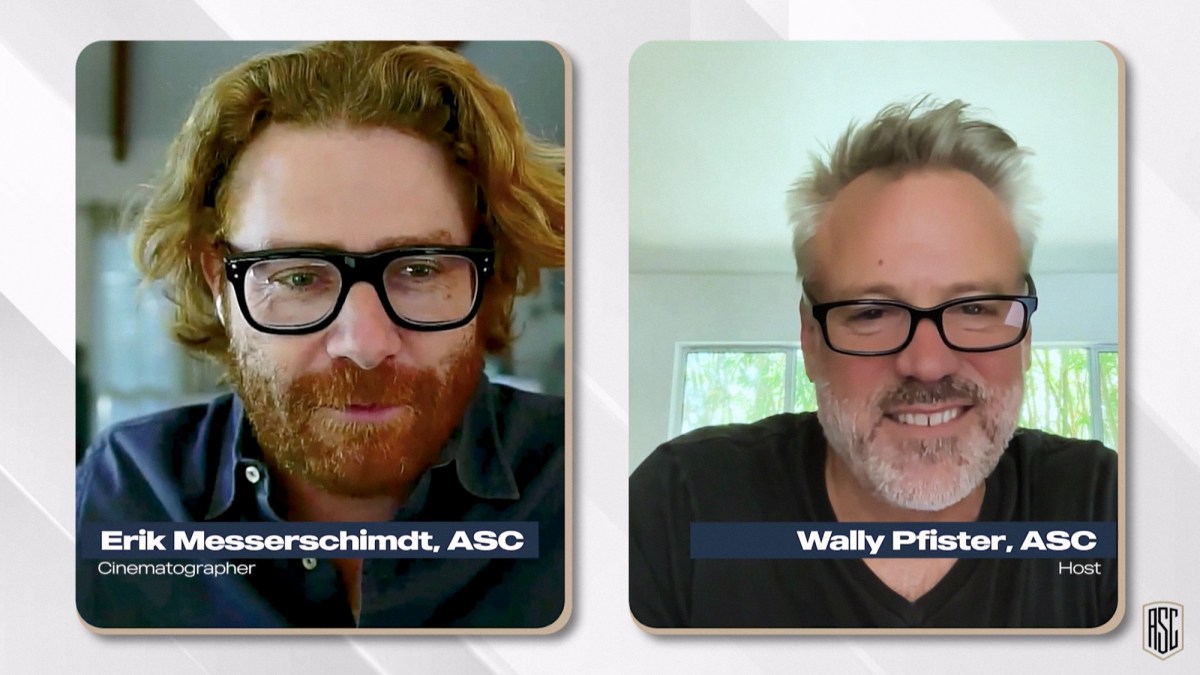
In this episode, cinematographer Erik Messerschmidt, ASC is joined by interviewer Wally Pfister, ASC to discuss his work on The Killer — the neo-noir thriller from director David Fincher that follows an assassin on the run after a botched hit job.
In The Killer, the titular antihero misses one of his intended targets for the first time in his career, and is forced to flee and survive the inevitable consequences. The film marks the second Fincher-directed feature shot by Messerschmidt, following the 2020 film Mank, for which he won an Academy Award for Best Cinematography.
In this interview, Messerschmidt discusses the film’s Paris-inspired color palette; how he shot scenes “loosely” or “rigidly,” based on the main character’s degrees of control over varying situations; how he approached the lighting for a complex fight scene; how he incorporated planned postproduction decisions for lighting, flares and camera destabilization into his workflow; and what he learned about what an audience sees versus what it hears.
Erik Messerschmidt, ASC first emerged as a filmmaker when he was hired by Society member and mentor Mark Doering-Powell on several features as a grip and later gaffer. After Messerschmidt served as Society member Jeff Cronenweth‘s gaffer on the David Fincher-directed Gone Girl (2014), Cronenweth encouraged Fincher to hire Messerschmidt to photograph the Netflix series Mindhunter. Messerschmidt would reunite with Fincher for their 2020 feature Mank, which earned him an Academy Award for Best Cinematography.
Wally Pfister, ASC is a filmmaker whose cinematography credits include the Christopher Nolan features Batman Begins (2005), The Prestige (2006), The Dark Knight (2008) and Inception (2010). He was nominated for an Oscar for Best Cinematography for all of these works, winning one for Inception in 2011.
The film reflects the muted yellow and green colour palette of its graphic novel inspiration.
Oscar-winning DP Erik Messerschmidt ASC reteams with David Fincher for a live-action comic book adaptation that required a meticulous approach to its cinematography.
When Erik Messerschmidt ASC got the call from David Fincher to work on his new film The Killer, it was an offer that arrived almost as stealthily as its lethal protagonist. “He only ever [asks] once he knows he’s going to make the film,” says the American-born cinematographer, who previously collaborated with Fincher across two seasons of the Netflix series Mindhunter (2017-2019) and the acclaimed Hollywood-set period tale Mank (2020), which won Messerschmidt an Academy Award for Best Cinematography. The Killer, an adaptation of the French graphic novel, written by Alexis “Matz” Nolent, offered a whole different set of challenges, however.
This tense, taut thriller follows a nameless assassin, played by Michael Fassbender, who is fighting for his life after a job he undertakes in Paris goes disastrously wrong. “When I first read it, I was so excited about how little dialogue is in the film. It’s all voiceover,” explains Messerschmidt. “Normally, when you shoot a scene in a narrative film, you’re shooting actors predominantly talking to each other. And this film… on the set it was quite a quiet place. Which is really, really interesting. And it changes the dynamic enormously.”
To borrow the film’s cunning tagline, “Execution is everything”, and making The Killer became a meticulous experience for Messerschmidt and his team. Choreographing the camera to reflect the perspective of Fassbender’s killer, as he watches from the shadows, required absolute perfection. “It became very much about precision,” he says. “It’s an enormous amount of pressure on the camera operator [Brian S. Osmond] on this film.” Every step of the background artists was accounted for, like an elaborate dance. “So, it’s all sort of in concert…[that] is the intention most of the time.”
Consider this promotional material for the 1969 assassin-at-a-crossroads film Hard Contract: “Everything they do is 97 percent control and 3 percent emotion.” Compare that with the mantra from the nameless lead character in The Killer, director David Fincher’s newest feature for Netflix, shot by Oscar-winner Erik Messerschmidt, ASC. “Stick to your plan. Anticipate, don’t improvise. Trust no one. Never yield an advantage. Fight only the battle you’re paid to fight.”
It sounds pretty much the same, right? Both help illustrate the heart of a broad subgenre of films that includes Anton Corbijn’s The American (shot by Martin Ruhe, ASC), the aforementioned Hard Contract (shot by Jack Hildyard, BSC), The Eiger Sanction (shot by Frank Stanley, ASC, former IATSE Local 659 president) and Fred Zinnemann’s The Day of the Jackal (shot by Jean Tournier.) The common locus revolves around the assassin as a high-functioning sociopath, able to operate effortlessly in various circles without being found out. Given the inherent complexity of such a character type, it is easy to see how Fincher was able to attract Michael Fassbender to take the lead role.
Derived from a long-running graphic novel series by author Alexis “Matz” Nolent, The Killer had been in gestation by Fincher for close to fifteen years. Depicting a murder-for-hire gone awry and its aftermath, the film is viewed through the eye of a seasoned assassin (Fassbender), who now finds himself a target and must seek out not only his erstwhile employers but also those they have deployed against him.
Messerschmidt’s history with Fincher began as Chief Lighting Technician on Gone Girl [ICG Magazine October 2014] before going on to shoot his Mindhunter series and then, in 2021, winning the Oscar for Mank. Messerschmidt had also shot episodes of Fargo, Legion and Raised by Wolves, and, more recently, the WWII aerial epic Devotion [ICG Magazine December 2022]. “What I initially found interesting about the script was how it is almost wholly absent of dialog,” Messerschmidt describes. “There is a significant amount of voice-over, a lot of which was present in the first script, but very little is spoken on screen – so in a sense, it’s like a silent film. This meant the way we told the story with the camera was that much more important. It’s an adaptation of a graphic novel, which are told in a similar way. I was fascinated by that kind of challenge.”
Mank is an American biographical drama film about screenwriter Herman J. Mankiewicz and his battles with director Orson Welles over screenplay credit for Citizen Kane (1941). The film is directed by David Fincher, based on a script written by his father Jack Fincher, with Gary Oldman in the title role.
“A place to unload all my cinematic truths.” —Newton Thomas Sigel, ASC
How do you cultivate a career in Hollywood? What does it take to make iconic work? There’s an art to everything in life and the Art of the Shot explores the answers to those questions and more through deep-dives into the minds of master filmmakers. Join host Derek Stettler, young filmmaker and writer for the ASC and SOC magazines since 2016, as he learns from the artists behind today’s most strikingly-shot projects. Enjoy compelling conversations on the craft, insights from successful careers, tips, techniques + more!
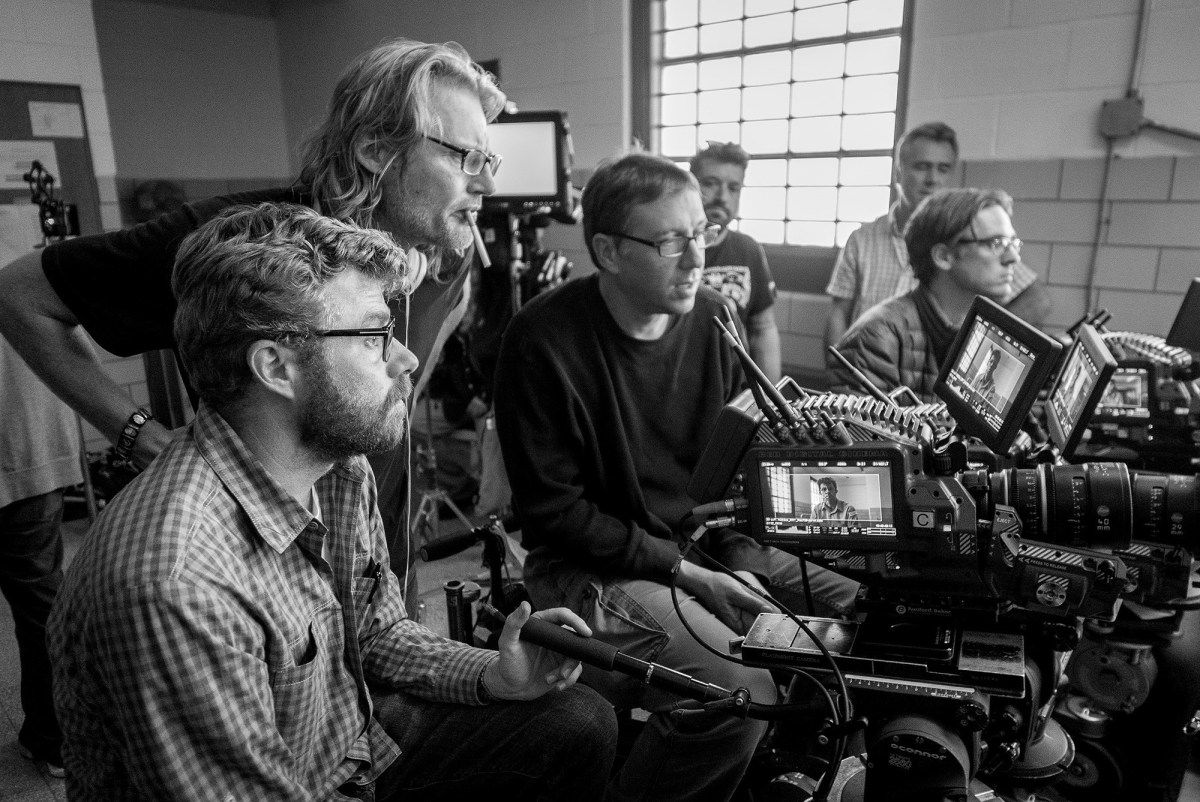
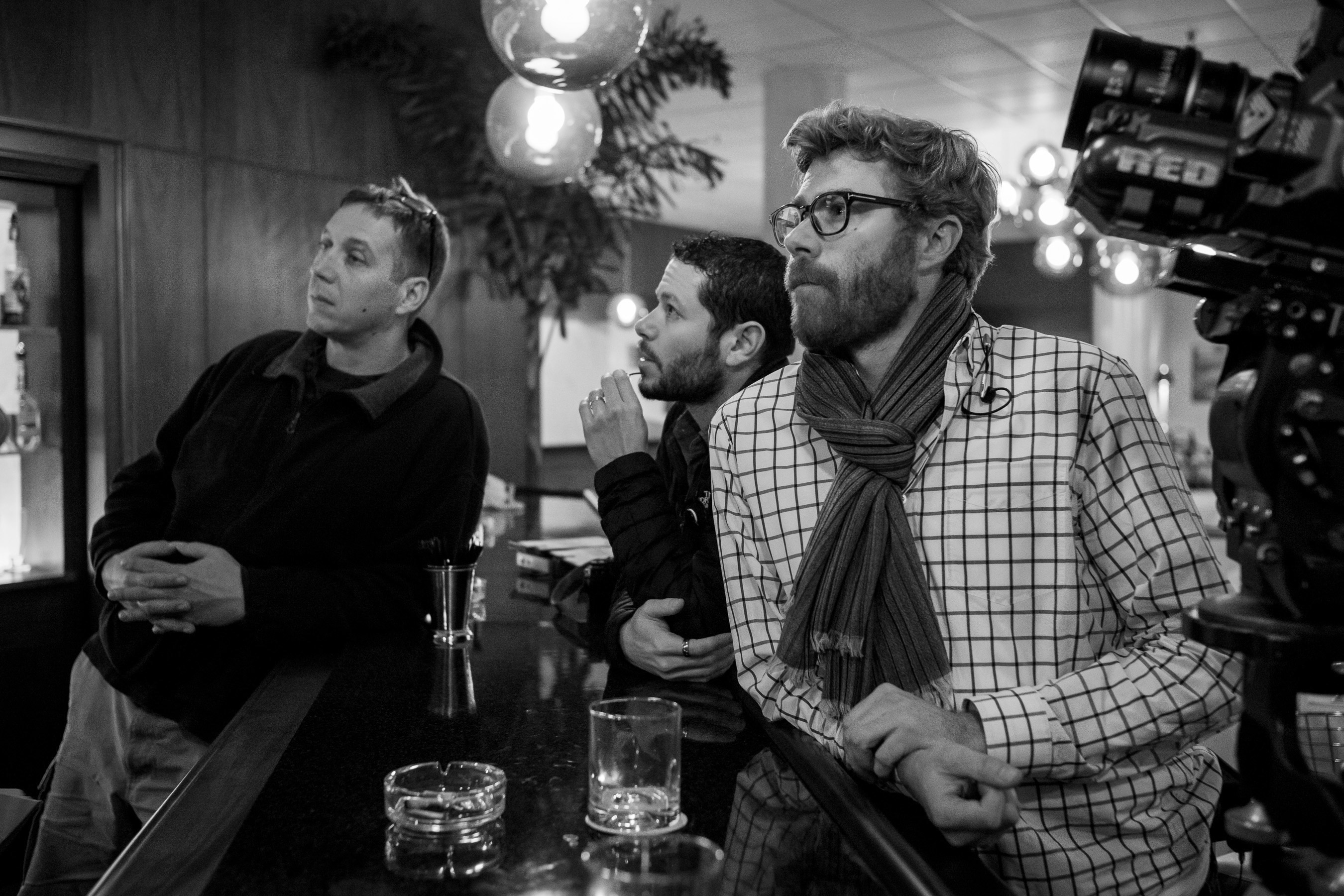
In this episode, you’ll hear from both the cinematographer and the “A” camera operator of Mindhunter, who worked together throughout Season 1 and 2 to shoot every single episode. Please enjoy this exclusive interview with Erik Messerschmidt, ASC and Brian Osmond, SOC!
Brian Osmond, Gaffer Danny Gonzalez, and Erik Messerschmidt (Nikolai Loveikis)
In this episode, you’ll learn:
– Erik’s career path (00:04:06) – Erik’s favorite part of the job (00:06:42) – What DP’s should know to best work with their gaffers, from Erik’s experience working as a gaffer before becoming a DP (00:07:02) – Unique skills Erik gained from his experience as a gaffer (00:07:56) – How Brian got his career started (00:11:19) – Brian’s favorite part of his job (00:12:19) – What other directors can learn from how David Fincher treats his crew (00:18:39) – The thought process & techniques behind Mindhunter‘s precise camera movement (00:22:50) – The strategic use of handheld camera operating (00:34:27) – The collaborative nature of the Mindhunter set (00:37:34) – The importance of having a dedicated camera operator on set, especially on a David Fincher set (00:41:19) – Erik’s role as “quality control supervisor” (00:44:21) – Why a monitor on a David Fincher set is covered in smudges (00:46:57) – Why there’s no such thing as a B camera “bonus shot” on Mindhunter & how shots are planned out for multiple cameras (00:48:23) – What Erik thinks is the hardest shot to do well (00:52:04) – How Erik lights & shoots with 2 cameras simultaneously (00:53:41) – Erik’s approach to lighting Mindhunter & techniques used (00:56:55) – Erik’s preference for real fluorescent lighting (01:03:30) – Mindhunter‘s production design and how much of the locations were built (01:05:01) – Favorite set of Season 2 (01:06:26) – How getting scripts in advance helps them work better (01:10:44) – The innovative car process shooting on Mindhunter & how it works (01:12:38) – How virtual production helps realize every filmmaker’s dream, stopping time, & how Erik used that to shoot a 9-minute dialog scene at dawn (01:18:02) – How the car process shooting on Mindhunter evolved from Season 1 (01:22:37) – How the custom RED digital cinema camera, dubbed the Xenomorph, evolved from Season 1 (01:27:22) – Why Brian prefers a fluid head over a geared head to achieve those smooth, precise shots David Fincher loves (01:37:34) – How to shoot a scene & why “Fix it in prep!” should be every filmmaker’s mantra (01:42:08) – All about the lenses used on Mindhunter & how Erik art directed the artifacts & nuances of every optical aberration (01:48:10) – Tips from Brian on getting really precise shots with a fluid head, what operating technique Erik has learned from Brian, & how being self-critical is a key to his success (01:56:42) – What Erik & Brian feel is the most rewarding part of working on Mindhunter (02:02:47)
If you haven’t yet, please be sure to subscribe to be notified of future episodes, and share this podcast with others to help grow the show and spread the knowledge!
The Art of the Shot podcast is brought to you by Evidence Cameras, an outstanding rental house in Echo Park specializing in high-end digital cinema camera packages, lenses, support, and accessories.




 The Fincher Analyst