Starting her career producing commercials Lisa Beroud transitioned to James Cameron‘s famous VFX house Digital Domain, where she worked on titles including TRON: Legacy, Oblivion, Her, 47 Ronin, and a multitude of David Fincher projects including Zodiac, The Curious Case of Benjamin Button, The Girl with the Dragon Tattoo, and Gone Girl. Since leaving DD, she has been a VFX producer of hits such as Black Panther, Terminator: Dark Fate, and Sonic the Hedgehog 2.
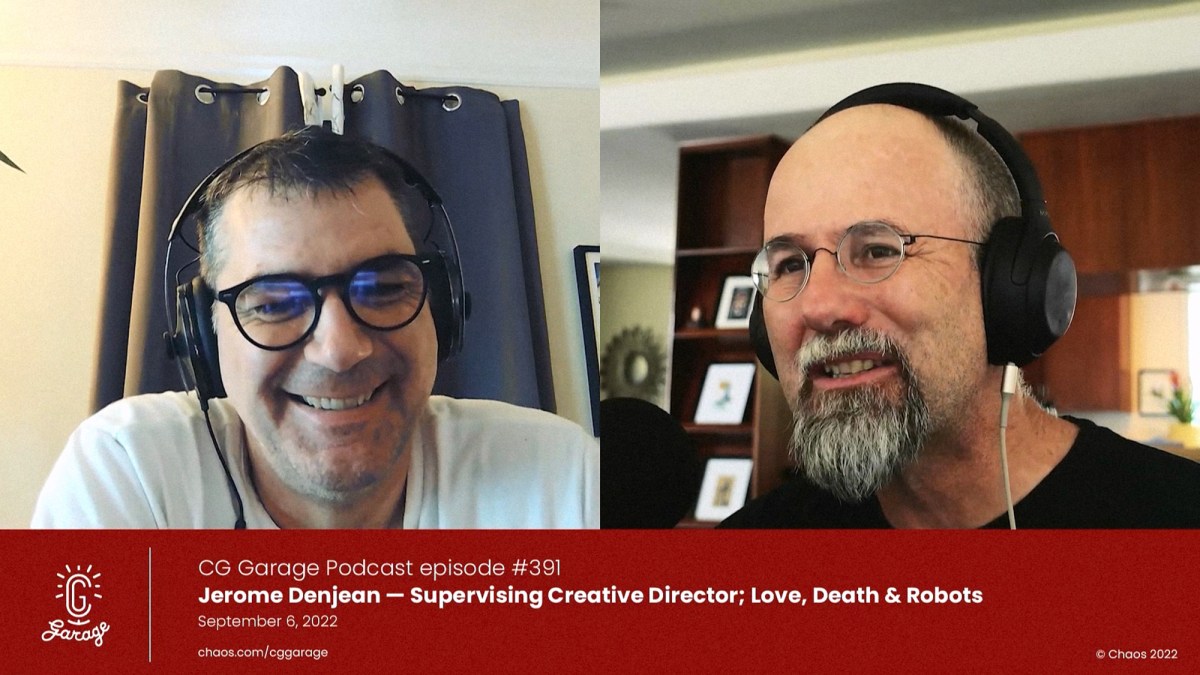
Over the past five years, Love, Death & Robots has completely resculpted the landscape of animation, feeding Netflixviewers bite-size chunks of violence, sex, and gore. Supervising Creative Director Jerome Denjean is a key player behind-the-scenes, giving Love, Death & Robots’ talented directors the freedom to execute their visions (literally!) while ensuring that each episode fits in with the series’ overall vision and tone.
In his second podcast with Chris, Jerome breaks down some of the amazing episodes in series three: David Fincher’s “Bad Travelling,” Alberto Mielgo’s “Jibaro,” Patrick Osborne’s “Three Robots: Exit Strategies,” and Emily Dean and Polygon Pictures’ “The Very Pulse of the Machine.” Jerome also reveals how episodes are researched and produced, and how Japanese animation has influenced their direction.
0:00:00: Intro 0:06:03: Five years of Love, Death & Robots 0:09:12: Jerome’s role and how he works with different directors and international teams 0:14:28: Working with David Fincher on “Bad Travelling“ 0:18:23: Fincher, mocap, virtual production, and gore 0:23:48: Old friends return: “Three Robots: Exit Strategies” 0:30:19: The style of “The Very Pulse of the Machine“ 0:35:36: The influence of anime and working with Polygon 0:40:16: Alberto Mielgo’s “The Witness” and “Jibaro“ 0:52:39: Nurturing new talent 0:55:17: Producing “Love Death & Robots”
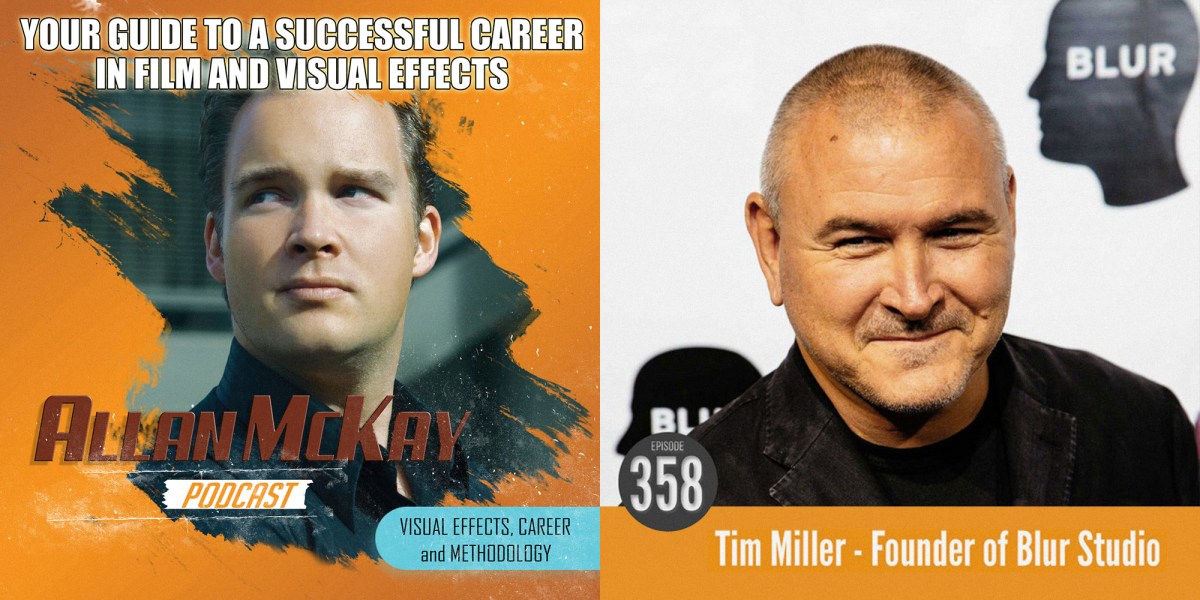
Tim Miller is a Film Director, Animator, Creative Director, and VFX Artist. He was nominated for the Academy Award for Best Animated Short Film for the work on his short film Gopher Broke. He made his directing debut with Deadpool. He is also known for creating opening sequences for The Girl with the Dragon Tattoo and Thor: The Dark World.
In 1995, Tim co-founded Blur Studio with David Stinnett and Cat Chapman. Blur is where animators and artists can collaborate and be in control of their creative destinies. Since then, the Studio has evolved into an award-winning production company with work spanning the realms of game cinematics, commercials, feature films, and more. Committed to their clients, artists, and the telling of great stories, Blur continues to grow as a high-end animation studio and original content creator, having recently helmed Netflix’s first animated anthology Love Death + Robots.
In this Podcast, Allan McKay interviews Tim about the history of launching Blur, its legacy, Tim’s ongoing collaboration with David Fincher, directing Deadpool and Terminator: Dark Fate, and creating Love Death + Robots.
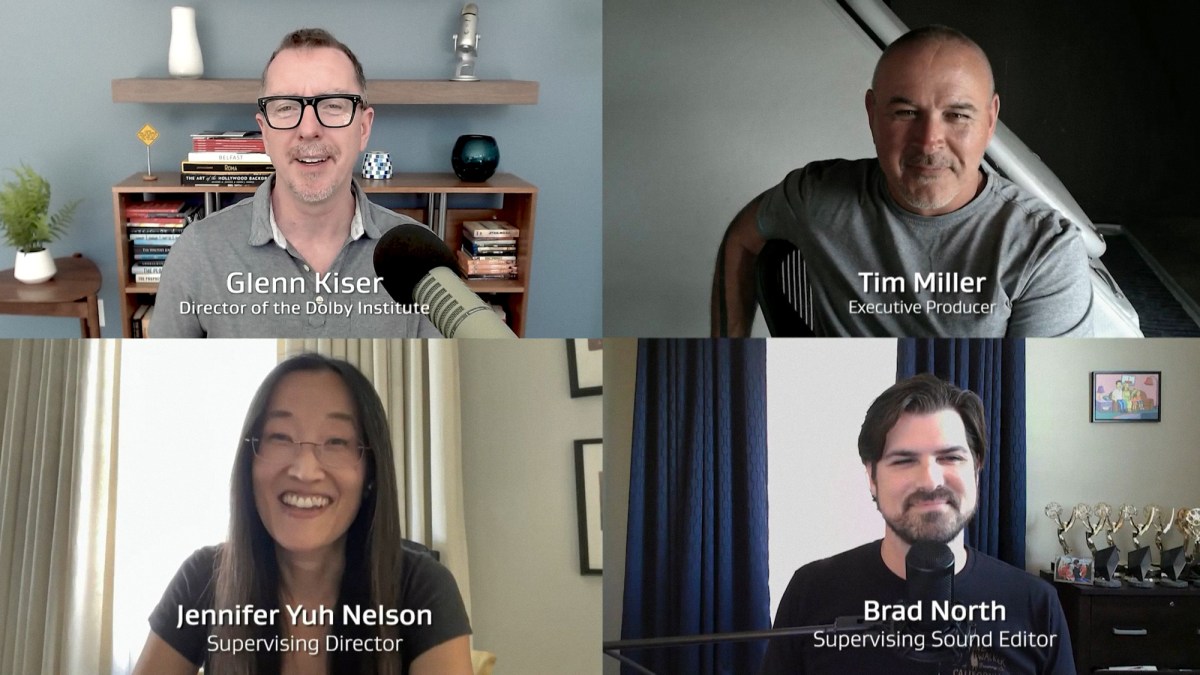
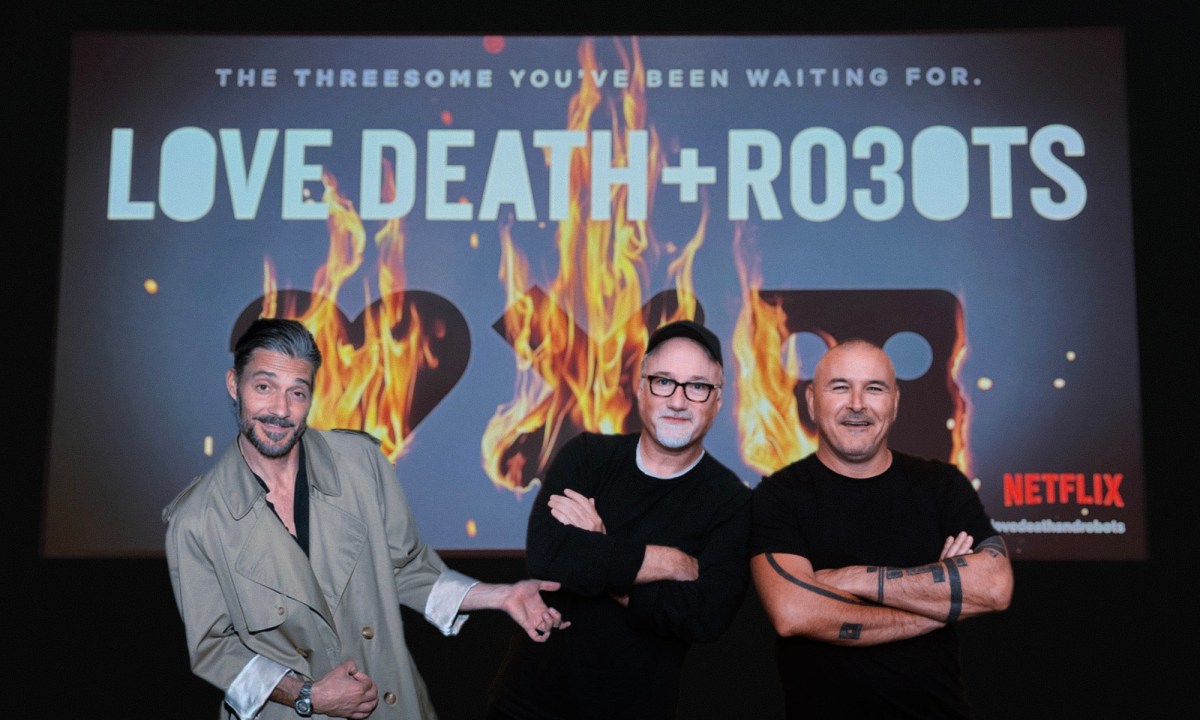
Season 3 of the eleven-time Emmy winning series LOVE DEATH + ROBOTS hit Netflix on May 20th and we are delighted to sit down with creator Tim Miller, supervising director Jennifer Yuh Nelson, and supervising sound editor Brad North to discuss how they managed to succeed where so many others have failed — creating a hit anthology television series.
“It really comes down to who’s doing the shorts. There’s been a lot of care trying to match-make: The shorts, the stories, the directors, and the studios. You’ve got a whole lifetime of experience with people and studios that Tim has worked with at Blur. People that have been doing incredible content, that maybe haven’t had the opportunity to do a feature yet, because of the size and experimentalism of that particular place. And to be able to hook them up with really good, solid stories that they can put all of their effort into making that, actually, great. You’re not spinning a lot of wheels here. You’re doing amazing. Everything goes right to the screen.” — Jennifer Yuh Nelson, Supervising Director, LOVE DEATH + ROBOTS
For this masterclass on the Art of Sound in film and TV, we welcome on the show Gwen Yates Whittle, a 2-time Oscar-nominated sound professional whose credits include this summer’s Jurassic World: Dominion, Saving Private Ryan, Top Gun: Maverick and the upcoming Avatar: The Way of the Water.
In today’s conversation, the Skywalker Sound member and I break down some of Hollywood’s biggest sound moments. We discuss Gwen’s beginning in the industry and why the prospect of sound editing intrigued her in ways that sound mixing never did; her relationship with detail-oriented directors like Steven Spielberg, James Cameron, and David Fincher (Fight Club, Panic Room, Zodiac, Benjamin Button, Gone Girl); the process of layering animal sounds to create the dinosaur voices in the Jurassic World franchise—as well as how the pandemic suddenly impacted Gwen’s work. All of this… and much more!
Gwen’s newest movies Jurassic World: Dominion and Top Gun: Maverick are now in theaters across the world, with Avatar: The Way of the Water opening in December 2022.
Editing dialog and working with the original recordings from the set is one of the most under-appreciated arts in cinema sound. In this episode of “Conversations with Sound Artists,” two-time Academy Award nominee Gwen Yates Whittle talks with the Dolby Institute’s Glenn Kiser about why George Lucas thinks dialog editing is one of the most important parts of the process, why she loves working on low-budget independent films (“They talk more,”), and why David Fincher and Meryl Streep love doing ADR.
Frame & Reference is a conversation between Cinematographers hosted by Kenny McMillan. Each episode dives into the respective DP’s current and past work, as well as what influences and inspires them. These discussions are an entertaining and informative look into the world of making films through the lens of the people who shoot them.
In this episode, Kenny talks with legendary cinematographer Jeff Cronenweth, ASC about the Oscar Nominated film “Being the Ricardos.” You likely know Jeff from his work on films such as “Fight Club“, “Gone Girl“, “The Social Network” & “The Girl with the Dragon Tattoo.”
It’s Showtime! When Steven Soderbergh joins Rob, the two friends get to ask the questions they’ve never asked one another. In this episode find out about Steven’s new film Kimi, and how he thinks Sex, Lies, and Videotape now feels like a Jane Austen novel.
Join your Season 2 hosts, Mario Sikora and TJ Dawe, as well as their special guest hosts throughout the season, as they discuss how the themes of the Enneagram are reflected in the work of great film directors such as Clint Eastwood, Martin Scorsese, Steven Spielberg, Wes Anderson, Michael Mann, and others.
Mario and TJ analyze the films of David Fincher in two episodes to explore Enneagram Type 5, “Striving to Feel Detached.” They discuss “Seven”, “Fight Club”, The Social Network” and “Girl with a Dragon Tattoo.”
In this episode, we’re joined by one of the world’s greatest Cinematographers, Jeff Cronenweth. Born into the film business, he grafted his way through the rungs of the camera department and music video scene of the 1990s, until he got the call from David Fincher to take the reins of Fight Club. From there it’s been a run of legendary movies including, One Hour Photo and Gone Girl, as well as The Social Network and The Girl With The Dragon Tattoo both of which he picked up Oscar nominations.
What you’ll learn from Jeff:
Jeff’s opinion on whether film school is still necessary
Whether music videos are still useful starting grounds for DPs
How Jeff get imposter syndrome on Fight Club
What it’s like to work with Aaron Sorkin
How does the DP Director relationship work
Jeff’s opinion on the film fanboys that constantly copy the ‘Fincher/Cronwneth aesthetic!’
Whether Jeff has taught David Fincher anything
What a day of prep is like for Fincher and Jeff
And of course in our quick-fire: Jeff’s no 1 piece of advice, favourite film, book to read, person to work with, and more.