
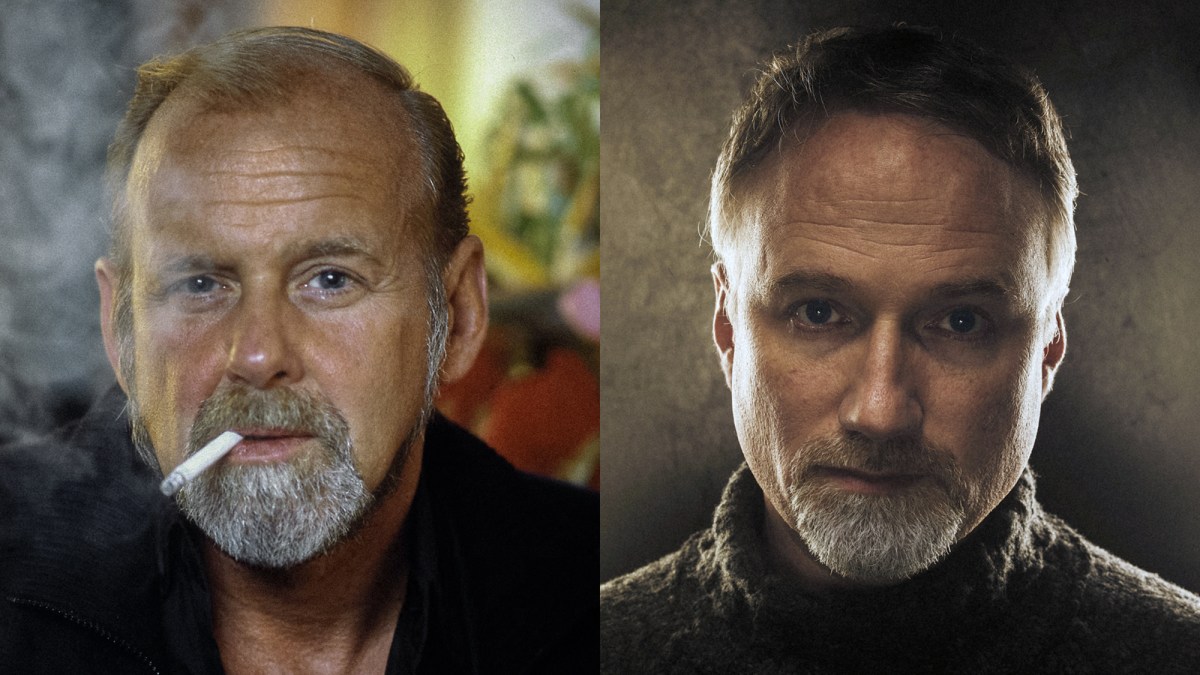
Marshall Shaffer
May 21, 2025
Crooked Marquee
“Can SONY market a ONE MAN SHOW (?)” wrote David Fincher in an email uncovered by the 2014 Sony hack, regarding his excitement about Aaron Sorkin’s Steve Jobs script. “Can you guys make the LENNY of it all, the MUST SEE?” This reference to Bob Fosse’s 1974 film Lenny (whose restoration receives a spiffy 4K disc from the Criterion Collection this month) proves a revelatory window into Fincher’s mind.
The late multihyphenate has seen his legacy on the upswing even beyond the Criterion canonization. This reappreciation has recognized Fosse’s work, such as IndieWire naming his All That Jazz the best film of the 1970s last year. And it’s also shone a spotlight on the man, most notably through FX’s acclaimed miniseries about his up-and-down relationship with life and creative partner Gwen Verdon in Fosse/Verdon.
But Fincher’s been a consistent, continuous admirer in ways that are not always recognized. “I’m a big Fosse guy,” Fincher told a Film Independent event in 2014. “I don’t think the guy made a bad movie.” He backs that admiration up in his own work, most notably an extended homage to All That Jazz in his music video for Paula Abdul’s Cold Hearted.
Yet the ties run deeper than surface-level homage. As a teenager working in a movie theater projection booth, Fincher claims to have seen All That Jazz 175 times. Fosse is the only director who has multiple films in Fincher’s list of all-time favorites. And, it should be noted, Fincher was among the long list of directors approached to tackle bringing Fosse’s Chicago to the big screen during its long development process in the 1990s.
The kinship between Fosse and Fincher is as much a spiritual one as an overtly stylistic connection. Both men arrived in Hollywood through side doors, honing their craft through other media and disciplines that would form their distinctly calibrated sense of spectacle and rhythm alike. Fosse was a creature of the stage who excelled as an actor, choreographer, and director in the heyday of the American musical. Fincher, on the other hand, began his career in visual effects before cutting his teeth on the nascent form of music videos (as well as some slick commercials).
Having to break down movement into its discrete components forged a relentless perfectionism in both men. This exact and exacting compulsion recurs in everything from the craftsmanship to their characters. “He’s ruthless with his characters,” Fincher observed of Fosse in terms that could just as easily apply to the pitiless precision of his own filmography. “They’re amazing, and they’re watchable, and they’re disgusting.”

