The First Rule of Making ‘Fight Club’: Talk About ‘Fight Club’

Dan Evans (The Ringer)

In an excerpt from the new book ‘Best. Movie. Year. Ever.,” David Fincher, Edward Norton, and the minds behind ‘Fight Club’ talk about the bare-knuckled, bloody battle to bring Chuck Palahniuk’s book to the big screen

Brian Raftery
March 26, 2019
The Ringer

Sometimes, during their breaks, the men who worked alongside Chuck Palahniuk would gather to talk about where their lives had gone wrong. It was the early nineties, and Palahniuk was employed at a Portland, Oregon, truck-manufacturing company called Freightliner. Many of his colleagues were well-educated, underutilized guys who felt out of sorts in the world—and they put the blame on the men who’d raised them. “Everybody griped about what skills their fathers hadn’t taught them,” says Palahniuk. “And they griped that their fathers were too busy establishing new relationships and new families all the time and had just written off their previous children.”

Palahniuk’s Freightliner duties included researching and writing up repair procedures—tasks that required him to keep a notebook with him at all times. At work, when no one was looking, he’d jot down ideas for a story he was working on. He’d continue writing whenever he could find the time: between loads at the laundromat or reps at the gym or while waiting for his unreliable 1985 Toyota pickup truck to be fixed at the auto shop. The result was a series of “small little snippets” about an unnamed auto company employee who’s so spiritually inert, so unsatisfied, that he finds himself attending various cancer support groups, just to unnumb himself. He soon succumbs to the atomic charisma of Tyler Durden, a mysterious figure whose name had been partly inspired by the 1960 Disney movie Toby Tyler. “I grew up in a town of six hundred people,” says the Washington-born Palahniuk, “and a kid in my second-grade class said he’d been the actor in that movie. Even though he looked nothing like him, I believed him. So ‘Tyler’ became synonymous with a lying trickster.”

After meeting Tyler Durden, Palahniuk’s narrator begins attending Fight Club, a guerrilla late-night gathering in which men voluntarily beat each other bloody. Fight Club comes with a set of fixed rules, the most important of which is that, no matter what, you do not talk about Fight Club. Many of the book’s brawlers are working-class guys with the same dispiriting jobs—mechanics, waiters, bartenders—held by some of Palahniuk’s friends. “My peers were conflict averse,” says Palahniuk. “They shied away from any confrontation or tension, and their lives were being lived in this very tepid way. I thought if there was some way to introduce them to conflict in a very structured, safe way, it would be a form of therapy—a way that they could discover a self beyond this frightened self.”

Palahniuk would bring work-in-progress chapters to writing classes and workshops around Portland, holding one successful early reading at a lesbian bookstore. “They wanted to know ‘Is there a women’s version of this?’ he says. “They just assumed Fight Clubs existed in the world and wanted to participate.” Palahniuk, then in his early thirties, had recently seen his first novel get rejected. “I was thinking ‘I’m never getting published, so I might as well just write something for the fun of it.’ It was that kind of freedom, but also that kind of anger, that went into Fight Club.” He’d wind up selling the book to publisher W. W. Norton for a mere $6,000.

Fight Club’s quiet 1996 release came just a few years after the arrival of the so-called men’s movement, in which dissatisfied dudes looking to reclaim their masculinity would gather for all-male retreats in the woods. They’d bang drums and lock arms in the hope of escaping what had become a “deep national malaise,” noted Newsweek. “What teenagers were to the 1960s, what women were to the 1970s, middle-aged men may well be to the 1990s: American culture’s sanctioned grievance carriers, diligently rolling their ball of pain from talk show to talk show.”

Palahniuk’s Fight Club characters, though, were younger and angrier than their aggrieved elders. A few primal scream sessions in the woods weren’t going to cut it. “We are the middle children of history, raised by television to believe that someday we’ll be millionaires and movie stars and rock stars, but we won’t,” Tyler says of his peers, adding “Don’t fuck with us.” It was one of many briskly written yet impactful mission statements in Palahniuk’s book, which earned positive reviews from a few major critics—the Washington Post called it “a volatile, brilliantly creepy satire”—as well as the author’s own father. “He loved it,” Palahniuk says. “Just like my boss thought I was writing about his boss, my dad thought I was writing about his dad. It was the first time we really connected. He’d go into these small-town bookstores, make sure it was there, and brag that it was his son’s book.”

Fight Club wasn’t an especially big performer in its original hardcover run, selling just under 5,000 copies. But before it even hit shelves, an early galley copy reached producers Ross Grayson Bell and Joshua Donen, the latter of whom had produced such films as Steven Soderbergh’s noir The Underneath. Bell was put off by some of the book’s violence, but as he read further, he arrived at Fight Club’s big revelation: the insomniac narrator, it turns out, really is Tyler Durden, and at night he’s been unknowingly leading the Fight Club army raiding liposuction clinics for human fat—first to turn into soap, and then to use for explosives. Eventually Tyler’s hordes of followers begin engaging in a series of increasingly violent acts. “You get to the twist, and it makes you reassess everything you’ve just read,” says Bell. “I was so excited, I couldn’t sleep that night.” Looking to make Fight Club his first produced feature, Bell hired a group of unknown actors to read the book aloud, slowly stripping it down and rearranging parts of its structure. He sent a recording of their efforts to Laura Ziskin, who’d produced Pretty Woman and was now heading Fox 2000, a division that focused on (relatively) midbudget films. According to Bell, after listening to his Fight Club reading during a fifty-minute drive to Santa Barbara, Ziskin hired him as one of Fight Club’s producers. “I didn’t know how to make a movie out of it,” said Ziskin, who optioned the book for $10,000. “But I thought someone might.”

Ziskin gave a copy of Palahniuk’s book to David O. Russell, who declined. “I read it, and I didn’t get it,” Russell says. “I obviously didn’t do a good job reading it.” There was one filmmaker, though, who definitely got Fight Club. He was the perfect match—a guy who viewed the world through the same slightly corroded View-Master as Palahniuk; who could attract desirable actors; who could make all of Fight Club’s bodily fluids splatter beautifully across the screen. And he wasn’t afraid of drawing a little blood himself.

Read the full excerpt

The Ringer: The 50 Best Movies of 1999, Part 1

The Ringer: The 50 Best Movies of 1999, Part 2
The Ringer: Make the Case: ‘Being John Malkovich’ Was a Head Trip Masterpiece—and the Best Film of 1999

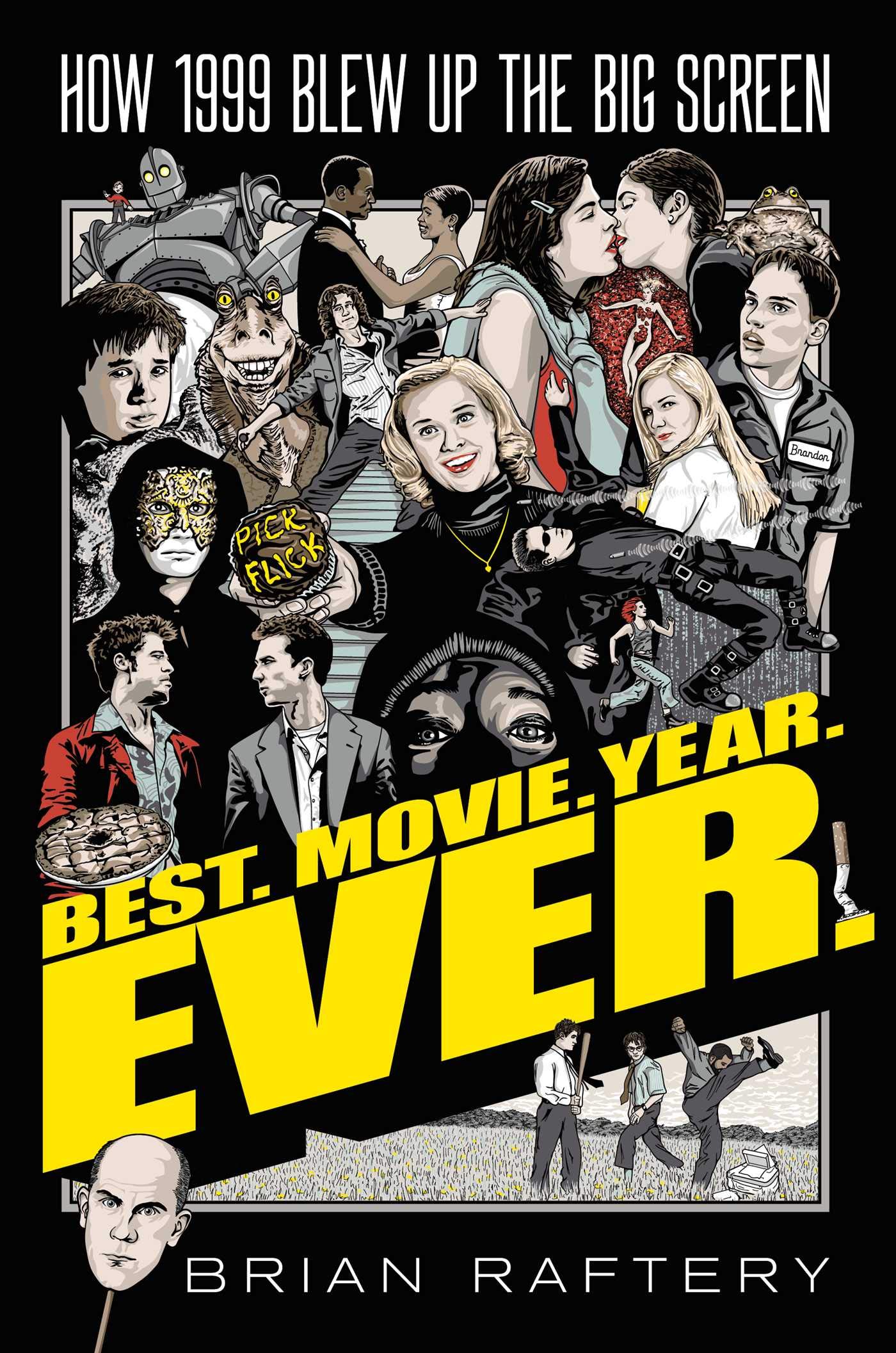
Order Best. Movie. Year. Ever.: How 1999 Blew Up the Big Screen, by Brian Raftery (Simon & Schuster). On sale: April 16, 2019

For the Man Who Has Everything: Close-Up on “The Game”

David Fincher’s serpentine thriller exists in a dangerous, hermetic world of chicanery and artifice.

Greg Cwik
March 26, 2019
Notebook (MUBI)

“…from any given body of fictional text, nothing necessarily follows, and anything plausibly may.”

William H. Gass, “The Concept of Character in Fiction”

What is The Game?

“The eternal question,” an unnamed character intones, when he is asked this by its newest player, Nicholas van Orton (Michael Douglas), a middle-aged millionaire unaccustomed to befuddlement. Mainstream critics, who similarly dislike being perplexed, didn’t quite know what to make of the film when it premiered in 1997: responses were tepid and noncommittal, and, despite its $100 million box office draw, it has long been considered a minor work in David Fincher’s oeuvre, ensconced between the seminal Se7en (1995) and the belatedly-loved Fight Club (1999). It is a film that is at once subtle and silly, whose perfunctory reputation belies the virtuosic craftsmanship evident in every shot, and the careful, studious attention paid to diminutive, seemingly insignificant details. The serpentine thriller exists in a dangerous, hermetic world of chicanery and artifice, a solipsistic world of glass towers that glint like grand statements and businessmen with flatlined lips—men who have everything but understand nothing. Nicholas, a successful man in a gray suit, receives a surprise birthday visit from his cut-up brother, Conrad (Sean Penn). Conrad, who wryly goes by the pseudonym “Seymour Butts,” gives Nicholas a special gift, a certificate for an enigmatic “game,” the rules of which are obtuse, and whose purpose is nebulous. What else do you get the man who has everything except something that he can’t understand? Conrad is, essentially, gifting Nicholas with confusion, something with which Nicholas, who lives a sealed-off life, is unfamiliar. The Game is run by a company called Consumer Recreation Services (CRS), whose logo is a Penrose triangle, an intangible object, though this fact goes unmentioned. (The film is replete with such keen minutiae.) Figuring out the object of The Game is the object of The Game, but luxuriating in the details of The Game is the purpose of Fincher’s film.

Read the full article

Close-Up is a feature that spotlights films now playing on MUBI. David Fincher‘s The Game (1997) is showing March 23 – April 22, 2019 in many countries around the world.

In Conversation with Actor Joe Tuttle

Paula Courtney
March 23, 2019
Absolute Music Chat

Joe Tuttle is well known amongst the fans of David Fincher’s Netflix show Mindhunter, for his role as FBI Agent Gregg Smith in both seasons 1 and 2. He has also appeared on other top-rated shows such as The Blacklist and Unforgettable. Joe and I had an in-depth conversation discussing his influences growing up, his career, and so much more.

[…]

JT: My secret weapon is my wife, she’s not an actress but she does have a writing background, so sometimes I think I can get caught up looking at these scripts as an actor like, ‘Oh this could be a really beautiful moment,’ but my wife is always about the writing, sort of, ‘Don’t forget these are human beings.’ It’s nice to have your moment as an actor, but don’t forget, are you really serving the story?

PC: And from speaking to many of the actors on Mindhunter that’s exactly what David Fincher wants when he shoots take after take of the same scene, for you not to play them out as an actor but to be, or react, as you would naturally in real life, and that really ties in to what your wife is saying.

JT: I think that’s part of it… I wish just for one day I could get in the head of David. I don’t think I’ve ever met anyone like him before; I probably won’t meet anyone like him again. He’s sort of brilliant at all these different things. I think that’s true he does a lot of takes for a lot of different reasons. One of them is certainly because it’s, ‘Okay let’s make the performances kind of finely crafted in a way, sort of uncrafted in a way. We don’t want to see the actor, we want to see a human being having the experience’.

PC: Yeah exactly!

JT: Also another reason David Fincher does a lot of takes is because I think he has a vision and he wants it to be exactly how he visualises it. It’s not always about the actor, sometimes it’s: we are slightly out of focus; it’s the wrong moment; actually I want to change one word, or the lightning is slightly different, or l want to frame up the camera in a different way, or I don’t like the coffee cup you are using, or that chair, we need to switch that out, or the background actors weren’t perfectly in sync. He notices everything, things that no one else would notice!

PC: In shooting numerous takes he wants the scenes to be the best of the best and to be fair it pays off doesn’t it.

JT: I think so. I don’t think David is making movies or TV shows for the 95%. I think people universally love his work and for good reason. He’s not making them for the 95%, he’s making them for that top 5, that top 2% even, who are going to notice these kinds of things. They are going to say, ‘That cup doesn’t make sense in this world. The lighting was a little bit off in that shot,’ or, ‘that background actor didn’t see his mark exactly.’ He’s making it for people like him, who are going to really notice that stuff. And when you do notice a glaring error or mistake, or something that doesn’t seem right, it takes you out of the story. I think he just wants a total immersive experience. He wants you, I presume, to be so involved that you almost forget, so that you really do feel like a fly on the wall, watching these people having these experiences.

PC: I have just interviewed Garry Pastore and his other job, when he’s not acting, is as a set dresser (leadman). He said he notices stuff like a blank wall behind a person which would clearly have a piece of art or a photograph on it in real life.

JT: The trouble with David is it means we notice that stuff now too; he’s sort of a force of nature; he raises everybody’s game. I’ve really noticed that about him – and not just with the actors, but the cinematographer, the technicians, the dolly grip, the sound folk – because he’s operating at such a high level you have rise to the occasion. I think that’s why people are drawn to working with him and will pass up other job opportunities, just to be able to work with David.

PC: I have arranged to have an interview with a guy called Dwayne Barr who operates the A camera dolly grip, because I’m just as interested to get his take on the technicalities of Mindhunter and Fincher, not just actors. I would love to talk to Erik Messerschmidt about cinematography.

JT: He’s a talented guy. It’s the first time in my working life as an actor I’ve been like ‘Wow!’ I wish my education had included more about cameras, editing and lighting. We touched on a lot of that stuff in acting school but wow, the technical aspects of making a TV show or film is frankly probably more important than some stuff we were taught. Just being able to ask the DP or the cinematographer why this, why now? Because I’ve had this work opportunity, I’ve started to notice.

Read the full interview

Joe Tuttle (David Noles)

Read the other Absolute Music Chat conversations with the Cast of Mindhunter (more to come):

Jonathan GroffHolt McCallanyCameron BrittonCotter SmithJack ErdieAdam ZastrowAlex Morf, Jesse C. Boyd, Tobias SegalThomas Francis MurphyChris Dettone.

Colorist Ian Vertovec’s Instagram Notes on His Work for David Fincher

Ian Vertovec & Michael Cioni
March 17, 2019
Ian Vertovec (Instagram)
Michael Cioni (Instagram)

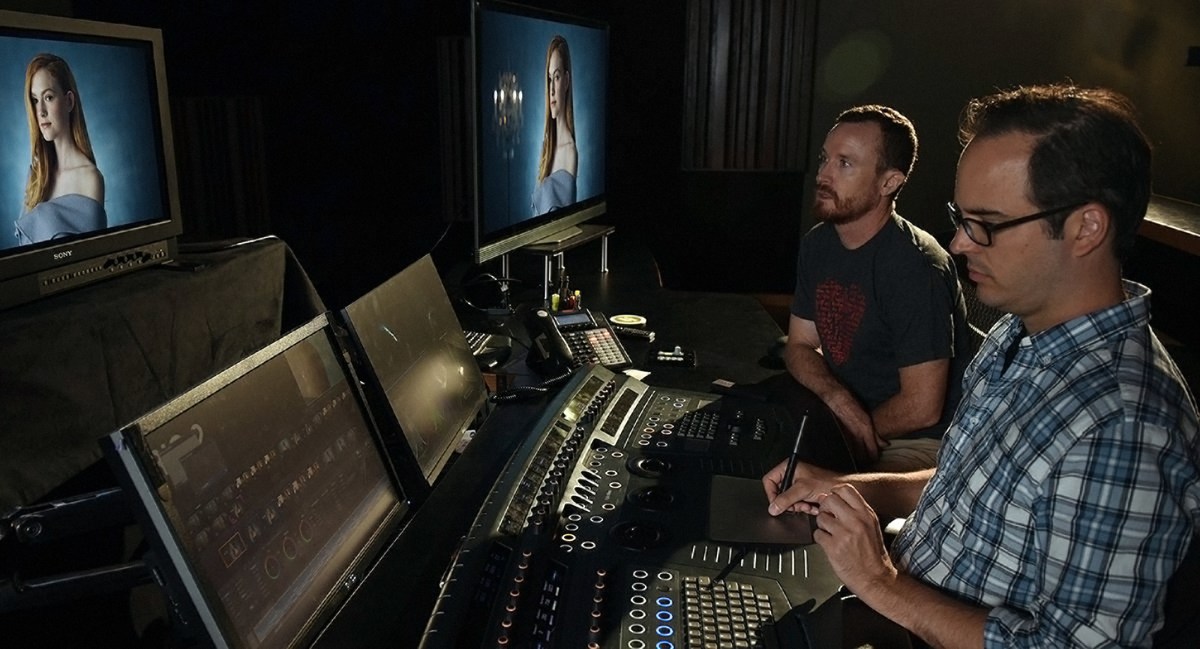
Ian Vertovec is Supervising Colorist at Light Iron, which he co-founded, a Panavision company specialized in dailies, digital intermediate, archival, and data services for projects originated on file-based motion cameras.

View this post on Instagram

Reposted from @ianvertovec – The Girl with the Dragon Tattoo Dir: David Fincher DP: Jeff Cronenweth One of the best technical and creative accomplishments of our team's career was collaborating on this film. GDT included scenes shot on the first RED Epic camera (mixed in with lots of RED ONE MX) and was the first 5K RAW DI. We had to work with Quantel at the time to innovate a new way to do DI in a 5K extraction and display in 4K. It was our first time making 5K DSM non-scaled 2.40 and 1.78 masters so no blow-up was required for deliverables. It also means there is a 4K 4:3 version somewhere! The creative techniques and technology discovered on this film went into hundreds of films we did thereafter. Sometimes I travel the world and people ask, "How do you get RED cameras to look so good?" I tell them, "Don't worry so much about it. We all have access to the exact same technology to make these pictures look great. The difference is in who actually touches the tech." Colorist @ianvertovec is the key to these images and leads the Light Iron creative team to bring the best color regardless of the camera. Now you can follow his colorful journey on Instagram. Follow @ianvertovec #thegirlwiththedragontattoo #davidfincher #rooneymara #danielcraig – #regrann #regrann  #redcamera #redepic #redcamerausers #lightiron #lightironcolor #digitalintermediate #colorcorrection #cinematographer #cinematography #resolution

A post shared by Michael Cioni (@michaelcioni) on

‘Love, Death & Robots’: Tim Miller on His NSFW Anthology of Animated Stories

Steve ‘Frosty’ Weintraub
March 16, 2019
Collider

With Love, Death + Robots now streaming on Netflix, a few days ago at SXSW I got to sit down with Tim Miller to talk about the NSFW anthology of animated stories he made with David Fincher. If you haven’t seen the trailers, the very cool series features 18 shorts that run between 5-15 minutes in length, are aimed at adults, were done by different teams of filmmakers from around the world, and showcase a variety of styles from traditional 2D to photo-real CGI. In addition, all of the stories are wildly different. You’ve got cyborg bounty hunters, alien spiders, sentient dairy products, werewolf soldiers, robots gone wild, and blood-thirsty demons from hell — to just name a few.

I caught six of the shorts before doing the interview and absolutely loved what I saw. If you’re into cool stories and incredible animation, you absolutely want to check the series out. Love, Death + Robots is now streaming on Netflix.

During the interview, Tim Miller talked about how the series was made, how they’ve been working on it since before Deadpool was released in theaters, how he became friends with David Fincher and why they did this project, and what it was like collaborating with Netflix. Plus, if he has a suggested order for people to watch the series, if he’s ready to tell more stories in some of these worlds, the possibility of a second season, how the budgets were dictated by length and animation style, and so much more.

Watch the full interview

How Netflix’s Spectacularly Weird Love, Death & Robots Came Together

David Fincher, Jennifer Miller & Tim Miller, Executive Producers
SXSW Film Festival. Austin, TX
(Daniel Boczarski / Getty Images, Zimbio)

Eric Vespe
March 15, 2019
SyFy Wire

Tim Miller and David Fincher aim to scramble and rearrange the face of TV animation with their ambitious Netflix series Love, Death & Robots, which features short, adult tales told in a variety of styles. At SXSW this week, they debuted six of the 18 shorts that went live on Netflix today. These risque shorts ran the gamut of comedy, thriller, crime, sci-fi horror and everything in-between.

This isn’t the first time Fincher has teamed up with Tim Miller. Before Miller achieved fame as director of Deadpool, he owned the Blur animation and VFX studio, and worked as Fincher’s guy for opening title sequences. The two even tried to get an animated adaptation of Eric Powell‘s The Goon off the ground 10 years ago.

In this chat with Tim Miller and his producer and wife Jennifer Miller, we talk about the process of bringing Love, Death & Robots to life, how that could potentially help make their Goon adaptation a reality, as well, and what it was like juggling dozens of directors and production outfits.

[…]

I don’t think you and I talked around the time, but I did talk with both David Fincher and Eric Powell when you all were trying to get The Goon off the ground about ten years ago…

Tim: We have not given up. It will happen.

Watching those episodes from Love, Death & Robots last night I couldn’t help but hope that it does well enough for Netflix that maybe they’ll go ahead and finally make Goon a reality. I’d love for this to pave the way to The Goon actually happening.

Tim: I think it will only help, but we haven’t given up on The Goon. Never have, never will. And I think you’ll be happy. Soon. I’m excited about it and I do think all of this helps. It can take a while. I don’t think I’m talking out of school, but the last hiccup was Eric had some older business that needed to be cleared out for lawyers to be happy and stuff. I feel it keenly, like if I was a fan and I would go, “These f***ers took my money and what did they do with it?” We did exactly what we said. We have a whole reel. We spent that money and more of our own besides. We have a full reel for the movie. It’s going to be great. It’s just any movie is a push up hill. For (Love, Death & Robots) David and I tried for 10 years.

Since you tried to get The Goon off the ground you’ve made one of the most successful superhero movies of all time…

Tim: Which also took five years to do as well, but we never gave up. David never gave up. On this show, literally the weekend Deadpool came out, David called and said, “Okay, you’re going to get a little juice off of this and we’re going to use that to combine it with my power and we’re going to push this forward.” The thing that was nice about Deadpool, which David saw, was it was something that everybody said won’t work and then they see it not only works but it works well and there’s a hunger for this kind of material out there. That was the same door we were pushing against with this R-rated animated anthology. So you can see the corollaries, and I think the same thing will be for The Goon. Why not?

That source material is so fun It’s a tragedy that it hasn’t happened yet, but I love that you guys are still pushing forward on it.

Tim: David never gives up and I don’t either. It’s not like I can’t give up because I have so much time invested. I just never stopped liking it. I didn’t get bored with it. Sometimes you just can’t get it done. You hit a wall and you have to find another way around.

Jennifer: I think it’s one of the things that makes you successful. You will walk through a wall to get to that project. I’ve seen you do it. You hang on for years and years. That tenacity is great. You need it, in this business especially.

You’re producing all these different shorts and you also directed one of your own. Did you find that there was much a difference when you were directing versus when you’re producing the other projects? Did you find yourself in any kind of different mindset?

Tim: I don’t think directors make the best producers because it’s hard for you not to go, “Well, how would I do this?” or “I would never do that.” But I do think from running a studio for years, Blur is almost 25. We have a lot of directors doing projects and I’m used to helping them or, I hate this word, but mentoring some of them or just chiming in and with an opinion when I’m asked. I’ve never felt like I had to control everything. I’m not that type of guy. And David is definitely not. I mean, we did the Girl With the Dragon Tattoo opening and David was like, “Tell me I’m the best f***ing client you’ve ever had.” I mean it was his vision for what it was, but as far as like saying “No, do this,” or “Cut out five frames early,” he never said any of that.

In fact, the last review was him saying, “I want to stop by and see it.” And I said, “Oh, why?” He’s like “’cause it’s cool. I just want to come by and see it and I’m in the neighborhood.” That’s the way he was for the whole project. And I try and be that way. On the other hand, Netflix expects us, Blur, as the hub of this whole enterprise to make something great. If we don’t deliver, first David will go, “Dude, what the f***? This sucks.” And then secondly, Netflix will go, “Uhhh…” So we feel a sense of responsibility to make sure it hits a certain level of quality, but I think you can do that without being heavy-handed. Maybe you should ask the other directors. (laughs) We only made two or three people cry during the production.

Jennifer: One of your superpowers is finding excellent talent. You would scour through the Internet and find all these great artists to come work at Blur and now you’re scouring the Internet to find these fantastic new directors. You gave them a lot of latitude and you set them up for success with fantastic stories and it worked. I think that very excellent hiring of talent really just set you up to be able to let go as a director and let them do their job.

Tim: Timing-wise, it worked pretty well for us. When Netflix said go we had a chunk of time before I had to leave and do The Terminator. We got through the entire story selection process. We got through the entire selection of the directors and studios that were doing the work. We got through the initial presentations of here’s what we’d like it to look like and here are our storyboards, and, in some cases, even animatics before I had to say, “See you later!” Terminator was a seven days a week, 24 hours a day enterprise. Jennifer and the production team are involved in all of that as well, so I don’t have to worry about that. Blur can do that without any input from me. It was a really great teamwork approach to the whole thing.

Read the full interview

Terminator 6’s Tim Miller Says Linda Hamilton and James Cameron’s Rules Are Key

Eric Vespe
March 15, 2019
SyFy Wire

How David Fincher and Tim Miller’s ‘Love, Death and Robots’ Made the Leap to Netflix

David Fincher & Tim Miller, Executive Producers
SXSW Film Festival. Austin, TX
(Daniel Boczarski / Getty Images, Zimbio)

Brandon Katz
March 11, 2019
Observer

Steven Spielberg may or may not be marshaling forces against Netflix. The Academy may or may not have awarded Green Book Best Picture as a slight to the streamer’s unanimously praised Roma. A handful of power players in Hollywood still dismiss direct-to-consumer platforms as secondary hubs of entertainment. But they’ll be on the wrong side of history.

Some of cinema’s greatest filmmakers are flocking to the world of streaming, tempted by its deep pockets and creative freedom (hello, Martin Scorsese). Roma didn’t need to win Best Picture for Netflix to make a powerful point about its place in the industry—with an increasingly ambitious library of original shows and films, the service has already become arguably the No. 1 destination for entertainment. Adding directors David Fincher and Tim Miller’s new animated anthology series Love, Death and Robots to the mix just further underlines that fact.

The creative duo, who boast three Academy Award nominations between them, originally viewed the series—a collection of animated short stories that spans various genres including science fiction, fantasy, horror and comedy—as a film. But up against Hollywood’s risk-averse studios, they could never get a firm green light. Enter Netflix, which has emerged as a home for the kind of daring, left-field storytelling we rarely see in mainstream cinema.

“We got a ‘yes’ [from film studios] for a while here, a ‘yes’ for a while there, and then everybody starts on the whole ‘Yeah, but anthology, yeah, but anthology,’ and, you know, ‘Is it going to be confusing?’ And it’s like, why would a buffet be confusing?” Fincher told Observer at SXSW. “Why would it be confusing that you can have fruit or pancakes? Really, streaming services are kind of the perfect place to do something like this, because, you know, these [shorts] are distractions. But they’re really detailed in their execution, and a lot of love and care went into it.”

Netflix offered Fincher and Miller the opportunity—and a ton of freedom—to breathe life into their vision, so it’s easy to see why they ultimately landed there. The partnership helped Love, Death and Robots truly take shape.

Read the full profile

David Fincher. SXSW Film Festival. Austin, TX
(Daniel Boczarski / Getty Images, Zimbio)

David Fincher on If He’d Ever Direct a Superhero Film

Brandon Katz
March 9, 2019
Observer

David Fincher Wants to Destroy the Concept of the Half-Hour and Hour-Long Show

David Fincher (Patrick Lewis/Starpix for Netflix/REX/Shutterstock, IndieWire)

SXSW: Fincher and Tim Miller talk about their decade-long journey to making the new Netflix animation anthology “Death, Love and Robots.”

Chris O’Falt
Mar 9, 2019
IndieWire

The concept of an anthology animated short series, made by different artists from around the world, was a near-impossible pitch for executive producers David Fincher and Tim Miller to sell. Following the SXSW premiere of six of their 18 shorts — which will air on Netflix under the “Love, Death and Robots” banner — the duo revealed they had received countless rejections (though one unnamed studio said yes, before, as Miller described it, “they chickened out”) until the show eventually landed at Netflix.

“It was a very difficult thing to pitch a movie studio because it’s not often we’ll see it with all the credits in the middle,” said Fincher, referring to the fact that the 90-minute program the SXSW audience had just watched included end credits following each of the six shorts. “You want to move on to the next. For a streaming service it’s perfect.”

The idea that the shorts could be different lengths and have no narrative connective tissue was perfect for the on-demand nature of a subscription streaming service. According to Fincher, dating back to “House of Cards” and “Mindhunter,” his conversations with Netflix, including Chief Content Officer Ted Sarandos, have been centered around the need to break free of the half-hour and hour-long format.

“We have to get rid of the 22-minute [length of a half-hour show with commercials] and 48-minute [length of an hour-long show with commercials] because there’s this Pavlovian response to this segmentation that to me seems anathema to storytelling,” said Fincher. “You want the story to be as long as it needs to be to be at maximum impact or entertainment value proposition.”

Read the full profile

In Conversation with Jesse C. Boyd (Mindhunter, Day 5, TURN)

Davina Baynes
March 9, 2019
Absolute Music Chat

Jesse C. Boyd has graced our screens playing roles such as Frank Janderman in David Fincher’s Mindhunter, the lead role of Jake in Day 5, a Queen’s Ranger in TURN and a wolf in The Walking Dead. We had an in-depth, and really fun conversation, about his childhood in rural North Carolina, his career and roles, upcoming projects, music, his love of hot sauce and lots more besides.

[…]

JCB: For Mindhunter I auditioned for it for, I think, a year – it was really long time. I remember I did my first tape when I was at a film festival in Idaho and, I think, while I was there I found out that I got Day 5. Then when I was filming Day 5 season 1 I got my second audition and they added another 8 pages to it. That was just ongoing and ongoing over time until, finally (and I think I was wondering whether it was actually happening) they were like, ‘They want you to come in to the office and do another read.’ I went in for another read. I think that Laray Mayfield (who does the casting) she actually does prefer self-tapes because she wants to weed through and see what she gets. They did just such an incredible job with that casting. When I saw it myself I just thought, ‘Wow! This is just so authentic and good!’ Laray is so talented too. Getting finally into the room you’re like, ‘Don’t screw this up!’

DB: When you were in the room was it just one or two run-throughs, or did she tweak how she wanted you to play it?

JCB: She did tweak. I know she did a version where she wanted it really fast. You’ve got to realise we’ve been doing these auditions over a year and the names are changing and the dialogue changes so you are consistently reframing what you’ve already learned. And then you’re finally going into the room and they’re like, ‘Can you do a fast version?’ (I think they want to see how [actors] can be on their feet, because of the way they filmed that show. When I ended up filming it they had so many different versions that we did of dialogue, I think they wanted to see whether you could handle these quick switches). There was one take that was super-fast and one that was more slowed down.

DB: How did you prep for that role? For who Frank Janderman actually is.

JCB: First of all I [had] spent a lot of time in Pittsburgh which was great (I did work and lots of things there), so that Pittsburghian accent was all around me. Then I just saw Frank as just like so many people that I feel that I already kind of know in life. This ‘nobody-fucking-asked-you’ kind of guy, but also he believes he’s a hotshot. He was accessible to me through so many other people I had met in my life that I know, that I think are really so much about the façade of not showing who they really, truly are – some of that, broken-downness in them.

DB: There’s a long interrogation scene and then a shorter one: how many takes did they do?

JCB: Oh my God! I wish I could tell you! Can I say a million takes? They did that big interrogation scene – we had three cameras running at all times – I think we filmed it for 12 hours the first day (it’s a 9-and-a-half page scene) three cameras, so you’re getting every angle on either side, and you’re doing it over, and over, and over, and over, and over… and just when you’re done, you’re doing it over, and over, and over again. Then I think the next day we went back and did another 6 hours. So it was a really long time of doing which is, I think, what makes it so great. First of all you’re breaking down a lot; you’re coming back; you’re refreshing with new things; you’re constantly finding new things to play with; and also you have so much coverage that when he [David Fincher] chooses what he’s going to put together he really has every colour of the box to paint his picture with.

Read the full interview

Jesse C. Boyd (Janet Adamson / JA Images)

Read the other Absolute Music Chat conversations with the Cast of Mindhunter (more to come): Jonathan Groff, Holt McCallany, Cameron Britton, Cotter Smith, Jack Erdie, Adam Zastrow, Alex Morf, Tobias Segal, Thomas Francis Murphy, Chris Dettone.