30 Years of Kyle Cooper’s Classic Title Sequence for SE7EN

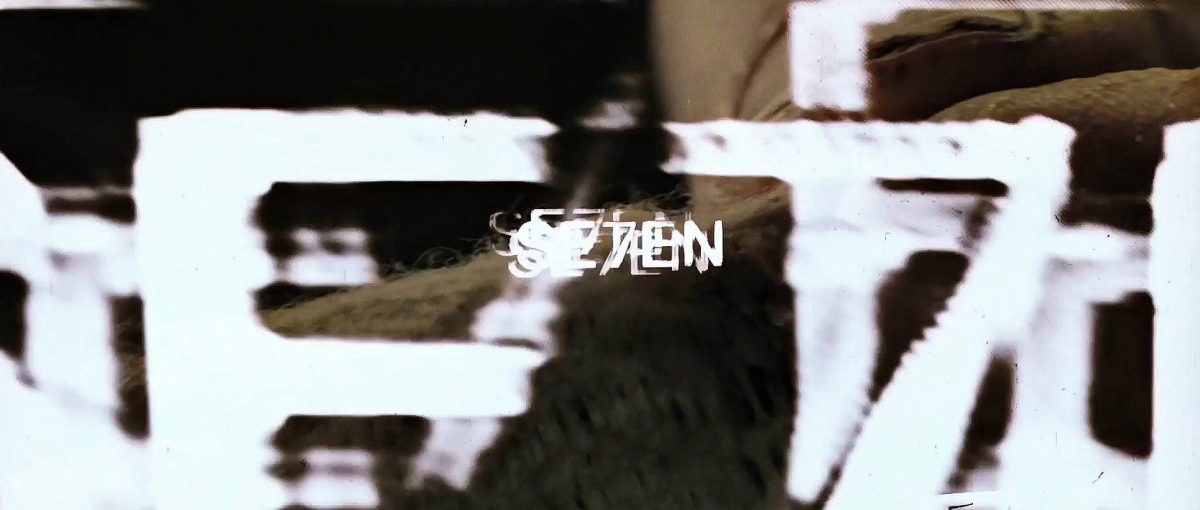
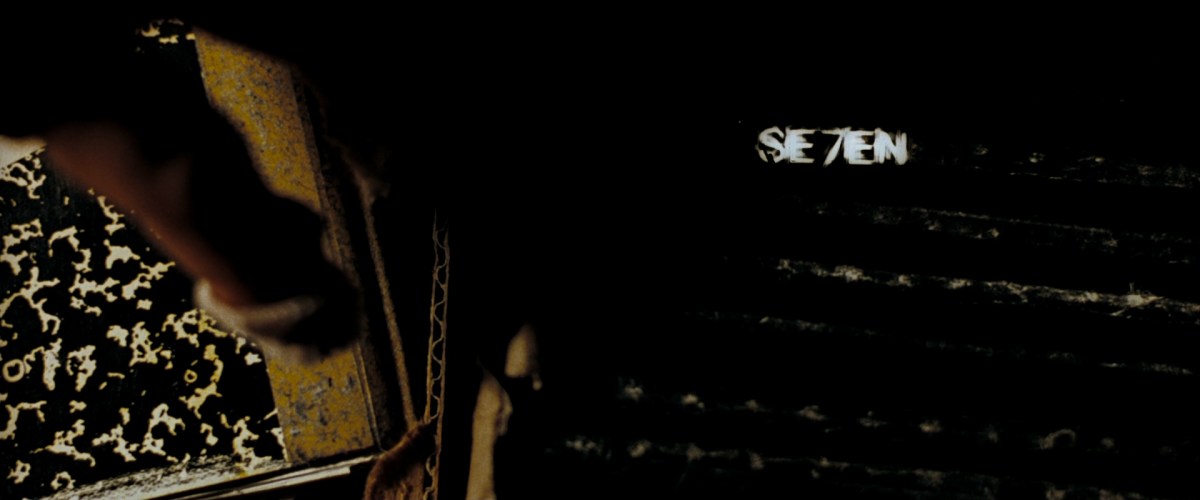
On September 22, 1995, David Fincher’s SE7EN introduced audiences to a darkness unlike anything seen before, accompanied by an opening title sequence from Kyle Cooper that has since become one of the most influential in film history.

September 26, 2025
Prologue Films (Instagram: 1, 2, 3, 4)

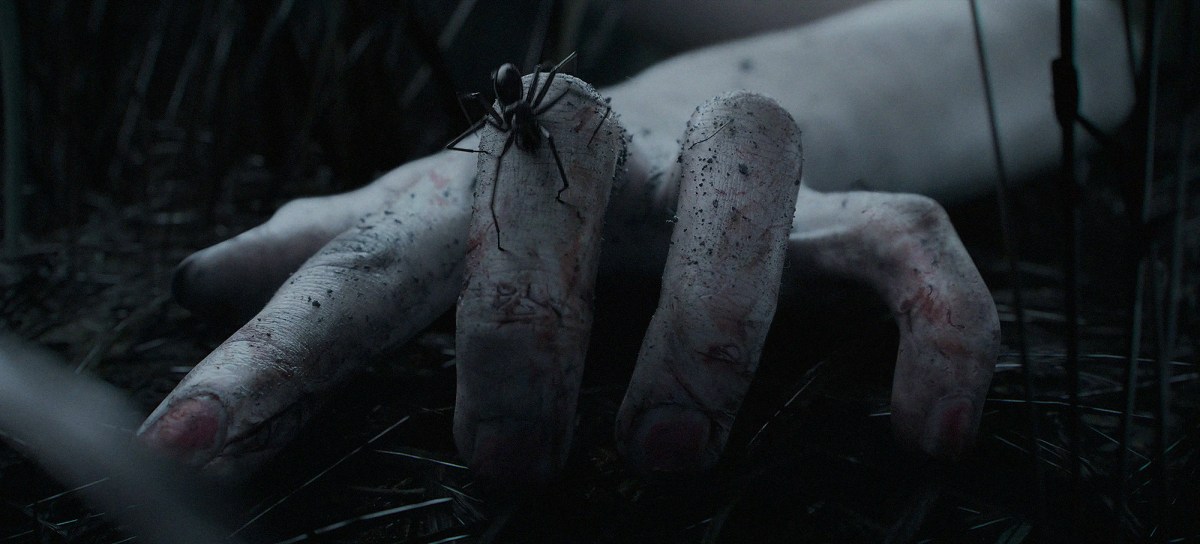
For this classic title sequence, David Fincher tasked Kyle Cooper, founder of Prologue Films, to get inside the mind of a serial killer, immediately setting an ominous tone. Typography was scrawled into scratch board and shot on film, and Cooper shot tabletop photography representing the preparation of the killer’s obsessive sketchbooks. This dark yet spirited sequence was called a “masterpiece of dementia” and was credited with the resurgence of a generation’s interest in film title design.

The audio of this video is pulled from Kyle’s interview on the 2010 Blu-ray Special Edition of SE7EN, where he discussed the making of the sequence in detail.

In Part 1, Kyle reflects on his early conversations with Fincher. The two bounced ideas back and forth, shaping a vision that would forever change the way opening credits were made. This reel pairs finished titles with original process photographs, every frame shot on film, every prop (from John Doe’s notebooks to the hand model) photographed and tested.

“People think there’s computer graphics in there, but we assembled the majority of the sequence by hand… it takes on a life of its own.” In Part 2, he explains how he created the unsettling typography. Every letter was scratched, smeared, and distorted through the camera itself, analogue from start to finish. This reel pairs final frames from the title sequence with the original process photography of John Doe’s notebooks, props, and hands, showing how the haunting visuals took shape long before digital tools.

“This is John Doe’s job: he gets up, makes his books, plans his murders, drinks his tea.” In part 3, he reveals how the titles were designed to immerse viewers directly into the fractured psyche of the killer. To capture the killer’s mindset, Kyle went beyond typography. He gathered real objects from his surroundings, fish hooks, razor blades, sewing needles, twine, even clumps of hair from his shower drain, and filmed them in-camera alongside hand-crafted journals. These raw analogue elements were photographed, tested, and layered into the sequence, blurring the line between prop and pathology.

Kyle has recalled in interviews that during the premiere, when the title sequence finished, the audience actually clapped, something almost unheard of for opening credits. Thirty years later, that impact still reverberates across cinema and design.

The SE7EN End Credits Crawl

The unease of SE7EN doesn’t end with the final scene. Even the closing crawl was designed to keep audiences trapped in John Doe’s world.

Kyle and Kim Cooper crafted the end credits entirely by hand. Each name was cut out and taped together into a single, massive scroll, almost like a tapestry. The piece was then shot with a video camera and lit from behind so the light bled through the lettering.

To deepen the sense of obsession, the crawl was embellished with objects John Doe might have owned: razor blades, fishing hooks, twine, screws, wire, flies, even hair pulled from a shower drain. Every detail was assembled practically, frame by frame, just like the opening titles.

We first show the original handmade scroll, now preserved in five long backlit panels at Prologue Films. Continue watching to see the crawl as it appeared in 1995. Instead of rolling upward like a traditional credit sequence, Fincher had it roll downward, a subtle inversion that mirrored the sick, twisted psychology at the heart of the film.
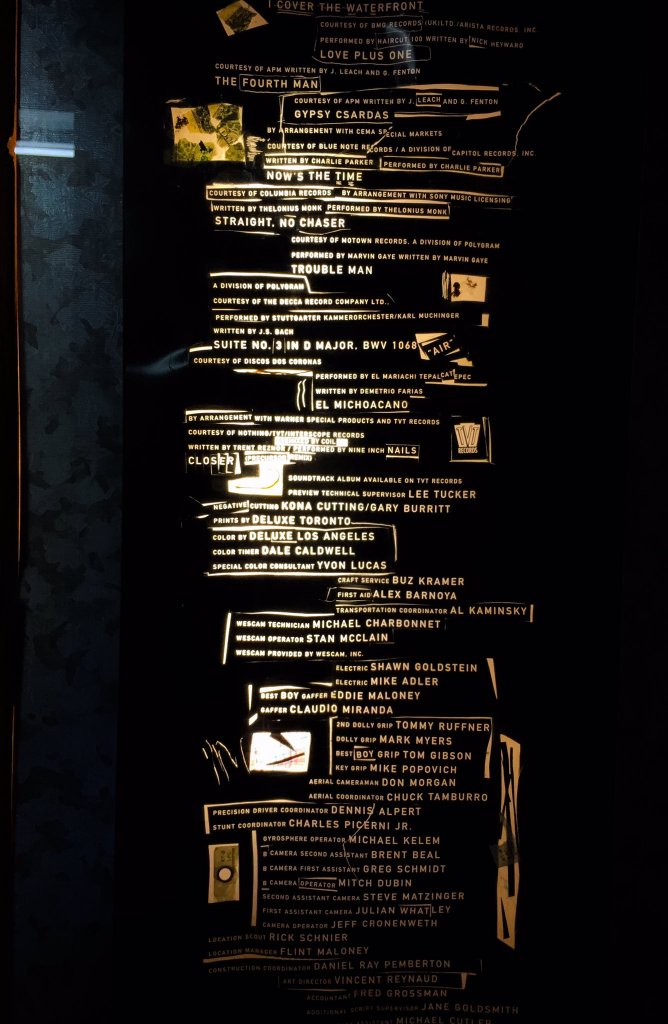
SE7EN end credits crawl panel, displayed at Prologue Films, photographed by Hideo Kojima.
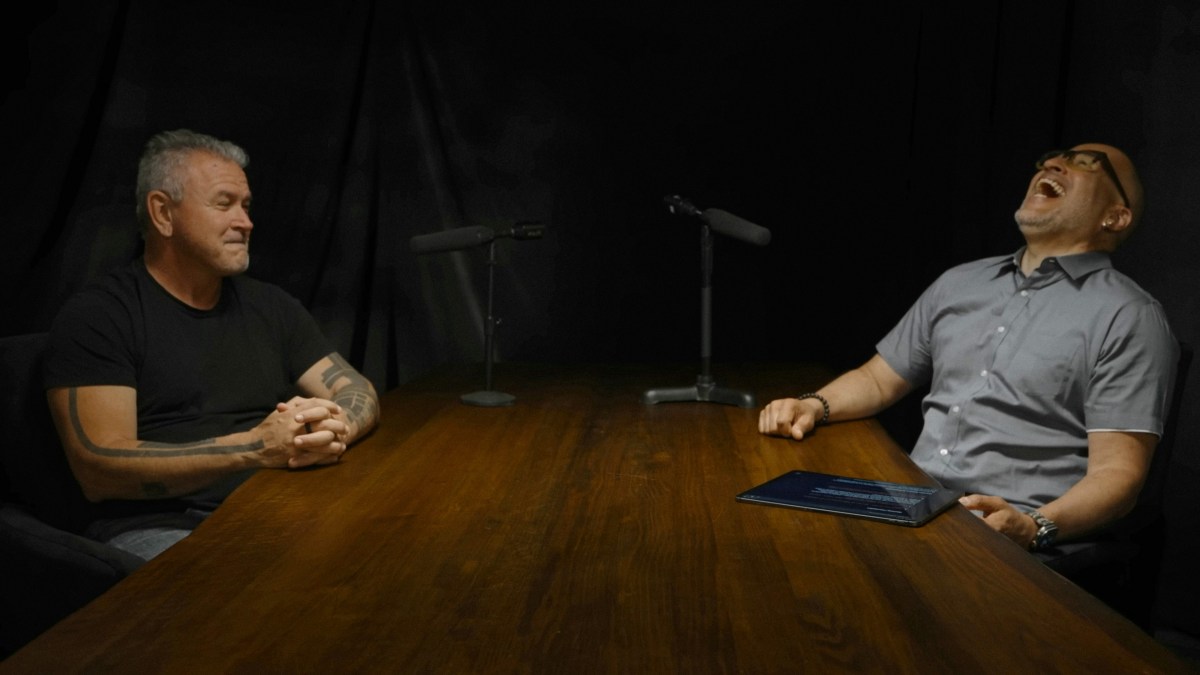
Fireside Chat with Tim Miller, Director of Deadpool and Creator of LOVE DEATH + ROBOTS

Miles Perkins, Industry Manager, Epic Games
July 28, 2025
Unreal Engine

Join Tim Miller, co-founder of Blur Studio and winner of multiple Emmy Awards, for a candid chat on his origins as an animator and visual effects artist, his “story first” philosophy, and his views on creativity. Tim’s curiosity and drive has led him to branch out from traditional visual effects to direct live-action features and explore real-time animation with Blur’s Secret Level series and the LOVE DEATH & ROBOTS anthology series.

Sinnin’ Ain’t Easy: David Fincher on The Lasting Legacy of SE7EN’s Pervasive Horror

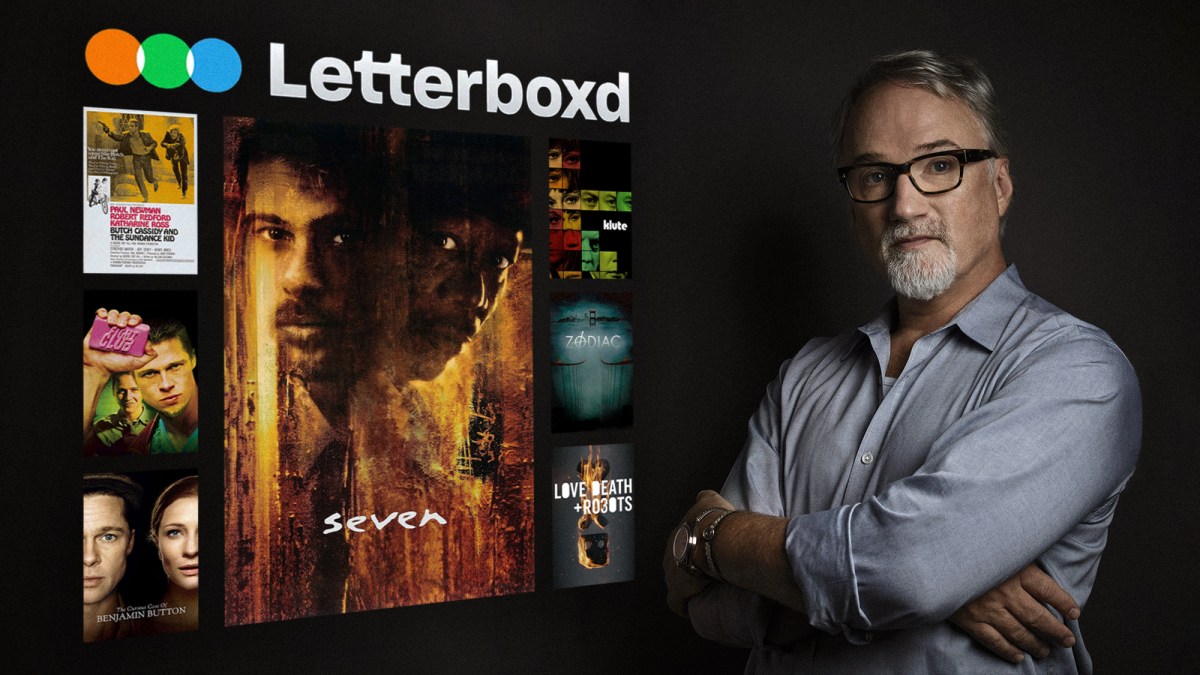
As SE7EN receives an anniversary release in IMAX theaters and on 4K UHD Blu-ray, David Fincher tells Mitchell Beaupre about the film’s enduring impact, Brad Pitt’s basketball ties, John Doe’s memorable entrance and more, including his personal favorite opening credit sequences.

Mitchell Beaupre
January 3, 2025
Letterboxd

Plenty of films want to sell us on the idea that sinning is fun. SE7EN is not that film. Drenched in the cold city rain, grime coming out from the sewers and onto the streets, cockroaches scattering behind furniture and paint peeling off the walls, in the world of Se7en there’s not much fun about life at all. And yet, since its release thirty years ago, David Fincher’s neo-noir-tinged detective thriller/serial killer horror has been a fan favorite, pulling in more than $327 million worldwide and firmly cementing a place on the Letterboxd Top 250 with a whopping 4.3 average rating. Not bad for a movie that makes you want to take a shower the minute you finish watching.

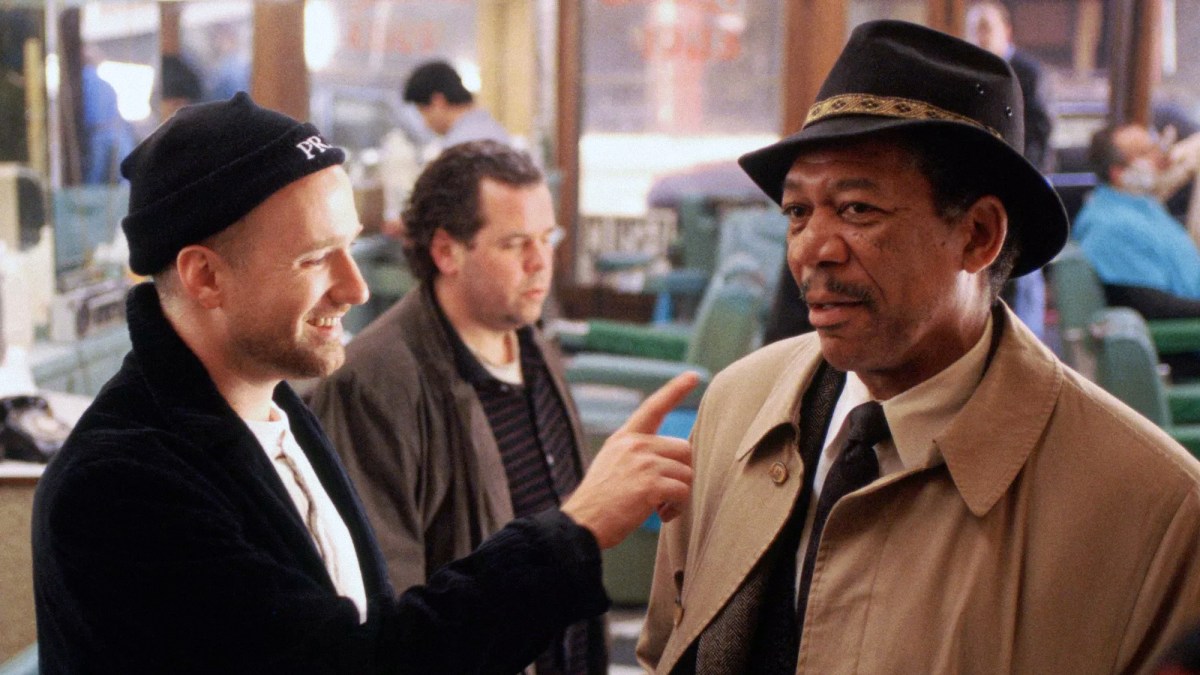
Beneath all of the shocking moments of grotesquerie as Detectives Mills (Brad Pitt) and Somerset (Morgan Freeman) track the meticulously orchestrated slaughters executed by John Doe (Kevin Spacey), SE7EN’s resonance comes from how it invites us to question the futility of feeling good about anything in this life. It’s the ultimate glass half full or half empty story, as these men see some of the worst that humankind is capable of every day, and Mills somehow retains a positive outlook while Somerset has lost all hope for society. Over the course of a week, these two develop a natural bond while their worldviews continuously clash. Director Jim Cummings writes in a Letterboxd review of SE7EN that “outside of the incredible craftsmanship displayed in its filmmaking, it’s an incredible character study with perfect fusion of character-comedy and detective-pornography.”

Cummings is one of many filmmakers who adore Fincher’s sophomore feature, which laid the foundation in 1995 for essentially every gnarly detective thriller that would come in the years to follow. “Easy to forget that this became the template for the genre it reinvented, but beyond that it’s a spectacular piece of provocation and confidence,” Matt writes, which Dirk echoes by saying, “The true star here is David Fincher. He has created an aesthetic that has been copied so many times, but has never really been equaled.” Dirk also opens his review by pondering, “It is always difficult to determine when you are ‘allowed’ to call a film a classic or a masterpiece,” then three paragraphs later ending with the declaration that SE7EN is, indeed, both.

So that settles that. Here’s my conversation with David Fincher.

Read the full interview

David Fincher talks remastering SE7EN and reveals what was really in the box

The filmmaker says the rumor that the infamous box contained a prosthetic head is “entirely ridiculous.”

Wesley Stenzel
January 2, 2025
Entertainment Weekly

SE7EN turns 30 this year, and to commemorate the anniversary, director David Fincher has overseen the 4K remaster of the seminal crime drama.

The serial killer mystery — which stars Morgan Freeman, Brad Pitt, Gwyneth Paltrow, and Kevin Spacey — first shook up the crime genre in 1995 with propulsive, precise craft and unprecedentedly nasty crime scenes that have influenced everything from Saw to The Batman. The film now has a higher-resolution look that will debut on IMAX screens on Jan. 3 before releasing on 4K UHD Blu-ray Discs and on digital Jan. 7. Fincher and his team painstakingly recreated the film as it was originally printed in 1995, utilizing some AI tools to enhance the image and fix visual mistakes that weren’t visible in previous scans of the film.

Entertainment Weekly chatted with Fincher to discuss the new version of SE7EN and reflect on his memories of helming his feature directorial breakout 30 years later — including what’s really in the box.

Read the full interview

Macro Cinematography Experiment with MINDHUNTER and the Laowa Sword lenses

December 5, 2024
Media Division

This is a cinematography experiment for fun and education. To explore Macro techniques, we recreate David Fincher‘s iconic MINDHUNTER title sequence and, of course, we give it our very own twist.

We also test & review the new Laowa Sword cine macro lenses. Macro Lenses open a whole world of technical possibilities and perspectives that are impossible to achieve with normal lenses. Macro and extreme close-ups can play an important role in cinematic storytelling, product videography, Stop-Motion work, and practical effects.

Then, we take you behind the scenes and show you how the different scenes were set up and lit. The LAOWA Sword macro cine lenses cover full frame and offer a wide range of focal lengths starting from 15mm all the way up to 180mm. We give you test shots and talk about our experience.

00:00: Intro & Contents
02:23: Extreme close ups in cinema
04:02: What is a Cine Macro Lens
07:52: Laowa Sword introduction
13:20: Laowa Sword Lens Test
18:15: Reimagining the Mindhunter titles
22:10: MACROHUNTER
25:48: Making of & Tutorial
29:10: Staging Marie – Skull shots tutorial
32:12: The Verdict
34:19: Laowa Aurogon introduction
37:19: Thank You

Here is our short with all MACROHUNTER sequences next to behind-the-scenes.

Disclaimer: we collaborated with LAOWA to bring you this episode. As always, we strive to give you our honest opinion based on our experience and our tests. If you are interested in buying the LAOWA Sword, please consider our affiliate link. It doesn’t cost you a dime more, but we get a little for the tip jar. Thanks a lot!

Please join the ranks of the Media Division: YouTube, Instagram, Facebook

Business and collaboration inquiries: info@media-division.de

Links to Collaborators and Partners: Thanks to the Marmalade and their awesome crew! And to Techmoan for the description of the Mindhunter Props.

Music licences by Artlist. To get the music from this episode, subscribe to Artlist. With this referral link, you’ll get 2 months for free.

David Fincher at The Cinémathèque Française: “The Killer” Screening and Q&A

Frédéric Bonnaud, Director of the Cinémathèque française
Anaïs Duchet, Interpreter
October 13, 2023
Cinémathèque Française

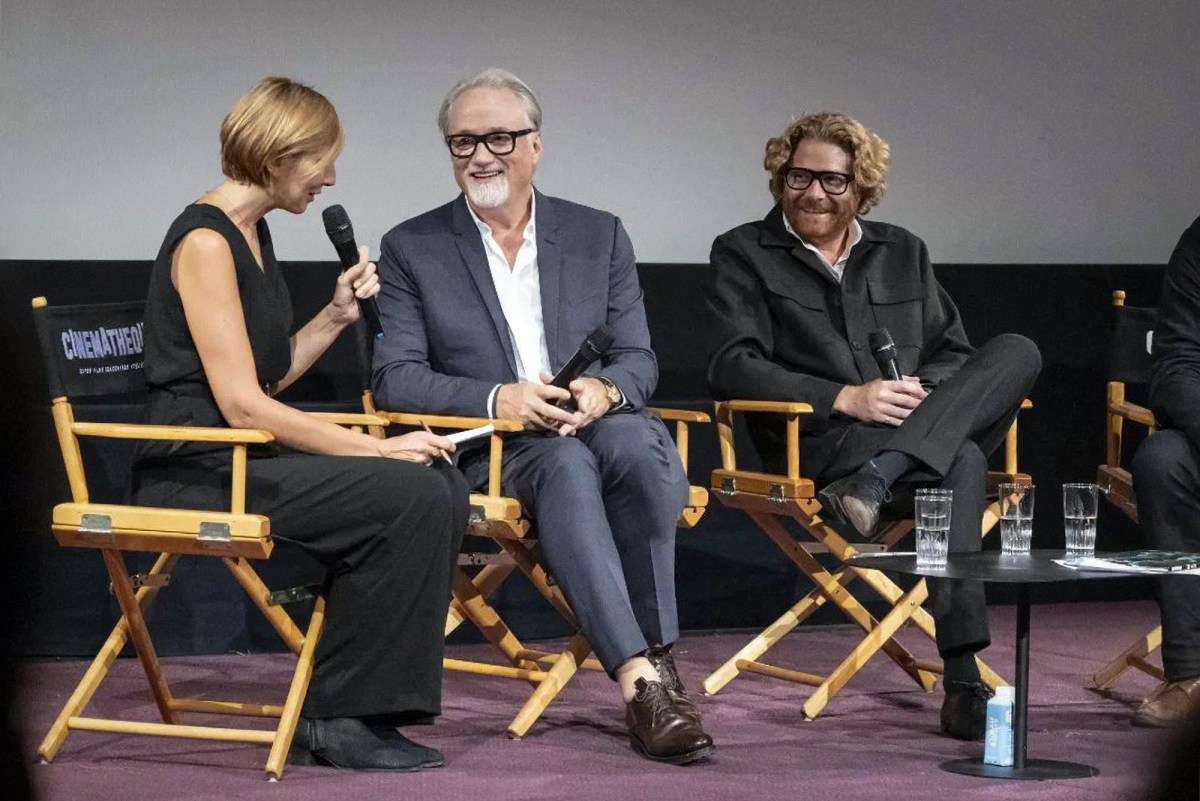
The Cinémathèque Française (French Cinematheque) hosted a David Fincher Retrospective from October 13 to 22, 2023, in Paris (France).

Supported by Netflix, Patron of the Cinémathèque, it opened with a preview screening of The Killer followed by a Q&A with Director David Fincher, and Director of Photography Erik Messerschmidt, ASC.

The next day, a screening of Zodiac was followed by a discussion with the director about the film and his career.

‘Mindhunter’: An Intro Is Worth a Thousand Words

Will Jones
August 24, 2019
Big Shiny Robot

David Fincher is a meticulous man.

From the infamous tales of his multi-take shooting style to the sheer technical precision consistently on display in his work, it is apparent that Fincher is methodical in his craft, a director who knows what he wants and sees very little point in doing the job if he is ever willing to settle for less than that.

Which is why, in a truly unique way, the opening intro to Fincher’s latest Netflix series, Mindhunter, is essentially a distillation of his entire filmmaking career into a single minute-and-a-half of unnervingly brilliant and precise cinematic craft.

Fincher’s first credit as a filmmaker may have technically been Alien 3, but his career didn’t really begin properly until 1995, with the release of Seven. The tale of a pair of detectives investigating the grisly murders of a serial killer, Seven is in many ways, in hindsight, the perfect introductory statement for Fincher’s body of work as a whole. On the surface, it’s a tightly-woven and meanly constructed narrative about a serial killer and the men trying to catch him. But just beneath the surface (and for our purposes, much more importantly) Fincher is using the narrative as a framework through which to explore themes such as the perverseness of mankind, the lasting wounds of grieving, and obsession.

That last one is important: obsession. Because it’s one he’s come back to again and again, and explored in increasingly interesting ways. Fight Club saw him creating a pop-cultural satire, one that delved deep into the depravity of its time and how the obsessions of a generation essentially derailed the concept of mental stability. Zodiac saw him confronting it in his most direct way yet, showing how Robert Graysmith’s and the nation-at-large’s obsession with the Zodiac murders came to engulf them.

What’s so intriguing about Mindhunter is that it tackles this thematic staple of Fincher’s work in a very similar way, yet it does so without even necessitating a single minute of footage from the series proper.

Read the full article

5 Visual Aesthetics of David Fincher’s MINDHUNTER: A Video Essay

Vashi Nedomansky
November 28, 2018
VashiVisuals

“I thoroughly enjoyed the visual sensibilities and filmmaking techniques used in the first season of  Mindhunter on Netflix. Here are 5 of my favorite cinematography and film editing techniques that I feel made it a very distinctive show. Created and directed by David Fincher, he used many of the stylistic choices from his feature films such as dark cinematography and glass-like camera movement but also added some new tools to his arsenal as well.”

More by Vashi Nedomansky:

All 25 Subliminal Shots in David Fincher’s MINDHUNTER Title Sequence

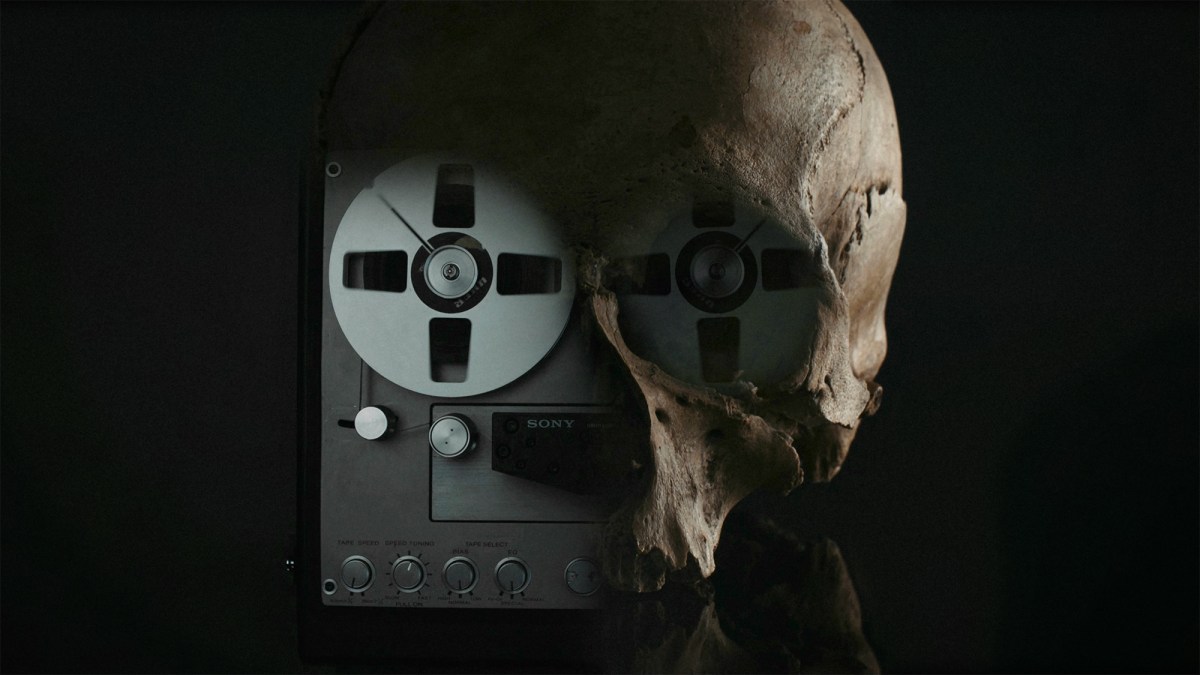
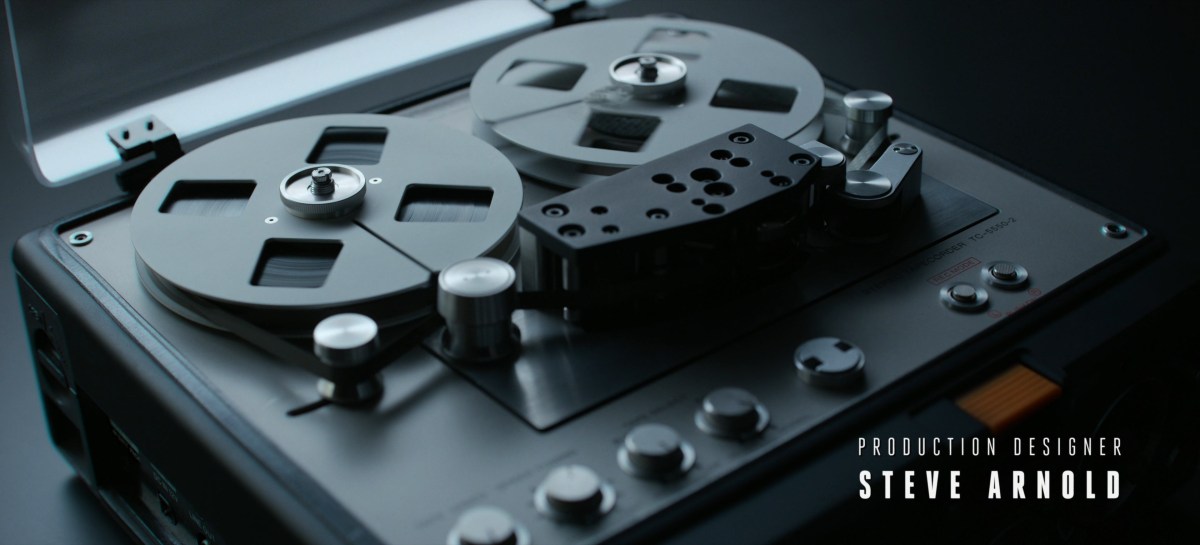
Recreating the Mindhunter Reel-to-Reel titles (minus the corpses)

Techmoan (YouTube)
May 5, 2018

A ‘joyously nerdy’ video in which I attempt to assemble all the components to recreate the reel-to-reel title sequence from the Netflix Show Mindhunter.

hifiengine: the Portable Stereo Reel-to-Reel Tape Recorder Sony TC-510-2 (or Sony TC-5550-2 in Japan)

The Tapeheads forums: “Looking for the sony tc-510

The RPF forums: “The Tape Recorder from Netflix MINDHUNTER” (“David wants perfect”)

New Mindhunter style metal 5″ reels can be bought from Righteous Reels.

Special thanks to Jason Moore (on Patreon) for the tip regarding The Professionals episode.

The music used in my recreation of the title sequence is ‘Spirit Of the Dead‘ – by Aakash Ghandi and is from the youtube audio library (Download link).

NOTE: The TDK tape leader was created specifically for the sequence with CGI to hide the original Sony one:

Ollin VFX 2018 Demo reel

Ollin VFX (vimeo)
December 12, 2017

Comment by Kenneth Palkow (Kenney’s Custom Props) in Techmoan’s video
2020

Very nicely done, Techmoan. It’s amazing to see how many people fell in love with that recorder.

Working for David Fincher and having the opportunity to work with some very talented individuals was amazing. About 40% of the prop was recreated. We had acquired a couple machines. There was also one we found in a museum but did not get that one. In the end, I had 2 machines to work with. Some logos you noticed were not present anymore and that’s because that was a part I machined… like the head roller cover. The original had some deep gouged marks.

Since the recorder needed to look new from that time period, it was best to make a new one. I machined that part aluminum. There were other parts I needed recreate and machine. As you know, these machines are rare and it was just easy to tear the recorder down to every nut and bolt and give it a complete restoration. The hardest part was the housing and lettering. Some of it I had to recreate while other parts was just a refinish. In the end, I decided to match the original finish using ceramic based gun coatings. It was a durable finish and the color match ended up being perfect. So, the entire housing and misc parts, like the head/roller cover I totally refinished with this coating.

The next challenge was the reels themselves. David wanted a .005″ chamfer specifically on all edges of the reels. This was mainly because he was going to do plenty close ups and the details and the details had to be spot on. Again, I created a CAD model based on metal reels of that time period and machined them out of aluminum. I had to make custom fixtures to machine these parts because they are so thin. The center hubs a created a CAD model and 3D printed. I then wet polished the hubs down to 2000 grit. The hubs in the sequence were placed upside down. I did not intend or ask for my company initials to be visible…. that just happened by chance or intentional by the prop master or even possibly David was happy enough with my work that he did this for me. Either way, I was really excited to see that in the sequence.

I think The Fincher Analyst is correct about the tape having a cg overlay done. There were many other details I recreated as well…. like the rubber seal between the clear cover and housing. That part I did a cad model, printed a master, pulled a mold, and cast the recreated seals in rubber. The clear cover is also custom made. I did modify the locking knob on the cover to a magnetic one so the actor would just have to pull up vs trying to fidget with trying to get it to release… or worrying about it locking up and not release fluidly for the camera. Remember, the seen had to be very fluid.

Anyway, I hope this gives you some insight as to how much effort David wanted put into that opening sequence. Another friend of mine, Max Burman did the corpse stills you see.

Adam Savage Is Obsessed With This Tape Recorder

Adam Savage’s Tested
May 15, 2023

Comment by Kenneth Palkow (Kenney’s Custom Props) in Adam Savage’s Tested video
May 16, 2023

Hey brother, thank you for the shout out.

Yes, yes, and yes…. David Fincher 100% was extremely meticulous about detail on this reel to reel. His specifications was .005 of an inch chamfer on the reels edges alone. We had two machines at our disposal and I took one to create a superhero prop for that opening sequence alone.

Since a good portion of the recorder had damages, such as deep scratches, gouges, etc etc, I had to re-create those parts by CNC machining. The seal for the top cover I 3-D print it and even the top cover is not original. I had to make a new one from scratch. The top cover where the pick ups are that says Sony, I did not remove the logo, because that part as well I had to remake from scratch. Again, CNC machining. There were areas of machining that I was holding half a thou tolerance. Lol, I know, crazy. But, I was instructed that this would be an extreme close-up scene. The rest of the machine I tore down, refinished the side panels the back panel to take out all of the scratches gouges and then did a refinish using KG gun coatings. There was some Cerakote as well in there.

The reels were probably the most pain in the butt. Machining, thin metal like that can be problematic with vibration so I had to form a custom jig that sandwiched the reels down so I can machine the chamfers. The center hub is 3-D printed and if you look closely on the Opening sequence when he is tightening the reel knob, you will see my company initials KCP. That actually was an accident and no one was supposed to see that but someone put the reels upside down. I’m not gonna complain. Lol.

Truth be told this task of refinishing/fabricating. This reel to reel went in front of two other prop shops before it ultimately ended up in my hands. David was extremely adamant about the quality of this prop that the Prop Master took it to two shops. One of the shops tried, but could not give the quality level of work David was asking for.

That second shop gave me a call one day and said “Kenney don’t be mad at me but I’m sending somebody your way. They are being truly anal about the detail and I told them if you’re looking for someone that’s anal, you need to go to Ken shop“. Not five minutes later Prop Master called me at about 20 minutes later I was on a flight to Pittsburgh for a morning meeting the next day. I looked at the previous work done by the last shop, and thought to myself this is some pretty good work and question whether I could pull off with David wanted. Ultimately, that opening sequence is a project I’m most proud of being a part of and definitely one of the most beautifully done.

And last, I did make mention to the art department that in exchange for the hard work, David needed to bring me on for World War Z 2. Lol there was a lot more to this project but that’s pretty much the gist of it. Thanks again, brother, for the shout out.

If by any chance, you would like files to the the reel to reel or any of the other parts, let me know.

Murder by Imitation: The Influence of Se7en’s Title Sequence

Tim Groves
April 2018 (Issue 43)
Screening the Past

The serial killer film is nothing if not prolific: Robert Cettl discusses over six hundred examples in his annotated filmography, Richard Dyer argues that there are over two thousand serial killer films, and the IMDB lists more than 3500 film and television titles. [1] As with any genre, the serial killer film is marked by its typicality. Indeed, Philip Simpson criticises the serial killer film as a subgenre that is “endlessly derivative of its predecessors”. [2] The tropes of the clever, fiendish killer, his grotesque, ritualistic ‘signature’ and the gifted but damaged investigator are certainly familiar, but how does the serial killer film replicate itself on a textural level? This article will analyse the influence of Kyle Cooper’s much admired opening title sequence in Se7en (David Fincher, 1995). [3] However, rather than exploring the general influence of the sequence, I will focus on its stylistic similarities to the credit sequences of other serial killer texts such as The Bone Collector (Phillip Noyce, 1999), Red Dragon (Brett Rattner, 2002), Sanctimony (Uwe Boll, 2001), Taking Lives (D.J. Caruso, 2004) and the first season of Whitechapel (Ben Court and Caroline Ip, 2009). I will argue that their imitative or plagiaristic qualities can be interpreted in terms of Mark Seltzer’s work on the repetitive and circular discourse of serial killing.

Se7en

The title sequence of Se7en appears a few minutes into the film, occurring after a brusque initial encounter between Detectives William Somerset (Morgan Freeman) and David Mills (Brad Pitt) at the scene of the first murder. The sequence runs for just over two minutes and contains over a hundred shots, many in close up. It shows a person (whom we retroactively infer is the killer John Doe [Kevin Spacey]) shaving off the skin on his fingertips, and then working on a group of notebooks while wearing bandages. We see Doe writing in longhand, and highlighting and erasing portions of other texts. He also develops photographs and uses scissors to trim Polaroids and pieces of film. Doe incorporates some of these images and texts into the notebooks and then uses needle and thread to stitch the pages of his journal into a book, one of many.

The title sequence provides vital story material for the viewer about Doe’s activities. He removes his fingertips to ensure that he does not leave fingerprints behind, either in his apartment or at crime scenes. This also enables him to toy with the investigators by leaving a message composed of fingerprints on a wall at the second murder scene. Instead of this resulting in Doe’s apprehension, it points the police to his third victim, whose amputated arm was used to ‘write’ the words “help me”. After Doe surrenders, the police discover that he does not have a Social Security number, nor any banking or other official records. He is also, as Somerset states, “John Doe by choice”. His anonymity focuses police attention on to his mission or “work”. Indeed, during the final confrontation, Doe insists that he is not personally important, but that his crimes will be remembered and studied because of their shocking nature and diabolical logic (and Se7en is more memorable than many other serial killer films for precisely this reason).

Read the full essay