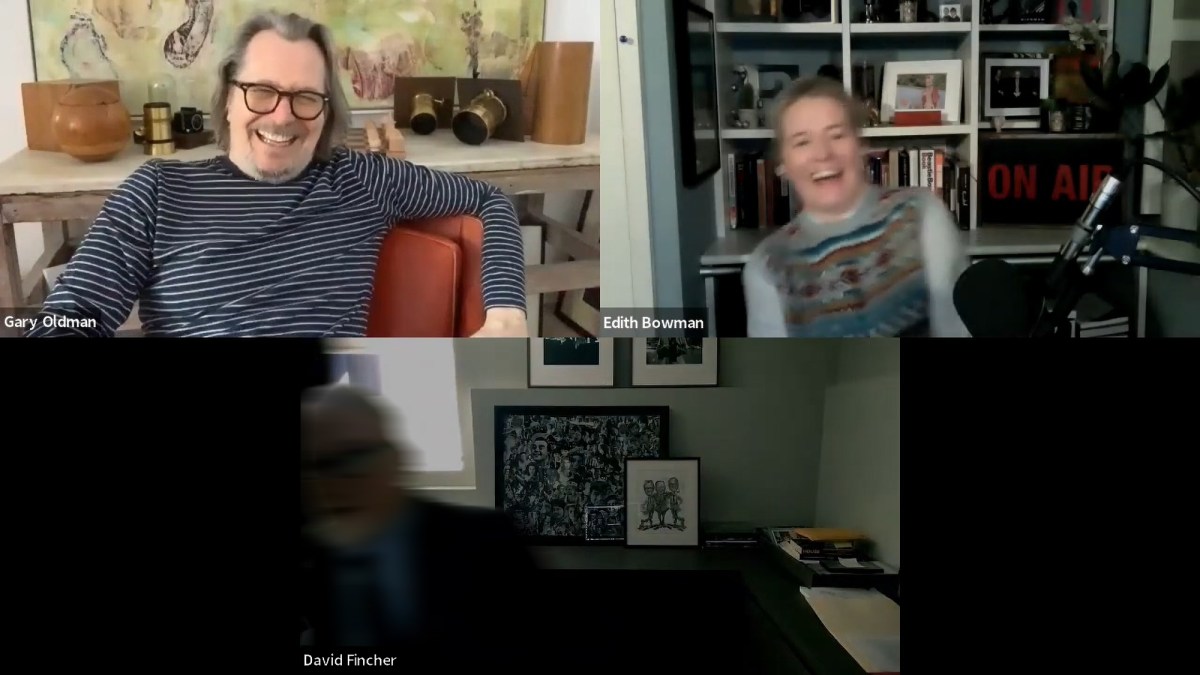
Edith Bowman
January 18, 2021
Netflix UK & Ireland (YouTube)
Tag: Screenwriting
MoMA FILM: “Mank” Q&A with Gary Oldman
Rajendra Roy
March 17, 2021
MoMA (The Museum of Modern Art)
Gary Oldman joins MoMA‘s Chief Curator of Film Rajendra Roy for a discussion about the 2020 film Mank.
Scene at The Academy: Mank
Oscars (YouTube)
March 6, 2021
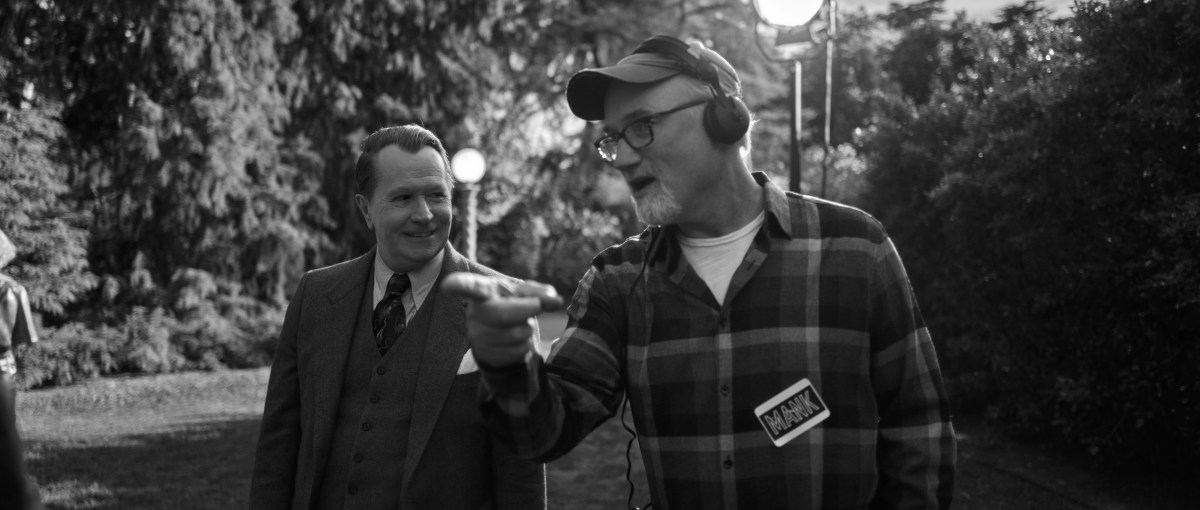
Mank director David Fincher, actors Gary Oldman and Amanda Seyfried, the cinematographer Erik Messerschmidt, production designer Donald Graham Burt and sound designer Red Kyle walk you through a boisterous San Simeon house party sequence and the recreation of William Randolph Hearst’s famed zoo.
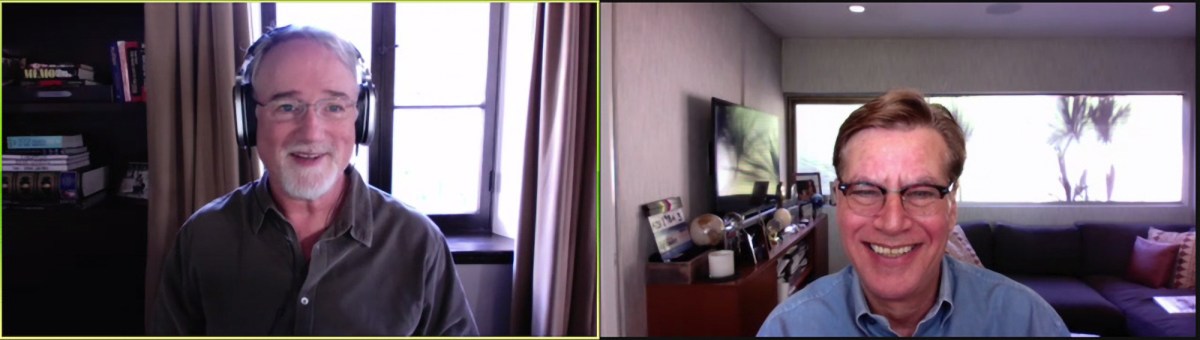
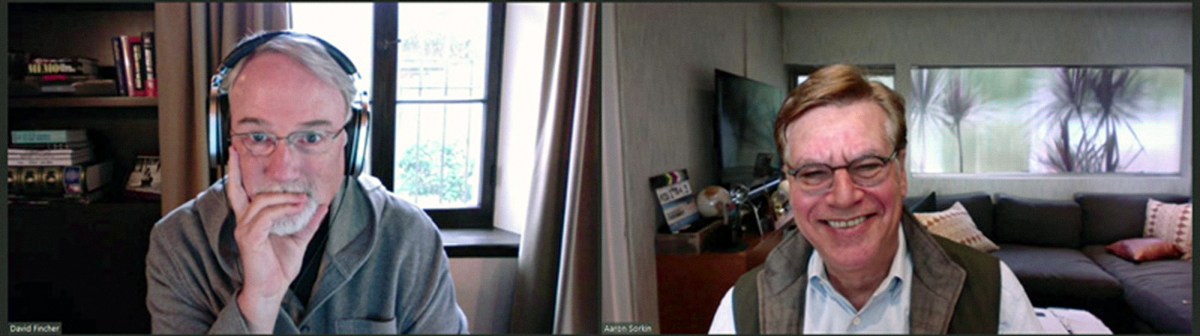
Director David Fincher discusses Mank with Aaron Sorkin
A DGA Virtual Q&A
February 6, 2021
The Director’s Cut. A DGA (Directors Guild of America) Podcast
A disillusioned screenwriter in old Hollywood gets a shot at redemption in Director David Fincher’s biographical comedy-drama, Mank.
Fincher’s film takes place as film 24-year-old wunderkind Orson Welles hires scathing social critic and alcoholic screenwriter Herman J. Mankiewicz to write the screenplay for his masterpiece, Citizen Kane.
On February 6, Fincher discussed the making of Mank in a DGA Virtual Q&A moderated by Director Aaron Sorkin (The Trial of the Chicago 7).
During their conversation, Fincher spoke about his love for “the altar of cinema,” the communal aspect that can come through film. “For me, what I love about cinema is going into a big dark room with 700 people and through their laughter and through their surprise and through their shock and through their reactions you realize, I’m not alone. I’m the same. I’m wired into this group in the same way just organically and I’m picking up on all these other cues. That is what makes the cinema, or a great grand theater, an almost cathedral-like experience.”
Fincher’s other directorial credits include the feature films Se7en, The Game, Panic Room, Zodiac, Gone Girl; episodes of the television series House of Cards and Mindhunter; and countless commercials and music videos. He has been nominated for the DGA Award for Outstanding Directorial Achievement in Theatrical Feature Film for The Curious Case of Benjamin Button, The Social Network and The Girl with the Dragon Tattoo. In 2013, he was nominated for the DGA Award for Dramatic Series for House of Cards, “Chapter 1” and has twice been nominated for the DGA Award for his Commercial work with Anonymous Content in 2003 and 2008, winning the Award in 2003 for Beauty for Sale (Xelibri Phones), Gamebreakers (Nikegridiron.Com) and Speed Chain (Nike).
Fincher has been a DGA member since 1991.
Listen to the podcast:
‘Mank’: Read The Screenplay For David Fincher’s Movie About The Writing Of ‘Citizen Kane’ Penned By His Father
Patrick Hipes
February 19, 2021
Deadline
EXCLUSIVE: David Fincher’s Mank has been near the top of the heap this awards season, scoring the most nominations at the Golden Globes and Critics Choice Awards and a place on the AFI Top 10 movies of 2020 for the take on the relationship of screenwriter Herman J. Mankiewicz and Orson Welles during the writing of the iconic Citizen Kane.
Those noms include posthumous recognition for the screenplay, written by Fincher’s father Jack, who died in 2003. It was David who encouraged his dad to explore the story between the two men, along with it the idea of taking responsibility for one’s ideas put into the world, and the reality-altering power that creates.

Director Aaron Sorkin discusses The Trial of the Chicago 7 with David Fincher
A DGA Virtual Q&A
January 23, 2021
The Director’s Cut. A DGA (Directors Guild of America) Podcast
The counterculture movement of the 1960s clashes with the hostile Nixon administration in Director Aaron Sorkin’s historical drama, The Trial of the Chicago 7.
Set in the aftermath of what happened after a peaceful protest turned into a violent encounter with the police at the 1968 Democratic National Convention in Chicago, Sorkin’s film recounts the infamous 1969 trial of seven political activists – that included moderate Students for a Democratic Society led by Tom Hayden, militant Yippies led by Abbie Hoffman and Jerry Rubin, and Bobby Seale of the Black Panthers – who were all charged with conspiracy in an unfair trial that transfixed the nation and sparked a conversation about mayhem intended to undermine the U.S. government.
On January 23, Sorkin discussed the making of The Trial of the Chicago 7 in a DGA Virtual Q&A session moderated by Director David Fincher (Mank).
During the conversation, Sorkin spoke about how he came up with a plan to shoot the riot scenes despite his budgetary limitations.
“I find a constraint like that forces you to get creative,” said Sorkin. “It forces you to have an idea. So we came up with this plan, we were going to get a few wide shots and we were going to take advantage of the tear gas. We got smoke everywhere. I discovered what happens when you shoot light through smoke so I wanted smoke in every scene. I could not get enough smoke. It didn’t matter where we were.”
In addition to his directing work on The Trial of the Chicago 7, Sorkin was nominated for the 2017 DGA Award for Outstanding Directorial Achievement in First-Time Feature for his debut film, Molly’s Game. He was also part of the producing team (which includes DGA President Thomas Schlamme) that won multiple Emmy awards for “Outstanding Drama Series” for their work on the series The West Wing. Sorkin also took home an Academy Award for “Best Writing, Adapted Screenplay” for David Fincher’s feature The Social Network.
Sorkin has been a DGA member since 2016.
Listen to the podcast:
Ben Affleck Reunites With ‘Gone Girl’ Director David Fincher, Accuses Him of Making a Movie With Heart
Meredith Woerner
February 11, 2021
Variety
For once, Ben Affleck gets to ask the questions.
That’s how the actor-director framed his duty of leading a conversation with longtime friend and “Gone Girl” boss David Fincher, the esteemed director whose Netflix film “Mank” has emerged as a top awards contender for 2021.
“This is a real role reversal from having to just be Fincher bitch, having to go over and over again,” Affleck teased the director, alluding to Fincher’s notorious preference for many consecutive takes of the same scene.
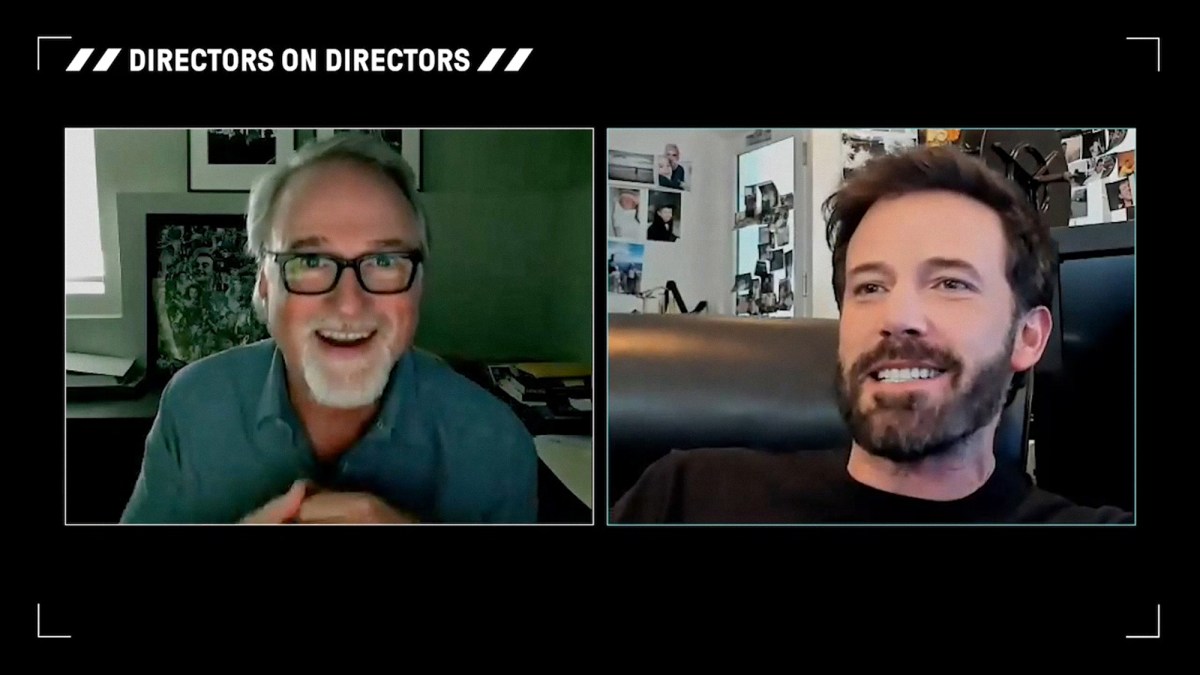
Appearing in Variety‘s “Directors on Directors” conversation series, the pair recently held a virtual reunion where Affleck dug into the decades-long process of bringing the story of famed screenwriter Herman J. Mankiewicz to screen.
In perhaps the broadest conversation Fincher has had about the film’s themes, Affleck gets to the heart of the original script from the director’s father, the value of creative credit at the dawn of Hollywood’s golden age, and the rare glimmer of heart and hope in a David Fincher film.
Read the conversation and watch the interview
‘Gone Girl’ Duo David Fincher & Ben Affleck Reunite to Dissect ‘Mank’ | Directors on Directors
American Cinematographer Clubhouse Conversations: Mank
Caleb Deschanel, ASC
February 10, 2021
American Cinematographer
In this 85-minute episode, interviewer Caleb Deschanel, ASC talks to cinematographer Erik Messerschmidt, ASC and director David Fincher about their stylish black-and-white period drama.
Written by Fincher’s father, Jack, Mank depicts the turbulent life and career of self-destructive Hollywood screenwriter Herman J. Mankiewicz (played by Gary Oldman) — focusing on his writing of the script for the iconic 1941 drama Citizen Kane. He and director Orson Welles shared an Academy Award for Best Original Screenplay.
While the filmmakers sought a period look and feel contemporary to their story — in part inspired by Gregg Toland, ASC’s Oscar-nominated camerawork in Citizen Kane and The Grapes of Wrath — they embraced every modern tool to accomplish their creative goal, shooting with Red Ranger monochrome Helium cameras and Leitz Summilux-C lenses while employing virtual production techniques to facilitate recreating a vintage Los Angeles and other locations.
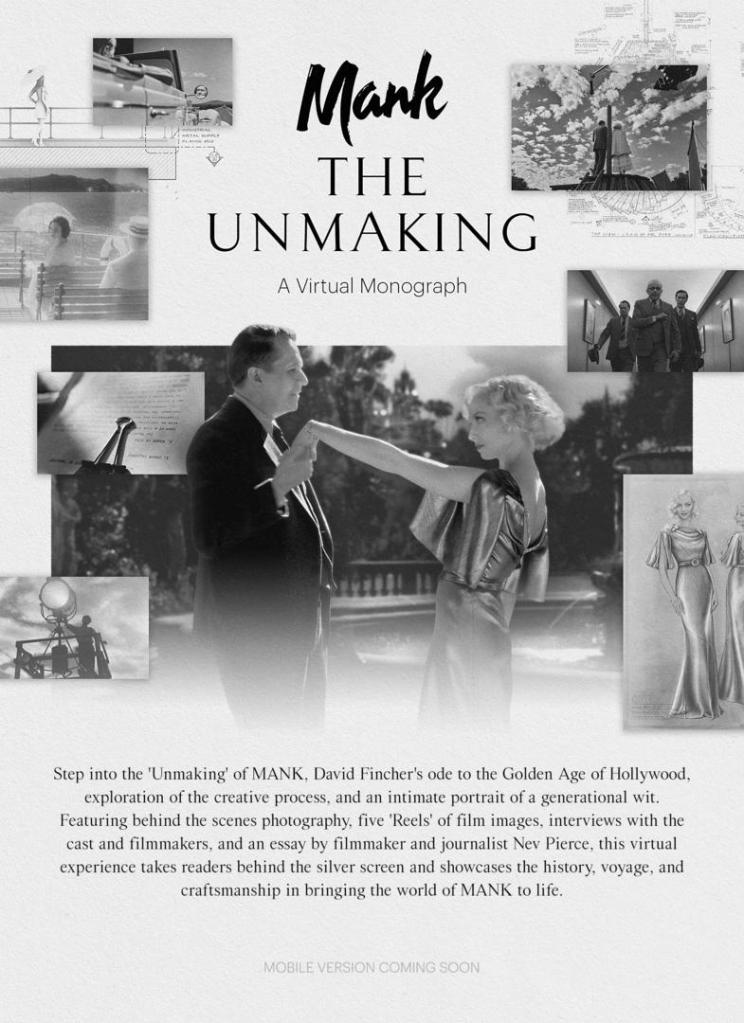
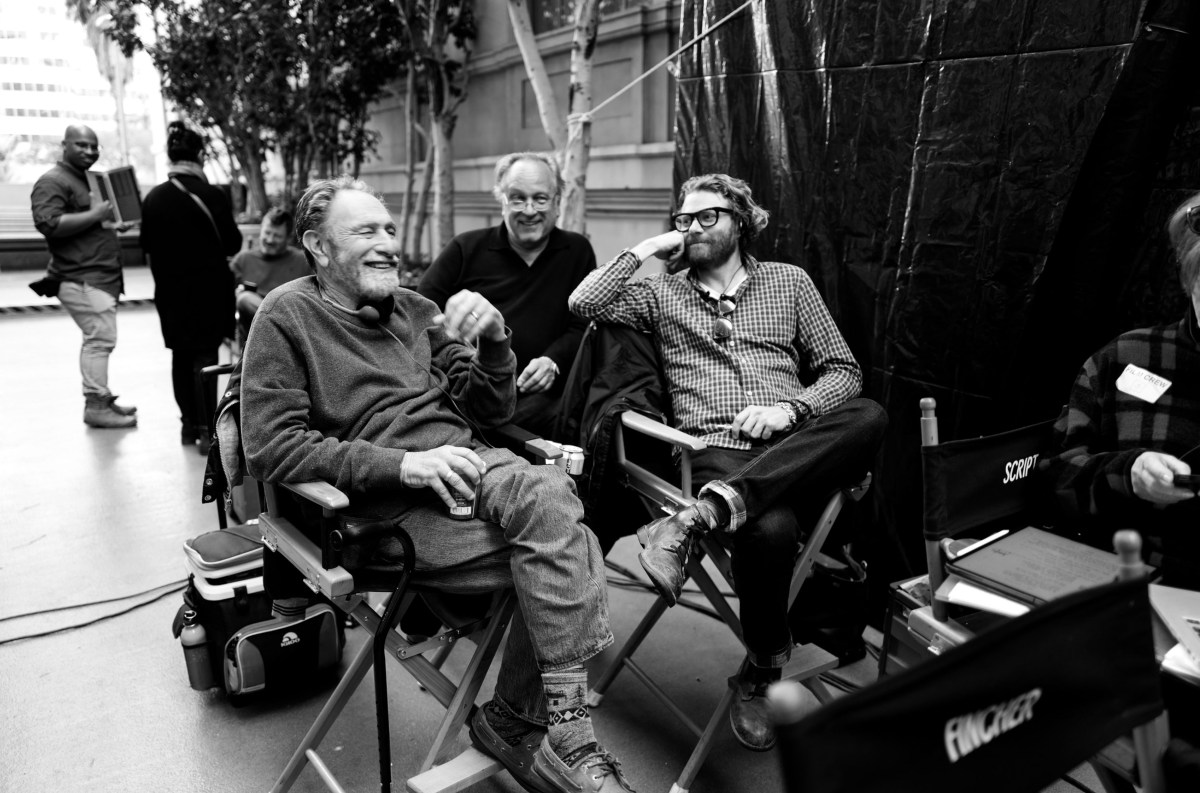
Mank, The Unmaking
January 28, 2021
Netflix

manktheunmaking.com [Old Domain]
Text by:
Photography by:
Erik Messerschmidt
Miles Crist
Gisele Schmidt-Oldman
Gary Oldman
Ceán Chaffin
Nikolai Loveikis
Design and development by:
The Man in the Wings: David Fincher on the Shadowy Life of Herman Mankiewicz
Sydney Ladensohn Stern
January 14, 2021
Criterion
Herman Mankiewicz—a washed-up Hollywood screenwriter writing the first draft of Orson Welles’s 1941 biopic about William Randolph Hearst—may seem an unlikely hero for a 2020 biopic. He is rarely remembered today outside of cinephile circles, but in telling his story, David Fincher’s Mank delivers a loving tribute to Golden Age Hollywood films, a clear-eyed dissection of a company town, an unexpectedly timely depiction of 1930s fake-news shenanigans, and an unabashed homage to Citizen Kane, all wrapped up in a snappy, stylishly retro package.
Welles is rightly revered as the twenty-five-year-old wunderkind behind Citizen Kane, but when Herman Mankiewicz went to Hollywood in 1926, he, too, was a promising young man. At twenty-eight, he was not only the New York Times’ assistant theater editor under George S. Kaufman and the New Yorker’s first theater critic, he was an aspiring playwright collaborating with both Kaufman and Marc Connelly. Unfortunately, Herman was also an alcoholic with a gambling problem and a penchant for getting himself fired. So, despite despising the movie business, his periodic attempts to escape back to his native New York and his friends in the Algonquin Round Table writers’ group failed, and he remained in Hollywood for the rest of his life.
At first he was successful. As head of Paramount’s writing department, he recruited journalist friends who created the wisecracking, irreverent sensibility of many 1930s movies. He produced the Marx Brothers’ Monkey Business and Horse Feathers. At Metro-Goldwyn-Mayer, David O. Selznick had Herman write an all-star adaptation of George Kaufman and Edna Ferber’s hit play Dinner at Eight. As the first writer assigned to The Wizard of Oz, he objected to adapting the book, then said that if the studio insisted, they should film Oz in color and shoot the Kansas sequences in black and white, a suggestion that led to the movie’s iconic use of sepia.
Mank begins soon after that, with Herman on his way east to take one more stab at rekindling his newspaper career when fate intervenes in the form of Orson Welles. Citizen Kane revitalized Herman’s career in the 1940s, but he spiraled down again, dying in 1953 at the age of fifty-five.
After that, he was largely forgotten until February 1971, when the New Yorker published a two-part, 50,000-word piece by Pauline Kael, in which she wrested away screenplay credit from Orson Welles and handed it almost entirely to Herman. Kael’s inaccurate and unfair account was actually an attempt to rebut auteur theory critics by arguing that Citizen Kane was not the product of one man’s singular genius and vision, but rather an example of the studio system at its best. Kael’s claims on Herman’s behalf were so hyperbolic and her dismissal of Welles so outrageous that although her arguments were effectively debunked at the time, Welles’s defenders have been attacking Herman ever since.
In October 2019, I published a biography of Herman and his younger, more successful brother, writer-director Joseph L. Mankiewicz (All About Eve, Cleopatra), and after living with Herman in my head for a decade or so, I had mixed feelings about the prospect of a David Fincher biopic. Like most biographers, I had become proprietary about my subjects, and though I imagined a movie would raise Herman’s profile, film is such a powerful medium that I knew no matter how inaccurate it might be, Fincher’s concept and Gary Oldman’s portrayal would become the prevailing version of Herman for the foreseeable future. To my immense relief, they cared very much about accuracy. So much so, in fact, that the first time I saw Herman, Joe, and Herman’s wife, Sara, up on the screen and heard them saying many of the same things they say in my book was an incredibly moving experience. They were the Herman, Joe, and Sara I had imagined. It was surreal in a good way.
David Fincher has actually been thinking about Herman decades longer than I have. He acquired his love of movies from his late father, journalist Jack Fincher, and because the two revered Citizen Kane above all, David was interested enough to seek out Kael’s piece while he was still in junior high school. The notion that Herman’s Marx Brothers sensibility and newspaper background fed into Citizen Kane intrigued him, so when Jack retired around 1991 and wanted to write a screenplay, David suggested he consider Herman as a subject. Jack liked the idea, and over the years, he wrote draft after draft while David tried to get it made. It took almost three decades to find a producer, mostly because of David’s insistence that he shoot in black and white. By the time Netflix assented, Jack, who died in 2003, did not live to see the final result. David dedicated Mank to his father.
The Brothers Mankiewicz: Hope, Heartbreak, and Hollywood Classics.
By Sydney Ladensohn Stern: