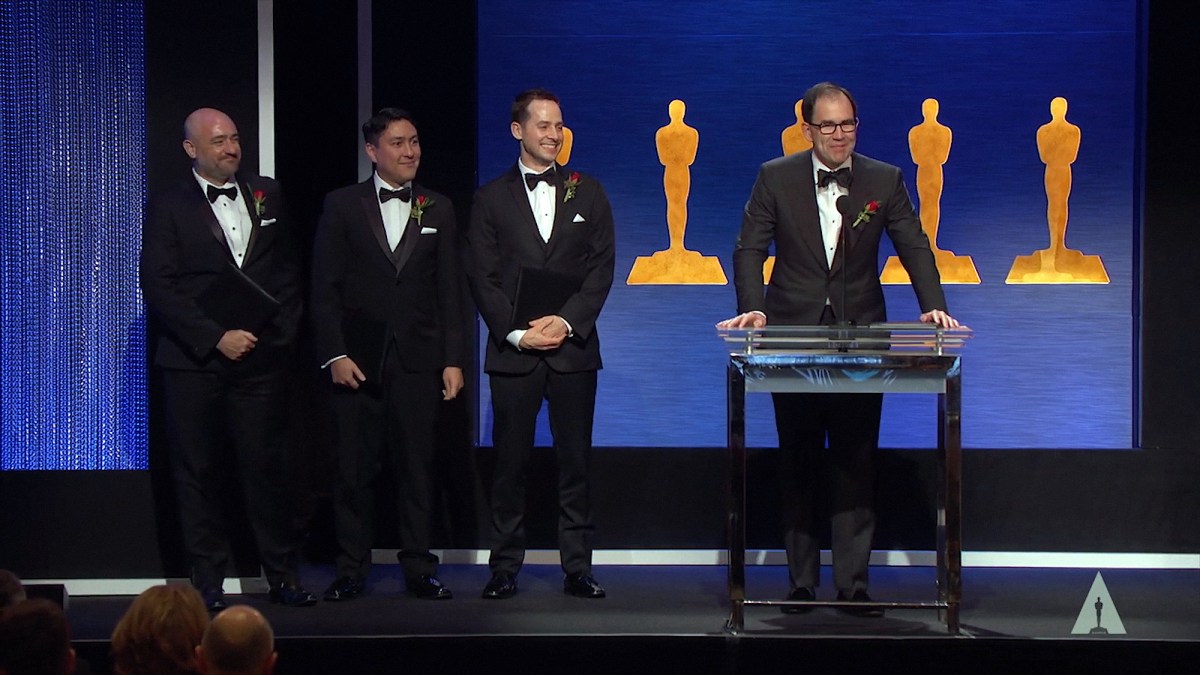
PIX System honored at the Academy of Motion Picture Arts and Sciences’ Scientific and Technical Awards

February 9, 2019
Oscars.org

Technical Achievement Award (Academy Certificate): to Eric Dachs, Erik Bielefeldt, Craig Wood and Paul McReynolds for the design and development of the PIX System’s novel security mechanism for distributing media.

PIX System’s robust approach to secure media access has enabled wide adoption of their remotely collaborative dailies-review system by the motion picture industry.

Scientific & Technical Awards 2018 | 2019

February 10, 2019
Oscars (YouTube)

PIX founder and CEO Eric Dachs thanked Ren Klyce, Ceán Chaffin and David Fincher (present at the ceremony): “your friendship, patience, and talents have had an enduring and measurable impact on our work, and more importantly, in filmmaking.”
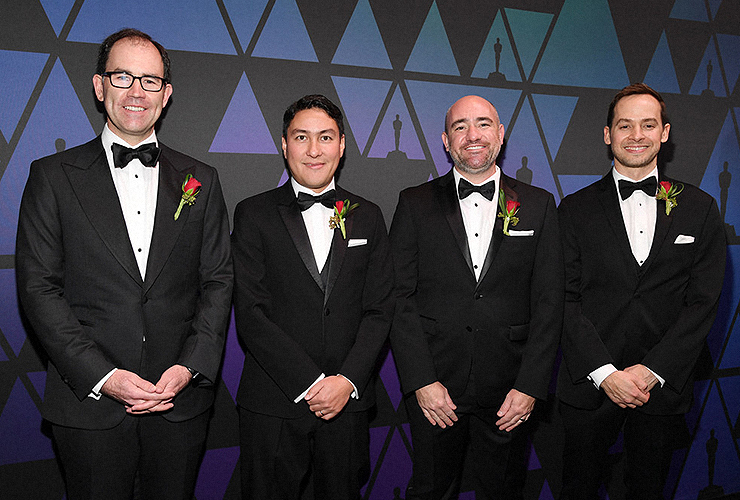
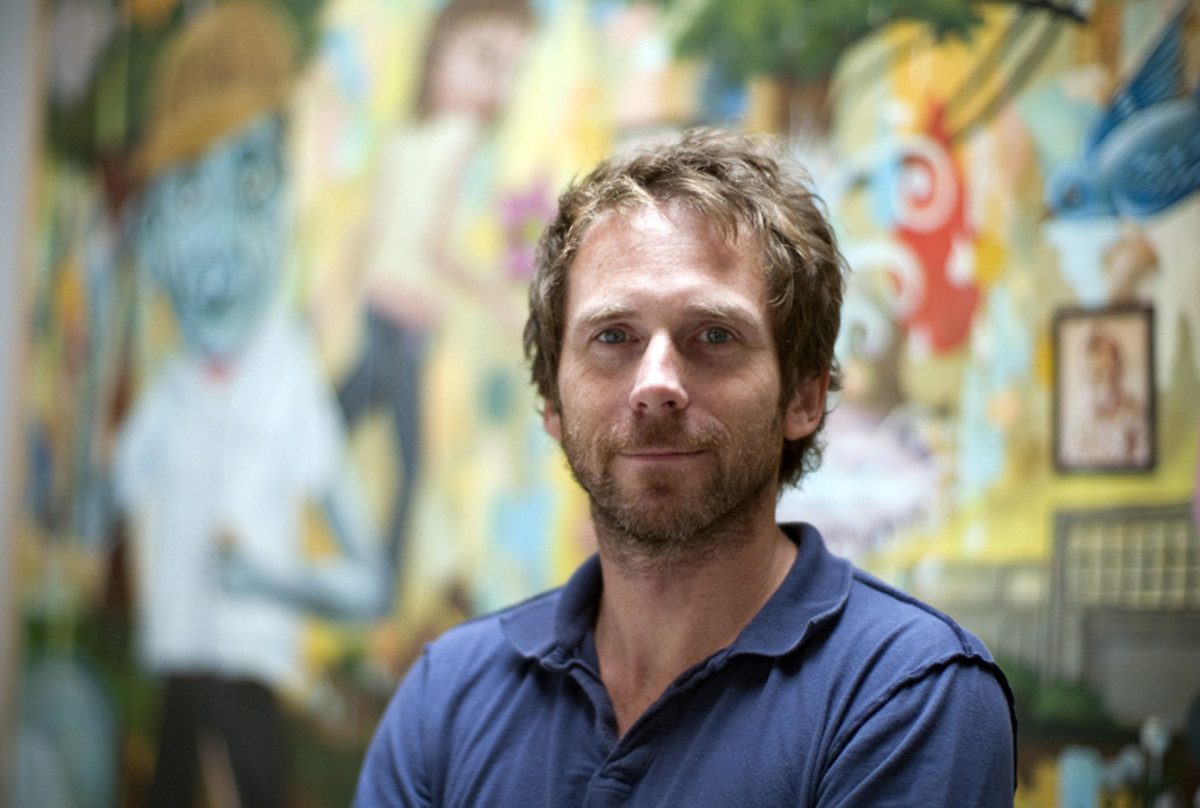
Eric Dachs, Erik Bielefeldt, Craig Wood, and Paul McReynolds
(Amy Sussman/Getty Images)

SciTech Awards

Carolyn Giardina
February 9, 2019
The Hollywood Reporter

Evening of Excellence: 2019 Scientific and Technical Achievement Awards

Jay Holben
February 21, 2019
The American Society of Cinematographers
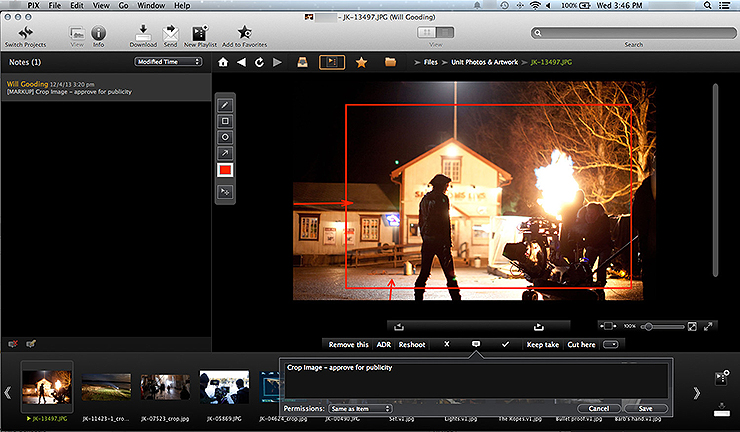
How David Fincher and ‘Panic Room’ Helped Launch a SciTech Award Recipient

Pix was initially developed to help ‘Panic Room‘s’ sound team.

Carolyn Giardina
February 9, 2019
The Hollywood Reporter

The familiar Pix app is one of the early tools with security features developed to improved communication and collaboration during production, which was initially conceived as filmmaking became more distributed geographically. After being used on more than 5,000 film and TV projects including Black Panther, Bohemian Rhapsody and Mindhunter, its developers will be among those honored Saturday at the Academy of Motion Picture Arts and Sciences’ annual Scientific and Technical Awards.

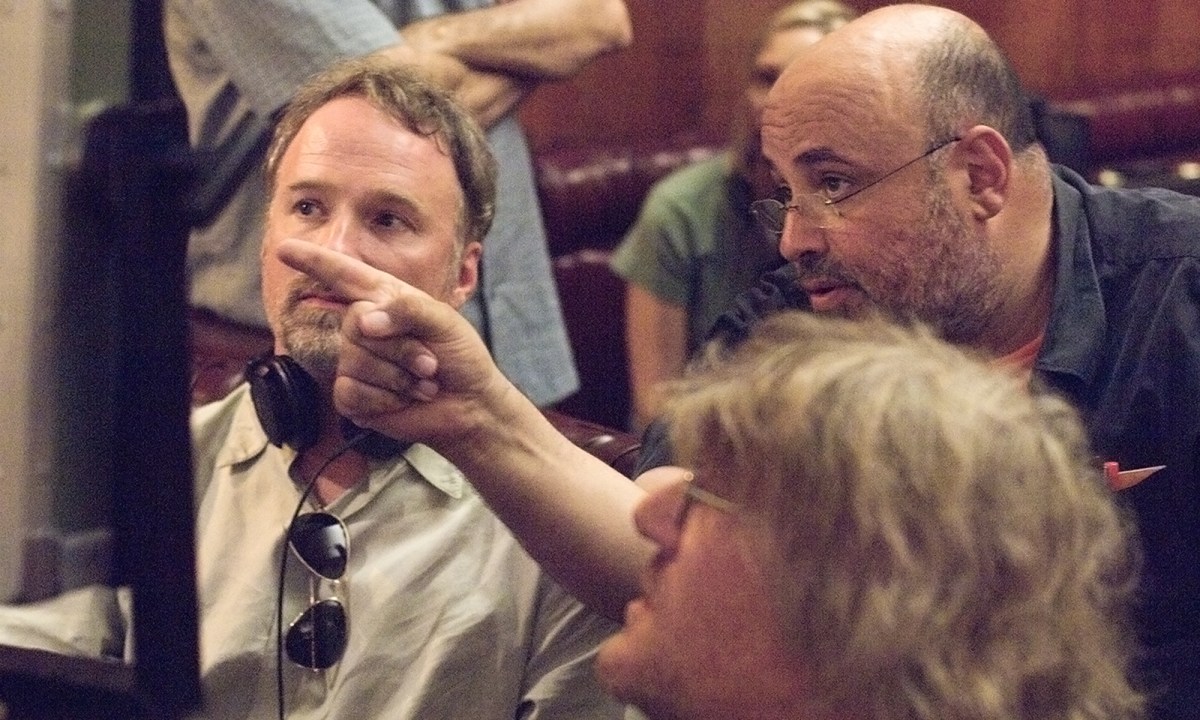
Pix founder/CEO Eric Dachs — who with director of R&D Erik Bielefeldt, technical director Craig Wood and Paul McReynolds will receive Technical Achievement Awards — started his career in sound and it was while working as an assistant to seven-time Oscar nominated sound designer Ren Klyce on David Fincher’s 2002 film Panic Room that the idea for Pix was born. “I got a look at how digital technology was changing motion picture postproduction, but I also saw the inefficiency from faxing notes when the work was distributed geographically,” Dachs tells The Hollywood Reporter. “I started writing a really simple prototype application for capturing David’s spotting notes and getting them distributed to the crew via a simple web application. So that [composer Howard Shore] could get the music notes in real time, and the different departments within sound were no longer having to wait for faxes.”

One afternoon during the final mix, Klyce showed Fincher the app and the technically-savvy director was impressed. In fact, he continues to use it today.

Read the full profile

Dachs ’98 Receives Sci-Tech Oscar for PIX System

Cynthia Rockwell
March 4, 2019
Wesleyan University

The Academy of Motion Picture Arts and Sciences (AMPAS) honored Eric Dachs ’98, the founder and CEO of PIX System, with a Technical Achievement Award at its Oscars 2019 Scientific and Technical Awards Presentation on Feb. 9, 2019.

Since its creation in 2003, PIX System has become the entertainment industry gold standard in providing secure communication and content management capabilities. Dachs, a theater major while at Wesleyan, designed and coded the initial software early in his career when he was an assistant to sound designer Ren Klyce for Panic Room. It was then that he saw the need for an easy, safe digital platform to share revisions and collaborate across locations.

Read the full profile

PIX, the only addiction I have left.”
David Fincher

PIX System

‘Mindhunter’: The David Fincher Look is All About Power and Control

Merrick Morton / Netflix

Fincher was very particular about conveying control and dominance through lighting and production design in his Netflix FBI crime drama.

Bill Desowitz
June 18, 2018
IndieWire

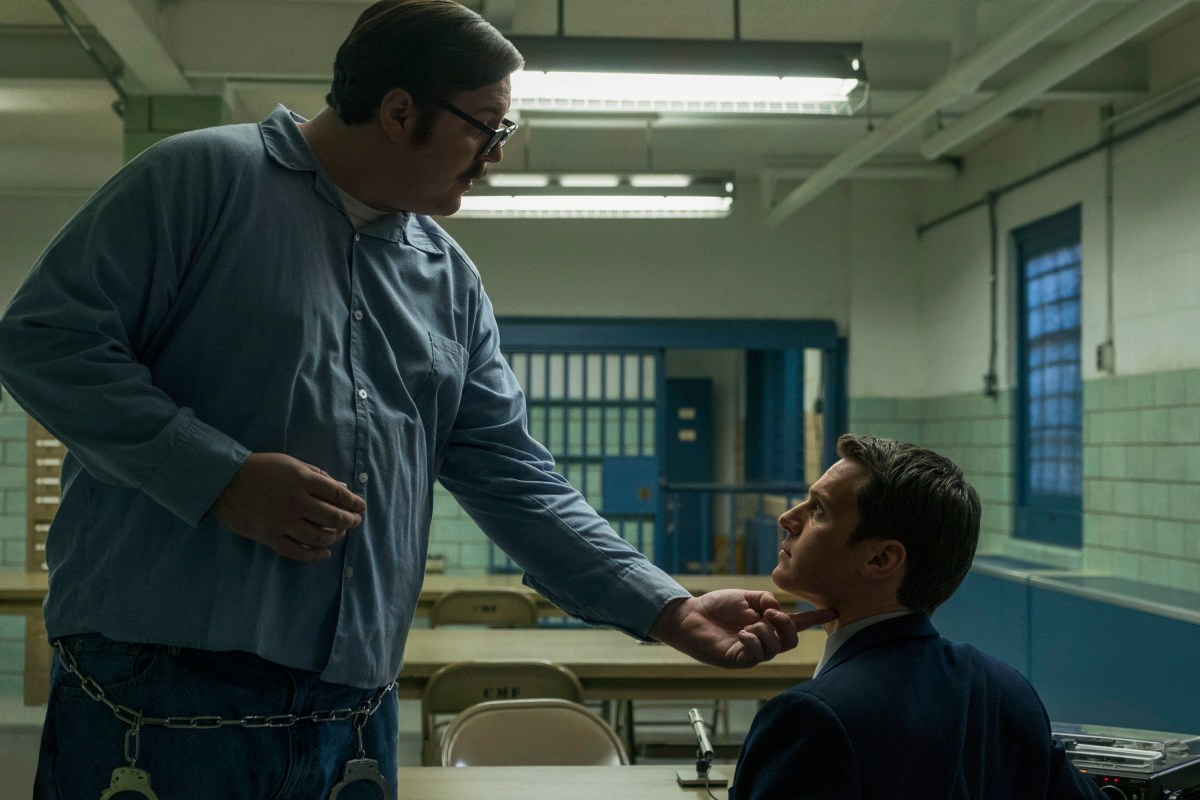
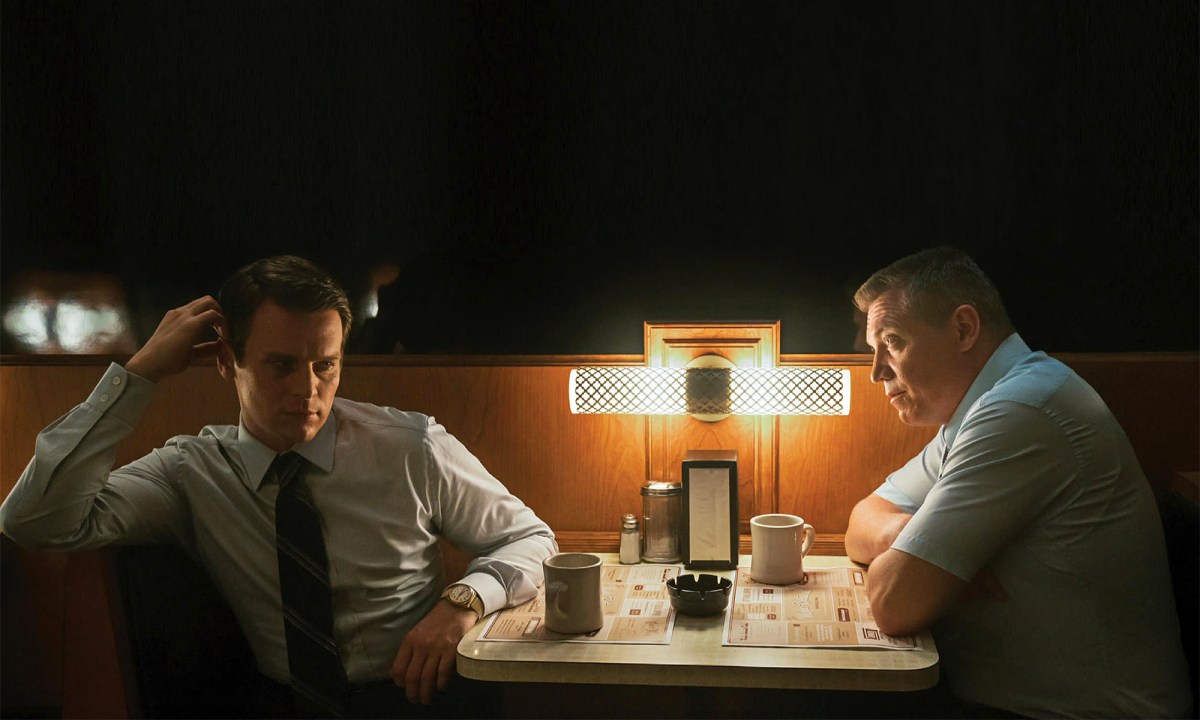
David Fincher brilliantly pushes his cinematic formalism in “Mindhunter,” Netflix’s 10-episode crime drama that explores the FBI’s fledgling Behavioral Science Unit in Quantico, Virginia, in the late ’70s. But, for the dialogue-heavy creepy interrogations with imprisoned serial killers by agents Holden Ford (Jonathan Groff) and Bill Tench (Holt McCallany), executive producer/co-director Fincher manages to visually convey constant power shifts.

“It’s about control and dominance and also about misogyny,” Fincher said. “People forget that this goes all the way back to Jack the Ripper.”

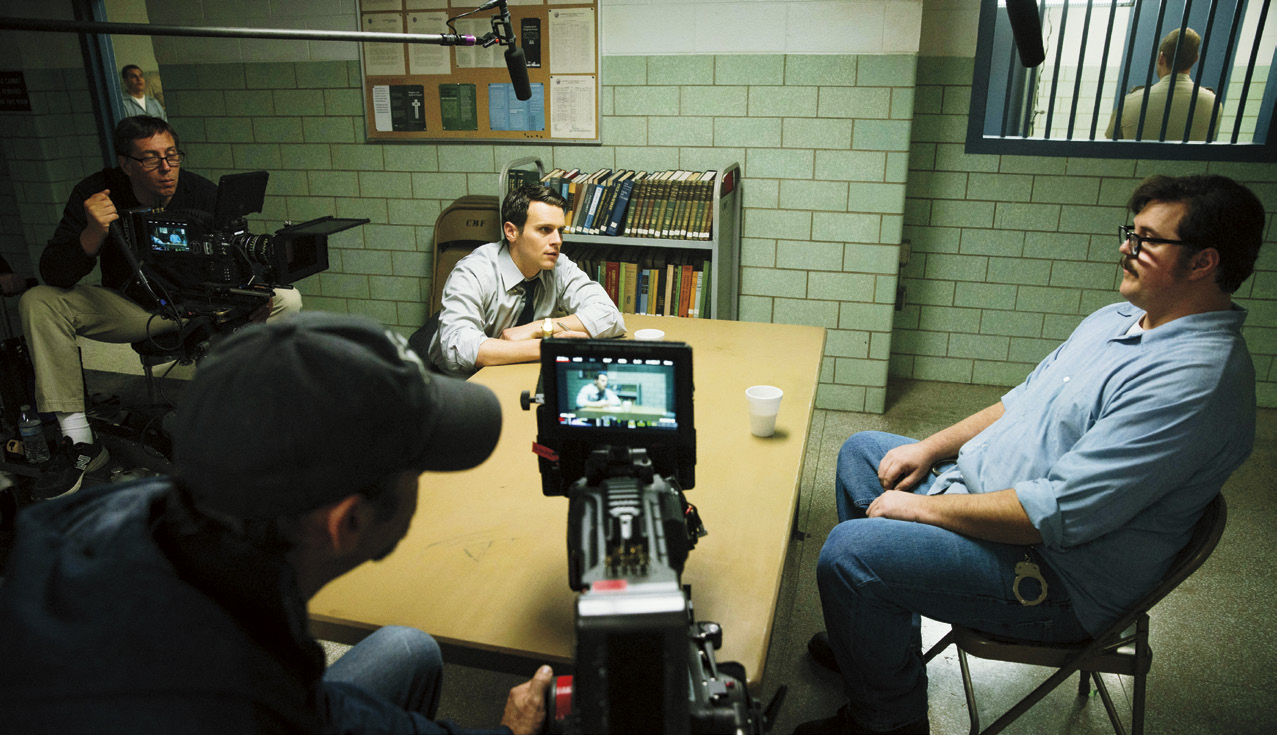
And Fincher’s collaboration with production designer Steve Arnold (“House of Cards”) and gaffer-turned cinematographer Erik Messerschmidt (“Mad Men”) was crucial to the authentic ’70s look and dynamic blocking of the interrogation scenes, particularly those involving Ed Kemper (Cameron Britton), who captivates and mentors Holden.

Read the full profile

Actors on Actors: Jonathan Groff & Maggie Gyllenhaal

Variety (YouTube)
June 8, 2018

Los Angeles Times (YouTube)
June 7, 2018

Before Jonathan Groff Could Nail Mindhunter, He Had to Stop Smiling

ANATOMY OF A CHARACTER

The stage and screen star discusses leading David Fincher’s pitch-black serial-killer series.

K. Austin Collins
June 14, 2018
Vanity Fair

THE CHARACTER: HOLDEN FORD, MINDHUNTER

If you’ve seen classic David Fincher films like Seven, Zodiac, or even The Girl with the Dragon Tattoo, you know the infamously exacting director has a type: the obsessive who tries to solve a crime in the library or the archives, nimbly combing through databases and warehouses full of forgotten evidence. The Fincher obsessive starts their work unblemished—but by the end, it has upended their lives.

In the case of Fincher’s 10-episode Netflix series Mindhunter, that obsessive is Holden Ford, played by Tony-nominated actor Jonathan Groff. Holden starts as a textbook Groff character: neat, bookish, pretty, an F.B.I. choirboy who becomes a teacher and researcher after a hostage situation goes wrong. But soon, alongside behavioral scientist Bill Tench (Holt McCallany) and anthropologist Wendy Carr (Anna Torv), Holden falls down the rabbit hole of a new line of thinking about killers, one that brings him a little too close to the murderers themselves.

Read the full profile

How David Fincher Nailed ‘Mindhunter,’ from Charlize Theron to Jonathan Groff

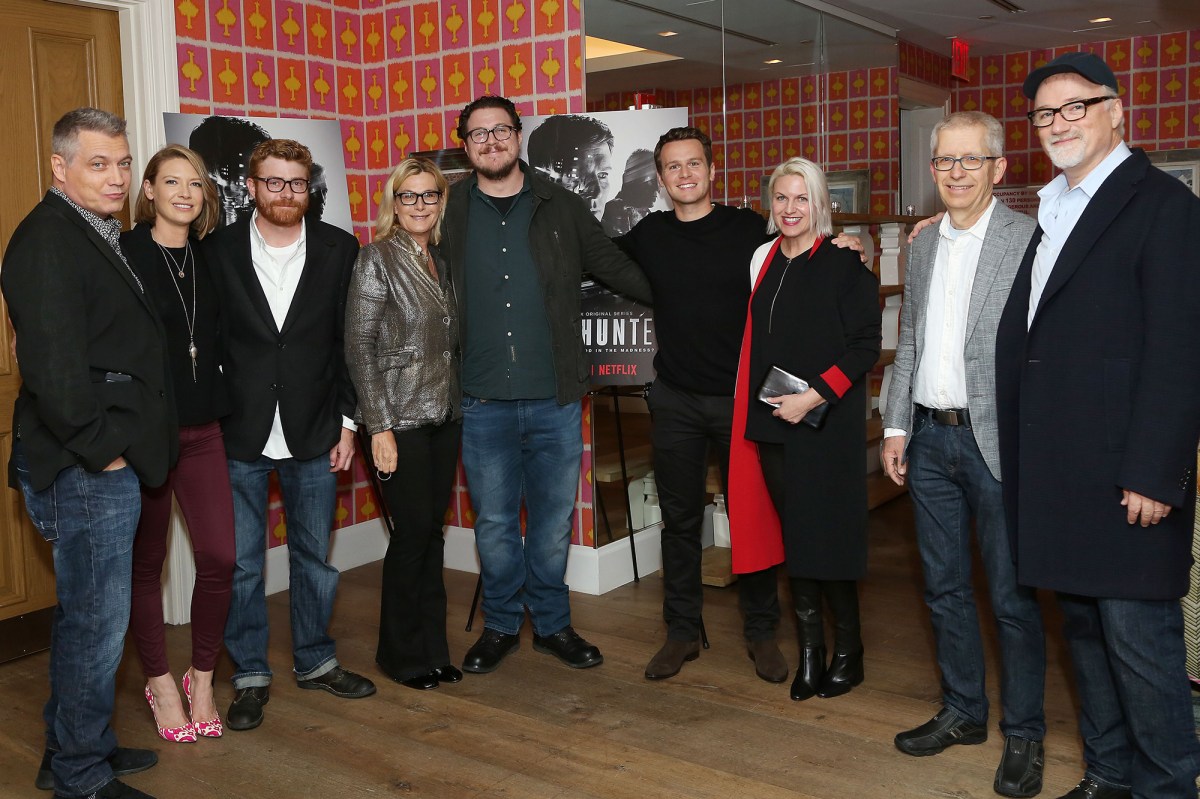
Holt McCallany, Anna Torv, Erik Messerschmidt (Director of Photography), Laray Mayfield (Casting Director), Cameron Britton, Jonathan Groff, Jennifer Starzyk (Costume Designer), Steve Arnold (Production Designer), David Fincher (Director/Executive Producer). (Patrick Lewis/Starpix for Netflix/REX/Shutterstock/IndieWire)

Take some people obsessed with serial killers, and a detail freak like David Fincher, and the alchemy is undeniably compelling.

Anne Thompson
June 4, 2018
IndieWire, Thompson on Hollywood

There are manifold reasons why Netflix’s chilling series “Mindhunter” breaks the mold, from David Fincher to the bromantic chemistry between boyish FBI agent Holden Ford (“Hamilton” star Jonathan Groff) and gruff, chain-smoking G-man Bill Tench (Fincher veteran Holt McCallany). Here are a few factors that pushed this series to the top of the competitive drama Emmy contenders.

1. Charlize Theron

The series may never have existed if executive producer Charlize Theron hadn’t recognized a fellow serial killer buff in Fincher. When the actress was researching her Oscar-winning role as sociopath Aileen Wuornos in Patty Jenkins’ “Monster,” she read John Douglas’s “Mindhunter,” about the groundbreaking ’70s FBI unit that pioneered research into serial killers.

“This guy had an incredible life,” she said. “What he does is so rare and mind-blowing. I’m fascinated by books on neurology and brain development and why people are sociopaths: They cut off all emotion in order to do horrible things. I bought the rights to his book. I thought about Fincher, who loved ‘Zodiac’ and ‘Seven’ [and thought] ‘He must be obsessed with this stuff too; he must know who John Douglas is.’ People said, ‘You have never produced television.’ I asked David to lunch and he knew about Douglas and was on board: ‘Let’s make it into a series.’ Dream big, motherfuckers!”

Read the full profile

Charlize Theron craves Sushi
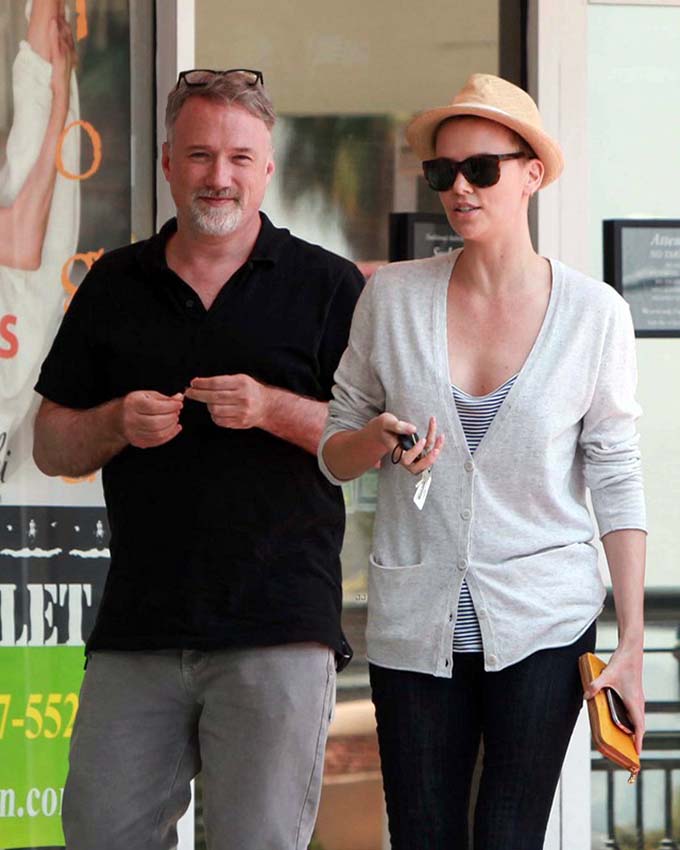
Fincher and Theron, after their meeting in 2012 (Bauer-Griffin, AKM-GSI)

‘Mindhunter’: David Fincher and Editor Kirk Baxter’s Dance of Death

Cameron Britton as serial killer Ed Kemper in Episode 10 (Patrick Harbron / Netflix)

2014. Kirk Baxter
Film Editor Kirk Baxter

The FBI crime drama about early behavioral profiling is a Fincher Master Class in blocking and montage, with an assist from Steven Soderbergh.

Bill Desowitz
May 29, 2018
IndieWire

With Netflix’s “Mindhunter,” executive producer David Fincher delivers a gripping crime series about the early days of FBI behavioral profiling in 1977 without any grisly murders. (Fincher directed the initial two episodes as well as the concluding two.) And for Oscar-winning editor Kirk Baxter (“The Girl with the Dragon Tattoo,” “Social Network”), this dialogue-heavy walk and talk between agents Holden Ford (Jonathan Groff) and Bill Tench (Holt McCallany) was a gift.

“The skill that David has with blocking scenes is what’s most enjoyable,” Baxter said. “With 25 different angles of different set ups, it’s very dense and takes a lot of man-hours in perfecting, but a walk and talk with an A and B camera, all I have to do is pick the best take.”

Read the full profile

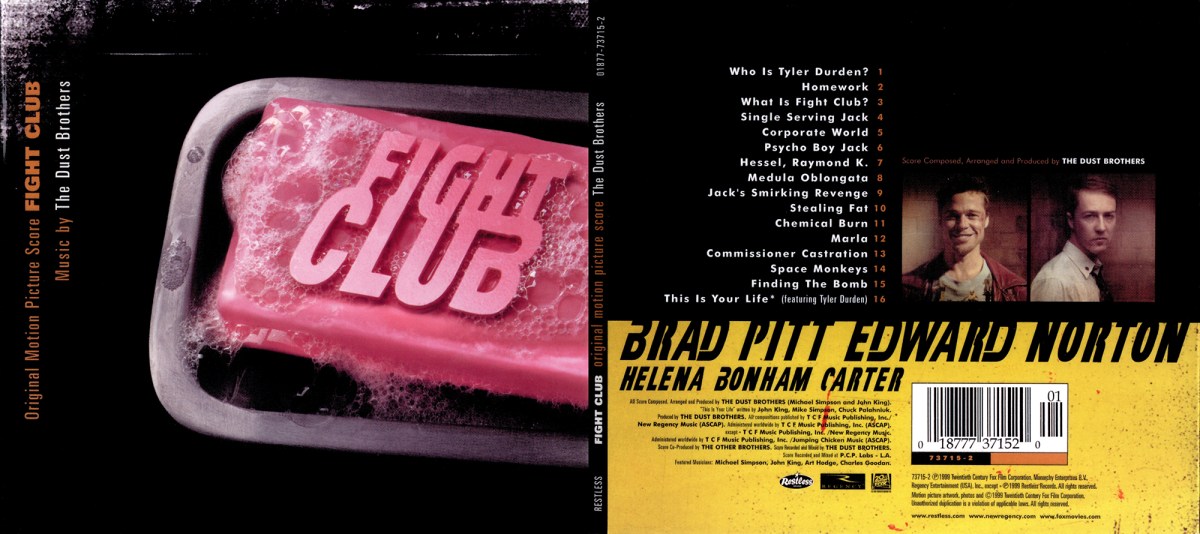
The Dust Brothers’ E.Z. Mike on Fight Club and Performing His Score Live

2005-05. The Dust Brothers
The Dust Brothers: John King (left) and Mike Simpson. By Mr. Bonzai / SOS (2005)

Michael Cooper
May 17, 2018
L.A. Weekly

The first rule of Fight Club is: You do not talk about Fight Club. The second rule of Fight Club is: YOU DO NOT TALK ABOUT FIGHT CLUB! – Tyler Durden

We are going to talk about Fight Club _ the score, that is. Since the film was first released in theaters almost 20 years ago, it has managed to stay afloat in the pop culture atmosphere thanks to a strong cult following. The subject matter and performances were and still are a big part of the movie’s appeal, but the film’s standout score, created by legendary writer-producer duo The Dust Brothers, has a lot to do with it, too. This Saturday night, for the first time ever, both Brothers (who aren’t actually related) will present the score live at the Wiltern.

Read the full profile

The Dust Brothers

Sampling, Remixing & The Boat Studio

Paul Tingen
May 2005
SOS (Sound on Sound)

Time Hunters

David Fincher went looking for the 1970s — and found them in Pittsburgh. but that was just the start for the esteemed producer-director and his team, who recreated the era for Mindhunter, the Netflix series about two pioneering FBI profilers.

Liane Bonin Starr
April 13, 2018
Emmys (Television Academy) / Emmy Magazine

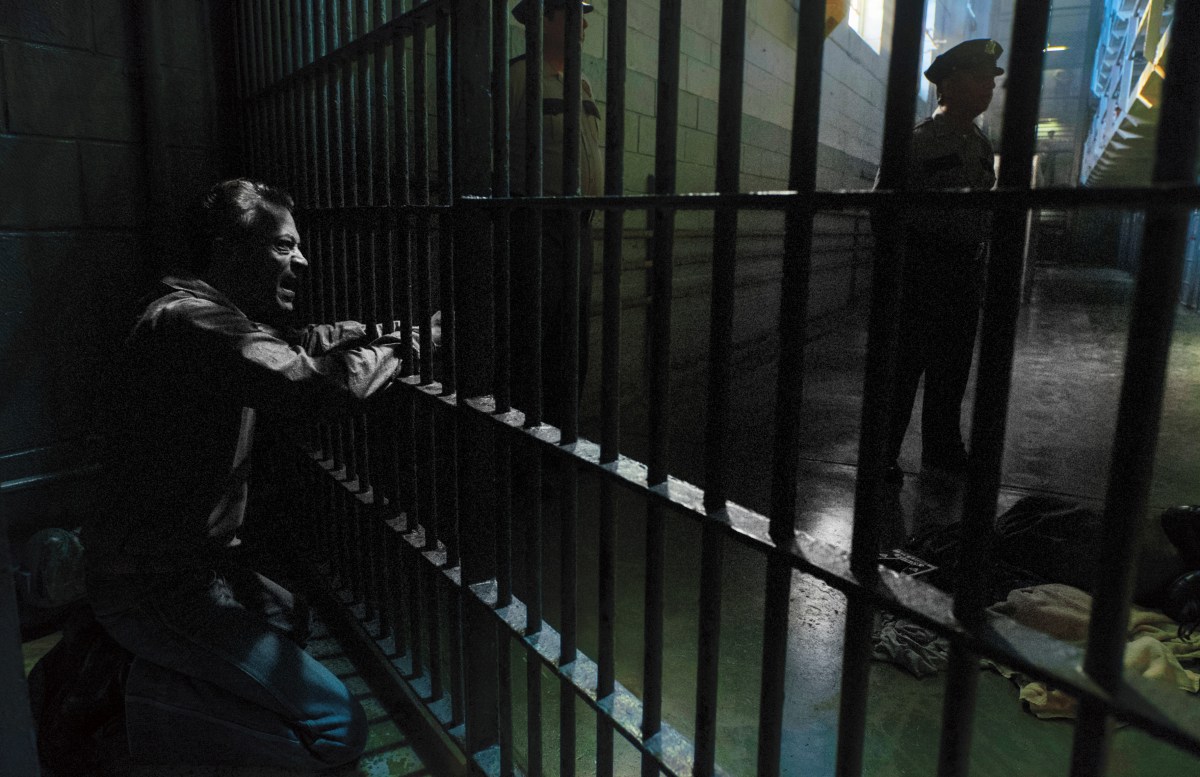
Watching the Netflix series Mindhunter, you may shudder as convicted serial killer Ed Kemper (Cameron Britton) casually chats about his string of brutal murders, or flinch when — spoiler alert! — a bird hits the fan courtesy of mass murderer Richard Speck (Jack Erdie).

What you’re less likely to notice is the precision with which the show’s late-’70s landscape has been created. David Fincher considers that a win.

“It’s really important that it feels like two people having a conversation — and that 40 people aren’t on their iPhones simultaneously just outside of frame,” says Fincher, who is executive-producing the series with Joshua Donen, Charlize Theron and Ceán Chaffin. “The great news is, I lived through the ’70s, so I remember what that looks like.”

Created by Joe Penhall — and based loosely on FBI agent John Douglas‘s book Mindhunter: Inside the FBI’s Elite Serial Crime Unit — the series explores the birth of criminal profiling.

Special agent Holden Ford (Jonathan Groff, playing a fictionalized version of Douglas) and his partner, Bill Tench (Holt McCallany), work alongside psychologist Wendy Carr (Anna Torv) to dig into what makes murderers tick. Shot in Pittsburgh, the show is a window on a time before the term serial killer had been coined, much less become the focus of TV shows and casual conversations.

While that seemingly more innocent time is reflected partly in the show’s relative lack of gore, the decade’s thornier complexities required a critical eye (or, in this case, eyes) to see past the polyester-covered clichés.

“David is the most holistic filmmaker I’ve ever met,” director of photography Erik Messerschmidt says. “The tone of every scene is important, and [so are] how the costumes and lighting and set decoration and everything play a part in creating the finished product.”

Fincher, who directed four of the first season’s 10 episodes, is famously meticulous, but he says the secret to getting it right is finding the right people.

“I don’t think you keep a project in a kind of design and aesthetic wheelhouse by being a dictatorial influence. Just stomping your feet and holding your breath is not going to make stuff work,” he says. “A lot of times, you have to empower people who are the advance troops and the follow-up troops to make decisions that are based on conversations that you have.”

In this case, one of the first decisions — where to shoot — was daunting.

“Our biggest issue,” Fincher says, “was: where do we find 1978?”

Read the full profile

This slideshow requires JavaScript.

Bad Lands

2018-04 ICG Magazine - Mindhunter 05 (Patrick Harbron)

Erik Messerschmidt and Chris Probst, ASC, also have made “smart” use of LED technology, as detailed in our cover story on Mindhunter (page 36). David Fincher, who first started using LED’s for process work on Zodiac, 11 years ago, not only customized a high-resolution RED camera for the show (dubbed the “Xenomorph”), but also devised one of the most ingenious LED-driven plate projection/interactive lighting processes for driving shots TV has ever seen. Messerschmidt’s description of Fincher’s commitment to innovation mirrors those Sundancers bending technology in the service of new ways to tell a story: “For David, the frame is sacred; what we choose to include is intrinsic to what the audience thinks is important. They are one and the same.”

David Geffner, Executive Editor
ICG Magazine

Visualizing the daring and often scary world of David Fincher requires new technologies and processes rarely attempted in series television.

Matt Hurwitz
Photos by Patrick Harbron & Merrick Morton, SMPSP
April 2018
ICG Magazine

In the season 1 finale of Netflix’s MINDHUNTER, a disturbed FBI agent, Holden Ford (Jonathan Groff), bursts wildly from a hospital room, as a handheld camera gives chase. The move begins as shaken as ford is, but, as it lands with the agent, who collapses in the hallway, it’s as if the camera has floated to a butter-smooth stop inches from the floor, the maneuver executed like it was on a perfectly balanced Jib arm, crane, or even Steadicam. But it’s none of those. What can viewers assume from this?

David Fincher has returned to television.

FOR THIS SERIES ABOUT A PAIR OF AGENTS WORKING IN THE FBI’S ELITE BEHAVIORAL SCIENCES UNIT in 1979, and attempting to understand the mind of a serial killer, Fincher used a number of leading-edge technologies – interactive LED lighting, custom built high-resolution cameras, and, as in the shot with Agent Ford, image stabilization/smoothing in postproduction – to keep the viewer visually embedded. Fincher’s aim with MINDHUNTER, which has no graphic violence, is for viewers to “access their own attics. There’s far scarier stuff up there than anything we can fabricate,” the filmmaker insists. “I wanted people to register what’s going on in [characters’] eyes and where the gear changes are taking place. At what point do I [as the viewer] feel like, ‘OK, I’ve got an insight,’ and at what point do they feel like: ‘oh, I’m being sold something. It’s all about the nuance in how the balance of power is changing.”

Fincher’s longtime postproduction supervisor, Peter Mavromates, says he creates an “experience of omniscience,” similar to Kubrick’s A Clockwork Orange, “where you’re in a straitjacket with your eyelids pinned open, and David’s forcing you to watch these horrible things.” In fact, the show’s unique visual process began more than a year before production started in Pittsburgh (on area locations and on stages at 31st Street Studios, a former steel mill), with the development of a unique RED camera system.

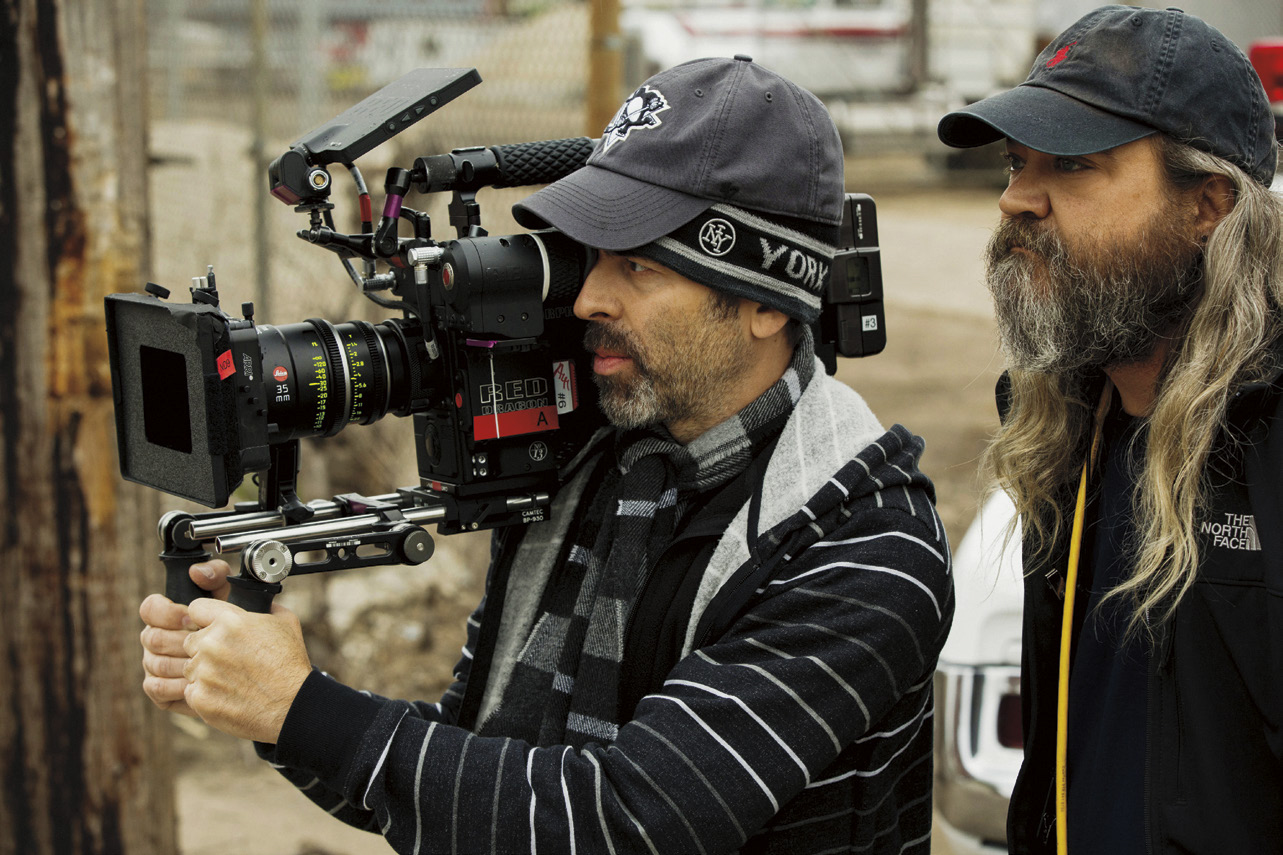
Christopher Probst, ASC – who shot MINDHUNTER’S pilot and second episode – was asked for his input on a RED prototype system, which had been designed by Jarred Land and RED’s Chief Designer Matt Tremblay according to Fincher’s specific needs. “David wanted to take all of the different exterior add-ons that create a jungle of wires, and put them inside the camera body,” Probst explains.

Fincher puts it even more directly: “It just seems insane that we’ve been bequeathed a [camera] layout [dating back to] D.W. Griffith and Charlie Chaplin that looks like some bizarre Medusa. [The camera] should be something that people want to approach, touch, and pick up.”

In fact, the custom system built for Season 1 [Land created a 2.0 version being used in Season 2] had an RTMotion MK3.1 lens-control system, Paralinx Arrow-X wireless video, and Zaxcom wireless audio (with timecode) integrated into the RED body, with the only visible cable being to control the lens. Slating was all but eliminated, with clip-number metadata being shared wirelessly between the camera and the script supervisor, who used Filemaker software to associate takes and clips. An audio scratch track from the mixer was recorded onto the REDCODE RAW R3D files and received wirelessly.

The base camera was one of RED’s DSMC2 systems, the then-new WEAPON DRAGON, with its 6K sensor. The shell design, accommodating the added gear inside, with its angular shape and heat venting fins on top, had a “Xenomorph” appearance (à la Alien), and was dubbed as such by Land and Fincher. “When the camera arrived in Pittsburgh, they had actually engraved “Xenomorph” on the side,” Probst says.

Read the full profile:

Website version of the profile

2018-04 ICG Magazine - Mindhunter 14 (Patrick Harbron)

2018-04 ICG Magazine - Mindhunter 13 (Merrick Morton)

Cinematographers & Cameras: Insights Into “The Crown,” “Strong Island,” “Mindhunter,” Spots

Robert Goldrich
March 26, 2018
Shoot

One DP just won his first career ASC Award—on the strength of his work on The Crown (Netflix).

Another made key contributions to the heartfelt Strong Island (Netflix), which was nominated for this year’s Best Documentary Feature Oscar.

And a third DP has spent a recent stretch focusing on spots after getting a career break from David Fincher on the TV series Mindhunter (Netflix).

Here are insights from DPs Adriano Goldman, ASC, ABC, Alan Jacobsen and Erik Messerschmidt.

[…]

Erik Messerschmidt

Cinematographer Erik Messerschmidt has spent the past year focused on commercials but his career progression is the reverse of what is typical. Instead of spots serving as a springboard to TV series and theatrical features, it was Messerschmidt’s work on the TV series Mindhunter (Netflix) which established him as a DP, leading to spotmaking opportunities.

Messerschmidt’s commercial lensing exploits have included Taco Bell’s “Web of Fries” cinema, web and TV fare directed by Joseph Kosinski of RESET, Buick and other automotive ads from director Kevin Berlandi, and a pharmaceutical spot directed by Mark Pellington of Washington Square Films. Messerschmidt also shot for Pellington the Demi Lovato music video “Tell Me You Love Me.”

Messerschmidt had been a gaffer who worked extensively on commercials that were lensed by such notables as Claudio Miranda, ASC, Tami Reiker, ASC and Jeff Cronenweth, ASC.

On the feature front, Messerschmidt served as a gaffer on the David Fincher-directed, Cronenweth-shot Gone Girl, a project which proved pivotal. “David knew I had a still photography background and I ended up doing promotional still work with him on Gone Girl,” related Messerschmidt. “David took me under this wing and moved me up to shoot his series Mindhunter.” (The alluded to still photography chops date back to when Messerschmidt worked for still shooter Gregory Crewdson.)

Read the full profile

Harris Savides, ASC and director David Fincher plumb the depths of human obsession

Flashback: Zodiac.

David E. Williams
Unit photography by Merrick Morton, SMPSP
April 2007
American Cinematographer

Most people remember the San Francisco Bay Area of the late 1960s for “flower power” and the Summer of Love. But as the decade came to a close, a grim nightmare unfolded in the counterculture mecca. On the night of December 20, 1968, two teens in the San Francisco-adjacent town of Benicia were brutally slain by a lone gunman. At midnight on July 4, 1969, another young couple was attacked in nearby Vallejo. On July 31, cryptic letters arrived at three Bay Area newspapers, including the San Francisco Chronicle; each contained part of a complex cipher. The writer warned that unless his coded messages were printed on the front page of each publication, “I will go on a kill rampage.” A followup letter soon arrived at the newspaper. Opening with the sentence “This is the Zodiac speaking,” the missive detailed the particulars of both crimes. The killer had given himself a name and stated his purpose: to taunt and terrify. The three-part cipher was soon solved, revealing a hate-filled manifesto. In all, he would communicate with such letters and codes on more than 20 occasions.

One front-line observer to the unfolding story was Chronicle editorial cartoonist Robert Graysmith, who began investigating the case after it became clear that harried law-enforcement officials — hampered by jurisdictional regulations, misleading evidence, and the emergence of more than 2,500 suspects — were powerless to unmask the killer. In 1986, Graysmith published his true-crime book Zodiac, which connected disparate clues for the first time and presented theories on the killer’s identity. This book formed the basis of the recently released film, photographed by Harris Savides, ASC for director David Fincher.

In the film, Graysmith (Jake Gyllenhaal), SFPD inspectors Dave Toschi and Bill Armstrong (Mark Ruffalo and Anthony Edwards, respectively), and Chronicle reporter Paul Avery (Robert Downey Jr.) are sucked into the Zodiac’s vortex. All four try to manage their growing obsession with the case, but soon find their lives inextricably intertwined with that of a madman. The case remains unsolved to this day.

Read the full article

Zodiac