Starting her career producing commercials Lisa Beroud transitioned to James Cameron‘s famous VFX house Digital Domain, where she worked on titles including TRON: Legacy, Oblivion, Her, 47 Ronin, and a multitude of David Fincher projects including Zodiac, The Curious Case of Benjamin Button, The Girl with the Dragon Tattoo, and Gone Girl. Since leaving DD, she has been a VFX producer of hits such as Black Panther, Terminator: Dark Fate, and Sonic the Hedgehog 2.
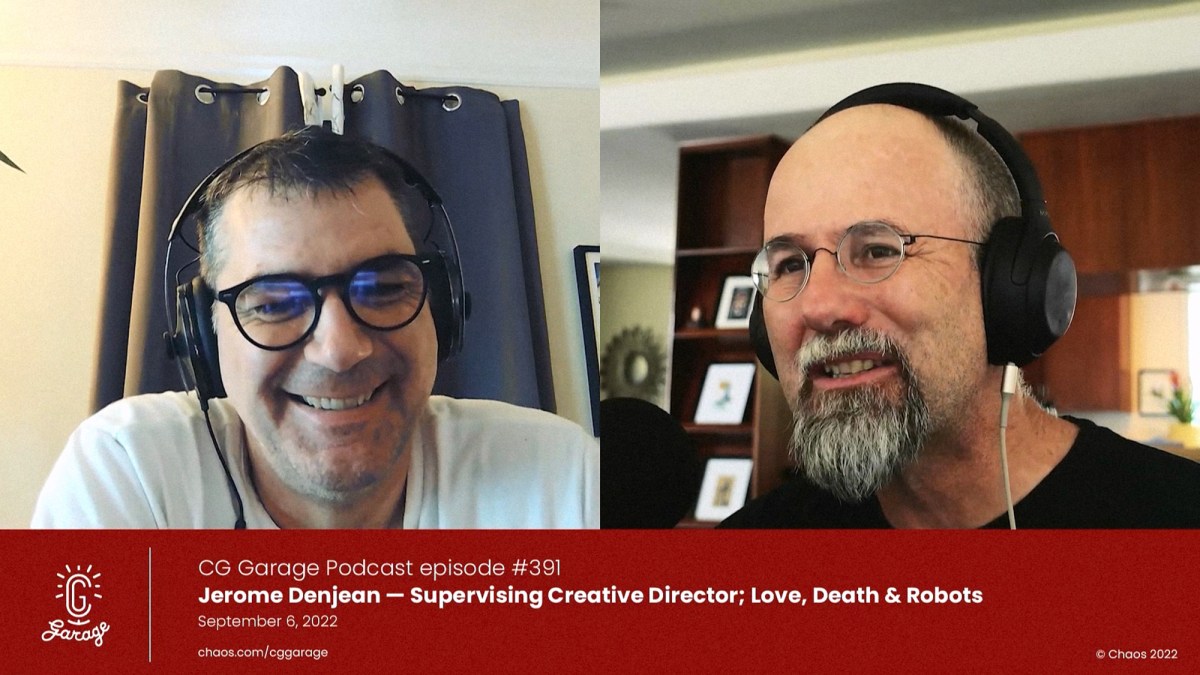
Over the past five years, Love, Death & Robots has completely resculpted the landscape of animation, feeding Netflixviewers bite-size chunks of violence, sex, and gore. Supervising Creative Director Jerome Denjean is a key player behind-the-scenes, giving Love, Death & Robots’ talented directors the freedom to execute their visions (literally!) while ensuring that each episode fits in with the series’ overall vision and tone.
In his second podcast with Chris, Jerome breaks down some of the amazing episodes in series three: David Fincher’s “Bad Travelling,” Alberto Mielgo’s “Jibaro,” Patrick Osborne’s “Three Robots: Exit Strategies,” and Emily Dean and Polygon Pictures’ “The Very Pulse of the Machine.” Jerome also reveals how episodes are researched and produced, and how Japanese animation has influenced their direction.
0:00:00: Intro 0:06:03: Five years of Love, Death & Robots 0:09:12: Jerome’s role and how he works with different directors and international teams 0:14:28: Working with David Fincher on “Bad Travelling“ 0:18:23: Fincher, mocap, virtual production, and gore 0:23:48: Old friends return: “Three Robots: Exit Strategies” 0:30:19: The style of “The Very Pulse of the Machine“ 0:35:36: The influence of anime and working with Polygon 0:40:16: Alberto Mielgo’s “The Witness” and “Jibaro“ 0:52:39: Nurturing new talent 0:55:17: Producing “Love Death & Robots”
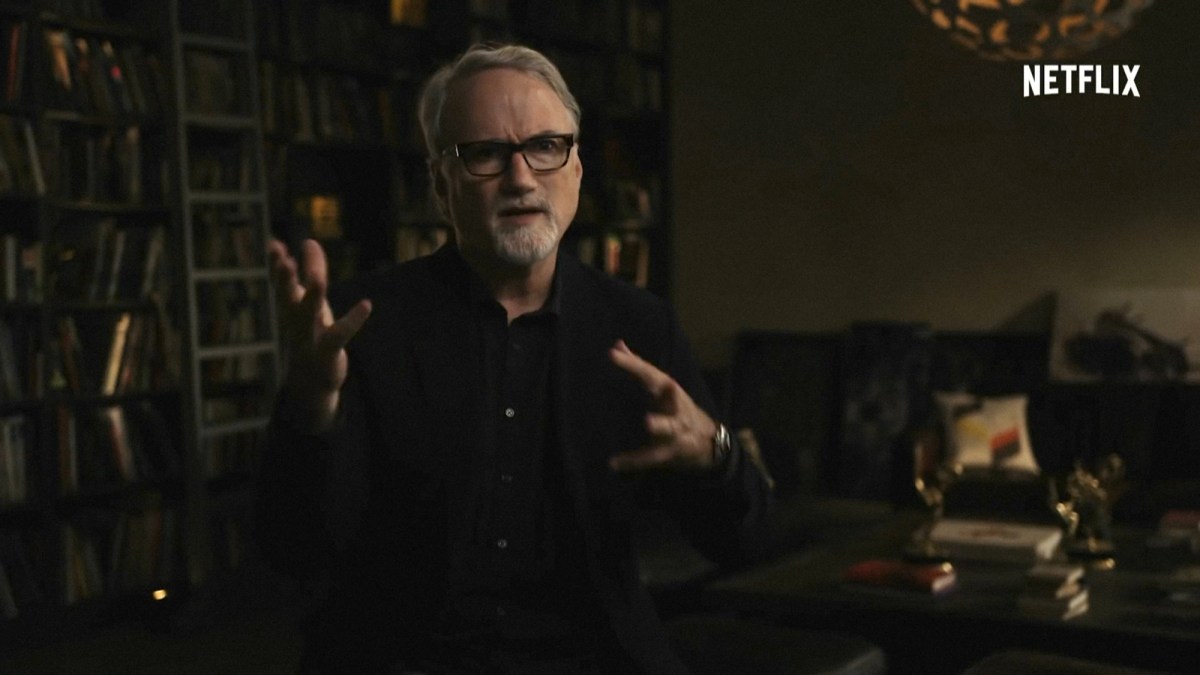
Love Death & Robots’ “Bad Travelling” gave Blur Studio a chance to work alongside legendary director David Fincher. Find out what they learned in the process.
Cinema is often referred to as painting with light — but it could be said that David Fincher’s movies paint with darkness. Beginning with Alien 3, and moving on through Se7en, Fight Club, Zodiac, Mank, and the TV series Mindhunter, the acclaimed director has made use of low-key lighting and anemic palettes to explore the darker recesses of the human mind.
Now, Fincher has taken his characteristic chiaroscuro to “Bad Travelling,” a grisly maritime adventure involving a dishonest, paranoid crew — and a giant crustacean lurking below decks. The Love, Death & Robots episode marks Fincher’s first completely computer-animated short film, as well as his first directorial contribution to the Netflix anthology series he executive produces alongside fellow director Tim Miller.
To create the nautical world of “Bad Travelling,” Fincher teamed up with Blur Studio, the animation and VFX production company founded by Miller. We spoke to Compositing Supervisor Nitant Ashok Karnik and Co-CG Supervisor Jean Baptiste Cambier about working with a living legend of modern cinema, and how V-Ray’s lighting tools helped Fincher embrace the darkness.
It’s Showtime! When Steven Soderbergh joins Rob, the two friends get to ask the questions they’ve never asked one another. In this episode find out about Steven’s new film Kimi, and how he thinks Sex, Lies, and Videotape now feels like a Jane Austen novel.
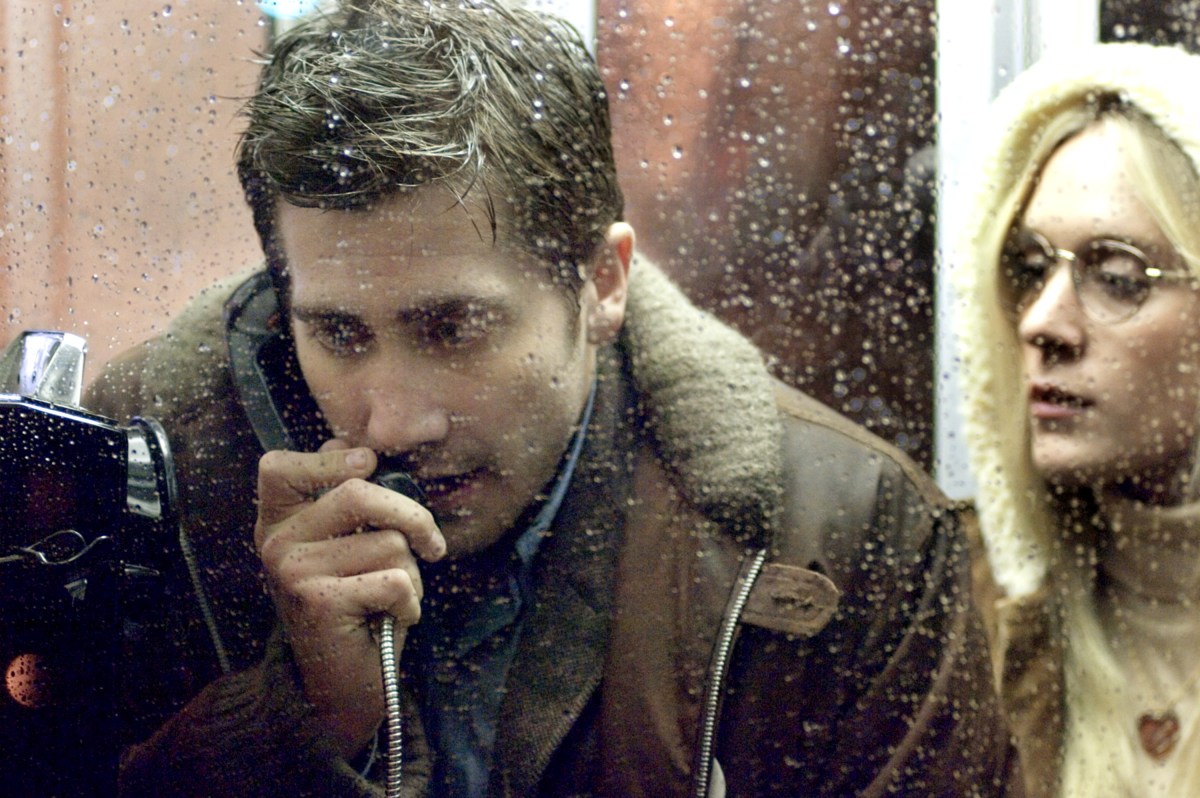
This week marks 15 years since “Zodiac” was released in theaters, and save for the actors looking 15 years younger than they do now, the film still feels like it could be released today. If anything, “Zodiac” feels more like a product of 2022 than 2007. The country is more obsessed with serial killers than ever before, with true crime podcasts and documentaries continuing to draw massive ratings, Zodiac killer memes being used in presidential primaries, and the latest Batman movie taking the form of a serial killer drama.
That makes it a great time to revisit “Zodiac,” as well as a good opportunity to take a deep dive into the making of the film. “Zodiac” attracted as much attention for its painstaking production process as it did for the finished product, as the always detail-oriented David Fincher went above and beyond to make sure everything in his film was historically accurate. Sometimes his methodical process hurt his relationships with the cast, but one thing is for certain: They made a great movie.
Drew McWeeny explained that he almost missed out on David Fincher’s emails and calls after he thought someone was pranking him and was using a very weird, full of movie references email address (and yes, I really need to know what were these references now…):
“He emailed me in the middle of the night. I didn’t know him, we hadn’t spoken before (…) and the email just said “Hi, this is David Fincher. Call me.”
He ignored the email. David Fincher emailed him again the next day, but Drew didn’t want to believe it.:
“And it’s the third day when he actually called me and said ‘Hi, this is David Fincher, what’s your problem?!’ And I went ‘Oh my god! Hi, how are you?”
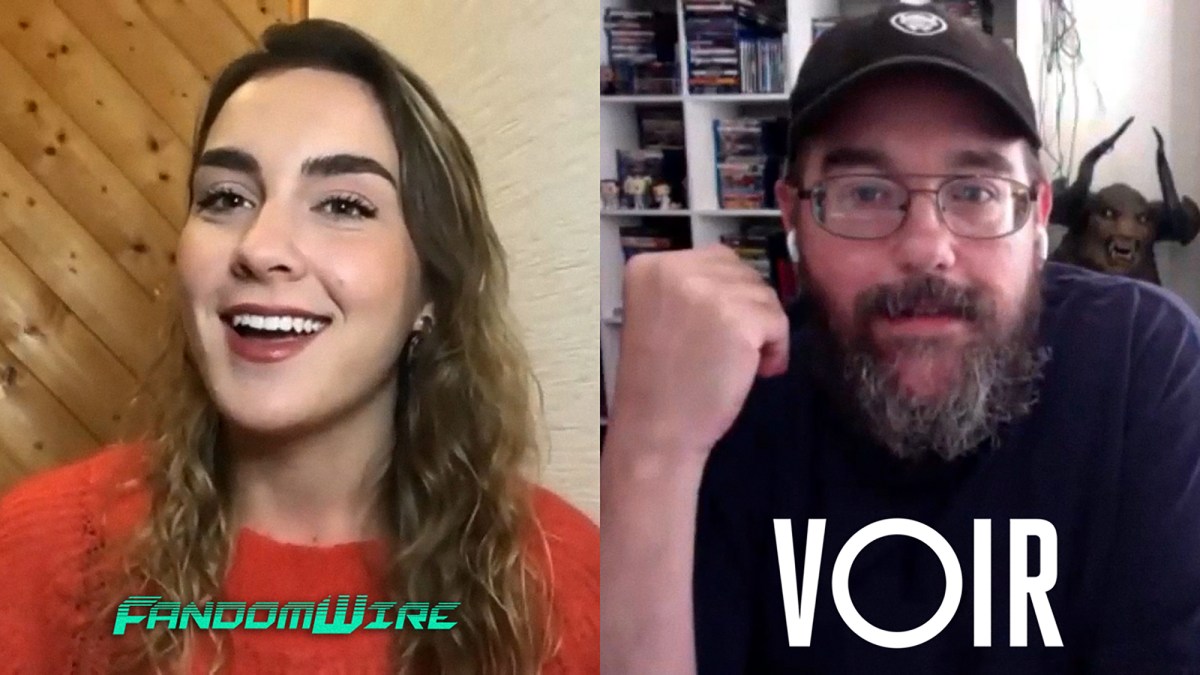
VOIR: 03. But I Don’t Like Him. Written and narrated by Drew McWeeny
Drew McWeeney declared that creating Voir started with David Fincher having “the vaguest notion that he wanted to celebrate movies”.
But when Drew McWeeney decided to make his episode of Voir centered on unlikeable characters, it was because he felt that a conversation needed to be had:
“I think ‘likeability’ has become this weird, weird buzzword, we hang a lot of other issues about movies on it. When people don’t like a movie, they immediately go to ‘I didn’t like the character’. But that’s not necessarily a bad thing. And all I wanted to do is reframe that conversation”. (…) Art is not about endorsement.”
Sasha Stone’s episode of Voir, Summer of the Shark, directed by David Prior, is now streaming on Netflix, along with five other film essays: The Ethics of Revenge, The Duality of Appeal, Film vs. Television, by Tony Zhou and Taylor Ramos, But I Don’t Like Him by Drew McWeeney, and Profane and Profound by Walter Chaw.
David Fincher and David Prior’s anthology essay series “Voir” is only six episodes, but fully half of those came from Taylor Ramos and Tony Zhou. Their skill with the form comes as no surprise to fans of their YouTube channel “Every Frame a Painting,” which almost served as a proof of concept for a show like “Voir” — and that millions of people would be interested in videos exploring just how the grammar of filmmaking impacts its meaning. When done well, video essays combine the thrill of knowing a secret and the joy of learning more about a long-held passion. Zhou and Ramos spoke to IndieWire about how the process of creating that joyful learning shifted and expanded when working on “Voir.”
“YouTube was very constricting because of things like copyright and DMC,” Ramos said. “The license that Netflix and [David Fincher] gave us, it was very, ‘Oh, we can do anything and everything!’ And [that] was, I don’t want to say daunting, but —”
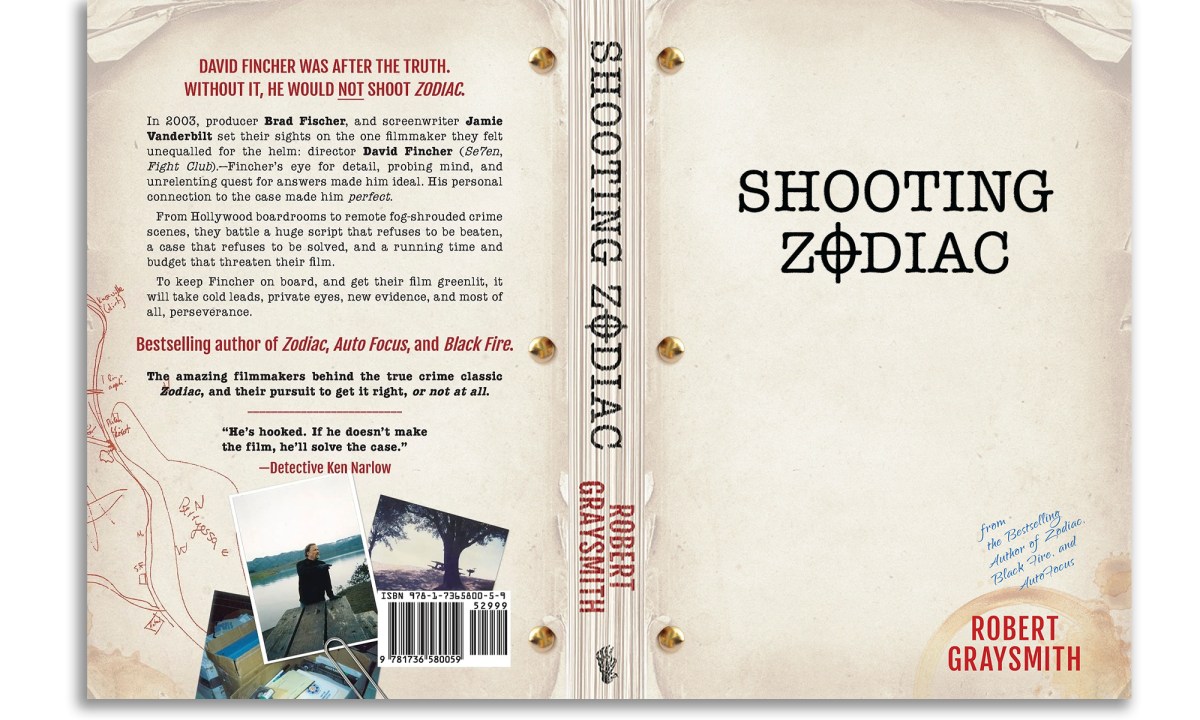
For nearly two decades, Hollywood had been trying to make a movie of Zodiac, and for nearly two decades, it had failed. In 2003, producer Brad Fischer, and screenwriter Jamie Vanderbilt attempted the undoable, and set their sights on the one filmmaker they felt unequalled for the helm: director David Fincher (Se7en, Fight Club). Fincher’s eye for detail, probing mind, and unrelenting quest for answers made him ideal. His personal connection to the case made him perfect.
Author Robert Graysmith, director David Fincher, producer Brad Fischer, and screenwriter James Vanderbilt: “The Untouchables” (Photo: Margot Graysmith)
From Hollywood boardrooms to remote fog-shrouded crime scenes, they battle a huge script that refuses to be beaten, a case that refuses to be solved, and a running time and budget that threaten their film. Follow as they track down missing witnesses, gather the original investigators, visit the original crime scenes, discover boxes of Zodiac case files from an attic, unearth new clues, a videotape of the prime suspect’s police interrogation, and a surviving victim who doesn’t want to be found. To keep Fincher on board, and get their film greenlit, it will take cold leads, private eyes, new evidence, and most of all, perseverance.
About The Author
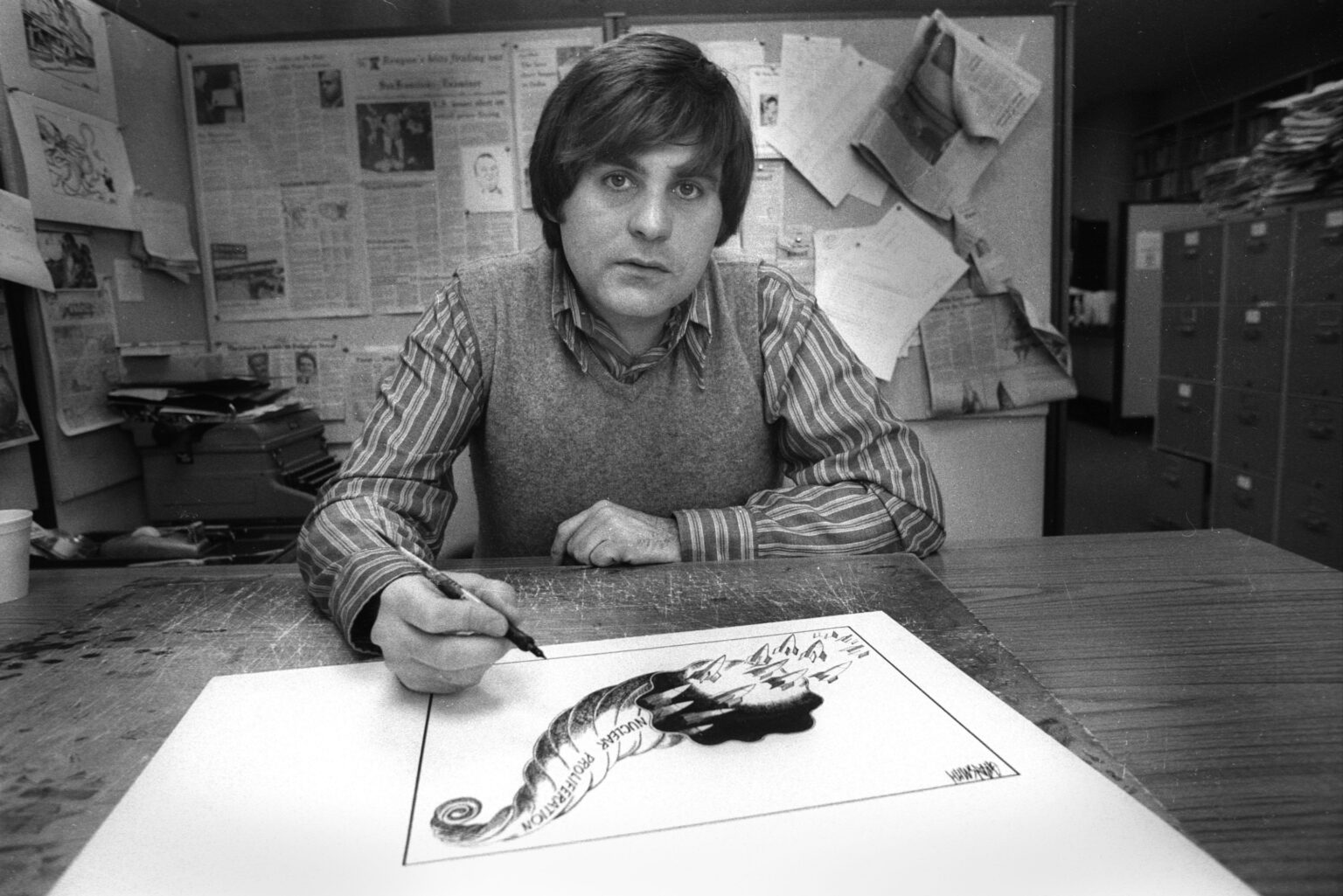
Robert Graysmith in 2012. Photo: Russell Yip / The Chronicle
Robert Graysmith (Facebook) is an author and illustrator. He was the political cartoonist for the San Francisco Chronicle when the letters and cryptograms from the infamous Zodiac killer began arriving to the paper. He was present when they were opened in the morning editorial meetings, and has been investigating & writing ever since. He lives in San Francisco where he continues to write and illustrate. He is best known for his books “Zodiac” and “Zodiac Unmasked”.
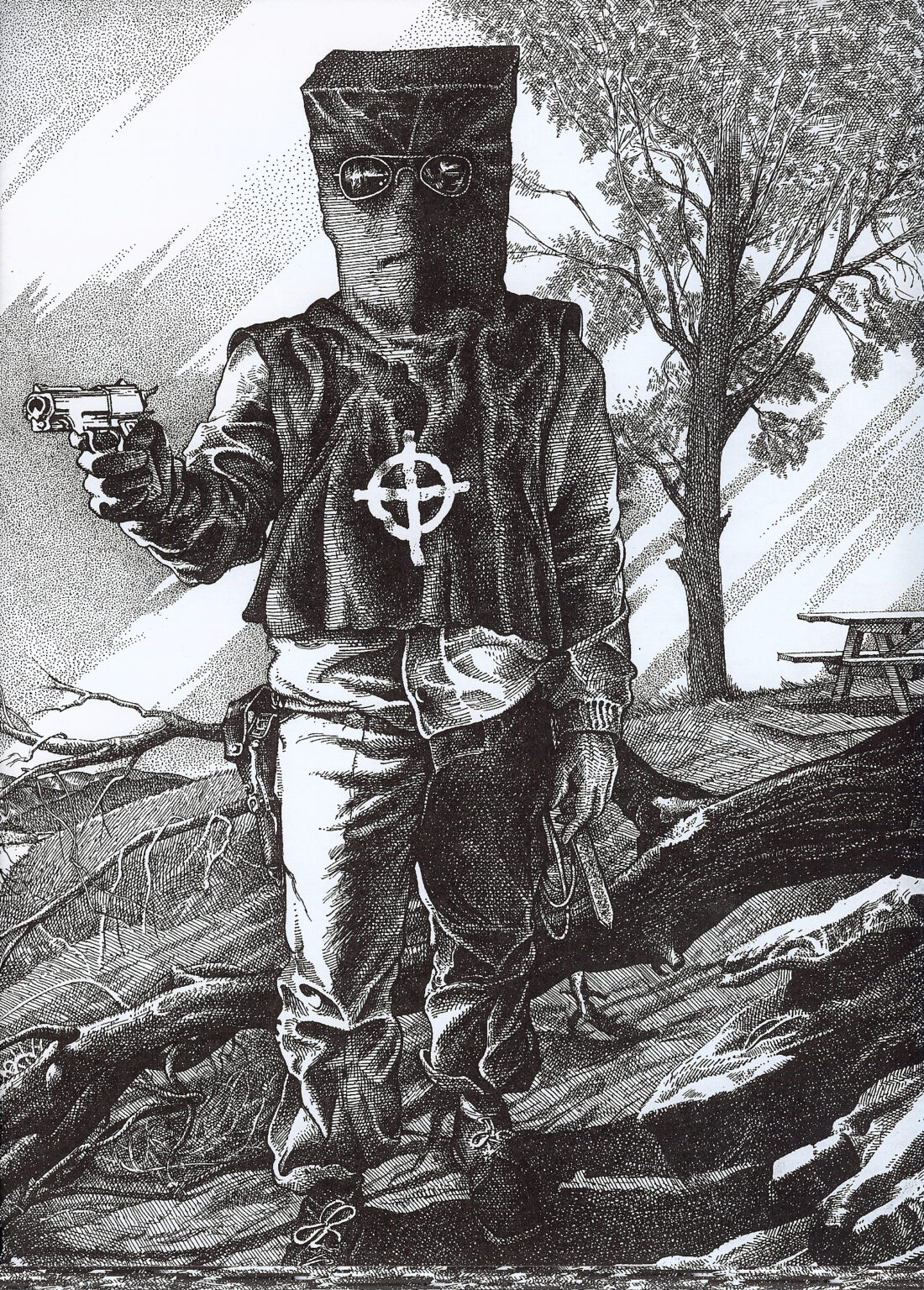
“Zodiac in Costume at Lake Berryessa,” by former Chronicle cartoonist Robert Graysmith. Surviving victim Bryan Hartnell personally described the costume in detail to Graysmith, after his, and Cecilia Shepherd’s, encounter with the Zodiac on Sept. 27, 1969. Photo: Robert Graysmith
Robert Graysmith, political cartoonist for The San Francisco Chronicle, in 1977. Photo: Gary Fong / The Chronicle
BOOKS
Robert Graysmith wrote the definitive Zodiac Killer book. He breaks decade-long silence to tell us about his upcoming projects
For a fairly famous guy, author Robert Graysmith doesn’t get out much. He hasn’t been heard from in public for about a decade, and he rarely leaves his San Francisco home.
The 78-year-old Graysmith has been crafting manuscripts at such an astonishing pace, printing them out as he goes along, that they now stand in a 5-foot-high stack that breaks down into what he says will be 34 books, ranging from children’s tales and historical explorations to true crime and fictional legends. Most just need a few final touches and editing, he said.
These days, Graysmith is working with a new publisher he knows well: his 50-year-old son, Aaron Smith.
The first in this voluminous new string landed on online sites like Amazon at the end of August, the 383-page “Shooting Zodiac,” which documents the planning that went into making the movie “Zodiac.”
“It’s much more fun working with Aaron on these things, because he can put them out quickly,” Graysmith said. “I figured out you’re going to wait about three years to get a book done, and then you hand them the book, and they’re going to spend a lot of time and then they won’t do anything for another year or so. With Aaron, we can get the book edited and out there in a few months.”
Graysmith’s son — who uses the last name his dad used before he merged Gray and Smith — said he wasn’t really surprised when he realized how many pages his dad had in the hopper.
“Writing is pretty much all he does,” Smith said by phone from his home in Southern California, “and the illustrations.”
Graysmith said he started working on his engagingly told “Shooting Zodiac” before the movie came out, as he was being bowled over by the dedication director David Fincher, producer Brad Fischer and screenwriter Jamie Vanderbilt put into the project. They combed over the same material Graysmith had in his books “Zodiac” and “Zodiac Unmasked” to rebuild and advance his narrative around the only suspect ever named by police, Arthur Leigh Allen of Vallejo.
Watching them work was “a marvelous adventure,” Graysmith said.
The new book is as much about greenlighting the movie and hiring actors like Jake Gyllenhaal, who played Graysmith, as it is about how the three filmmakers did their research. It’s also probably the last thing Graysmith will write about the Zodiac, he and his son said.







 The Fincher Analyst