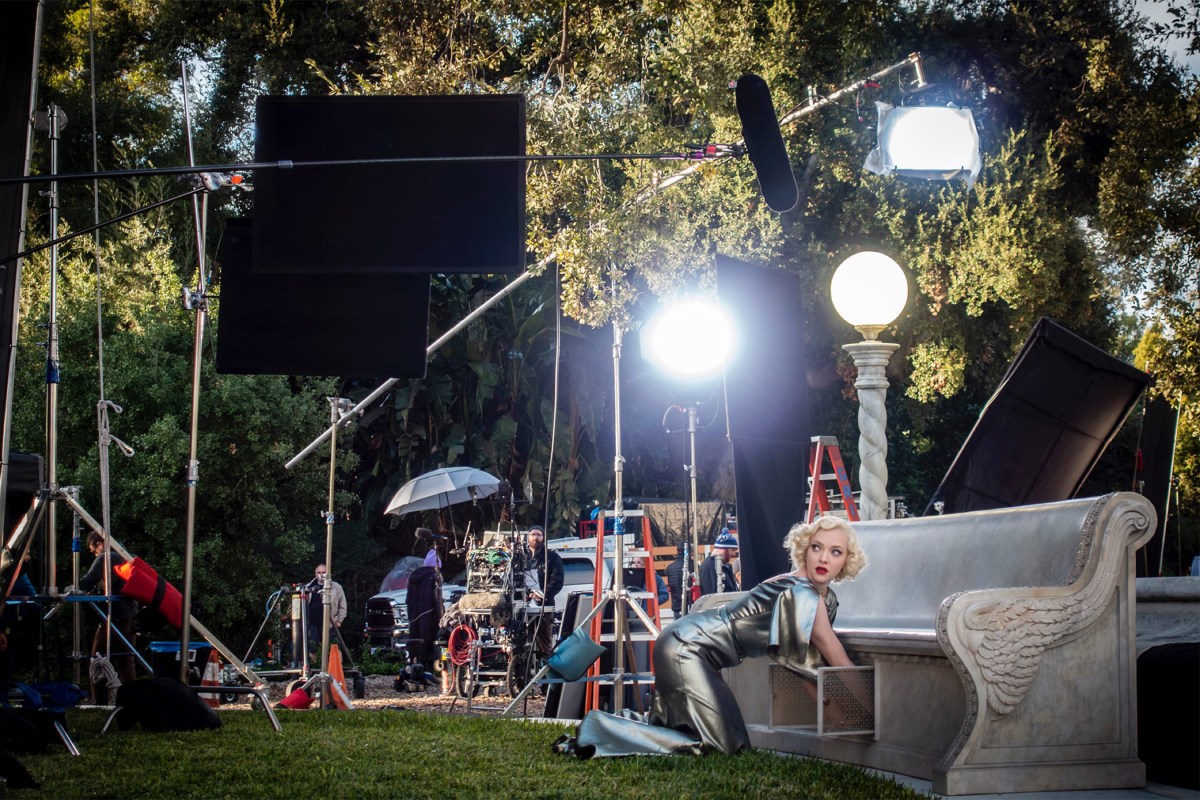
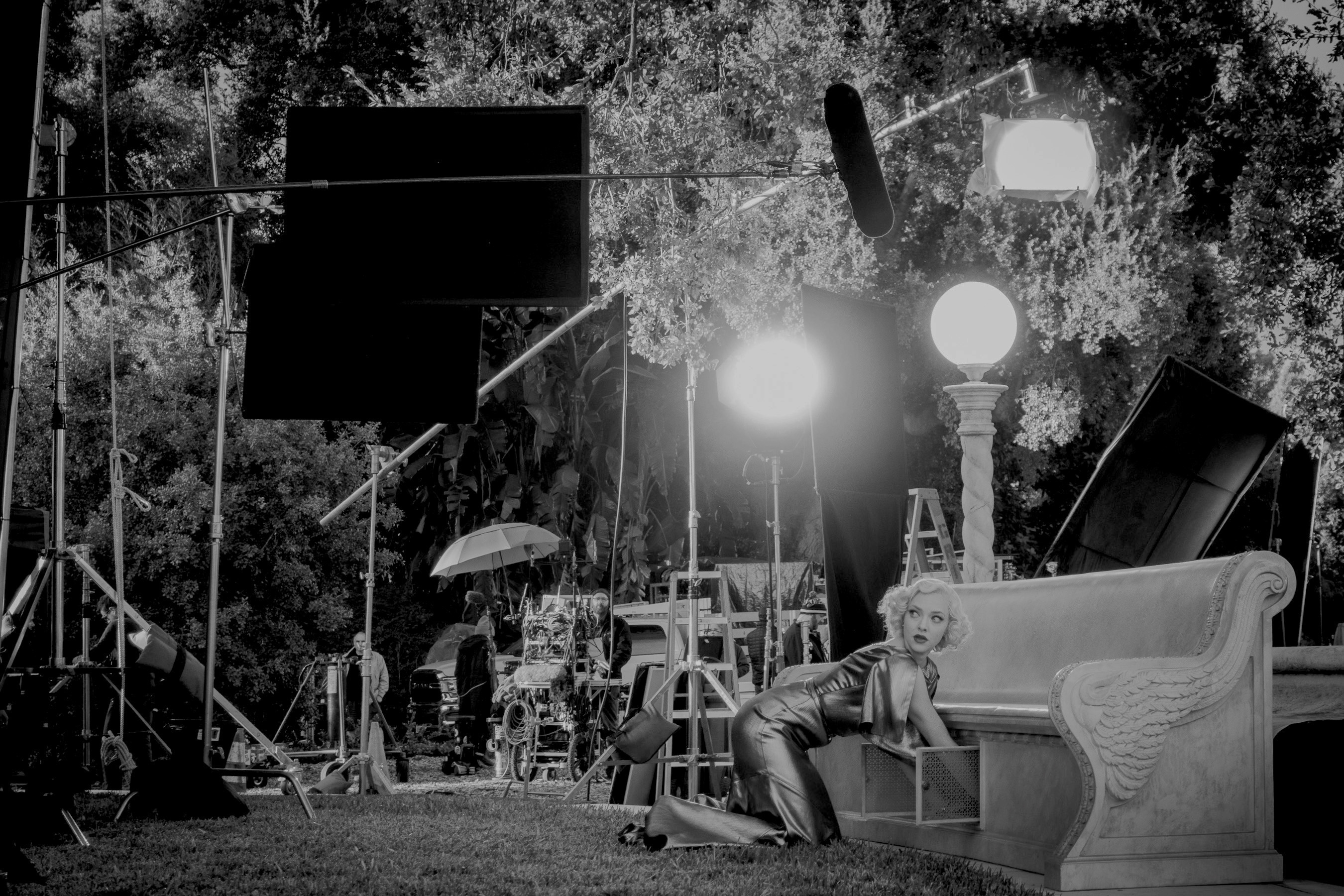
Precision Cutting: The Editing of Mank


Netflix Film Club (YouTube)
February 3, 2021

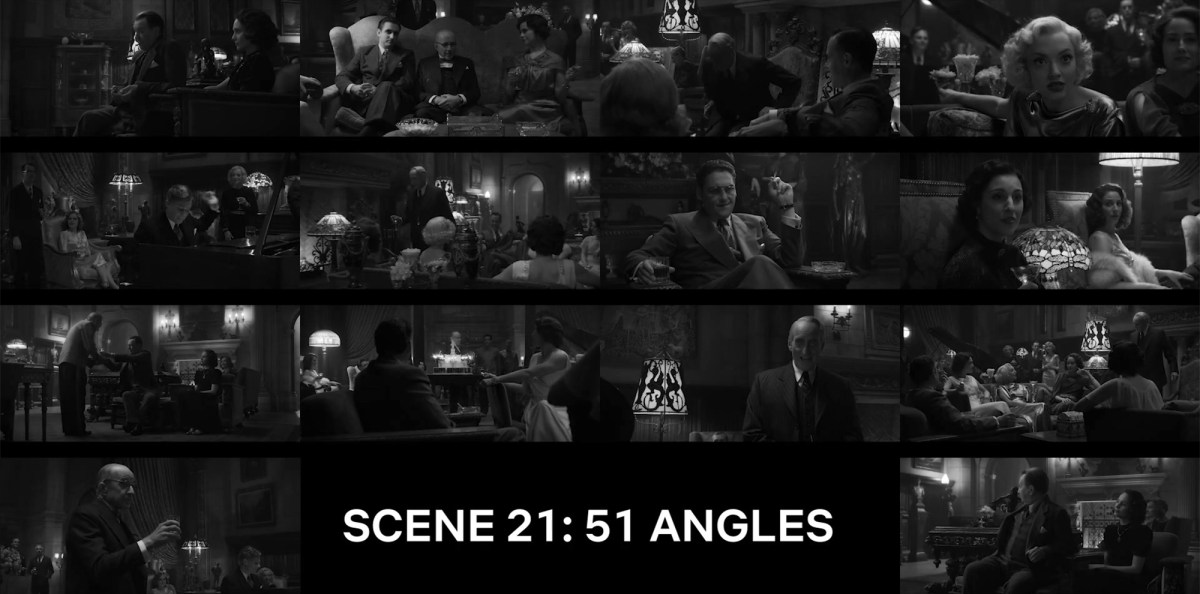
Two-time Oscar®-winning film editor Kirk Baxter details the assemblage of David Fincher‘s acclaimed new film Mank. He digs in on navigating the director’s wealth of coverage, building transitions, piecing together Mank’s climactic tirade at Hearst Castle and much, much more.

That Classic Sound. The Sound Design of Mank

Netflix Film Club (YouTube)
February 1, 2021

David Fincher‘s longtime sound designer Ren Klyce discusses the soundscape of Mank, conceived as a companion piece of sorts to Citizen Kane (no pressure). What is it about a classic movie that makes it sound, well, classic? From filtering frequencies to adding elements like optical flutter and overlaid reverb, learn about the work that went into making the film sound as if it was booming from the screen of a grand movie palace.

Settling the Score

Director David Fincher talks the music of Mank with composers Trent Reznor and Atticus Ross.

Jon Burlingame
February 12, 2021
Netflix Queue

Trent Reznor and Atticus Ross have written a dozen film and television scores together. Not just partners in Nine Inch Nails, they have won multiple awards for music in visual media: an Oscar and a Golden Globe for The Social Network, a Grammy for The Girl with the Dragon Tattoo, an Emmy for Watchmen. But they had never tackled a project quite like Mank.

Director David Fincher, whose films The Social Network, The Girl with the Dragon Tattoo, and Gone Girl Reznor and Ross also scored, came to the duo with a period piece set between 1930 and 1940 and shot in black and white, the story of Hollywood screenwriter Herman “Mank” Mankiewicz (played by Gary Oldman).

Reznor and Ross’s previous scores had been created with synthesizers, samplers, and sequencers in their Los Angeles studios, where they recorded all of the music themselves. Mank required something different: a more traditionally orchestral score, with swing-jazz and dance-band elements appropriate to the era. It was an arena in which neither Reznor nor Ross had any prior experience.

So they listened to the popular music of the 30s and 40s and, intriguingly, the early film scores of Bernard Herrmann, the longtime Orson Welles collaborator. His music for Citizen Kane proved inspirational in terms of the style of orchestral writing that frames Mank.

Ultimately, they created more than 90 minutes of original music, played by the equivalent of a 70-piece orchestra and big band. Because of the pandemic raging through the summer and fall of 2020, all of the musicians performed individually in their home studios and were mixed together into a seamless whole.

“It was an incredibly intoxicating, inspiring environment,” Reznor says of working with Fincher. “We felt like artists, not artisans, being challenged to try to make something awesome.”

We talked to the musicians and the director about creating the music for Mank.

Read the full interview

True Colors

Costume designer Trish Summerville enters the world of black-and-white filmmaking for Mank.

Jessica Shaw
February 12, 2021
Netflix Queue

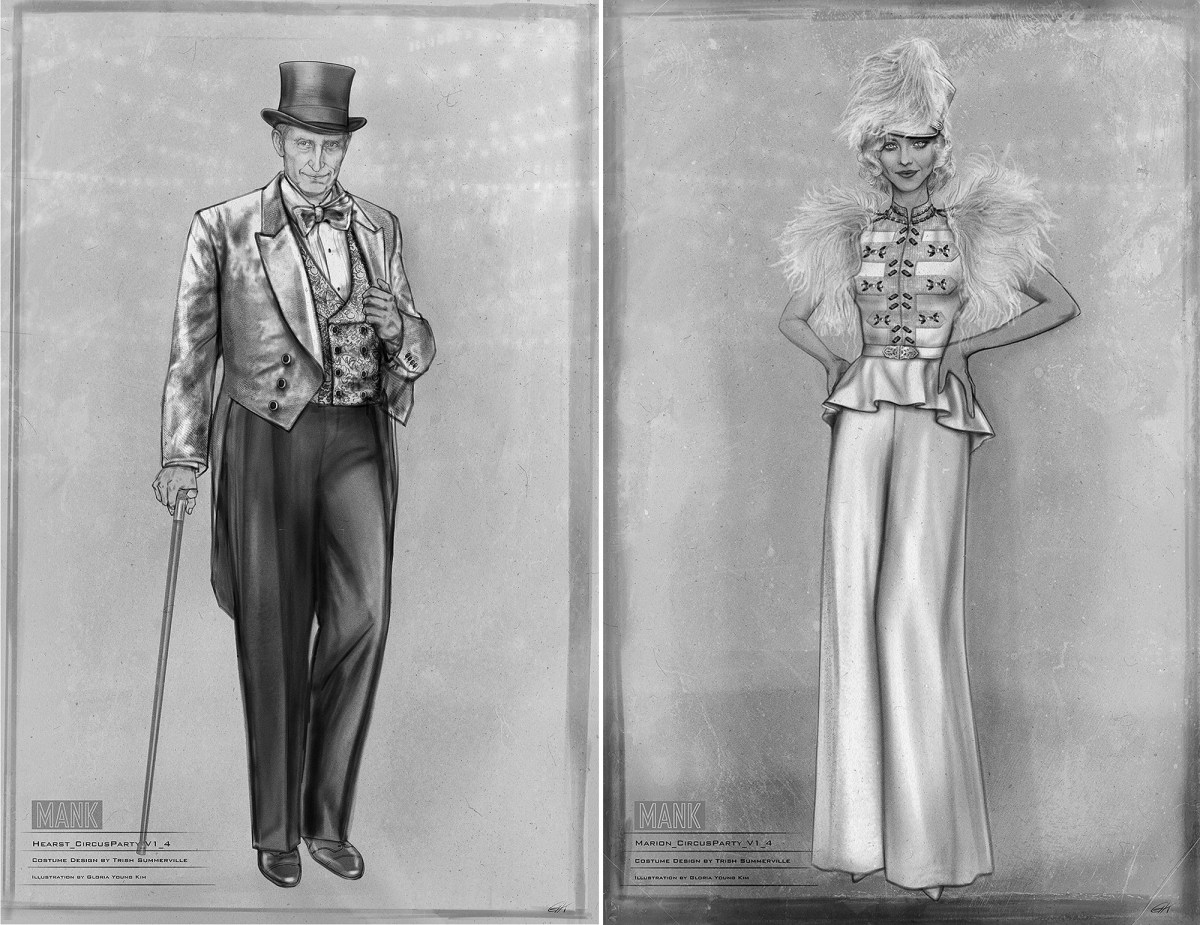
Costume Sketches by Gloria Young Kim

The first thing Trish Summerville heard from her friends when she signed on to be the costume designer for David Fincher’s Mank was, “That is going to be so easy for you!” People wondered how difficult it could possibly be to dress a cast for a black-and-white film set in the 1930s and 40s, about Herman Mankiewicz, the screenwriter who penned the first draft of what would become Orson Welles’s Citizen Kane. “I kept hearing, ‘You can just use any color you ever wanted and never worry,’” Summerville recalls, laughing at the thought. “That was definitely not the case.”

In fact, it couldn’t have been further from the truth. Summerville is a Hollywood force herself, having costume-designed films like The Hunger Games: Catching Fire, and Fincher’s Gone Girl and The Girl with the Dragon Tattoo, among others. Before Mank, she had worked on projects that incorporated black and white through flashbacks, but she had never done a complete picture sans color.

She immediately immersed herself in the style and learned some tricks of the trade. For instance, a light blue might be beautiful in person, but it’s going to look light gray onscreen. A true black can be too severe; navy reads as a softer alternative. A dark or saturated color that’s striking in real life will seem equally flat in black and white. On top of that, some fabrics strobe and some patterns with contrasting colors resemble confetti. Even a color that looks great can distract an actor in a dialogue-heavy scene and should therefore be avoided.

“Any project with Dave is a dream and you know it’s going to be challenging and exciting, Summerville summarizes, calling me from the set of Slumberland, her next film, “but my brain definitely had to adjust.”

Read the full profile

They Don’t Make ‘Em Like They Used To. The Production Design of Mank

Netflix Film Club (YouTube)
February 3, 2021

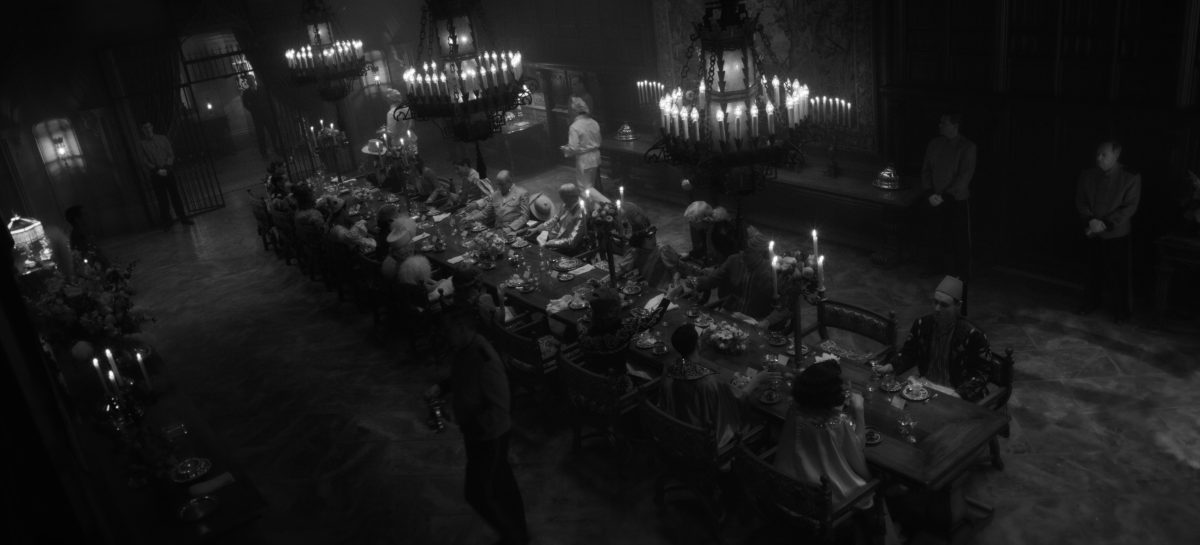
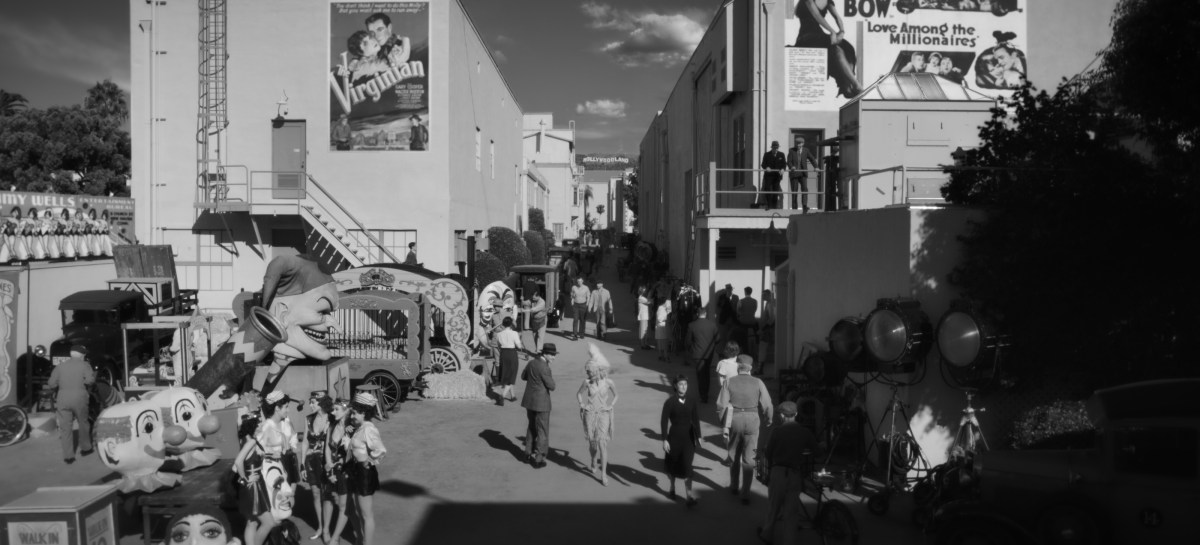
Mank production designer Donald Graham Burt breaks down the effort that went into recreating locations like the old Glendale, CA train station and the famed Hearst Castle for David Fincher‘s craft-heavy film. Hear all about the research that went into bringing Hollywood history back to life.

More Like This: Spotlight on Mank, featuring Trent Reznor, Atticus Ross, Erik Messerschmidt and more

Krista Smith
February 10, 2021
More Like This (A Netflix Queue Podcast)

A podcast from Netflix Queue, the journal that celebrates the people, ideas, and process of creating great entertainment on Netflix and beyond. Host Krista Smith is joined by a different co-host each episode – Franklin Leonard, Tre’vell Anderson, and others – to give an insider’s peek into the creation of your favorite films, series and documentaries and the incredibly talented people who make them.

More Like This gets the Mank treatment! In this very special episode, Krista takes us behind the scenes of David Fincher’s Mank, sharing interviews with key members of the creative team. Composers Trent Reznor and Atticus Ross talk about the power of storytelling through music, how they pulled inspiration from composers of the past, and how pandemic restrictions forced them to record a 70-piece orchestra one instrument at a time; set decorator Jan Pascale demonstrates how the smallest details make the biggest impact; cinematographer Erik Messerschmidt details how he combined classic and modern techniques to transport a 21st century audience back in time; and editor Kirk Baxter explains why David Fincher once called him 50% blacksmith and 50% poet. Enjoy this deep dive into the process of making movie magic with film collaborators at the top of their game, and be sure to see their work in Mank, now streaming on Netflix.

Listen to the podcast:

Apple Podcasts
Spotify
Google Podcasts
Stitcher

Simplecast
PodBean

Excerpt with Erik Messerschmidt:

Cinefade VariND

Ben Affleck Reunites With ‘Gone Girl’ Director David Fincher, Accuses Him of Making a Movie With Heart

Meredith Woerner
February 11, 2021
Variety

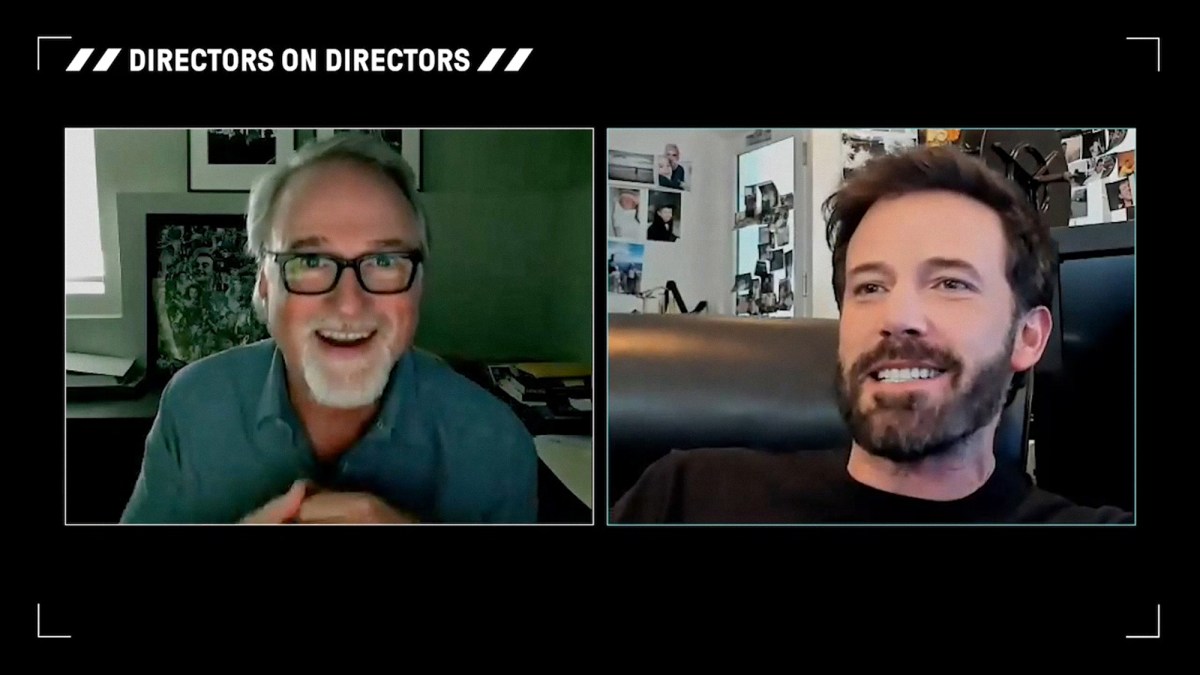
For once, Ben Affleck gets to ask the questions.

That’s how the actor-director framed his duty of leading a conversation with longtime friend and “Gone Girl” boss David Fincher, the esteemed director whose Netflix film “Mank” has emerged as a top awards contender for 2021.

“This is a real role reversal from having to just be Fincher bitch, having to go over and over again,” Affleck teased the director, alluding to Fincher’s notorious preference for many consecutive takes of the same scene.

Appearing in Variety‘s “Directors on Directors” conversation series, the pair recently held a virtual reunion where Affleck dug into the decades-long process of bringing the story of famed screenwriter Herman J. Mankiewicz to screen.

In perhaps the broadest conversation Fincher has had about the film’s themes, Affleck gets to the heart of the original script from the director’s father, the value of creative credit at the dawn of Hollywood’s golden age, and the rare glimmer of heart and hope in a David Fincher film.

Read the conversation and watch the interview

‘Gone Girl’ Duo David Fincher & Ben Affleck Reunite to Dissect ‘Mank’ | Directors on Directors

Variety (YouTube)

Sound + Image Lab: David Fincher and Ren Klyce Transport Us to The Golden Age of Hollywood in “Mank”

Glenn Kiser, Director of the Dolby Institute
February 9, 2021
The Dolby Institute

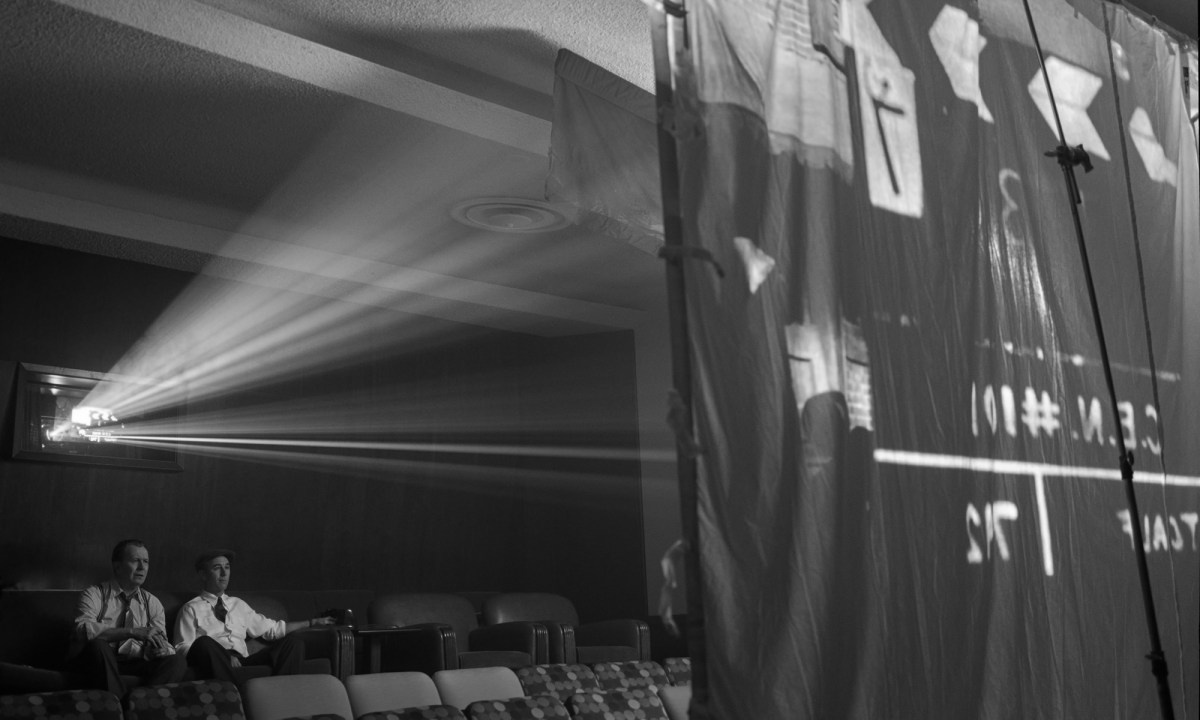
Mank” has been a personal passion project for David Fincher for several decades now. His own father wrote the script, about the famously self-destructive writer of “Citizen Kane,” and Fincher was determined to make the film feel as authentic as possible. Almost like it was an undiscovered artifact from Hollywood’s “Golden Age,” insisting for years to film it in black & white, 1:33​, and in mono. He once again joined forces with his longtime collaborator, sound designer Ren Klyce, to do exactly that. But building this time capsule turned out to be a surprisingly challenging process.

“It’s beyond production value. Sound is a portal into a stranger’s mind that is incredibly influential. And if we don’t avail ourselves of this access, um… then we’re stupid and we should die (laughs).” – David Fincher, director of “Mank”

Listen to the Sound + Image Lab: The Dolby Institute Podcast:

Apple Podcasts
Spotify
Google Podcasts
SoundCloud
Amazon Music
Stitcher
TuneIn

Connect with Dolby on InstagramTwitterFacebook, or LinkedIn. Movie buff? Follow Dolby Cinema on Instagram.

Right On Hue

Photo by Nikolai Loveikis

David Fincher’s black-and-white tribute to Old Hollywood took a radically different approach to the role of color in design.

January 29, 2021
Netflix Queue

In the annals of Hollywood, Herman Mankiewicz will forever be remembered as the screenwriter of Orson Welles’s towering classic Citizen Kane, but his impact on the history of cinema doesn’t stop there. Mankiewicz also served as an early, uncredited writer on The Wizard of Oz. His contribution? Suggesting that once Dorothy Gale travels over the rainbow, the film transitions from black and white to glorious Technicolor. “He walked away from that [project] saying, ‘This is all I can come up with,’” laughs director David Fincher. “It might be the greatest special effect in the history of the movies.”

For Mank, Fincher’s backstage drama about the screenwriter’s life and his work on Kane, the director and his creative team journeyed from a world of color to one rendered entirely in black and white, shooting eye-catching sets and costumes with the RED 8K Helium Monochrome camera. That created an interesting artistic puzzle for Fincher and his collaborators to solve. From cinematography and production design to costumes and hair and makeup, each department needed to determine the best way to manipulate color to achieve the proper register of lights and darks onscreen.

“We had to train our senses to see through a lens of black and white,” explains Oscar-winning production designer Donald Graham Burt (The Curious Case of Benjamin Button). “It mandated a palette based on tone and contrast.”

Fortunately, they proved more than up to the challenge.

Read the full article