30 Years of Kyle Cooper’s Classic Title Sequence for SE7EN

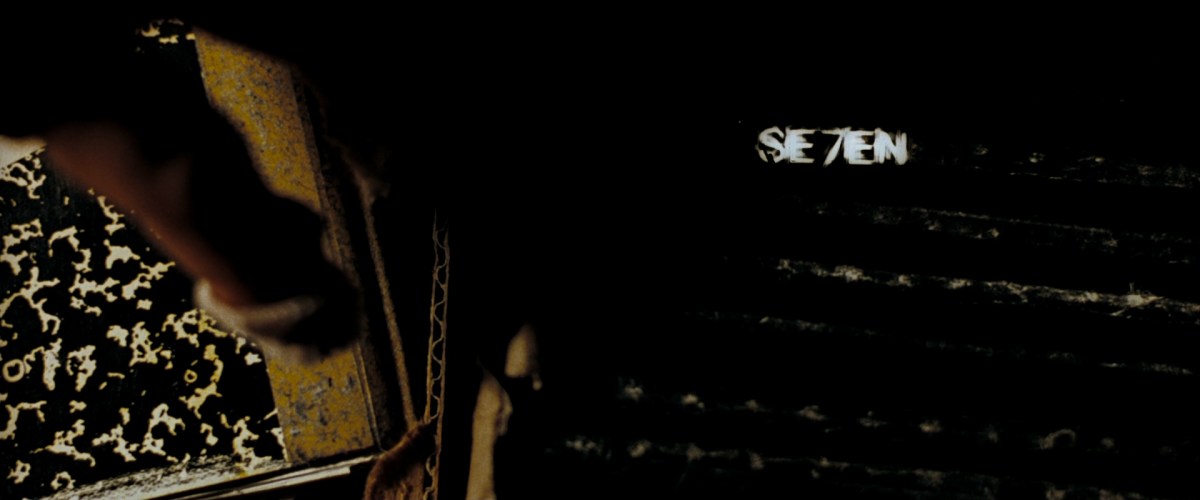
On September 22, 1995, David Fincher’s SE7EN introduced audiences to a darkness unlike anything seen before, accompanied by an opening title sequence from Kyle Cooper that has since become one of the most influential in film history.

September 26, 2025
Prologue Films (Instagram: 1, 2, 3, 4)

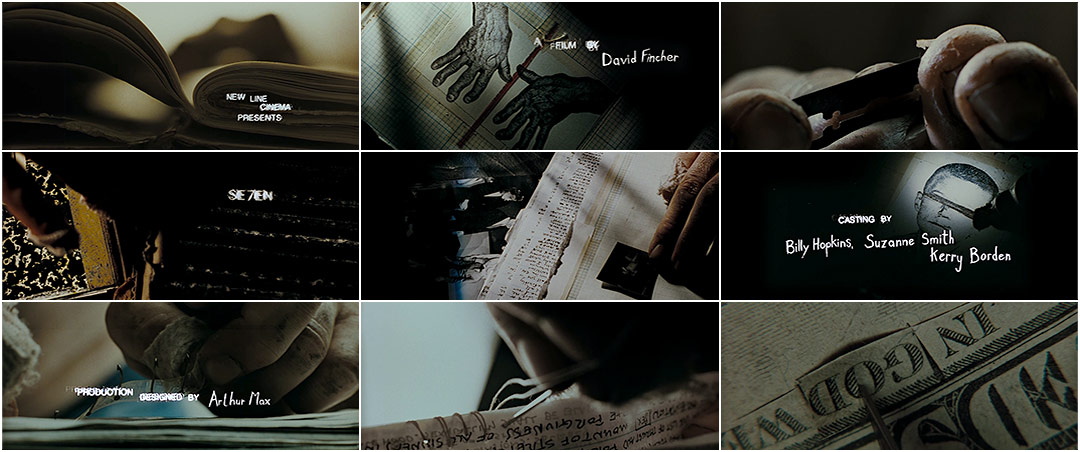
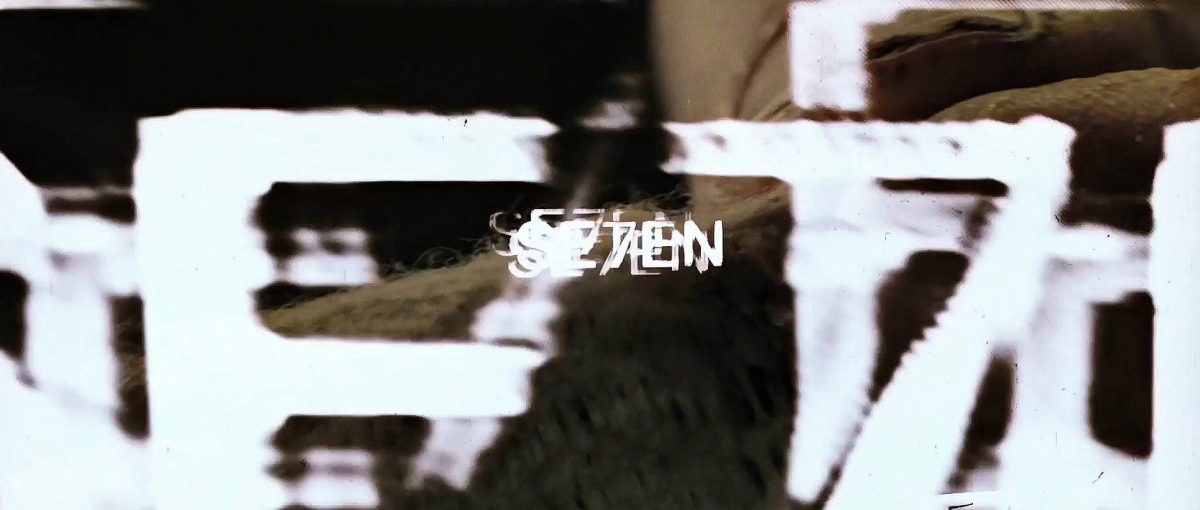
For this classic title sequence, David Fincher tasked Kyle Cooper, founder of Prologue Films, to get inside the mind of a serial killer, immediately setting an ominous tone. Typography was scrawled into scratch board and shot on film, and Cooper shot tabletop photography representing the preparation of the killer’s obsessive sketchbooks. This dark yet spirited sequence was called a “masterpiece of dementia” and was credited with the resurgence of a generation’s interest in film title design.

The audio of this video is pulled from Kyle’s interview on the 2010 Blu-ray Special Edition of SE7EN, where he discussed the making of the sequence in detail.

In Part 1, Kyle reflects on his early conversations with Fincher. The two bounced ideas back and forth, shaping a vision that would forever change the way opening credits were made. This reel pairs finished titles with original process photographs, every frame shot on film, every prop (from John Doe’s notebooks to the hand model) photographed and tested.

“People think there’s computer graphics in there, but we assembled the majority of the sequence by hand… it takes on a life of its own.” In Part 2, he explains how he created the unsettling typography. Every letter was scratched, smeared, and distorted through the camera itself, analogue from start to finish. This reel pairs final frames from the title sequence with the original process photography of John Doe’s notebooks, props, and hands, showing how the haunting visuals took shape long before digital tools.

“This is John Doe’s job: he gets up, makes his books, plans his murders, drinks his tea.” In part 3, he reveals how the titles were designed to immerse viewers directly into the fractured psyche of the killer. To capture the killer’s mindset, Kyle went beyond typography. He gathered real objects from his surroundings, fish hooks, razor blades, sewing needles, twine, even clumps of hair from his shower drain, and filmed them in-camera alongside hand-crafted journals. These raw analogue elements were photographed, tested, and layered into the sequence, blurring the line between prop and pathology.

Kyle has recalled in interviews that during the premiere, when the title sequence finished, the audience actually clapped, something almost unheard of for opening credits. Thirty years later, that impact still reverberates across cinema and design.

The SE7EN End Credits Crawl

The unease of SE7EN doesn’t end with the final scene. Even the closing crawl was designed to keep audiences trapped in John Doe’s world.

Kyle and Kim Cooper crafted the end credits entirely by hand. Each name was cut out and taped together into a single, massive scroll, almost like a tapestry. The piece was then shot with a video camera and lit from behind so the light bled through the lettering.

To deepen the sense of obsession, the crawl was embellished with objects John Doe might have owned: razor blades, fishing hooks, twine, screws, wire, flies, even hair pulled from a shower drain. Every detail was assembled practically, frame by frame, just like the opening titles.

We first show the original handmade scroll, now preserved in five long backlit panels at Prologue Films. Continue watching to see the crawl as it appeared in 1995. Instead of rolling upward like a traditional credit sequence, Fincher had it roll downward, a subtle inversion that mirrored the sick, twisted psychology at the heart of the film.
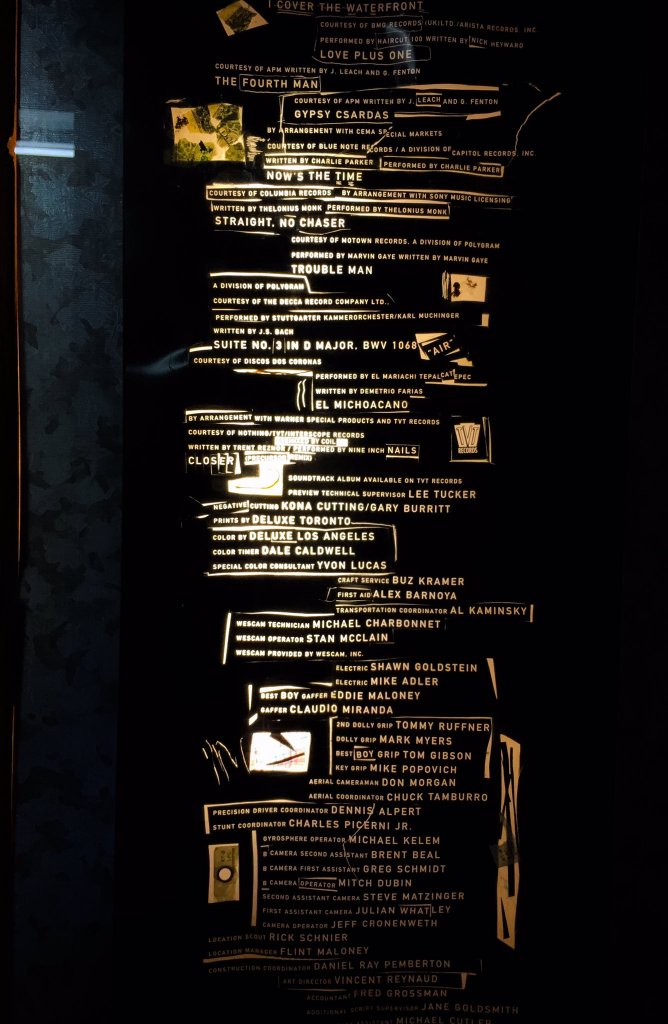
SE7EN end credits crawl panel, displayed at Prologue Films, photographed by Hideo Kojima.
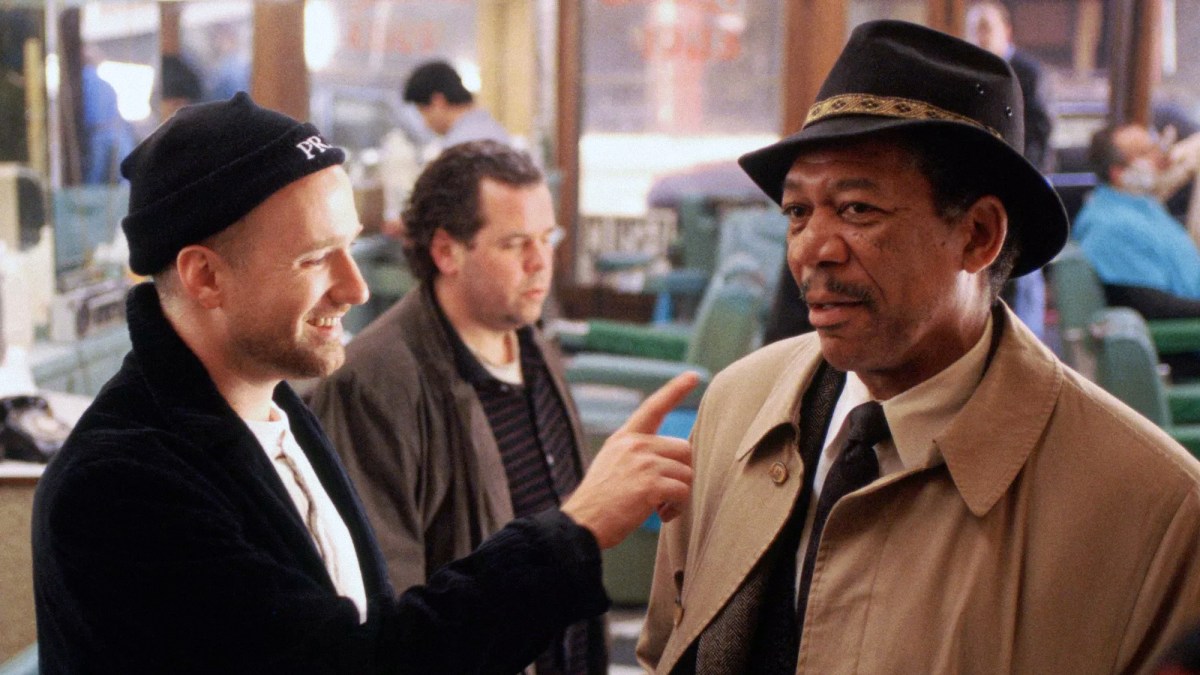
David Fincher talks remastering SE7EN and reveals what was really in the box

The filmmaker says the rumor that the infamous box contained a prosthetic head is “entirely ridiculous.”

Wesley Stenzel
January 2, 2025
Entertainment Weekly

SE7EN turns 30 this year, and to commemorate the anniversary, director David Fincher has overseen the 4K remaster of the seminal crime drama.

The serial killer mystery — which stars Morgan Freeman, Brad Pitt, Gwyneth Paltrow, and Kevin Spacey — first shook up the crime genre in 1995 with propulsive, precise craft and unprecedentedly nasty crime scenes that have influenced everything from Saw to The Batman. The film now has a higher-resolution look that will debut on IMAX screens on Jan. 3 before releasing on 4K UHD Blu-ray Discs and on digital Jan. 7. Fincher and his team painstakingly recreated the film as it was originally printed in 1995, utilizing some AI tools to enhance the image and fix visual mistakes that weren’t visible in previous scans of the film.

Entertainment Weekly chatted with Fincher to discuss the new version of SE7EN and reflect on his memories of helming his feature directorial breakout 30 years later — including what’s really in the box.

Read the full interview

Murder by Imitation: The Influence of Se7en’s Title Sequence

Tim Groves
April 2018 (Issue 43)
Screening the Past

The serial killer film is nothing if not prolific: Robert Cettl discusses over six hundred examples in his annotated filmography, Richard Dyer argues that there are over two thousand serial killer films, and the IMDB lists more than 3500 film and television titles. [1] As with any genre, the serial killer film is marked by its typicality. Indeed, Philip Simpson criticises the serial killer film as a subgenre that is “endlessly derivative of its predecessors”. [2] The tropes of the clever, fiendish killer, his grotesque, ritualistic ‘signature’ and the gifted but damaged investigator are certainly familiar, but how does the serial killer film replicate itself on a textural level? This article will analyse the influence of Kyle Cooper’s much admired opening title sequence in Se7en (David Fincher, 1995). [3] However, rather than exploring the general influence of the sequence, I will focus on its stylistic similarities to the credit sequences of other serial killer texts such as The Bone Collector (Phillip Noyce, 1999), Red Dragon (Brett Rattner, 2002), Sanctimony (Uwe Boll, 2001), Taking Lives (D.J. Caruso, 2004) and the first season of Whitechapel (Ben Court and Caroline Ip, 2009). I will argue that their imitative or plagiaristic qualities can be interpreted in terms of Mark Seltzer’s work on the repetitive and circular discourse of serial killing.

Se7en

The title sequence of Se7en appears a few minutes into the film, occurring after a brusque initial encounter between Detectives William Somerset (Morgan Freeman) and David Mills (Brad Pitt) at the scene of the first murder. The sequence runs for just over two minutes and contains over a hundred shots, many in close up. It shows a person (whom we retroactively infer is the killer John Doe [Kevin Spacey]) shaving off the skin on his fingertips, and then working on a group of notebooks while wearing bandages. We see Doe writing in longhand, and highlighting and erasing portions of other texts. He also develops photographs and uses scissors to trim Polaroids and pieces of film. Doe incorporates some of these images and texts into the notebooks and then uses needle and thread to stitch the pages of his journal into a book, one of many.

The title sequence provides vital story material for the viewer about Doe’s activities. He removes his fingertips to ensure that he does not leave fingerprints behind, either in his apartment or at crime scenes. This also enables him to toy with the investigators by leaving a message composed of fingerprints on a wall at the second murder scene. Instead of this resulting in Doe’s apprehension, it points the police to his third victim, whose amputated arm was used to ‘write’ the words “help me”. After Doe surrenders, the police discover that he does not have a Social Security number, nor any banking or other official records. He is also, as Somerset states, “John Doe by choice”. His anonymity focuses police attention on to his mission or “work”. Indeed, during the final confrontation, Doe insists that he is not personally important, but that his crimes will be remembered and studied because of their shocking nature and diabolical logic (and Se7en is more memorable than many other serial killer films for precisely this reason).

Read the full essay

Seven: The Violence of a Cinematic Hellscape

Posted by David Shreve | Aug 29, 2017
Audiences Everywhere

There are less than 20 gunshots fired in David Fincher’s 1995 film Seven, each exchanged between David Mills and John Doe. If you don’t count Detective Somerset’s late face slap, there is only one wounding act of violence committed onscreen. It’s an oft-shared description offered by cinephiles and aspiring screenwriters and critics: Seven is, in the most basic sense, a non-violent film, even as watching it feels like a very violent viewing experience. For most of its run-time, Seven, which this week celebrates its 20th anniversary, is a noir- serial killer thriller built around already murdered corpses rather than murderous acts. Yet, this basic quantifiable description feels misleading to anyone watching or re-watching the film, anyone caught within or recently escaped from the spiraling trap of the film’s increasingly unsettling, malicious scenes.

Seven is widely credited for displaying influence from prior detective films and inspiring several films of comparable serial killer concern, but few films in either comparative line have less character violence and yet even fewer give as distinct an impression of having witnessed something truly violent.

Read the full article

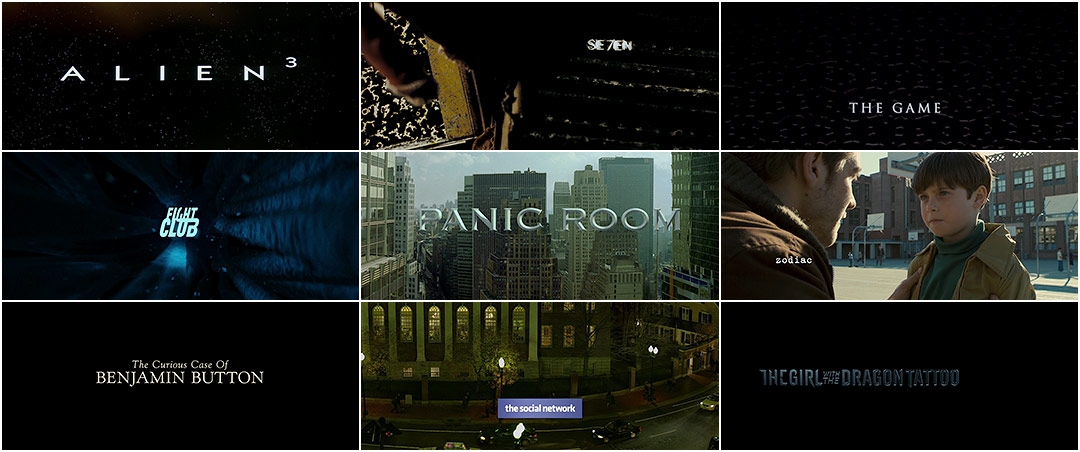
Art of the Title: David Fincher

David Fincher: A Film Title Retrospective

August 27, 2012
Art of the Title

The History of Movie Title Sequences

John P. Hess
July 30th, 2017
Filmmaker IQ

Not only do Title Sequences tell you the name of the film and the stars, they can also set the tone and mood and put you in the right frame of mind to experience the film or TV show to come. Explore the history of the title sequence and how they’ve evolved along with business of filmmaking over the past century.