Cinematography is a true art form. To compose a memorable shot is something that one really does need a skill for. That doesn’t even take into account how a cinematographer must work well with a director, have an understanding of their camera, and an infinite number of other assets necessary to help make a movie succeed. Earlier this week, we got a chance to talk with two time Academy Award nominated cinematographer Jeff Cronenweth, who was able to detail just some of what goes into being a quality DP.
Cronenweth has been cited by the Academy twice. Both times, collaborations with director David Fincher (The Social Network, followed by The Girl with the Dragon Tattoo) received Oscar nominations in Best Cinematography. Tomorrow, he ventures into television for the first time, collaborating with filmmaker Mark Romanek on an episode of the new Amazon Prime science fiction series Tales from the Loop. Generously chatting on the phone for nearly a half hour, Cronenweth details not just working on the show, but with Fincher as well. He even tells us a few interesting stories about his father Jordan Cronenweth, a famous cinematographer in his own right. It’s an informative and loose interview, so we hope you enjoy it…
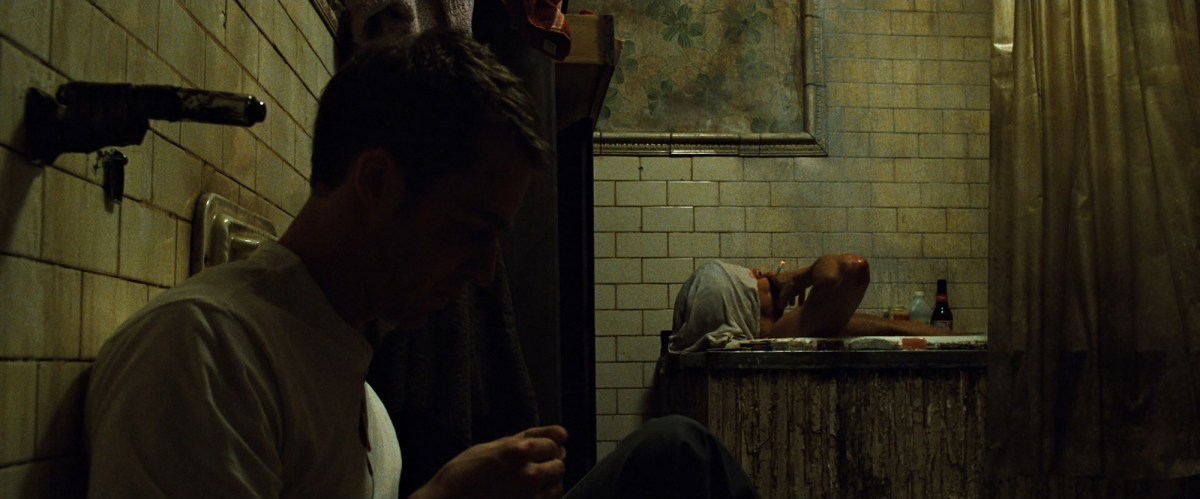
Caustic, nihilistic and controversial, Fight Club successfully adapted Chuck Palahniuk’s transgressive fiction novel, it’s a credit to screenwriter Jim Uhl’s excellent adaptation that the voice of the original novel is heard so clearly, and at the same time the film proved to be an enormous success. Though much credit is also due to the excellent sound and editing: so much in this film depends on hitting exactly the right tone.
Based on a reader suggestion, I decided to take a look at the various home video versions of Fight Club that are available.
Filming Fight Club
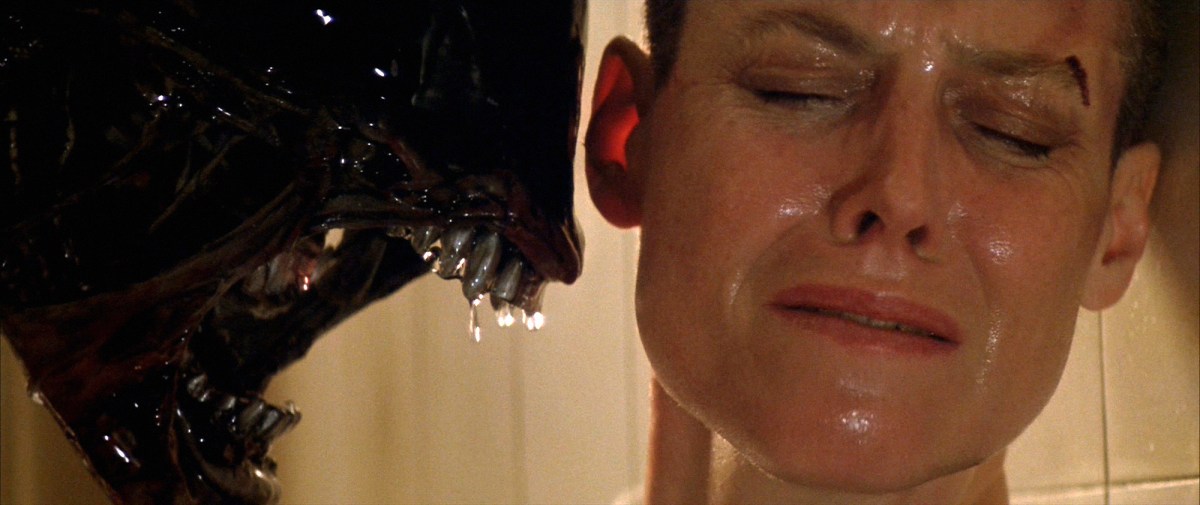
Fight club was photographed by Jeff Cronenweth, a then hot and upcoming Cinematographer who until that point hadn’t shot a major feature, but did have the advantage of being Blade Runner cinematographer Jordan Cronenweth’s son. Fincher has worked with both father and son on a number of projects culminating in ‘Alien 3’. Subsequently Jeff did camera work on a number of Fincher’s other features including ‘Se7en’ and ‘The Game’.
An Interview with Cronenweth in American cinematographer records Fincher’s preference for both natural and pre-existing lighting in locations over elaborate lighting setups. This necessitated the choice of higher speed stocks.
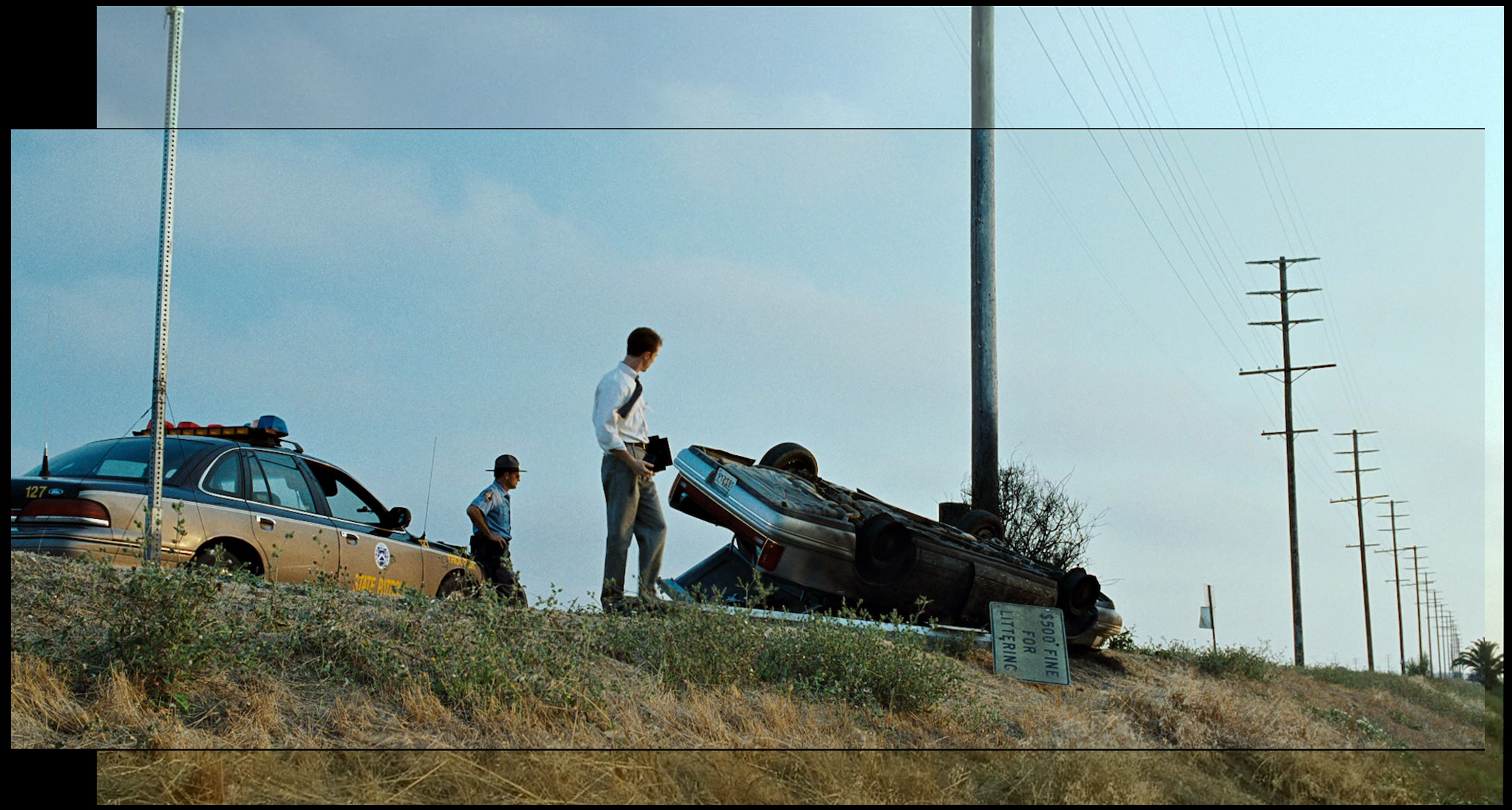
The film was shot using the Super35 format, and framed at 2.35:1. Daylight scenes were shot on Kodak EXR 100T and Vision 250D film, while the majority of night scenes were shot on ‘faster’, grainier Vision 500T.
Selected night scenes from the film were 5% flashed at the laboratory, which boosts contrast and enhances detail in the darker parts of the frame. Additionally a handful of release prints were treated with the Technicolor’s ENR silver retention process (bleach bypass) at the 80 IR level.
Shooting in Super35 at an aspect ratio of 2.35:1 provides considerable latitude for re-framing during the editing process, which David Fincher may have developed a taste for when working on the various home video editions of Se7en.
Ron Magid Unit Photography by Rolf Konow and Bob Penn, courtesy of 20th Century Fox July, 1992 American Cinematographer
Alex Thomson, BSC — one of Britain’s premier cinematographers — creates images of dazzling perfection, richness and clarity, images which have graced some of the most exquisite-looking films in recent memory: Legend, Ridley Scott‘s epic fairytale; Eureka, Nicholas Roeg‘s influential retelling of Citizen Kane; and Excalibur, John Boorman‘s visually magnificent approach to the King Arthur legend.
Though Alien3 is ideal subject matter for Thomson’s rich photographic style, he might never have lent his expertise to the project had it not been for one of the greatest triumphs and tragedies of his career. Late in 1990, Thomson had been chosen by one of the world’s undisputed filmic masters to photograph what promised to be his final masterpiece: the director was David Lean; the project was Joseph Conrad‘s Nostromo.
Unfortunately, Lean took ill and died, Nostromo shut down and a saddened Alex Thomson returned to London, wondering what he would do next. “I came back from France on a weekend and they called me on Monday to see if I could take over on Alien3,” Thomson recollects. “I started work on Tuesday, which was about a week and a half into production. I was happy to do it; it kept my mind off what might have been.” (There is a certain karmic irony to Thomson’s twist of fate. As fans of the first Alien film will recall, the spaceship in that picture was dubbed the Nostromo.)
Behind the camera, Alex Thomson, BSC watches intently as operator David Worley lines up a shot on Charles Dance as Sigorney Weaver stands by.
The production history of Alien3 is a troubled one. Before Thomson joined the film, its first director, New Zealander Vincent Ward — one of a slew of directors who had been attached to the project during its lengthy pre-production phase — had been replaced by rock video director David Fincher. Thomson was hired when the film’s original cinematographer, Jordan Cronenweth, ASC (Blade Runner) left the production.
Many cinematographers might feel stifled by a production where the original look had already been determined, but not Thomson. “I had no problem with following in Jordan’s footsteps because his approach was so right,” he enthuses. “It was marvelous to be pointed in the right direction by a man of his caliber.”
First-time feature director Fincher, for his part, is an award-winning rock video director with a background in visual effects storyboarding at ILM. “To take something over like this at 28 must’ve been quite awe-inspiring, but he handled it as if he’d done 20 pictures,” Thomson relates.
Cinematographer Jeff Cronenweth, ASC lensed his first feature, “Fight Club,” in 1998. He earned Best Cinematography nominations from the Academy of Motion Picture Arts and Sciences and the American Society of Cinematographers for two more collaborations with director David Fincher, “The Girl With the Dragon Tattoo” (2011) and “The Social Network” (2010). Cronenweth also shot Fincher’s “Gone Girl” (2014), Kathryn Bigelow’s “K-19: The Widowmaker” (2002) and Sasha Gervasi’s “Hitchcock” (2012). He recently completed director Sam Taylor-Johnson’s “A Million Little Pieces,” based on the literary hit.
In addition to his feature career, Cronenweth is known for his stylish and CLIO Award-winning music videos and commercials. In the last two years he shot music videos for Katie Perry, Jennifer Lopez, Pink, Maroon 5 and Taylor Swift. A native Angelino, Cronenweth studied filmmaking at the University of Southern California (USC) and began his professional career apprenticing to some of the industry’s greatest cinematographers, including Sven Nykvist, ASC, John Toll, ASC, Conrad Hall, ASC and his father, the late Jordan Cronenweth, ASC.
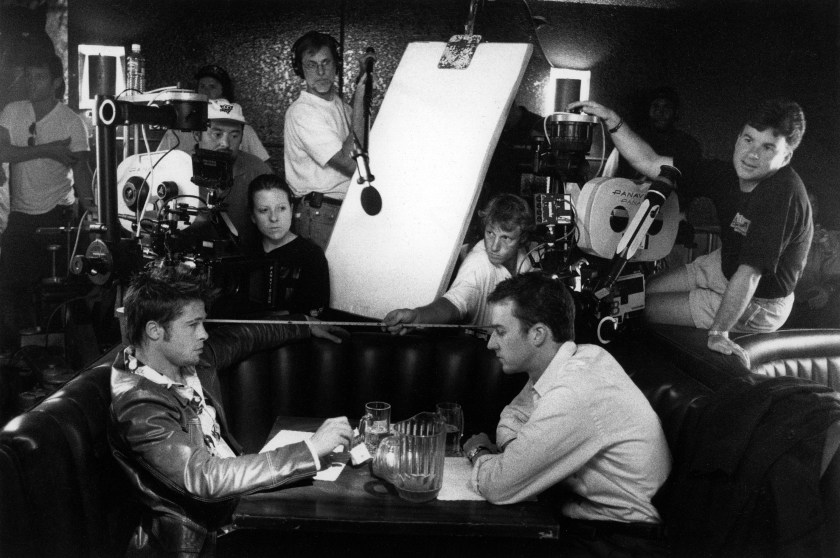
Cronenweth, behind the camera A on left, and his crew set up double coverage for a scene between Tyler Durden (Brad Pitt) and the film’s nameless narrator (Edward Norton). On the right, B camera operator (and future Panic Room cinematographer) Conrad W. Hall. (1999, Merrick Morton)
What was your pathway into this field?
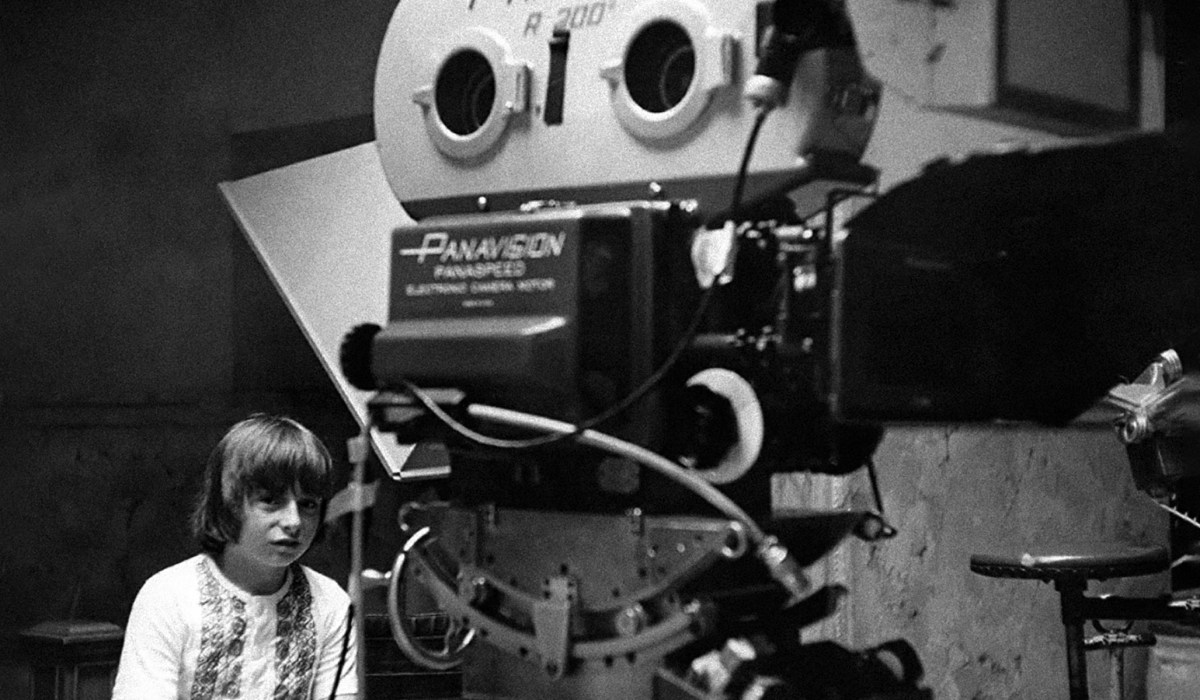
“My great-grandfather owned a photo store in Pennsylvania. My dad’s dad won the last Oscar given for portrait photography: He was a staff photographer for Columbia [Pictures]. My grandmother was a Ziegfeld Follies dancer. My dad [Jordan Cronenweth, ASC] won a BAFTA for ‘Blade Runner’ (1983) and got an Oscar nomination for ‘Peggy Sue Go Married’ (1987). So as a child I often visited sets and went on location for extended stays. I felt like I wanted to be part of that great experience, that camaraderie. Each day was like a military unit battling to bring back great images.
“I knew I wanted to do something in the industry: I had been around it all and found it all so exciting. I made many Super 8 films in high school and decided USC (the University of Southern California) was where I wanted to attend film school. But two years into school Film Fair, a commercial production company my father had collaborated with, had a position open for a staff loader and that job offered the opportunity to get into the union. I visited my dad as often as I could when he was shooting ‘Blade Runner’ and assisted him on other movies as a camera operator and on second unit. A lot of relationships I formed then carried over when my dad retired.
“I met [director] David Fincher on a Madonna video my father photographed and I shot second unit for in the heyday of music videos – it was a very creative and innovative time, and I was grateful to be there. I was his camera assistant on the documentary ‘U2: Rattle & Hum’ (1988) and the film ‘State of Grace’ (1990), both directed by Phil Joanou, a former USC film school classmate. Then I got my first feature as a cinematographer, ‘Fight Club,’ with Fincher. Not a bad credit for the first time out of the gate!”


 The Fincher Analyst