It’s All True: A Conversation with David Fincher

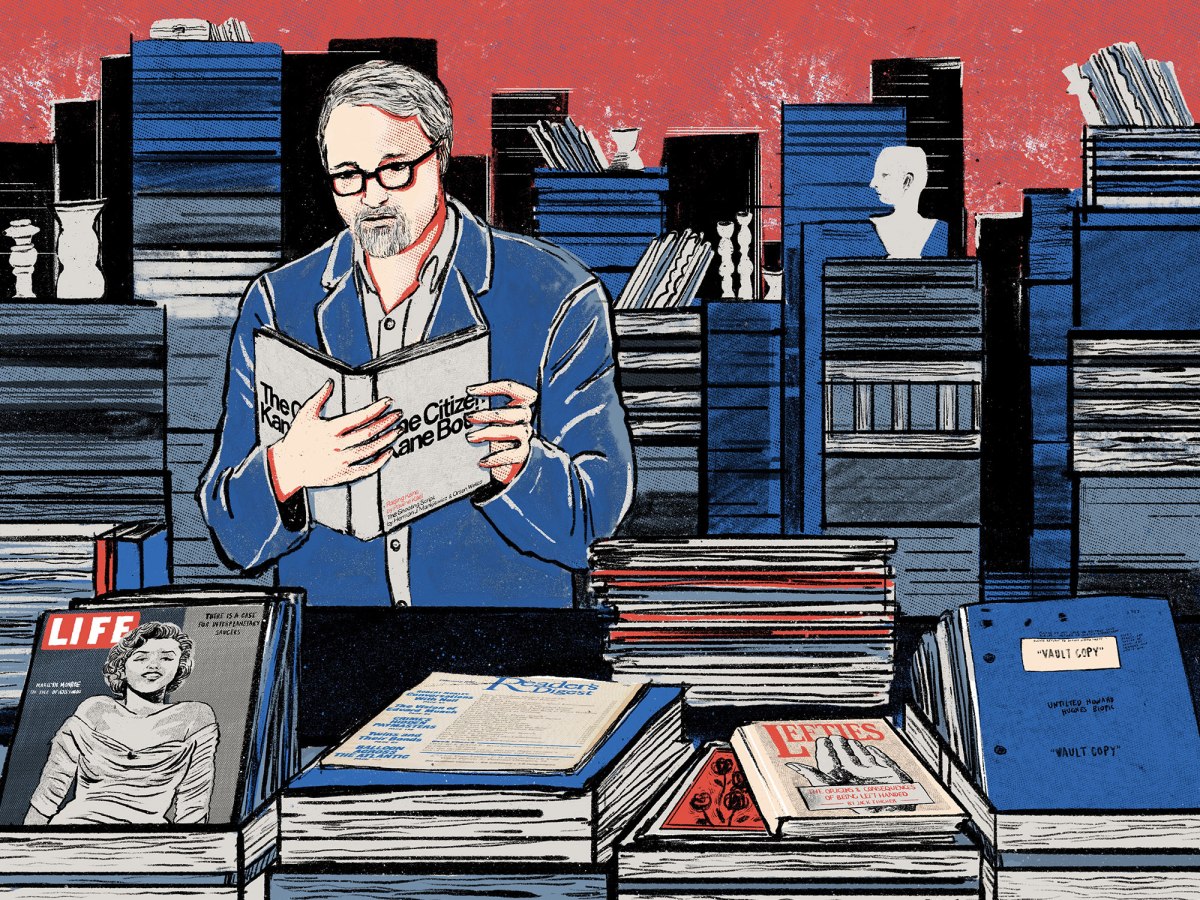
Illustration by Rumbidzai Savanhu

The master filmmaker behind Mank on Orson Welles, Pauline Kael and realising a passion project after a 30-year wait.

David Jenkins
December 2, 2020
Little White Lies

From the pen of Jack Fincher comes Mank, the story of how perma-soused Hollywood hack Herman J Mankiewicz happened to write one of the greatest screenplays of all time. Sadly, Jack didn’t live long enough to see the words he had written transformed into sound and light, but it’s something that his son David had wanted to realise for close to three decades.

It’s been six years since Fincher Jr’s last feature film, 2014’s Gone Girl, and in the interim we’ve had two series of Rolls Royce TV drama in the form of Mindhunter. For someone who has already made a tech bro riff on Citizen Kane (2010’s The Social Network), and a melancholic homage to his late father (2008’s The Curious Case of Benjamin Button), Mank combines these two career poles, while also posing such existential hypotheticals as, what makes a man? And not only that, what makes a writer, and what makes a director?

LWLies: Let’s go on a quick flashback to the early days and the creation of this amazing script by your father, Jack. He was a journalist and author by trade. Did he pivot to screenwriting later in life?

Fincher: I think he wrote a screenplay that was optioned and Rock Hudson wanted to do it – this was in the late ’60s. That fizzled out. Then he wrote spec screenplays in the ’60s, ’70s and ’80s, and then when he retired in the ’90s, he came to me and said, ‘I’m going to have all this time on my hands, what do you want to read a script about?’ I said I had always been interested in ‘Raising Kane’ which I was exposed to in middle school. I had read Pauline Kael’s essay on microfiche in the school library, and then I noticed a copy of it in my father’s library, and we talked about it. Then, 12 years later, I was about to go off to do Alien3, and he was retiring and wanted a new challenge.

Read the full interview

More in Little White Lies 87: The Mank Issue
David Fincher’s Impossible Eye

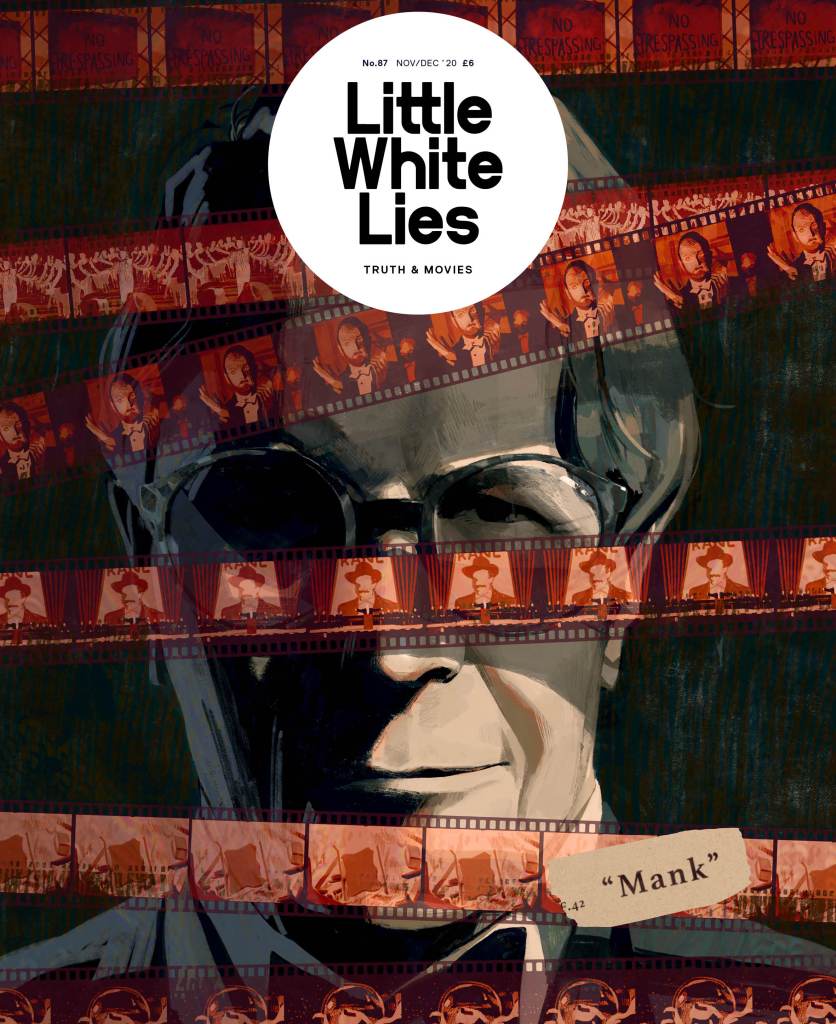
David Fincher by Jack Davison

With ‘Mank,’ America’s most famously exacting director tackles the movie he’s been waiting his entire career to make.

Jonah Weiner
November 19, 2020
The New York Times

Six years ago, after I contacted David Fincher and told him I wanted to write an article about how he makes movies, he invited me to his office to present my case in person and, while I was there, watch him get some work done. On an April afternoon, I arrived at the Hollywood Art Deco building that has long served as Fincher’s base of operations, where he was about to look at footage from his 10th feature film, Gone Girl,” then in postproduction. We headed upstairs and found the editor Kirk Baxter assembling a scene. Fincher watched it once through, then asked Baxter to replay a five-second stretch. It was a seemingly simple tracking shot, the camera traveling alongside Ben Affleck as he entered a living room in violent disarray: overturned ottoman, shattered glass. The camera moved at the same speed as Affleck, gliding with unvarying smoothness, which is exactly how Fincher likes his shots to behave. Except that three seconds in, something was off. “There’s a bump,” he said.

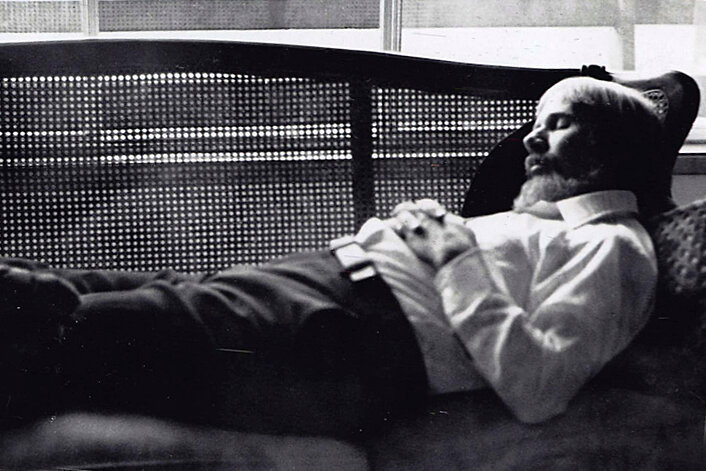
Jack Fincher photographed by David Fincher in 1976, when he was 14.
“That’s why it’s out of focus”.

No living director surpasses Fincher’s reputation for exactitude. Any account of his methods invariably mentions how many takes he likes to shoot, which can annoy him, not because this is inaccurate but because it abets a vision of him as a dictatorially fussy artiste. Fincher, who is 58, argues that this caricature misses the point: If you want to build worlds as engrossing as those he seeks to construct, then you need actors to push their performances into zones of fecund uncertainty, to shed all traces of what he calls “presentation.” And then you need them to give you options, all while hitting the exact same marks (which goes for the camera operators too) to ensure there will be no continuity errors when you cut the scene together. Getting all these stars to align before, say, Take No. 9 is possible but unlikely. “I get, He’s a perfectionist,” Fincher volunteered. “No. There’s just a difference between mediocre and acceptable.”

Read the full profile