Holt McCallany Talks to David Fincher about “The Iron Claw” and the Role of a Lifetime

By David Fincher
December 29, 2023
Interview

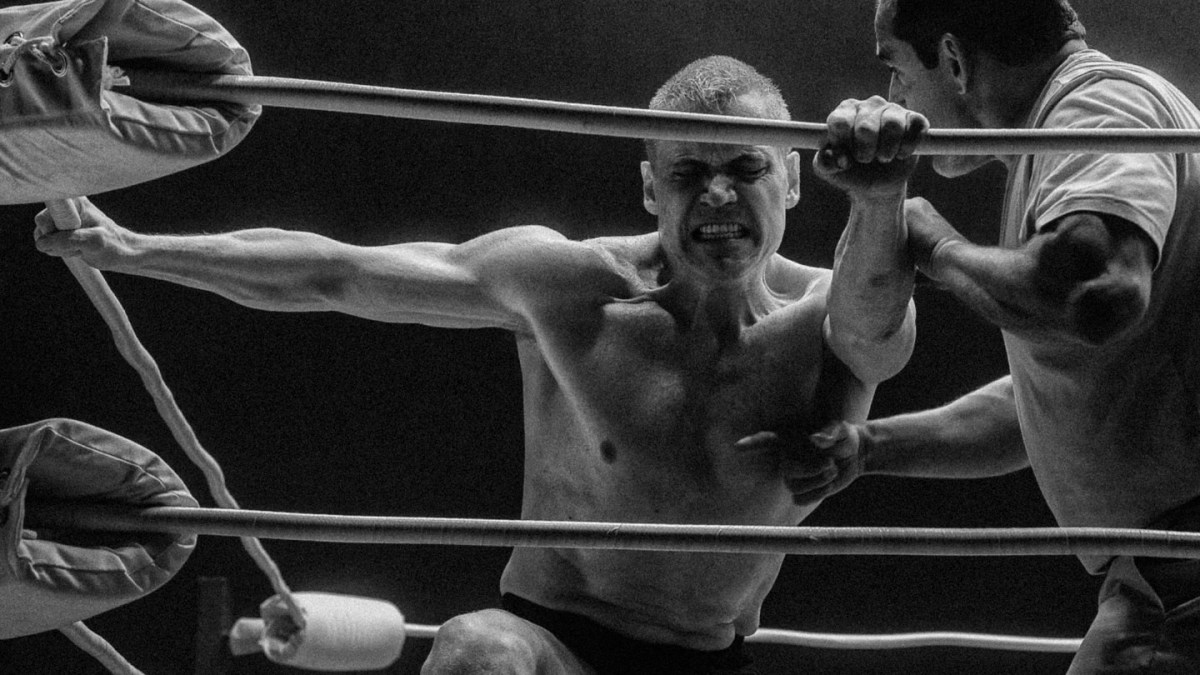
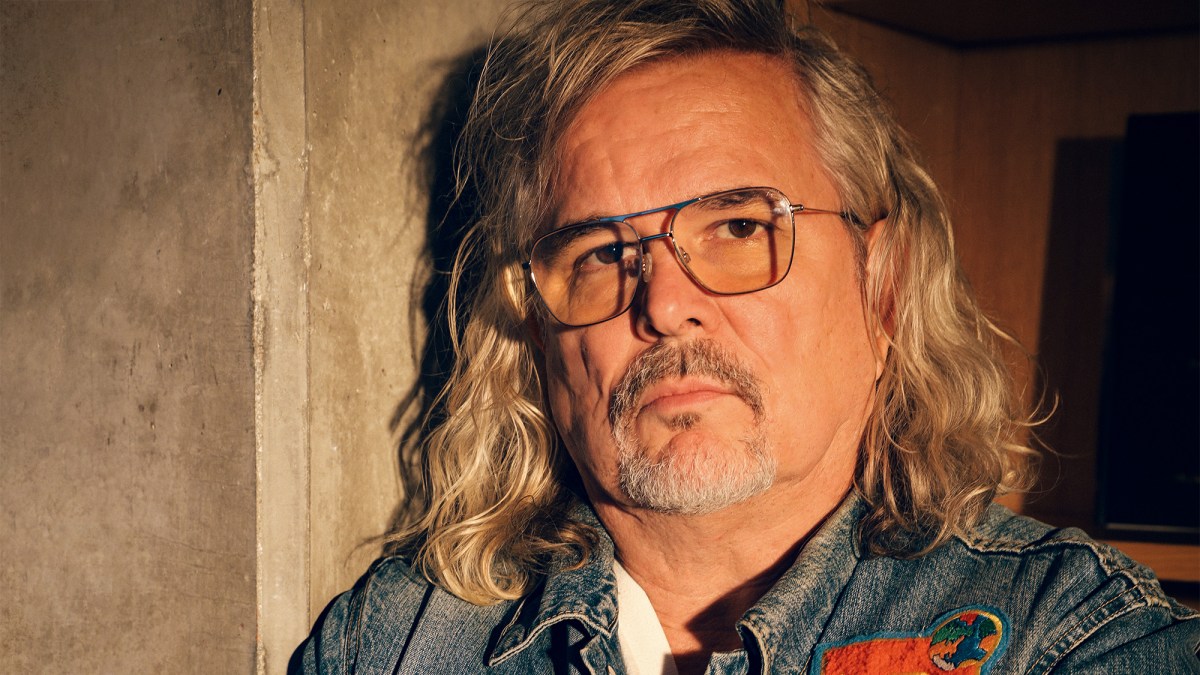
After casting Holt McCallany in Alien 3 and later in Fight Club in the types of tough-guy roles that have largely defined his four-decade career, David Fincher finally let the 60-year-old actor showcase his softer side as FBI agent Bill Tench in Netflix’s psychological thriller Mindhunter. It was that performance, in which McCallany was able to balance steely professionalism and quiet melancholy, that earned him a meeting with director Sean Durkin, who was looking for the right person to play the patriarch of the Von Erich clan in The Iron Claw, his biopic of the legendary Texas wrestling dynasty. As Fritz Von Erich, a loving but severe father who pushed his four sons (played by Zac Efron, Jeremy Allen White, Harris Dickinson, and Stanley Simons) beyond their limits—often with tragic results—McCallany is earning the best reviews of his career, and even, to his own shock, some Oscar buzz. As he told Fincher over Zoom a couple of weeks ago, he’s still letting it all sink in.

DAVID FINCHER: Hey Holtster! How have you been?

HOLT MCCALLANY: I’ve been great David, because there were a couple of articles, one in Variety, one in Vulture, that picked me as somebody who could get a possible Academy Award nomination for Supporting Actor, even though it’s going to be a very tough year.

Read the full interview

Variety Awards Circuit Podcast: Danielle Brooks (“The Color Purple”) and Holt McCallany (“The Iron Claw”)

Clayton Davis
December 14, 2023
Variety

Also on this episode, “The Iron Claw” actor Holt McCallany talks about playing the legendary wrestler Fritz Von Ehrich in Sean Durkin’s powerful new drama. He discusses coming to peace with many of his scenes that were cut from the film, and what we can expect from his upcoming directorial effort “The Star Maker” after getting script notes from David Fincher.

A quintessential “that guy” performer in the eyes of most audience members, this veteran character actor boasts over 80 credits in a three-decade career, including turns in “Nightmare Alley” and Netflix’s “Mindhunter.” As the hardened patriarch of a family of pro wrestlers in A24’s sports drama, McCallany exudes an intense and thorny power, expertly revealing the dangers of a particular form of pressurized ambition. It’s a performance that’s reminiscent of J.K. Simmons Oscar-winning turn as the abusive music teacher in “Whiplash.”

Two of 2023’s Most Strikingly Filmed Movies Are from the Same Cinematographer

Erik Messerschmidt talks about his approach to very different but equally excellent new films: “The Killer” and “Ferrari.”

Jim Hemphill
December 28, 2023
IndieWire

David Fincher‘s “The Killer” and Michael Mann‘s “Ferrari” are two of the most visually sophisticated films of the fall season, though their approaches are as different as those two directors’ sensibilities. “The Killer” is icy and deglamorized where “Ferrari” is smoking hot and visceral; Fincher puts his character under a microscope for the audience to study like a microbe, while Mann wants the audience in the driver’s seat with his passionate and committed characters. What the two films have in common is an attention to light, color, and framing as expressive tools that is exceptional in its precision; few movies in recent memory have guided the viewer’s eye in such an intentional and affecting manner. That’s because of something else these movies share: cinematographer Erik Messerschmidt.

Just seven years ago, Messerschmidt was a respected gaffer on series like “Mad Men” and “Bones.” That changed when, on the set of “Gone Girl,” Fincher recognized Messerschmidt’s taste and talent; he promoted the gaffer to director of photography on his Netflix series “Mindhunter,” which led to Messerschmidt’s collaboration with Fincher on “Mank.” Messerschmidt’s shimmering black-and-white photography on that movie earned him some well-deserved attention — and an Academy Award for his first cinematography credit on a feature film.

Unsurprisingly, Fincher returned to Messerschmidt when the time came to make “The Killer,” though the director of photography says the initial conversations were quite different. “It was unique because we didn’t really talk about the way the movie was meant to look at all,” Messerschmidt told IndieWire. “We talked about pace and structure and how he wanted to handle the voiceover and structure the scenes. We talked about the movie much more abstractly than when we were talking about ‘Mank.’ The palette and aesthetic came much later in the process.”

Read the full profile

How Erik Messerschmidt Post-Produced His Cinematography for “The Killer”

Julian Mitchell, editor, media maker publishing
December 18, 2023
NAB Amplify

NAB Amplify caught up with cinematographer Erik Messerschmidt just as he was about to fly to the Camerimage film festival in Poland, where Ferrari, his first film with director Michael Mann, was in competition. “An extraordinary experience, once in a lifetime,” was his on-the-spot reaction to the question, “How was it?”

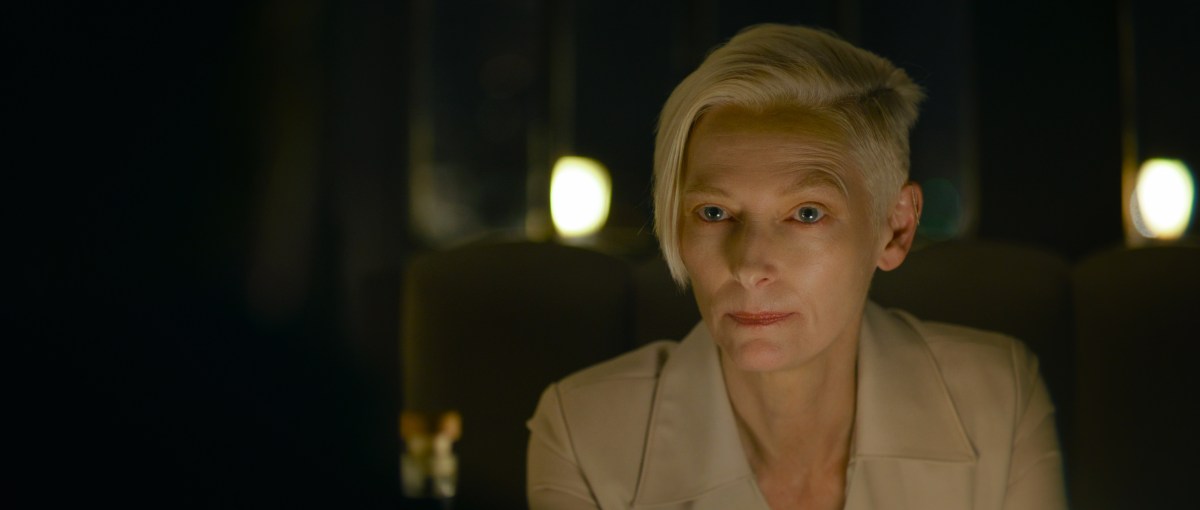
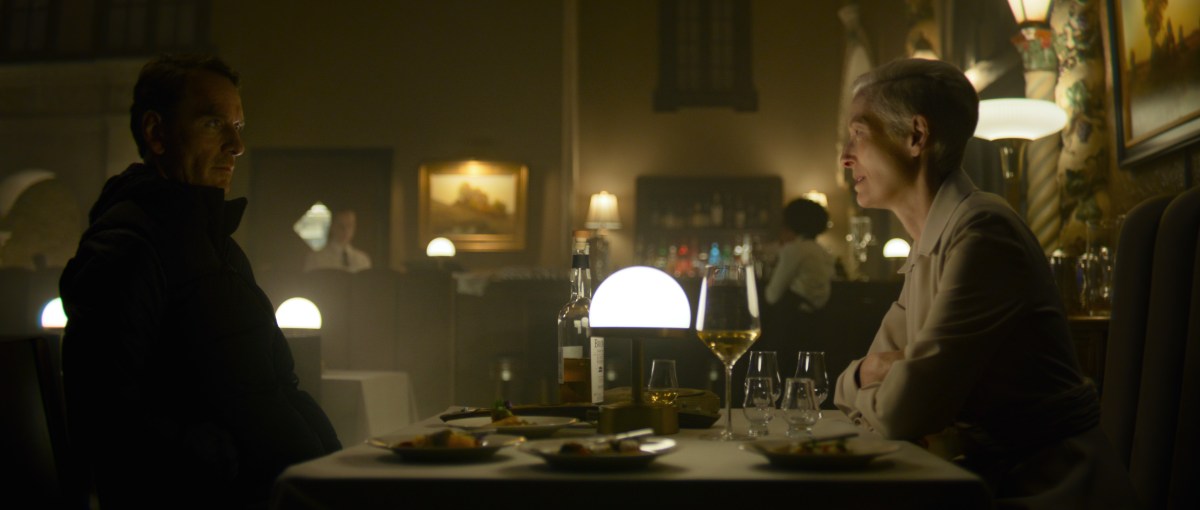
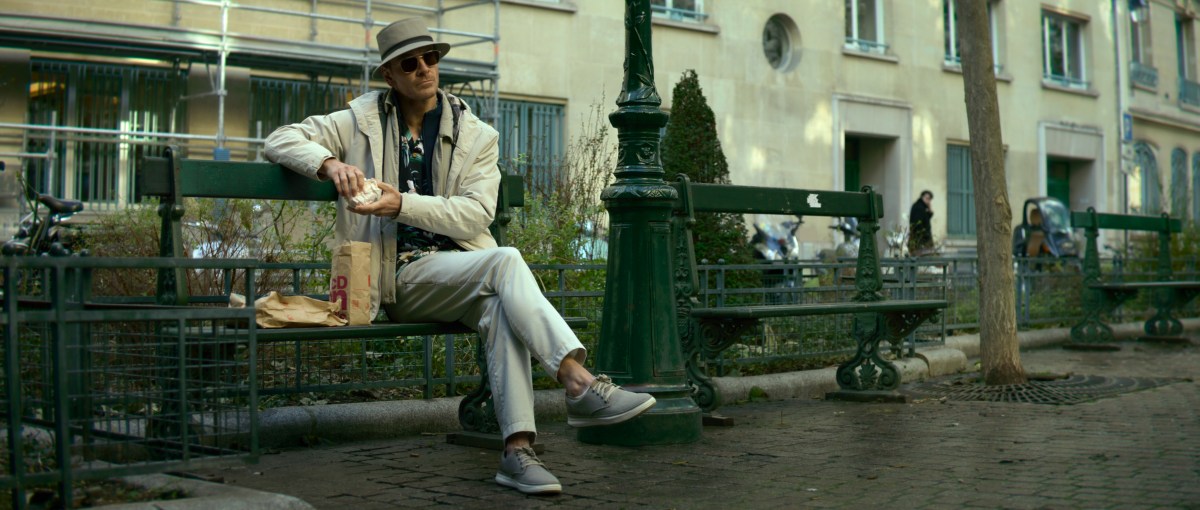
But we wanted to talk to him about The Killer, a Netflix movie with an appearance in selected theaters at very selective times. Most people would wait for the stream and live with the Internet compression artifacts for the treat of a Fincher film, this time about a man who kills for a living. Cue Michael Fassbender, with sociopathic personality traits and an attention to detail that leaves nothing to chance; some reviews suggested that this man was a depiction of Fincher himself.

If you have seen previous films or television shows from the Fincher/Messerschmidt duo, especially 2018’s Mindhunter, you would be in a comfortable place from the get-go of The Killer: An avocado-colored LUT, exquisite scene management, and meticulous coverage. “Is this all you?” the DP was asked.

“It’s a thing that David and I do together. I enjoy the process of camera direction; I view it as sort of my principal job, really. It’s thinking about the structure of the film and of each scene. Every director’s interaction in terms of coverage and camera direction is different. It’s the first thing David and I discuss: structure and pacing. It’s almost an editorial conversation in terms of what we’re going to provide Kirk [Baxter, the editor] and how each scene breaks down in terms of the pace,” he said.

Read the full profile

‘The Killer’ filmmakers David Fincher, Andrew Kevin Walker on paring down the dialogue and being inspired by Don Siegel

The Killer sees David Fincher deliver a lean, efficient and darkly funny hitman tale. Screen talks to the filmmaker and screenwriter Andrew Kevin Walker about bringing a French graphic novel to the screen.

Mark Salisbury (Ex-Twitter)
December 20,2023
ScreenDaily

“Obviously, I’m drawn to nihilism,” says a grinning David Fincher, director of Se7enFight Club and Gone Girl, when asked why he wanted to adapt French graphic novel series The Killer into a film. “But I wanted to make a fucking Don Siegel movie. I wanted to make a Michael Winner movie. I’m so tired of slogging through characters you create to deliver some idea of backstory. What’s the greatest backstory in the history of motion pictures? ‘What were you doing in China­town, Jake?’ ‘As little as possible.’ It explains everything in one line.

“I love it when you can distil motivation down to these incredibly brief and simple evocations,” he continues. “I’m tired of two-hour 45-minute movies, and two-hour 30-minute movies. I’m tired of making them. I’m joking, but does it warrant it? Then I started thinking about Get CarterCharley Varrick. Movies where it just is what it is.”

This was back in 2007, when the graphic novel series — written by Alexis ‘Matz’ Nolent and illustrated by Luc Jacamon, and first published in 1998 — was being developed into a film by Brad Pitt’s Plan B Entertainment and Paramount. Fincher was intrigued, but was directing Pitt in The Curious Case Of Benjamin Button, so was not ready to commit. “It wasn’t like you were going, ‘This has to be seen.’ It was more of a way to explore some things I was interested in — the broadest brushstrokes of backstory and this idea of intercepted thought. Why is it we assume when we hear a character’s thoughts that it’s the truth? I don’t know people who aren’t lying to themselves.”

Fincher approached Se7en screenwriter Andrew Kevin Walker, who had done uncredited rewrites on Fight Club and The Game as well as work on several unmade Fincher projects — among them The Girl Who Played With Fire, 20,000 Leagues Under The Sea, an adaptation of Arthur C Clarke’s Rendezvous With Rama and a remake of The Reincarnation Of Peter Proud — to see if he was interested in adapting The Killer. But Walker was not, according to Fincher. “He didn’t want to touch it then.”

Read the full profile

Killer Instinct

With six unique locations, grading The Killer was never going to be simple. Colourist Eric Weidt shares how he captured David Fincher’s meticulous hitman.

Katie Kasperson
January 2024
Definition

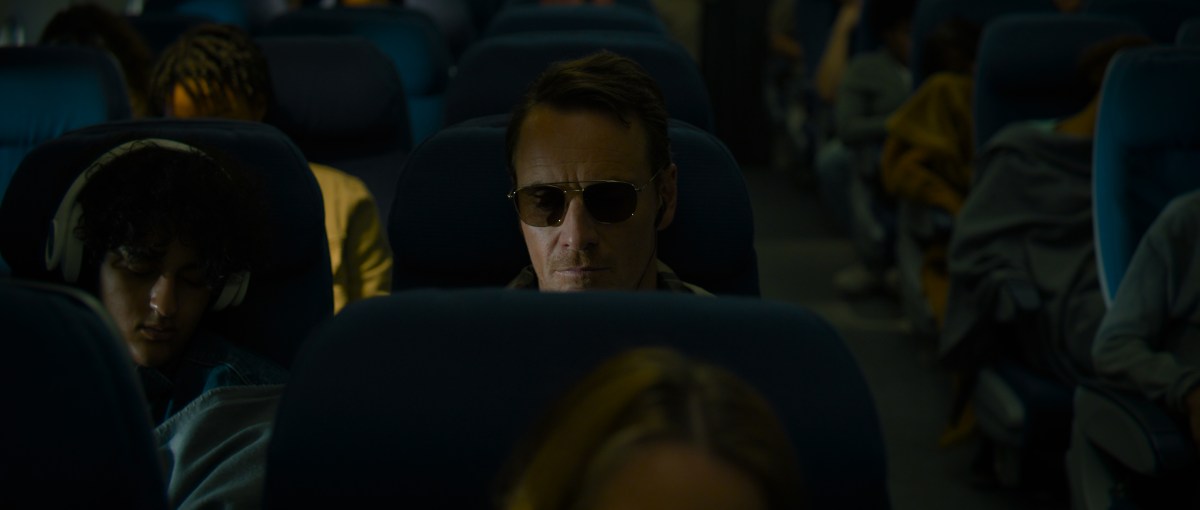
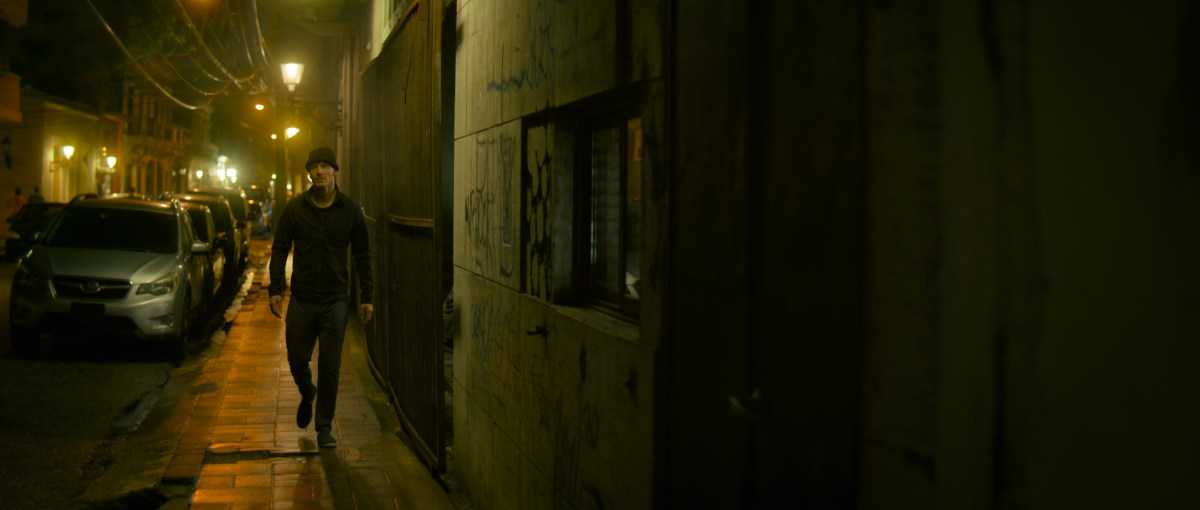
The latest film from David Fincher, The Killer, sees Michael Fassbender play the titular assassin – a Smiths-loving cynic who embarks on an international chase after a high-profile job goes awry. The story takes our anti-hero from hazy Paris to humid Florida to wintry New York, with each location taking on its own challenge – both for the Killer and the film’s colourist Eric Weidt.

GOING INTERNATIONAL

Based on Alexis Matz Nolent’s graphic novel series and inspired by Jean-Pierre Melville’s Le Samourai, The Killer combines a fast-paced plot with moody yet bold colours. “I think Fincher is a big comic book fan,” begins Weidt, “especially in the art of framing to impart the beats of a story. Working in film, he brings that to movement as well – he’s seeking a visual rhythm that makes you forget it is highly constructed.

“David likes to push and pull colours, but always strikes an unconscious balance,” he continues. Weidt began working on The Killer while it was still at the pre-production stage, developing lookup tables alongside cinematographer Erik Messerschmidt ASC, who had previously worked with Fincher on Mank, for which he won an Academy Award.

Read the profile and the full January 2024 issue of Definition magazine

Read the website version of the profile

The Professionals: “The Killer” and “Ferrari”

Erik Messerschmidt, ASC shoots two stories about men whose business and private lives spin out of control.

Patricia Thomson
January 2024
American Cinematographer

A pair of films shot by Erik Messerschmidt, ASC premiered at the Venice International Film Festival last August, and both were collaborations with leading directors: David Fincher’s The Killer and Michael Mann’s Ferrari. Messerschmidt recently spoke with AC from Spain about his work on each production.

The Killer | A Devil of a Job

Fincher and Messerschmidt didn’t discuss the look of The Killer as much as its tempo and structure.

Adapted from a graphic-novel series, the film follows a methodical, nameless assassin (played by Michael Fassbender) whose life spirals out of control after a job goes horribly wrong in Paris. He tries to restore a sense of order by punishing those responsible.

Messerschmidt won an Academy Award for Fincher’s Mank (AC Feb.’21), and his collaborations with the director span the Netflix series Mindhunter and the feature Gone Girl — with Messerschmidt serving as gaffer for Jeff Cronenweth, ASC (AC Nov. ’14) on the latter.

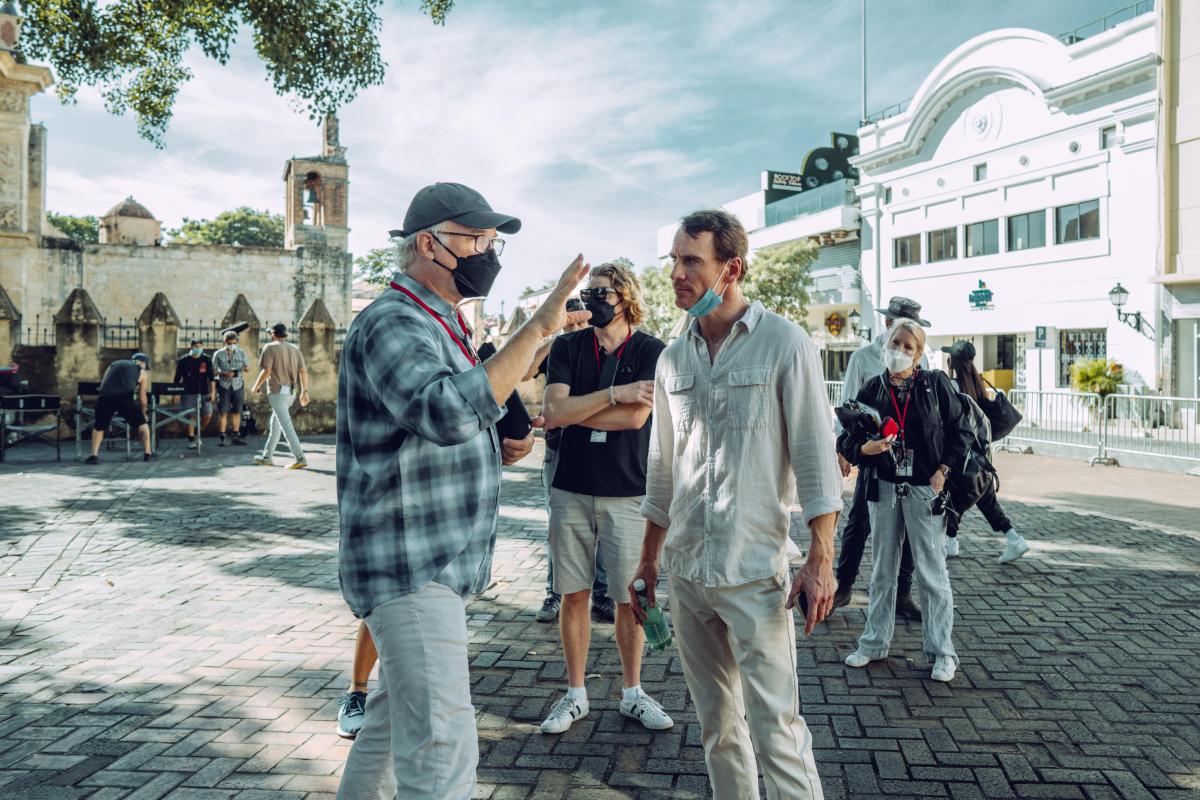
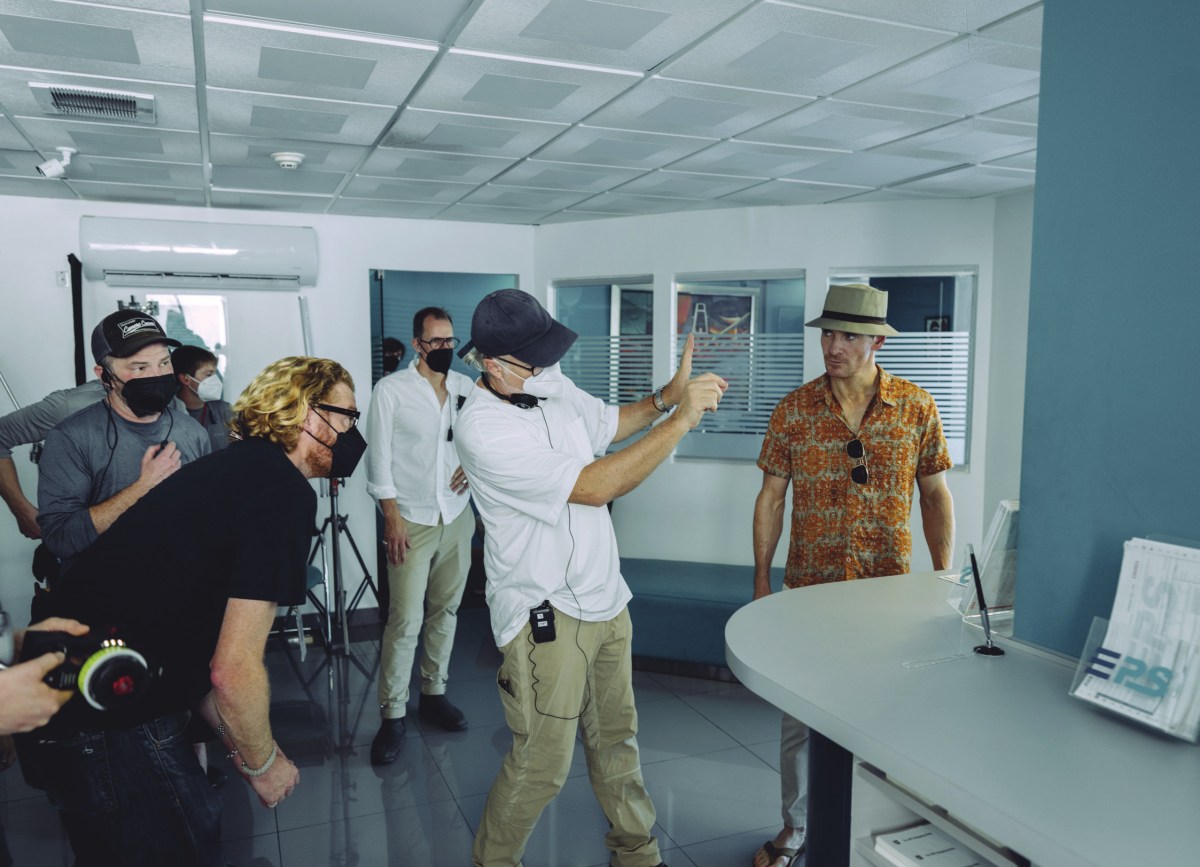
“David is fastidious,” he says. “He is very prepared, but very collaborative and considerate of what it is everyone’s bringing to the project. He shares his goals for the film with you, and he shares the techniques that he wants to use in a really elegant way. So, you begin to understand quite quickly what he’s looking to achieve on a given shot, a given scene or even on a given film.

“On this film, David was particularly interested in exploring The Killer’s state of mind through the camera’s perspective,” recalls Messerschmidt. “The Killer in his natural state is very much in control of his environment — nothing surprises him, and we wanted the audience to immediately connect to his confidence.”

Read the full double feature in the January Issue of American Cinematographer

How Andrew Kevin Walker created a chatty ‘Killer’ who breaks his own rules

Andrew Kevin Walker looks to make the process of writing fun, and to add a dash of that fun to his scripts, as with “The Killer.” (Brandon Michael Young / For The Times)

Bob Strauss
December 18, 2023
Los Angeles Times

Andrew Kevin Walker feels right at home on the patio of a Los Feliz restaurant. As he should; the Pennsylvania native has lived in the L.A. neighborhood since moving here from New York with his screenplay for “Se7en,” the disturbing thriller that became director David Fincher’s 1995 breakout feature.

Gregarious as the protagonist of “The Killer,” his new feature with Fincher, is taciturn — the screenwriter’s proud that, in his first script draft, Michael Fassbender’s unnamed, professional assassin had only 13 lines of dialogue. He sweated to get every line and action in the brutal, existential “Killer” just so, yet constantly refers to a search for fun in both his painstaking writing process and throughout the lean, mean movie he concocted with Fincher.

“Writing is no fun, but the challenge is how do you make it interesting to invent, semi-realistically at least, this guy’s existence in the first 20 minutes or so,” says Walker, who’s wearing a vintage Rolling Stones tour T-shirt, shoulder-length gray/blond hair and a friendship bracelet that says “jackass” made at one of the numerous WGA picket lines he marched this summer. “Sleep on a rubber mat that you roll up every night, spray the sink and use bleach in the toilet so you’re getting the DNA out of the pipes the best you can, have thermal gloves so you can twist off your rifle barrel without blistering your hand. … The problem-solving became what defined the process-intensive storytelling. Which hopefully didn’t tip over into tedium but embraced what I like to call an exquisite mundanity.”

Read the full profile

‘Ferrari,’ ‘Society of the Snow’ and ‘The Killer’ Deliver the Sound of Trouble

TheWrap magazine: The sound teams on those three movies had to conjure up car wrecks, a plane crash and some assassinations.

Steve Pond
December 15, 2023
The Wrap

Over the last few years, the Oscar sound category has recognized war movies like “All Quiet on the Western Front,” science fiction movies like “Dune” and musicals like “West Side Story,” among others. There’s no formula for how to use sound effectively, but three of this year’s gems do share a sense that their sonic palette puts us in dangerous places: On the racetracks of 1950s Italy, in the frigid expanses of the Andes and inside the unsettling cranium of Michael Fassbender.

Read the full profile

The Killer: Wei Zheng (Artemple Hollywood), Yabin Morales (Ollin VFX) & James Pastorius (Savage VFX)

Vincent Frei
December 18, 2023
ART of VFX

Wei Zheng (VFX Supervisor) began his career in visual effects in 1998 at ILM. He then worked at Digital Domain and joined Artemple Hollywood in 2012. He has worked on various shows including Minority ReportZodiacMindhunter, and Mank. Today he talks to us about his new collaboration with David Fincher.

Yabin Morales (VFX Supervisor) has been with Ollin VFX for over 15 years and has worked on projects such as The Curious Case of Benjamin ButtonJumanji: Welcome to the JungleThe Boys, and Outer Range.

With over twenty years of experience in visual effects, James Pastorius (VFX Supervisor) has worked on many films such as Gone GirlJumanji: The Next LevelUncharted, and Ferrari. In 2007, he founded his own studio, Savage VFX.

Read the full interview

‘Killer’ Cinematographer Erik Messerschmidt Collaborated With Director David Fincher To Create a Uniquely Visual Assassin’s Tale

Clarence Moye
December 18, 2023
AwardsDaily

Cinematographer Erik Messerschmidt began his acclaimed collaboration with iconic director David Fincher as a gaffer on Fincher’s 2014 thriller Gone Girl. That initial introduction led to Messerschmidt lensing 16 episodes of the acclaimed Netflix crime drama Mindhunter for which he received a Primetime Emmy Award nomination. That close collaborative relationship with Fincher then morphed into Messerschmidt’s breakout moment as a celebrated cinematographer, his Oscar-winning lensing of Fincher’s 2020 Mank. His black-and-white cinematography not only echoed Gregg Toland’s Oscar-nominated work on Citizen Kane, but it also fully immersed viewers in 1940s cinema, a goal for the film that Messerschmidt shared with other Mank artisans.

Now, Messerschmidt again collaborates with Fincher on an entirely different project, Netflix’s The Killer. The film thrusts both artists into a modern day world of a hired assassin (Michael Fassbender) as he botches a hit job and travels across the world to seek retribution. Traditionally, when approaching a project of this caliber, Messerschmidt would prep a “lookbook,” a collection of photographs intended to outline visual references for multiple aspects of the filmmaking craft.

But with The Killer, Fincher and Messerschmidt approached things differently.

“In the past when I’ve worked with [Fincher], I have sent him lookbooks, we’ll have references, or we’ll start with paintings or photography or other movies. We didn’t do that on this movie. We talked about pacing and timing and scene structure and point of view,” Messerschmidt shared. “The aesthetics of the look of the movie ended up being born through the process of exploration and scouting and location selection. Even though the movie is stylistic, it all comes from a place of realism, and that was always the intent.”

To follow The Killer on his world-wide journey, Fincher segments the film into chapters. Not only does this structure echo the graphic novel roots of the story (the film is based on the French comic by Alexis “Matz” Nolent and Luc Jacamon), but it also sets the tone within the larger world of its edgy, pulp fiction ancestors. Given that structure, Messerschmidt faced unique lensing challenges as The Killer moves from chapter to chapter.

Read the full profile