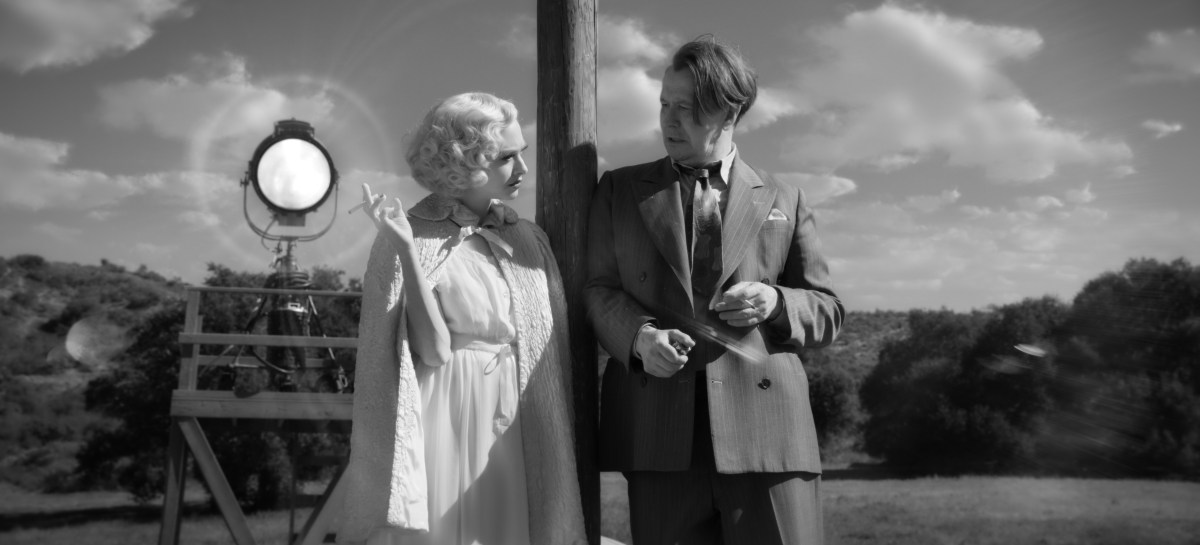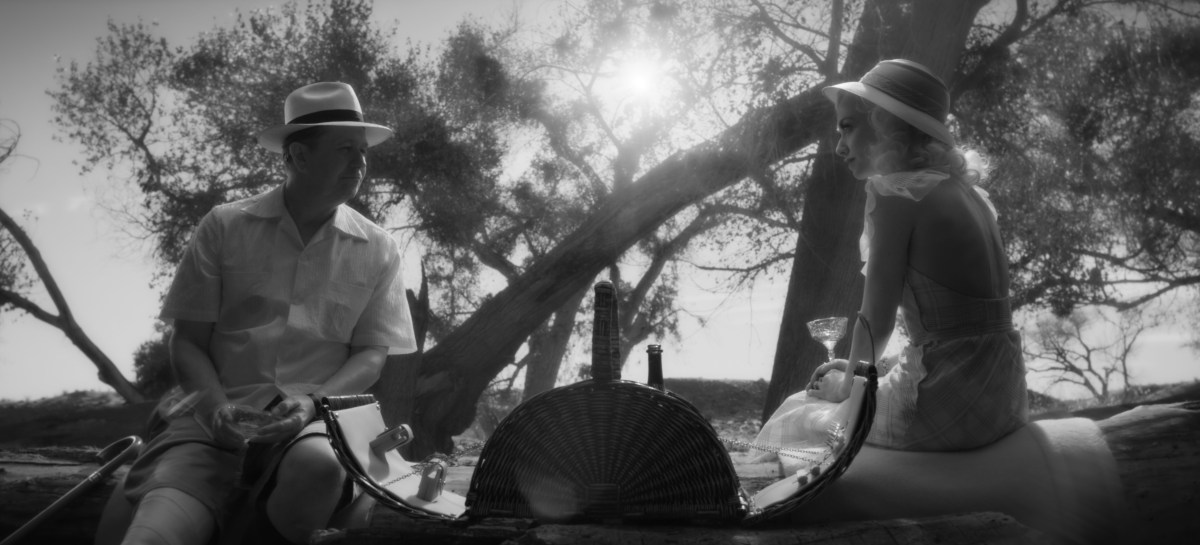
Like her fellow Oscar-nominated colleagues, costume designer Trish Summerville had the rare opportunity of working in black-and-white on David Fincher’s “Mank,” which meticulously recaptured the Golden Age of Hollywood in the ’30s. But their work was made easier by the monochromatic settings on their iPhones, allowing them to instantly translate the proper color tones. This way, the look of Summerville’s wardrobes would be in sync with the sets and decor. It was all part of strategic plan to create an authentic-looking monochromatic world.
“I had conversations with [production designer] Don Burt about what his color palettes would be so we wouldn’t have the rooms be so colorful,” Summerville said. “We wanted to have the tones blend. For us in costumes, it was more burgundies, purples, navies, blacks. And you could pump up from there to gowns with muted lilacs or dusty roses, which came in as nice light grays. We also had shell whites or cream whites and stayed away from deep black. It was also being mindful of prints and patterns that could be too bold or too busy. And how to use details that wouldn’t have too much contrast or disappear entirely. For instance, you couldn’t have navy buttons on a navy suit or it would look black.”
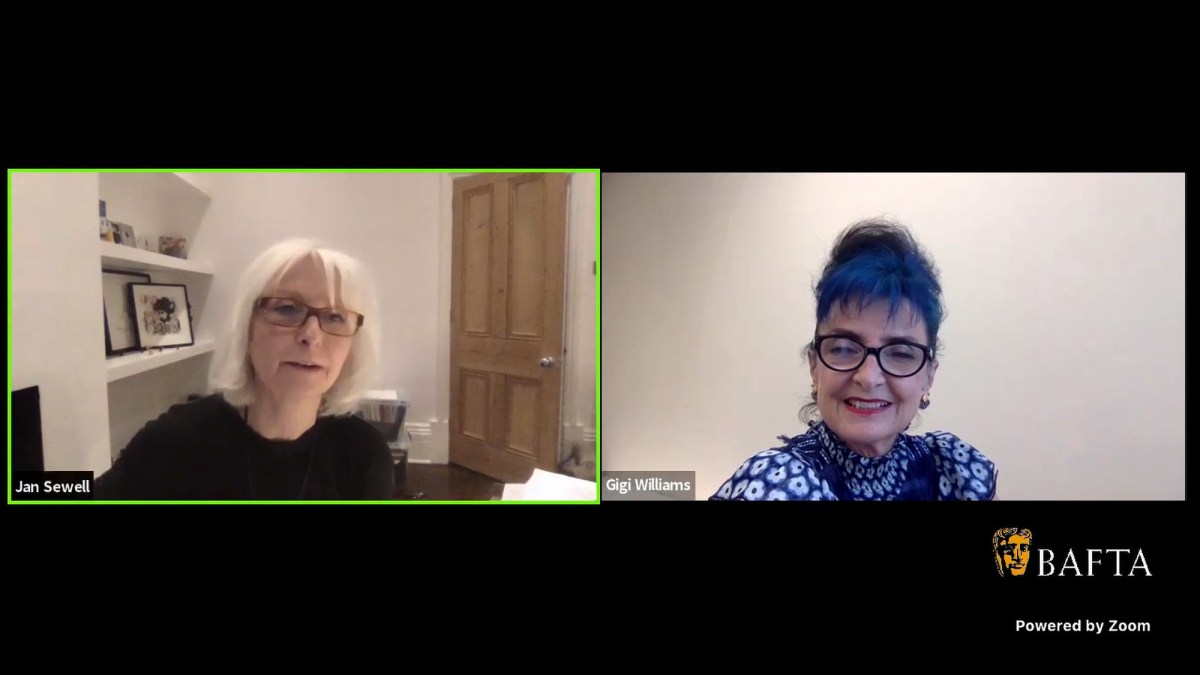
David Fincher‘s Mank is the most Oscar-nominated film of the year, amassing ten, thanks to the beauty and brilliance of its black-and-white execution. One of those nominations belongs to makeup department head Gigi Williams, a veteran who picks her work based on her belief in the director. In Fincher, she was collaborating with one of the most precise filmmakers in the business, and in Mank, working off a script from his father Jack Fincher, Williams had caught the director on what was likely his most personal project to date.
“If your makeup is too loud, you take away from the performance and you don’t belong in this artist’s picture, because Mank is a piece of art that everyone has dabbled in,” Williams says. “Everyone has put their piece into it, and everyone flows together so that nobody stands out. My whole career, I don’t like makeup that’s too big, that makes a statement, if you see my makeup, I’ve failed. I want to see the actor, I want to see the essence of the actor. I love the process of acting. I’m there to facilitate that.”
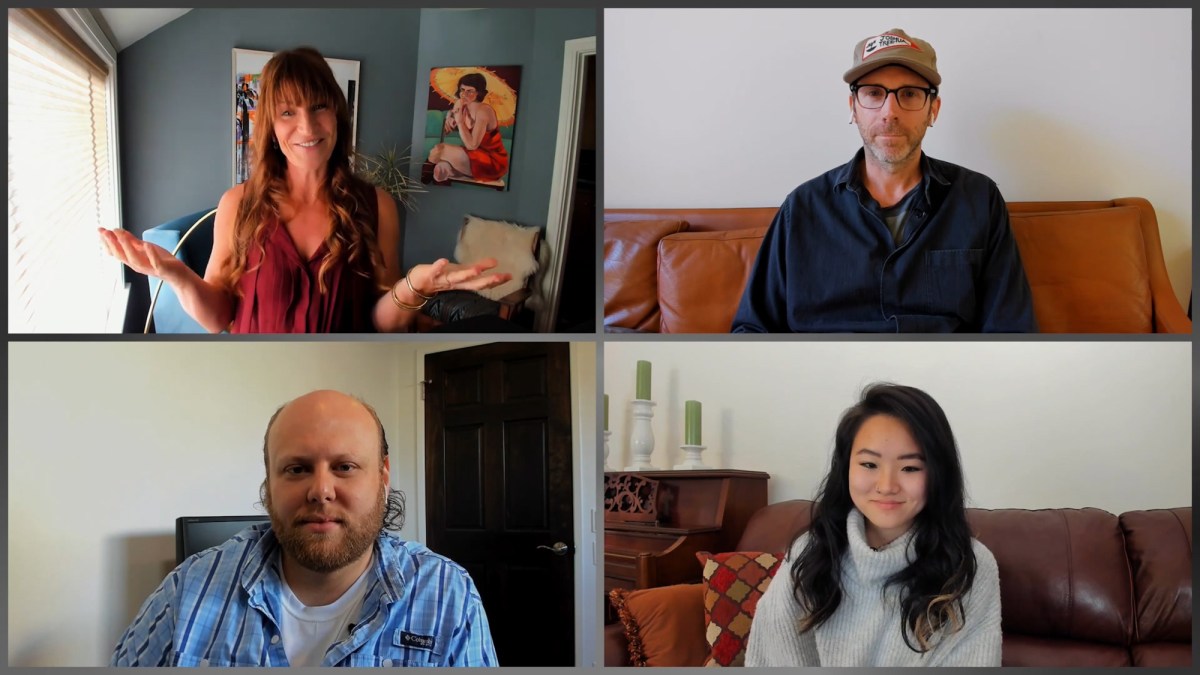
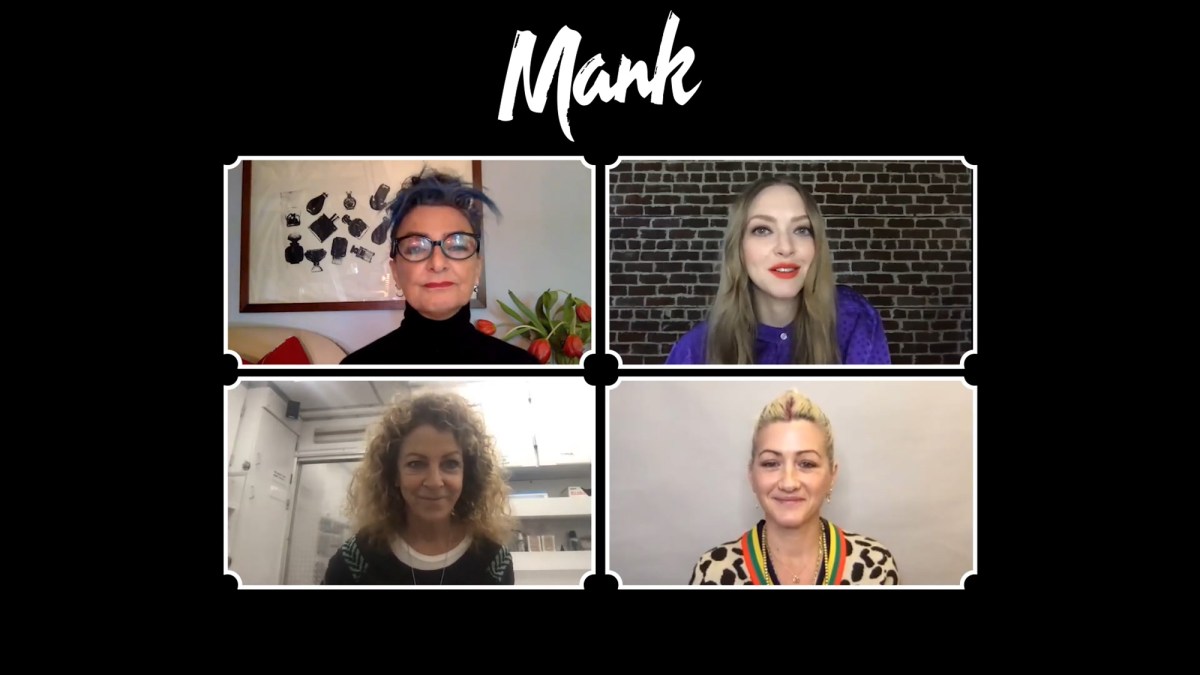
Mank star Amanda Seyfried sits down with costume designer Trish Summerville, makeup department head Gigi Williams and assistant head hair stylist Colleen LaBaff for a deep-dive discussion of their efforts in bringing Marion Davies to life on the screen for David Fincher‘s black-and-white ode to Hollywood’s Golden Age.
Welcome to the Rock ‘n Roll Ghost Podcast. On this episode, the Ghost speaks with musician and composer Jason Hill about his career dating back to his days in the bands Convoy, Louis XIV and Vicki Cryer. As well as his work with The Killers and producing/touring with the New York Dolls and the recent passing of Sylvain Sylvain. Hill also talks about his late career turn towards film and TV composing. He has worked closely with director David Fincher on projects such as Fincher’s Gone Girl and the Netflix series Mindhunter. It’s a pretty wide ranging, fun interview with someone I go back nearly twenty years with.
Also, starting April 1st, Hill will be hosting Film Composing and Music production masterclasses. Check out the Department of Recording and Power‘s website for more information.
You would be forgiven for thinking production designer Donald Graham Burt works exclusively with David Fincher. His talents are visible in confirmed classics including Zodiac, The Girl With The Dragon Tattoo and The Curious Case of Benjamin Button, for which he received an Oscar. Beyond that his work can also be appreciated in Donnie Brasco, Christian Bale headliner Hostiles and most recently Outlaw King featuring Chris Pine.
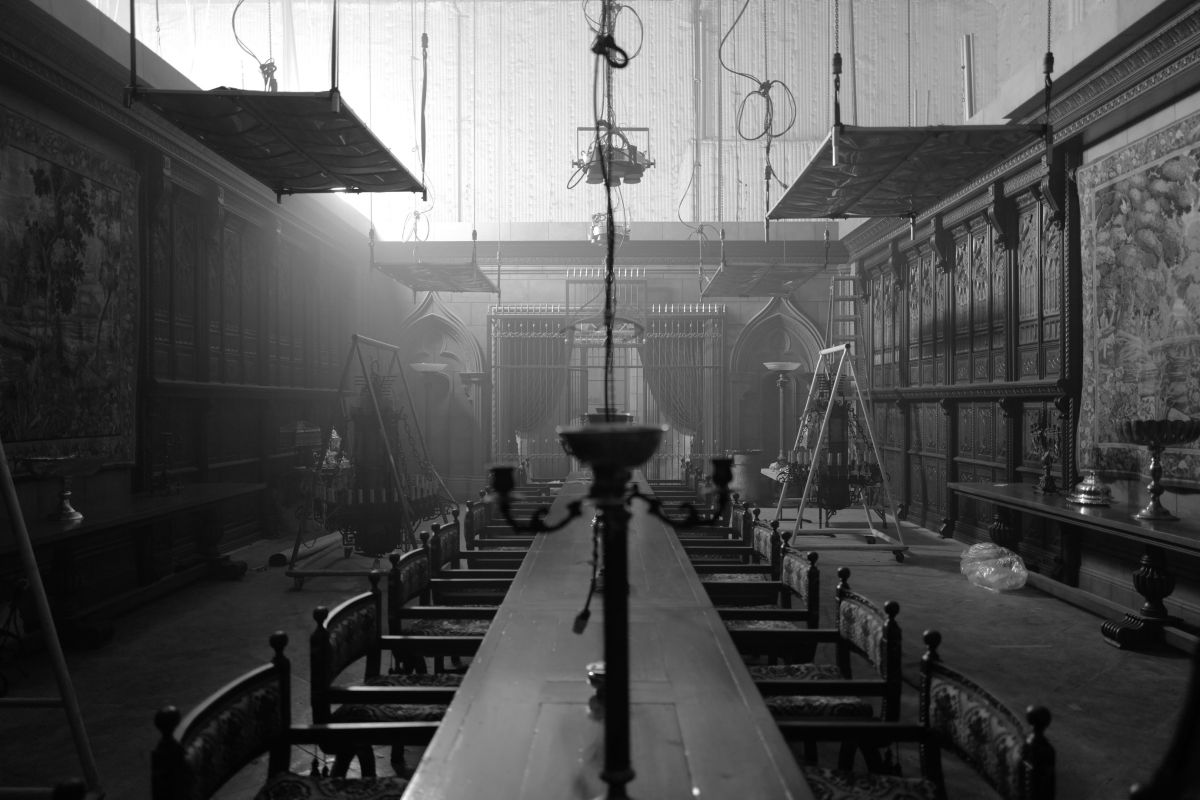
In conversation Donald is self-deprecating, effortlessly engaging and eloquent on his process. Mank appears to be the culmination of a professional relationship spanning more than a decade, which uses Citizen Kane as its backbone to explore broader issues. Adorned in the garb of a Thirties film noir, Mank is masterful at evoking a bygone era. Much of that success comes through the pitch perfect production design, which would have been impossible without Donald Burt.
Following on from his nomination at the British Academy Film Awards, he took time out to talk to Flickering Myth’s Martin Carr about what was required to bring Mank to life, as well as what a collaboration with David Fincher really involves.
Nobody but Laray Mayfield could have cast Netflix’s “Mank.” She saw the first version of the script back in the late ’90s thanks to her long-standing working relationship with director David Fincher, which dates back to making music videos in the ’80s. Her work in film alongside Fincher and beyond has earned Mayfield both critical and popular acclaim. An expert at building ensembles and finding new faces, she again worked her magic on “Mank,” which chronicles Herman J. Mankiewicz’s writing of “Citizen Kane.” Here, she shares her advice for actors and illuminates how she works with Fincher after all these years.
How did the ensemble for “Mank” come together?
We spent a lot of time reading and meeting actors. Of course, we offered it to Gary [Oldman] first, and that was a pivotal piece of our casting. And then we went to Charles Dance. For everything else, we jumped in and started doing lots of auditions, running lists, and talking to David about different actors. We did that for seven months.
“If somebody really wants to be an actor, they should take acting classes. They should go to school for it. It’s a training. It’s like dancing, it’s like painting, it’s like playing football, it’s like playing guitar. You don’t just decide one day you’re going to be an actor.”
Excerpts from the ‘Virtual Glass of Wine’ British Film Editors interview series. Kirk Baxter talks about editing Mank, directed by David Fincher (Fight Club, The Social Network).
Kirk Baxter, ACE on how he approached MANK (2020)
Kirk Baxter, ACE on MANK (2020) from script to scene
Citizen Kane has long been regarded as a movie masterpiece for its cinematography, storytelling, and ahead-of-its-time visual effects. Who better to pay homage to the 1940’s film than director David Fincher, whose films are often lauded for these same characteristics? Fincher’s most recent project, the Netflix feature film Mank, brings to life a screenplay written by his late father, journalist Jack Fincher.
Netflix describes the film as “1930s Hollywood…reevaluated through the eyes of scathing wit and alcoholic screenwriter Herman J. Mankiewicz as he races to finish Citizen Kane.” This movie about a movie showcases the unique approach to storytelling and visual style that continues to make Fincher’s work stand out.
Helping Fincher to bring his signature style to life is a talented post-production team that includes post producer Peter Mavromates, editor Kirk Baxter, first assistant editor Ben Insler, assistant editor Jennifer Chung, and a number of additional assistant editors and VFX artists. Their collective credits include MINDHUNTER, Gone Girl, The Social Network, The Girl with the Dragon Tattoo,The Curious Case of Benjamin Button, House of Cards, and other features.
As co-producer of Mank, Mavromates oversaw the timing, budget, schedule, and integration between the editorial, visual effects, and finishing departments. Insler was responsible for integrating the overall project workflows. Chung prepped dailies and supported the editorial team throughout the post-production process and liaised with the sound, color, and visual effects teams.
The team constantly looks to refine and improve their workflows. “I love the mechanics of post-production,” says Insler. “If there’s a way we can eliminate a bottleneck or figure out a more efficient way to do things, I’m all over it. It’s one of my favorite things to do.”
Insler had that opportunity while working on Mank, which was edited using Productions in Adobe Premiere Pro. Already long-time users of Premiere Pro, Productions made it even easier for the editorial team to organize projects, collaborate, and scale, while solving issues such as avoiding duplicate clips and providing the ability to break large projects into smaller segments so that they open and save faster.
How do you make a movie about the best movie ever made? With David Fincher, Gary Oldman, Netflix and Adobe Premiere Pro, Mank tells the story behind the story of Citizen Kane.