Fincher Moments: Mark Zuckerberg Walks Into a Bar

On the cusp of the 25th anniversary of Se7en and the 10th anniversary of The Social NetworkThe Ringer hereby dubs the next five days David Fincher Week. Join us all throughout the week as we celebrate and examine the man, the myth, and his impeccable body of work.

The first few minutes of David Fincher’s ‘The Social Network’ is a thesis statement on its protagonist—and a harbinger for a decade defined by assholes

Katie Baker
September 21, 2020
The Ringer

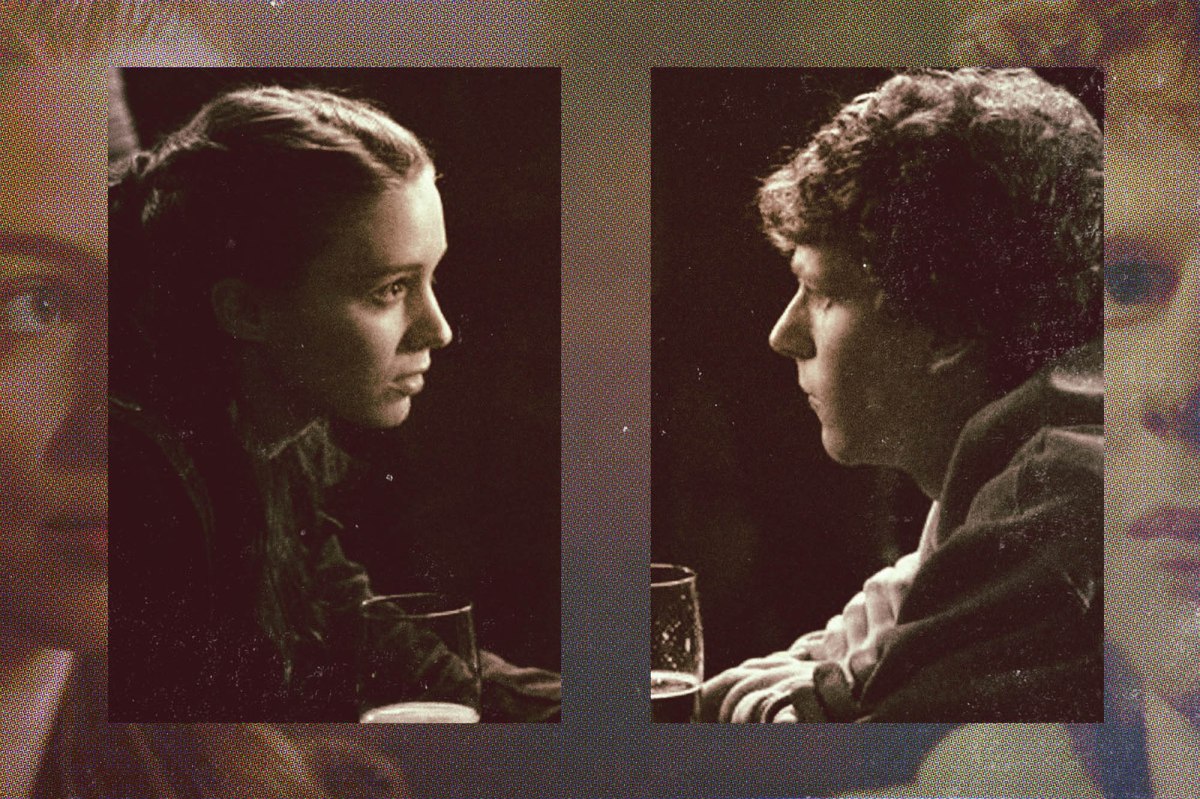
“The scene is stark and simple,” reads the first page of the screenplay. A young couple sits bickering at a campus pub, a tale as old as time. They speak quickly and sharply about pressing student concerns: SAT scores, summer jobs, a cappella groups, and whether one of them used to sleep with the establishment’s bouncer. (He’s just a friend named Bobby, she insists.)

Each character feels increasingly insulted by the other. By the end of the conversation, their relationship is through. “A fuse has just been lit,” notes the script at the scene’s conclusion, describing a dynamic—college breakup as launching pad—that is broadly familiar to audiences yet is also, in this telling, a portal to a great and eventually unrelatable unknown. That’s because this movie is no rom-com; it’s The Social Network, the 2010 deep dive into the hectic and ultimately litigious early days of Facebook that was written with snide perceptiveness by Aaron Sorkin, directed with bold ambition by David Fincher, scored with staccato generosity by Trent Reznor, nominated for eight Oscars, and received by audiences worldwide to the tune of nearly a quarter of a billion dollars.

Read the full article

The David Fincher Syllabus

A collection of things to listen to, read, and watch about the director behind ‘Fight Club,’ ‘The Social Network,’ ‘Mindhunter,’ and more

The Ringer Staff
September 21, 2020
The Ringer

Streaming: Netflix’s Mindhunter

Marc Loftus
July 2, 2020
Post Magazine

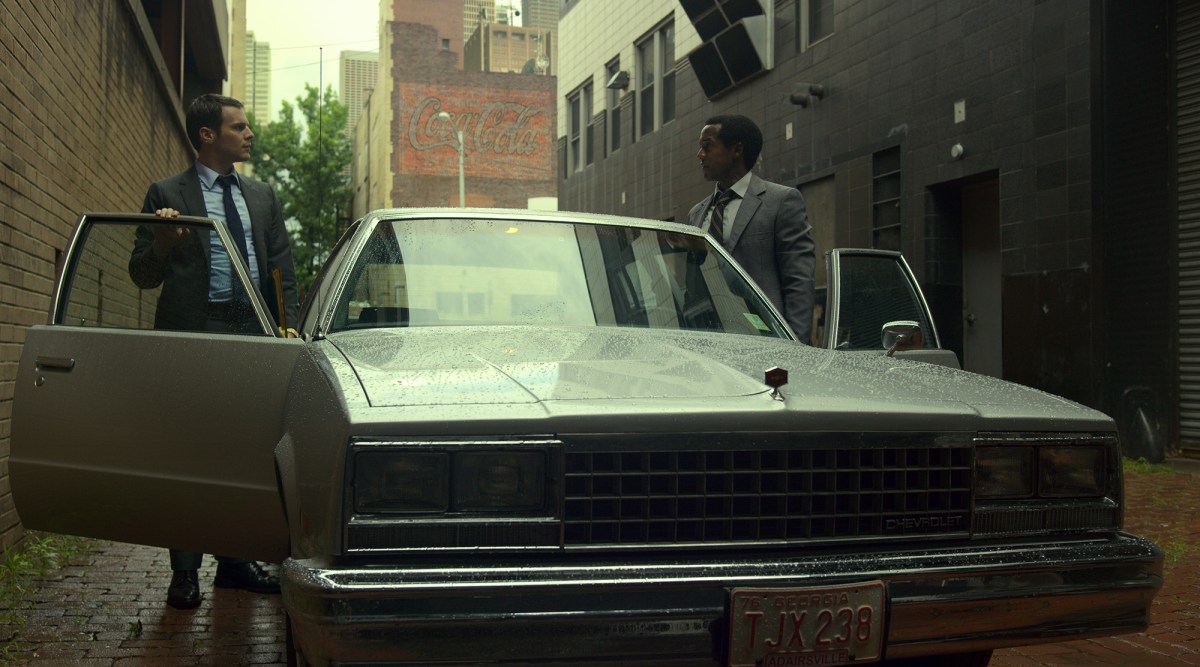
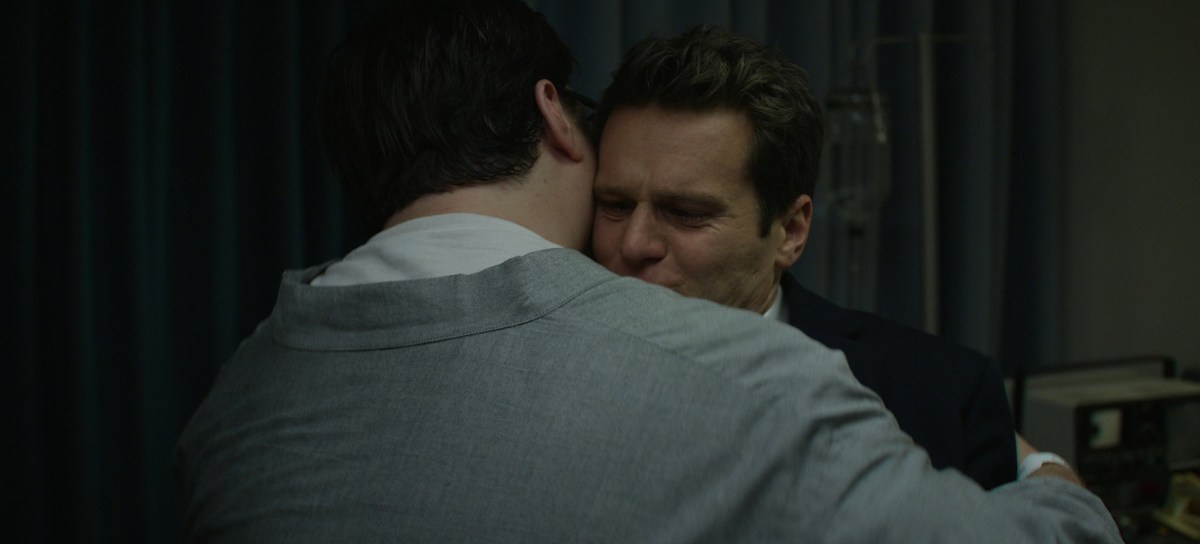
Netflix’s Mindhunter series is inspired by true events. Directed by David Fincher, the show focuses on FBI agents Holden Ford and Bill Tench, who try to understand the psyches of notorious serial killers. Mindhunter’s first season debuted in 2017, and the second season returned in the summer of 2019. 

Season 2 stars Jonathan Groff, Holt McCallany, Anna Torv, Joe Tuttle, Albert Jones, Stacey Roca, Michael Cerveris, Lauren Glazier and Sierra McClain. While Fincher was the series’ primary director, Andrew Dominik and Carl Franklin also directed episodes.

SHOOTING

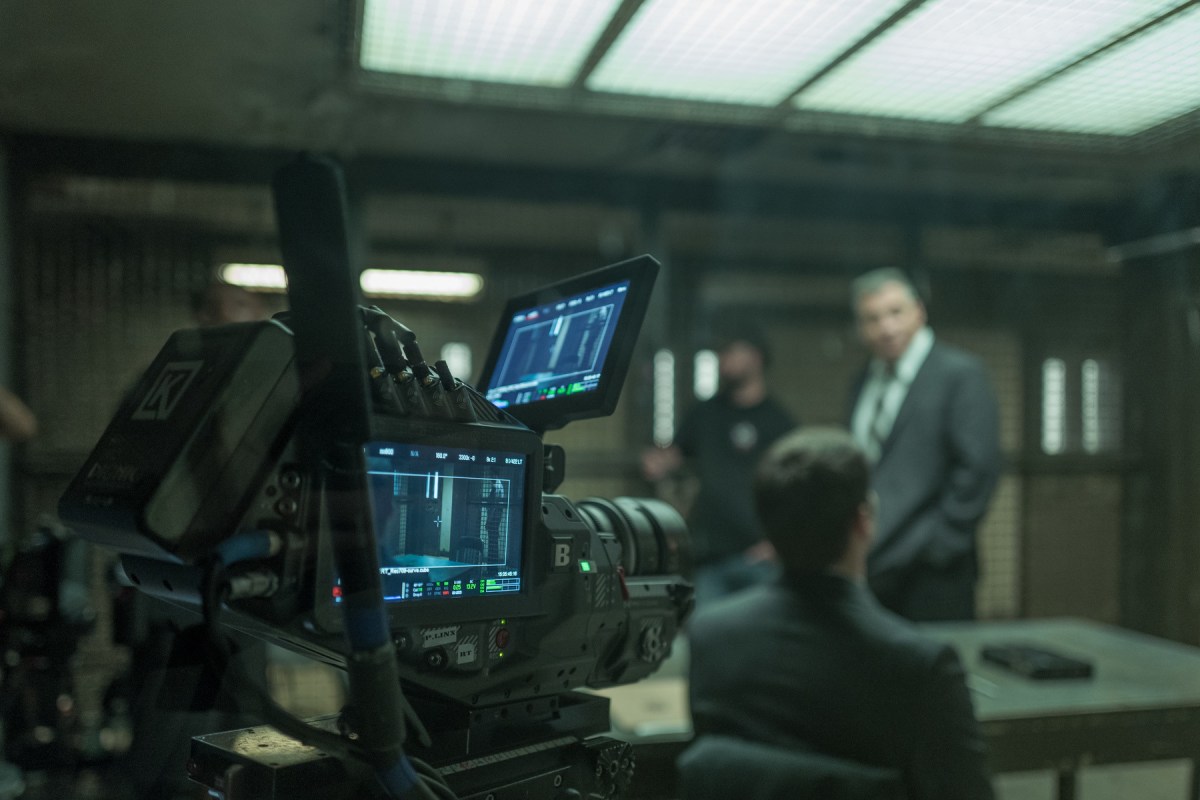
Cinematographer Erik Messerschmidt, ASC, had worked with Fincher in the past. He was a gaffer on the filmmaker’s Gone Girl, and was excited to receive a call, inviting him to come onboard to reshoot part of the pilot and second episode back in 2017. The show was already shooting with a Red camera for Season 1, and upgraded to the newer Hellium 8K sensor for Season 2.

EDITING

Kirk Baxter of Santa Monica’s Exile also has a long-standing relationship with David Fincher. He’s cut The Curious Case of Benjamin Button (2008), The Social Network (2010) and The Girl with the Dragon Tattoo (2011) — all of which won the Oscar for Best Editing, a credit he shared with Angus Wall. He also cut 2014’s Gone Girl (2014), and is currently working on an upcoming Netflix feature with the director titled Mank.

Read the full profile

How Crafts Amplified Berkowitz, Watson, & Manson Scenes in ‘Mindhunter’ Season 2

A look at the crafts behind the killer interrogations, including cinematography, sound editing, prosthetics, editing, and rerecording mixers.

Megan McLachlan
June 20, 2020
Awards Daily

Awards Daily’s Megan McLachlan and the technical team behind Netflix’s Mindhunter Season 2 (cinematography, sound editing, editing, prosthetics, and rerecording mixers) break down why each killer interview is completely different.

Mindhunter Season 2 starts with a “doozy” of a sequence.

“You’re not sure where you are,” said Mindhunter re-recording mixer Scott Lewis.

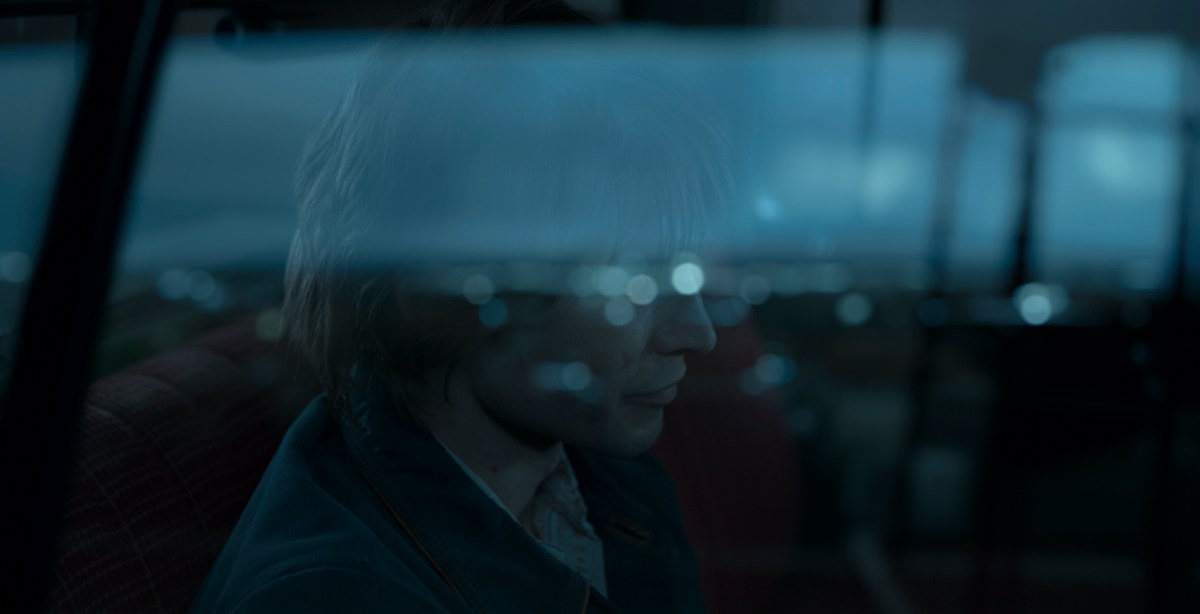
The opening sequence reacquaints us with the mind of a killer—in this case, specifically the BTK Killer (Sonny Valicenti), who we’ve been following in Season 1 through vignettes. BTK’s wife comes home to discover him tying himself up in the bathroom while wearing a mask. Lewis and his re-recording mixer partner Stephen Urata went back and forth about how the sound of the door, bumping from BTK’s aggression, was supposed to sound from down the hall.

“[Director] David [Fincher] gave some vague directions for that,” said Urata. “We tried to keep it really mysterious. We started with really dreamy, big reverb, did some fabbing, and [the wife] starts picking up on those knocking sounds. We took our liberties with it. The knocking sounds probably wouldn’t be that loud.”

It had to compete with Roxy Music’s “In Every Dream Home a Heartache,” something they had to find the right timing for with the knocks. When it came to editing the sequence with the music, editor Kirk Baxter felt like he was working on a music video.

“The track was predetermined, so I could plot everything to the music, when it was gonna hit,” said Baxter. “So much of the reaching, the hand, it was based around being stretched so the door opened at the exact beat I needed it to. To me, it was like a Christmas present. When you’ve got all of the angles and coverage, you can expand the tension and manipulate the hell out of it.”

The Crafts Behind the Madness of Mindhunter Season 2

It’s specific technical details like this that take Mindhunter to a new level of creepy with each episode. And though these elements are subtle, they add so much to each and every scene, especially when Holden (Jonathan Groff) and Tench (Holt McCallany) interview the killers.

While they might seem like they’re similar in format, each interrogation scene is completely different and tells you so much about the killer they’re questioning, with precise engineering and great care that goes into them. Let’s look at how Berkowitz, Tex Watson, and Manson are all completely different from each other.

Featured crafts:

Kirk Baxter, editing
Kazu Hiro, prosthetics
Scott Lewis & Stephen Urata, rerecording mixers
Erik Messerschmidt, cinematographer
Jeremy Molod, sound editor

Read the full profile

Deep Dive. Show, Don’t Tell: MINDHUNTER

Jackson (Twitter)
September 30, 2019
Skip Intro (YouTube) (Patreon)

“Show don’t tell” is common writing advice, but in a show with no action, how does that work?.

Stream Theory – The First One: Disney+ Pricing, CBS + Viacom Merger, Mindhunter S2

Skip Intro & Thomas Flight
September 12, 2019
Stream Theory

A guide to Netflix, Disney+, HBO Max, Apple TV+, Amazon Prime Video and Hulu as they compete in the ongoing streaming wars and what it means for the stuff you actually watch.

Listen to the podcast: Apple Podcasts, Spotify

Kirk Baxter Talks About Methods and Madness in Editing Netflix’s ‘Mindhunter’

Patrick Z. McGavin
September 25, 2019
CineMontage

In a world filled with police procedurals, Netflix’s “Mindhunter” has attracted a lot of attention.

Created by Joe Penhall, the series is a police procedural about two FBI special agents, Holden Ford (Jonathan Groff) and Bill Tench (Holt McCallany).  It has attracted top-tier talent such as David Fincher, Carl Franklin (“One False Move”) and executive producer Charlize Theron.

The second season dropped last month on the streaming platform. The Australian-born editor Kirk Baxter, ACE, a two-time Academy Award-winner for Fincher’s “The Social Network” (2011) and “The Girl with the Dragon Tattoo” (2012), is the editor of four of the nine episodes.

In an exclusive interview, Baxter talked about serial killers, editing difficult material, and working with the notorious perfectionist Fincher.

You you have had a long and very successful creative collaboration with Fincher. How did you first meet?

Kirk Baxter: I got introduced to David through Angus Wall when Angus was editing “Zodiac” (2007). I got brought into helping out, so I met David when I was already cutting a scene for him. Things went well. I became a puppy that never left.

How you would describe your working methods?

Baxter: I try to rely on him as little as possible because I am familiar with what his days are like, especially during the shooting process. David is incredibly busy, and I like to get on with it.

We work through PIX [a workflow tool that allows production teams to securely share and review content], so I will put a lot of stuff up for him every day and it is the day’s PIX that we critique and do back and forth at his pace.

David is pretty good at being all-consuming. He will tend to get back to me immediately. I don’t really hit him with questions. I just hit him with work.

He shoots, I select, put something together and send it to him and I take the feedback kind of dryly. I don’t take anything from [it as] a personal affront. I just work until it is there, until we are happy with it. I am trying to outgrow the part where you loathe yourself until you like the scene. I am getting better, but I haven’t perfected it yet.

Wheat tends to happen is during the shooting process, the initial assembly is just misery. We all hate ourselves, hate the show, and then once it is beginning to take shape, there is more of a jovial atmosphere where you start to feel comfortable that things are working.

In Season 2, was there a conscious decision to take the work in different stylistic or formal directions?

Baxter: No. David might have had that conversation with the cinematographer Erik Messerschmidt, but certainly not with me. Again, rarely am I going to have a philosophical conversation about what we want to do. My communication with David is just by doing.

Read the full interview

What Makes Mindhunter So Compelling? An Analysis

Thomas Flight
August 16, 2019
Netflix UK & Ireland (YouTube)

Mindhunter is not like other crime shows. In this video essay, Thomas Flight explores some of the inventive techniques creators Joe Penhall and David Fincher employ to inject drama and conflict into the show.

This is a detailed analysis of the ways in which Mindhunter pulls the audience into the lives of its characters as they explore the minds of some of the worst criminals on earth.

Mindhunter’s Brilliant Editing. A Breakdown

Thomas Flight
September 25, 2019
Thomas Flight (YouTube)

The Creator of Netflix’s ‘Mindhunter’ Is Already Thinking Past Season 2

“We’re working as fast as we can,” Joe Penhall tells Inverse.

Jake Kleinman
January 17, 2019
Inverse

Joe Penhall has been keeping busy. In between researching and writing Mindhunter Season 2, he also had time to pen King of Thieves, a new movie out next week about a group of elderly British burglars. But we couldn’t resist asking about his hit Netflix show, and, in an interview, Penhall tells Inverse approximately when we can expect Mindhunter Season 2 to arrive along with his plans for Season 3 and beyond. (Listen to the interview in the video above, if you can stand the sound of my rapid note-taking throughout.)

You might think that, as series creator, Penhall would be heavily involved with the editing process, but once filming wrapped in December 2018 he was essentially finished with Mindhunter Season 2.

“The editing process is quiet for me because David Fincher locks himself away and doesn’t really want to share with anybody,” Penhall says. “And I don’t particularly need to see things half finished.”

He added that Season 1 took about “6 months of 8 months” to edit, suggesting that Mindhunter Season 2 could see a similar timeline, only faster.

“We’re working as fast as we can,” he says. “There’s only eight episodes in this one [down from 10 in Season 1]. So he doesn’t have quite as much to do.”

Read the full profile and listen to the interview

When will Mindhunter season 2 be released? Here is what its creator told us

Joe Penhall also talks Charles Manson, his 5 season plan and admits he almost passed out at FBI’s museum of death.

Gregory Wakeman
January 22, 2019
Metro (US)

Mindhunter creator Joe Penhall is hopeful that the second season of the Netflix show will be released by the end of 2019, although he admits that all depends on director David Fincher.

Shooting on Mindhunter season 2 finished “about a month ago,” but when it comes to its release date Penhall says, “I don’t know because that’s always up to David. He kind of goes into editing and he doesn’t talk to anybody until he comes out again.”

“I would hope that would be by the end of this year but I just don’t really know. Yeah and he’s a rule breaker and he wants to do it on his own with his own schedule.”

Read the full profile

Editors on Editing: Kirk Baxter, ACE talks GONE GIRL

American Cinema Editors (YouTube)
May 6, 2018

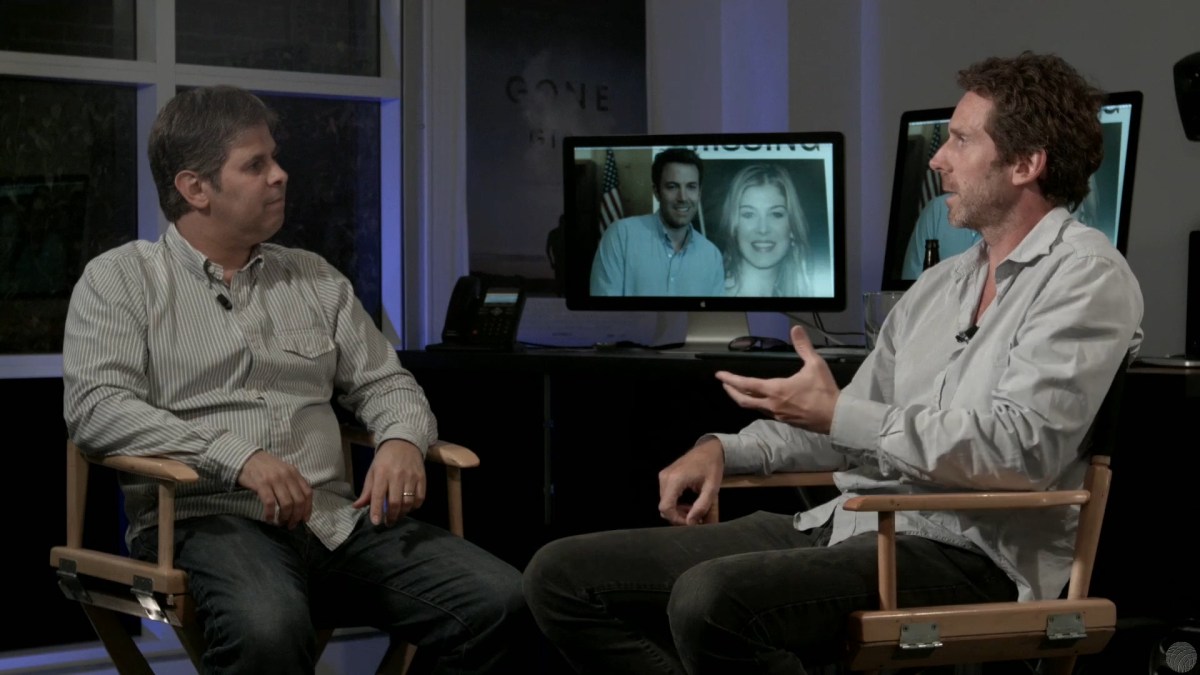
Editors on Editing: Glenn Garland, ACE talks to Kirk Baxter, ACE about editing the film, GONE GIRL.

Original release:

Gone Girl: Kirk Baxter, ACE
October 2014
moviola.com

‘Mindhunter’: David Fincher and Editor Kirk Baxter’s Dance of Death

Cameron Britton as serial killer Ed Kemper in Episode 10 (Patrick Harbron / Netflix)

2014. Kirk Baxter
Film Editor Kirk Baxter

The FBI crime drama about early behavioral profiling is a Fincher Master Class in blocking and montage, with an assist from Steven Soderbergh.

Bill Desowitz
May 29, 2018
IndieWire

With Netflix’s “Mindhunter,” executive producer David Fincher delivers a gripping crime series about the early days of FBI behavioral profiling in 1977 without any grisly murders. (Fincher directed the initial two episodes as well as the concluding two.) And for Oscar-winning editor Kirk Baxter (“The Girl with the Dragon Tattoo,” “Social Network”), this dialogue-heavy walk and talk between agents Holden Ford (Jonathan Groff) and Bill Tench (Holt McCallany) was a gift.

“The skill that David has with blocking scenes is what’s most enjoyable,” Baxter said. “With 25 different angles of different set ups, it’s very dense and takes a lot of man-hours in perfecting, but a walk and talk with an A and B camera, all I have to do is pick the best take.”

Read the full profile