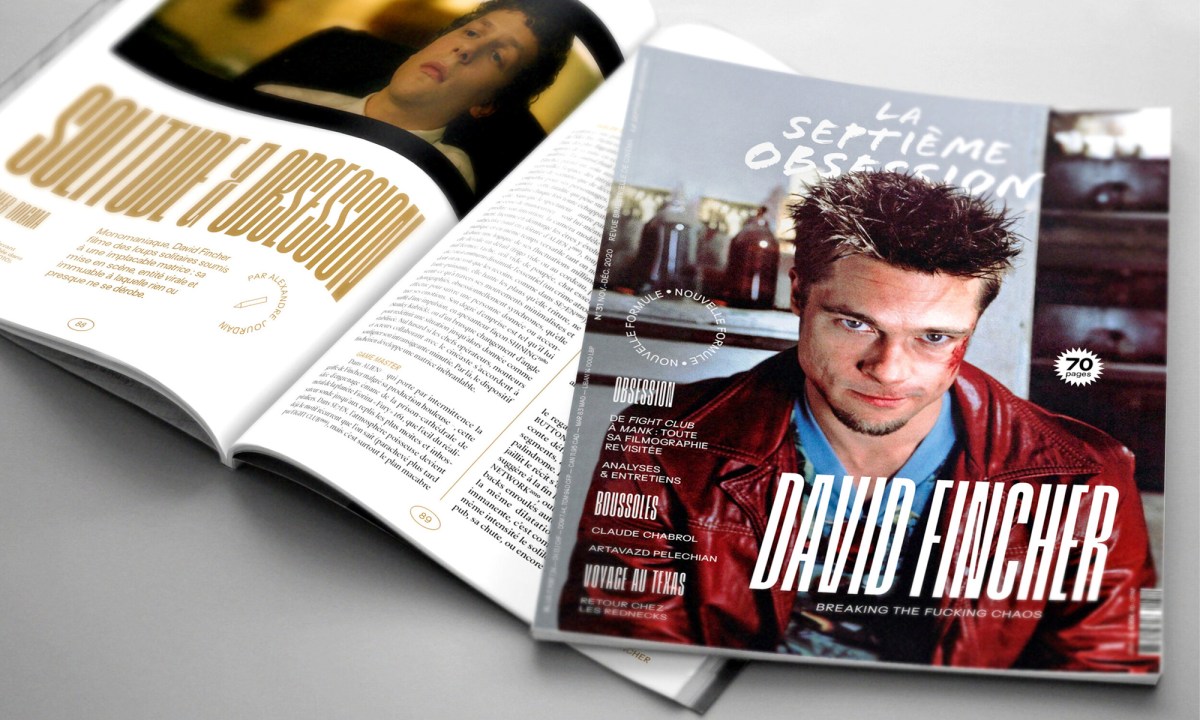
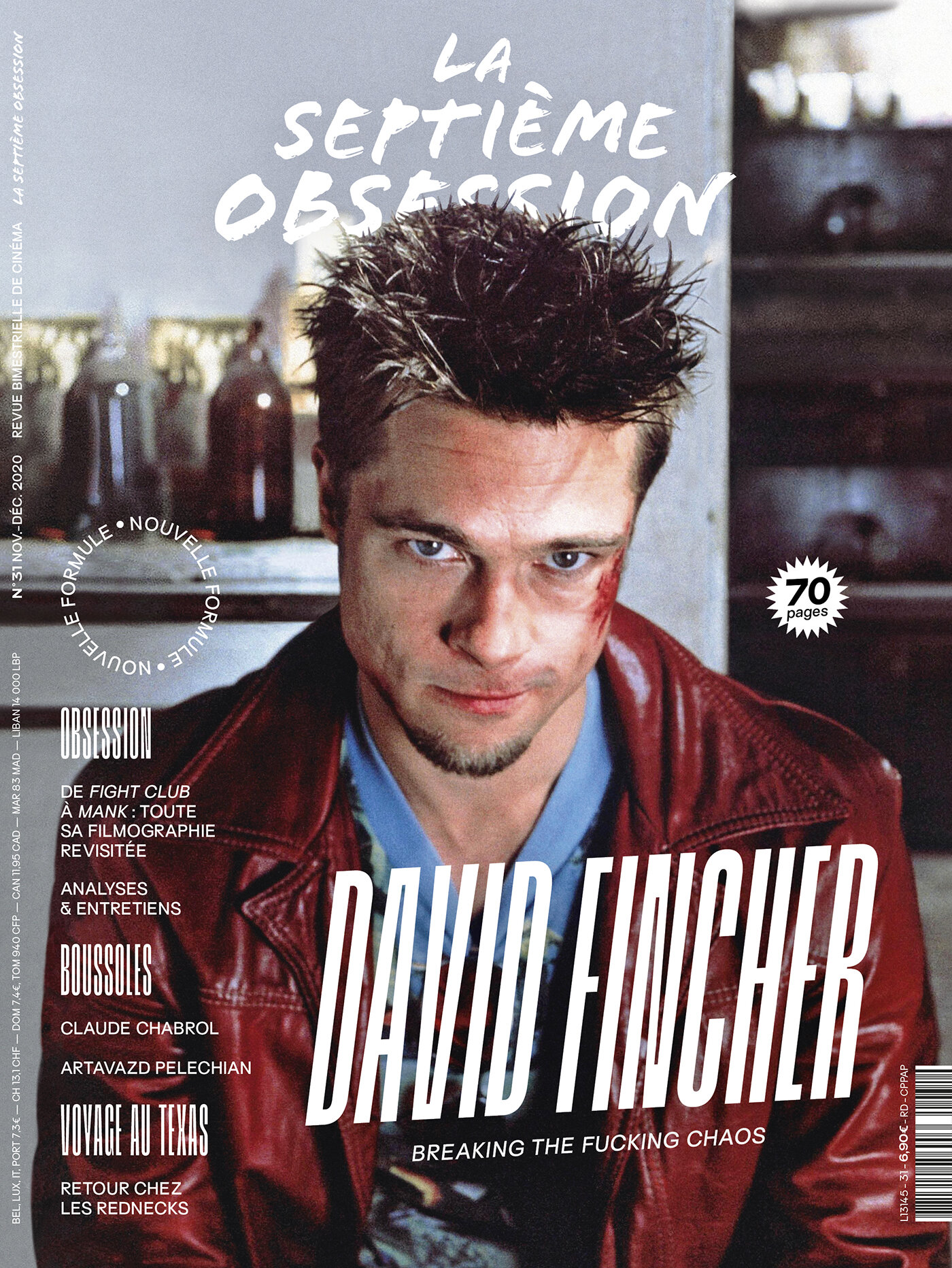
Le grand film de Fincher débarque sur Netflix le 4 décembre. L’occasion d’un entretien avec le cinéaste, mais aussi avec ses collaborateurs les plus proches. 16 pages spéciales.
Scénario pour une critique par Nicolas Tellop
Filmopathe entretien avec David Fincher – par Nev Pierce
Collaborer avec Fincher entretiens avec Erik Messerschmidt (chef opérateur) – Donald Graham Burt (chef décorateur) – Trish Summerville (costumière) – Kirk Baxter (monteur)
2. Revisiter Fincher
Plongée exceptionnelle dans l’oeuvre de l’un des plus grands cinéastes contemporains. Filmographie commentée, analyses… 50 pages à lire.
4 nuances de Fincher par Jean-Sébastien Massart et Fabrice Fuentes
David Fincher en 14 titres Propaganda Films (clips) – Alien 3 – Se7en – The Game – Fight Club – Panic Room + les plans de Panic Room – Zodiac – L’Étrange histoire de Benjamin Button – The Social Network – Millénium + la musique hantée de Millénium – Gone Girl – Mindhunter
3. Analyses
Démoniaque – la perfection du crime par Nathan Reneaud Fantômes et paranoïa par Jérôme d’Estais Solitude & obsession – Fincher Dogma par Alexandre Jourdain Poétique du suicide par Aurélien Lemant Le système des objets – design finchérien par Dick Tomasovic
Please extend a big, hearty welcome to our new issue, which is inspired by David Fincher’s Mank. First a little bit of back story: the film was adapted from a script written by Fincher’s father, Jack, who took it on as a project set by his son (who was making his early incursions into Hollywood at the time) to liven up his retirement years. This was back in the early ’90s, and once it was ready, Fincher Jr hit something of a brick wall when it came to convincing studios to fund this black and white rendering of a vital moment in old Hollywood lore.
On the cover
The title refers to the nickname given to ace scribe, wit and raconteur, Herman J Mankiewicz, and how after years of coasting on his genius, he finally alienates enough professional cohorts to write something big, meaningful and dangerous. The 200 page script he ended up with was named American, but it ended up being released into cinemas (albeit not very many cinemas) under the name Citizen Kane, directed by Orson Welles. Mank is the story of how that script came into being, but is also a hard-nosed exploration into the malevolent nature of creativity, and the cruel aspect of parlaying real lives into a fictional context.
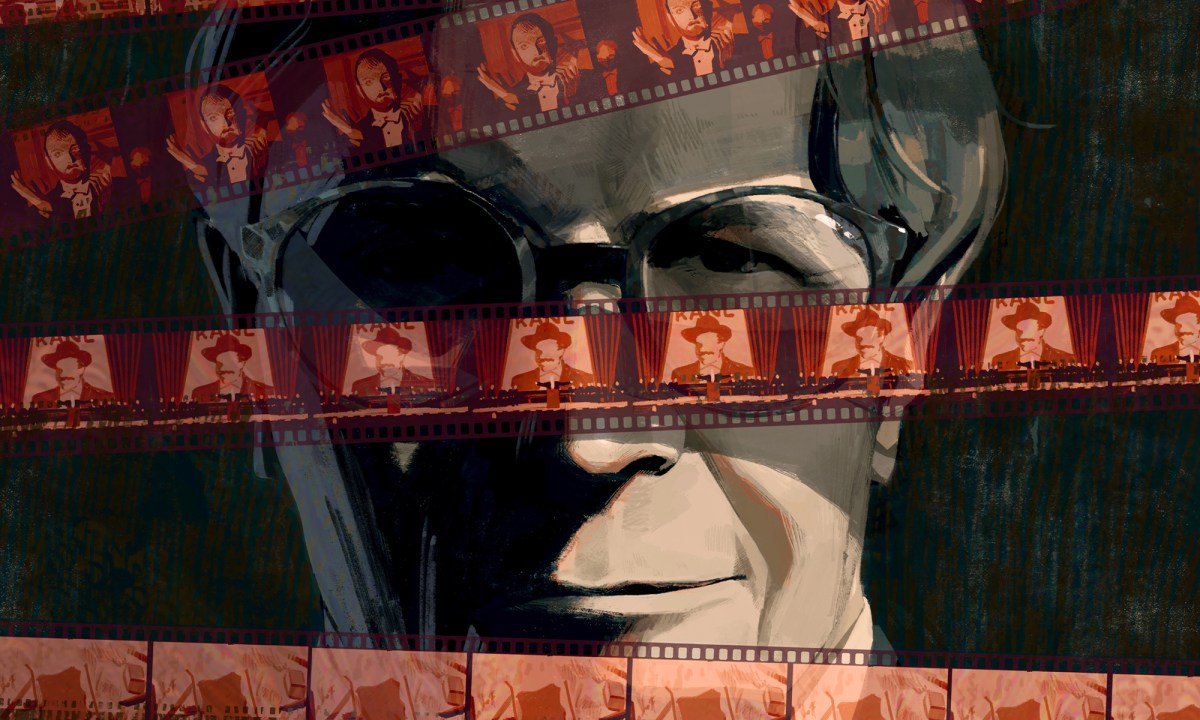
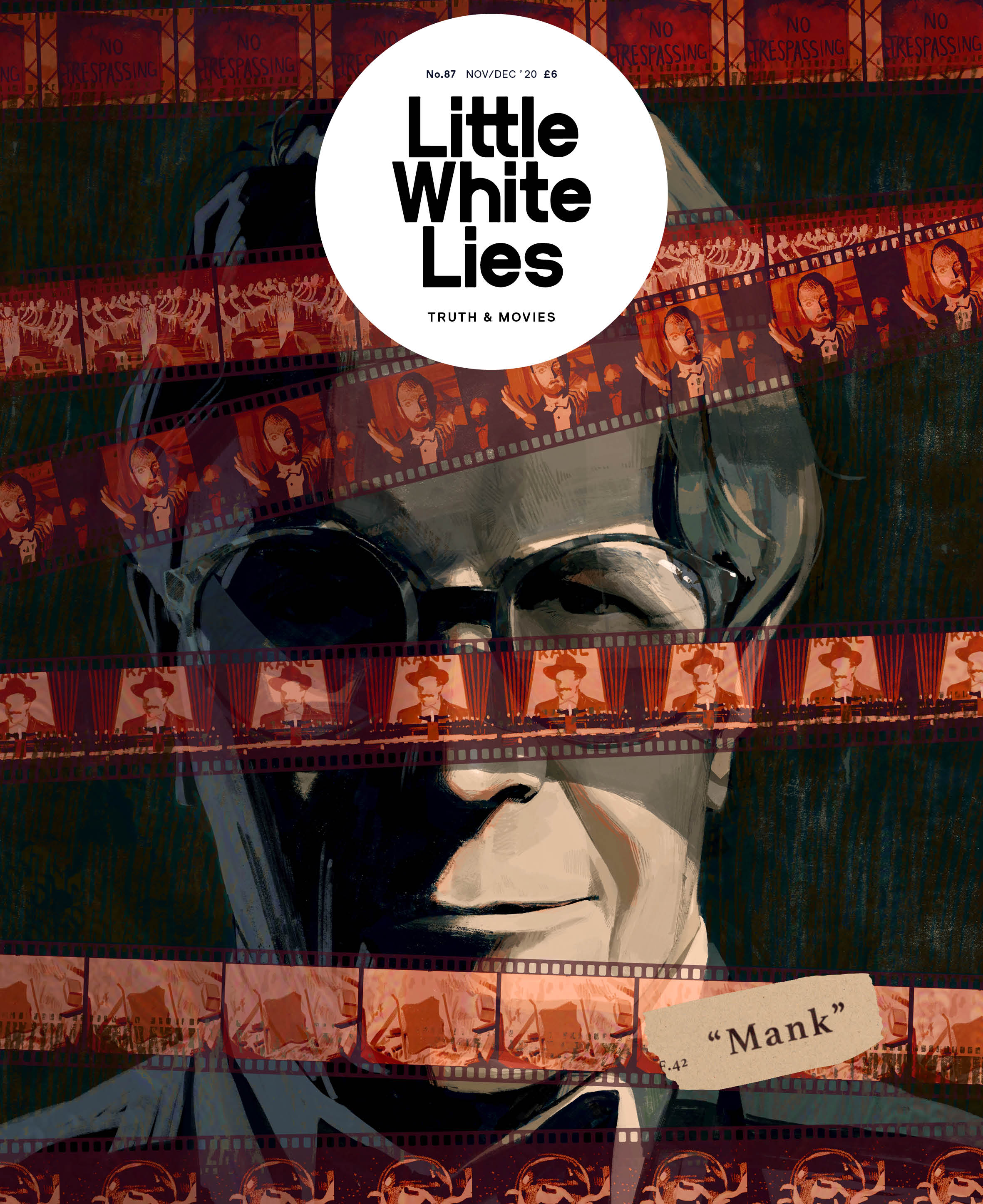
We worked with the Brooklyn-based illustrator Katherine Lam on a series of portraits inspired by cinema’s arch outsiders for our Shape of Water issue, and so she was our first choice to attack a cover about another fringe Hollywood figure being placed in the limelight. Her stunning portrait of Gary Oldman as Mank is obscured by reels of the film he had an important (but largely spectral) hand in bringing to life.
Inside the issue
A review of David Fincher’s Mank Hannah Woodhead verbally spars with this sumptuous evocation of classic-era Hollywood.
It’s All True: A Conversation with David Fincher David Jenkins talks to the master filmmaker about realising a passion project after a 30-year wait.
The Heroine Caitlin Quinlan profiles one of our favourite actors working today, Tuppence Middleton.
F For Fake On the magic tricks behind selecting costumes to show up on black-and-white film.
The Dreamers Adam Woodward scours the credits of Citizen Kane for the lost masters of cinema.
For David Fincher‘s new movie Mank — which chronicles screenwriter Herman J. Mankiewicz‘s efforts to craft Citizen Kane, as well as the personal baggage behind the film — Summerville was tasked with bringing the Tinseltown of the 1930s and ’40s back to life.
In some cases, she was recreating the looks of classic stars, including Marion Davies (Amanda Seyfried) and Orson Welles (Tom Burke). But for the most part, the film (and Summerville) opted for grit over glitz. “It’s not super-glamorous,” she tells EW. “We’re really focused on the daily life of Mank [played by Gary Oldman]. So we were looking for authentic pieces and nothing too over-the-top. We want it to be authentic in the shapes, what fabrics were used, the silhouettes, the colors, that kind of thing — and then translate that into black and white. It has to be subtle.”
On the surface, it was a perfect fit for Summerville, who previously worked with Fincher on projects like Gone Girl and The Girl With the Dragon Tattoo. “Normally I don’t use a lot of color; I use a really muted palette,” she says. “For Dave’s films, it is always pretty muted.”
“A place to unload all my cinematic truths.” —Newton Thomas Sigel, ASC
How do you cultivate a career in Hollywood? What does it take to make iconic work? There’s an art to everything in life and the Art of the Shot explores the answers to those questions and more through deep-dives into the minds of master filmmakers. Join host Derek Stettler, young filmmaker and writer for the ASC and SOC magazines since 2016, as he learns from the artists behind today’s most strikingly-shot projects. Enjoy compelling conversations on the craft, insights from successful careers, tips, techniques + more!
In this episode, you’ll hear from both the cinematographer and the “A” camera operator of Mindhunter, who worked together throughout Season 1 and 2 to shoot every single episode. Please enjoy this exclusive interview with Erik Messerschmidt, ASC and Brian Osmond, SOC!
Brian Osmond, Gaffer Danny Gonzalez, and Erik Messerschmidt (Nikolai Loveikis)
In this episode, you’ll learn:
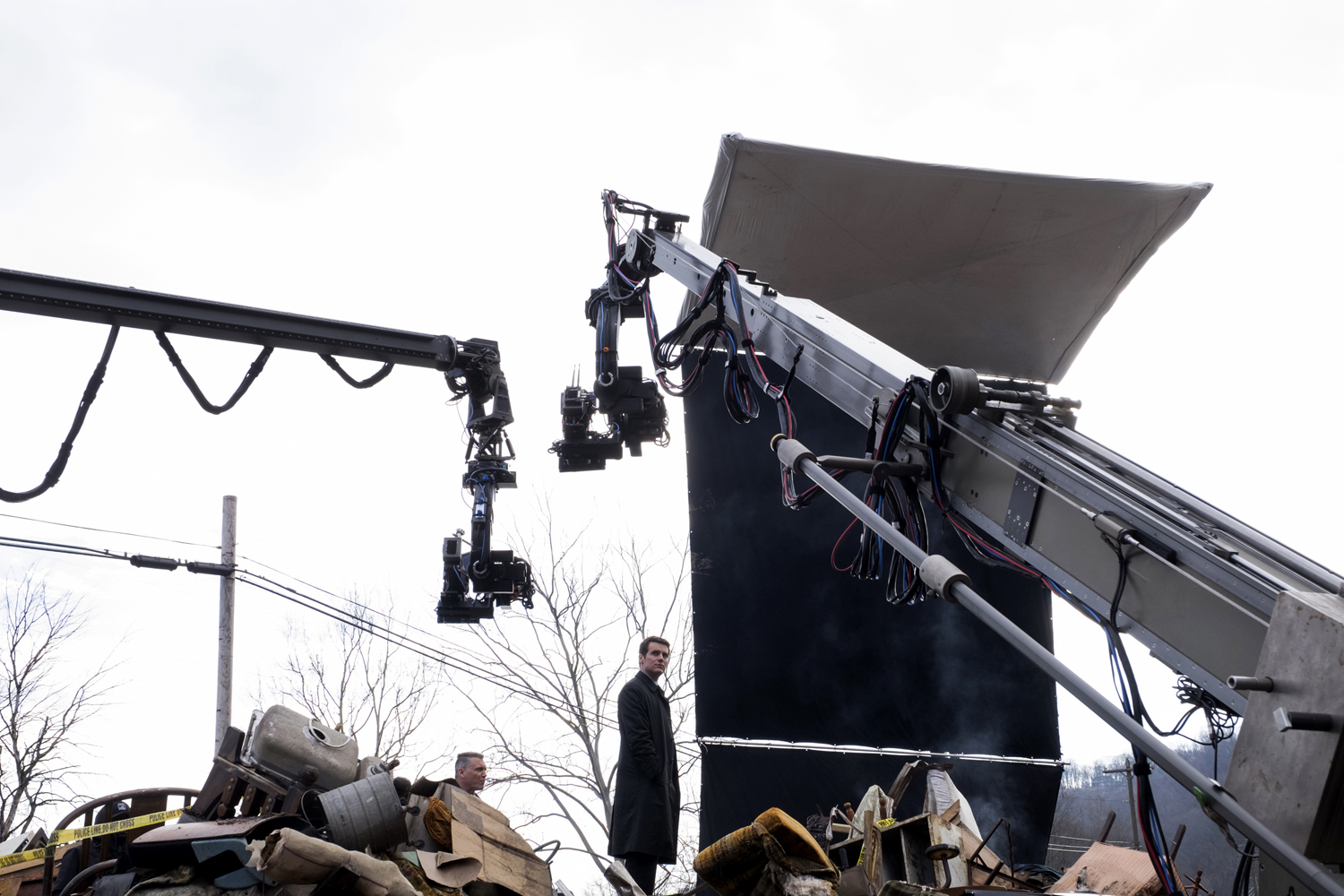
– Erik’s career path (00:04:06) – Erik’s favorite part of the job (00:06:42) – What DP’s should know to best work with their gaffers, from Erik’s experience working as a gaffer before becoming a DP (00:07:02) – Unique skills Erik gained from his experience as a gaffer (00:07:56) – How Brian got his career started (00:11:19) – Brian’s favorite part of his job (00:12:19) – What other directors can learn from how David Fincher treats his crew (00:18:39) – The thought process & techniques behind Mindhunter‘s precise camera movement (00:22:50) – The strategic use of handheld camera operating (00:34:27) – The collaborative nature of the Mindhunter set (00:37:34) – The importance of having a dedicated camera operator on set, especially on a David Fincher set (00:41:19) – Erik’s role as “quality control supervisor” (00:44:21) – Why a monitor on a David Fincher set is covered in smudges (00:46:57) – Why there’s no such thing as a B camera “bonus shot” on Mindhunter & how shots are planned out for multiple cameras (00:48:23) – What Erik thinks is the hardest shot to do well (00:52:04) – How Erik lights & shoots with 2 cameras simultaneously (00:53:41) – Erik’s approach to lighting Mindhunter & techniques used (00:56:55) – Erik’s preference for real fluorescent lighting (01:03:30) – Mindhunter‘s production design and how much of the locations were built (01:05:01) – Favorite set of Season 2 (01:06:26) – How getting scripts in advance helps them work better (01:10:44) – The innovative car process shooting on Mindhunter & how it works (01:12:38) – How virtual production helps realize every filmmaker’s dream, stopping time, & how Erik used that to shoot a 9-minute dialog scene at dawn (01:18:02) – How the car process shooting on Mindhunter evolved from Season 1 (01:22:37) – How the custom RED digital cinema camera, dubbed the Xenomorph, evolved from Season 1 (01:27:22) – Why Brian prefers a fluid head over a geared head to achieve those smooth, precise shots David Fincher loves (01:37:34) – How to shoot a scene & why “Fix it in prep!” should be every filmmaker’s mantra (01:42:08) – All about the lenses used on Mindhunter & how Erik art directed the artifacts & nuances of every optical aberration (01:48:10) – Tips from Brian on getting really precise shots with a fluid head, what operating technique Erik has learned from Brian, & how being self-critical is a key to his success (01:56:42) – What Erik & Brian feel is the most rewarding part of working on Mindhunter (02:02:47)
If you haven’t yet, please be sure to subscribe to be notified of future episodes, and share this podcast with others to help grow the show and spread the knowledge!
The Art of the Shot podcast is brought to you by Evidence Cameras, an outstanding rental house in Echo Park specializing in high-end digital cinema camera packages, lenses, support, and accessories.
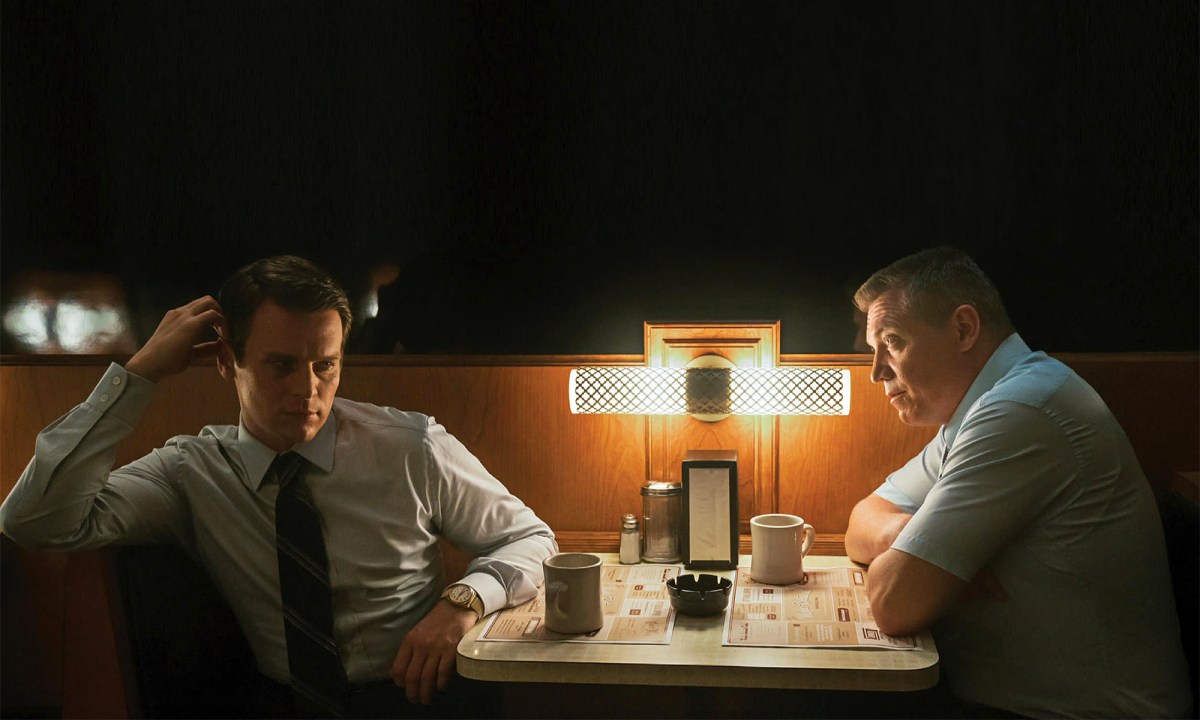
The Netflix original series Mindhunter is, by far, one of the best new shows currently running. The true story-based, 1977-set drama chronicles the early days of criminal psychology and criminal profiling primarily through the eyes of three people at the FBI’s Behavioral Science Unit: eager newcomer Holden Ford (Jonathan Groff), somewhat jaded veteran Bill Tench (Holt McCallany), and brilliant psychology professor Wendy Carr (Anna Torv). That this show is immaculately crafted from top to bottom will come as no surprise to those aware that it’s the brainchild of David Fincher, who serves as executive producer and directed nearly half of the series’ first season.
This is without doubt one of the best looking pieces of entertainment released in 2017, regardless of medium, with classical framing, motivated camera movement, and a tremendous palette that gives a mere peek into the darkness inside the minds of the criminals and serial killers who are the subject of the Behavioral Science Unit’s interviews.
So when I got the chance to speak with cinematographer Erik Messerschmidt about his work on the series, I was thrilled. Messerschmidt shot eight of the first season’s 10 episodes, including the Fincher-directed closing installments, and as he revealed during our interview, this was essentially his first major gig as a cinematographer. Messerschmidt had worked previously as a gaffer on shows like Mad Men and Bones, and then later the feature film Gone Girl where he first came into contact with Fincher. Based on their work together on that film, Fincher called Messerschmidt up when they were looking for a new DP for Mindhunter after the show’s original cinematographer exited over creative differences.
This promotion from gaffer to DP is a familiar refrain with Fincher’s cinematographers, as he did the same with his The Game and Fight Club gaffer Claudio Miranda, who was brought on as DP for The Curious Case of Benjamin Button and went on to win the Oscar for Best Cinematography for his work on Life of Pi.
Messerschmidt’s rise to the primary cinematographer of Fincher’s brand new TV show elicits similarly spectacular results, as the DP’s work on Mindhunter is elegantly classical and incredibly motivated by character and theme. During the course of our conversation, Messerschmidt talked about the road that led to him becoming the cinematographer on Mindhunter, the specifics of his working relationship with Fincher, what it’s like to serve as a DP in the world of episodic television, how the work of production designers and costumes designers goes under-appreciated, and trying to maintain a consistent aesthetic with multiple directors. He also teased a bit about Mindhunter Season 2, including revealing their extensive shooting schedule.
David Fincher went looking for the 1970s — and found them in Pittsburgh. but that was just the start for the esteemed producer-director and his team, who recreated the era for Mindhunter, the Netflix series about two pioneering FBI profilers.
Watching the Netflix series Mindhunter, you may shudder as convicted serial killer Ed Kemper (Cameron Britton) casually chats about his string of brutal murders, or flinch when — spoiler alert! — a bird hits the fan courtesy of mass murderer Richard Speck (Jack Erdie).
What you’re less likely to notice is the precision with which the show’s late-’70s landscape has been created. David Fincher considers that a win.
“It’s really important that it feels like two people having a conversation — and that 40 people aren’t on their iPhones simultaneously just outside of frame,” says Fincher, who is executive-producing the series with Joshua Donen, Charlize Theron and Ceán Chaffin. “The great news is, I lived through the ’70s, so I remember what that looks like.”
Created by Joe Penhall — and based loosely on FBI agent John Douglas‘s book Mindhunter: Inside the FBI’s Elite Serial Crime Unit — the series explores the birth of criminal profiling.
Special agent Holden Ford (Jonathan Groff, playing a fictionalized version of Douglas) and his partner, Bill Tench (Holt McCallany), work alongside psychologist Wendy Carr (Anna Torv) to dig into what makes murderers tick. Shot in Pittsburgh, the show is a window on a time before the term serial killer had been coined, much less become the focus of TV shows and casual conversations.
While that seemingly more innocent time is reflected partly in the show’s relative lack of gore, the decade’s thornier complexities required a critical eye (or, in this case, eyes) to see past the polyester-covered clichés.
“David is the most holistic filmmaker I’ve ever met,” director of photography Erik Messerschmidt says. “The tone of every scene is important, and [so are] how the costumes and lighting and set decoration and everything play a part in creating the finished product.”
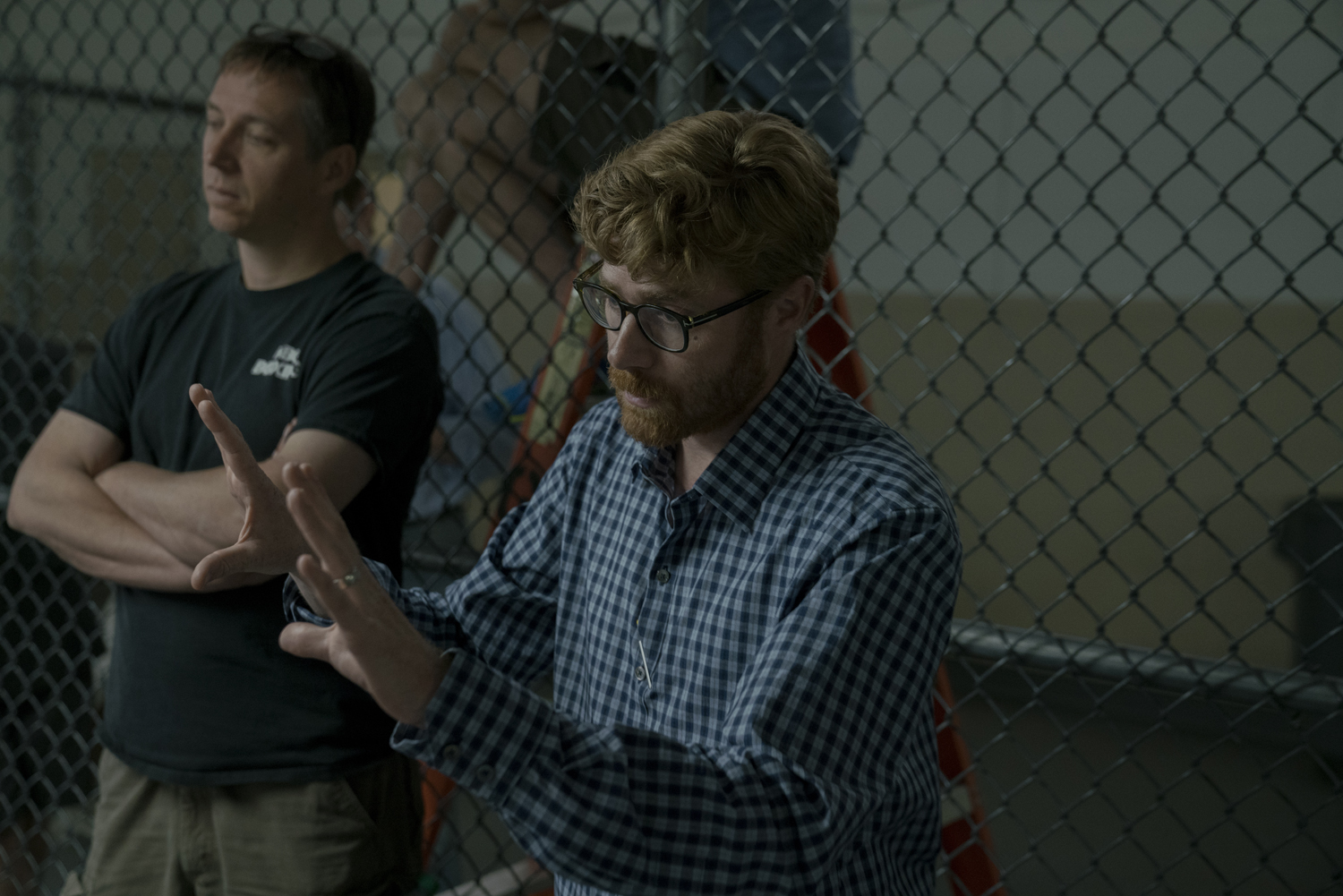
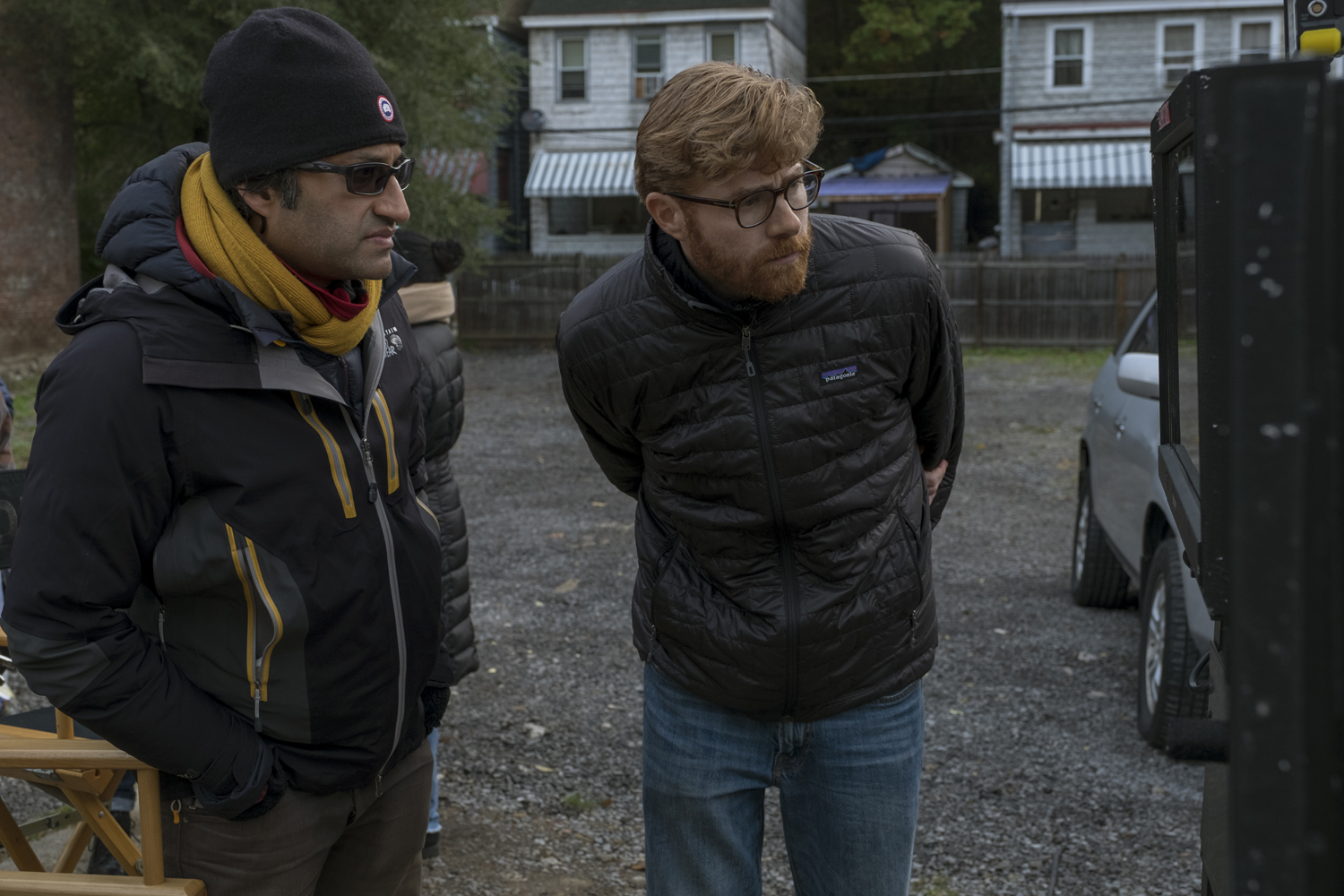
Fincher, who directed four of the first season’s 10 episodes, is famously meticulous, but he says the secret to getting it right is finding the right people.
“I don’t think you keep a project in a kind of design and aesthetic wheelhouse by being a dictatorial influence. Just stomping your feet and holding your breath is not going to make stuff work,” he says. “A lot of times, you have to empower people who are the advance troops and the follow-up troops to make decisions that are based on conversations that you have.”
In this case, one of the first decisions — where to shoot — was daunting.
“Our biggest issue,” Fincher says, “was: where do we find 1978?”

 The Fincher Analyst