Tyler Mowery
November 21, 2017
YouTube
Today I look at David Fincher, his personal directing style, and the process that created The Social Network.
Tyler Mowery
November 21, 2017
YouTube
Today I look at David Fincher, his personal directing style, and the process that created The Social Network.

Headjar Productions Scanned More Than 30,000 Feet of Archival Footage for Channel 4 Documentary
By Bryant Frazer / November 9, 2017
Studio Daily
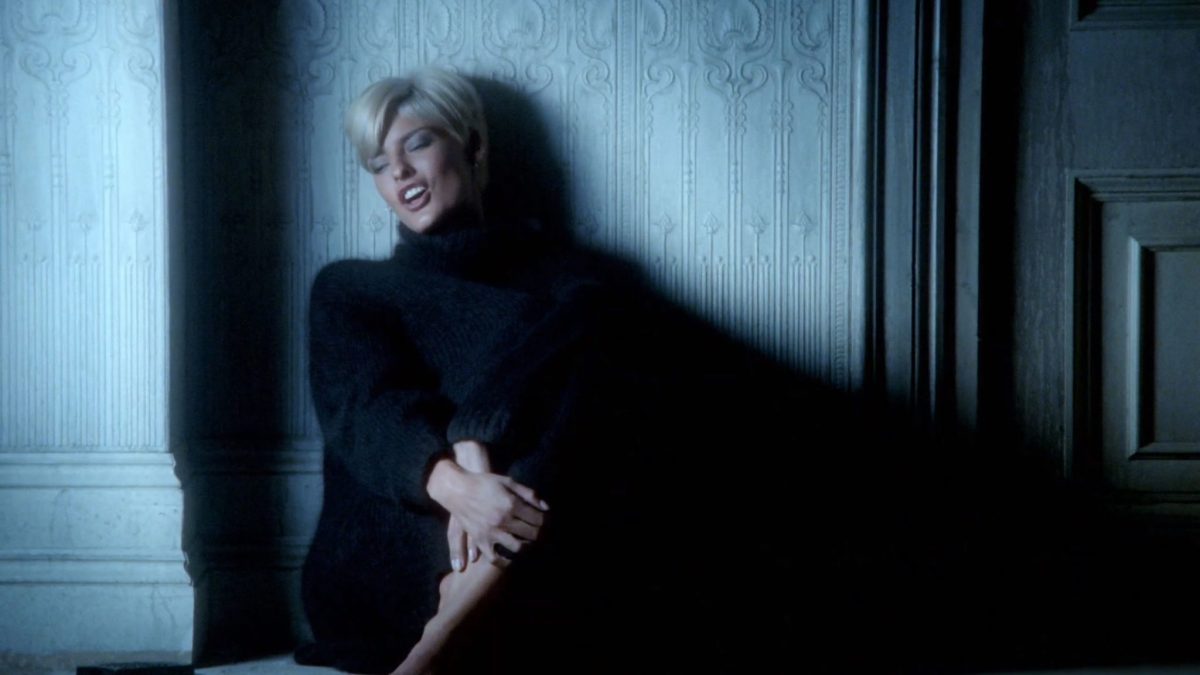
An iconic music video has gotten a rare 4K remaster. As part of a documentary project for U.K. broadcaster Channel 4, director David Fincher’s promo clip for the late George Michael’s “Freedom! ’90” featuring supermodels Naomi Campbell, Linda Evangelista, Tatjana Patitz, Christy Turlington and Cindy Crawford has been rescanned from the original camera negatives at 4K on a Blackmagic Design Cintel Scanner and graded in Blackmagic DaVinci Resolve Studio to match the look of the original, NTSC-resolution music video.
November 8, 2017
Black Magic Design
In addition to serving as co-executive producer for Mindhunter, Fincher directed four hours of the 10-episode season.
By: Kevin H. Martin
10/26/2017
Creative Planet Network / Digital Video Magazine
The first masterpiece from filmmaker David Fincher was his feature film Se7en, a procedural featuring one of the most memorable serial killers ever committed to celluloid. Ten years ago he returned this dark territory with Zodiac, an adaptation of the true-life case involving a still-unknown killer who struck repeatedly throughout the San Francisco Bay area. In the years since, Fincher helped launch House of Cards (an adaptation of the successful UK series) for Netflix. He comes back to the crime investigation genre with Mindhunter, a 10-part streaming series that launched on Netflix on Oct. 13.
[…]
In addition to serving as co-executive producer for Mindhunter, Fincher directed four hours of the 10-episode season, with Christopher Probst shooting the pilot installment. The other directors were Asif Kapadia, Tobias Lindholm and Andrew Douglas.
Cinematographer Erik Messerschmidt shot part of episode two, along with the remaining eight episodes. Messerschmidt had served as gaffer on Fincher’s most recent feature, Gone Girl. He pulled double duty on this fall’s Granite Mountain, gaffing and shooting 2nd unit—the latter a duty he performed for next year’s Sicario follow-up, Soldado, as well. “Fincher was very involved in the process, which is to be expected. He was there every day,” Messerschmidt says.
Patrick Harbron / Netflix
I recently spoke with Tyler Nelson, one of the four series editors, who was given the opportunity to move from the assistant chair to that of a primary editor on ‘Mindhunter.’
By: Oliver Peters
10/26/2017
Creative Planet Network / Digital Video Magazine
by Hannah Gal
30/10/2017
KFTV
Erik Messerschmidt was director of photography on Netflix‘s Mindhunter – he talks about using a customised camera with David Fincher.
As a hard working gaffer, Erik Messerschmidt has reached the top of his profession, but his ambition has always been to work as a cinematographer.
His break came when David Fincher asked him to join Netflix’s new project. The director had previously worked with the cinematographer on the 2014 domestic thriller Gone Girl and signed on to Mindhunter, a story that traces the development of the FBI’s understanding of criminal science in the 1970s. Fincher directed four of the show’s ten episodes and was an executive producer on the full series.
Matt Mulcahey
October 26, 2017
Filmmaker
When mere mortals gear up for a job, they are restricted to selecting cameras currently in existence. Not David Fincher.
Fincher has long hated all the gak required to make a digital cinema camera functional: a wireless transmitter to get signal to video village, the add-ons to provide wireless iris and focus control, the assistant camera’s onboard monitor hanging off the side — all the things that turn a small, lightweight camera body into a labyrinth of cables and breakout boxes.
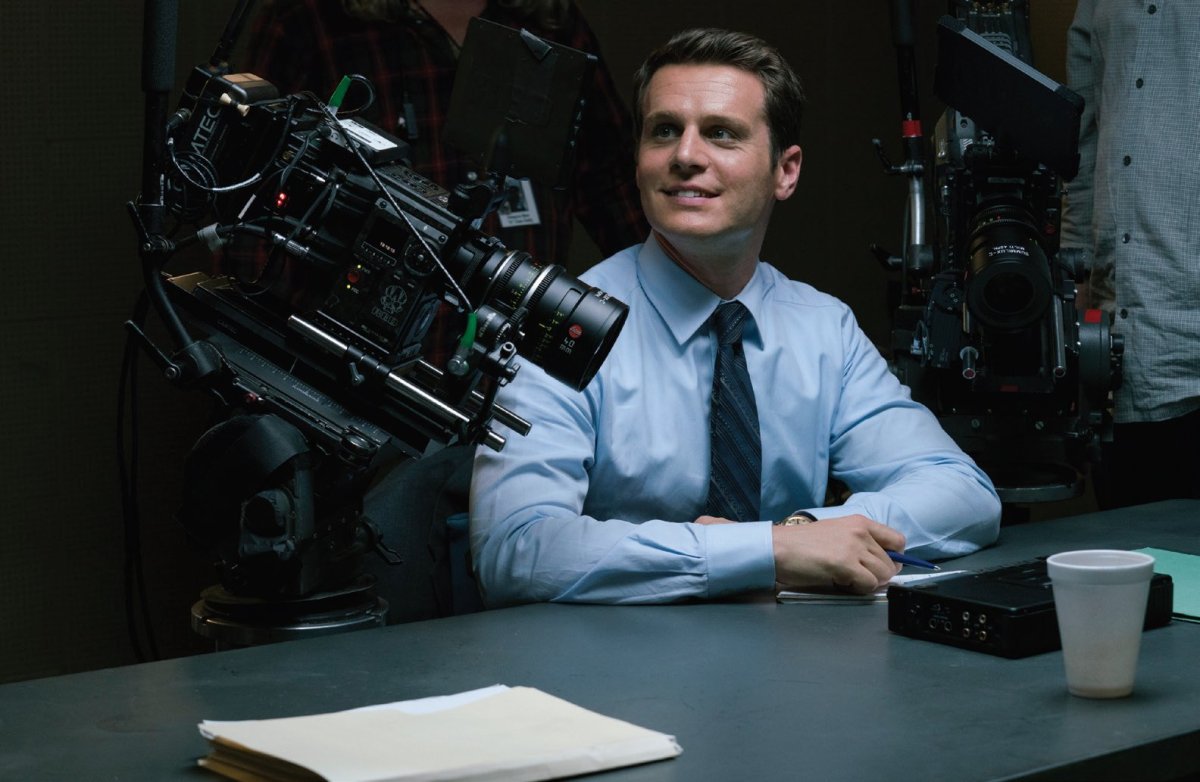
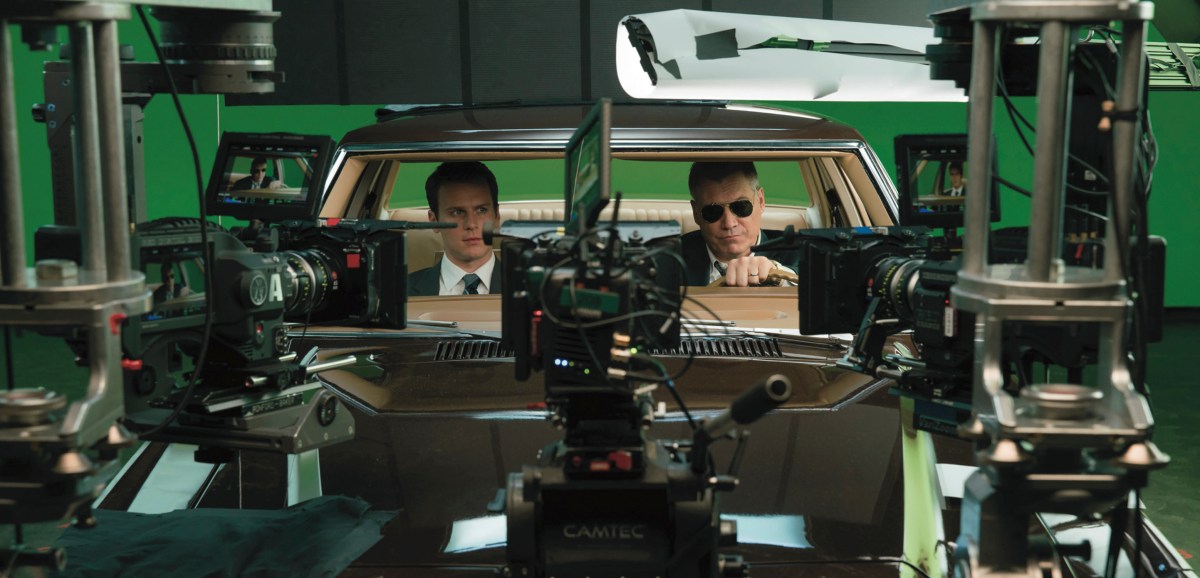
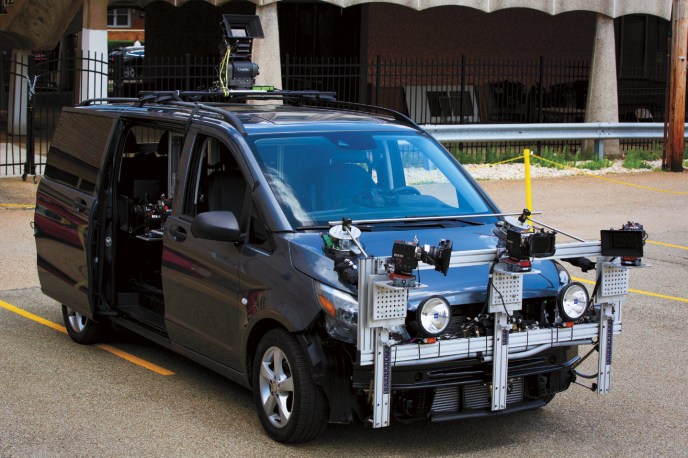
Red Digital Cinema responded by making Fincher his own set of custom Weapon Red Dragons for use on the new Netflix series Mindhunter—each with the features listed above built into an ergonomically friendly camera christened the Xenomorph. Put a lens on the front and a battery on the back and the Xenomorph is ready to rock and roll.
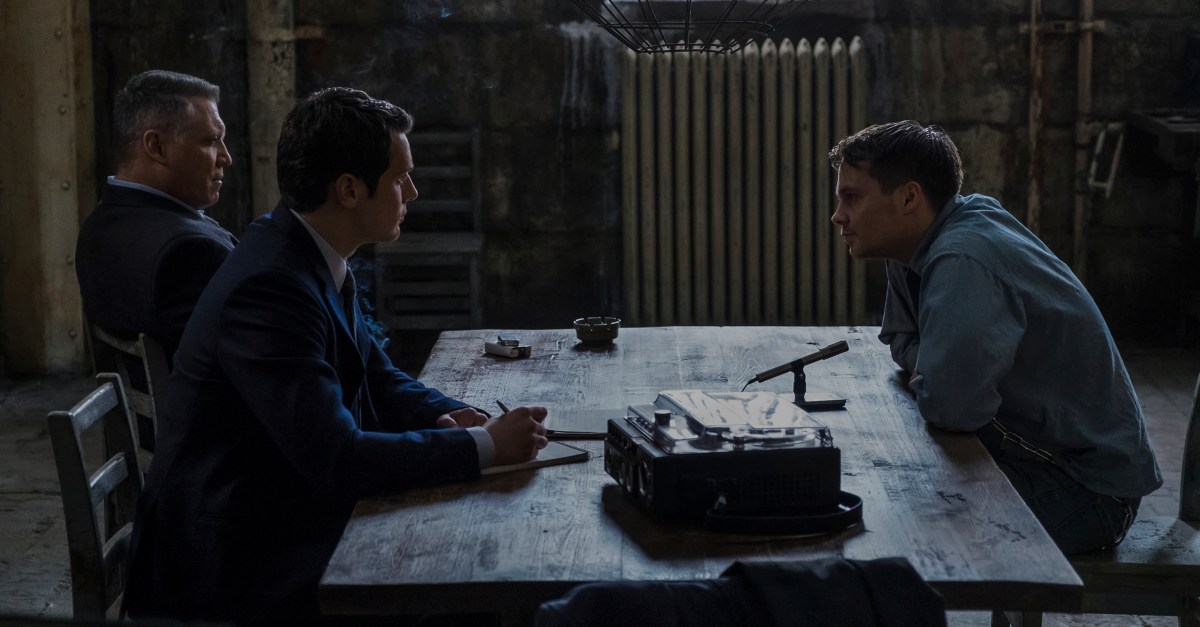
On Mindhunter, cinematographer Erik Messerschmidt reaped the benefits of that smaller camera footprint. Messerschmidt spoke to Filmmaker about his work on the new series, which follows the fictionalized story of the agents (Jonathan Groff’s Holden Ford and Holt McCallany’s Bill Tench) who started the FBI’s psychological profiling program in the 1970s by interviewing incarcerated serial killers.
![2017-09-22 Alison Leigh Evans (Instagram) - Mindhunter Camera Department Xmas Decorations [EDIT]](https://thefincheranalyst.com/wp-content/uploads/2017/10/2017-09-22-alison-leigh-evans-instagram-mindhunter-camera-department-xmas-decorations-edit.jpg)
Mindhunter Camera Department Xmas Decorations (Alison Leigh Evans, Instagram)
Working with David Fincher, the RED XENOMORPH, CW Sonderoptic Leica Summilux-C lenses and shooting for Netflix
By David Alexander Willis
October 23, 2017
ProVideo Coalition
Shot with a tailor-made RED camera, the RED XENOMORPH, auteur David Fincher chose cinematographer Erik Messerschmidt to helm camera for his latest, and possibly most ambitious project, the 10-episode Mindhunter series. Based on the novel Mind Hunter: Inside the FBI’s Elite Serial Crime Unit, Messerschmidt lensed actors Jonathan Groff and Holt McCallany during the extended production as they play FBI agents Holden Ford and Bill Tench. Focusing on the precocious criminal psychology work of the 1970s, the show centers on the duo as they attempt to understand the mind of a serial killer. Mindhunter is available to watch via Netflix now.
Thanks to Joe Frady
Cinematographer Erik Messerschmidt breaks down how the look of Netflix’s “Mindhunter” builds on Fincher’s well-established style.
Chris O’Falt
October 19, 2017
IndieWire
David Fincher is one of the most distinctive visual storytellers working today. On his new Netflix’s show “Mindhunter,” the director’s well-established visual style and use of film language is carried throughout the entire Season 1 arc, despite Fincher having only directed four of the ten episodes himself. IndieWire recently talked the show’s principal cinematographer Erik Messerschmidt – who was once Fincher’s gaffer, and shot 90% of “Mindhunter” – about what defines the cinematic style of the great auteur and how he built off the look of “Zodiac” to create something we aren’t used to seeing on TV.
Hawkins DuBois
October 13, 2017
No Film School
‘Mindhunter’ DP Erik Messerschmidt shot the darkly intimate show with custom-made RED Xenomorphs.
When it comes to cinematography, every filmmaker, every movie or show, and every shot is different. While there may be a “textbook” way to approach a scene, there is no “correct” way. Even so, patterns and styles always emerge, and few filmmakers have developed a look as distinctive as David Fincher‘s. While Fincher is best known for his mysterious and gritty films, ranging from Fight Club to The Social Network, he’s recently ventured into the realm of streaming television, where he has produced and directed the critically-acclaimed House of Cards, and now seeks to expand on that success with the recently-released Mindhunter for Netflix.
Mindhunter tells the story of a pair of FBI agents, played by Jonathan Groff and Holt McCallany, as their work in the Elite Serial Crime Unit leads them down a dark path where they interrogate and explore the mindsets of serial killers and rapists. It’s another psychologically tense world from the mind of Fincher, and a significant part of what brings this world to life is the work of cinematographer Erik Messerschmidt, who keeps audiences grounded and in the moment.
Messerschmidt, a longtime gaffer in the industry, built up years of knowledge while working alongside some of the best DPs in Hollywood, and his unique background allowed him to creatively solve problems and accentuate story with his camerawork. No Film School recently sat down with Messerschmidt to talk about his career and Mindhunter, including his decision to come up through the lighting department, mastering crew-management skills, and how to incorporate natural lighting into your shots.
By Adam Chitwood
October 12, 2017
Collider
Claudio Miranda has had an interesting career thus far. After working as a gaffer on films like Se7en and Fight Club, filmmaker David Fincher (with whom he’d worked on a few commercials and music videos as a cinematographer) asked him to serve as the cinematographer for the wildly ambitious 2008 film The Curious Case of Benjamin Button. That VFX-intensive effort scored Miranda an Oscar nomination and led to him then shooting visually breathtaking movies like Tron: Legacy and Oblivion, and of course Life of Pi, for which he won the Best Cinematography Oscar.
Miranda’s latest film reteams him with director Joseph Kosinski for the third time and also marks something of a departure—the true story drama Only the Brave. The film revolves around one unit of local firefighters who battled the Yarnell Hill wildfire in 2013 to tragic results. Josh Brolin leads a cast that includes Miles Teller, Jeff Bridges, James Badge Dale, Taylor Kitsch, and Jennifer Connelly.
With Only the Brave hitting theaters on October 20th, I recently got the chance to have an extended conversation with Miranda about his work on the film. He talked about his working relationship with Kosinski, the challenges of capturing real fire onscreen, shooting on location, and his approach to shooting realistic visual effects.
But I’m also a big fan of Miranda’s work in general, so the conversation veered off into his early days working as a gaffer for Fincher, and we discussed his “trial by fire” experience shooting Benjamin Button as well as what it’s like to work with Fincher and how his gaffer work with other cinematographers like Harris Savides and Dariusz Wolski has shaped his approach. Finally, with Kosinski next set to direct the Top Gun sequel Top Gun: Maverick, I asked Miranda what the prep has been like on that movie so far.
It’s a wide-ranging and refreshingly candid conversation that hopefully admirers of Miranda’s work, or just those curious about cinematography in general, will find illuminating. I certainly had a great time chatting with the talented DP.
(Merrick Morton, Netflix)
Valentina I. Valentini
October 12, 2017
Variety
When Erik Messerschmidt stepped into the role of David Fincher’s cinematographer on “Mindhunter” — a series centered on an elite FBI serial crime unit that premieres on Netflix on Oct. 13 — he and the director were already in sync.
“David and I see the world in a similar way,” says Messerschmidt, who was Fincher’s gaffer on “Gone Girl.” “I felt like I had a lot of freedom to try things visually and take some calculated risks. He was a huge supporter of that.”