Mank Cinematographer Erik Messerschmidt on Why He Didn’t Shoot on Celluloid, Classic Influences, and Modern Touches

Joshua Encinias
December 17, 2020
The Film Stage

Beginning his collaboration with David Fincher as a gaffer on Gone Girl, cinematographer Erik Messerschmidt’s third collaboration with the director has now arrived nearly a decade later. Mank follows alcoholic screenwriter Herman J. Mankiewicz in his mad dash to finish the script for Citizen Kane, and Messerschmidt’s playful interpolation of Gregg Toland’s iconic cinematography is a sight to behold in every frame.

I spoke with Messerschmidt about his work with Fincher on Mindhunter organically leading to Mank, how Fincher doesn’t accept “much of anything he can’t control,” emulating the look of 1940s cinema without trying to perfectly recreate it, and he provides a list of movies he studied in preparation for Mank. 

Read the full interview

Front Row: David Fincher

John Wilson
December 17, 2020
Front Row (BBC, Radio 4)

Visionary director David Fincher on Mank, his new film about 1930s Hollywood, as seen through the eyes of screenwriter Herman J. Mankiewicz (Gary Oldman) as he races to finish Citizen Kane with Orson Welles.

Mank‘s screenplay is by Fincher’s father Jack Fincher, who started writing it in the early 1990s and died in 2003.

David Fincher’s other films, which have earned thirty Oscar nominations, include Fight Club, Se7en, The Zodiac, The Social Network, The Curious Case of Benjamin Button, Gone Girl, and Panic Room.

Fincher also talks about the future of cinema, streaming, and his early career as a director of iconic music videos such as Madonna‘s Vogue and George Michael‘s Freedom.

Mank is released on Netflix.

Presenter: John Wilson
Producer: Timothy Prosser
Studio Manager: Emma Harth

Listen to the podcast:

Front Row (BBC, Radio 4)
BBC Sounds

Recreating 1930s Hollywood for ‘Mank’, the new Netflix film from David Fincher

December 15, 2020
FilmLight

Mank is the highly anticipated Netflix biopic directed by David Fincher. The movie is told through the eyes of alcoholic Hollywood screenwriter, Herman J. Mankiewicz, as he battles with personal demons to finish the screenplay for Orson Welles’ renowned Citizen Kane.

While Fincher and his team have worked with FilmLight’s Baselight colour grading system since the 2008 film The Curious Case of Benjamin Button and the Netflix TV series House of Cards, it was with Netflix’s Mindhunter that the director established his own in-house DI facility in Hollywood. Colourist Eric Weidt was brought on to lead colour development on the facility’s Baselight X system.  Weidt had previously developed custom film emulation profiles for traditional film photographers, and brought his considerable experience in post-production for fashion stills and films to the grading suite.

Entirely shot in black and white, Mank has a 1930s Hollywood feel. Many tests were done before shooting – cameras, lenses, even light bulbs – before Eric developed the HDR, SDR and day-for-night LUTs alongside the project’s DoP Erik Messerschmidt. Fincher wanted to re-create certain period elements in post, for example “black blooming” in the shadows.

Read the full case study

The People Who Can See Inside David Fincher’s Head

The famously meticulous Mank director is surrounded by collaborators tasked with turning his most ambitious ideas into reality.

David Sims
December 9, 2020
The Atlantic

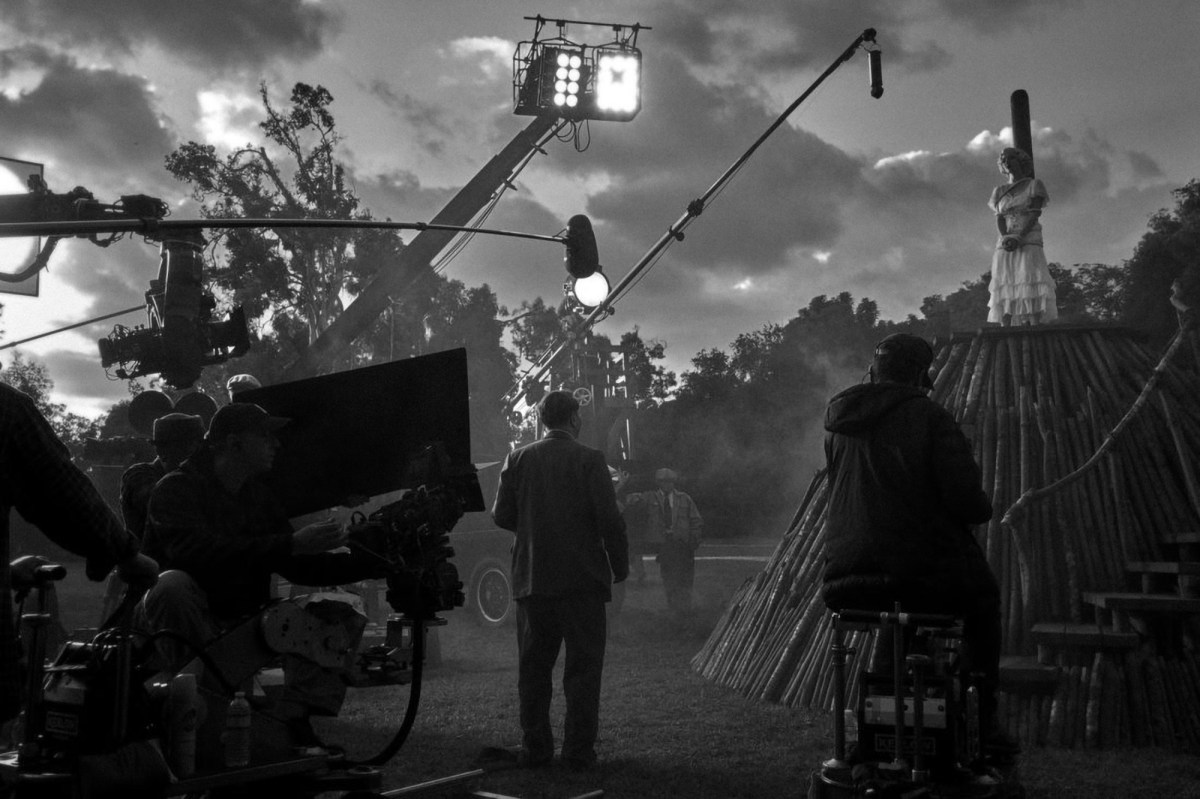
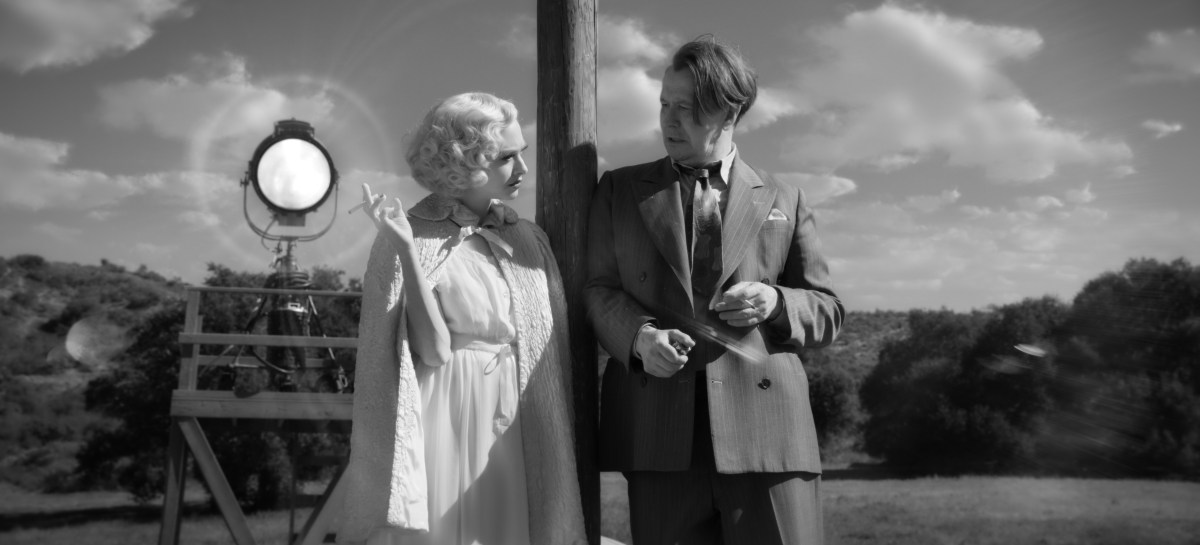
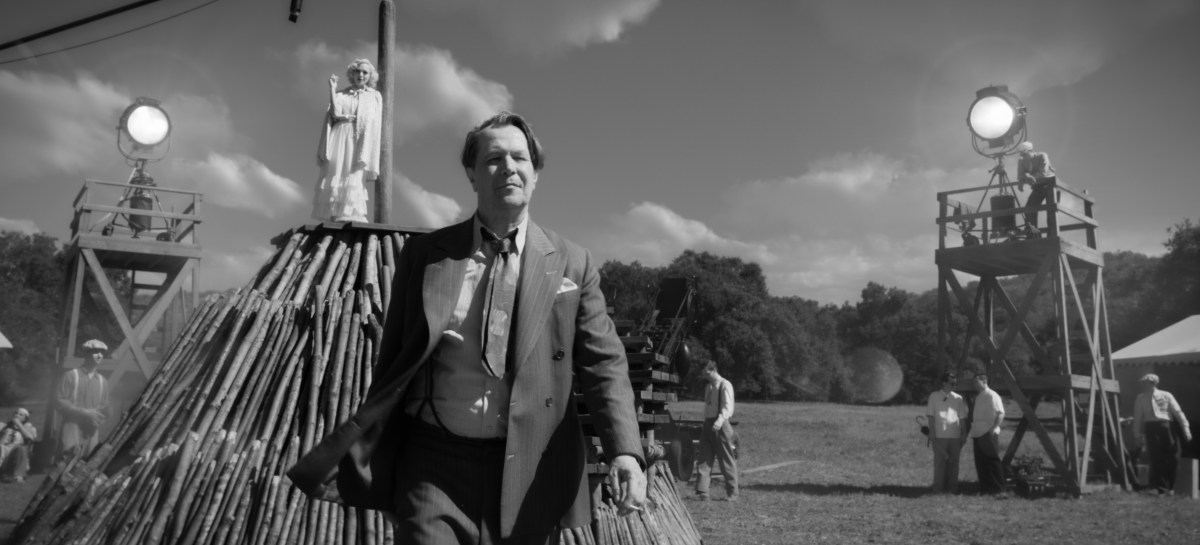
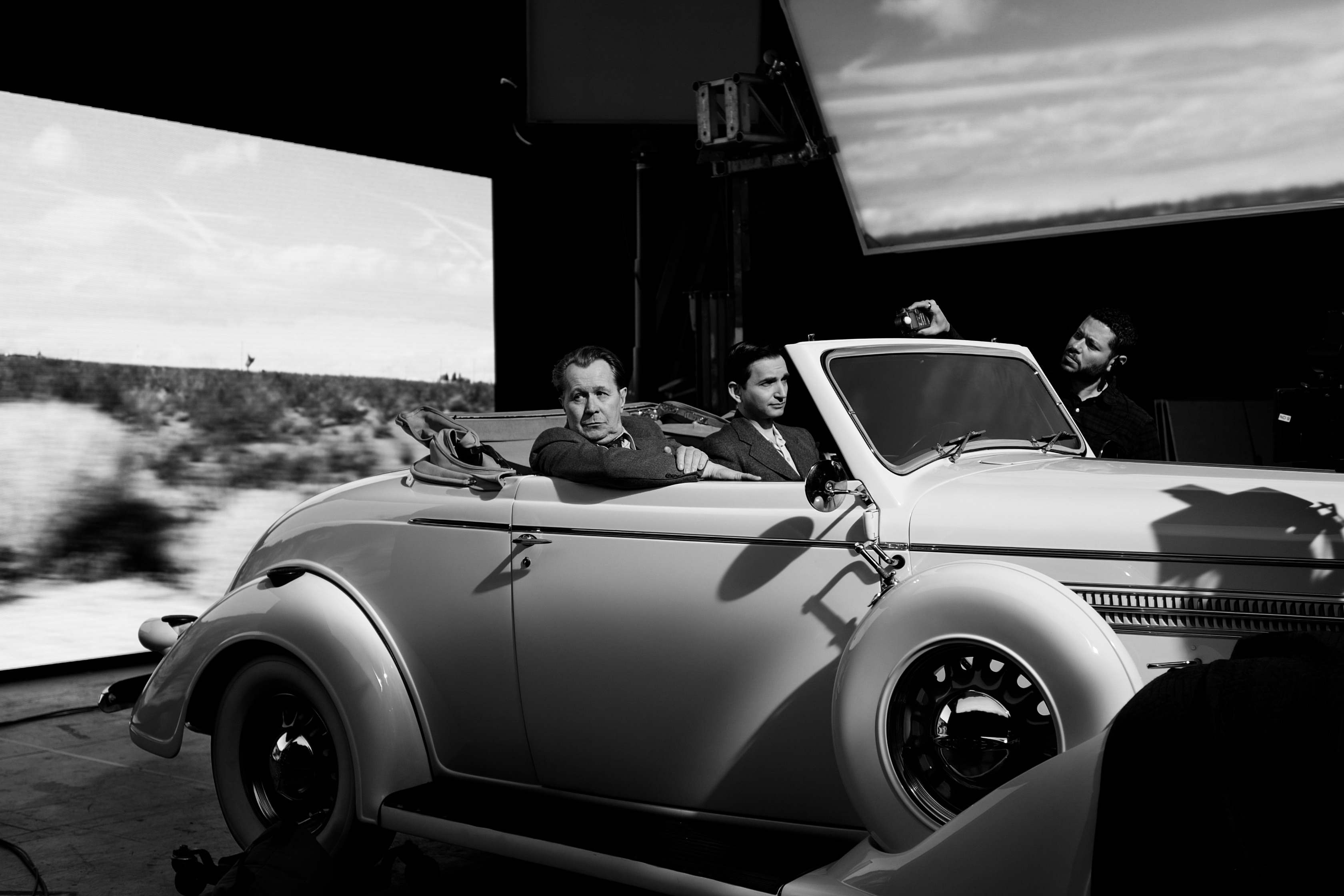
Early in Netflix’s Mank, the screenwriter Herman J. Mankiewicz (played by Gary Oldman) ambles onto an outdoor movie set, where he bumps into an array of glamorous characters. In a scene full of repartee with real-life figures such as the actor Marion Davies, the film honcho Louis B. Mayer, and the mogul William Randolph Hearst, the visual details of the environment might seem unimportant. But to Mank’s director, David Fincher, they mattered. “The grass was not to David’s liking, and the sky was not to his liking, so all that’s been replaced,” Peter Mavromates, his co-producer, told me. When making a movie, Fincher literally controls heaven and earth.

That example sums up the capricious-sounding, godlike power of a director, especially in the age of digital filmmaking, which allows for total command of every frame. But as with all of his movies, Fincher’s vision for Mank was realized by a group of dedicated collaborators, most of whom have worked with the director for many years across projects. This film, which Fincher mulled for nearly three decades, is unlike anything he has made before. An unusual-looking-and-sounding film set in the Golden Age of Hollywood, Mank reflects the aesthetic of the 1930s with its black-and-white cinematography; an echoey, old-fashioned sound mix; and a brassy, orchestral score. But Fincher also wanted it to be a distinctly modern film, which posed many unique and fascinating technical challenges to the creators charged with bringing his lofty ideas to life.

Read the full profile

X2X: Glimpse into Future Filmmaking with Mank

How will filmmaking adapt in the post-Covid era? A glimpse into the future is afforded by Mank, the forthcoming Netflix feature project directed by David Fincher and spearheaded by producer Ceán Chaffin. More than a love letter to a catalog title, Mank is a glimpse of the complex interplay of human creativity and the filmmaking process as practiced in Hollywood’s golden era.

December 9, 2020
X2X

Fincher is known for working in the vanguard of filmmaking technology. Examples include a very early digital intermediate on Panic Room – the first ever in a facility designed for the purpose – and Zodiac, one of the first major features to be shot almost entirely digitally. The remote collaboration envisioned by futurists at the dawn of the internet era was already common practice for his team long before the pandemic.

“Fortunately, we have not missed a beat,” says Chaffin. “We are working now exactly how we mostly could have been working the past ten years, which is working from home during post.”

But the virus and its requirement to remain physically apart may constitute a final push for the industry at large. All the attributes of true remote connectivity – reduced travel time and its attendant benefits in terms of stress, pollution and time savings, enhanced with rapid feedback, superior organization and a centralized database – will still be applicable when health concerns subside.

A canvas of the top pros on David Fincher’s team indicates that while the pandemic naturally raises stress levels, the need to work separately has been essentially a non-factor in terms of their ability to collaborate efficiently and keep the production on track.

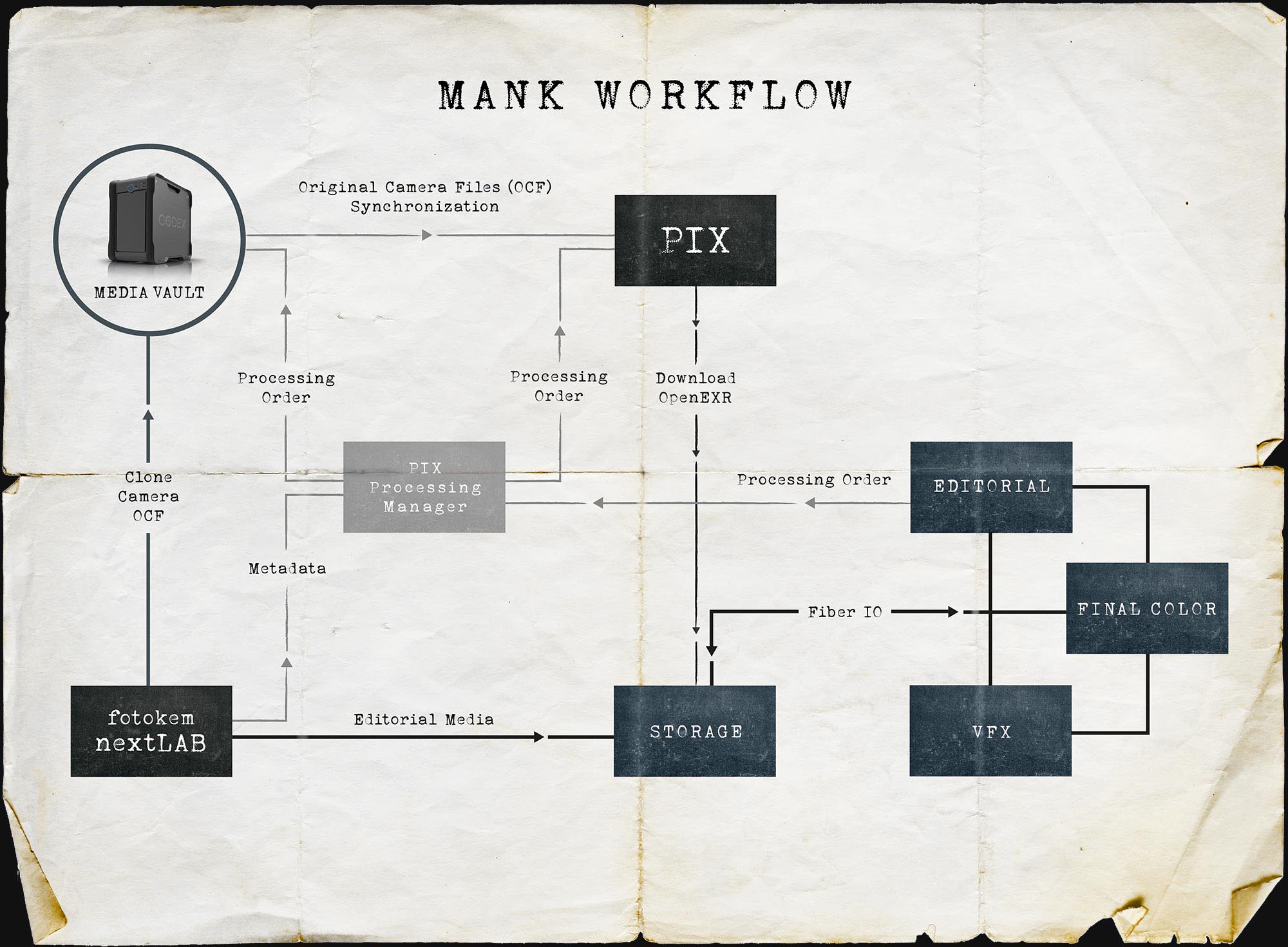
Fincher came to the project with a mandate that the production work with the PIX production hub. Chaffin, who has made nine films with Fincher, says that the system is an essential tool for collaboration and input.

“This is how we have worked for a long time.” says Chaffin. “David feels the team is making the film with him, sharing in the problem-solving. Even when we were in the same building, David was often responding exclusively through PIX. His preferences and concerns are there for everyone to refer to. You don’t have to go find that one email, or remember a comment someone made on their way out the door.

Read the full case study

‘Mank’ Cinematographer Erik Messerschmidt on Recreating 1930s Hollywood with David Fincher

The DP sheds light on why they didn’t shoot on film, shooting day-for-night, and how they shot those massive dinner party scenes.

Adam Chitwood
December 8, 2020
Collider

Shooting your first movie as a cinematographer is always a somewhat daunting prospect, but imagine your first movie is a 1930s-Hollywood set story about the writing of one of the greatest films ever made, boasting a cast of some of the best actors working today. Oh, and it’s in black-and-white. And the director? David Fincher.

That’s exactly what happened to Erik Messerschmidt, who got the call from Fincher that the director behind Zodiac, The Social Network, and Fight Club wanted him to be the cinematographer on his next film, Mank. The results? Absolutely stunning. Messerschmidt’s demeanor about the ordeal? Cool as a cucumber.

Messerschmidt first worked with Fincher as a gaffer on his 2014 film Gone Girl (an underrated entry in Fincher’s filmography, IMO) and then worked intimately with the filmmaker on the first two seasons of his Netflix series Mindhunter. Messerschmidt shot nearly every episode of Mindhunter, and in doing so developed a short-hand with Fincher. Which may be one of the reasons the director hired Messerschmidt to tackle one of his most visually ambitious films yet.

Mank takes place in Hollywood throughout the 1930s as it follows screenwriter Herman J. Mankiewicz (Gary Oldman) and the process by which he wrote the first draft for what would become Citizen Kane. The film alternates between Mank’s writing process and his trials and tribulations in Hollywood that would inspire some of the characters and situations in Citizen Kane, including a kinship with actress Marion Davies (Amanda Seyfried) and an association with publishing magnate William Randolph Hearst (Charles Dance).

Mank is alternately jubilant and melancholic as it essentially tells the story of a talented, fun-loving writer with a knack for zingers who is somewhat changed by what he sees throughout the 1930s, and shoots his shot when Orson Welles comes a-calling.

The film is presented entirely in black-and-white with visual allusions to Citizen Kane’s groundbreaking cinematography, and when I recently got the chance to speak with Messerschmidt at length about his work on the film, he pulled back the curtain on the process through which he and Fincher brought this story to life in living monochrome.

During our 45-minute conversation, the cinematographer explained why he and Fincher never considered shooting on film, and discussed the lengthy testing process by which they ultimately found the winning formula to achieve a look that fits right in with the films made in the 30s and 40s. He also broke down the process of filming specific sequences, including Mank and Marion’s nighttime walk (shot day-for-night) and the two epic party scenes.

Read the full interview

Soundstage Access: Erik Messerschmidt, Cinematographer (David Fincher’s ‘MANK’, ‘Mindhunter’)

Brando Benetton
December 5, 2020
Soundstage Access

It’s so exciting to sit down with Erik Messerschmidt, ASC – an Emmy-nominated cinematographer whose credits include the popular Netflix series Mindhunter, HBO’s Raised by Wolves and David Fincher‘s latest Netflix film Mank!

In today’s conversation, me and Erik discuss his beginnings in the film industry working as a gaffer (learning from the best cinematographers in the business); a deep dive into his cinematography for the two Emmy-nominated seasons of Mindhunter; Erik’s creative relationship with David Fincher, and the thought process behind the infamous “multiple takes” Fincher is so known for; how classic Hollywood noirs of the ‘30s and 40s influenced the visual style for Mank—all of this, and much more.

Check out Erik’s new film Mank (now on Netflix), which many speculate will land him his first Oscar nomination for Cinematography in just a few months.

Listen to the podcast on:

Apple Podcasts
Spotify

Soundcloud

Also:
Kazu Hiro, Special Makeup Effects Designer
Stephen Nakamura, Colorist
John Schwartzman, Cinematographer

Soundstage Access on Facebook and Twitter.

David Fincher: Hollywood’s Most Disturbing Director

With films including Se7en, Zodiac and Fight Club, David Fincher has explored the darkest edges of humanity. Yet there’s more to his unique vision, writes Gregory Wakeman, as the director’s film Mank is released.

Gregory Wakeman
December 3, 2020
BBC Culture

David Fincher fans have had plenty to celebrate over the past few months. September marked the 25th anniversary of Se7en, Fincher’s deeply disturbing psychological thriller that established the then 33-year-old as one of the most iconoclastic young directors in Hollywood. Then, just a couple of weeks later, The Social Network, Fincher and screenwriter Aaron Sorkin’s searing exploration of Mark Zuckerberg and the origins of Facebook, turned 10. Most exciting of all for Fincher aficionados, though, is the fact that, more than six years after the release of his last feature film Gone Girl, Mank will finally arrive on Netflix on 4 December.

Fincher has waited around 20 years to find the perfect home for the film, which was originally written by his father Jack in the late 1990s. But while most major Hollywood studios were put off by the idea of a black and white biopic of Citizen Kane screenwriter Herman J Mankiewicz, Netflix gave Fincher carte blanche to fulfil his vision.

The early reviews for Mank have been extremely positive, and Fincher has immediately become one of the main contenders for the best director Oscar. Covid-19’s disruption of the 2020 cinematic calendar means that Fincher’s competition isn’t quite as strong as it could have been. But it’s to the Academy Awards’ great shame that this titan of modern filmmaking has somehow only received best director nominations for The Curious Case of Benjamin Button and The Social Network. Despite this oversight, Fincher’s place in the cinematic pantheon has long been secure. No other modern filmmaker has examined alienation, depression, obsession, and the dark side of intelligence like he has, while keeping a stylish, visceral, and, most importantly of all, entertaining approach. 

But what is it that sets Fincher’s work apart from that of his peers?

Curating Reality: Cinematographer Erik Messerschmidt and “Mank”

Mank BTS (Miles Crist)

An in-depth conversation with “Mank” DP Erik Messerschmidt about his detailed work on the film.

Nicolas Rapold
December 4, 2020
Notebook (MUBI)

It’s impressive when a Director of Photography’s first fiction feature is with David Fincher, notorious for his exacting eye in terms of both working methods and stringent aesthetics. But before Mank—Fincher’s passion project on Herman J. Mankiewicz and the writing of Citizen Kane—Erik Messerschmidt had been a part of Fincher’s team on both seasons of Mindhunter and even earlier as a gaffer on Gone Girl for DP Jeff Cronenweth. On Mindhunter, Messerschmidt’s camera infused the bloodless institutional interiors of its serial-killer/FBI interview set pieces with subtly vulnerable undertones, hewing to a Fincher playbook of visual control that telegraphs barely contained chaos.

Mank posed its own challenge with the director’s dream of making a black-and-white period picture in 2020, a vision of authenticity that is something of a chimera in cinema’s digital age. The story shuttles between Mankiewicz (Gary Oldman) writing Citizen Kane in 1940 and his preceding years of experience with the people and society that inspired him, including Davies (Amanda Seyfried) and William Randolph Hearst (Charles Dance). Mank does not simulate the look of any single movie made in the 1940s but rather comprises a gentle pastiche of styles and signifiers (no office seems without slatted shades). Standout scenes include the banquets in cavernous Hearst Castle, where Mank dunks on the assembled high-flown guests; bull sessions in the screenwriter’s Mojave Desert bungalow as he hems and haws and bangs out the screenplay for Citizen Kane; a glitzy-weary 1934 election party for California’s gubernatorial contest, celebrating Republican Frank Merriam’s victory over Upton Sinclair; and anything featuring Seyfried as Davies, remarkably the sole true star in a film set in 1930s and ’40s Hollywood.

Speaking with Messerschmidt, I zeroed in on the feelings and associations within the look of Mindhunter, and the particular technical choices that went into creating Mank’s Hollywoodland.

Read the full interview

Behind the Scenes: Mank

Erik Messerschmidt, ASC, reveals the techniques behind Mank, David Fincher’s digitally dexterous emulation of Hollywood’s classic era.

Adrian Pennington
December 3, 2020
IBC

David Fincher’s passion project about the Citizen Kane screenwriter Herman J. Mankiewicz looks, as intended, like a love letter to 1930s cinema. The filmmakers employ sophisticated digital techniques to pay homage to the cinematic bravura that helps Orson Welles’ masterpiece regularly top the list of all-time classics. 

It’s a film the director originally intended as the follow-up to his 1997 thriller The Game, shortly after his father Howard, a journalist at LIFE magazine, wrote the script. For one reason and another, and reports suggest it was Fincher’s insistence on shooting in black and white, Mank was delayed until Netflix greenlit production late last year. Principal photography finished in February, just days before California went into lockdown. 

Fincher of course kickstarted the streamer’s original content by masterminding House of Cards. He has subsequently made two series of serial killer investigation Mindhunter, all sixteen episodes shot by Erik Messerschmidt ASC who is Fincher’s collaborator here.

Mank follows the ‘scathing social critic and alcoholic’, played by Gary Oldman as he races to finish the Kane screenplay for Welles. It also stars Charles Dance as newspaper tycoon William Randolph Hearst and Amanda Seyfried as Heart’s girlfriend Marion Davies, satirized by Welles and Mankiewicz as Charles Foster Kane and mistress Susan Alexander. The connection with Hearst is strengthened by the fact that Mankiewicz was a frequent guest of Davies at Hearst’s fabulous California castle, dubbed Xanadu in Kane. 

As a homage to WWII-era Hollywood the decision to emulate the look pioneered by cinematographers like Gregg Toland in digital format is a bold one.

“For this movie we wanted to shoot very deep focus photography for most of the film and then be very specific about where we used shallow focus,” says Messerschmidt. “Shooting on film would have significantly limited our creative choices, particularly with focus and depth of field.”

Read the full interview