Insights Into The Lensing of “Mank,” “The Prom,” “Malcolm & Marie”

Cinematographers Erik Messerschmidt, Matthew Libatique, Marcell Rév discuss respective films, collaborating with directors David Fincher, Ryan Murphy, Sam Levinson

Robert Goldrich
February 26, 2021
Shoot

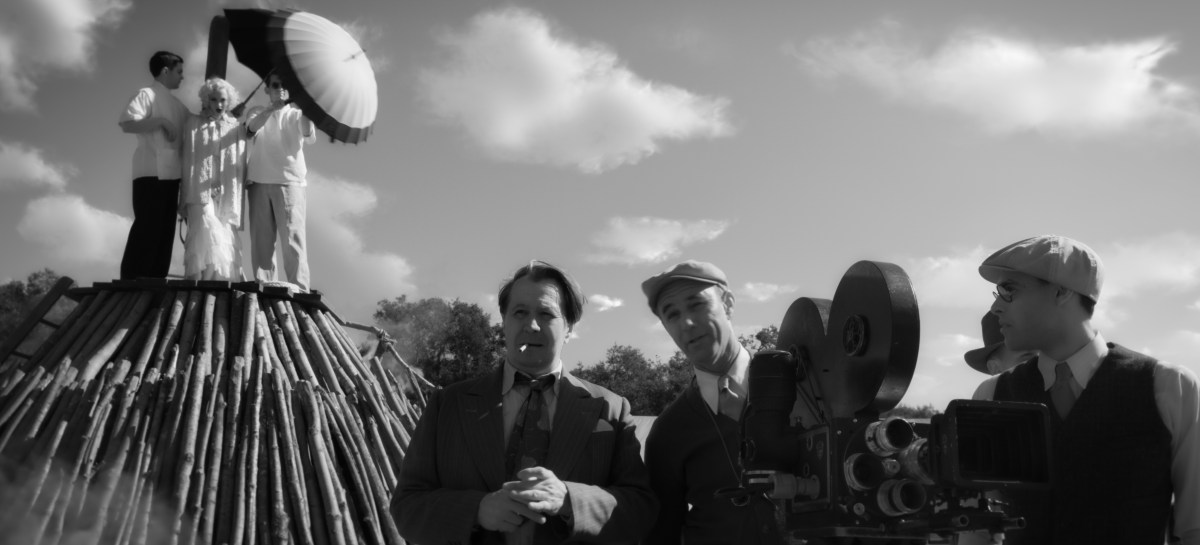
Mank (Netflix) marks cinematographer Erik Messerschmidt’s first narrative feature. It continues a series of firsts for the DP in collaboration with director David Fincher.

Messerschmidt, who earned ASC membership distinction last year, got a major break back in the day while serving as a gaffer for cinematographer Jeff Cronenweth, ASC, most notably on the Fincher-directed Gone Girl. During the course of that movie, Fincher had Messerschmidt do some promotional still work for Gone Girl and the two struck up a rapport. This eventually led to Messerschmidt becoming the DP on Fincher’s Mindhunter, the thriller series centered on an FBI agent’s quest to track down serial killers in the late 1970s.

Last July, Messerschmidt garnered his first career Emmy nomination for his lensing of Mindhunter. He’s shot the lion’s share of Mindhunter episodes, representing his first major TV gig as his DP endeavors prior to that were primarily in commercials and other short-form fare. 

Fincher then further expanded Messerschmidt’s reach–this time into the feature realm with Mank which centers on screenwriter Herman J. Mankiewicz (portrayed by Gary Oldman) as he races to finish the script for director Orson Welles’ Citizen Kane on a tight timetable, secluded in a bungalow in a desert town miles removed from Los Angeles as he recuperates from a car accident in 1940. Attending to him are his secretary Rita (Lily Collins) and his German nurse (Monika Grossmann).

In the process, through Mankiewicz’s worldview–marked by his abiding social conscience and wit, at times caustic–we are introduced to not only Hollywood but life in the 1930s, ranging from the struggle of the rank and file during the Great Depression to the grandeur of Hearst Castle and high society. We also become privy to Mankiewicz’s own inner struggles with alcoholism, as well as a professional battle with Welles (played by Tom Burke) over screen credit for what became the classic Citizen Kane. The Mank cast also includes Charles Dance (as William Randolph Hearst), Amanda Seyfried (as Marion Davies, Hearst’s wife), Tuppence Middleton (as Sara Mankiewicz, Herman’s wife), Arliss Howard (as Louis B. Mayer), Sam Troughton (as John Houseman), Tom Pelphrey (as Joe Mankiewicz, Herman’s brother), Toby Leonard Moore (as David O. Selznick) and Ferdinand Kinsley (as Irving Thalberg).
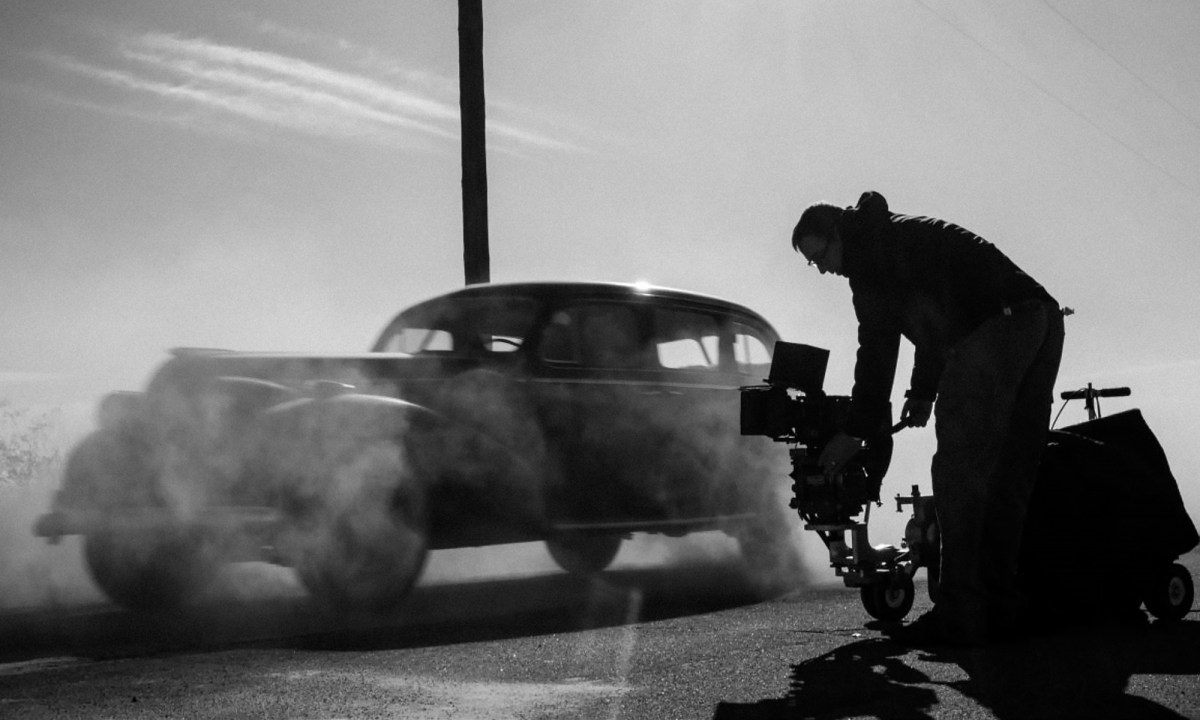
Read the full profile

Mank: Rosebud…

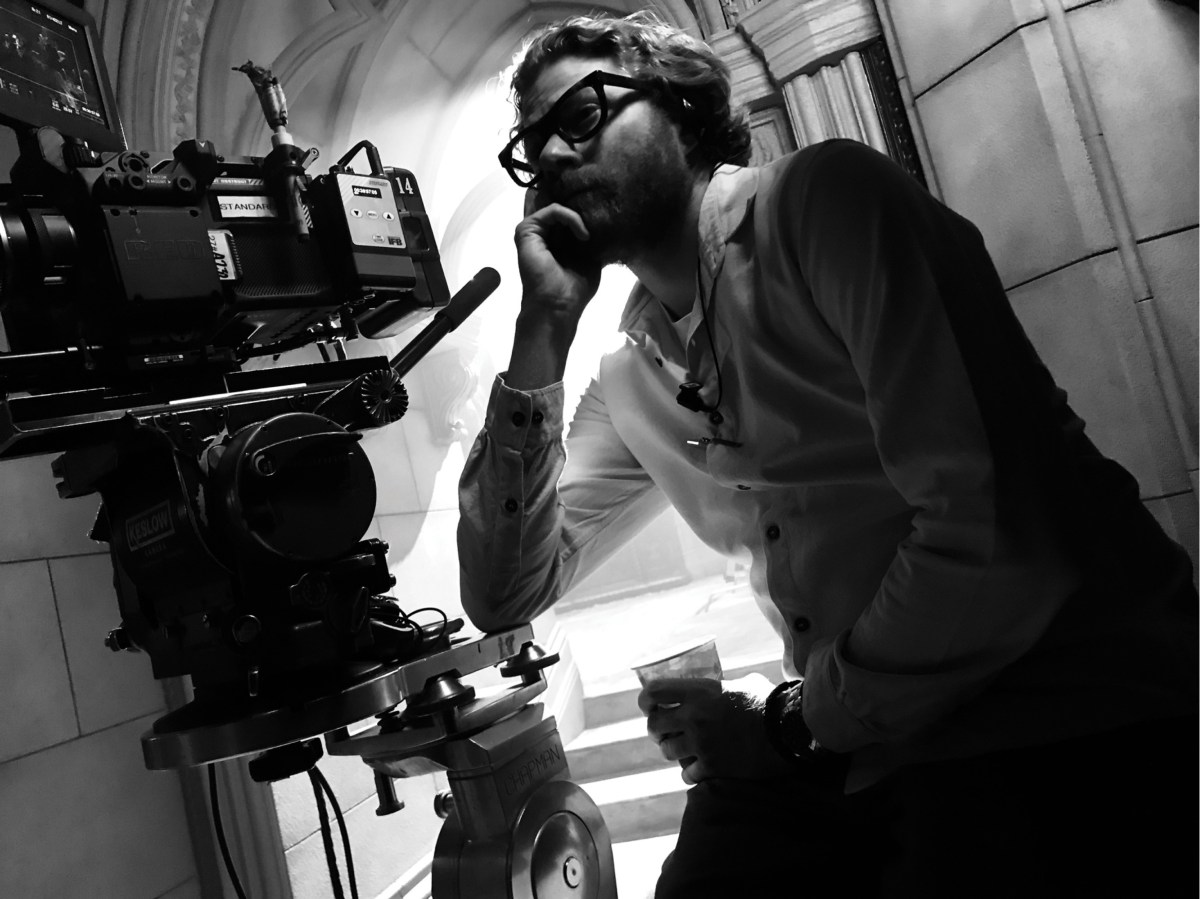
Photo by Nikolai Loveikis

An Interview with Camera Operator Brian S. Osmond, SOC

Kate McCallum
February 2021
SOC Camera Operator (Society of Camera Operators)

Mank is an American biographical drama film about screenwriter Herman J. Mankiewicz and his battles with director Orson Welles over screenplay credit for Citizen Kane (1941). The film is directed by David Fincher, based on a script written by his father Jack Fincher, with Gary Oldman in the title role.

Read the full interview:

‘Mank’ Cast and Crew on Jack Fincher’s Script and Shooting in Black and White

Antonio Ferme
February 22, 2021
Variety

While Netflix’s Oscar contender “Mank” was directed by David Fincher, the script was written by his father, Jack Fincher, prior to his death in 2003. Gary Oldman, who starred in the film as “Citizen Kane” screenwriter Herman Mankiewicz, said Fincher’s script was one of the best he had read in a long time.

“It is fun to be a detective and go off and read things and find out things and all of that,” Oldman said. “That’s great fun, but I felt that the work had really been done by Jack.”

In the Variety Streaming Room, hosted by deputy awards and features editor Jenelle Riley, the cast and crew of “Mank” discussed how Jack Fincher’s script was able to capture the extensive legacies of some of the icons from the golden age of Hollywood, as well as the challenges of shooting in black and white.

Amanda Seyfried, who portrayed William Randolph Hearst’s mistress Marion Davies, said that Fincher’s script infused new life into the cinema starlet’s legacy.

“None of what I read in my investigation was different from what the sense that I had gotten of her,” Seyfried said. “The essence was captured in that script right off the bat. So if I had nothing, I would have been okay.”

Aside from a handful of music videos and commercials, “Mank” was the first project cinematographer Erik Messerschmidt had ever filmed in black and white. He said the crew bounced many ideas off of each other when it came to figuring out what colors would look like on set.

“It becomes this very exciting kitchen of ideas, which is a very special thing to participate in,” Messerschmidt said.

When it came to fitting photos, costume designer Trish Summerville said she only sent them to Fincher in black and white. She said she did a lot of her research on what worked as far as which colors, prints and patterns translated well.

“Some things became really contrast-y and too kind of like confetti,” Summerville said. “Once we got to do the camera test, which I think helped us all greatly with seeing what the lighting was going to be, it helped with hair, with makeup, with clothes. It was a big tool for us.”

Watch the full conversation

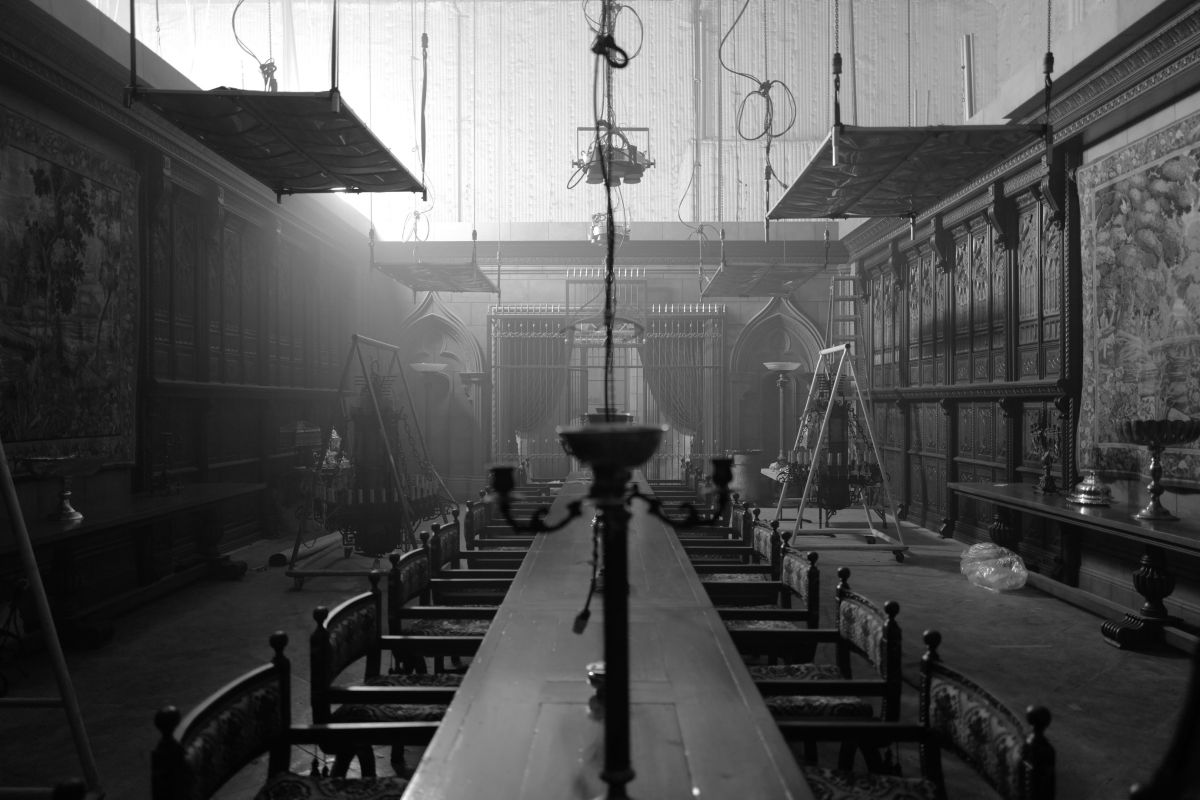
Artist Spotlight: Mank Production Designer Donald Graham Burt

Edward Douglas
February 18, 2021
Below the Line

Continuing Below the Line’s look at the crafts behind David Fincher’s Mank, we spoke to Production Designer Donald Graham Burt, his sixth go-round with Fincher after the first worked together on 2007’s Zodiac. A year later, Burt would win the Oscar for Production Design for his work on Fincher’s The Curious Case of Benjamin Button. Besides performing those duties for six Fincher films, Burt also played a significant role in the designs for Fincher’s Golden Globe-winning Netflix series, House of Cards.

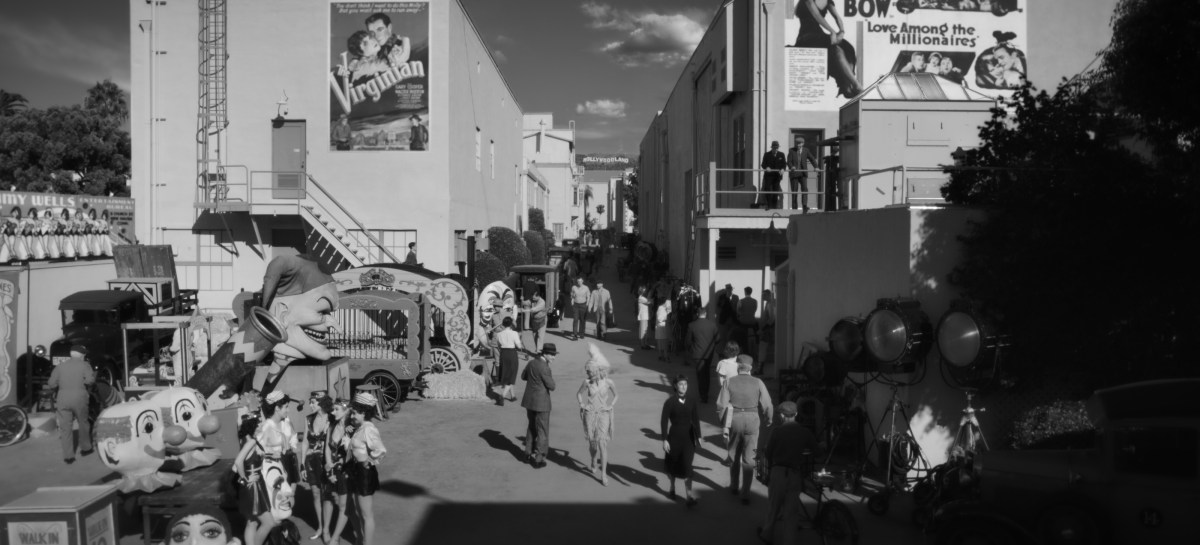
Burt’s definitely a bit of an old school Hollywood vet, going back to some of his work in the ‘90s like The Joy Luck Club and Dangerous Minds. Still, Mank offered Burt a number of new challenges, the first one being the fact that the film would be shot entirely in black and white, the second would be how it would task Burt and his team to recreate some of Hollywood’s most iconic locations from the ‘30s and ‘40s. You only have to watch the movie or look at some of the images below to agree that Burt and his art department came through with flying colors… even without having any actual color.

Below the Line spoke with Burt over the phone for the following interview.

AFI Awards: Mank Cinematographer Erik Messerschmidt on Making the Film

February 18, 2021
AFI Movie Club

Mank cinematographer Erik Messerschmidt sat down to talk about shooting one of the most outstanding films of the year, which is about the greatest film of all time.

AFI Movie Club: AFI AWARDS Honoree MANK

ASC Insights Premieres

Jay Holben
February 17, 2021
The American Society Cinematographers

In a new series of in-depth interviews with Society members, ASC Insights provides the cinematographer’s perspective on today’s most pertinent topics. The first two episodes cover High Dynamic Range (HDR) from the director of photography’s view.

Episode One discusses the implementation of HDR in postproduction as a deliverable and features the insights from Markus Förderer, ASC, BVK; Polly Morgan, ASC, BSC; and associate member and colorist Dave Cole. The episode examines scenes from Independence Day: Resurgence, the F/X series Legion and the short film Mandy. 

Episode Two examines the implementation of HDR throughout the entire workflow from set to post and features thoughts from Erik Messerschmidt, ASC; Marshall Adams, ASC; and colorist Dave Cole. The members discuss scenes from Netflix’s Mindhunter and El Camino: The Breaking Bad Movie

For both episodes, ASC associate member and American Cinematographer contributing editor Jay Holben discusses the ins and outs of HDR, the benefits and pitfalls and how important it is for the cinematographer to be involved in the postproduction implementation of HDR. The key to the format is in expanding the palette of creative intention for the filmmakers, not in merely delivering a brighter picture.  

Watch both episodes now right here.

American Cancer Society’s “Smoking Fetus”

Directed by David Fincher and shot by Michael Owens, this PSA gained national attention due to its striking images and potent warning.

Bruce Mink
August 1985
American Cinematographer

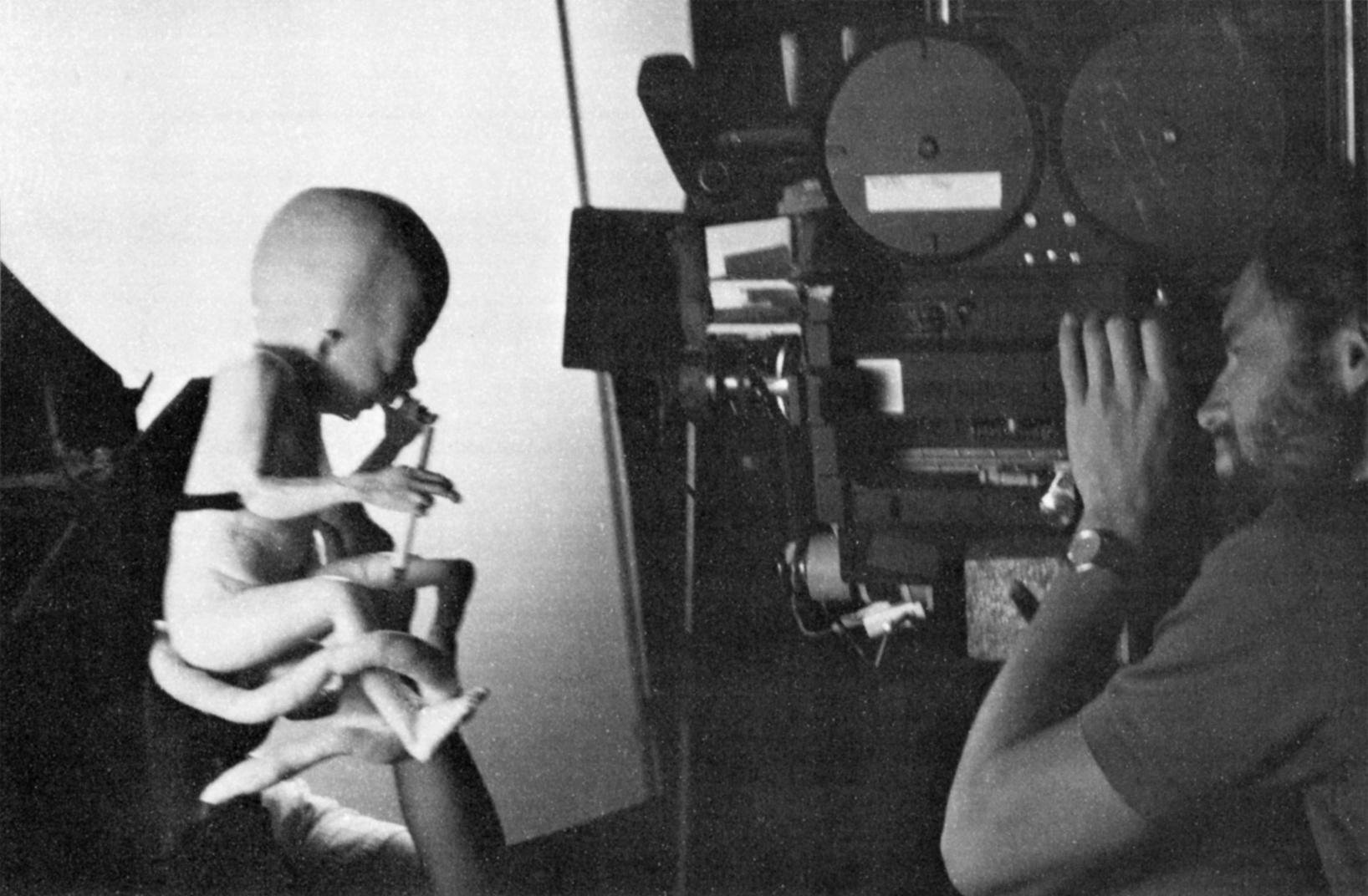
Tony McVey sets up his sculpture in front of the motion-control camera.

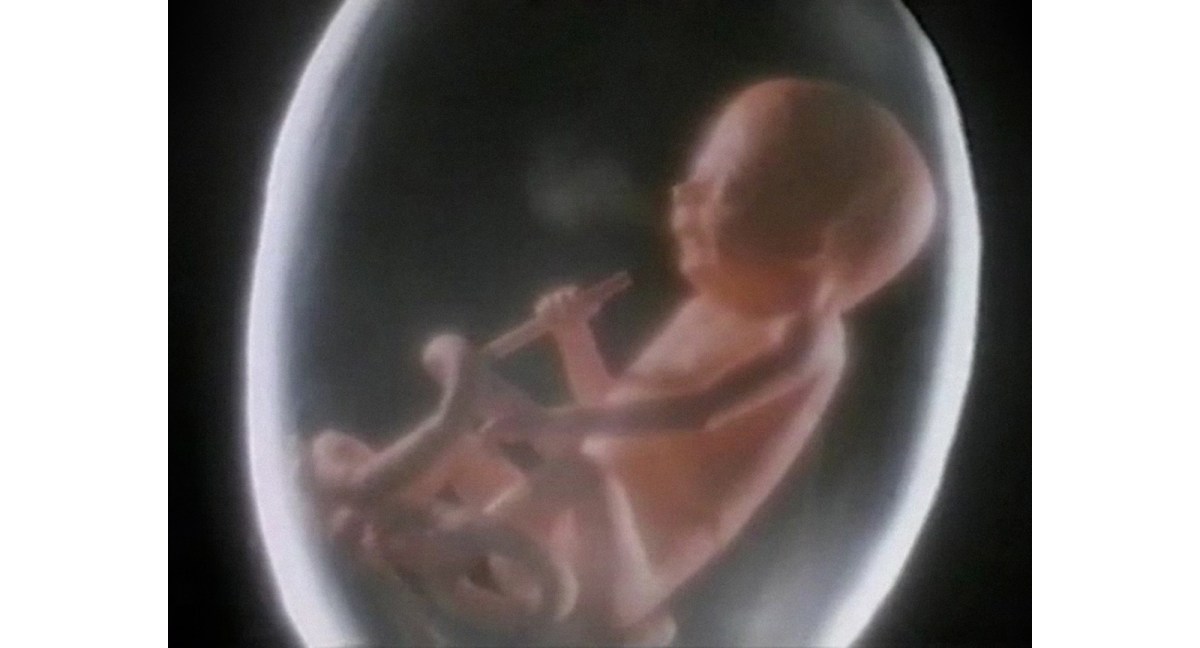
The sound of a heartbeat is heard. A human fetus fades up on the television screen in close-up and a voiceover begins: “Would you give a cigarette to your unborn child?” The camera pans and dollies back to reveal an entire fetus existing serenely in the womb of its mother. “You do every time you smoke when you’re pregnant.” At this point, the fetus slowly brings a lit cigarette to its lips and takes a puff, exhaling the smoke into the glowing placenta it lives in. And the voiceover finishes: “Pregnant mothers, please don’t smoke.”

The 30-second spot was produced for the American Cancer Society by a talented and relatively untapped group of San Francisco Bay area filmmakers, modelmakers, and computer specialists brought together by producer Joseph Vogt (Rick Springfield’s “Bop ’Till You Drop”). With a film and conceptual design education behind him, Vogt organized the majority of his film crew from the ranks of Industrial Light and Magic. It was with the abundant talents of these production people — director David FincherMidland Productions, and Monaco Labs — that Vogt brought life to a most creative and technically challenging public service announcement.

Director of photography Michael Owens at the Mitchell GC ready to shoot the prepped sculpture.

Jerry Angert, director of broadcasting with the American Cancer Society, described the ad as “one of the most powerful we have done… We considered the fact that it would be controversial and the networks might not show it, but counted on the local stations to take it.” And that’s exactly what transpired. NBC and CBS chose not to air the graphic spot while CNN (Turner Broadcasting), ABC and its affiliates and affiliates of NBC and CBS elected to show it.

CBS and NBC claim the spot is too graphic. An NBC spokeswoman cited “general taste considerations” as a deterrent to airing the spot. “It was the sight of the fetus that was especially shocking and we felt it was potentially offensive to our viewers,” she was quoted as saying. A CBS spokesman said the network agreed with the “importance of the intent of the message,” but said that the spot was “far too graphic for broadcast on CBS.” An ABC spokesman, however, said the message put forth by the spot was “important for pregnant mothers to understand.” The network felt that. while it was “different visually” from the usual fare viewed on TV, it contained no material that warranted its ban from the airwaves.

Read the full article

American Cinematographer, August 1985 cover

Watch the commercial and read The Fincher Analyst dossier:

1985. American Cancer Society – Smoking Fetus (PSA)

Director Aaron Sorkin discusses The Trial of the Chicago 7 with David Fincher

A DGA Virtual Q&A

January 23, 2021
The Director’s Cut. A DGA (Directors Guild of America) Podcast

The counterculture movement of the 1960s clashes with the hostile Nixon administration in Director Aaron Sorkin’s historical drama, The Trial of the Chicago 7.

Set in the aftermath of what happened after a peaceful protest turned into a violent encounter with the police at the 1968 Democratic National Convention in Chicago, Sorkin’s film recounts the infamous 1969 trial of seven political activists – that included moderate Students for a Democratic Society led by Tom Hayden, militant Yippies led by Abbie Hoffman and Jerry Rubin, and Bobby Seale of the Black Panthers – who were all charged with conspiracy in an unfair trial that transfixed the nation and sparked a conversation about mayhem intended to undermine the U.S. government.

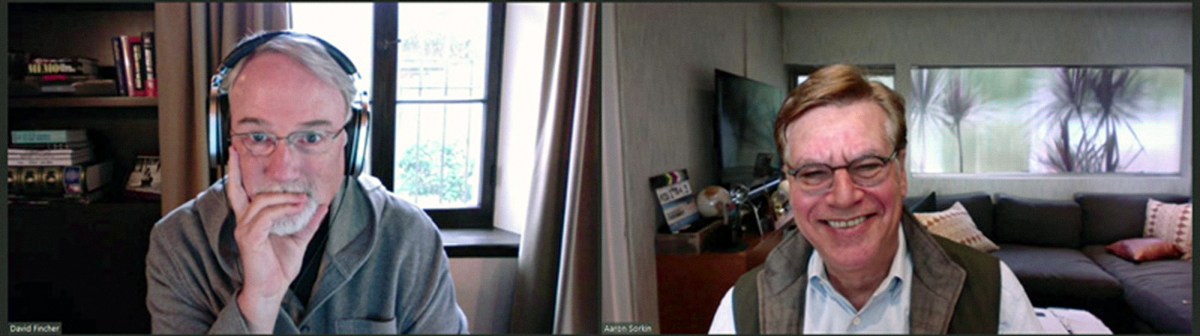
On January 23, Sorkin discussed the making of The Trial of the Chicago 7 in a DGA Virtual Q&A session moderated by Director David Fincher (Mank).

During the conversation, Sorkin spoke about how he came up with a plan to shoot the riot scenes despite his budgetary limitations.

“I find a constraint like that forces you to get creative,” said Sorkin. “It forces you to have an idea. So we came up with this plan, we were going to get a few wide shots and we were going to take advantage of the tear gas. We got smoke everywhere. I discovered what happens when you shoot light through smoke so I wanted smoke in every scene. I could not get enough smoke. It didn’t matter where we were.”

In addition to his directing work on The Trial of the Chicago 7, Sorkin was nominated for the 2017 DGA Award for Outstanding Directorial Achievement in First-Time Feature for his debut film, Molly’s Game. He was also part of the producing team (which includes DGA President Thomas Schlamme) that won multiple Emmy awards for “Outstanding Drama Series” for their work on the series The West Wing. Sorkin also took home an Academy Award for “Best Writing, Adapted Screenplay” for David Fincher’s feature The Social Network.

Sorkin has been a DGA member since 2016.

Listen to the podcast:

DGA.org
Apple Podcasts
Spotify
YouTube

Making Mank

Director David Fincher and cinematographer Erik Messerschmidt shoot a black-and-white masterpiece for the 21st century.

February 12, 2021
Netflix Queue

It’s a milestone for any up-and-coming cinematographer, landing that first feature film assignment. For Erik Messerschmidt, that all-important project turned out to be Mank, David Fincher’s ambitious chronicle of Herman Mankiewicz and how the irascible screenwriter came to pen the first draft of what became Orson Welles’s cinematic landmark Citizen Kane.

On paper, Mank could not have been more daunting. Messerschmidt would be working side by side with a famously exacting filmmaker, on a high-profile drama starring Oscar winner Gary Oldman in the title role. He’d also be shooting entirely in black and white.

“I was like, Oh cool, I get to do black and white,” Messerschmidt recalls. “Then I realized how naïve that was, and it freaked me out. It really freaked me out.”

Fortunately, Messerschmidt had some history with Fincher. He had worked as a gaffer on the director’s 2014 thriller Gone Girl, and deeply appreciated his direct communication style and the specificity of his vision. Impressed by Messerschmidt’s pragmatism and work ethic, Fincher subsequently hired him for the F.B.I.-profiling drama Mindhunter, and the professional relationship deepened from there.

When Fincher turned his sights to Mank, he knew whom to call. “I’m a big believer in multidisciplinary thinking,” he explains. “Erik was obviously somebody who knew how to run his manpower, but he could also speak to his crew in myriad ways that imparted slightly different nuances. He can split hairs in terms of foot-candles or T-stops or F-stops but also have a conversation about Carol Reed or how Marlon Brando never hit his mark.”

Together, Fincher and Messerschmidt plotted how best to shoot the character-driven period drama, which was written by the director’s late father, Jack Fincher. One of the most challenging sequences was a nighttime stroll taken by Mank (Oldman) and the screen siren Marion Davies (Amanda Seyfried) through the palatial grounds of Hearst Castle. Onscreen, the friends are bathed in moonlight, yet those scenes were actually shot during the day using a classic Hollywood camera technique known as day for night. (The sequence was filmed largely on location at Pasadena’s Huntington Library, Art Museum, and Botanical Gardens; the menagerie of animals in the background was added in digitally during post-production.)

The scope of the production might have proved overwhelming were it not for the rapport between director and cinematographer. “All we do all day is ask questions of the people that we’re working with. I was completely thrilled to be working for someone who had answers to those questions and who was genuinely interested in and curious about what it was that we were doing,” Messerschmidt says. “Being in a situation where you can have a really productive conversation with the director, that is so rare and so important.”

The duo spoke to Queue about what makes their partnership work.

Read the full interview

More Like This: Spotlight on Mank, featuring Trent Reznor, Atticus Ross, Erik Messerschmidt and more

Krista Smith
February 10, 2021
More Like This (A Netflix Queue Podcast)

A podcast from Netflix Queue, the journal that celebrates the people, ideas, and process of creating great entertainment on Netflix and beyond. Host Krista Smith is joined by a different co-host each episode – Franklin Leonard, Tre’vell Anderson, and others – to give an insider’s peek into the creation of your favorite films, series and documentaries and the incredibly talented people who make them.

More Like This gets the Mank treatment! In this very special episode, Krista takes us behind the scenes of David Fincher’s Mank, sharing interviews with key members of the creative team. Composers Trent Reznor and Atticus Ross talk about the power of storytelling through music, how they pulled inspiration from composers of the past, and how pandemic restrictions forced them to record a 70-piece orchestra one instrument at a time; set decorator Jan Pascale demonstrates how the smallest details make the biggest impact; cinematographer Erik Messerschmidt details how he combined classic and modern techniques to transport a 21st century audience back in time; and editor Kirk Baxter explains why David Fincher once called him 50% blacksmith and 50% poet. Enjoy this deep dive into the process of making movie magic with film collaborators at the top of their game, and be sure to see their work in Mank, now streaming on Netflix.

Listen to the podcast:

Apple Podcasts
Spotify
Google Podcasts
Stitcher

Simplecast
PodBean

Excerpt with Erik Messerschmidt:

Cinefade VariND