David Fincher on filmmaking and his twisted new comedy, The Killer

As his new film gets ready to hit Netflix, the legendary director talks to Nick Chen about The Smiths, Michael Fassbender, and the similarities between directors and hitmen.

Nick Chen
November 6, 2023
Dazed

To prove the catchiness of “Unhappy Birthday” by The SmithsDavid Fincher sings to me the opening refrain with a huge grin. For our conversation, the 61-year-old director of feel-bad fare like Se7enZodiac, and The Girl with the Dragon Tattoo is in surprisingly good spirits. Or bad spirits, given the miserabilist nature of The Smiths.

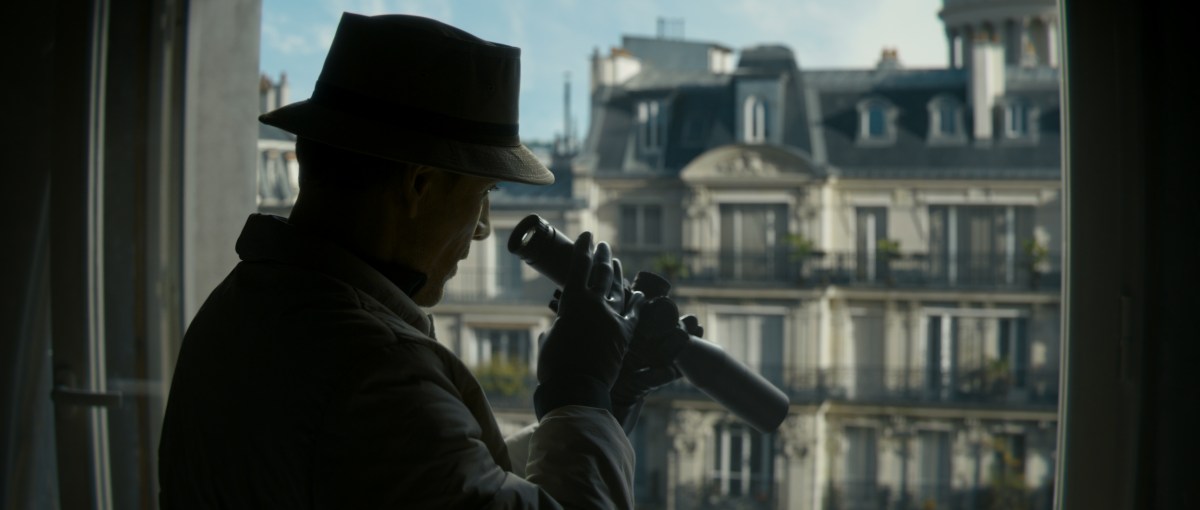
In Fincher’s sleek, bleak thriller The Killer, his second feature for Netflix, there are 11 killer songs by The Smiths on the soundtrack. An unnamed hitman (Michael Fassbender) – simply The Killer, in the credits – calms his nerves when operating a sniper rifle by listening to “How Soon Is Now?”, the tremolo reverberating through his earphones. “That guitar shouldn’t be comforting, because it’s sinister,” says Fincher, speaking in Ham Yard Hotel during the London Film Festival. “But to me, it’s comforting. We originally had Joy Division and Siouxsie and the Banshees[Trent] Reznor was like, ‘Every time we use The Smiths, it’s just funny.’”

After the black-and-white seriousness of Mank, Fincher has returned to the kind of big-screen, popcorn fun he delivered in Gone Girl – except it also mischievously isn’t. Adapted from a French graphic novel, The Killer is less of a John Wick-esque, gun-toting adventure and more observing an assassin do admin to bypass security measures. He shuffles through paperwork to identify home addresses, and fills in endless forms to join a victim’s gym. To remain faceless, he picks up Amazon purchases from a locker and eats at a McDonald’s that doesn’t involve entering a building. If it weren’t too meta, he’d wind down by using someone else’s password to stream Fincher’s House of Cards on Netflix.
Read the full profile

Killer Instincts

David Fincher aims to unsettle with Michael Fassbender as a ruthless assassin in gripping thriller The Killer.

By Nev Pierce
Photograph by Jean-Baptiste Mondino

November 1, 2023
Netflix Queue

The Killer is about an exacting professional whose meticulous methods and wry worldview are disrupted by unruly reality. This may be a clue as to why David Fincher wanted to make it. The Fight Club filmmaker is well-known for his tenacious approach to directing — always pushing for more. And in Michael Fassbender he has a leading man who is equally driven.

The Oscar-nominated star of 12 Years a Slave and Steve Jobs left screens for a few years to take up professional racing behind the wheel of a Porsche in the European Le Mans Series. This blend of danger and precision seems apt for playing the title character in The Killer, an unnamed assassin who aims to execute things — and people — perfectly.

We’ll get to how, or if, one can define “perfection” in cinema, but to an on-set observer, it might seem Fincher will settle for nothing less. While he would contest this, he knows his definitions can differ from others’. “My idea of professionalism is you work 24-7 to make good on your promises,” he says, before continuing with a self-aware smile. “Not a lot of people feel that way. Some people are like: ‘You do the best you can in 40 hours a week and let the chips fall where they may.’”

Read the full profile

Watch The Killer on Netflix

Screenwriter Andrew Kevin Walker Explains Why Michael Fassbender Eats All Those Hard-Boiled Eggs in David Fincher’s “The Killer”

Fincher’s Se7en and Fight Club collaborator talks protein, process, and audiences’ expectations.

Esther Zuckerman
October 26, 2023
GQ

Screenwriter Andrew Kevin Walker’s first produced screenplay was Se7en, which became director David Fincher‘s breakout film. Since then Walker has worked with Fincher a number of times, pitching in on The Game and “polishing the edges” of Jim Uhls’ original script for Fight Club. But not everything they’ve collaborated on more recently has made it to the big screen. Walker did a rewrite on the unmade sequel to The Girl with the Dragon Tattoo, and one on a Fincher version of 20,000 Leagues Under the Sea that Walker says could have been “mind-blowing.”

After these and other false starts, a new Fincher/Walker project has finally come to fruition: The Killer, out in theaters this weekend and on Netflix next week. “There’s no way to express proper gratitude to this gentleman David Fincher, and the effect he’s had on my life,” Walker says. “But it is fun to now be able to go, ‘Hey, David and I have been trying to get to this for a long time. Thank you. Go see this, because this one isn’t the only one we’ve been spending years trying to write.'”

Read the full interview

David Fincher: “I haven’t seen Fight Club in 20 years. And I don’t want to”

Best known for grisly thrillers like Seven and Fight Club, the director speaks to GQ about The Killer, his new hitman revenge movie with a blackly comic twist.

Jack King
October 25, 2023
GQ (UK)

He might not like it, but David Fincher has something of a reputation. It goes back to those Seven days — even before. He’s infamously exacting, requiring his actors to perform endless takes. Sometimes, well into the triple-digits. Rumour has it that Jake Gyllenhaal is still scarred.

In the 61-year-old’s latest movie, The Killer, Michael Fassbender portrays a meticulous hitman who obsesses over every… single… detail. He, like his movie’s director, is exhaustive. Exhaustingly so. He’ll take days on a job. He narrates the virtues of patience like a self-help tape stuck on repeat. Sound familiar? Some critics think so, detecting a whiff of self-deprecation in the air.

It seems a totally reasonable, and legitimate, observation. But does Fincher see the parallel? “No,” he tells GQ. “But I can see why the weak-minded…” He stops himself from finishing that sentence with a wry chuckle. Maybe he’s getting softer.

In many ways, The Killer is natural territory for this maestro of the macabre, best known to most for his grislier thrillers — not least Seven, his they-didn’t-get-it-at-the-time masterwork Zodiac, and the prematurely canned Netflix psychodrama Mindhunter. (Oh, and a bloody-knuckled little ‘90s flick called Fight Club.)

Nevertheless, it’s a sharp left-turn from his last feature, the deeply personal Citizen Kane biography Mank, which was written by his dad Jack, who passed away in 2003. “I’ve always liked B-movies,” Fincher says of the shift to this relatively restrained genre exercise. “And Fight Club to Panic Room, what’s that about? I don’t know, it’s kind of where your interests take you. And I spend a lot of time developing three or four things for every one thing I end up doing.”

The result is an eminently re-watchable revenge movie, morbid and sardonic and wickedly funny, the latter of which hasn’t been highlighted nearly enough in early press. Think John Wick, if Keanu Reeves was a sociopath with a penchant for bucket hats, Amazon and inadvertently xenophobic quips about Germans. Oh, and if he loved The Smiths. Especially “How Soon is Now.”

In a hotel room on one of October’s last sunny days, Fincher spoke to GQ all about The Killer, his feelings about AI, and why one of his (many) canned projects would’ve been “a lot” like The Last of Us

Read the full interview

Why Seven still has one of the most shocking endings in cinematic history

“What’s in the box?!”

C. Molly Smith and Will Robinson
September 21, 2023
Entertainment Weekly

In 1995, Brad Pitt‘s exclamation of fear and dread jolted audiences and left a lasting cultural imprint. The ending of Seven, director David Fincher‘s breakout film, is one of the most shocking, disturbing, and iconic twists in modern cinema, capping a tight, wrought thriller.

The film’s initial introduction to its world, a metropolis mired in unrest, is normal enough. Cool veteran Detective Somerset (Morgan Freeman) is paired with young hothead Detective Mills (Pitt) in pursuing a serial killer who picks his victims based on the seven deadly sins. They follow the clues and corpses, and the murderous John Doe (Kevin Spacey) eventually makes it into their custody, promising to reveal his two final victims—targeted for envy and wrath.

But the third act abandons cinematic tropes and convention. The promise of the final two corpses is questioned when a mysterious box arrives that is Doe’s coup de grace; it contains the head of Mills’ wife, Tracy (Gwyneth Paltrow)—never seen on screen, but revealed through dialogue and reaction. Doe acted on his envy of Mills’ normal life and incurs Mills’ lethal wrath. Though he’s killed at the hands of the good guy, the bad guy’s death serves as a loss for the positive forces of the world.

And it was all this close to not happening; “What’s in the box?!” nearly missed its canonization. Fincher, scribe Andrew Kevin Walker, and some of the cast, including Brad Pitt, fought for the original planned finale, against the studio’s protests. The producers eventually conceded to uphold the work’s artistic integrity. “There’s nothing wrong with up endings, it’s just that the dark ending of Seven was what it was about,” Walker told Uproxx. “To change the ending to something else was to remove the very heart of the story.”

Entertainment Weekly looks at how off-camera elements of the film successfully crafted suspense and resulted in Seven‘s enduring ending.

Read the full profile

“The Killer” interview with the director David Fincher

Chiara Nicoletti
September 8, 2023
FRED, The Festival Insider

David Fincher, director of “The Killer“: “We thought it would be interesting if the ‘cool’ assassin movie tropes were all taken away”.

For his twelfth film, The Killer, in competition at the 80th Venice International Film Festival, the director David Fincher reunites with Andrew Kevin Walker, with whom he created the indelible serial killer thriller Se7en (1995).

Adapted from the acclaimed graphic novel written by “Matz” (Alexis Nolent), the film explores the boundaries of the revenge movie and sees Michael Fassbender in the role of a hitman failing at his main task and being threatened because of this.

In his production notes, David Fincher writes: “We thought it would be interesting if the ‘cool’ assassin movie tropes were all taken away”. The director describes how he decided to let the audience into the protagonist’s train of thoughts as to understand that “what he does and what he thinks do not match”.

The Killer releases globally on Netflix November 10, 2023.

Listen to the interview

First behind-the-scenes look at David Fincher’s “The Killer” with Michael Fassbender

Michael Fassbender: Road to Le Mans. Season 4, Episode 1

November2, 2022
Porsche (YouTube)

Follow the fourth season of Michael Fassbender’s journey to compete at the world’s ultimate motorsport event in this weekly YouTube series.

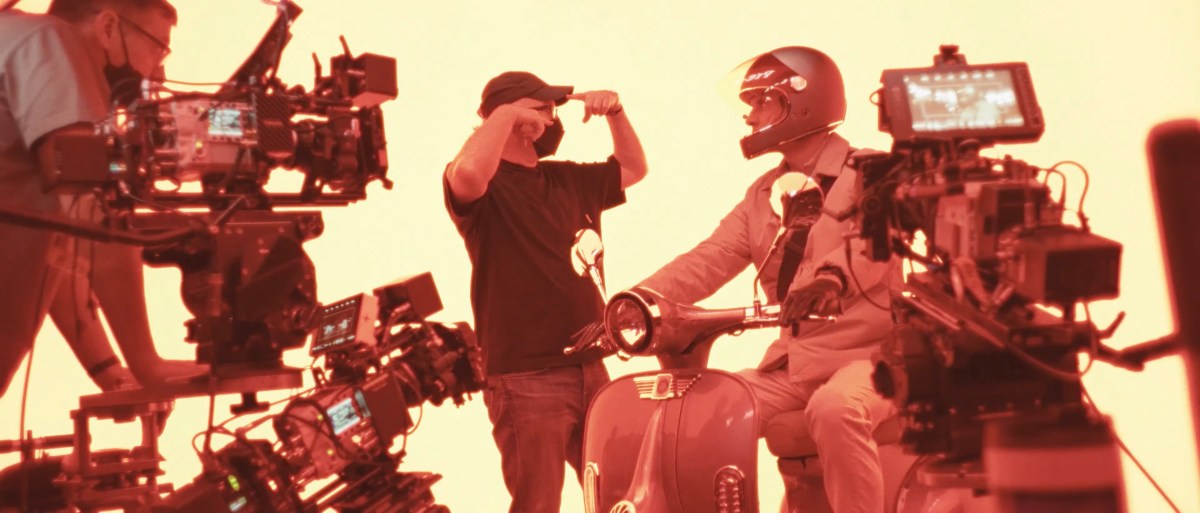
Starting at minute 2:14, there is a three-minute clip of Fassbender shooting car process scenes for The Killer with Fincher and his team on Sound Stage 2 at Triscenic Production Services. Andrew Kevin Walker, the screenwriter of the film, is also visiting.

The actor discusses working on the film during the off-season of his other passion, car racing:

I had the great privilege and honor of working with David Fincher on The Killer. I have the lead role in his film. To have a small window of opportunity to go to work and then to be able to work with one of the best filmmakers out there was just a dream come true.

It felt really good to go back to work. The film that I’ve done before was just before lockdown. But that was 2019, so I was definitely ready to go back to work.

With somebody of David’s caliber, it was a very special opportunity for me: quite a few locations over a five-month period.

What was interesting for me was taking the experience from what we’re doing on track and bringing it on set, especially with somebody like David who films very precisely and everything is dealing in fractions in terms of how you deliver things and movement and exactly how the frame is occupied.

You have to step on and deliver in a period of time. And David is looking for perfection and to do that within a take, however long that take is. It might be 40 seconds. It might be six minutes long, but within that time frame, you’re looking to do everything exactly as it should be.

You’ve taken on board all the notes and there’s plenty of them to digest, but in the moment when you’re trying to deliver those notes, you’re not thinking at all.

It was a real honor. I felt like I learned a lot from him. It was a full-on shoot, very long hours sometimes six-day weeks. So there was literally not enough time for me to get into car and do any training whatsoever.

So we wrapped up the film in L.A., end of March, and I got directly on a flight the next day and then came straight to the track.

Step by Step, David Fincher’s ‘The Game’ Drags You Into a Living Nightmare

The most overlooked entry in David Fincher’s filmography is also one of his best.

Matthew Mosley
November 1, 2022
Collider

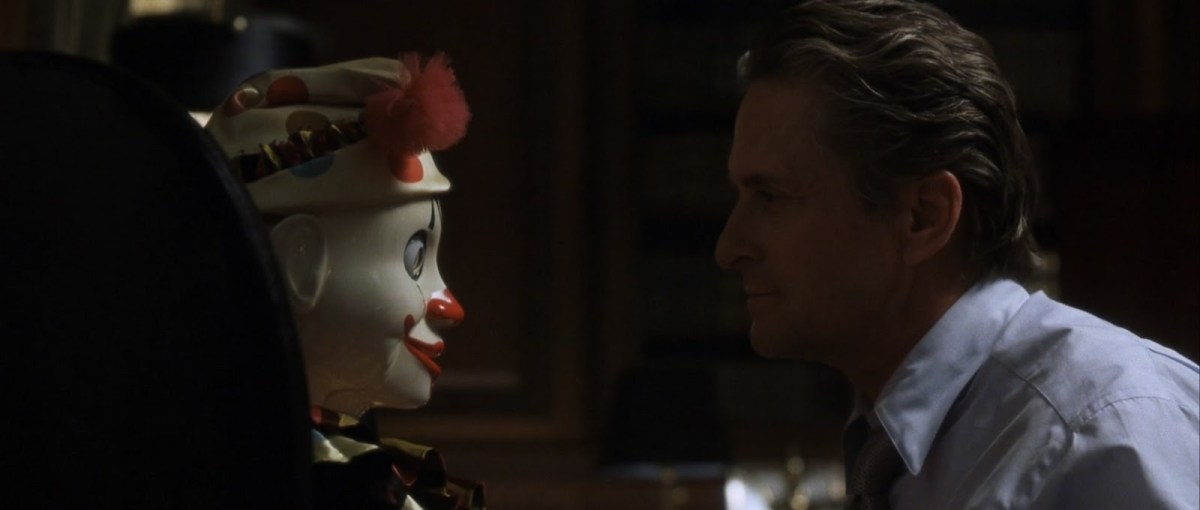
The Game had a lot to live up to. It was the film David Fincher chose as his follow-up to the wildly acclaimed Seven, a film that had thrust the young director into the limelight and prevented his career from reaching a premature end after the mixed reaction to his debut, Alien 3. Suddenly, he was no longer the man who’d killed the little girl we’d spent all of Aliens trying to save. Instead, he was a fully realized auteur ready to carve out his place in the annals of cinema, and all eyes were on him to see what he would do next. What he came back with was The Game, a Hitchcockian thriller for the modern age that toned down the controversial subject matter of its predecessor to focus on being a more straightforward genre pic – a decision that raised a few eyebrows.

The film centers on Nicholas Van Orton (Michael Douglas), a wealthy investment banker who has everything but the one thing money can’t buy – happiness. For his 48th birthday, his estranged brother Conrad (Sean Penn) gives him a voucher for a mysterious game operated by the equally mysterious Consumer Recreation Services. Nicholas initially rejects the gift, but curiosity gets the better of him and he agrees to participate. However, it doesn’t take long before reality and the game become one and the same, and Nicholas finds himself caught in a web of conspiracy that grows tighter the more he tries to escape. It’s classic thriller stuff and would make for perfect late-night viewing for someone looking to escape into the fantastical world of movies. It’s the sort of thing Alfred Hitchcock excelled at, and while it’s an oversimplification to say that that’s all the film has going for it – touches of psychological thriller era Brian De Palma are scattered throughout, alongside the occasional moment of surrealism that feels closer to what Charlie Kaufman would later popularize – it’s undeniably a more crowd-pleasing experience than Fincher’s previous work.

Read the full article

Interview with Andrew Kevin Walker, writer of Se7en

Daniel Fee (Twitter)
September 15, 2022
Daniel Fee33 (YouTube)

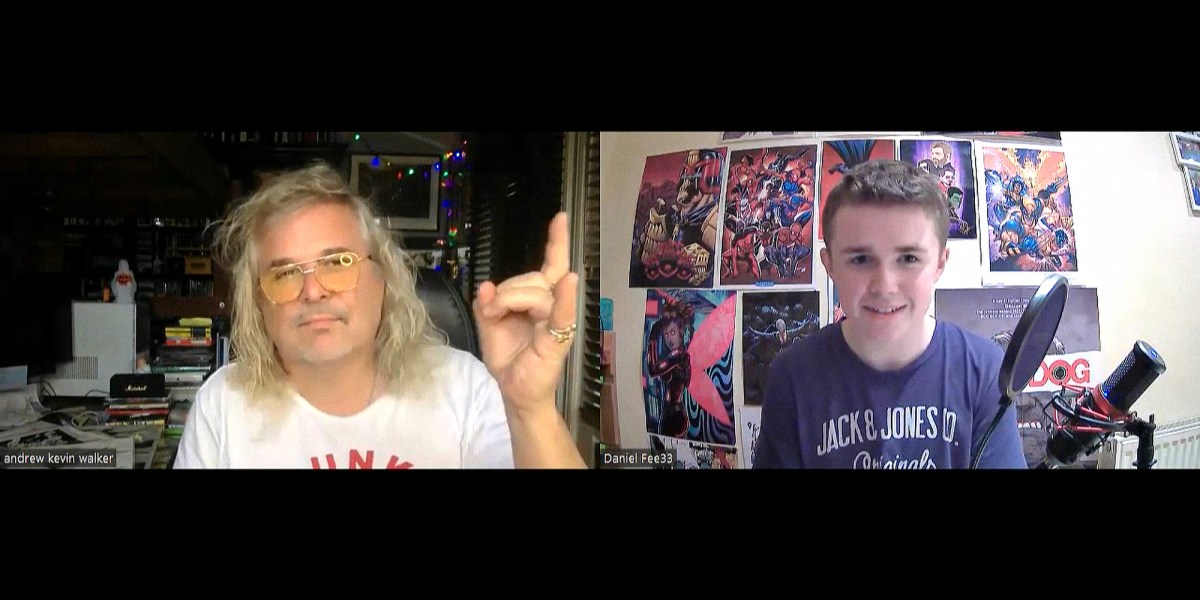
In this video, I’m lucky enough to sit down with Andrew Kevin Walker! Screenwriter behind projects such as SE7EN, the David Fincher directed crime thriller, starring Brad Pitt & Morgan Freeman! Andrew is also the screenwriter behind Brainscan, Nerdland, he co-wrote Windfall, and he also wrote an episode of hit TV Show, Love Death and Robots! It was such an honour to chat with Andy!

I would really appreciate it if anyone could donate to the National Deaf Children’s Society! (Twitter) Every cent helps! Thanks!

Andrew Kevin Walker: website, Twitter, Instagram

Mentioned podcast:

David Koepp in conversation with Andrew Kevin Walker

September 11, 2019
Live Talks Los Angeles (Apple Podcasts)

David Fincher Tells You Everything You’d Ever Want to Know About Making ‘Love, Death + Robots’ and Directing ‘Bad Travelling’

Fincher also talks about his love of director Alberto Mielgo’s ‘Jibaro’ and how he’s “never seen anything like it. I’ve never been that mesmerized.”

Steve Weintraub
May 20, 2022
Collider

If you’re a fan of David Fincher and Love, Death + Robots, you’re about to be very happy. Not only is Love, Death + Robots Volume 3 now streaming on Netflix, David Fincher directed one of the episodes, Bad Travelling, and it’s fantastic. Written by Se7en screenwriter Andrew Kevin Walker, it’s about a giant crustacean and a shark-hunting sailing vessel. I’d love to tell you more…but the best thing about Love, Death + Robots is not knowing anything about what you’re going to watch and just letting it happen.

Shortly after watching the episode, I was able to get on the phone with Fincher for a deep dive conversation about directing Bad Travelling and the making of Love, Death + Robots. During the sprawling conversation, Fincher talked about his history with animation, how he decided on the style of animation for his episode, how they decided where something should end, how everyone involved in the series is doing it for the love of the genre, and if they’ve thought about making a Love, Death + Robots feature film or doing a live-action version. In addition, he talked about his love of director Alberto Mielgo’s Jibaro (another Love, Death + Robots Volume 3 episode) and how he’s “never seen anything like it. I’ve never been that mesmerized.”

Trust me, if you’re a fan of Fincher and this amazing series, you’ll learn a lot about how it’s made.

Check out what he had to say.