This week on Pop Culture Confidential we are thrilled to have screenwriter Liz Hannah in conversation about the incredible new season of Mindhunter, as well as working with Steven Spielberg on The Post and more!
Liz Hannah burst onto the scene a couple of years ago when her first screenplay, a spec script about Washington Post owner Kay Graham and her decision to publish the Pentagon Papers, was picked up none other than Steven Spielberg. That became The Post starring Meryl Streep and Tom Hanks. Liz Hannah went on the write the critically acclaimed comedy Long Shot starring Charlize Theron and Seth Rogen.
Now she is onboard Mindhunter season two as a writer and producer. Liz Hannah talks to us about her career, working with David Fincher (exec producer and director on Mindhunter), writing and staging one of the most intense episodes of TV this year, the Charles Manson episode, getting into the heads of serial killers and much more.
Pelayo de las Heras Álvarez Septiembre 2, 2019 Mondo Sonoro
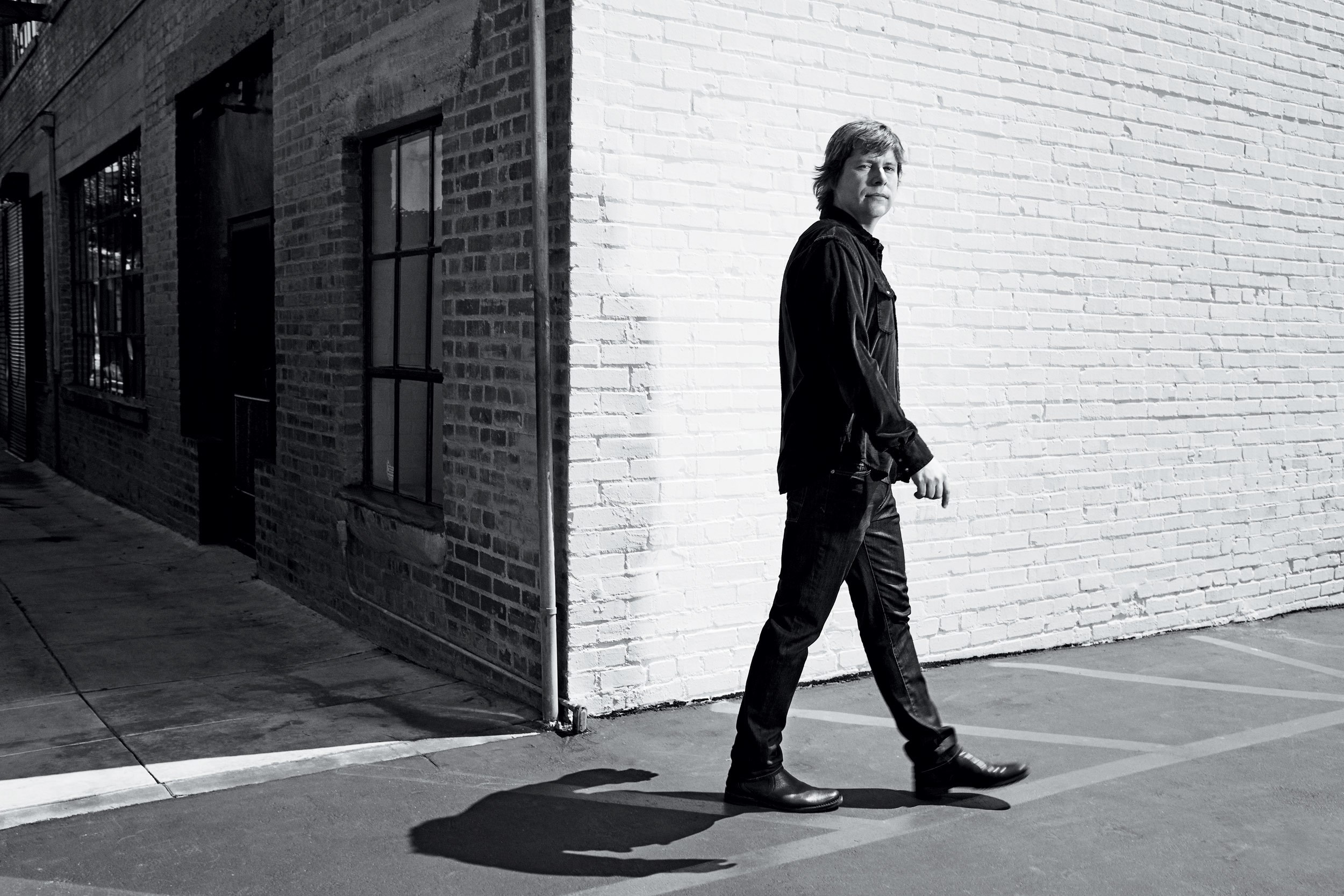
Jason Hill fue miembro de los relativamente efímeros Louis XIV, ahora volvemos a tenerle por aquí en una faceta bien distinta. Suya es la banda sonora original de la serie televisiva de Netflix “Mindhunter“. Aprovechamos el estreno de su segunda temporada para charlar con él.
Es la década de 1970 y los coches, brillantes y alargados, recorren las ciudades de Estados Unidos bajo la macilenta luz de las farolas. Jimmy Carter es presidente, J. Edgar Hoover lleva muerto varios años y la guerra fría sigue en marcha. Salir a la calle ya no parece tan seguro como lo era en la idealizada década de 1950, pero el país vive, entre todas, una particular pesadilla: los asesinatos en serie. El miedo al otro se instala en la sociedad norteamericana. ¿Conseguirá el FBI modernizarse a tiempo de una forma adecuada y eficaz? Sigamos la serie para descubrirlo. Una serie, por cierto, que destaca entre los thrillers televisivos actuales. Y uno de los motivos es por la atractiva banda sonora de Jason Hill, vocalista y guitarrista de Louis XIV, una banda que publicó tres álbumes en cuatro años durante la década pasada.
La banda sonora original de “Mindhunter” parece siempre sutil, delicada. Es como en la introducción de la serie, con la pieza de los créditos, en la que la subversión se esconde detrás de esa música y la perfección y cuidado de los agentes manejando la grabadora. Eso debe haber sido difícil de lograr. ¿Cómo fue el proceso creativo?
Era cuestión de encontrarle la voz, de encontrarle color al movimiento. Fue como un enigma. Yo desde el principio comencé a sentirlo como una bruma, una especie de niebla o agua. Era líquido, resbaladizo… pero también era como esa característica ilusoria de los pensamientos, que también es algo de lo que se trata en la serie, especialmente en la primera temporada: las cosas que ocurren y tienen lugar en las mentes de las personas y luego el camino y la acción que toman. Los pensamientos son muy extraños, no puedes tocarlos. Eso sucede muchas veces con la música también. Quería que la música fuera así, cuando no puedes tocarla exactamente, resbalándose entre los dedos.
Entonces, la banda sonora tiene una fuerte carga psicológica.
¡Sí! Por suerte, llevo trabajando con Fincher alrededor de cinco o seis años, y mucho de ese tiempo ha servido para identificar el sonido y la estética de las cosas y los temas [en particular]. Desde entonces ha sido fantástico; más o menos siempre lo encontramos juntos. Con “Mindhunter” he empezado a trabajar desde una fecha bastante temprana, incluso ocho meses antes de ver siquiera una sola imagen. De hecho, empecé desde el momento en que me dijo: ‘¿te apetecería hacer esto?’. Me mandó el guión y lo leí… ¡pero fue difícil! Me considero una persona muy relacionada con todo lo visual y sonoro, pero no es como que al leer el guión se me haya ocurrido la música. Nada de eso. Gran parte del proceso, por tanto, fue para encontrar algo que yo sintiese que era correcto. Cuando vi una imagen, entonces sí, todo adquirió sentido. La “sensación” o esencia que debía transmitir la serie surgió de mí al momento.
Parece que funcionó, porque la música encaja a la perfección con la serie. Había dado por hecho que habías comenzado a partir de las imágenes.
Oh no, no. Hay una canción titulada “The Crime Of The Century” que fue la primera que compuse a partir de una imagen. Fue como: ‘whoah, vale, este es el sonido de la serie (aunque por entonces ya había trabajado largo tiempo en ello). Esa fue la parte en la que sentí que había encontrado lo que buscaba, algo de un aspecto y movimiento acuoso, espeso. Se asemeja a cuando lanzas una piedra en un lago y ésta va formando pequeños círculos o anillos. Así sentía yo esa pieza en relación con la música y con el resto de canciones que estaban por venir. A veces me sentaba al piano y, aunque es difícil de explicar, sentía que la forma en la que estaba tocando era la que se suponía que debía de ser. Es decir, que ese ritmo era el que debía haber en la serie. Extrañamente, a pesar de que desde pequeño siempre creaba canciones, yo nunca entré en el mundo de la música para ser compositor.
Mindhunter is the 4th time David Fincher has examined serial-killers. Far from resorting to tired clichés, with the 2nd season he has again broken new ground.
From the infamous tales of his multi-take shooting style to the sheer technical precision consistently on display in his work, it is apparent that Fincher is methodical in his craft, a director who knows what he wants and sees very little point in doing the job if he is ever willing to settle for less than that.
Which is why, in a truly unique way, the opening intro to Fincher’s latest Netflix series, Mindhunter, is essentially a distillation of his entire filmmaking career into a single minute-and-a-half of unnervingly brilliant and precise cinematic craft.
Fincher’s first credit as a filmmaker may have technically been Alien 3, but his career didn’t really begin properly until 1995, with the release of Seven. The tale of a pair of detectives investigating the grisly murders of a serial killer, Seven is in many ways, in hindsight, the perfect introductory statement for Fincher’s body of work as a whole. On the surface, it’s a tightly-woven and meanly constructed narrative about a serial killer and the men trying to catch him. But just beneath the surface (and for our purposes, much more importantly) Fincher is using the narrative as a framework through which to explore themes such as the perverseness of mankind, the lasting wounds of grieving, and obsession.
That last one is important: obsession. Because it’s one he’s come back to again and again, and explored in increasingly interesting ways. Fight Club saw him creating a pop-cultural satire, one that delved deep into the depravity of its time and how the obsessions of a generation essentially derailed the concept of mental stability. Zodiac saw him confronting it in his most direct way yet, showing how Robert Graysmith’s and the nation-at-large’s obsession with the Zodiac murders came to engulf them.
What’s so intriguing about Mindhunter is that it tackles this thematic staple of Fincher’s work in a very similar way, yet it does so without even necessitating a single minute of footage from the series proper.
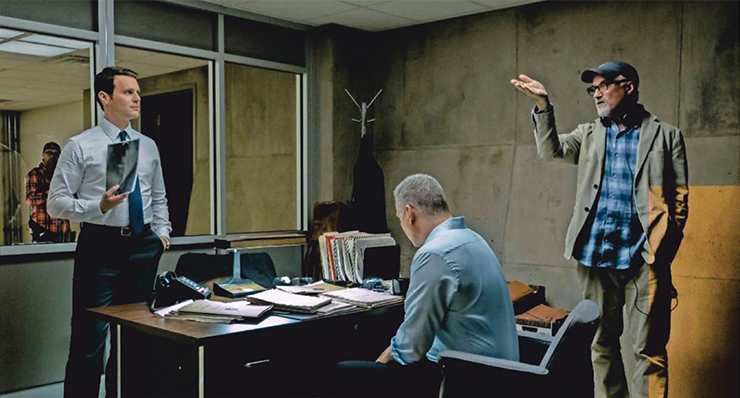
“I want to have no idea what’s going on in your head.”
David Fincher is issuing instructions to a
moustachioed man, who is gazing into a mirror, adjusting the shoulder strap on
the woman’s slip he’s wearing. The crew, similarly delicately, adjust the
lighting for this moment of self-fulfillment — one of a series of episode-puncturing
vignettes of Dennis Rader (played by Sonny Valicenti), aka The
BTK Killer.
Bind. Torture. Kill. And do it quickly.
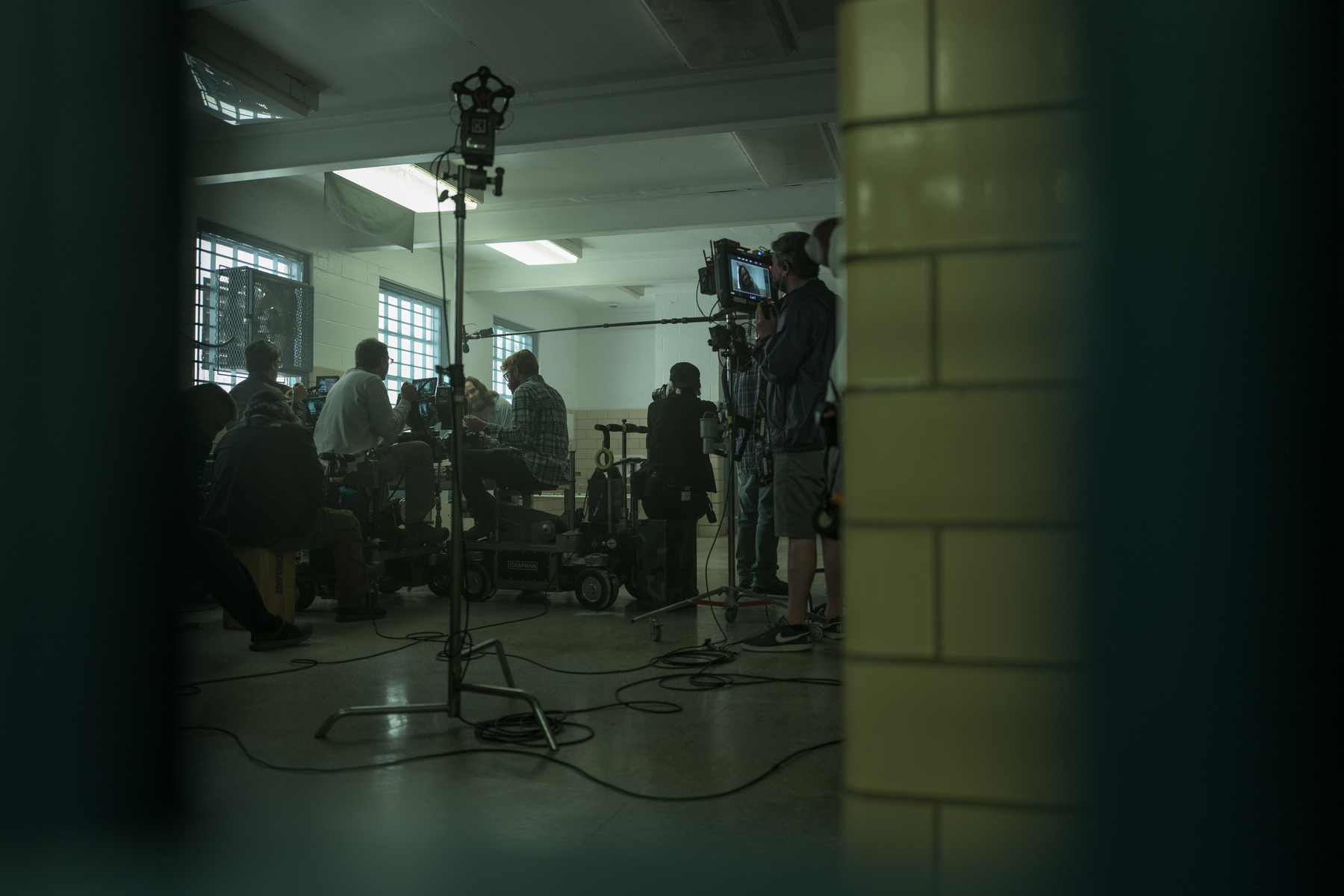
Fincher is on a tight schedule
for these late additions to the lengthy shoot. While the scene is set, he sits
at the monitor with lead writer Courtenay Miles, adjusting dialogue, as
the art department present him with crime-scene photographs and mementos of victims
for sign-off. Multitasking can be murder.
Camera set, they shoot. Once. Twice. “That is fucking creepozoid,” says Fincher, after the third take. If you can manage to unsettle the director of Seven and Zodiac, then you’re probably doing your job. The next few days filming in this cavernous Pittsburgh studio will involve FBI office politics, masks (literal and figurative) and autoerotic asphyxiation. As one crew member puts it, “Some things you can’t unsee.”
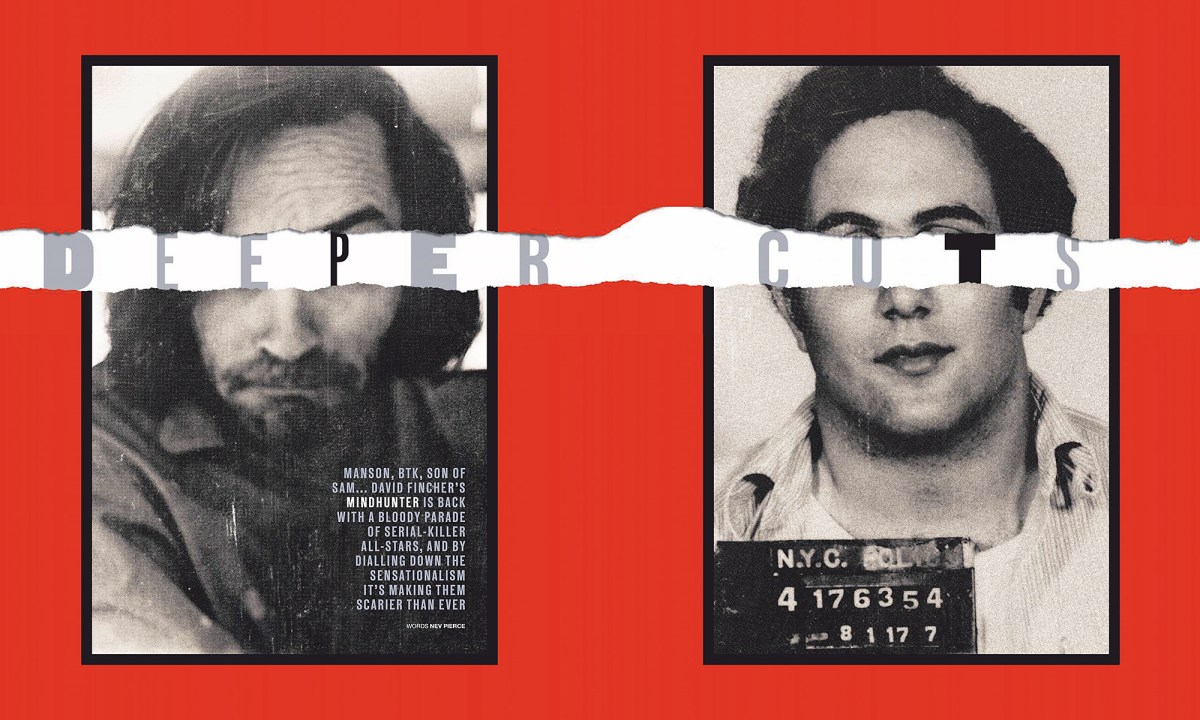
Back for its second season, Mindhunter has lost none of its fearlessness. BTK returns, of course, but following impactful portrayals of lesser-known serial killers Edmund Kemper and Jerry Brudos, this year is taking on the iconic — including arguably the two most famous serial killers of all: Charles Manson (Damon Herriman) and David Berkowitz, aka Son of Sam (Oliver Cooper). The latter we’ve previously seen on screen being commanded by a demon-possessed dog in Spike Lee‘s Summer Of Sam. And — on the 50th anniversary of the murders his ‘disciples’ carried out — Manson is everywhere, including in Quentin Tarantino‘s Once Upon A Time In Hollywood (portrayed by the same actor, Damon Herriman). But whereas most movies lean into the mythology of Manson, or embellish Berkowitz, Mindhunter is looking to re-examine reality. This isn’t hellhound hyperbole or gauze-softened myth. It’s the ugly truth.
“We want to believe they’re madmen,” says Courtenay Miles, “But when you read their history, their journals, letters, you see it is a human being in there. But it’s a human being gone wrong.” Miles was first assistant director on the debut series — the aide-de-camp to the director’s general — and made the unlikely but long-cherished transition to writer when Fincher gave her a shot. She immersed herself in the world of serial killers, and lost sleep as a result. “All of the characteristics that are in their mental structure and their compulsions are things that any other human being can identify with,” she says, reflecting on the long gestation of serial killers. “They’re made over 20 years. Nurturing these compulsions. That just got under my skin.”
Miles got the chance to be disturbed — and earn her first screenwriting credit — because Fincher cares considerably less about reputation than he does about his own lived experience. But while the first season saw him employ emerging directors (the most high-profile being Asif Kapadia, whose greatest achievements were in documentaries), here he’s joined behind the lens by two cinematic heavyweights. Carl Franklin is of late an in-demand director of TV, including House Of Cards, but was responsible for some astounding crime cinema in the 1990s: Devil In A Blue Dress and One False Move. In that grubby, merciless thriller, the wife of Bill Paxton‘s seemingly guileless cop observes, “Dale doesn’t know any better. He watches TV. I read non-fiction.” Mindhunter bridges that divide. The other director is Andrew Dominik, whose three features all deal with the ruthless reality beneath criminal lore and legends (Chopper, The Assassination Of Jesse James By The Coward Robert Ford, Killing Them Softly). Dominik has wrapped his two episodes. Franklin is shooting four, Fincher three — but, as Dominik puts it, “his tentacles are everywhere”.
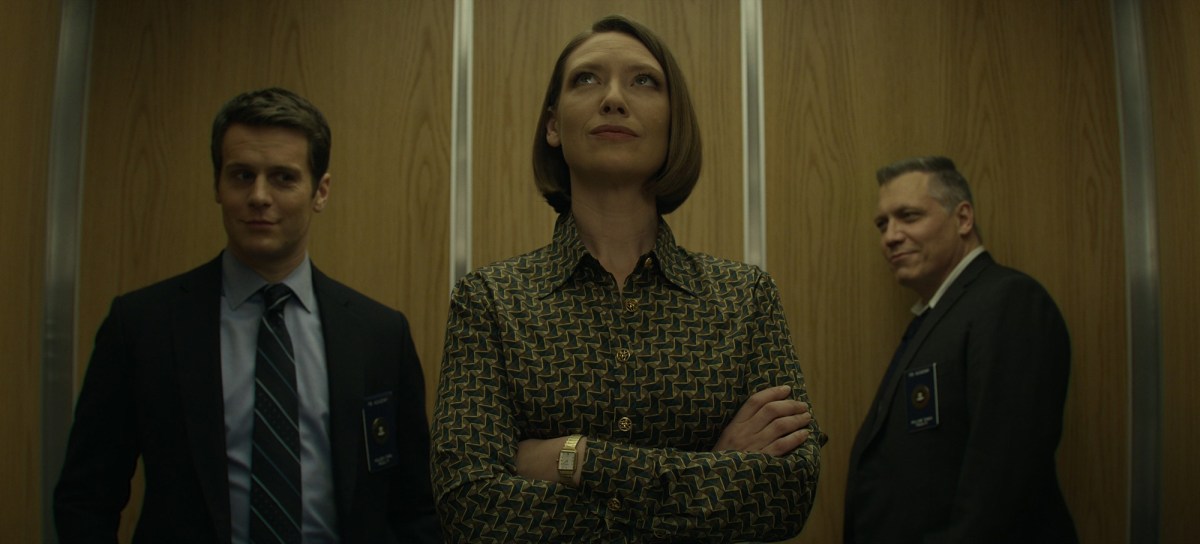
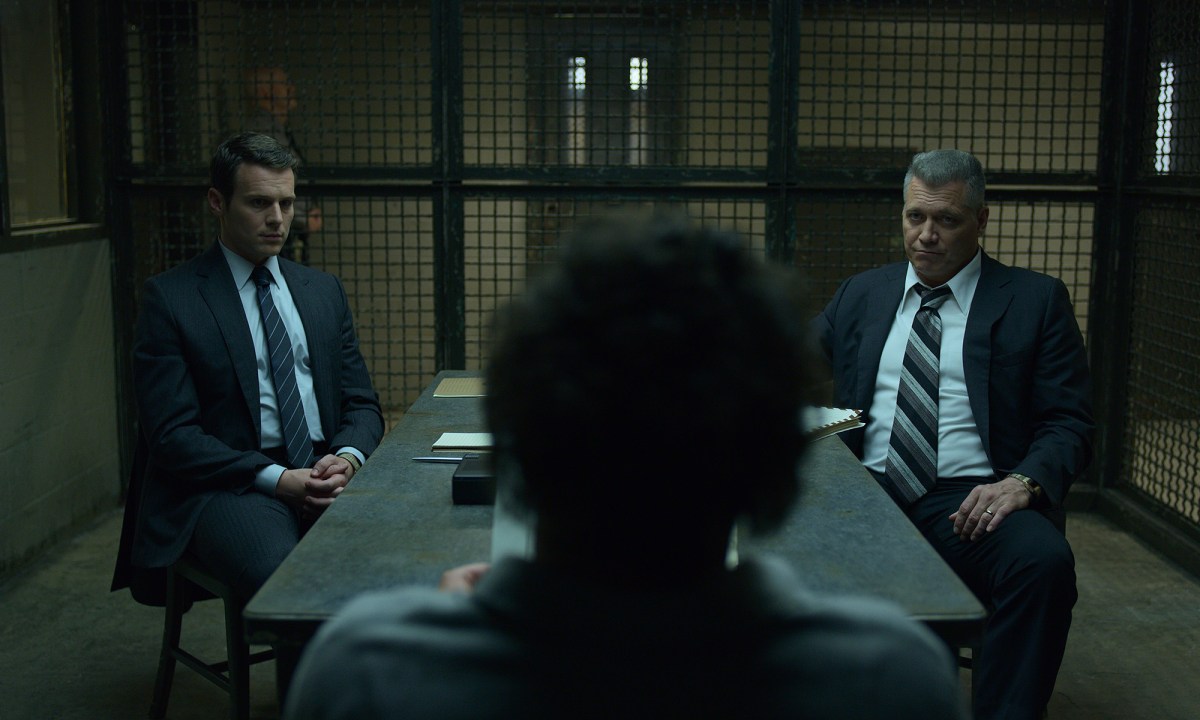
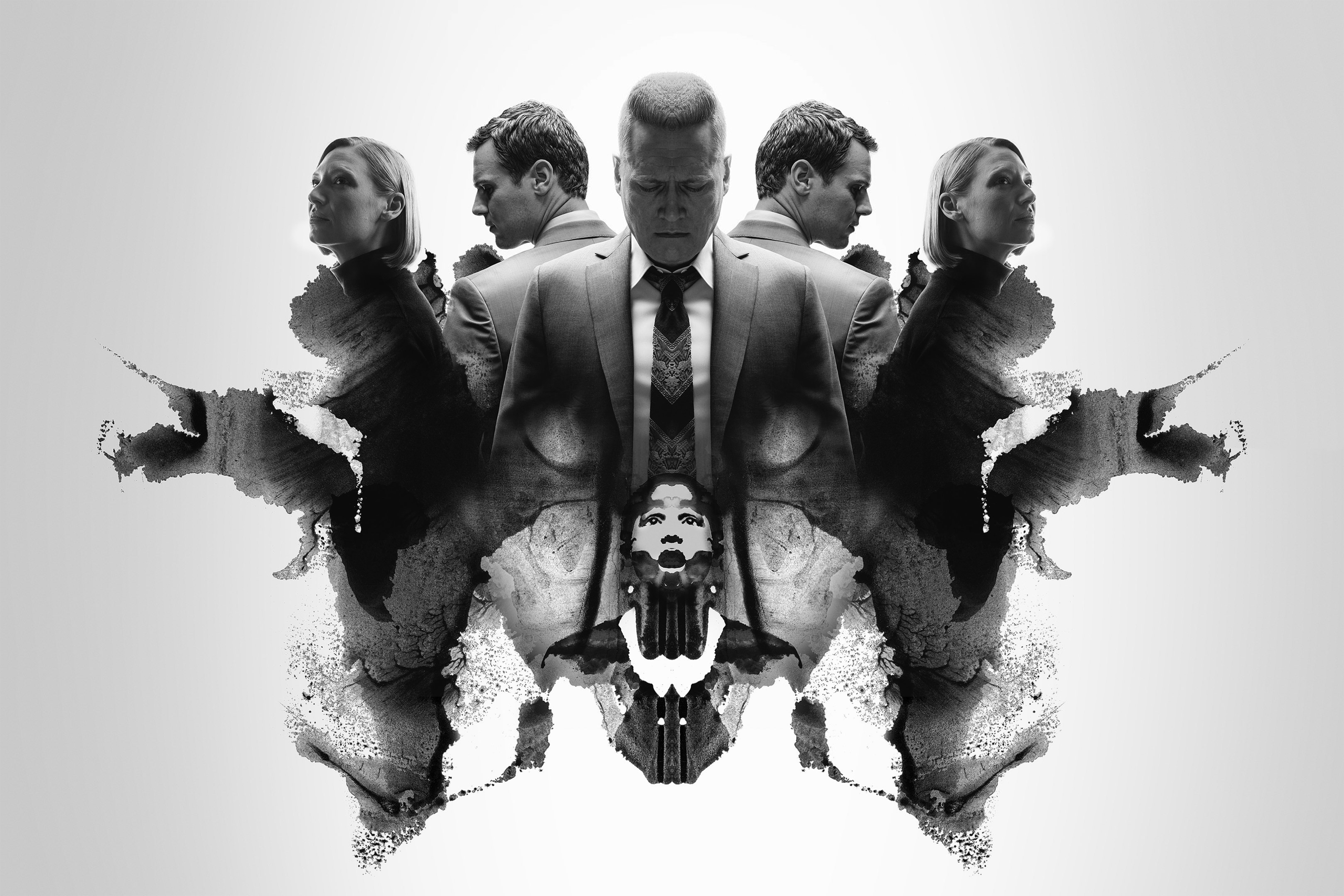
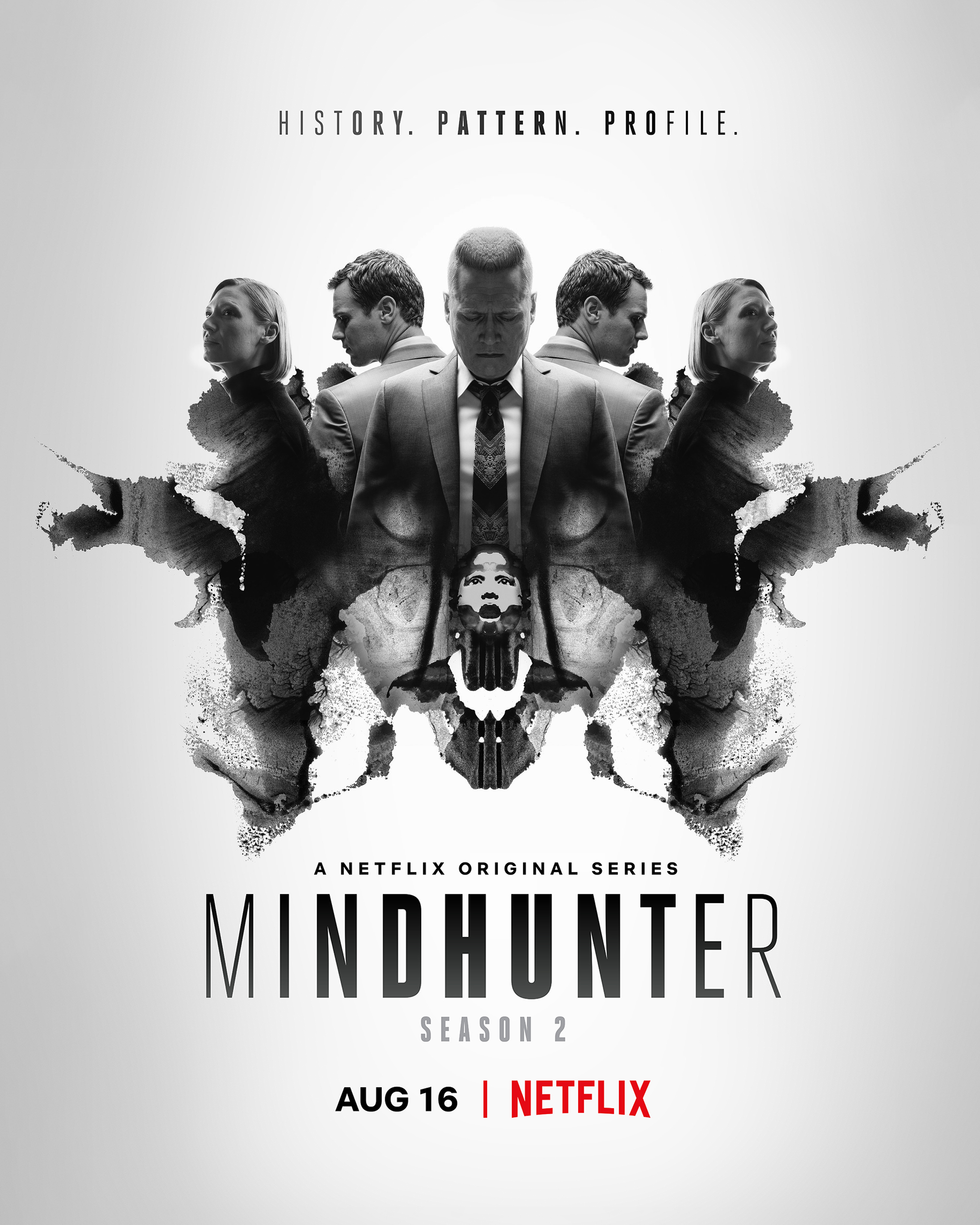
FBI agents Holden Ford and Bill Tench probe further into the psyches of those who have done the unthinkable. With help from psychologist Wendy Carr, they apply their groundbreaking behavioral analysis to hunting notorious serial killers.
Inspired by true events, Mindhunter Season 2 will premiere globally on Netflix on August 16, 2019.
The new season stars Jonathan Groff, Holt McCallany, Anna Torv, Joe Tuttle, Albert Jones, Stacey Roca, Michael Cerveris, Lauren Glazier, and Sierra McClain.
The series is directed by David Fincher (Gone Girl, The Social Network, Zodiac) as well as Andrew Dominik (The Assassination of Jesse James by the Coward Robert Ford, Killing Them Softly) and Carl Franklin (Devil In A Blue Dress, One False Move, episodes of House of Cards and The Leftovers).
David Fincher, Joshua Donen (Gone Girl, The Quick and the Dead), Charlize Theron (Girlboss, Hatfields & McCoys) and Cean Chaffin (Fight Club, Gone Girl) executive produce along with Courtenay Miles and Beth Kono.
Every story, as movie trailers never tire of informing us, has a beginning. The story of the cover-song trend in movie trailers began nine years ago, when the veteran trailer editor Mark Woollen found himself grappling with a difficult assignment. This was not unusual for Woollen, who is known for producing iconic, inventive mood-piece trailers for tough-to-market, tougher-to-summarize films by such directors as Terrence Malick, Steven Soderbergh, Michel Gondry, and Alejandro González Iñárritu. The brilliantly odd trailer for the Coen brothers‘ “A Serious Man,” punctuated by a rhythmically recurring shot of Fred Melamed bouncing Michael Stuhlbarg’s head off a chalkboard? That was Woollen. The trailer for Todd Field‘s “Little Children,” which used the sound of an oncoming train in lieu of music? That was Woollen, too. There are some films that can’t be marketed by traditional means; Woollen is the trailer auteur to whom auteurs turn for a nontraditional solution.
In early 2010, Woollen’s company, Mark Woollen & Associates, was tapped to produce a trailer for David Fincher’s “The Social Network.” As Woollen remembers it, it was March or April; Fincher was still busy in the editing room, and Trent Reznor and Atticus Ross had not yet written the movie’s score (which would win an Academy Award). With the Cambridge Analytica scandal and the election of 2016 still years away, the Facebook story seemed like curiously dry material for Fincher, the director of “Fight Club.” “It was kind of getting beat up in the press,” Woollen said. “Like, ‘How can you make a movie about Facebook? Are you gonna make a movie about eBay or Amazon next?'”
At first, Woollen wasn’t sure how to cut a trailer for a Facebook movie, either. But the answer turned out to be sitting on his hard drive. A few years earlier, while searching for something else, he’d downloaded an MP3 file from what he described as “some GeoCities-looking kind of Web site.” The file was a 2001 live recording of the song “Creep“—the first hit single by the British art-rock band Radiohead—as performed by Scala and Kolacny Brothers, a two-hundred-member girls’ choir from Belgium. The recording had a lot of the things that a trailer editor looks for in a piece of music. “It has this gentle introduction, it has moments that build and swell and rise, and then it can come down and land nicely,” Woollen said. “I felt, like, Here’s a track I can build a piece around.”
More important, the music seemed to work on a thematic level. Woollen, who was not a Facebook user, had been kicking around ideas about connectivity and loneliness. He played the choir recording on repeat while driving to work and thought about “lost, lonely voices that felt like they were speaking from the depths of the Internet.” In his business, Woollen said, “You’re always talking about trailers that invite you in, saying, ‘Come and see us, come and see us.'” He liked the counterintuitive notion of building a trailer around a song whose refrain is “What the hell am I doing here / I don’t belong here.” “The irresistible ingredient,” Woollen said, “was one hundred Belgian girls singing ‘You’re so fucking special’ in full voice.”
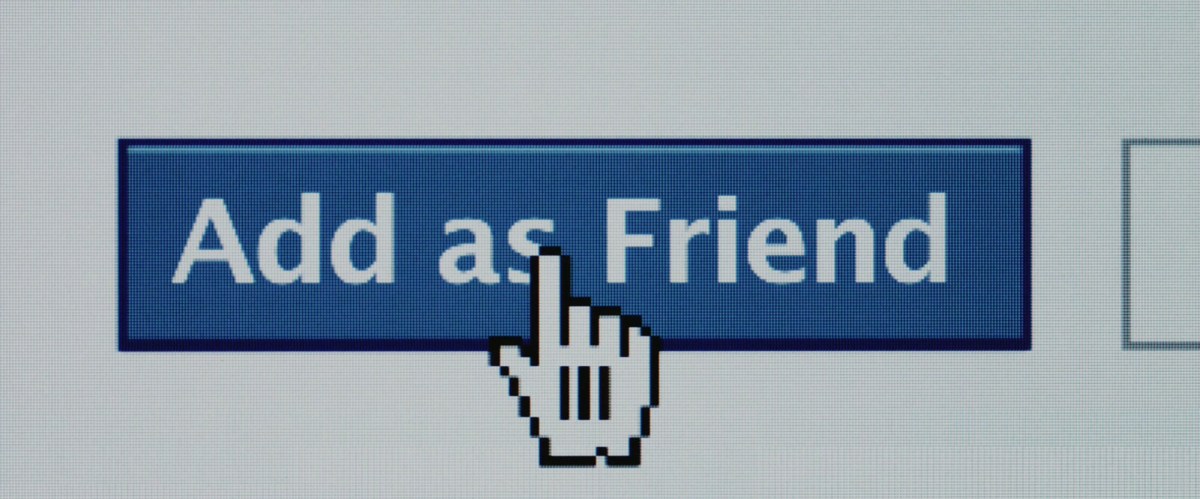
The finished trailer is an unsettling masterpiece. For fifty seconds, it plays like an ad for Facebook—a montage of photos, status updates, and unseen hands confirming friendships with the click of a blue-and-white button. Then, at the one-minute mark, a pixelated image of Jesse Eisenberg’s alarmingly dead-eyed Mark Zuckerberg fades into view. Woollen said that he was nervous about showing Fincher a cut that held back the director’s own footage in favor of stock photos and family pictures supplied by the staff of Mark Woollen & Associates. But Fincher liked it; the first time he screened “The Social Network” for the studio, he played Woollen’s trailer first.
There is a short list of films I consider to be perfect; that is, I’ve watched them over and over again and they not only work every single time, but they have no weak spots and just get better and better with each viewing. Casablanca is one of those. Psycho is one of those. Jaws is one of those. Fargo is one of those. Taxi Driver is one of those. The Social Network is one of those and, of course, Citizen Kane is one of those. You can’t imagine anything making the film better, and if you removed one tiny piece of it you would ruin the whole thing. From the writing to the directing to the acting to the producing, everything just works. Even time can’t break them down. You probably have your own ideas about which movies you consider perfect, but for me it’s a short list as even most of my favorite films of all time I would not call perfect. And indeed, perfection is never a goal any artist should seek to attain – it’s just that every so often a film arrives there.
The myth about Citizen Kane is legendary – the young Orson Welles with his Mercury Theater players, a keen eye, and a whole lot of ambition made what is not-arguably the greatest film ever made. Welles has always been credited with the whole thing because in America we are beholden to the hero’s journey. That he pulled off such a brilliant hat trick at 24 is part of the myth. When you have a more honest conversation about Citizen Kane, you start talking about Gregg Toland and you eventually get to (because you must) Herman Mankiewicz.
Variety reports that David Fincher will team up with Gary Oldman for Mank, a biopic about the Oscar winning co-screenwriter on Kane for Netflix. The script was written by Fincher’s late father and will be filmed in black and white!
Although no plot details have been released about Mank, one can only assume it will have something to do with Mank’s writing of Citizen Kane, or co-writing with Orson Welles. Mank had famously spent time at William Randolph Hearst’s castle in San Simeon with Hearst’s wife, Marion Davies, which gave him such close and personal access that, it is rumored, Mank knew that Hearst had a pet name for Davies’ golden clam, Rosebud, and trolled Hearst by putting it in Kane.
What is great about the story of Kane is what it says about William Randolph Hearst directly and indirectly and what a fit Hearst had about it. He thwarted the film’s release, hurting its box office significantly. He somehow turned the film industry against Orson Welles, who was booed at the Oscars, and easily handed the Best Picture/Best Director win over to John Ford and How Green Was my Valley.
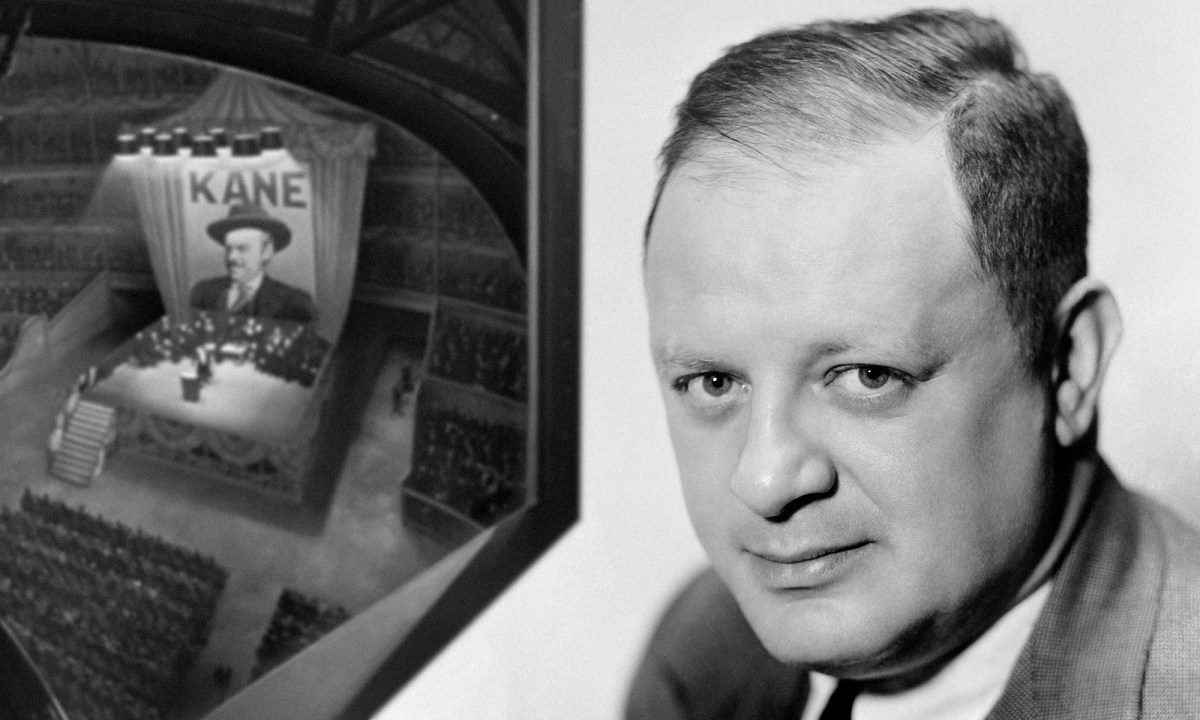
David Fincher has reportedly signed on to direct his first feature film since Gone Girl in 2014, a biopic about the contentious development of the script for Citizen Kane, one of Fincher’s favorite films, by the brilliant and prolific but troubled screenwriter Herman J. Mankiewiczand legendary director Orson Welles. They both shared the Academy Award for Best Original Screenplay.
And he is doing it for Netflix, the streaming service and production company that has granted him artistic freedom and for whom he has developed and produced the series House of Cards and Mindhunter, and executive produced the animated series Love, Death, and Robots.
Master Actor Gary Oldman will play the titular role, Mankiewicz, or “Mank“, as he was nicknamed.
The film project inception dates back to 1993 and is based on a script by Fincher’s late father, Howard “Jack” Fincher. Jack Fincher was a journalist, writer and essayist specialized in science, a former San Francisco bureau chief for LIFE magazine, and a devoted cinephile. In 1997, he was commissioned to draft a screenplay for a Howard Hughes biopic, with Kevin Spacey attached to direct. But this project was later absorbed by The Aviator project scripted by John Logan, which ended up being directed by Martin Scorsese.
Mank will be shot in black and white, as Fincher always intended. This caused the project to stall in the past, but Alfonso Cuarón’s recent success with Roma, also for Netflix, has reinforced the limited commercial appeal of this aesthetic option.
The film will be produced by the traditional power couple David Fincher & producer Ceán Chaffin, this time alongside Oldman’s business partner and producer Douglas Urbanski. Urbanski is an occasional actor who played President of Harvard University Lawrence Summers in The Social Network.
Production is scheduled to begin in November in Los Angeles.
As far back as 1997, this biographical story of Herman J. Mankiewicz, the writer of Orson Welles‘ epic motion picture Citizen Kane, was rumored as a pet project for David Fincher. From a script written by his father, Howard Fincher, the director’s black and white biopic targeted Seven star Kevin Spacey as the lead, with Panic Room‘s Jodie Foster in a co-starring role as movie actress Marion Davies. In production at the same time was HBO‘s telemovie RKO 281, which also covered the backstory of Citizen Kane (casting John Malkovich in the Mankiewicz role and Melanie Griffith as Davies). Still, the true story behind the creation of this mould-shattering movie and the writer behind it has enough scope for the production of a further feature by Fincher and his father.
Mankiewicz was a cynical but extremely talented scriptwriter, a former theatre critic for the New Yorker and the New York Times who left his job for the glitter of early Hollywood. Dropping out of the elite circle of New York’s high society, specifically the so-called “Algonquin Round Table“, Mankiewicz began with scripts for silent films, starting with The Road to Mandalay in 1926, working on more than 70 features during his lifetime. He once famously described Hollywood to a fellow writer in NYC by saying: “Millions are to be grabbed out here and your only competition is idiots. Don’t let this get around”. As film technology evolved in the late twenties, Mankiewicz changed gears and moved seamlessly into talkies, continuing to write stories or dialogue for films like Man of the World (1942), The Lost Squadron (1932), Dinner at Eight (1933) and It’s a Wonderful World (1939), as well as an uncredited rewrite on The Wizard of Oz; he also worked with the Marx Brothers as an executive producer on movies like Horse Feathers (1932) and Duck Soup (1933).
With his career flagging as the thirties ended and with his comedic hits behind him, Mankiewicz’s Oscar-winning success with Welles’ Citizen Kane in 1942 gave him a brief respite. However, his alcoholism and large gambling debts eventually got the better of him and he died, penniless, of uremic poisoning in 1953. Remembered for Welles’ powerfully directed feature about a ruthless newspaper mogul, Mankiewicz no doubt drew on his personal experiences as a former associate of real-life magnate William Randolph Hearst and as a partygoer at Hearst’s huge Hollywood mansion. Although Mankiewicz was forced to share Citizen Kane‘s Academy Award for Best Writing with Welles, the great majority of the script was the writer’s own work, and it was not only a source of friction between the two men but of debate among film critics to this day.
Last mooted as a Propaganda Films movie, Howard and David Fincher’s Mank may yet be produced as a project at Indelible Pictures. Fincher has previously spoken of his intent to use a special film stock to shoot Mank, a black and white negative type no longer used in the contemporary industry that would have to be recreated from the original “recipe”. For the director, this feature represents an opportunity to produce a fundamentally different film from his earlier works in a genre he has yet to explore; at the same time, the life of Herman J Mankiewicz retains the streak of darkness that has always appealed to Fincher’s sensibilities. “Mank is a script that I’ve been working to get exactly right for ten years”, said Fincher, “and I hope, some day, to make it as one of the definitive ‘writer in Hollywood’ stories”.
Pierce: Your dad was a journalist and a writer. He wrote a script called Mank, about the Citizen Kane screenwriter Herman J. Mankiewicz. Did you consider making that?
Fincher: We tried. It was too expensive. Because if you’re going to make a Hollywood insider movie—it’s nothing to do with Hollywood really, it’s Hollywood in the late thirties, early forties—you’ve got to make it really cheaply. We had a chance to make the movie for, like, $13 million, back in 1998 and, um, [guiltily] I wanted to make it in black and white. [Laughs] And that fucked up all those home video and video sellthrough and cable deals. I haven’t read it in a while. I probably should.
Pierce: Did your dad write a few screenplays?
Fincher: Yeah, he wrote a couple. That was the best of them, I think. He wrote a screenplay once about a divorce case. It was kind of based on the Keanes. Remember in the sixties, the guy who painted those pictures of the children with the giant eyes? They were in this bitter divorce. It was a very, very sardonic screenplay about two parents trying to prove what bad parents they are, so the other will get stuck with the kids! It was pretty funny! [Laughs] But it had an awful sentiment! But it was funny. It was a good script.
Pierce: There’s an element of your work—in Se7en, The Game, Zodiac— that is about professionalism and obsession. Is that something you think you got from your dad?
Fincher: My dad wasn’t very obsessive. Slightly compulsive, but not obsessive. You know, my dad did used to say, “Learn your craft; it will never stop you from being a genius.” It’s like, “Do the hard work, figure out how it works…” My dad worked a lot, but he paced himself. He paced himself a lot more than I think I probably do. […] My dad… he was an intellect and sort of a Monday-morning quarterback.






 The Fincher Analyst