Frame & Reference Podcast: “Halston”, “Stranger Things”, and “House of Cards” Cinematographer Tim Ives, ASC

Kenny McMillan
June 3, 2021
Frame & Reference

Frame & Reference is a conversation between Cinematographers hosted by Kenny McMillan. Each episode dives into the respective DP’s current and past work, as well as what influences and inspires them. These discussions are an entertaining and informative look into the world of making films through the lens of the people who shoot them.

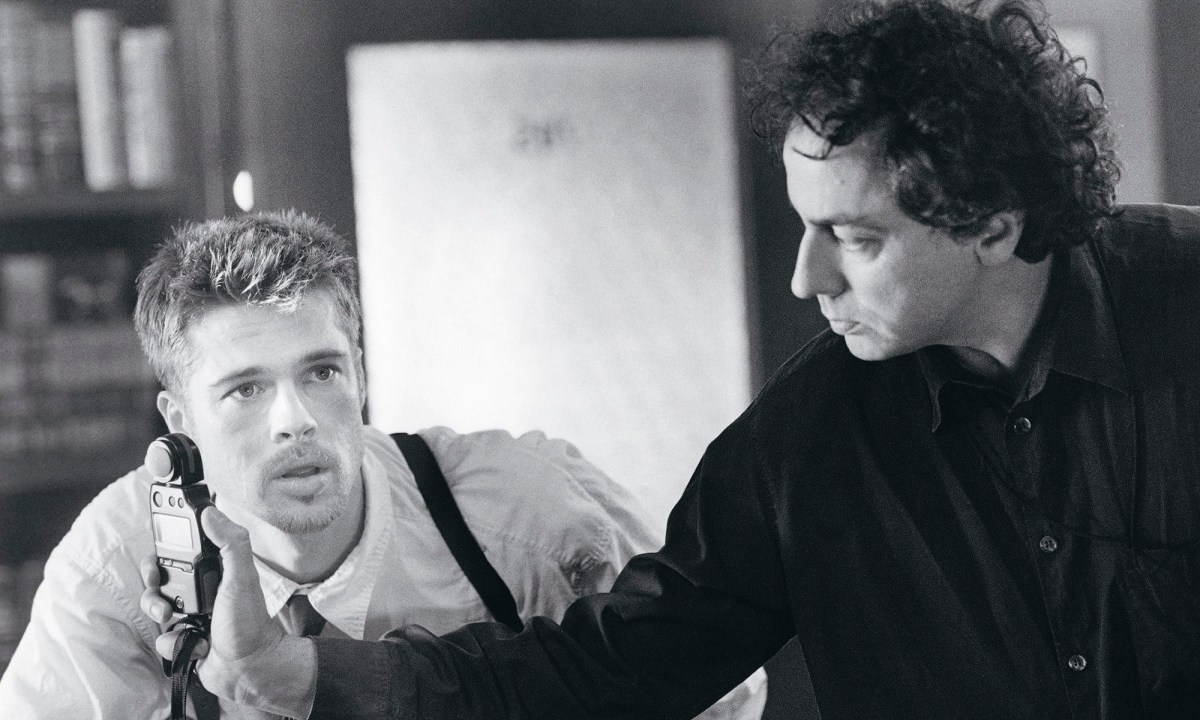
Tim Ives, ASC, talks about the new Netflix series Halston, which tells the story of a man who leverages his single invented name into a worldwide fashion empire that’s synonymous with luxury, sex, status, and fame, literally defining the era. Outside of this series, you likely recognize Tim’s name from his work on series such as Stranger Things, House of Cards, and Manifest.

Listen to the podcast:

Apple Podcasts
Spotify
YouTube

Support and follow the podcast: Patreon
Follow Frame & ReferenceYouTubeTwitterInstagram
Follow OWL BOTInstagram
Follow Kenny McMillanInstagram

Art Of The Frame Podcast: “Mank” Set Designer Cassidy Shipley

Damian Allen
June 2, 2021
Art Of The Frame Podcast (ProVideo Coalition)

The Art of the Frame Podcast brings in-depth conversations with the top creators of your favorite films and shows into your car, living room and beyond. In each episode, we talk with creators ranging from emerging stars to Oscar and Emmy winners. Hear from the top editors, cinematographers, directors and more about their careers and about their work on some of the biggest films and TV shows of the year.

On todays episode of the Art of the Frame Podcast, Damian Allen talks with Cassidy Shipley about his work on the Oscar winning film “Mank.” Cassidy has had an illustrious career having worked as a set designer on films such as “La La Land”, and the upcoming film “Thor: Love and Thunder” as well as shows like “Mindhunter”, “Them” and the new Amazon series “Solos.”

Make sure to check out Cassidy’s full IMDb for more info about his career and head over to Amazon to watch “Solos!”

Todays episode of the Art of the Frame Podcast is brought to you by Filmtools.com, Hollywoods trusted one-stop shop for all things production and post.

Art Of The Frame Podcast is available on:

ProVideo Coalition
Apple Podcasts
Spotify
Anchor
Google Podcasts
Breaker
Pocket Casts
Overcast
Radio Public

If you like the podcast, make sure to subscribe on your favorite podcast app and tell a friend.

Everything Zen: David Prior on “The Empty Man”

James Badge Dale and Sasha Frolova

David Prior’s creepy and impeccably crafted directorial debut was abandoned by the studio but has since been embraced by now devoted fans.

Adam Nayman
May 3, 2021
Notebook (MUBI)

Over and again throughout The Empty Man, we see characters sitting in the lotus position, cross-legged and attentive,  a pose connoting receptivity. It is in the migration of this mindset from snowy Bhutan to small-town Missouri, muled from East to West by the unlucky occidental tourist who doubles as its title character,  that David Prior’s film locates both its celestial sense of scale and a fine-grained gestural specificity. After literally stumbling into a cliffside cavern—the first unexpected plunge in a movie whose characters constantly find themselves either on shaky ground or descending into a darkness of their own volition—Paul (Aaron Poole) becomes transfixed by a skeletal figure whose meditative posture he adopts, seemingly permanently and much to the bewilderment of his fellow backpackers. Dragged back to the surface, he has become a husk, limbs locked and rapidly atrophying, staring out at the world with eyes wide shut. It would seem that he’s been hollowed out. Or is he suddenly full up?

The old Zen proverb about the philosopher who tells his overzealous visitor to return to him with an empty cup—the better to receive the flow of wisdom—comes eerily to mind in the image of a hiker mutated into a hapless Buddha. The story lying beyond The Empty Man’s gorgeous anamorphic frames is also akin to a kind of koan: if a great cosmic horror movie gets (barely) released in the middle of a global pandemic, and nobody sees it, does it really exist? 

Read the full review and interview

Interview: David Prior, The Empty Man’s Director

March 25, 2021
ELDERFANFILMS

Today, I’ve got the honor to post the interview I did to David Prior; who After being in charge of production video documentaries and have worked alongside nothing other than David Fincher, arrives with his horror film The Empty Man, making his directorial debut. The Empty Man is based on the Boom Graphic Novel called the same way. David, Tells us the unfortunate fate his movie went through all due bad management and bad luck to be in the middle of a transition between companies, addition to that, the company launched a misleading trailer, transforming the movie in another weird horror teenage movie, totally opposite of twist-thrilling horror film. The Empty Man is a top notch production with a great cast and crew team. The film got to us on October 23, 2020 in theaters and on Digital on January 12, 2021.

The director also shared with us the film creation process, the rocks he had to apart away from his path to get the film off the ground, his insights and learnings from all this exhausting but comforting filmmaking labor.

Read the full interview

BETA (WPR): Writer, Director David Prior On The Horrors of Making ‘The Empty Man’

Stephen Root and James Badge Dale

Despite Trials And Tribulations, The Film Has Earned Great Reviews.

Doug Gordon
May 29, 2021
BETA (WPR)

David Prior got his break directing DVD special features for such David Fincher films as “Zodiac” and “The Social Network.” He obviously drew on that work experience in writing and directing his debut horror feature film, “The Empty Man.”

“Any time you spent hanging around the set with David Fincher or Peter Weir or any number of the other people that I’ve been able to hang around the set with, it’s always going to be valuable,” Prior said.

The Empty Man” focuses on an ex-detective named James Lasombra. James is grieving the deaths of his wife and son. He helps his friend Nora whose daughter has gone missing.

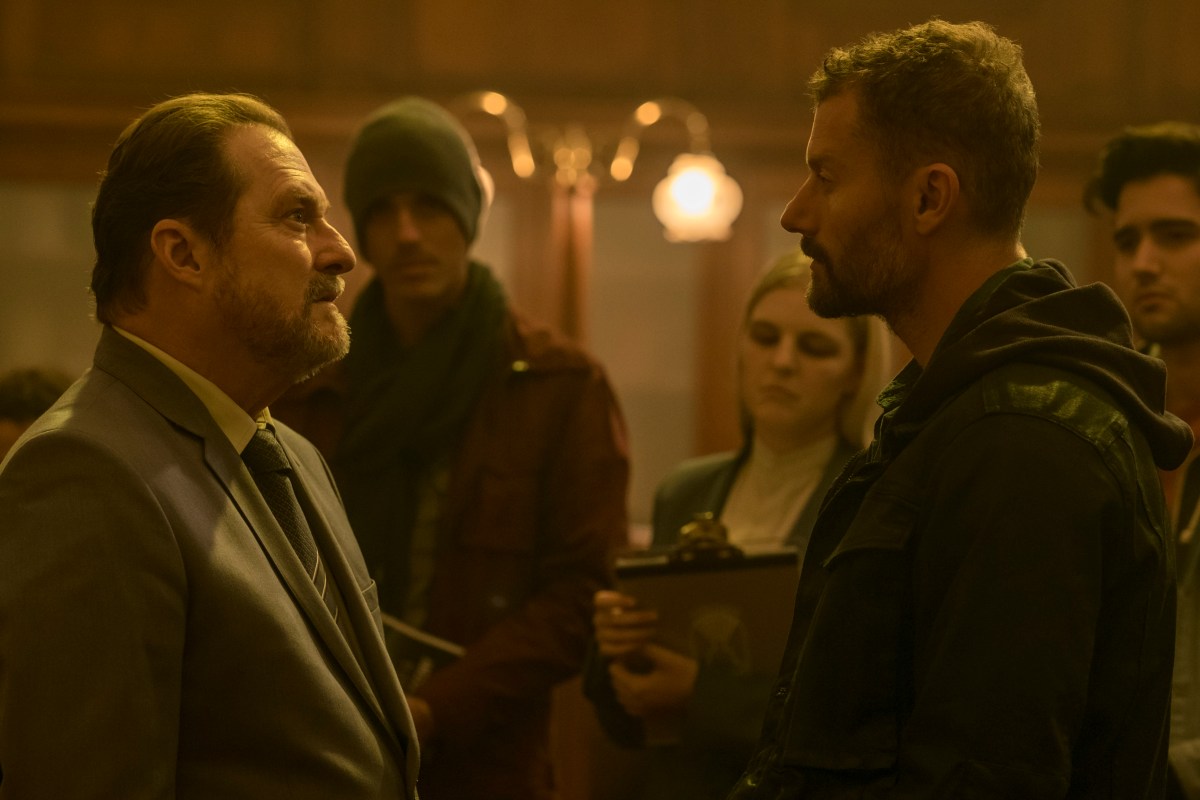
James’s investigation leads him to a sinister organization called The Pontifex Institute, which turns out to be a cult. The film stars James Badge Dale, and chameleon-like actor Stephen Root who delivers a great performance as the cult’s leader. 

The movie also became embroiled in a mega media merger that delayed and botched its release. “The Empty Man” features an impending sense of dread and doom and themes of guilt, grief, the meaning of existence and mind control. Prior explains to WPR‘s “BETA” why he wanted to include such big ideas in his film.

Read and listen to the full interview

Watch The Empty Man

Tim Miller: “Netflix Was the One That Was Willing to Take a Chance”

Tim Miller Talks ‘Love, Death & Robots,’ ‘Heavy Metal,’ and Deadpool in the MCU

Dais Johnston
May 27, 2021
Inverse

Tim Miller has always been a fan of short stories.

“My father read a lot, which is where I got my habit,” he tells Inverse in a recent interview.

Before the Deadpool director reimagined adult animation by co-creating the Netflix anthology series Love, Death & Robots with David Fincher (Season 2 is out now), he was in his father’s library.

It was there where he found a book called Chronopolis and Other Stories by J. G. Ballard. The short story book included “The Drowned Giant,” which tells the story of a dead human giant who washes up on the beach.

“I read it and I loved it. I even did an illustration for a fanzine in high school.”

“The Drowned Giant” is the standout episode from Love, Death & Robots Season 2, but the path to production wasn’t easy.

“Ballard is no longer with us, but his daughters are around. I asked them if I could do it Season 1, and they said no,” Miller says.

“I proceeded to send 50 emails begging them, and in one I said ‘Look, I’ve loved this story for years,’ and I sent them the illustration.”

Read the full interview

RedditLive AMA with Love, Death + Robots Creator Tim Miller and Supervising Director Jennifer Yuh Nelson

May 15, 2021
r/LoveDeathAndRobots (Netflix)

Watch the full livestream

Read the series guides:

2019. LOVE DEATH + ROBOTS. Volume 1

2021. LOVE DEATH + ROBOTS. Volume 2

Cinematography Style: Darius Khondji

Gray Kotzé (Director of Photography)
May 16, 2021
In Depth Cine

Darius Khondji is a cinematographer who is able to adapt images into almost any form to mimic the style of whichever director he works with, while subtly mixing in some of his own photographic traits. In this episode of cinematography style, I’ll break down the work of Khondji by examining his philosophy on photography as well as some of the gear which he uses to execute these ideas.

0:00: Introduction
1:23: Background
2:26: Philosophy
5:09: Gear
9:01: Conclusion

Music:
Liquid Memoirs‘Shimmer’
Eill‘The Horizon’
Isben Producer ‘Dream’
The Cliff‘Terms Of Motion’
Norvik ‘Walking The Universe’
Lalinea‘Will You Dance With Me’

Sources:
Conversations with Darius Khondji (American Cinematographer, November 2018)
Bedazzled (British Cinematographer, April 2020)

In Depth Cine: Official IDC MerchPatreonYouTubeInstagramDiscord, Facebook

Gear I use: YouTube GearEditing SoftwareMusicStock Footage, Cinematography Gear

DISCLAIMER: Some links in this description are affiliate links. If you purchase a product or service with these links I may receive a small commission without an additional charge to you. Thank you for supporting my channel so I can continue to provide you with free videos!

Creative COW with Erik Messerschmidt: A Labor of Light

Brie Clayton
May 14, 2021
Creative COW

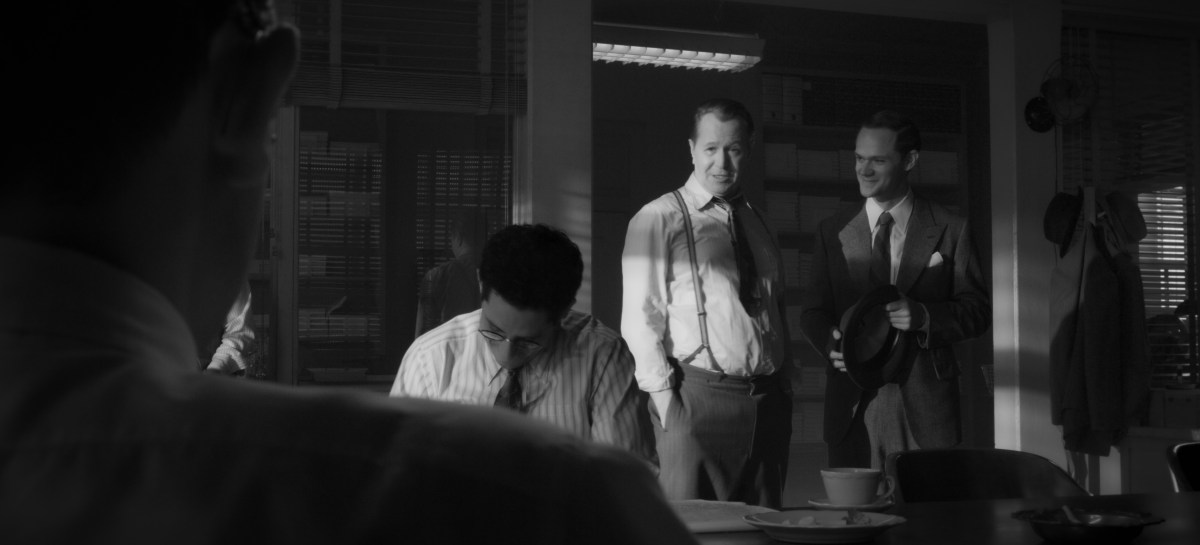
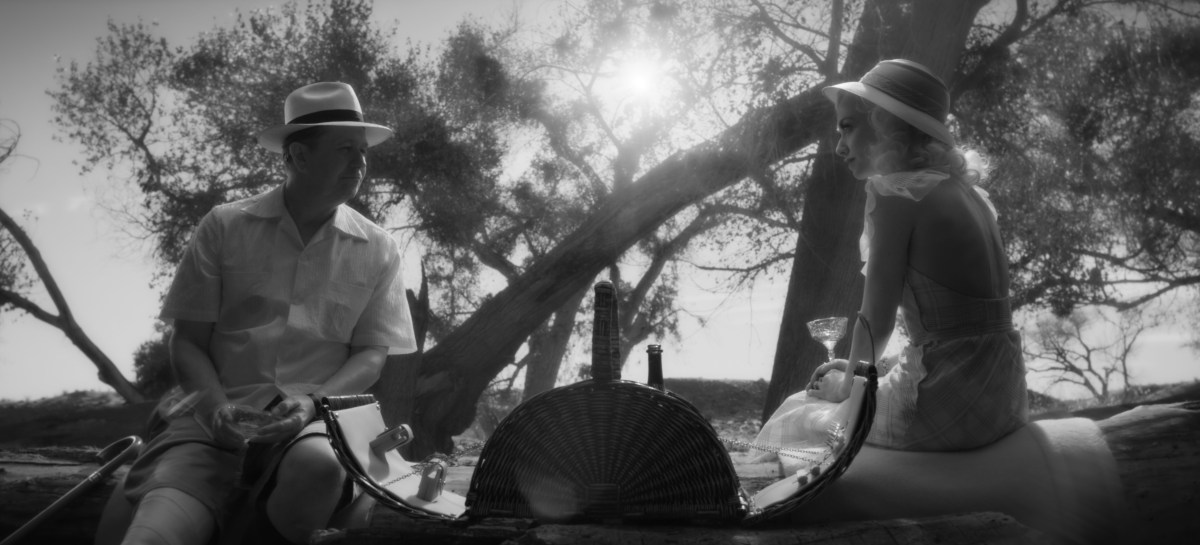
Mank could have easily been a parody of old school Hollywood, but Erik Messerschmidt and David Fincher weren’t going to let that happen. They went for broke on thoroughly reproduced sets, meticulous lighting, smoke filled offices, energetic conversations, and characters that breathe.

Once Mank opens its first scene, the scenery and intelligent dialogue make it hard to look away. As much as I thought I knew about San Simeon, having grown up ten minutes away from Hearst Castle, it was exciting to look into the bygone era when this California location was a lively hotbed of social chemistry, and parties, and movie creation, rather than just a stale museum where no one can touch the furniture.

When preparing to speak with Erik Messerschmidt, I would almost get lost working back through the layers of filmmakers contributing to this story. Mank pays homage to the legend Gregg Toland’s game-changing eye for cinematography. The dynamism between Toland, Orson Welles and the writer Herman J. Mankiewicz would be recrafted 80 years later by this modern team of David Fincher and Erik Messerschmidt, with Jack Fincher writing the screenplay.

In mid April 2021 Erik Messerschmidt took the ASC Award for Outstanding Cinematography, and then in May, deservedly, the Best Achievement in Cinematography Oscar for his lensing of the period piece Mank.

Despite his youthful appearance, Erik’s film career has already spanned decades, working his way up through the ranks as a grip, an electrician, and a number of years as a gaffer. Some of his gaffer work included Gone Girl, as well as DP on Mindhunter, with Fincher, further developing that relationship till the day when David asked Erik if he wanted to shoot this next project, Mank, and Erik said “Of course I want to shoot the movie!”

Mank, Erik’s first cinematography role outside of television, his first movie as DP, has won multiple awards this year. What kind of heavenly dream must that be for any cinematographer? Who hits a grand slam at their first baseball game?

Read the full interview

‘Mank’ & David Fincher: From the Quest for Truth to a Deeper Humanity

A perspective on the latest film in the director’s filmography.

Andrew Sidhom
May 8, 2021
Frame Rated

Warning: This article spoils the ending of Mank.

There’s little doubt that David Fincher and many of the characters he’s interested in — detectives, investigative journalists, screenwriters — are concerned with the search for truth. A point repeatedly raised is how attainable truth really is. What if, asks Zodiac (2007), at the end of years of research, the truth remains, and will always remain, out of reach? What if, in The Social Network (2010), we approach the truth of the main character’s motivations by way of a variety of angles, depositions, and second-hand accounts, but leave significant gaps in that truth that linger beyond the final frame? What would be the effect on audiences? The concern with truth and with the lack of it runs through so much of the director’s work.

From that concern with attainability of truth, the negative inference that might follow when watching these films is that we can’t hope to know a great deal about anything or anyone. In highlighting people who are grasping in the dark and who, as a result, see their obsessive or destructive sides come out, Fincher’s films can be troubling. But they’re also too rich to stay at that.

What I propose in this piece is a different angle through which we can approach the question of truth — one I find more interesting, that emerges with just as much clarity from Fincher’s work, and that can give rise to a more positive perspective on these issues. It’s not a question of finding easy uplift, but the wrestled and difficult kind of move towards positive meaning that I think these works warrant.

Read the full essay