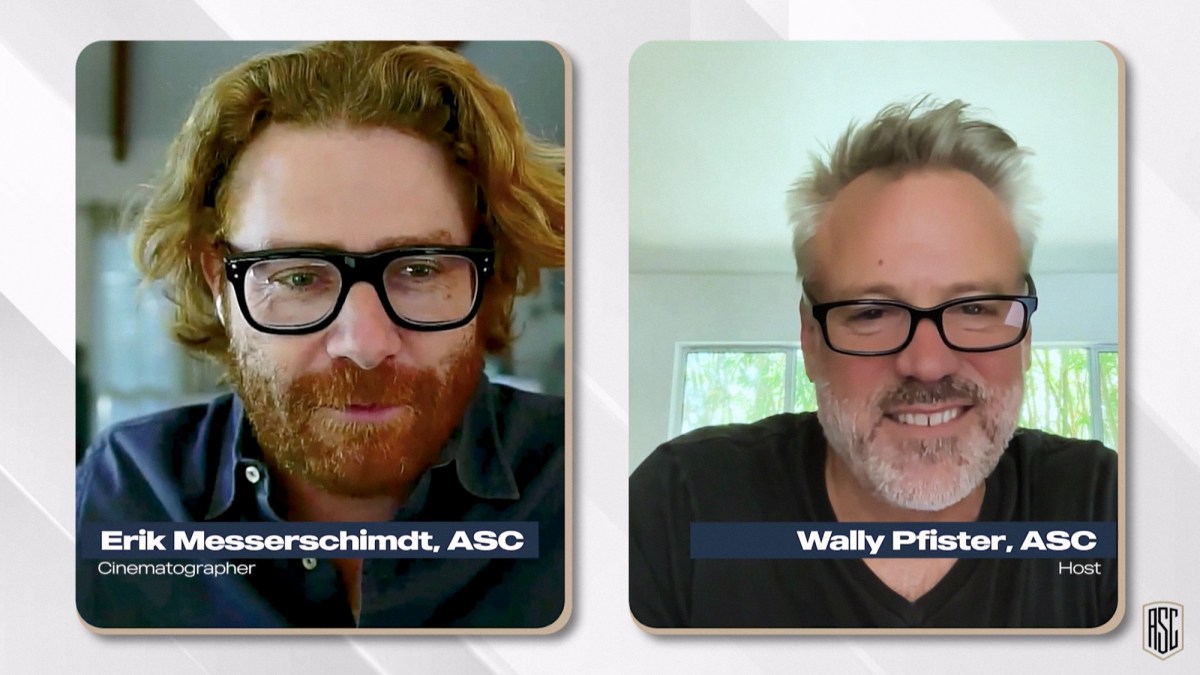
Clubhouse Conversations: “The Killer” Cinematographer Erik Messerschmidt, ASC

Wally Pfister, ASC
November 16, 2023
American Cinematographer

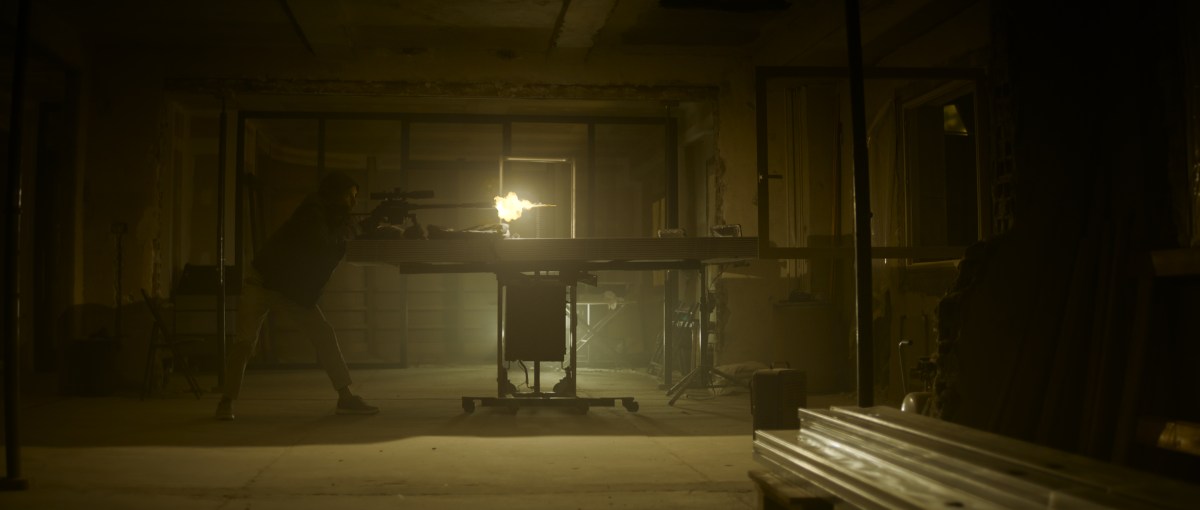
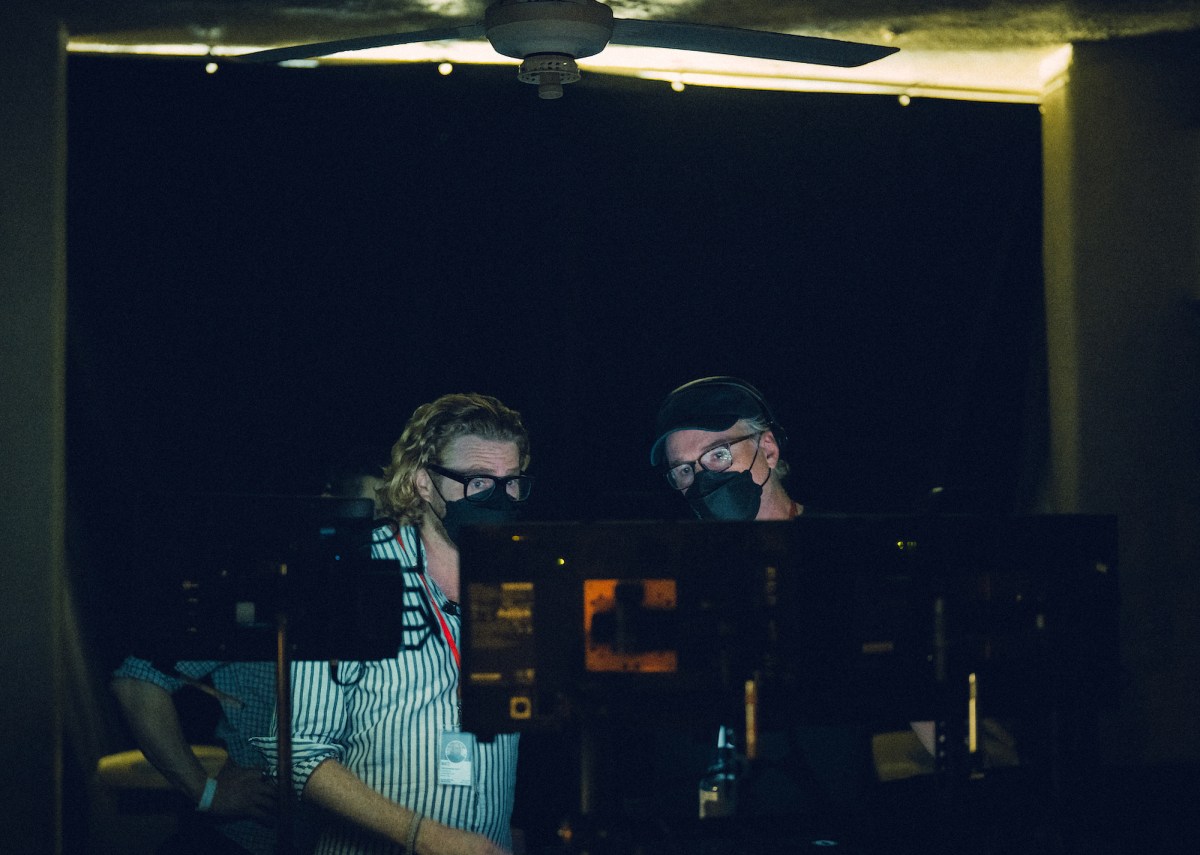
In this episode, cinematographer Erik Messerschmidt, ASC is joined by interviewer Wally Pfister, ASC to discuss his work on The Killer — the neo-noir thriller from director David Fincher that follows an assassin on the run after a botched hit job.

In The Killer, the titular antihero misses one of his intended targets for the first time in his career, and is forced to flee and survive the inevitable consequences. The film marks the second Fincher-directed feature shot by Messerschmidt, following the 2020 film Mank, for which he won an Academy Award for Best Cinematography.

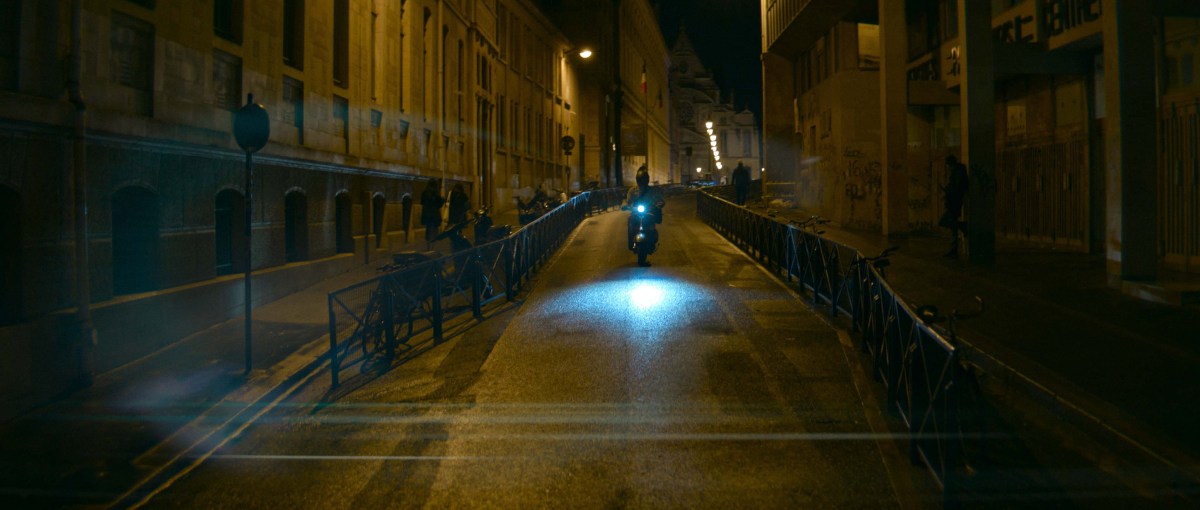
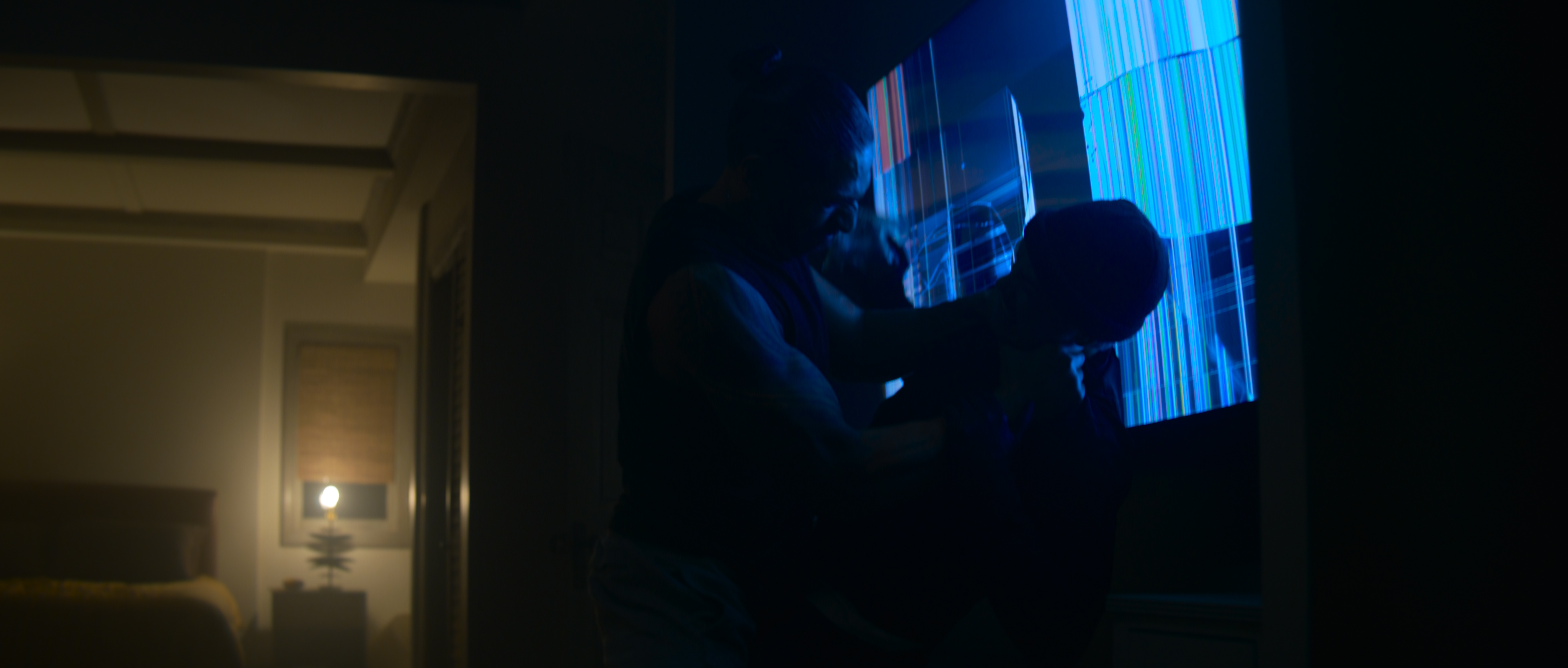
In this interview, Messerschmidt discusses the film’s Paris-inspired color palette; how he shot scenes “loosely” or “rigidly,” based on the main character’s degrees of control over varying situations; how he approached the lighting for a complex fight scene; how he incorporated planned postproduction decisions for lighting, flares and camera destabilization into his workflow; and what he learned about what an audience sees versus what it hears.
Erik Messerschmidt, ASC first emerged as a filmmaker when he was hired by Society member and mentor Mark Doering-Powell on several features as a grip and later gaffer. After Messerschmidt served as Society member Jeff Cronenweth‘s gaffer on the David Fincher-directed Gone Girl (2014), Cronenweth encouraged Fincher to hire Messerschmidt to photograph the Netflix series Mindhunter. Messerschmidt would reunite with Fincher for their 2020 feature Mank, which earned him an Academy Award for Best Cinematography.

Wally Pfister, ASC is a filmmaker whose cinematography credits include the Christopher Nolan features Batman Begins (2005), The Prestige (2006), The Dark Knight (2008) and Inception (2010). He was nominated for an Oscar for Best Cinematography for all of these works, winning one for Inception in 2011.
Watch the full conversation

Find all episodes in our ASC Clubhouse Conversations series

The Film Board: Erik Messerschmidt on The Killer

Justin Jaeger and Tommy Metz
November 14, 2023
The Film Board (TruStory FM)

This month, The Film Board is taking on David Fincher’s latest, The Killer. Cinematographer Erik Messerschmidt sat down with Justin Jaeger and Tommy Metz III to talk about making the movie, how movies are made, and why David Fincher’s reputation in one important area is wildly overstated.

Listen to the interview:

Apple Podcasts
Google Podcasts
Spotify
YouTube

Listen to the full podcast on The Killer:

Apple Podcasts
Google Podcasts
Spotify
YouTube

“The Killer” Cinematographer Erik Messerschmidt on Re-Teaming with David Fincher

Jack Giroux
November 14, 2023
The Credits (MPA)

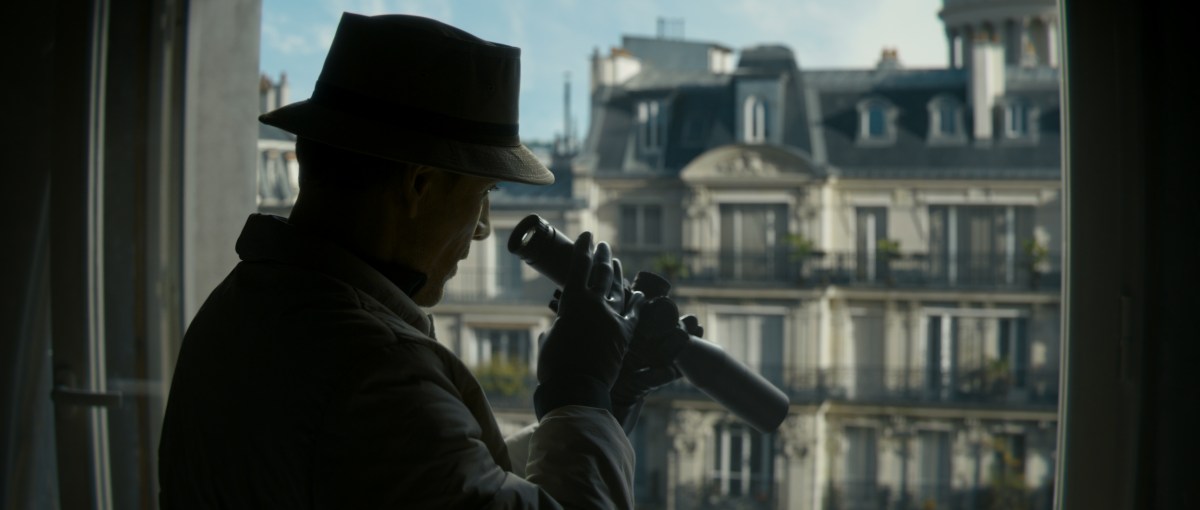
David Fincher’s lean, mean The Killer is a film stripped down to its bare essentials, much like the work of its titular assassin. Based on a French graphic novel and adapted by Andrew Kevin Walker (Se7en), Fincher’s adaptation tells the story of an unnamed killer (Michael Fassbender) and the strict, self-imposed protocols of his trade. It’s the rules of the process that concern the titular character, not moral dilemmas, yet they become unbearably intertwined after he botches an assignment, and the fallout affects someone he loves.

On the surface, The Killer is a revenge story. Once the job goes terribly wrong and his partner, Magdala (Sophie Charlotte), suffers violent consequences, Fassbender’s nameless assassin breaks his own rules to track down those responsible. The Killer is a world of shadows, sociopaths, and the people they prey on. For Fassbender’s antihero, feeling like the prey is a novel concept, and he’s determined to do anything to realign the world so he fits back in as a proper predator.

Once again, the director collaborates with cinematographer Erik Messerschmidt, who has been Fincher’s DP on Mindhunter and Mank. With The Killer, Messerschmidt helps Fincher place the viewer into the cramped, icy perspective of the titular character with a grace that belies the chaos he creates. We spoke to Messerschmidt about his working relationship with Fincher and what it was like to bring The Killer to life.

Read the full interview

How Cate Adams’ Costume Design Helped David Fincher’s “The Killer” Disappear

Kelle Long
November 14, 2023
The Credits (MPA)

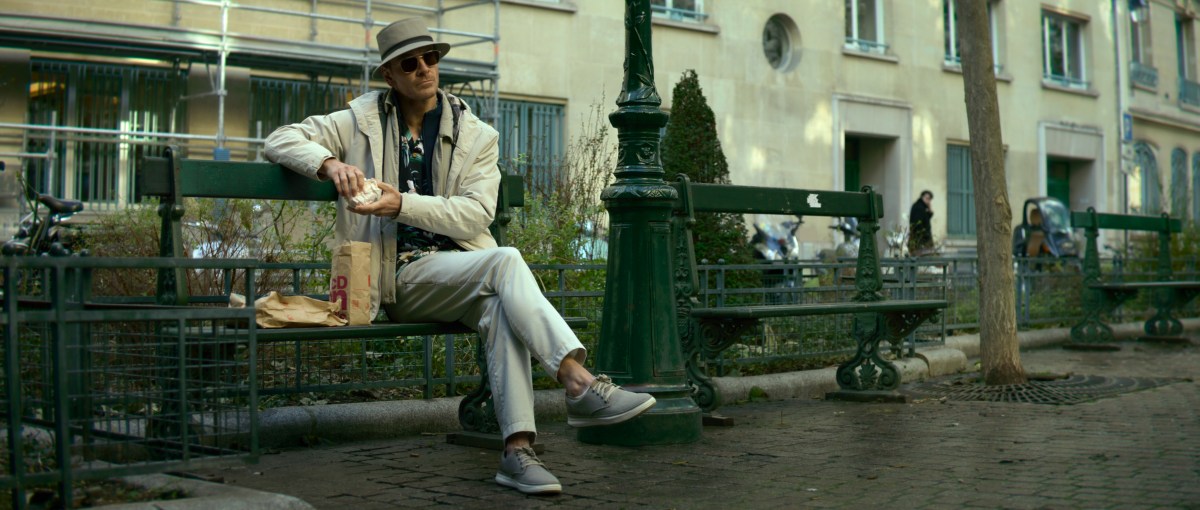
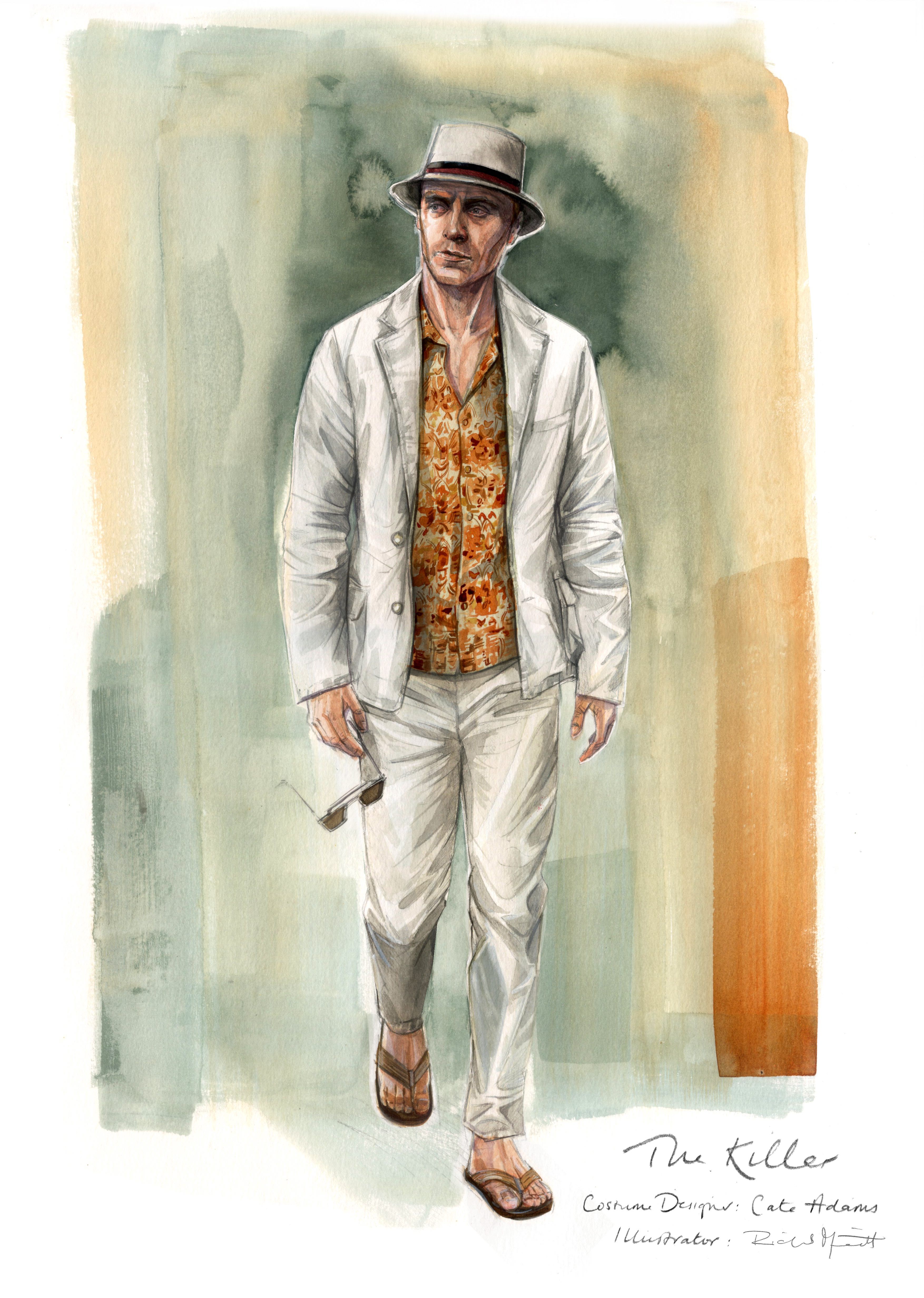
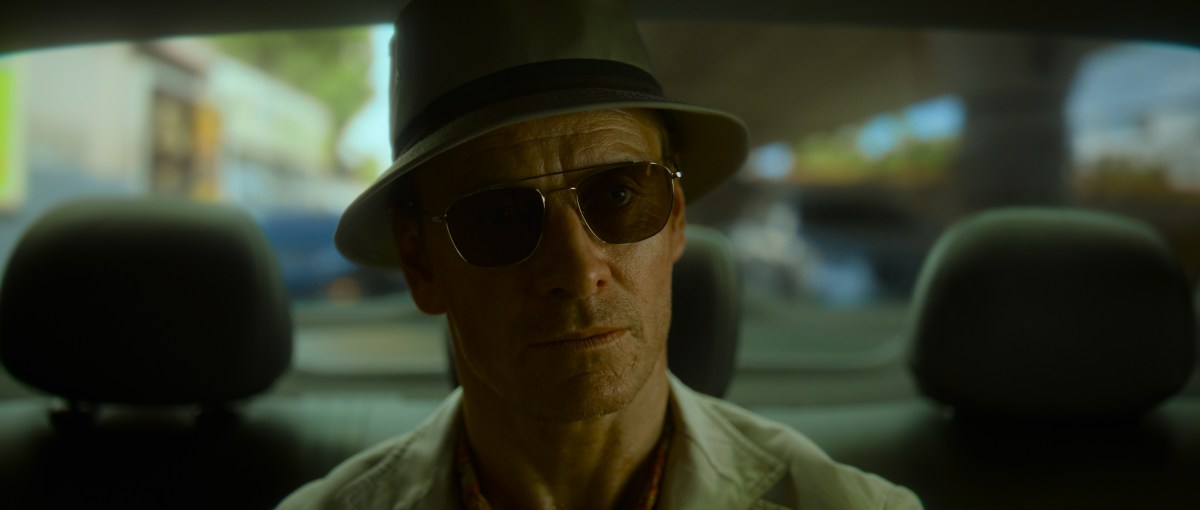
The coldest assassin is the kind you don’t see coming. In a lineup of globe-trotting sharpshooters from the movies, The Killer (Michael Fassbender) may be the most difficult to identify. On a crowded city street, he could be anyone—and that is by design. Costume designer Cate Adams developed the style for director David Fincher’s vision of a dangerous character you would hardly ever notice.

“Basically, he wears clothes that he can just find anywhere. Find in an airport, find in a convenience store. He doesn’t want to have to think about it,” she noted. “[Fincher] wanted a bucket hat instead of an umbrella to be water resistant for any kind of weather he was going to be in. He wanted a ‘lazy people notion.’ So, zippers or velcros or something pullover. Dad chinos. Anything he could have bought from an airport.” 

That mindset even extends to modern conveniences. Sometimes, the easiest way to shop today is with online delivery, and The Killer could plausibly wear pieces he purchased with the click of a button.

“One of the shirts he wears is a printed, short-sleeved Aloha shirt that was actually from Amazon. So, there are some pieces from Amazon,” Adams revealed. “It’s just very basic. Whatever he could find easily. He doesn’t take a lot of time to think about his clothes, which I really liked. He’s not in suits like James Bond. He just kind of looks weird, and you’re not really sure what he’s doing there. He just kind of looks normal and blends in.”

Read the full profile

How Liam Gallagher Inspired Michael Fassbender’s Style in ‘The Killer’

What’s the story, morning gory? Cate Adams, David Fincher’s costume designer, explains how Our Kid ended up on The Killer’s mood board.

Johnny Davis
November 10, 2023
Esquire

David Fincher’s new film The Killer stars Michael Fassbender as a ruthless hitman with a penchant for process, a drive for revenge and a high threshold for boredom. It’s a stylish movie, as you’d expect from the director of such gloomy noirs as Fight Club (1999), Zodiac (2007) and The Girl With The Dragon Tattoo (2011).

Except maybe when it comes to The Killer’s own wardrobe. As we see our protagonist move from Paris, to the Dominican Republic to New Orleans to Florida and finally New York, his wardrobe is an oddball mix of Hawaiian shirts, sensible slacks, anoraks and bucket hats.

Less John Wick more dad-at-Wickes. That, apparently, was the point.

To tell us more, Cate Adams, costume designer on The Killer, who previously worked with Fincher on the 2017 Netflix series Mindhunter, shared her mood board and inspirations. And helpfully provided actual sources for anyone wanting to ‘Get The Look’ – including Fassbender’s bucket hat, glassesshirts and casual sneakers. Enjoy!

Read the full interview

‘The Killer’ or Fashion Victim? Why Michael Fassbender’s Assassin Ended Up in Those Outfits

Jim Hemphill
November 10, 2023
IndieWire

Rock Star Liam Gallagher Inspired David Fincher’s The Killer

November 14, 2023
Below the Line

Editing ‘The Killer’ So That ‘We Crawl Into His Ears and Sit in the Back of His Eye Sockets’

David Fincher’s Oscar-winning go-to editor, Kirk Baxter, helped achieve a new kind of subjective cinema with Michael Fassbender’s assassin character.

Bill Desowitz
November 12, 2023
IndieWire

[Editor’s note: The following interview contains spoilers.]

David Fincher’s The Killer is his most experimental film since “Fight Club”: a subjective, cinematic tour de force in which we get inside the mind of Michael Fassbender’s titular assassin after he experiences his first misfire in Paris. Fully exposed for the first time, the hunter becomes the hunted and he’s forced to cover his tracks while stepping outside of his comfort zone. In the process, the film becomes a noirish existential journey from nihilism to faith, which is what first attracted Fincher to adapting Alex Nolent’s graphic novel.

For go-to editor Kirk Baxter (the Oscar-winning “The Girl with the Dragon Tattoo” and “The Social Network”), it was one of the hardest Fincher films to cut. It’s divided into six chapters, each with its own look, rhythm, and pace tied to Fassbender’s level of control and uncertainty, and the editorial process necessitated the creation of a visual and aural language to convey subjective and objective points of view for tracking Fassbender. In fact, it’s reminiscent of what Hitchcock called “pure cinema,” only much bolder.

“It was like a ’70s film and I found it to be one of the more challenging movies to make because it’s not sort of juggling a bunch of different character lines or going back and forth from past to present and that sort of thing,” Baxter told IndieWire. “It’s just a straight line, but the exposure of that with nowhere to hide, like you can’t kind of jazz hands your way out of something. It’s like everything is just under the spotlight and you’re not having dialogue and interaction to kind of dictate your pace. It’s a series of shots and everything has to be manhandled and manipulated in order to give it propulsion, or how you slow it down. But just by its very nature, it had to be sort of let’s go [and see how much Fassbender has to break his own rules to survive].”

Read the full profile

Editing David Fincher’s ‘The Killer’ on Premiere Pro

Netflix has another hit movie on its hands with David Fincher’s The Killer. We spoke to the film’s editor, Kirk Baxter, and Assistant Editor, Jennifer Chung, about how they put it together using Adobe Premiere Pro.

Andy Stout
November 10, 2023
RedShark

Kirk Baxter ACE picked up two Oscars working on previous Fincher titles you will probably have heard of, The Social Network (2010) and The Girl with the Dragon Tattoo (2011). In other words, The Killer has some serious pedigree behind it, and much like this year’s Academy Award for Editing winner Everything Everywhere All At Once, it was cut on Adobe Premiere Pro.

Jennifer Chung ACE was one of the Assistant Editors on The Killer and represents a 14-strong editing department. Chung is currently cutting her first indie feature (“It’s a different kind of stress,” she says laughing), but looking back on The Killer, is there any particular sequence that stands out as her favorite?

“I think it has to be the fight sequence,” she says. “The fight sequence is pretty epic. And it just goes on. I think Kirk did an incredible job with that; it’s just really fun to watch.”

“I watched something on TV which had a big fight sequence two nights ago, and I couldn’t follow it,” says Kirk Baxter, who edited The Killer and put the movie’s signature fight scene together. “I knew people were fighting, but I couldn’t track who owned what fist and what thing. It was just a jumble of limbs edited quickly.”

No such failure to follow the action in The Killer’s own fight scene, which Baxter says is essentially a sequence of 18 scenes with multi-camera setups depicting a single fight all strung together in a row. He was cutting the sequence as Fincher was shooting it. The shoot would break at lunchtime when he’d start cutting the first half of the day, getting the second half later at the end, then cutting into the evening and sending it to Fincher to see if any pickups were needed.

“It was this crazy, relentless week of all of us going around the clock to know that we had the thing,” he says. 

Read the full profile

The Killer: Original Score by Trent Reznor & Atticus Ross

nin.com
November 10, 2023

The Killer Original Score by Trent Reznor & Atticus Ross, from the film directed by David Fincher, is available now:

Spotify
Apple Music
Amazon Music
bandcamp
TIDAL
pandora

Tracklist:

  1. The Killer 00:47
  2. Fuck. 05:14
  3. The Hideout 02:20
  4. Stick to the Plan 03:45
  5. The Sunshine State 03:07
  6. Consequences Are Automatic 04:57
  7. Empathy Is Weakness 02:27
  8. Never Hesitate 04:25
  9. The Brute, Pt 1 01:33
  10. The Brute, Pt 2 04:15
  11. Intruder 04:25
  12. The Expert 05:31
  13. Gonna Have to Call You Back, Marvin 01:31
  14. One of the Many 06:41
  15. Trailer 01:26

Music written, arranged, produced, performed, programmed, and mixed by Trent Reznor & Atticus Ross

Engineer: Jacob Moreno

“I Don’t Think Directors Should Be Amenable”: Erik Messerschmidt on Shooting The Killer and David Fincher’s Simple Process

Nick Newman
November 8, 2023
The Film Stage

One of my most-read pieces last year revolved around two films that hadn’t shown a single frame. Strange except for the fact that it was a conversation with Erik Messerschmidt, whose recent time’s been devoted to shooting new films by David Fincher and Michael Mann––exactly the subjects who will earn eyeballs with just a mention. One year later, with The Killer winding down its limited release before a Netflix debut on Friday, I spoke again with Messerschmidt about the intensive, exhaustive, rewarding process behind one of 2023’s supreme entertainments, and how being guided by modern American cinema’s most-obsessive auteur was the only way to get it right.

The Film Stage: I made a point of seeing The Killer at New York’s Paris Theater––it’s a nice-sized screen, well-projected, a Dolby sound system. The unfortunate truth is that most watching it on Netflix won’t have a comparable experience.

Erik Messerschmidt: Sure.

Millions of people can see it, but then you think about people’s set-ups––let alone competing for their attention. How do you generally feel about this dichotomy, and specifically with this film?

I think the cinema is an extraordinary community experience, and it’s for that reason that it’s worth protecting. I think there is something really extraordinary about being in the room and experiencing something at the same time, and there is something equally extraordinary of being a director and experimenting whether or not you can control the audience response en masse. You know? Which is something you can only really test in the cinema environment. Look: there’s a real thing about being able to pause it and go to the bathroom, or pause it and go grab another glass of wine or whatever––pause it and watch it later. The “captive audience” part of the cinema is what makes it unique and important. I don’t necessarily agree that the technology is the reason to go to the cinema. I think the immersive nature of being in the black room with the single screen without screaming kids and your phone sitting there––all the other distractions––that’s a real thing. And I think the sound is a real thing, although people have home theaters in their homes now and surround sound and stuff. But it’s not the same as being in a calibrated environment.

I sort of go back to my childhood and think… I didn’t see Star Wars projected until I was, probably, 19 years old, but I had seen it 50 times on my parents’ VHS. In the wrong aspect ratio. And it’s the movie that made me want to make movies. As a cinematographer––as a student of cinema––I think it’s vitally important to project cinema and encourage people to see movies in a cinema. This movie in particular is especially well-appreciated in a cinema, but I would argue more for the sound, to be honest––because of what Ren Klyce is doing with the sound. I hope people enjoy the picture, too, obviously. I don’t put much stock in the idea of “Oh, well, it’s going to be on Netflix so people are going to see the film on television.” I just think people see films on television anyway.

Half the movies I see, by the way––and I’m hesitant to admit it, but it’s true––are on airplanes. [Laughs] I think the goal of filmmakers is to reach the audience, and you want to reach as many as possible, and hope people see your movie in the cinema. That’s where it’s intended. But you have to accept the reality that there are many avenues to view the image, and if someone sees it on Netflix, hopefully next time there’s a screening they get up and go. When there’s a screening of Lawrence of Arabia I jump at the opportunity because there are so few opportunities, but it doesn’t mean I don’t enjoy it at home on my Apple TV either. [Laughs]

Read the full interview