Jennifer Chung, Assistant Editor Ben Insler, First Assistant Editor Peter Mavromates, Post Producer
In this panel, you’ll hear Team Fincher discuss their TV and feature film workflows and see how they used the new Productions feature in Premiere Pro along with After Effects in a completely remote scenario during the pandemic.
They’ll also discuss their career paths and give advice on how to succeed as a professional editor.
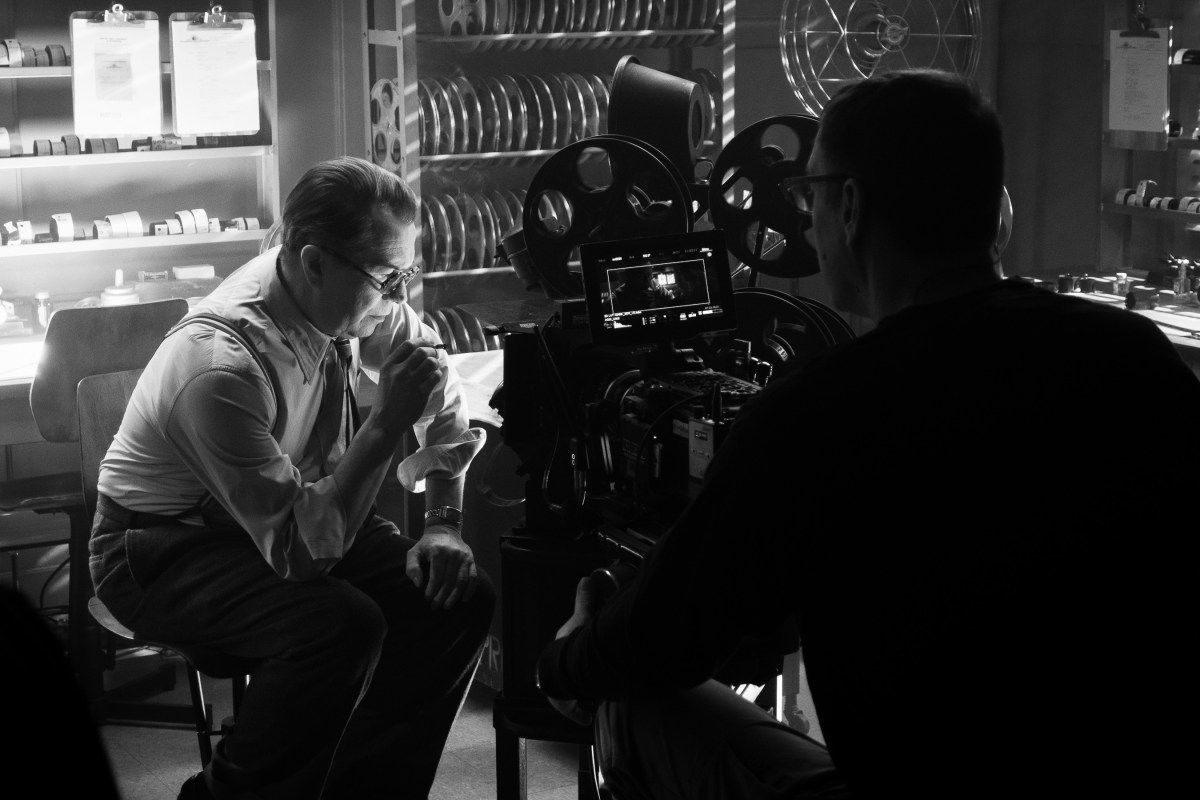
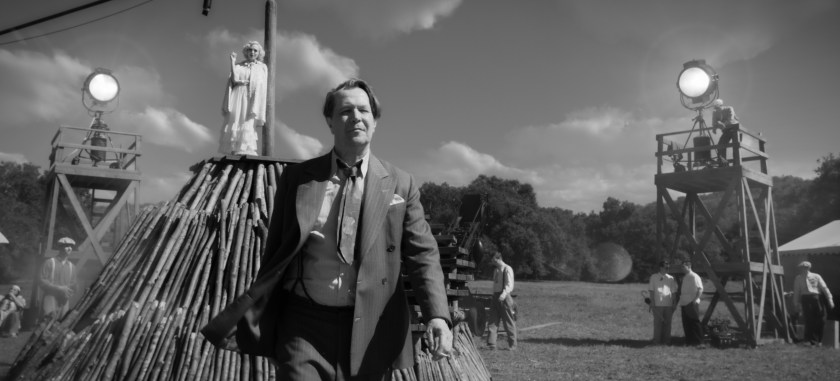
There was never any doubt that David Fincher was going to shoot “Mank” in black-and-white. His biopic about alcoholic and acerbic screenwriter Herman J. Mankiewicz (Gary Oldman) struggling to churn out a first draft of “Citizen Kane” cried out for monochromatic treatment. And yet Fincher and cinematographer Erik Messerschmidt (“Mindhunter”) were not about to indulge in a “Kane”-like re-enactment, or be confined to shooting on film, or composing in the period accurate aspect ratio of 1.37:1. Not with Fincher’s digital prowess and penchant for the 2.39: 1 widescreen format.
So Fincher and Messerschmidt struck a balance between retro and modern, taking advantage of the director’s efficient digital workflow to approximate the look of a movie made around the time of “Kane” in 1940 yet “Photographed in Hi-Dynamic Range” (as the title card proclaims).
“Filmmaking has always been a medium where we selectively employ the techniques that are available on the day,” Messerschmidt said. But shooting in black-and-white was a lot to unpack for the cinematographer, who had only done a few music videos and commercials outside of still photography and film school projects.
Technically, “Mank” is the story of how the script for what’s often considered the greatest movie ever made, “Citizen Kane,” may have been written. But there’s a lot more to David Fincher’s deep-focused, black-and-white, flashback-filled Netflix movie, which starts streaming on the service Friday, Dec. 4.
Built on a screenplay written by the director’s father, the late Bay Area journalist Jack Fincher, “Mank” is a speculative swirl of 1930s Hollywood and California history. The new film has already rekindled the controversy over whether veteran screenwriter Herman Mankiewicz (played by Gary Oldman) or 25-year-old, first-time director/star Orson Welles (Tom Burke) was the primary author of “Citizen Kane.”
The main show, however, revolves around alcoholic Mankiewicz’s memories. Some of those involve his friendship with the actress Marion Davies (Amanda Seyfried) and, at more of a remove, her powerful lover, newspaper baron William Randolph Hearst (Charles Dance). The model for Welles’ fictional Charles Foster Kane, Hearst — whose company owned the San Francisco Examiner at the time and now runs The Chronicle — famously exerted his considerable clout to have “Citizen Kane” squelched before it was released in 1941.
Speaking to The Chronicle by phone from Los Angeles, the Marin County-raised Fincher responded nimbly when informed he was talking to a Hearst publication.
When costume designer Trish Summerville first started working on David Fincher’s new Netflix film Mank, “even people in my crew and friends were like, ‘This would probably make things so much easier.” That’s because the film is shot in black and white. In fact, though, the opposite was true. “It actually made it a bit more difficult,” says Summerville. “When you shoot in color, you have all these different shades and tones you can work with and you can do stuff that’s tone on tone.”
What she found out — while researching the period and visiting costume rental houses, where she took photos of garments in black and white — is that not only are many options are no-go but that other problems present themselves.
It’s so exciting to sit down with Erik Messerschmidt, ASC – an Emmy-nominated cinematographer whose credits include the popular Netflix series MINDHUNTER, HBO’s RAISED BY WOLVES and David Fincher‘s latest Netflix film MANK!
In today’s conversation, me and Erik discuss his beginnings in the film industry working as a gaffer (learning from the best cinematographers in the business); a deep dive into his cinematography for the two Emmy-nominated seasons of MINDHUNTER; Erik’s creative relationship with David Fincher, and the thought process behind the infamous “multiple takes” Fincher is so known for; how classic Hollywood noirs of the ‘30s and 40s influenced the visual style for MANK—all of this, and much more.
Check out Erik’s new film MANK (now on Netflix), which many speculate will land him his first Oscar nomination for Cinematography in just a few months.
C’est l’événement cinématographique de cet hiver. Avec « Mank », en ligne sur Netflix vendredi 4 décembre, David Fincher signe le portrait de Herman J. Mankiewicz, scénariste de « Citizen Kane ».
Quand, au début des années 1990, son père a posé un scénario sur la table, David Fincher s’est contenté de regarder le titre inscrit sur la couverture. Mank. Il n’avait pas besoin d’en savoir plus. En un instant, il avait compris le sujet du récit que son père, Jack Fincher, journaliste, avait écrit. Une référence au diminutif par lequel ses pairs, à la cantine de la MGM – le studio hollywoodien le plus prestigieux des années 1930 et 1940 (Autant en emporte le vent, LeMagicien d’Oz…) –, désignaient l’un des plus brillants scénaristes de sa génération, Herman J. Mankiewicz.
A 7 ans, David Fincher avait entendu son père parler du chef-d’œuvre d’Orson Welles. S’il n’avait pas compris grand-chose, l’enfant avait saisi l’admiration portée au film, quasiment une dévotion. Alors, en ce début des années 1990, à presque 30 ans, le réalisateur de clips vidéo et de films publicitaires le plus talentueux de la planète pouvait légitimement prétendre devenir le destinataire de ce scénario. Mais ses états de service n’apparaissaient pas assez convaincants aux yeux de son père.
Ce journaliste, qui venait de prendre sa retraite – il dirigeait le bureau à San Francisco de l’hebdomadaire Life –, avait écrit ce scénario et discuté du projet avec son fils mais sans jamais rien mettre en branle pour le voir adapté à l’écran. Il s’était contenté de rêver ce film, imaginant le voir réalisé par un cinéaste de sa génération, un aventurier comme John Huston, par exemple. Le réalisateur du Trésor de la Sierra Madre (1948) et d’African Queen (1951) avait été boxeur, chasseur d’éléphants et collectionnait l’art précolombien. « Moi, en comparaison, soupire Fincher, j’avais fait quoi ? Réalisé des vidéos avec Madonna et des publicités pour Pepsi et Nike ? Ce n’est pas l’image du réalisateur qu’il se faisait. »
Few figures from Hollywood’s Golden Age loom as large as Orson Welles.
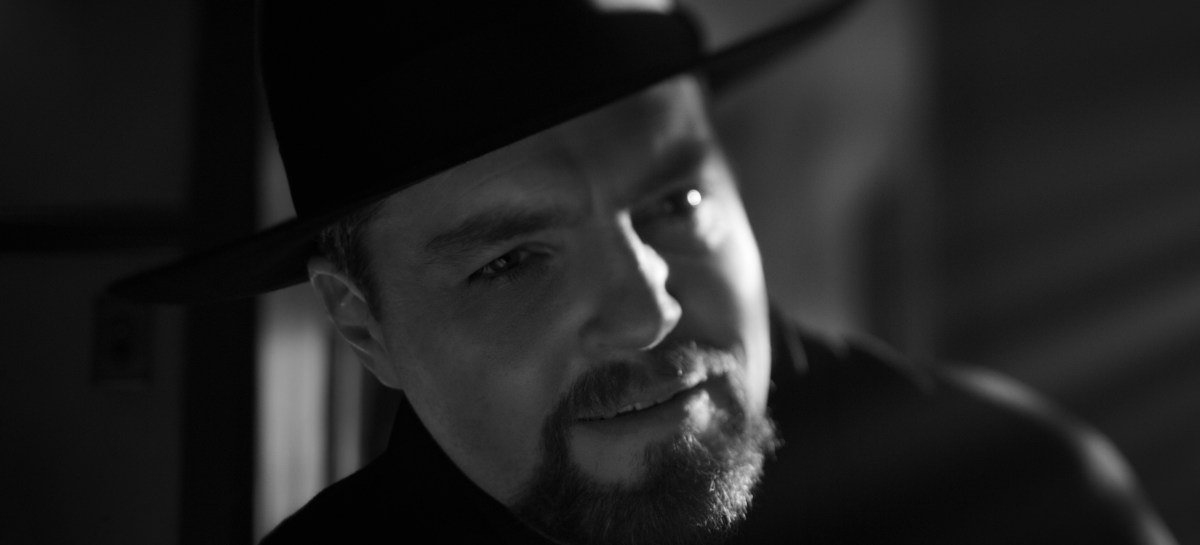
The mercurial wunderkind first made a name for himself with his voice, in his Mercury Theater‘s Shakespeare productions and his iconic radio adaptation of The War of the Worlds. Then he took Hollywood by storm as a creative force, acting, directing, and producing his own work, including his most famous film, Citizen Kane, which is central to David Fincher‘s new movie Mank.
As Welles aged, he became larger than life, both in his increasing girth and his tempestuous approach to filmmaking, a realm in which he was often at odds with studio brass and even himself (see: thelong-unfinished The Other Side of the Wind).
How then do you find the right person to portray such a towering figure? It’s been done before several times, by the likes of Vincent D’Onofrio, Angus MacFadyen, and even Jack Black.
Actor Tom Burke reveals how he perfected the voice of Orson Welles for his new film, Mank, and Rob Savage explains how he made lockdown horror movie Host.
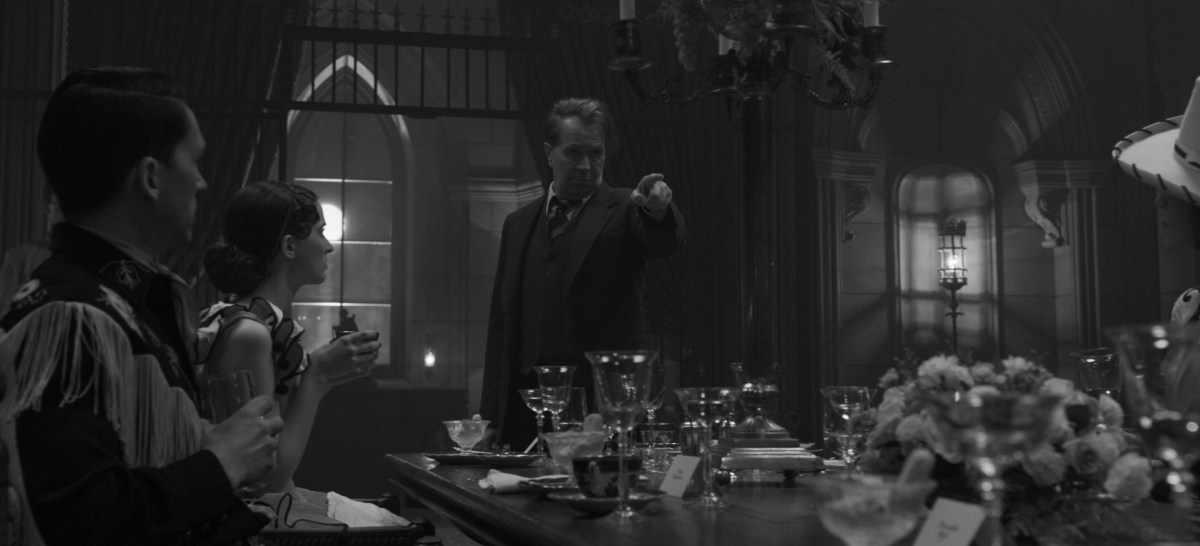
David Fincher pal Steven Soderbergh often consults on early cuts of his movies (including the friendly product placement of Soderbergh’s imported Singani 63 brandy in “Gone Girl”) — and “Mank” was no different. Turns out Soderbergh’s only complaint about the “Citizen Kane” biopic was the execution of the costume party set piece, where drunken screenwriter Herman J. Mankiewicz (Gary Oldman) goes on a long tirade against Machiavellian publisher William Randolph Hearst (Charles Dance) in front of his Hollywood friends at San Simeon.
“Soderbergh came during an early assembly and he just didn’t get why Hearst was putting up with Mank’s shit,” said editor Kirk Baxter (two-time Oscar winner for “The Girl with the Dragon Tattoo” and “The Social Network”). “And David and I talked about that. I very much make a movie with David, for David, and I’m not exposed to too many people during the process. But I found that the criticism helped. It didn’t provide the answer, it just provided the question.”







 The Fincher Analyst