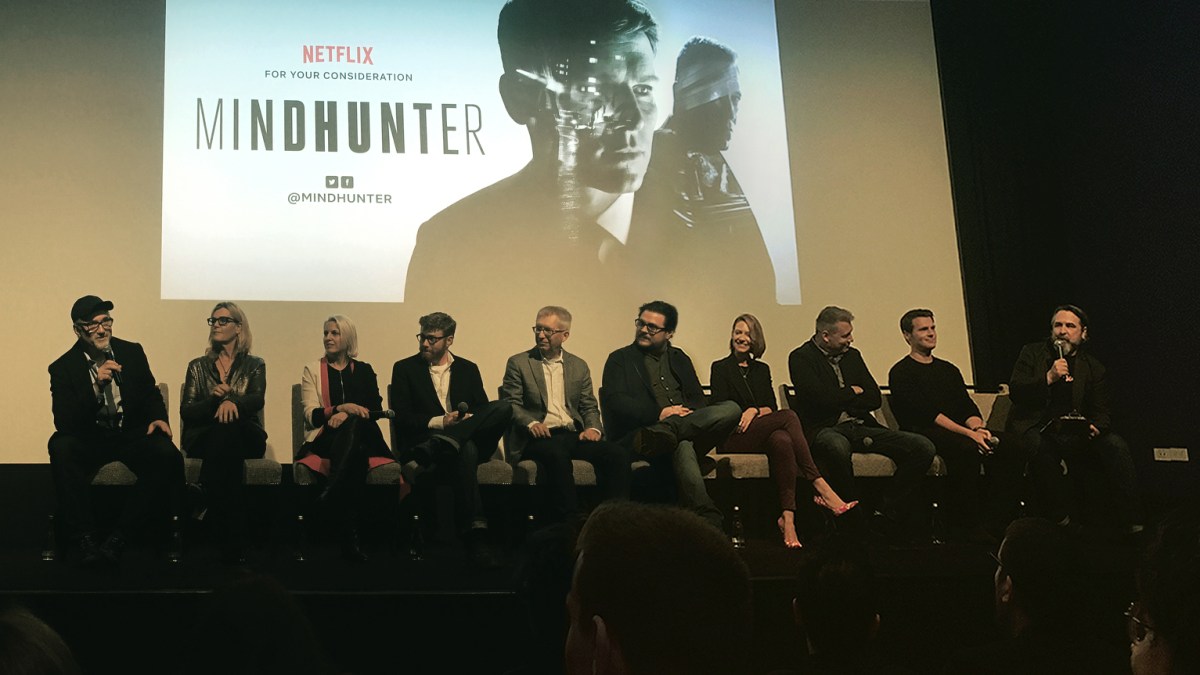
David Fincher (Director & Executive Producer), Laray Mayfield (Casting Director), Jennifer Starzyk (Costume Designer), Erik Messerschmidt (Director of Photography), Steve Arnold (Production Designer), Cameron Britton, Anna Torv, Holt McCallany, Jonathan Groff.
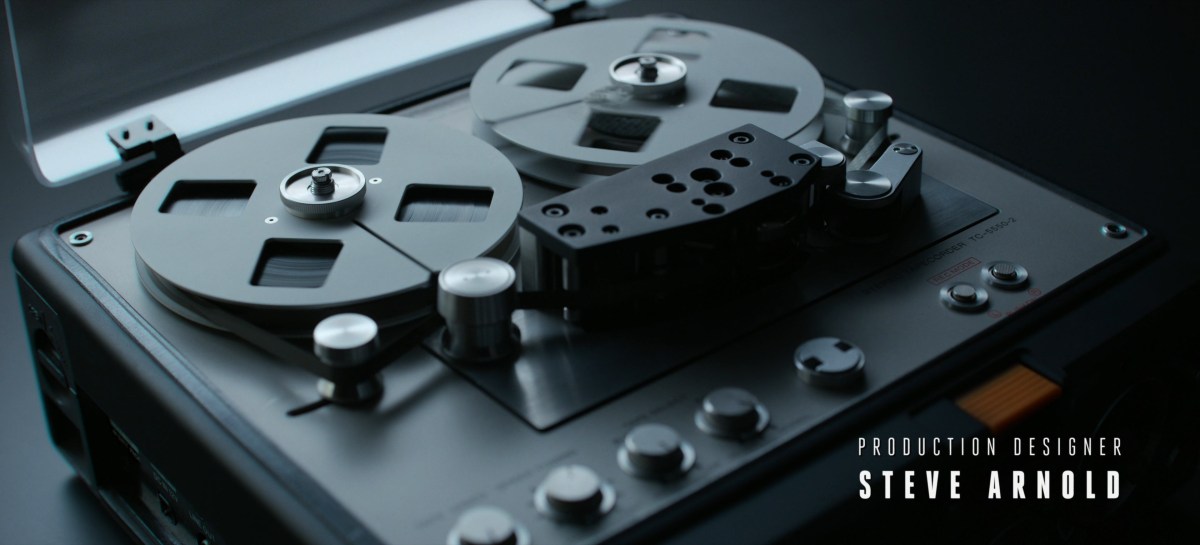
A ‘joyously nerdy’ video in which I attempt to assemble all the components to recreate the reel-to-reel title sequence from the Netflix Show Mindhunter.
Special thanks to Jason Moore (on Patreon) for the tip regarding The Professionals episode.
The music used in my recreation of the title sequence is ‘Spirit Of the Dead‘ – by Aakash Ghandi and is from the youtube audio library (Download link).
NOTE: The TDK tape leader was created specifically for the sequence with CGI to hide the original Sony one:
Comment by Kenneth Palkow (Kenney’s Custom Props) in Techmoan’s video 2020
Very nicely done, Techmoan. It’s amazing to see how many people fell in love with that recorder.
Working for David Fincher and having the opportunity to work with some very talented individuals was amazing. About 40% of the prop was recreated. We had acquired a couple machines. There was also one we found in a museum but did not get that one. In the end, I had 2 machines to work with. Some logos you noticed were not present anymore and that’s because that was a part I machined… like the head roller cover. The original had some deep gouged marks.
Since the recorder needed to look new from that time period, it was best to make a new one. I machined that part aluminum. There were other parts I needed recreate and machine. As you know, these machines are rare and it was just easy to tear the recorder down to every nut and bolt and give it a complete restoration. The hardest part was the housing and lettering. Some of it I had to recreate while other parts was just a refinish. In the end, I decided to match the original finish using ceramic based gun coatings. It was a durable finish and the color match ended up being perfect. So, the entire housing and misc parts, like the head/roller cover I totally refinished with this coating.
The next challenge was the reels themselves. David wanted a .005″ chamfer specifically on all edges of the reels. This was mainly because he was going to do plenty close ups and the details and the details had to be spot on. Again, I created a CAD model based on metal reels of that time period and machined them out of aluminum. I had to make custom fixtures to machine these parts because they are so thin. The center hubs a created a CAD model and 3D printed. I then wet polished the hubs down to 2000 grit. The hubs in the sequence were placed upside down. I did not intend or ask for my company initials to be visible…. that just happened by chance or intentional by the prop master or even possibly David was happy enough with my work that he did this for me. Either way, I was really excited to see that in the sequence.
I think The Fincher Analyst is correct about the tape having a cg overlay done. There were many other details I recreated as well…. like the rubber seal between the clear cover and housing. That part I did a cad model, printed a master, pulled a mold, and cast the recreated seals in rubber. The clear cover is also custom made. I did modify the locking knob on the cover to a magnetic one so the actor would just have to pull up vs trying to fidget with trying to get it to release… or worrying about it locking up and not release fluidly for the camera. Remember, the seen had to be very fluid.
Anyway, I hope this gives you some insight as to how much effort David wanted put into that opening sequence. Another friend of mine, Max Burman did the corpse stills you see.
Comment by Kenneth Palkow (Kenney’s Custom Props) in Adam Savage’s Tested video May 16, 2023
Hey brother, thank you for the shout out.
Yes, yes, and yes…. David Fincher 100% was extremely meticulous about detail on this reel to reel. His specifications was .005 of an inch chamfer on the reels edges alone. We had two machines at our disposal and I took one to create a superhero prop for that opening sequence alone.
Since a good portion of the recorder had damages, such as deep scratches, gouges, etc etc, I had to re-create those parts by CNC machining. The seal for the top cover I 3-D print it and even the top cover is not original. I had to make a new one from scratch. The top cover where the pick ups are that says Sony, I did not remove the logo, because that part as well I had to remake from scratch. Again, CNC machining. There were areas of machining that I was holding half a thou tolerance. Lol, I know, crazy. But, I was instructed that this would be an extreme close-up scene. The rest of the machine I tore down, refinished the side panels the back panel to take out all of the scratches gouges and then did a refinish using KG gun coatings. There was some Cerakote as well in there.
The reels were probably the most pain in the butt. Machining, thin metal like that can be problematic with vibration so I had to form a custom jig that sandwiched the reels down so I can machine the chamfers. The center hub is 3-D printed and if you look closely on the Opening sequence when he is tightening the reel knob, you will see my company initials KCP. That actually was an accident and no one was supposed to see that but someone put the reels upside down. I’m not gonna complain. Lol.
Truth be told this task of refinishing/fabricating. This reel to reel went in front of two other prop shops before it ultimately ended up in my hands. David was extremely adamant about the quality of this prop that the Prop Master took it to two shops. One of the shops tried, but could not give the quality level of work David was asking for.
That second shop gave me a call one day and said “Kenney don’t be mad at me but I’m sending somebody your way. They are being truly anal about the detail and I told them if you’re looking for someone that’s anal, you need to go to Ken shop“. Not five minutes later Prop Master called me at about 20 minutes later I was on a flight to Pittsburgh for a morning meeting the next day. I looked at the previous work done by the last shop, and thought to myself this is some pretty good work and question whether I could pull off with David wanted. Ultimately, that opening sequence is a project I’m most proud of being a part of and definitely one of the most beautifully done.
And last, I did make mention to the art department that in exchange for the hard work, David needed to bring me on for World War Z 2. Lol there was a lot more to this project but that’s pretty much the gist of it. Thanks again, brother, for the shout out.
If by any chance, you would like files to the the reel to reel or any of the other parts, let me know.
David Fincher went looking for the 1970s — and found them in Pittsburgh. but that was just the start for the esteemed producer-director and his team, who recreated the era for Mindhunter, the Netflix series about two pioneering FBI profilers.
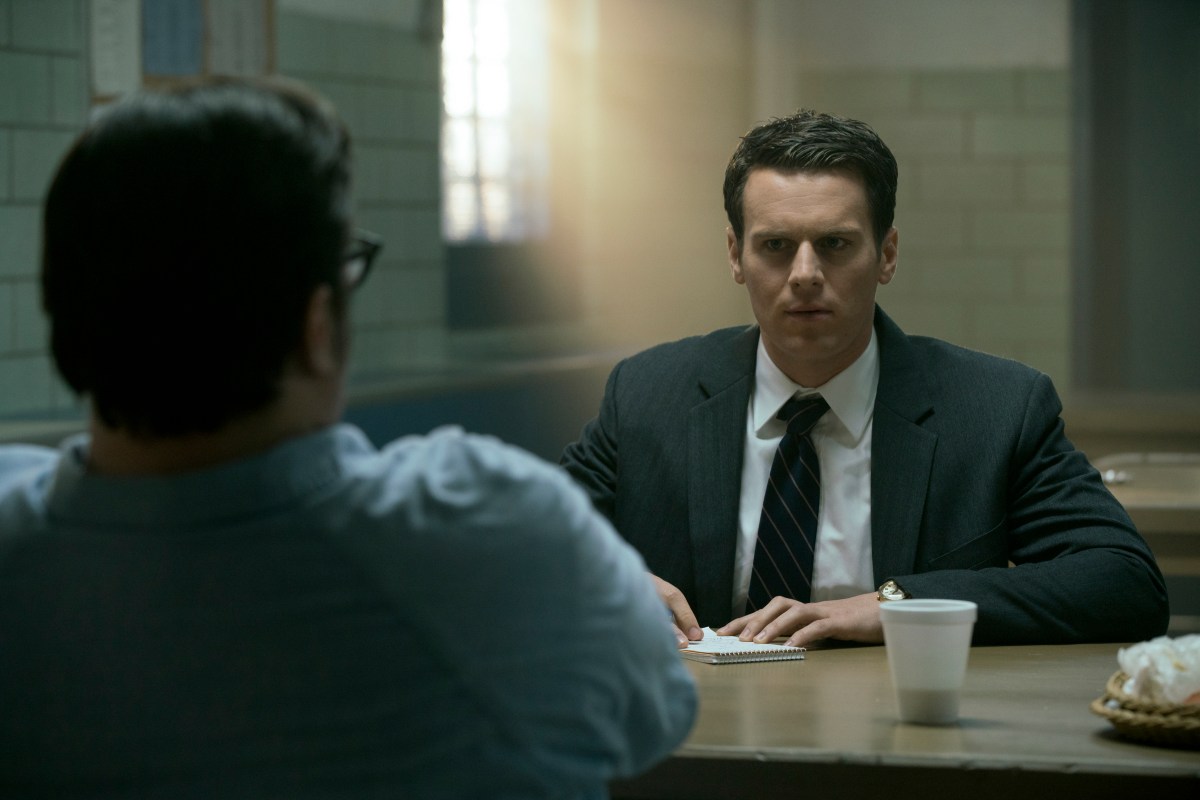
Watching the Netflix series Mindhunter, you may shudder as convicted serial killer Ed Kemper (Cameron Britton) casually chats about his string of brutal murders, or flinch when — spoiler alert! — a bird hits the fan courtesy of mass murderer Richard Speck (Jack Erdie).
What you’re less likely to notice is the precision with which the show’s late-’70s landscape has been created. David Fincher considers that a win.
“It’s really important that it feels like two people having a conversation — and that 40 people aren’t on their iPhones simultaneously just outside of frame,” says Fincher, who is executive-producing the series with Joshua Donen, Charlize Theron and Ceán Chaffin. “The great news is, I lived through the ’70s, so I remember what that looks like.”
Created by Joe Penhall — and based loosely on FBI agent John Douglas‘s book Mindhunter: Inside the FBI’s Elite Serial Crime Unit — the series explores the birth of criminal profiling.
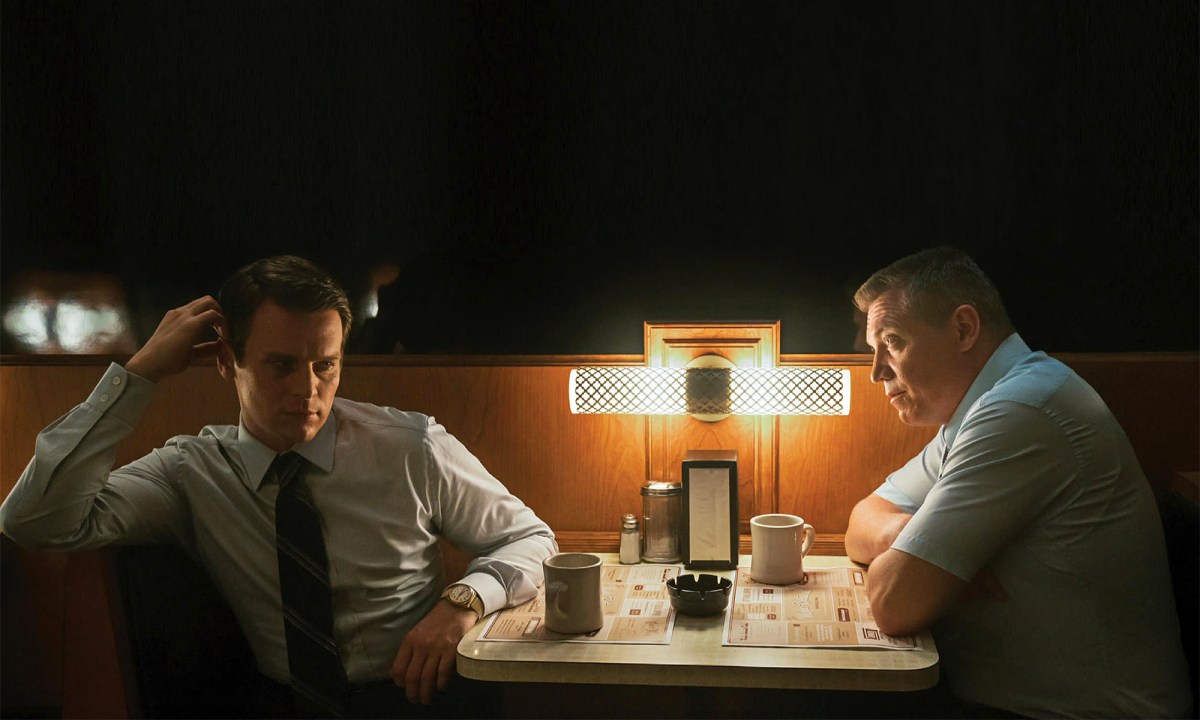
Special agent Holden Ford (Jonathan Groff, playing a fictionalized version of Douglas) and his partner, Bill Tench (Holt McCallany), work alongside psychologist Wendy Carr (Anna Torv) to dig into what makes murderers tick. Shot in Pittsburgh, the show is a window on a time before the term serial killer had been coined, much less become the focus of TV shows and casual conversations.
While that seemingly more innocent time is reflected partly in the show’s relative lack of gore, the decade’s thornier complexities required a critical eye (or, in this case, eyes) to see past the polyester-covered clichés.
“David is the most holistic filmmaker I’ve ever met,” director of photography Erik Messerschmidt says. “The tone of every scene is important, and [so are] how the costumes and lighting and set decoration and everything play a part in creating the finished product.”
Fincher, who directed four of the first season’s 10 episodes, is famously meticulous, but he says the secret to getting it right is finding the right people.
“I don’t think you keep a project in a kind of design and aesthetic wheelhouse by being a dictatorial influence. Just stomping your feet and holding your breath is not going to make stuff work,” he says. “A lot of times, you have to empower people who are the advance troops and the follow-up troops to make decisions that are based on conversations that you have.”
In this case, one of the first decisions — where to shoot — was daunting.
“Our biggest issue,” Fincher says, “was: where do we find 1978?”
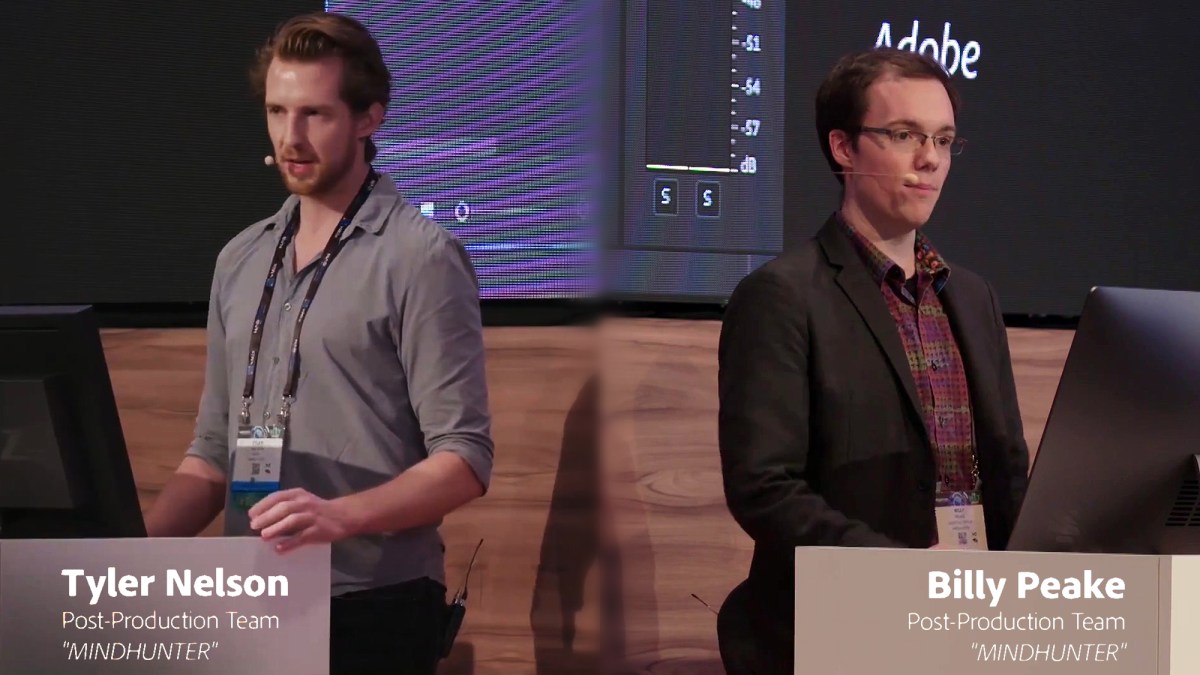
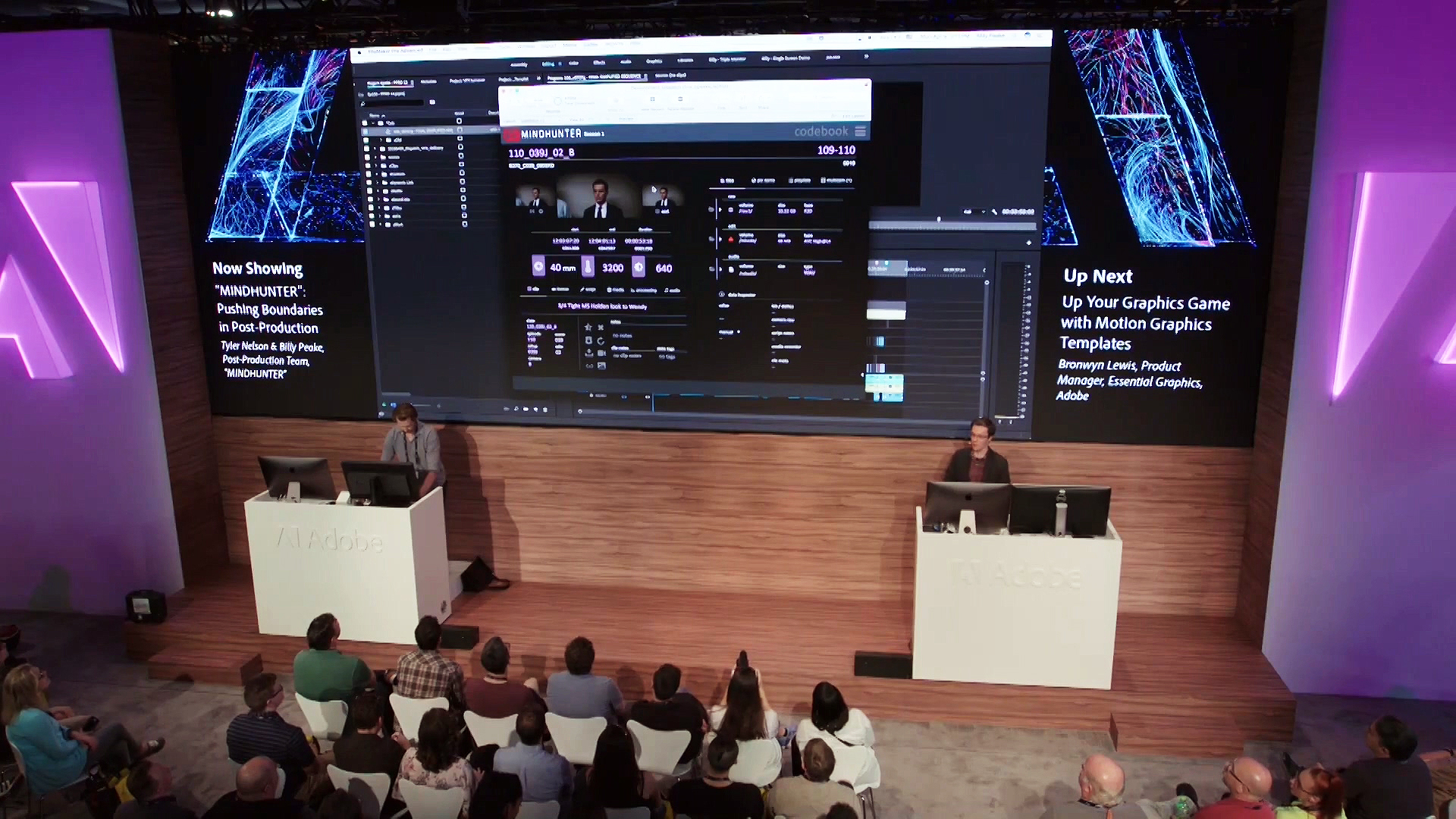
I don’t do a lot of interviews with editors, that’s the domain of Steve Hullfish and his legendary ART OF THE CUT series but when I saw that Adobe had some editors available for a chat at NAB 2018 I thought … why not. I had done some audio interviews before at NAB and I figured posting an audio interview to Soundcloud was a lot more likely to happen during a busy NAB week than trying to shoot and edit video (I did that one year with an iPad) or take a lot of photos and write up articles on what I saw.
Erik Messerschmidt and Chris Probst, ASC, also have made “smart” use of LED technology, as detailed in our cover story on Mindhunter (page 36). David Fincher, who first started using LED’s for process work on Zodiac, 11 years ago, not only customized a high-resolution RED camera for the show (dubbed the “Xenomorph”), but also devised one of the most ingenious LED-driven plate projection/interactive lighting processes for driving shots TV has ever seen. Messerschmidt’s description of Fincher’s commitment to innovation mirrors those Sundancers bending technology in the service of new ways to tell a story: “For David, the frame is sacred; what we choose to include is intrinsic to what the audience thinks is important. They are one and the same.”
David Geffner, Executive Editor
ICG Magazine
Visualizing the daring and often scary world of David Fincher requires new technologies and processes rarely attempted in series television.
Matt Hurwitz
Photos by Patrick Harbron & Merrick Morton, SMPSP
April 2018 ICG Magazine
In the season 1 finale of Netflix’s MINDHUNTER, a disturbed FBI agent, Holden Ford (Jonathan Groff), bursts wildly from a hospital room, as a handheld camera gives chase. The move begins as shaken as ford is, but, as it lands with the agent, who collapses in the hallway, it’s as if the camera has floated to a butter-smooth stop inches from the floor, the maneuver executed like it was on a perfectly balanced Jib arm, crane, or even Steadicam. But it’s none of those. What can viewers assume from this?
David Fincher has returned to television.
FOR THIS SERIES ABOUT A PAIR OF AGENTS WORKING IN THE FBI’S ELITE BEHAVIORAL SCIENCES UNIT in 1979, and attempting to understand the mind of a serial killer, Fincher used a number of leading-edge technologies – interactive LED lighting, custom built high-resolution cameras, and, as in the shot with Agent Ford, image stabilization/smoothing in postproduction – to keep the viewer visually embedded. Fincher’s aim with MINDHUNTER, which has no graphic violence, is for viewers to “access their own attics. There’s far scarier stuff up there than anything we can fabricate,” the filmmaker insists. “I wanted people to register what’s going on in [characters’] eyes and where the gear changes are taking place. At what point do I [as the viewer] feel like, ‘OK, I’ve got an insight,’ and at what point do they feel like: ‘oh, I’m being sold something. It’s all about the nuance in how the balance of power is changing.”
Fincher’s longtime postproduction supervisor, Peter Mavromates, says he creates an “experience of omniscience,” similar to Kubrick’s A Clockwork Orange, “where you’re in a straitjacket with your eyelids pinned open, and David’s forcing you to watch these horrible things.” In fact, the show’s unique visual process began more than a year before production started in Pittsburgh (on area locations and on stages at 31st Street Studios, a former steel mill), with the development of a unique RED camera system.
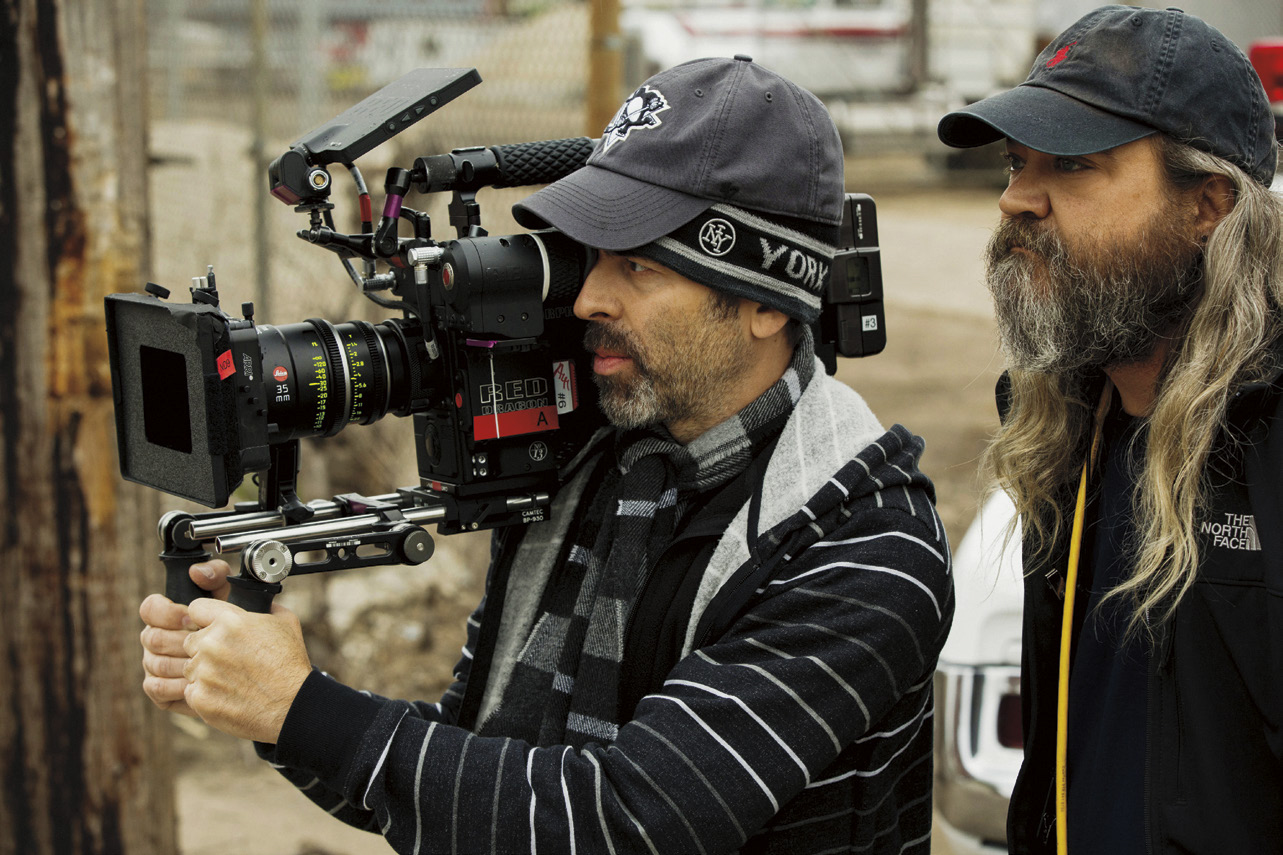
Christopher Probst, ASC – who shot MINDHUNTER’S pilot and second episode – was asked for his input on a RED prototype system, which had been designed by Jarred Land and RED’s Chief Designer Matt Tremblay according to Fincher’s specific needs. “David wanted to take all of the different exterior add-ons that create a jungle of wires, and put them inside the camera body,” Probst explains.
Fincher puts it even more directly: “It just seems insane that we’ve been bequeathed a [camera] layout [dating back to] D.W. Griffith and Charlie Chaplin that looks like some bizarre Medusa. [The camera] should be something that people want to approach, touch, and pick up.”
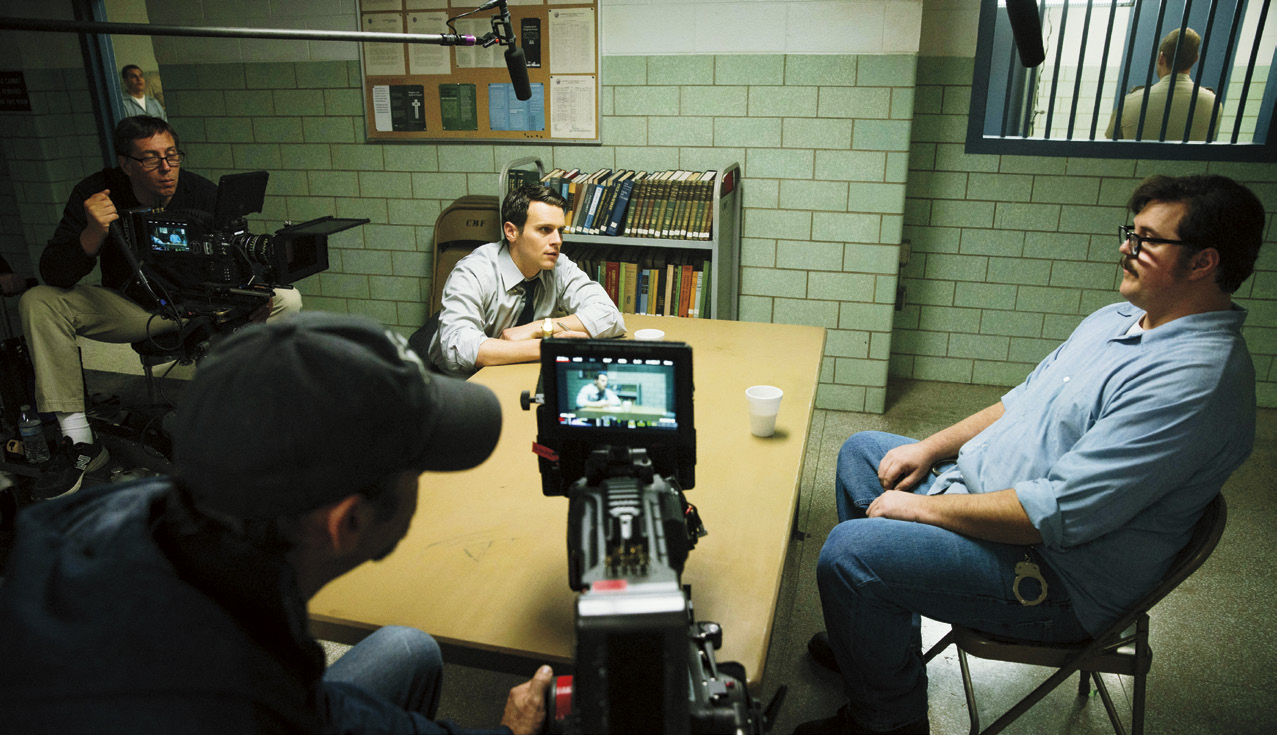
In fact, the custom system built for Season 1 [Land created a 2.0 version being used in Season 2] had an RTMotion MK3.1 lens-control system, Paralinx Arrow-X wireless video, and Zaxcom wireless audio (with timecode) integrated into the RED body, with the only visible cable being to control the lens. Slating was all but eliminated, with clip-number metadata being shared wirelessly between the camera and the script supervisor, who used Filemaker software to associate takes and clips. An audio scratch track from the mixer was recorded onto the REDCODE RAW R3D files and received wirelessly.
The base camera was one of RED’s DSMC2 systems, the then-new WEAPON DRAGON, with its 6K sensor. The shell design, accommodating the added gear inside, with its angular shape and heat venting fins on top, had a “Xenomorph” appearance (à la Alien), and was dubbed as such by Land and Fincher. “When the camera arrived in Pittsburgh, they had actually engraved “Xenomorph” on the side,” Probst says.
One DP just won his first career ASC Award—on the strength of his work on The Crown (Netflix).
Another made key contributions to the heartfelt Strong Island (Netflix), which was nominated for this year’s Best Documentary Feature Oscar.
And a third DP has spent a recent stretch focusing on spots after getting a career break from David Fincher on the TV series Mindhunter (Netflix).
Here are insights from DPs Adriano Goldman, ASC, ABC, Alan Jacobsen and Erik Messerschmidt.
[…]
Erik Messerschmidt
Cinematographer Erik Messerschmidt has spent the past year focused on commercials but his career progression is the reverse of what is typical. Instead of spots serving as a springboard to TV series and theatrical features, it was Messerschmidt’s work on the TV series Mindhunter (Netflix) which established him as a DP, leading to spotmaking opportunities.
Messerschmidt’s commercial lensing exploits have included Taco Bell’s “Web of Fries” cinema, web and TV fare directed by Joseph Kosinski of RESET, Buick and other automotive ads from director Kevin Berlandi, and a pharmaceutical spot directed by Mark Pellington of Washington Square Films. Messerschmidt also shot for Pellington the Demi Lovato music video “Tell Me You Love Me.”
Messerschmidt had been a gaffer who worked extensively on commercials that were lensed by such notables as Claudio Miranda, ASC, Tami Reiker, ASC and Jeff Cronenweth, ASC.
On the feature front, Messerschmidt served as a gaffer on the David Fincher-directed, Cronenweth-shot Gone Girl, a project which proved pivotal. “David knew I had a still photography background and I ended up doing promotional still work with him on Gone Girl,” related Messerschmidt. “David took me under this wing and moved me up to shoot his series Mindhunter.” (The alluded to still photography chops date back to when Messerschmidt worked for still shooter Gregory Crewdson.)
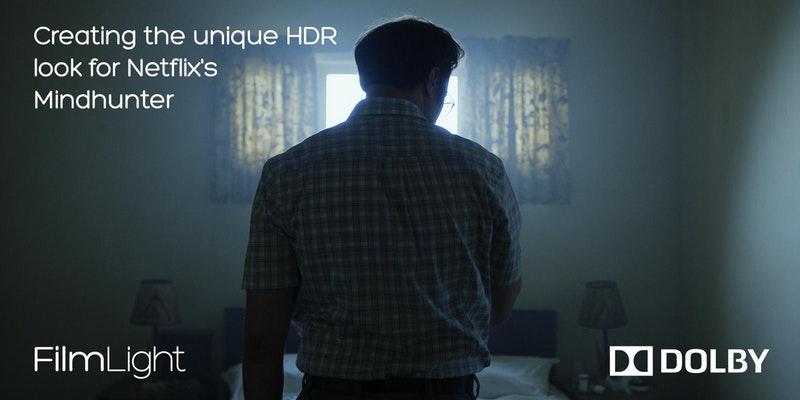
Colorist Eric Weidt shares creative insights on using Dolby Vision and Baselight to shape the look of the gripping Netflix original series.
Join us for an exclusive presentation by colorist Eric Weidt, who will demonstrate how he collaborated with producer and director David Fincher to create the look of the masterful psychological thriller Mindhunter.
Don’t miss this opportunity to explore how Eric developed the HDR color grade, which drew inspiration from films of the ’70s – demonstrated live on BaseLight.
The presentation will be followed by a technical discussion where Eric will be joined by Peter Postma, FilmLight‘s Managing Director of the Americas, Thomas Graham, Dolby‘s Sr. Manager of Imaging Content Solutions and Chris Clark, Manager – Imaging Science Technologies at Netflix who will share insights from their work with the latest tools and solutions for creating amazing HDR content.
March 28, 2018
Dolby Cinema Vine Theatre Los Angeles, CA 90028
Hello and thanks for the warm welcome! I’m honored to be hosting this month and look forward to posting a variety of images/topics. Being a nerd, there’ll be plenty of technical posts about cameras/lenses, but I’d also like to draw on my teaching at Global Cinematography Institute and writing/editing for American Cinematographer for the last 24 years. To begin, I’ll start with a little Mindhunter anecdote.
Over the past few months I’ve been asked, “What’s it like shooting for David Fincher?”
Coming up the camera department as a 1st AC/operator then shooting music videos and commercials, I’ve operated most of my projects. Simultaneously, I’ve also been writing for AC since 1994 and its Technical Editor since 98. That enabled me to literally corner many of the DPs I admired and pick their brains under the guise of some altruistic journalistic cause (but always with the underlying motive to learn from idols like Conrad Hall, Deakins, Chivo, Khondji, Harris Savides; and directors like Spielberg, Bay, the Coen bros., and Fincher). Like many of you, I’ve admired/studied David’s work, so thinking myself somewhat clever and not without operating skills, I opted to operate A-camera on my episodes.
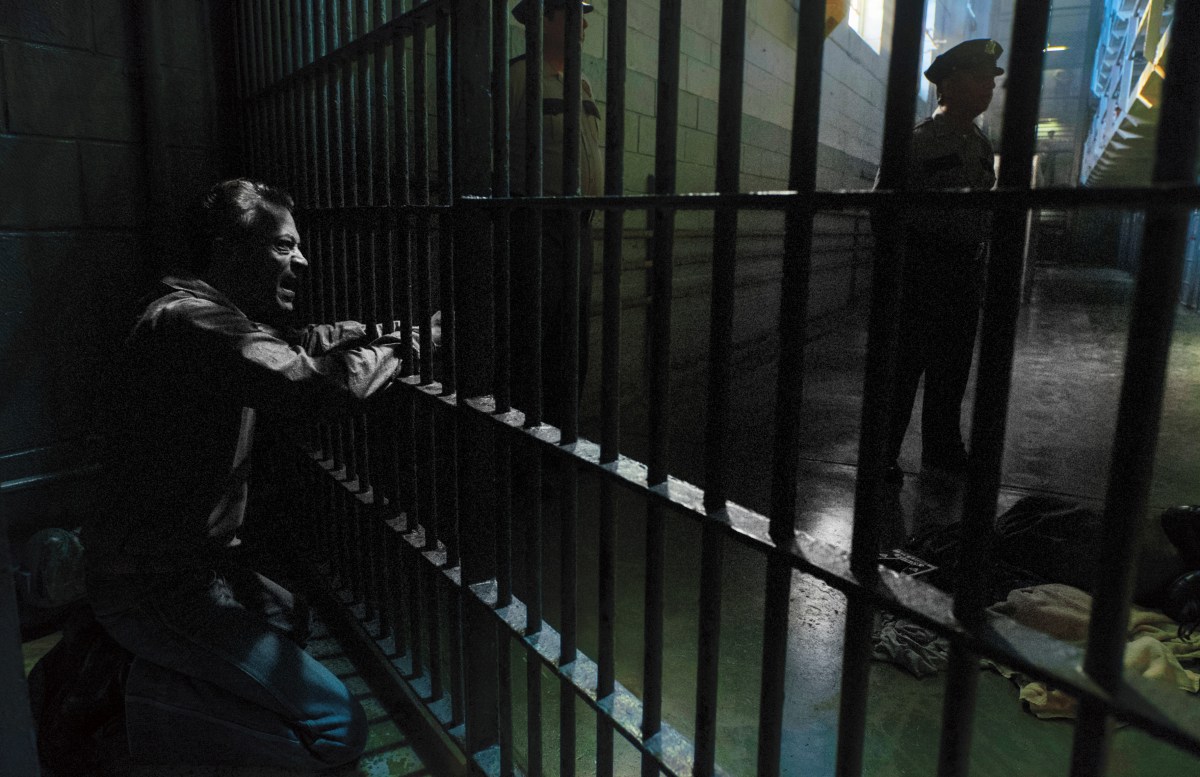
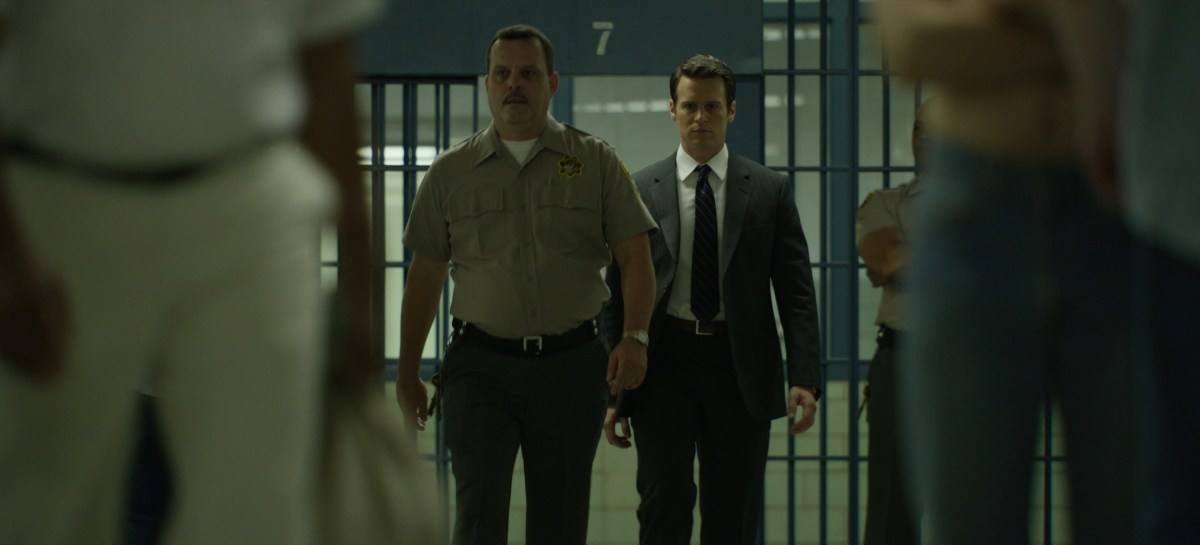
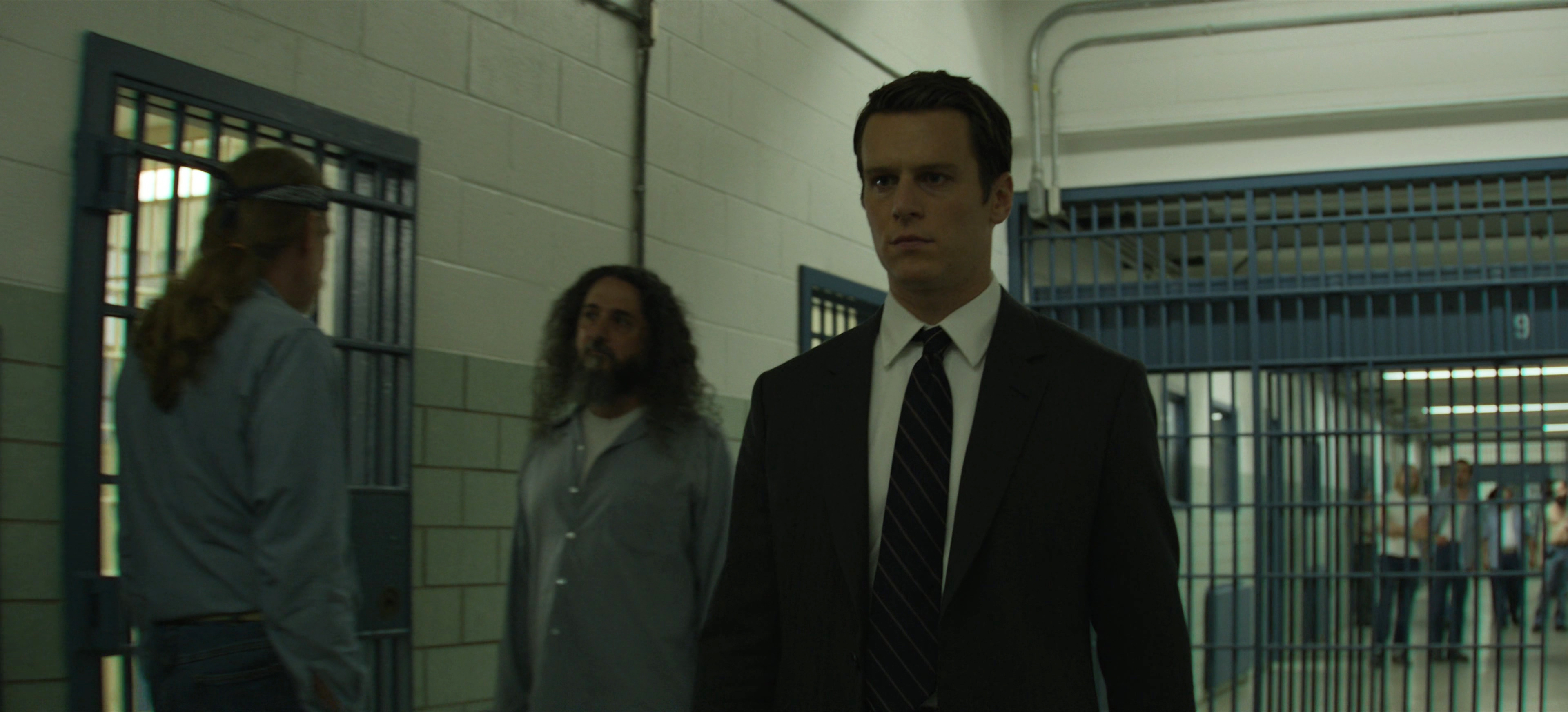
Early in the schedule, we were shooting a prison corridor as Jonathan Groff is led to meet the serial-killer Ed Kemper. We had 2 cameras on 150’ of dolly track: a 65mm locked-off closeup and a 29mm low 2-shot I operated remotely. We did a take and David said, “That’s great, but pan a little to the right.” Ok… note taken. Next take. “Pan to the left…” What the hell? Ok, what’s he looking at? We shot Mindhunter in 6K framing for a 5K extraction, so I was mainly looking where to place our lead in this low 3/4 shot. You know, rule-of-thirds kind of thinking:
Then it dawned on me. David’s looking for balance/symmetry in all aspects of his work. Forget what books say. He’s looking at the shot as a whole. Not just the actors. As the two walk, if I framed only for Ford, the guard may be at the edge or even cut off. Anything but symmetrical! But once I got in David’s head, I moved back from the monitor and tried to NOT look at the actors and just balance the sides of the frame.
That level of symmetry/precision permeates all aspects of a Fincher film. Working with David is full of moments that strengthen you as a filmmaker if you are open to challenging yourself and your preconceived ideas.

 Dispatch by
 ![Adobe Creative Cloud [SQUARE]](https://thefincheranalyst.com/wp-content/uploads/2018/04/adobe-creative-cloud-square.jpg)



 The Fincher Analyst