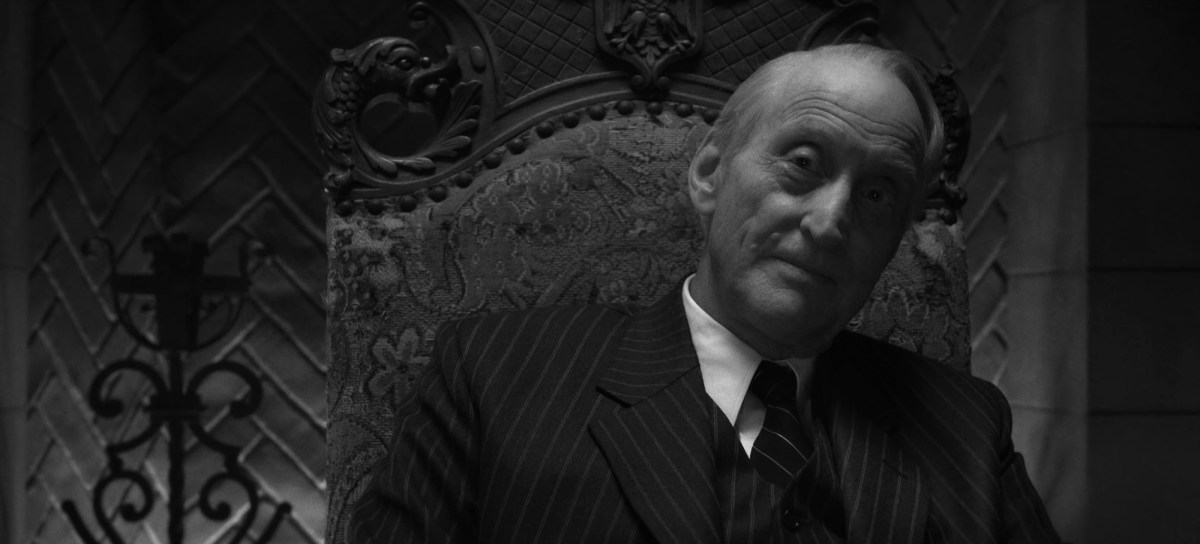
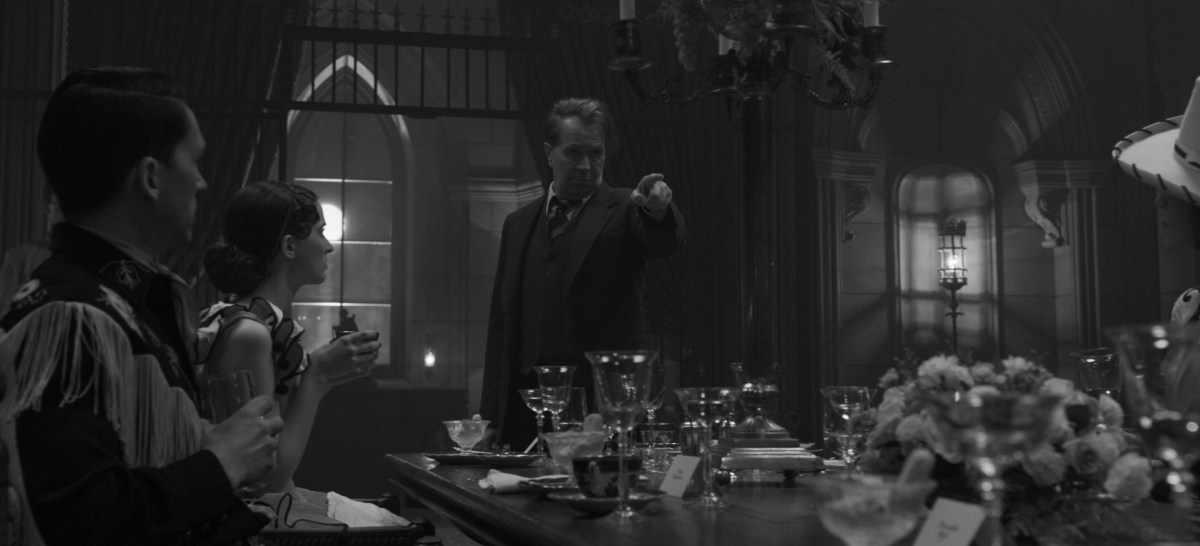
Charles Dance plays newspaper tycoon William Randolph Hearst in Mank.
Dance appeared as prison doctor Clemens in Fincher’s first film Alien3 (1992):
“First of all, I’m a huge fan of his. And I don’t say that about all directors that I’ve worked with. But when I first worked with David, the minute he walked onto the set and started to talk, I thought ‘right, this guy is clever'”.
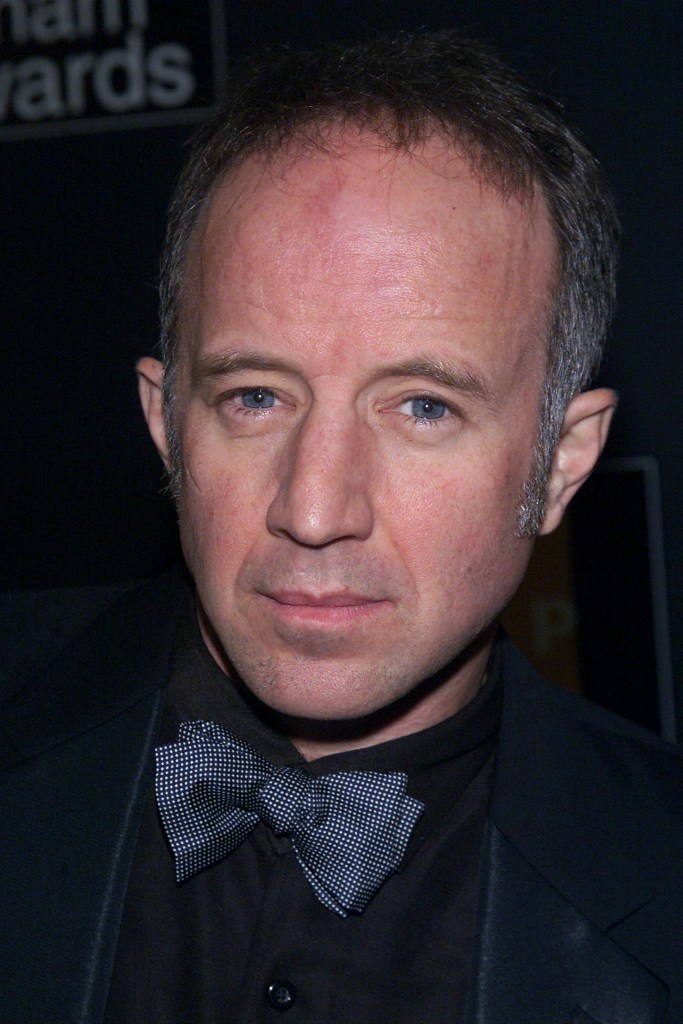
Don’t miss this exclusive and compelling conversation with actor, writer, and director Arliss Howard (Full Metal Jacket, Natural Born Killers, The Lost World: Jurassic Park, Amistad, Moneyball, Manhunt)
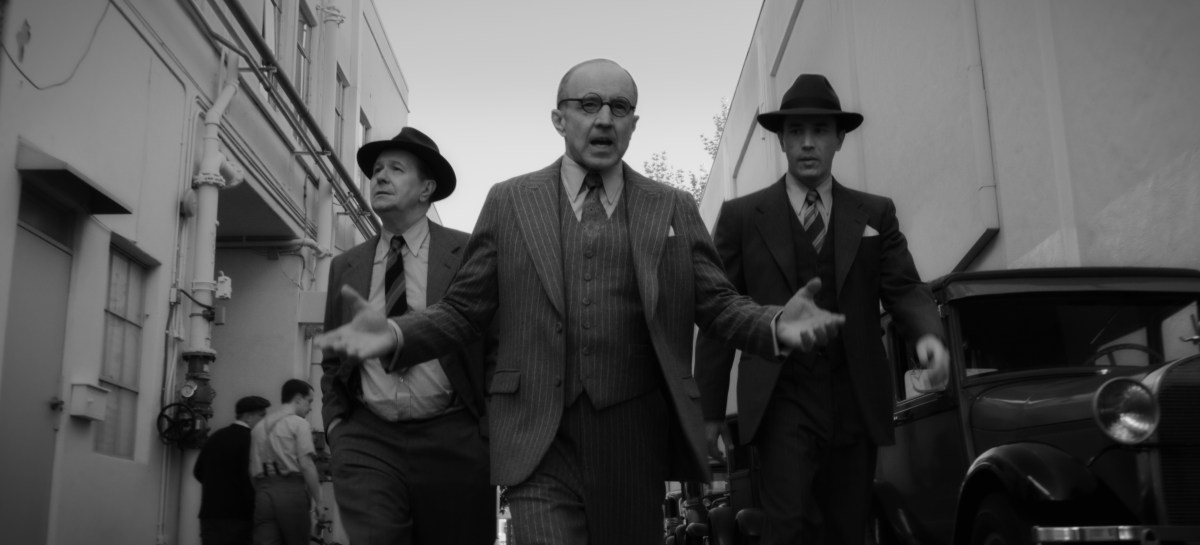
A journey into his process, his brilliant performance as MGM’s Louis B Mayer in David Fincher’s new epic feature ‘Mank’, working with Fincher, Kubrick, Spielberg and Stone and so much more!
‘Mank’ premieres theatrically in some territories on Nov 13th. On Netflix Dec 4.
Necessity is the mother of invention, and nothing proves this proverb more true than the evolution of film and television production technology in the age of COVID-19. While the field has always changed rapidly even in normal times, the pace of change and adaptation has accelerated over the past six months.
This adjustment has posed many questions. Beyond personal protective equipment, mandatory testing, on-set safety monitors, walking lunches and corona contingency fees, will the pandemic have enduring effects in the creative, collaborative endeavor that is filmmaking? The technology to work remotely has essentially been in place for some time, but will the pandemic finally push us over into a new normal?
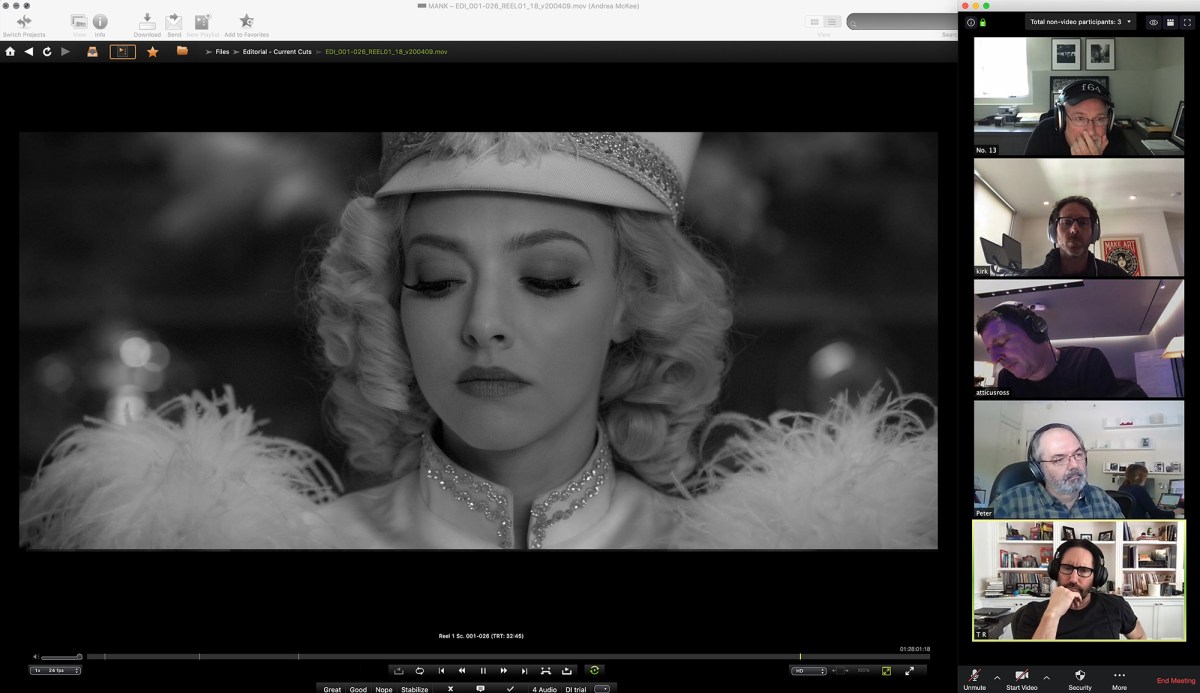
Numerous existing technology trends are being suddenly supercharged by the necessities imposed by the coronavirus. Shooting close to home has never been more appealing, and that impulse aligns neatly with ongoing advancements in LED backings and virtual production. In the world of image processing, connectivity solutions such as those offered by Moxion, Frame.io and Sohonet were already bringing immediacy and super-high resolution to a wide variety of devices without regard to location — and now those virtues are suddenly in much higher demand. And remote collaboration solutions including PIX are looking positively prescient.
Director David Fincher’s team found that the PIX production backbone, a tool they’ve helped develop over the years, facilitated safe group creativity but also enhanced efficiency on the forthcoming Mank.
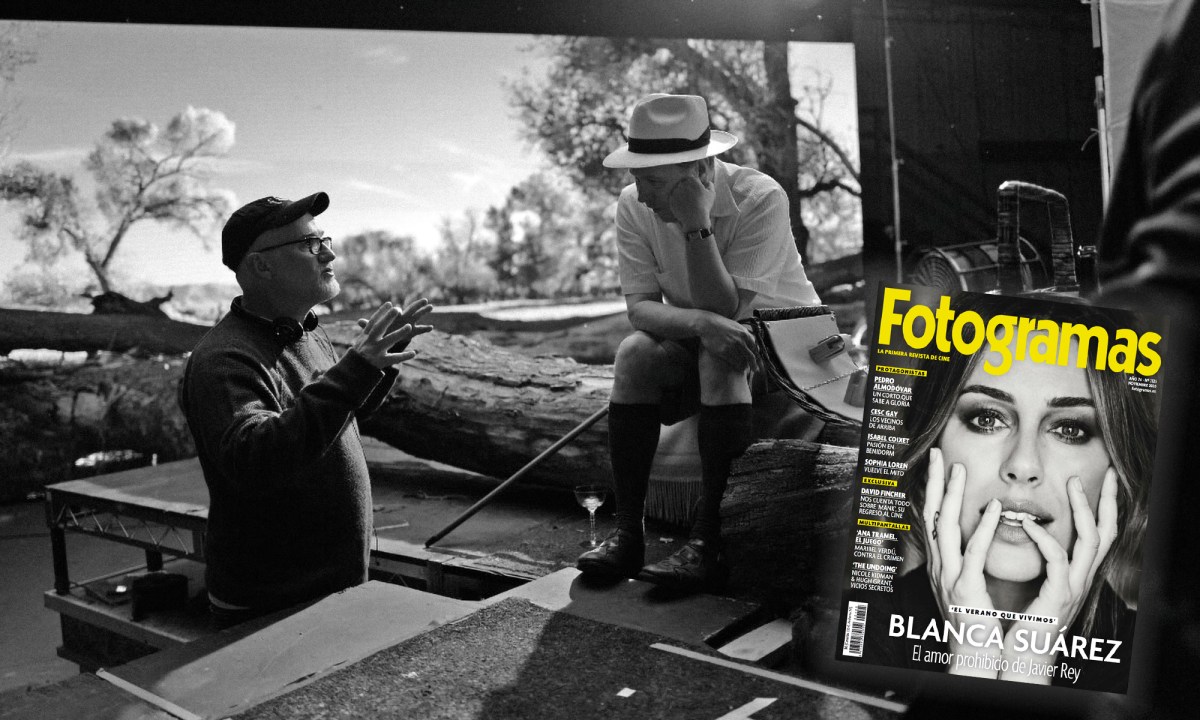
There are few directors as infamously meticulous as David Fincher. Amanda Seyfried – who appears in Fincher’s upcoming movie Mank, about the writing of Citizen Kane – previously revealed that one scenetook around 200 takes to capture properly. For the latest issue of the magazine, Total Film asked the team behind Mank about working with Fincher, with the director himself being the first to admit that he can be quite demanding.
“It was exhausting in the beginning, I think, for him,” Fincher says of leading actor Gary Oldman. “Because I’m fairly didactic about, ‘These are the things that the scene needs to accomplish for me, and we will continue to play, to look for ways to underline these ideas that are as subtle as we can make them.’
David Fincher’s Mankwas a long time coming. The director has been drumming up interest in the story of Herman J. Mankiewicz, the screenwriter behind Citizen Kane, since 1997 – as soon as his writer father Jack Fincher (a journalist and author) had finished the script.
“Unless you’re making a tentpole movie that has a Happy Meal component to it, no one’s interested,” Fincher tells Total Film for the latest issue of the magazine, headlined by Mank. However, after many years fighting for Mank to get made, the perfect opportunity presented itself when Netflix asked what Fincher would like to make next (the filmmaker had worked with the streamer on House Of Cards, Love, Death & Robots, and Mindhunter).
On paper, David Fincher’s Mank is a movie about the making of Orson Welles’ 1941 classic, Citizen Kane. But, in reality, it’s much more than that – as our five-star review indicates.
It tells the story of Herman J. Mankiewicz: the ‘Mank’ of the title. A self-sabotaging screenwriter, he’s a genius wit and knows the industry inside out, but his heavy drinking and reckless gambling scupper his chances to get ahead. An opportunity comes calling when Welles offers him the opportunity to collaborate on a screenplay with the working title, American…
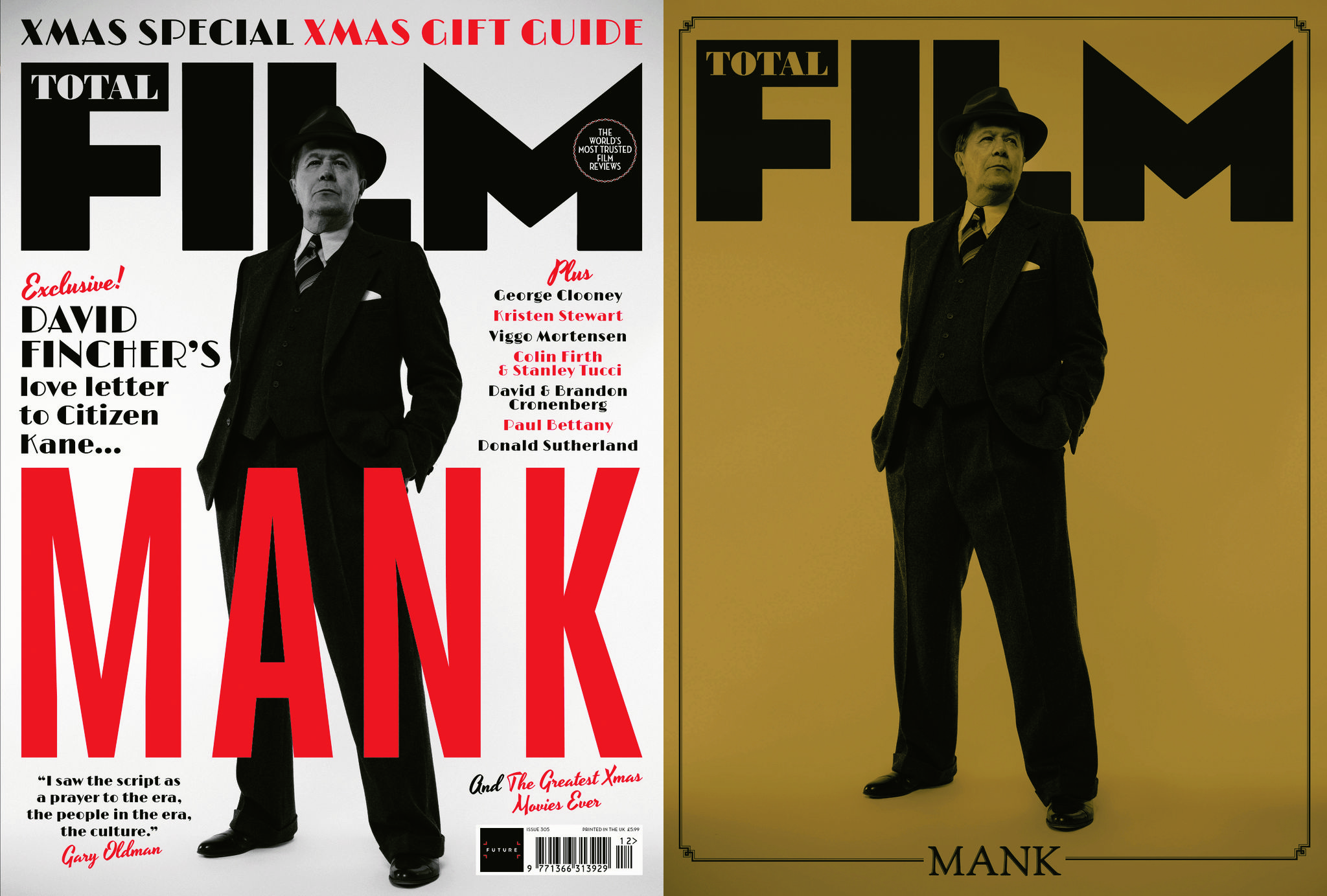
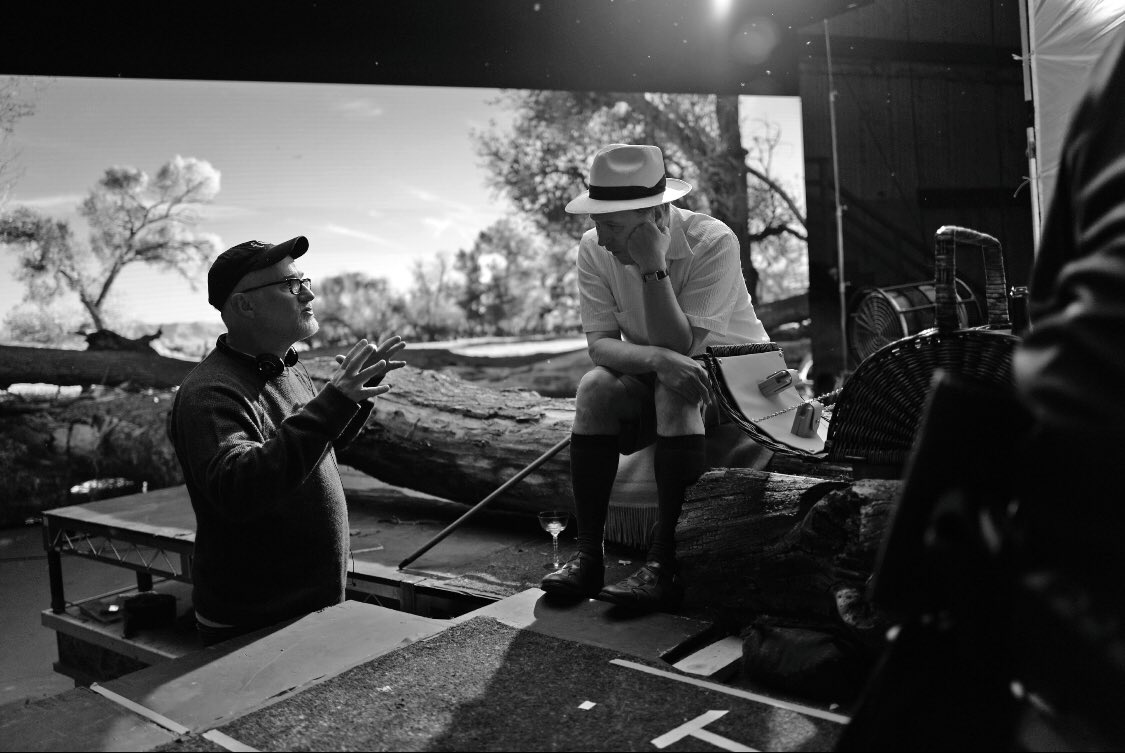
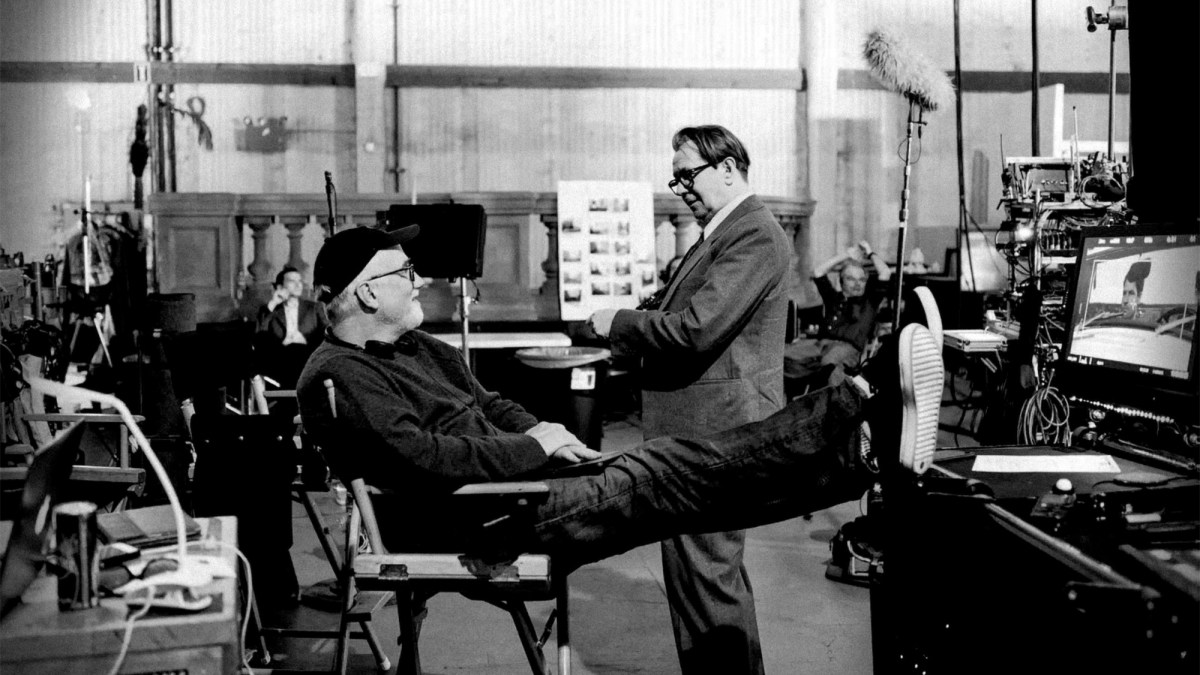
The movie – which is a 30-years-in-the-making passion project for Fight Club and The Social Network director Fincher – stars Oscar-winner Gary Oldman as Mank. You can take an exclusive look at Oldman in the film below, courtesy of our sister publication Total Film magazine. Plus, a new look at Oldman behind the scenes shooting an old-school driving scene, and hanging about between takes with Fincher.
The Gone Girl director is known for the psychological depth, visual symbolism and pulpy thrills of his films but all roads lead back to his tempestuous – and mysterious – collaborations with Madge.
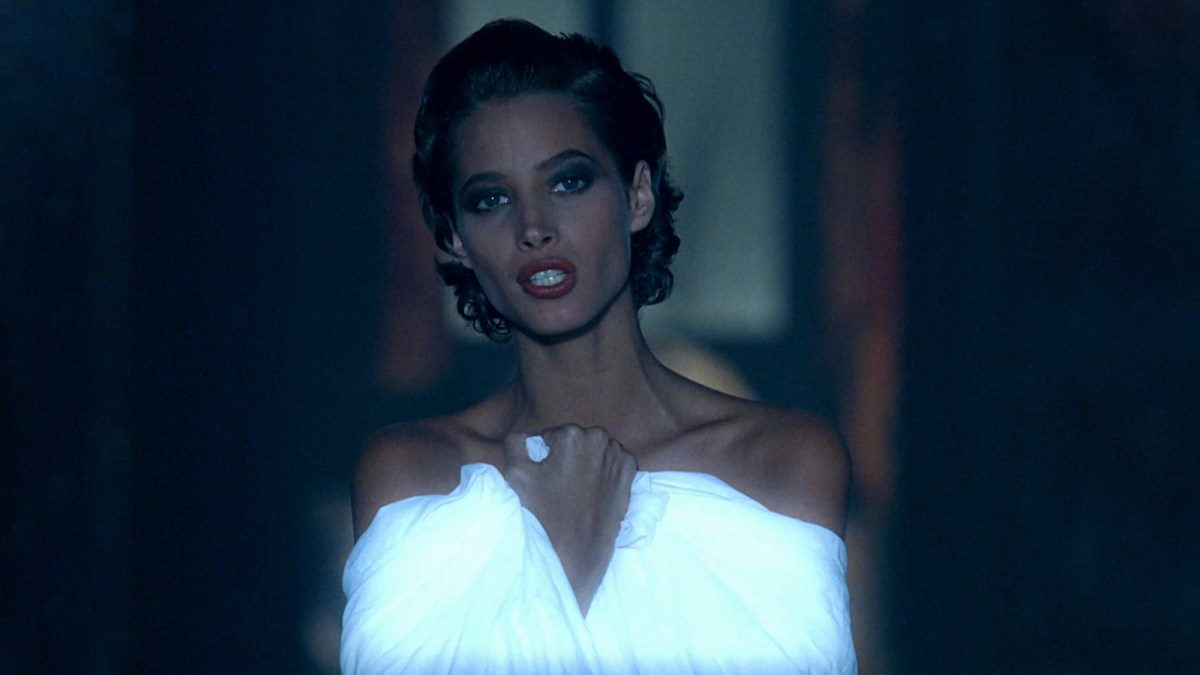
It was in the winter of 1993 that David Fincher murdered Madonna. The crime scene: a music video for one of the latter’s greatest singles, “Bad Girl”, and what would be the last of the pair’s four collaborations. In its wake, Fincher would become one of cinema’s most revered directors, the prickly genius behind Se7en (1995), The Social Network (2010), Gone Girl (2014) and the forthcoming Mank. But it’s “Bad Girl” that remains Fincher’s most important venture. It is a short, stylish erotic thriller that begins and ends with Madonna’s lifeless corpse; a video that nods toward the filmmaker Fincher would become, and a final act of artistic symbiosis between two titans of pop culture.
Back in the Nineties, Fincher was coming to the end of a luminous eight years as a music video visionary. The likes of Aerosmith’s “Janie’s Got a Gun” and George Michael’s supermodel-filled “Freedom ‘90” were gorgeous exercises in style and short-form storytelling. Little was more thrilling, though, than his work with Madonna – from the grandiose myth-making of “Vogue” and “Express Yourself” to the richly personal “Oh Father”. They both recognised the cinematic potential of the form, even if it came at a cost – all of their collaborations rank among the most expensive videos ever made.
That trilogy of music videos – which came before “Bad Girl” and were shot over the course of 10 months between 1989 and 1990 – would reflect a fruitful creative tussle between the pair. Despite Fincher’s relative lack of clout in the industry at the time, and especially compared to Madonna’s cultural ubiquity, they would approach their work as somewhat begrudging – and almost flirtatious – equals.
In interviews, Fincher recalled expressing mock outrage when Madonna asked him if he had heard of Metropolis, the landmark sci-fi film she wanted to replicate for “Express Yourself”. Madonna sneered at his idea to have her crawl across the floor, lick milk from a bowl, and then pour it over herself in the same video, assuming it might look like a student film. It turned out to be one of the video’s most memorable set pieces. The visual for “Oh Father”, meanwhile, a psychological wormhole into Madonna’s childhood and the emotional toll of her mother’s death, only came about at Fincher’s insistence. Madonna had been unsure it would even work as a single. Fincher, though, saw it as ripe for visual accompaniment, and captured her vulnerability like no other.
Director: David Fincher Director of Photography: Mike Southon, BSC Editors: James Haygood and George Michael Art Director: John Beard Stylist: Camilla Nickerson Hair Stylist: Guido Palau Makeup Artist: Carol Brown Production Company: Propaganda Films
Models: Naomi Campbell, Cindy Crawford, Linda Evangelista, Tatjana Patitz, Christy Turlington.
Male Models: Scott Benoit, Peter Formby, John Pearson, Todo Segalla, Mario Sorrenti.
Outtakes:
The Making of the Video:
The Story Behind Freedom ’90:
MTV Rewind: The Women of George Michael’s “Freedom! ‘90” Music Video (1990)
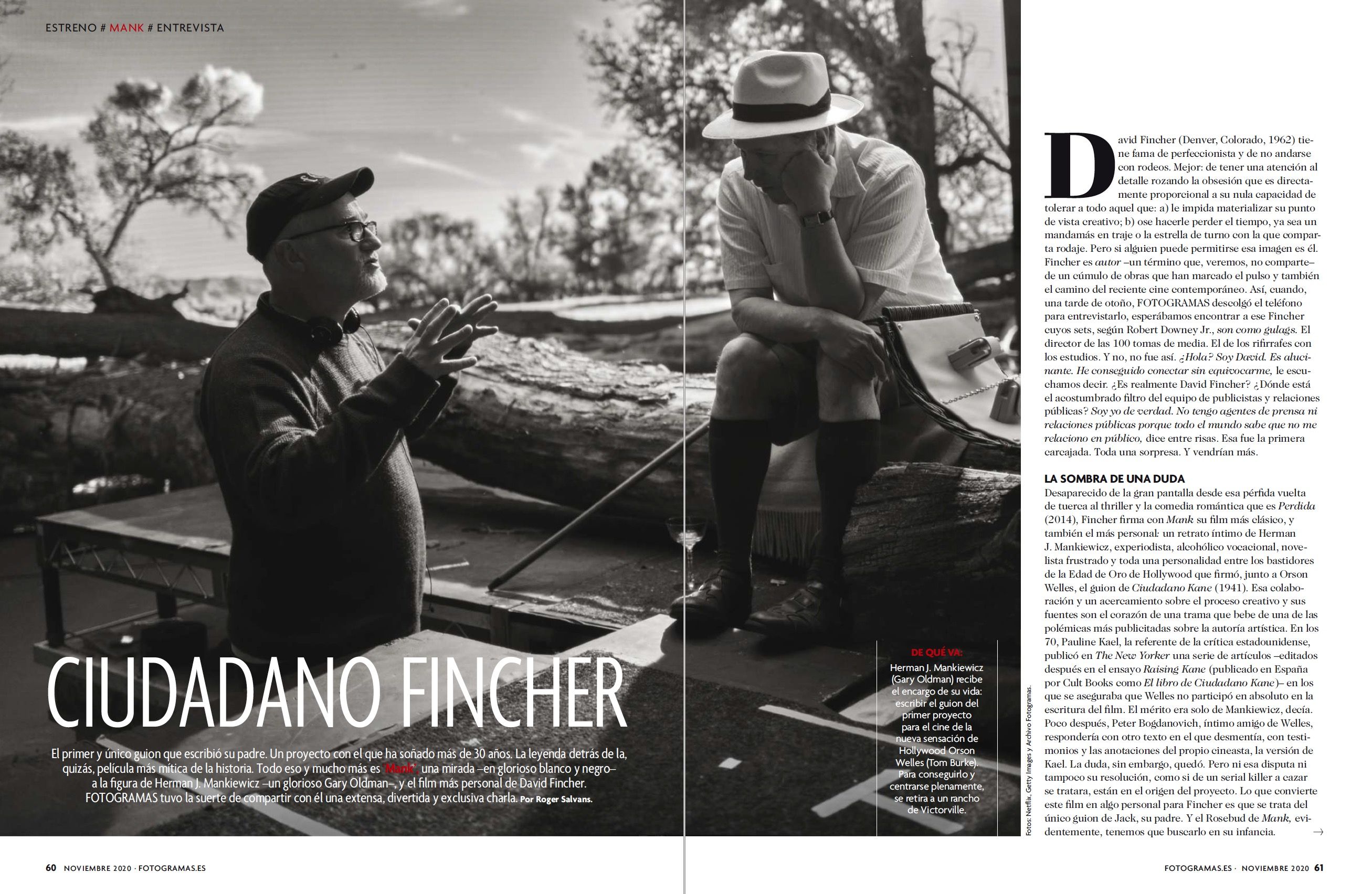
El primer y único guion que escribió su padre. Un proyecto con el que ha soñado más de 30 años. La leyenda detrás de la, quizás, película más mítica de la historia. Todo eso y mucho más es ‘Mank’, una mirada –en glorioso blanco y negro–a la figura de Herman J. Mankiewicz –un glorioso Gary Oldman–, y el film más personal de David Fincher. FOTOGRAMAS tuvo la suerte de compartir con él una extensa, divertida y exclusiva charla.
David Fincher (Denver, Colorado, 1962) tiene fama de perfeccionista y de no andarse con rodeos. Mejor: de tener una atención al detalle rozando la obsesión que es directamente proporcional a su nula capacidad de tolerar a todo aquel que: a) le impida materializar su punto de vista creativo; b) ose hacerle perder el tiempo, ya sea un mandamás en traje o la estrella de turno con la que comparta rodaje. Pero si alguien puede permitirse esa imagen es él. Fincher es autor –un término que, veremos, no comparte–de un cúmulo de obras que han marcado el pulso y también el camino del reciente cine contemporáneo. Así, cuando, una tarde de otoño, FOTOGRAMAS descolgó el teléfono para entrevistarlo, esperábamos encontrar a ese Fincher cuyos sets, según Robert Downey Jr., son como gulags. El director de las 100 tomas de media. El de los rifirrafes con los estudios. Y no, no fue así. ¿Hola? Soy David. Es alucinante.He conseguido conectar sin equivocarme, le escuchamos decir. ¿Es realmente David Fincher? ¿Dónde está el acostumbrado filtro del equipo de publicistas y relaciones públicas? Soy yo de verdad. No tengo agentes de prensa nirelaciones públicas porque todo el mundo sabe que no merelaciono en público, dice entre risas. Esa fue la primera carcajada. Toda una sorpresa. Y vendrían más.
La sombra de una duda
Desaparecido de la gran pantalla desde esa pérfida vuelta de tuerca al thriller y la comedia romántica que es Perdida (2014), Fincher firma con Mank su film más clásico, y también el más personal: un retrato íntimo de Herman J. Mankiewicz, experiodista, alcohólico vocacional, novelista frustrado y toda una personalidad entre los bastidores de la Edad de Oro de Hollywood que firmó, junto a Orson Welles, el guion de Ciudadano Kane (1941). Esa colaboración y un acercamiento sobre el proceso creativo y sus fuentes son el corazón de una trama que bebe de una de las polémicas más publicitadas sobre la autoría artística. En los 70, Pauline Kael, la referente de la crítica estadounidense, publicó en The New Yorker una serie de artículos –editados después en el ensayo Raising Kane (publicado en España por Cult Books como El libro de Ciudadano Kane)– en los que se aseguraba que Welles no participó en absoluto en la escritura del film. El mérito era solo de Mankiewicz, decía. Poco después, Peter Bogdanovich, íntimo amigo de Welles, respondería con otro texto en el que desmentía, con testimonios y las anotaciones del propio cineasta, la versión de Kael. La duda, sin embargo, quedó. Pero ni esa disputa ni tampoco su resolución, como si de un serial killer a cazar se tratara, están en el origen del proyecto. Lo que convierte este film en algo personal para Fincher es que se trata del único guion de Jack, su padre. Y el Rosebud de Mank, evidentemente, tenemos que buscarlo en su infancia.



 The Fincher Analyst