Mank: Behind the Sound

Glen Kiser, Director of the Dolby Institute
February 4, 2021
Netflix Film Club (YouTube) / Netflix Awards FYC

A conversation with Sound Designer Ren Klyce, Production Sound Mixer Drew Kunin, Supervising Sound Editor Jeremy Molod, Re-Recording Mixer Nathan Nance on behalf of MANK. Moderated by Glenn Kiser.

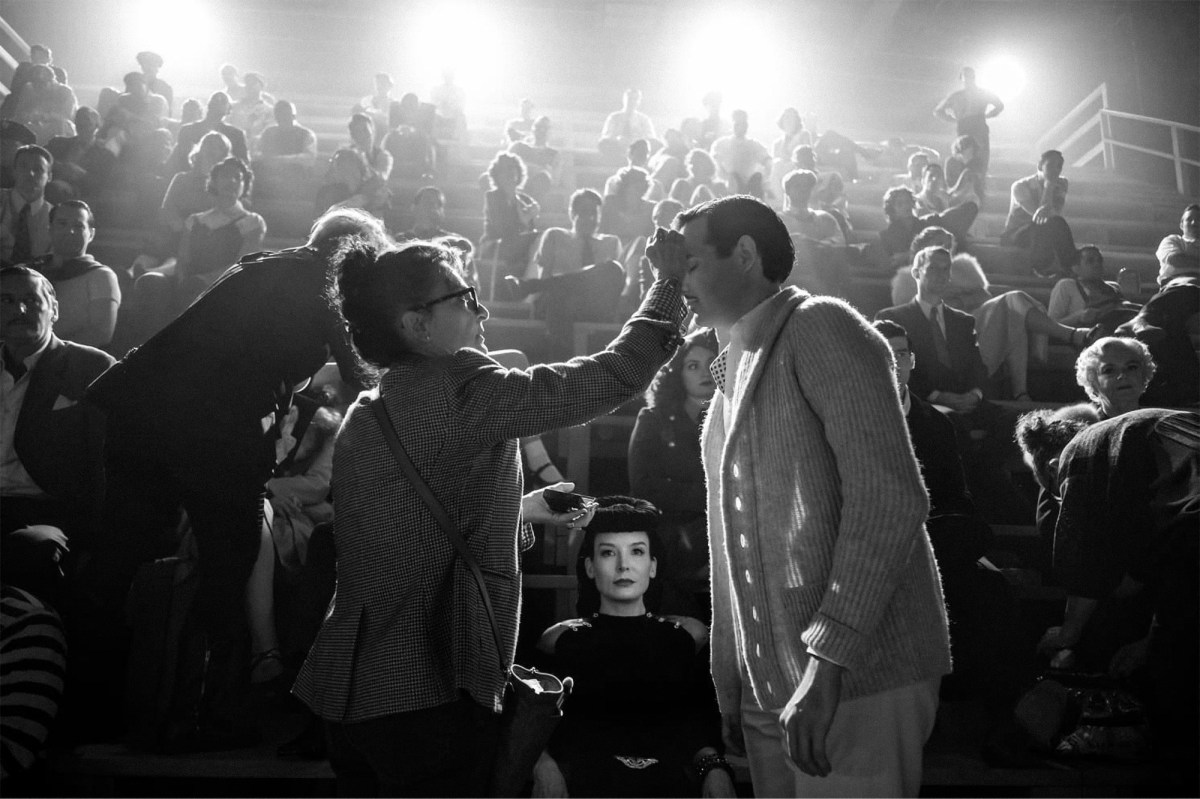
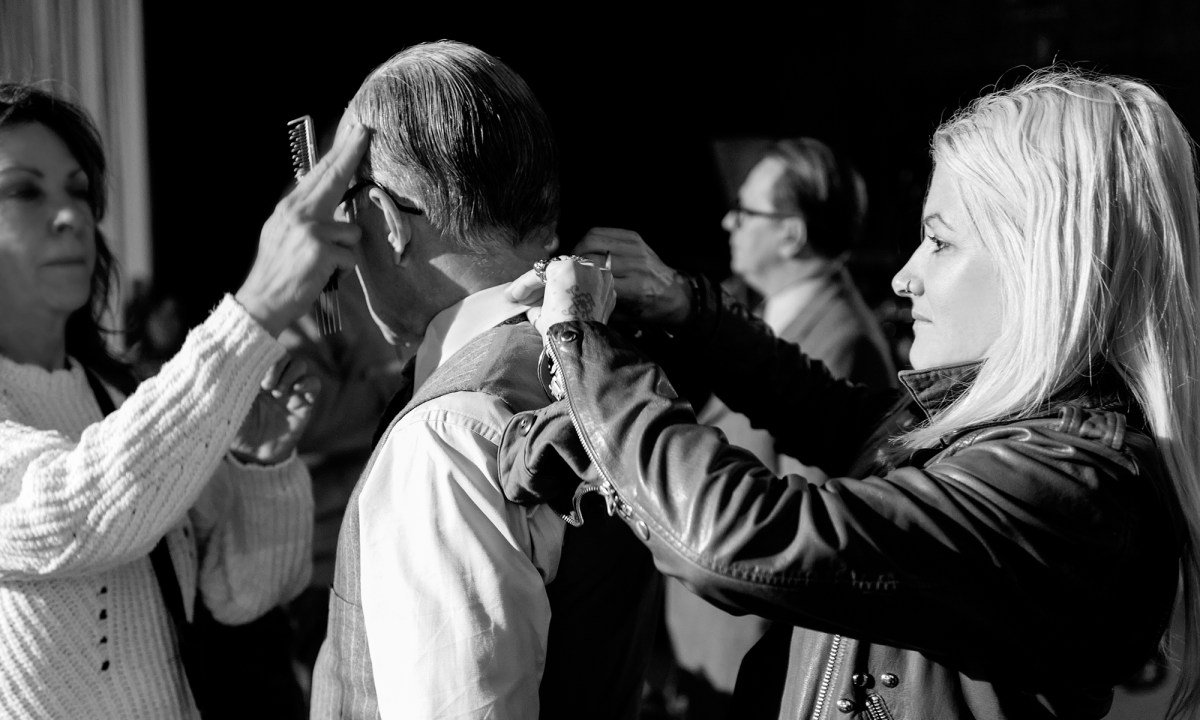
‘Mank’ makeup department head Gigi Williams on David Fincher: ‘He hates red!’

Riley Chow
February 5, 2021
Gold Derby

“He just doesn’t like red,” reveals “Mank” makeup department head Gigi Williams about her director David Fincher. It is a curious sticking point for a black-and-white film and Williams admits in her exclusive interview with Gold Derby that she is unsure of the origins. She continues, “It’s like a bull with red, so even on this, I had to find reds that weren’t going to be too distracting for him while we’re on the set, even though he’s watching most of it through a monitor, which is black and white.” Williams notes that purple-leaning reds are especially egregious, whereas “he can handle” orange-leaning varieties. She laughs, “He just hates red. I mean, you go on the set and you go, ‘Oh, there’s a red thermos over there on the set. He’s not going to like that’ and you have to move it.”

Read the full article

‘Mank’ Production Designer Donald Graham Burt On Recreating 1930s Hollywood, Hearst Castle

Clarence Moye
February 5, 2021
Awards Daily

David Fincher set Mank in a world spanning 1930s and 1940s Hollywood. To tell the story of the events and relationships that led to the creation of the great Citizen Kane, Mank looks and feels as if it were made during that same period – a rare feat of technical and crafts wizardry. To re-establish this world, VFX can only get one so far (more on that another time), so Fincher and his production designer Donald Graham Burt needed to recall classic Hollywood structures as well as find a way to recreate the period experience of William Randolph Hearst’s castle located in San Simeon.

And you have to do all of that on an approximate $25 million budget.

“It’s a challenge, and that’s probably the thing that, if anything kept me up at night, then that probably did,” Burt laughed. “In the same token, if you really look at the movie and break it down, it is pretty simple. I’m sort of a minimalist at heart. If you just take it and say let’s keep it simple but let’s build complexity within that simplicity, then it serves you so well in terms of dealing with a tight budget.”

Read the full profile

Costume Designing “Mank” and “The Prom”

Insights from Trish Summerville and Lou Eyrich into their work, including collaborating with directors David Fincher and Ryan Murphy, respectively.

Robert Goldrich
February 5, 2021
Shoot

Trish Summerville has thus far been nominated for five Costume Designers Guild Awards in her career–two of the honors coming for David Fincher films, The Girl with the Dragon Tattoo in 2012 and Gone Girl in 2015. Summerville won for The Girl with the Dragon Tattoo, and again two years later for The Hunger Games: Catching Fire. Her other two Costume Designers Guild nods came for Westworld (TV) in 2017 and Red Sparrow in 2019. Westworld also earned Summerville a primetime Emmy nomination in 2017.

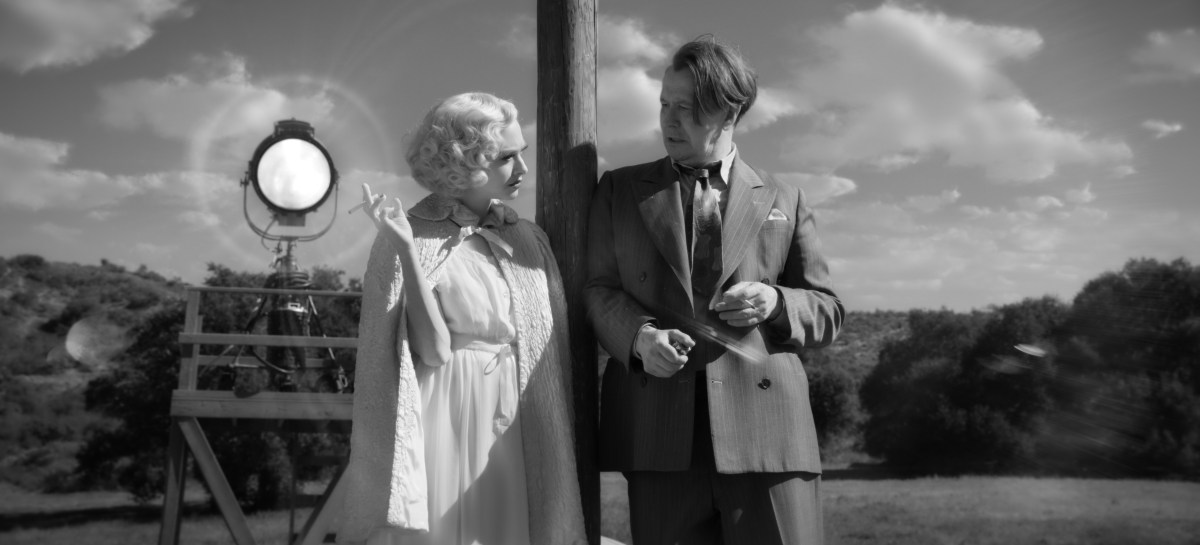
Now for this awards season, Summerville reunites with Fincher on Mank (Netflix) which centers on screenwriter Herman J. Mankiewicz (portrayed by Gary Oldman) as he races to finish director Orson Welles’ Citizen Kane on a tight timetable, secluded in a bungalow in a desert town miles removed from Los Angeles as he recuperates from a car accident in 1940. Attending to him are his secretary Rita (Lily Collins) and his German nurse (Monika Grossmann).

In the process, through Mankiewicz’s worldview–marked by his abiding social conscience and wit, at times caustic–we are introduced to not only Hollywood but life in the 1930s, ranging from the struggle of the rank and file during the Great Depression to the grandeur of Hearst Castle and high society. We also become privy to Mankiewicz’s own inner struggles with alcoholism, as well as a professional battle with Welles (played by Tom Burke) over screen credit for what became the classic Citizen Kane. The Mank cast also includes Charles Dance (as William Randolph Hearst), Amanda Seyfried (as Marion Davies, Hearst’s wife), Tuppence Middleton (as Sara Mankiewicz, Herman’s wife), Arliss Howard (as Louis B. Mayer), Sam Troughton (as John Houseman), Tom Pelphrey (as Joe Mankiewicz, Herman’s brother), Toby Leonard Moore (as David O. Selznick) and Ferdinand Kinsley (as Irving Thalberg).

Summerville jumped at the opportunity to again team with Fincher, deeming him “one of my favorite people in the world and also to work with. He has a hilarious sense of humor that a lot of people don’t get at times.” On Mank she collaborated closely with Fincher, cinematographer Erik Messerschmidt, ASC and production designer Donald Graham Burt on the overall tone, look, feel and coloring. “The reason David has collaborators who want to work with him is that he himself is a collaborator,” observed Summerville. “He gives you a lot of room. It’s not ‘my way or the highway.’ He always wants you to show him more stuff, what else do you have. He’s open to ideas. There’s a lot of trust and dialogue.”

Read the full profile

Anheuser-Busch Super Bowl Commercial Executive Produced by David Fincher and Directed by Adam Hashemi

February 3, 2021
Anheuser-Busch

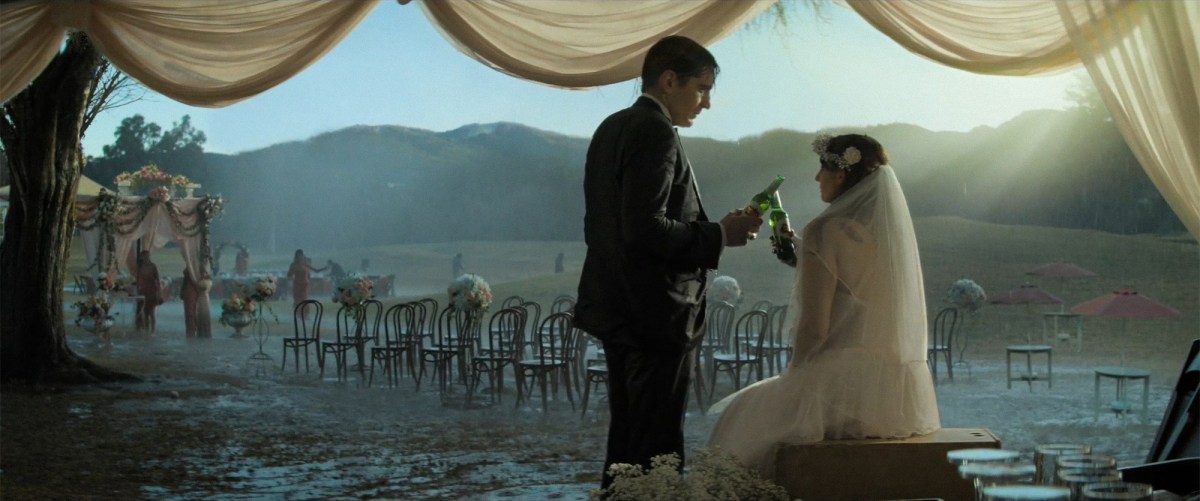
Anheuser-Busch – Let’s Grab a Beer (Super Bowl LV) (“90)

Anheuser-Busch – Let’s Grab a Beer (Super Bowl LV) (“60)

Tagline
“It’s never just about the beer. It’s about being together.”

Press Release

CREDITS

Client
Anheuser-Busch

Product
Beer

Title
Let’s Grab a Beer

Agency
Wieden+Kennedy Portland

Global Chief Creative Officer
Karl Lieberman

Global Chief Operating Officer
Neal Arthur

Director of Strategic Planning
Dan Hill

Creative Director
Michael Hagos

Copywriter
Brad Phifer

Head of Integrated Production
Nick Setounski

Executive Producer
Jessica Griffeth

Senior Producer
Bianca Cochran

Group Account Director
Brooke Stites

Account Supervisor
Meredith Zambito

Group Strategy Director
Stephane Missier

Strategist
Matt Hisamoto

Social Strategist
Irsis Cabral

Comms Director
Zack Green

Business Affairs
Daniella Vargas

Traffic Coordinator
Tina Wyatt

Production Company
RESET

Executive Producer
David Fincher

Managing Director/Executive Producer
Dave Morrison

Executive Producer
Deannie O’Neil

Producer
Vincent Landay

Assistant Producer
Grace Campos

Director
Adam Hashemi

1sr Assistant Director
Bob Wagner

Directors of Photography
Eigil Bryld, Chayse Irvin

Production Designer
Donald Graham Burt

Costumes
J.R. Hawbaker

Sound
Ren Klyce

Music
Barking Owl

Composer
Atticus Ross

Musical Creative Director
Kelly Bayett

Editorial & Finishing
Exile

Editor
Kirk Baxter

Additional Editor
Grant Surmi

Assistant Editor
Christopher Fetsch

Flame Artist
Dino Tsaousis

Flame Assistant
Adam Greenberg

Executive Producer
Sasha Hirschfeld

Post Producer
Toby Louie

The Perfect Storm That Led to Anheuser-Busch’s Super Bowl Ad

Inside the journey to W+K’s ‘Let’s Grab a Beer’

Tim Nudd
February 15, 2021
Muse by Clio

“Let’s Grab A Beer” Grabs 1st Place In Top Ten Tracks Chart

Atticus Ross and Ren Klyce continue to collaborate with David Fincher–this time on a Super Bowl spot directed by Adam Hashemi.

April 2, 2021
Shoot

Because We Love Making Movies: Production Designer Donald Graham Burt

Eren Celeboglu
January 22, 2021
Because We Love Making Movies (Instagram, Facebook)

Because We Love Making Movies is an ongoing conversation with filmmakers who work behind the scenes to make the movies we love. These are the invisible warriors we don’t think of: Production & Costume Designers, Cinematographers, Editors, Producers, and the whole family of artists who make movies with their hands and hearts.

In the very first episode of my podcast, I sit down with Production Designer Donald Graham Burt. We explore the role of the Production Designer, a life in the arts, working with David Fincher, and learn to talk less and listen more.

Recommended Viewing: The Joy Luck Club, The Curious Case of Benjamin Button, Gone Girl, The Girl with Dragon Tattoo, and Mank.

Listen to the podcast:

Apple Podcasts
Spotify

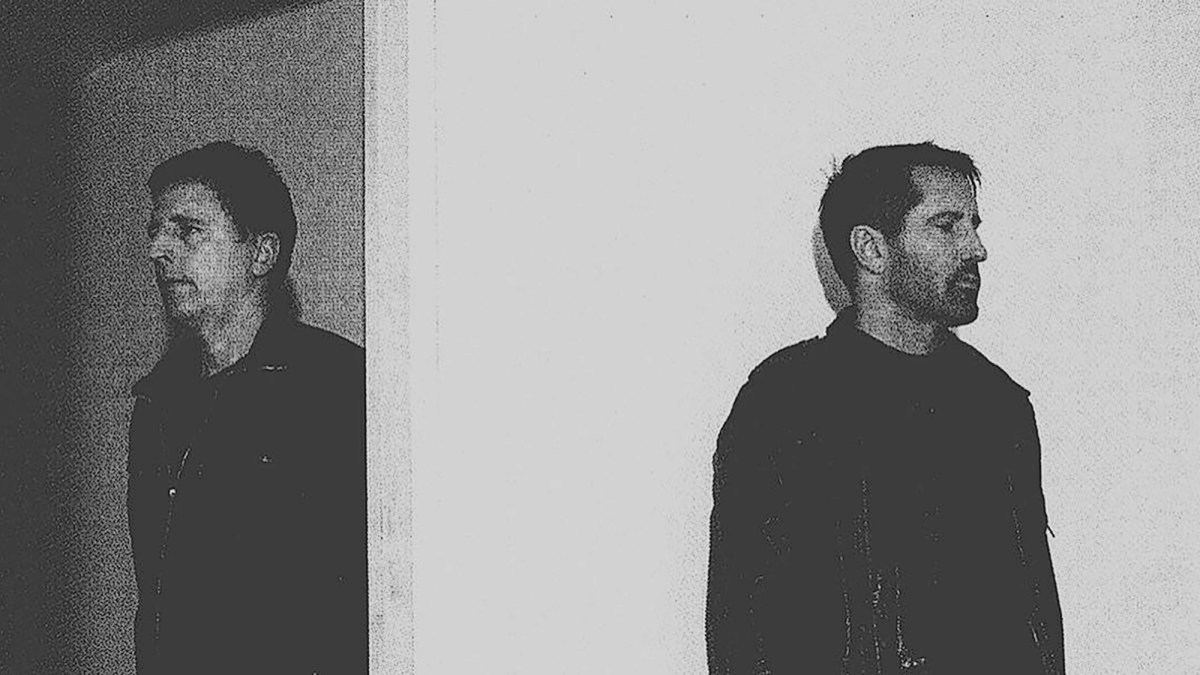
Crew Call Podcast: How Composers Trent Reznor and Atticus Ross Went From Sonic To Jazz in ‘Mank’

Anthony D’Alessandro
February 3, 2021
Deadline

Netflix’s drama Mank led all Golden Globe feature nominations this morning with a count of six, and one of those belonged to composers Trent Reznor and Atticus Ross’ score for the David Fincher film. Mank reps the fourth feature between the filmmaker and the composers, the latter who immediately took home the Oscar and Golden Globe in the first noms for their score of 2010’s The Social Network.

Fincher’s new age noir in Social Network, The Girl With the Dragon Tattoo and Gone Girl is continually heightened by Reznor and Ross’ synthetic, metallic, pulsating tonal stylings, but in Mank the two composers pull a 180 and deliver a lively jazz score that pays deep homage to the cinema of the 1930s and 1940s.

We talk with them both on Crew Call today about their shorthand with Fincher, and how they sparked a fascinating rhythm about embattled scribe Herman J. Mankiewicz’s rage against Hollywood, and his once mentor and friend, media titan William Randolph Hearst.

Reznor and Ross were a double Golden Globe nominee today, also nabbing a second score nom for Disney/Pixar’s Soul.

Listen to the podcast

‘Mank’ VFX: How David Fincher Directed the Scene-Stealing Stars of the Hearst Castle Zoo

Fincher provided meticulous notes to Industrial Light & Magic on how the monkeys, giraffes, and elephants should look and perform.

Bill Desowitz
February 3, 2021
IndieWire

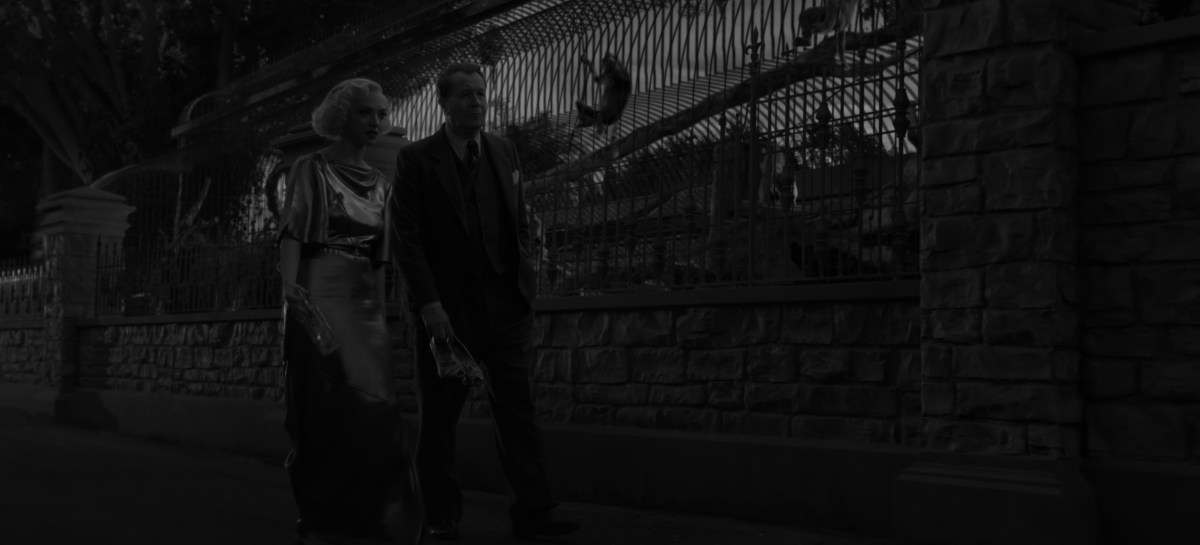
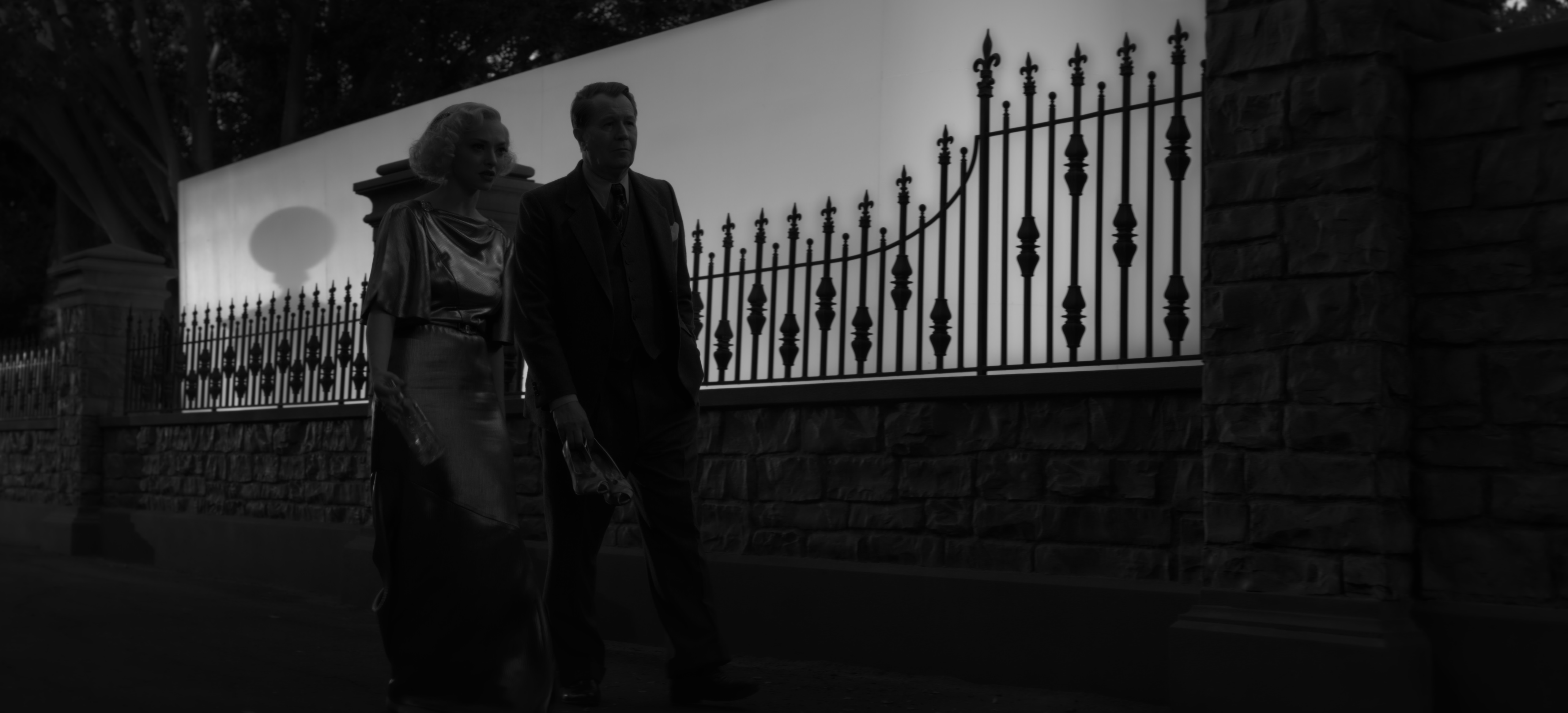
While the “Mank” visual effects team meticulously recreated ’30s-era LA in black-and-white (utilizing the matte paintings of Artemple, Territory’s LED rear screen projection, and Savage’s sky replacement with the Unreal engine), David Fincher took a special interest in directing the photo-real CG animals from Industrial Light & Magic that inhabit the Hearst Castle private zoo.

In a brief but memorable series of exchanges with the animals during their chatty moonlight stroll, Mank (Gary Oldman) and Marion Davies (Amanda Seyfried), are definitely upstaged by the scene-stealing Capuchin monkeys, elephants, and giraffes. “David wanted specific performances from all the animals,” said ILM VFX supervisor Pablo Helman (“The Irishman”). “He wanted the [four] monkeys to be agitated, the giraffes to spring in a certain way, and the elephants to have a response.”

Read the full profile

Going with the Grain to Capture the 1930s Black-and-White-Film World of Mank

Trevor Hogg
February 2, 2021
VFX Voice (VES)

A consistent entry on the greatest of all-time films is Citizen Kane, which is famous for innovative filmmaking, having been inspired by the life of American media mogul William Randolph Hearst and serving as the Hollywood debut of wunderkind Orson Welles. Just as legendary is the behind-the-scenes turmoil, in particularly Hearst attempting to derail the project and the careers of those involved. There were also accusations that Welles did not deserve a screenwriting credit as the true author was Herman J. Mankiewicz.

The script controversy captured the attention of journalist Jack Fincher who wrote an initial draft 30 years ago that was furthered developed by his son, David Fincher, best known for directing SevenFight ClubZodiac and The Social Network. The Netflix production of Mank stars Gary Oldman, Amanda Seyfried, Lily Collins, Arliss Howard, Tuppence Middleton and Charles Dance.

Over the course of his career, Mank co-producer and VFX Producer Peter Mavromates (Mindhunter) has frequently collaborated with Fincher as a post-production supervisor. “There is a high level of consistency in our post team, so we get to have that conversation about how we can do it better the next time.”

Visual effects and DI are done in-house. “When we’re doing tests during pre-production,” Mavromates says, “a lot of the time they are shot in the parking lot and we bring the files right into the DI in the building. How awesome is that kind of feedback for Erik Messerschmidt [Raised by Wolves], our DP, and David Fincher to be able to play with something, see it, test it, bend it, and then go back out and try an alternative version right away? That’s valuable. That’s also the advantage to having in-house visual effects, which is having the ability not to be on the clock. I can call David upstairs where our visual effects are and say, ‘I want you to look at these three shots.’ I can give feedback to the artist right there, and maybe the artist can immediately do his note and get him to sign off. I think of David as the visual effects supervisor and I am the supervisor on some of the more technical stuff, like retouches.”

Read the full profile

The Audio Design Hacks That Made Mank Sound Like Citizen Kane

Ren Klyce had to experiment with a lot of new ideas to make David Fincher’s movie sound old.

Angela Watercutter
February 2, 2021
Wired

During the COVID-19 pandemic, very few cinephiles have seen the inside of a theater, let alone a grand old one like the Castro Theater in San Francisco or the Paramount in Austin, Texas. Yet those who have recently watched Mank, David Fincher’s biopic about Citizen Kane screenwriter Herman J. Mankiewicz, might’ve noticed—or, more specifically, heard—something that felt old, something that sounded like it was coming from a 1930s theater, even if they were streaming the movie on Netflix. It’s eerie—and completely intentional.

With Mank, Fincher wanted a movie that not only looked but also sounded like the films produced in Hollywood during Mankiewicz’s era in the 1930s and ’40s. To do that, he shot the film in black and white (of course), and also enlisted the help of sound designer Ren Klyce, who came up with a method to create an aural “patina” that made all the dialog, all the ambient noises, and the score sound as though they were created using the methods of Golden Age pictures. “We came up with the technique by analyzing the sound spectrum of old-fashioned movies,” Klyce says, “and of course Citizen Kane was one that we modeled, and we kind of realized that that film sounded the way it did because of the limitations of the technology.”

Read the full profile and watch a featurette