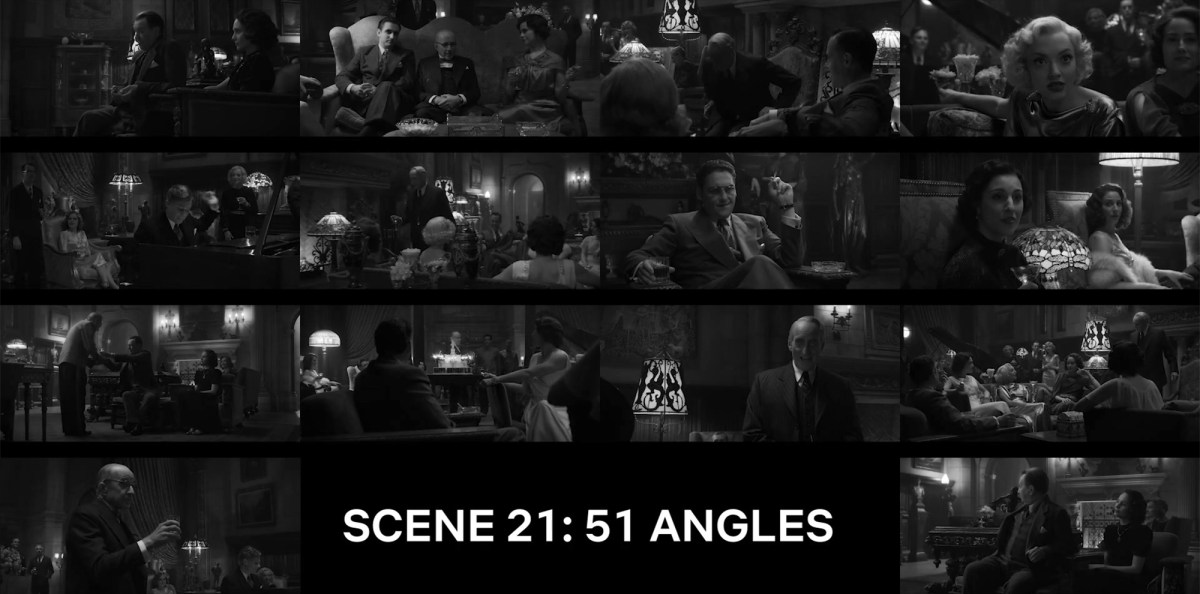
Two-time Oscar®-winning film editor Kirk Baxter details the assemblage of David Fincher‘s acclaimed new film Mank. He digs in on navigating the director’s wealth of coverage, building transitions, piecing together Mank’s climactic tirade at Hearst Castle and much, much more.
When editor Kirk Baxter boarded labyrinthine, Old Hollywood drama Mank, he was met with multiple timelines, and rapid-fire dialogue from a vast assortment of real-life characters.
While Baxter would be tasked with guiding the viewer through the complex period piece, he never thought of the film as a challenge, per se. “I look back,” he tells Deadline, “and see it as a joy.”
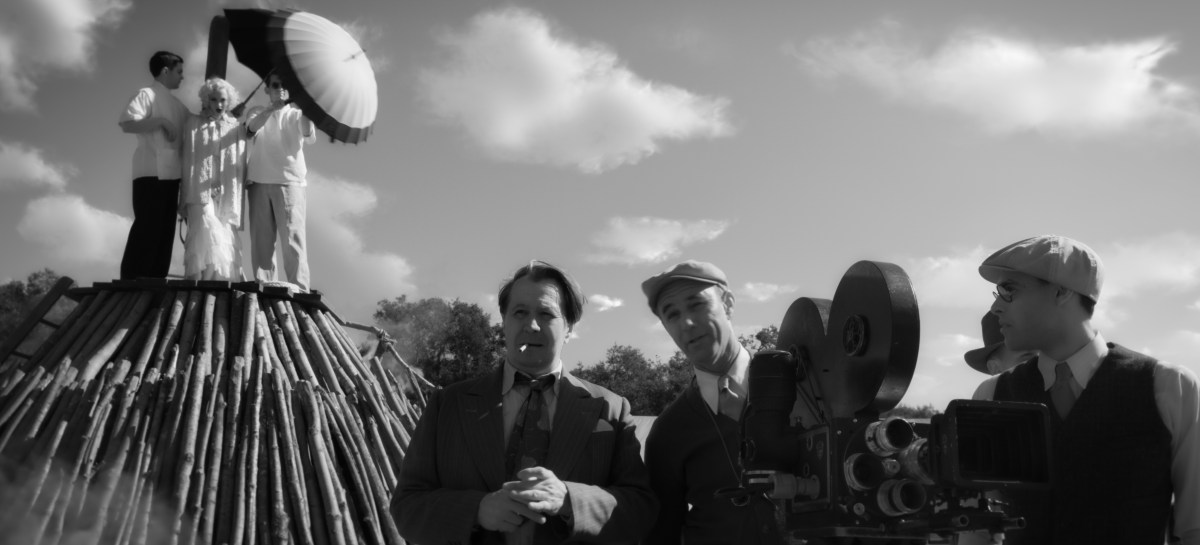
Directed by David Fincher, Mank follows alcoholic screenwriter Herman J. Mankiewicz (Gary Oldman), as he endeavors to finish the screenplay for Citizen Kane. Along the way, it also examines the washed-up wordsmith’s relationships with icons of his time, including Marion Davies (Amanda Seyfried), William Randolph Hearst (Charles Dance), and Orson Welles (Tom Burke).
First collaborating with Fincher on The Curious Case of Benjamin Button (2008), Baxter quickly developed a shorthand with the auteur, going on to reteam with him on four other films and two TV series. While Benjamin Button would land him his first Oscar nomination, his first pair of statuettes would come shortly thereafter, for his contributions to The Social Network and The Girl with the DragonTattoo.
Poised to return to the race once more with Mank, Baxter spoke with Deadline about the scene in Fincher’s longtime passion project that scared him the most, the performance that captured his heart, and the aspect of the process that felt like “the cherry on top.”
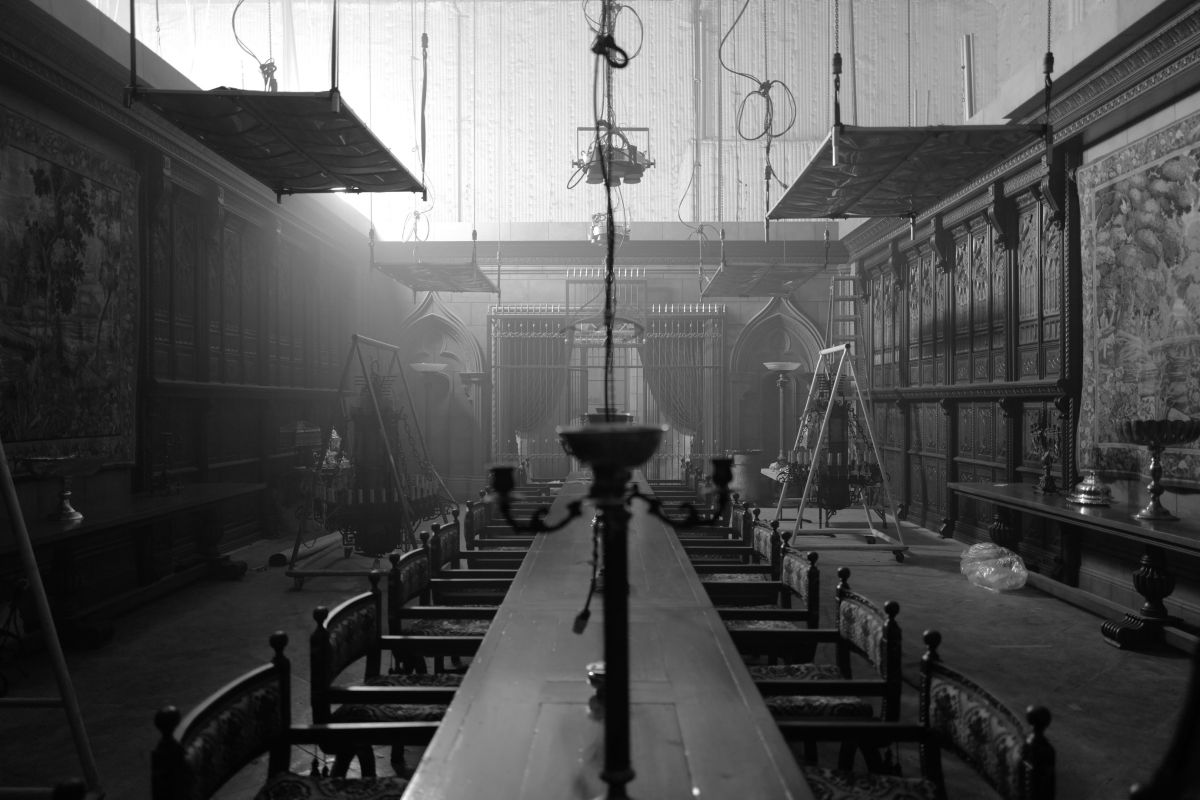
Continuing Below the Line’s look at the crafts behind David Fincher’s Mank, we spoke to Production Designer Donald Graham Burt, his sixth go-round with Fincher after the first worked together on 2007’s Zodiac. A year later, Burt would win the Oscar for Production Design for his work on Fincher’s The Curious Case of Benjamin Button. Besides performing those duties for six Fincher films, Burt also played a significant role in the designs for Fincher’s Golden Globe-winning Netflix series, House of Cards.
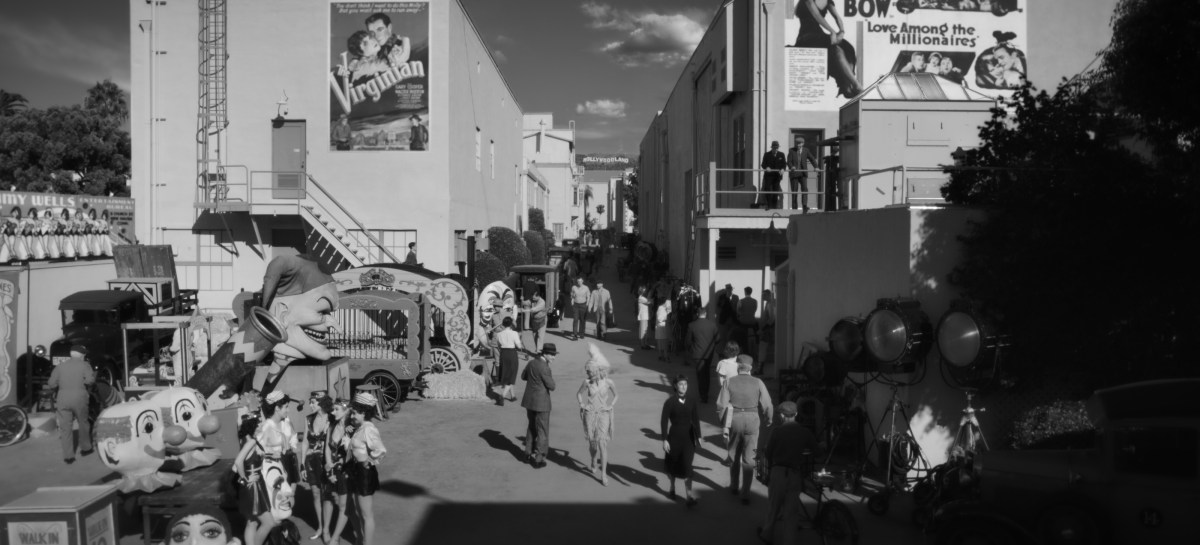
Burt’s definitely a bit of an old school Hollywood vet, going back to some of his work in the ‘90s like The Joy Luck Club and Dangerous Minds. Still, Mank offered Burt a number of new challenges, the first one being the fact that the film would be shot entirely in black and white, the second would be how it would task Burt and his team to recreate some of Hollywood’s most iconic locations from the ‘30s and ‘40s. You only have to watch the movie or look at some of the images below to agree that Burt and his art department came through with flying colors… even without having any actual color.
Mank cinematographer Erik Messerschmidt sat down to talk about shooting one of the most outstanding films of the year, which is about the greatest film of all time.
In a new series of in-depth interviews with Society members, ASC Insights provides the cinematographer’s perspective on today’s most pertinent topics. The first two episodes cover High Dynamic Range (HDR) from the director of photography’s view.
Episode One discusses the implementation of HDR in postproduction as a deliverable and features the insights from Markus Förderer, ASC, BVK; Polly Morgan, ASC, BSC; and associate member and colorist Dave Cole. The episode examines scenes from Independence Day: Resurgence, the F/X series Legion and the short film Mandy.
Episode Two examines the implementation of HDR throughout the entire workflow from set to post and features thoughts from Erik Messerschmidt, ASC; Marshall Adams, ASC; and colorist Dave Cole. The members discuss scenes from Netflix’s Mindhunterand El Camino: The Breaking Bad Movie.
For both episodes, ASC associate member and American Cinematographer contributing editor Jay Holben discusses the ins and outs of HDR, the benefits and pitfalls and how important it is for the cinematographer to be involved in the postproduction implementation of HDR. The key to the format is in expanding the palette of creative intention for the filmmakers, not in merely delivering a brighter picture.
I’ve never read a script from David Fincher that was anything less than smart and purposeful.
This held true with Mank.
Mank is the story of screenwriter Herman Mankiewicz and his scripting of the film Citizen Kane for Orson Welles and RKO Studios. While the film primarily deals with Mankiewicz’s tumultuous struggles in completing the screenplay, including his uneven relationship with Welles, it also addresses early filmmaking in 1930s Los Angeles and the behavior of the studio power brokers for whom Mankiewicz had been previously employed. Woven into the story are larger social issues of the era and the influencers—namely William Randolph Hearst—who in conjunction with studio executives (and to Mankiewicz’s dismay) manipulated the populace on political matters through wealth, deception and media control. All of this converges to shape the scribing by Mankiewicz of Citizen Kane.
After preliminary discussions with David about his vision for the film, we began the initial production process by scouting locations together in July of 2019.
David Fincher‘s longtime sound designer Ren Klyce discusses the soundscape of Mank, conceived as a companion piece of sorts to Citizen Kane (no pressure). What is it about a classic movie that makes it sound, well, classic? From filtering frequencies to adding elements like optical flutter and overlaid reverb, learn about the work that went into making the film sound as if it was booming from the screen of a grand movie palace.
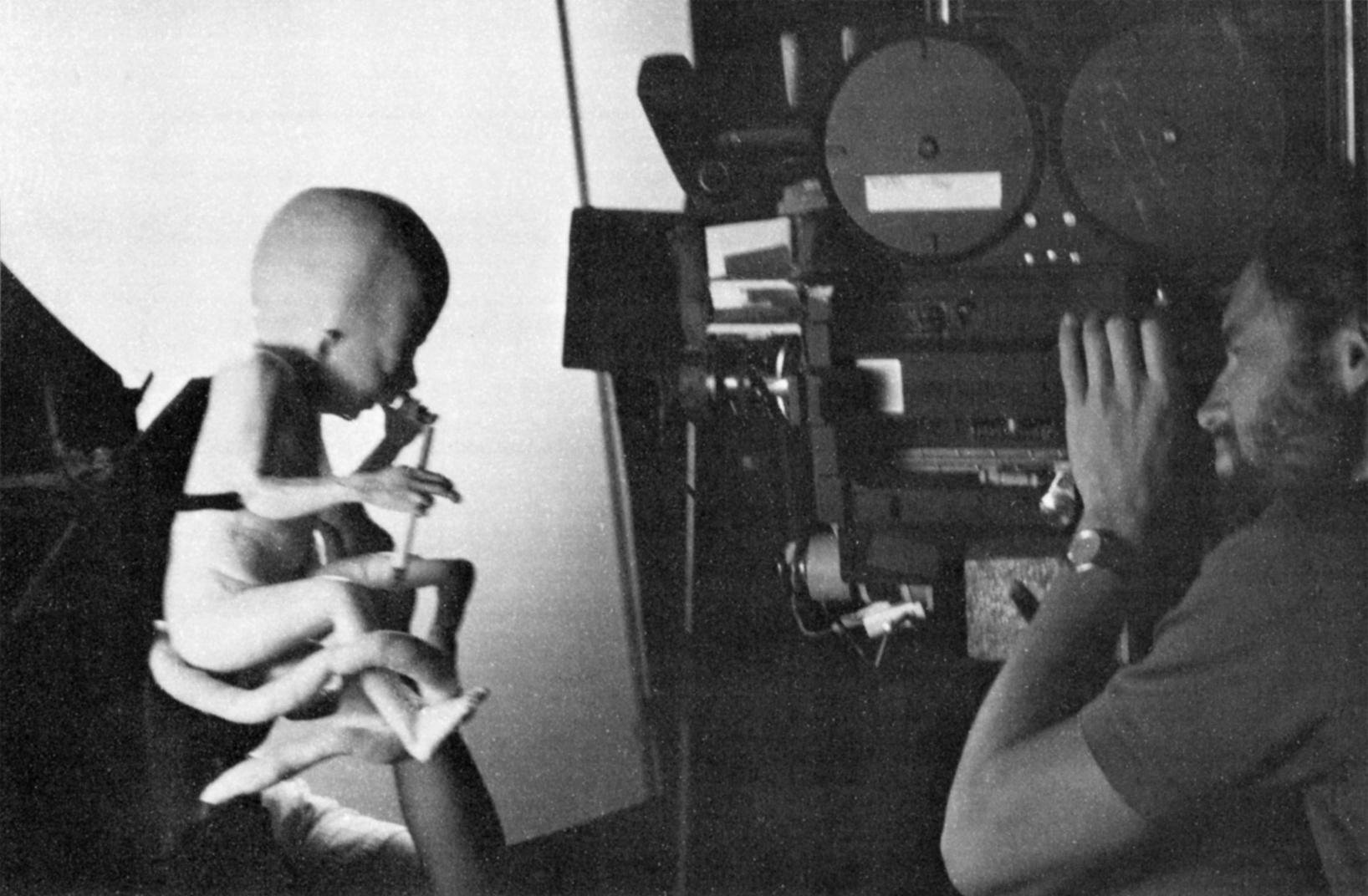
Tony McVey sets up his sculpture in front of the motion-control camera.
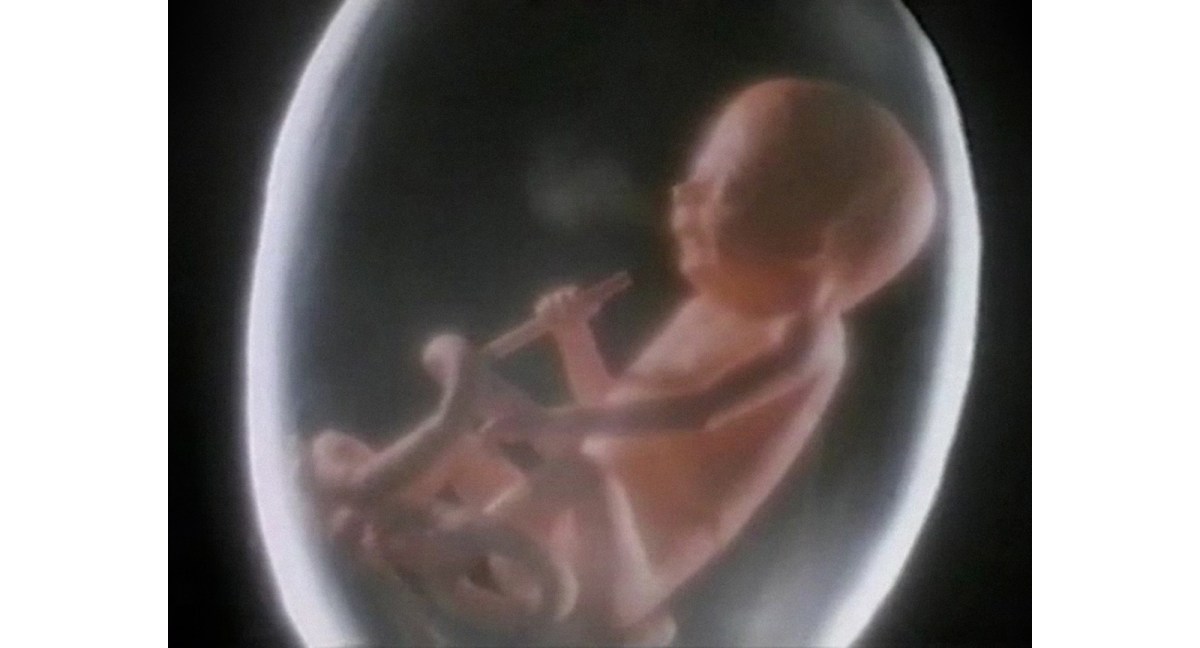
The sound of a heartbeat is heard. A human fetus fades up on the television screen in close-up and a voiceover begins: “Would you give a cigarette to your unborn child?” The camera pans and dollies back to reveal an entire fetus existing serenely in the womb of its mother. “You do every time you smoke when you’re pregnant.” At this point, the fetus slowly brings a lit cigarette to its lips and takes a puff, exhaling the smoke into the glowing placenta it lives in. And the voiceover finishes: “Pregnant mothers, please don’t smoke.”
The 30-second spot was produced for the American Cancer Society by a talented and relatively untapped group of San Francisco Bay area filmmakers, modelmakers, and computer specialists brought together by producer Joseph Vogt (Rick Springfield’s “Bop ’Till You Drop”). With a film and conceptual design education behind him, Vogt organized the majority of his film crew from the ranks of Industrial Light and Magic. It was with the abundant talents of these production people — director David Fincher, Midland Productions, and Monaco Labs — that Vogt brought life to a most creative and technically challenging public service announcement.
Director of photography Michael Owens at the Mitchell GC ready to shoot the prepped sculpture.
Jerry Angert, director of broadcasting with the American Cancer Society, described the ad as “one of the most powerful we have done… We considered the fact that it would be controversial and the networks might not show it, but counted on the local stations to take it.” And that’s exactly what transpired. NBC and CBS chose not to air the graphic spot while CNN (Turner Broadcasting), ABC and its affiliates and affiliates of NBC and CBS elected to show it.
CBS and NBC claim the spot is too graphic. An NBC spokeswoman cited “general taste considerations” as a deterrent to airing the spot. “It was the sight of the fetus that was especially shocking and we felt it was potentially offensive to our viewers,” she was quoted as saying. A CBS spokesman said the network agreed with the “importance of the intent of the message,” but said that the spot was “far too graphic for broadcast on CBS.” An ABC spokesman, however, said the message put forth by the spot was “important for pregnant mothers to understand.” The network felt that. while it was “different visually” from the usual fare viewed on TV, it contained no material that warranted its ban from the airwaves.
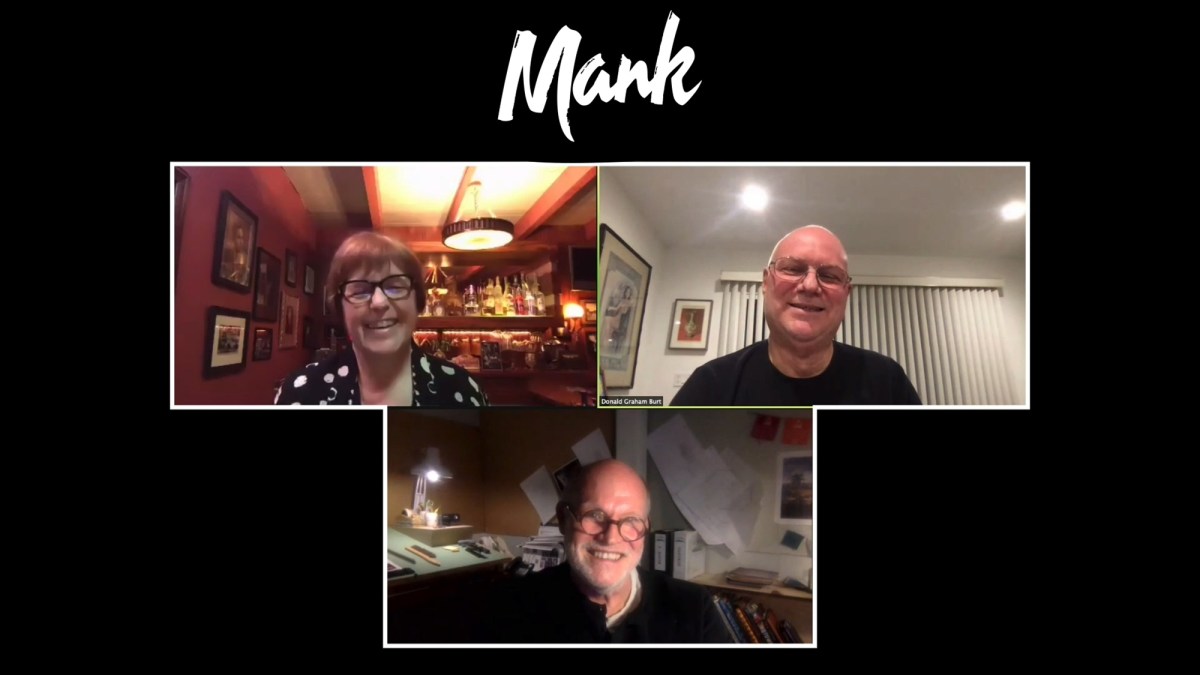
Because We Love Making Movies is an ongoing conversation with filmmakers who work behind the scenes to make the movies we love. These are the invisible warriors we don’t think of: Production & Costume Designers, Cinematographers, Editors, Producers, and the whole family of artists who make movies with their hands and hearts.
Today, we have a special treat… Production Designer Donald Graham Burt returns to talk about designing and making Mank… David Fincher’s love letter to old Hollywood & California, and the portrait of a man in conflict with everyone. It is a masterclass in filmmaking and the power of limitations from the most humble of masters.
Recommended Viewing: Citizen Kane, Sunset Boulevard, and Mank.






 The Fincher Analyst