
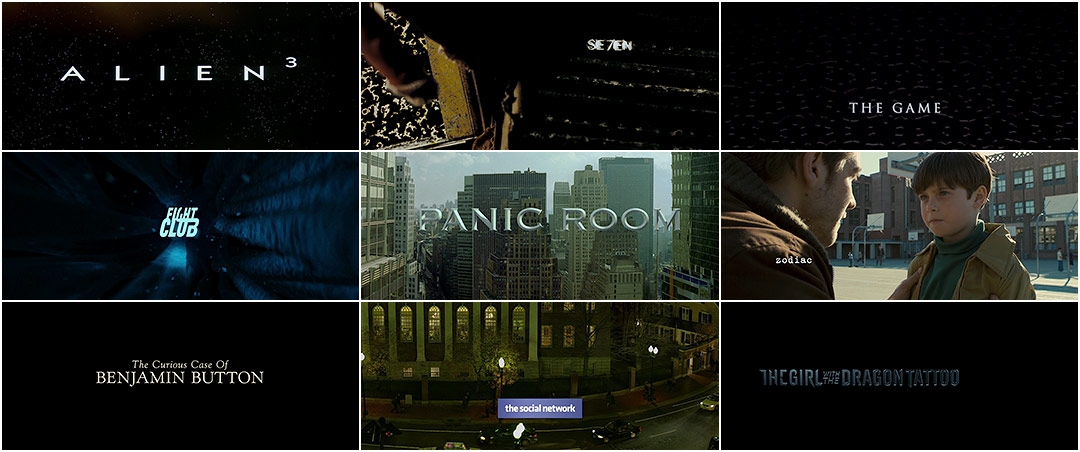
David Fincher: A Film Title Retrospective
August 27, 2012
Art of the Title
John P. Hess
July 30th, 2017
Filmmaker IQ
Not only do Title Sequences tell you the name of the film and the stars, they can also set the tone and mood and put you in the right frame of mind to experience the film or TV show to come. Explore the history of the title sequence and how they’ve evolved along with business of filmmaking over the past century.
by Lizzy Goodman
July 25, 2017
The Village Voice
With our political norms crumbling, our social fabric fraying, and our planet literally on fire, the Nine Inch Nails mastermind is back to make sense of it all.
Adam Nayman
Jul 25, 2017
The Ringer
Misunderstood upon its 2007 release, ‘Zodiac’ now stands as one of the great films of the century. A look back on this postmodern, hyper-realistic, obsessive mystery film about cops, a famous killer, newspapers, and the puzzle that stumped a city.
A Video Essay by Conor Bateman
Conor Bateman observes how analogue and digital, real and constructed, bleed into a paranoid, video-game vision of 1970s San Francisco in David Fincher’s classic crime procedural, Zodiac.
Commissioned by Open City Inc, publisher of RealTime 2017, ©RealTime
RocketJump Film School
Published on Aug 4, 2015
YouTube
Are computer generated visual effects really ruining movies?
We believe that the reason we think all CG looks bad is because we only see “bad” CG. Fantastic, beautiful, and wonderfully executed CG is everywhere – you just don’t know it. Truly great visual effects serve story and character – and in doing so are, by their very definition, invisible.
Written and Narrated by Freddie Wong
Edited by Joey Scoma
Assistant Editor – Joshan Smith
By Carl Wilson
24 July 2017
pop matters
All work and no play make Fight Club‘s Jack deconstruct life, cinema, and his own sanity.

Interiors is an online film and architecture journal, published by Mehruss Jon Ahi and Armen Karaoghlanian, that analyses and diagrams films in terms of space.
A Pair of Artists Use Architecture to Study Film
The founders of “Interiors,” a journal dedicated to film and architecture, diagram scenes from movies such as “Fight Club,” “Psycho,” and more.
Colin Warren-Hicks
January 30, 2014
Metropolis
If cinema is a matter of what’s in the frame, David Fincher is an artist who is very much concerned about all four corners of his canvas.
by INTERIORS Journal
June 3, 2013
ArchDaily
“Their positioning throughout the scene provides us with an understanding of how David Fincher uses space within the film, and in doing so, how he also maintains the architectural integrity of the film.”
Mehruss Jon Ahi and Armen Karaoghlanian
2012-01
Interiors
“The vastness of the desert around them emphasizes the fact that the handcuffed John Doe is captured; a lack of freedom despite the free space around him.”
Mehruss Jon Ahi and Armen Karaoghlanian
2013-01
Interiors
“David Fincher switches from a subjective perspective onto an objective perspective after the reveal has been made.”
Mehruss Jon Ahi and Armen Karaoghlanian
2014-01
Interiors
Jarred Land (Facebook)
Jarred Land (Instagram)
July 7, 2017
Crazy. Last night it seems the entire the world was arguing over how insane we were (again) and how the Hydrogen display we are promising is just simply impossible. […]
Read the full announcement:
Order here: http://www.red.com/hydrogen
Link to PDF: http://www.red.com/hydrogen.pdf
More details by Jim Jannard, founder of RED, on the RED User forums.
Thanks to mikez
Posted on July 3, 2017 by David Baker
Dread Central
David Fincher’s Zodiac, which debuted in March of 2007, is a perfect example of blending genres. At its core, it’s a drama built on obsession. It’s also a police and newspaper procedural, family drama, and what we’re going to be looking at, effective horror film. […]




 The Fincher Analyst