Sound Designer Ren Klyce Breaks Down The Elaborate, Multistep Process Of Crafting Monaural Palette For David Fincher’s ‘Mank’

Matt Grobar
February 8, 2021
Deadline

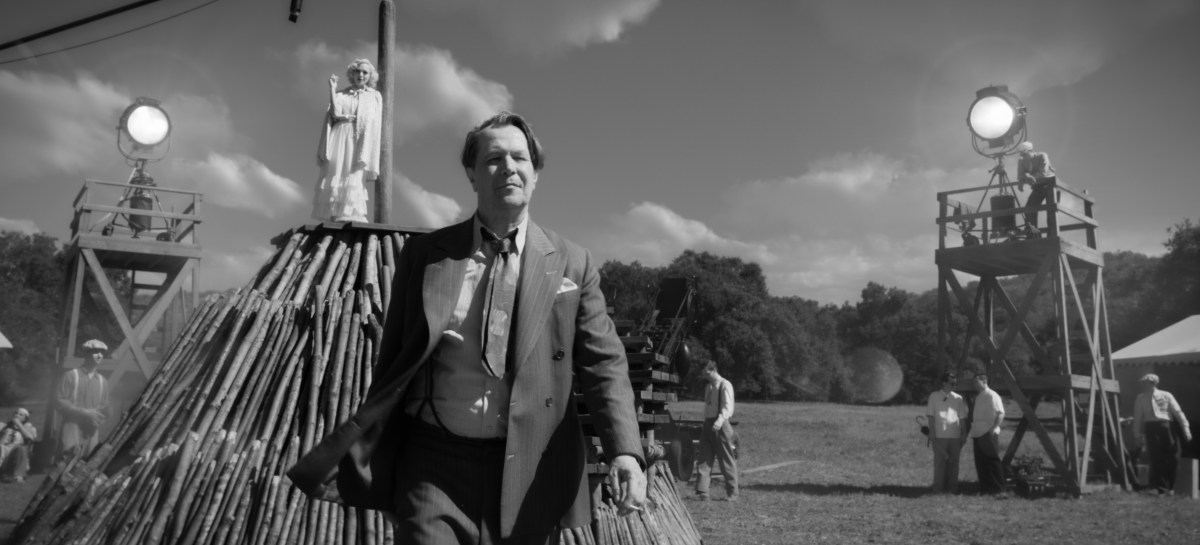
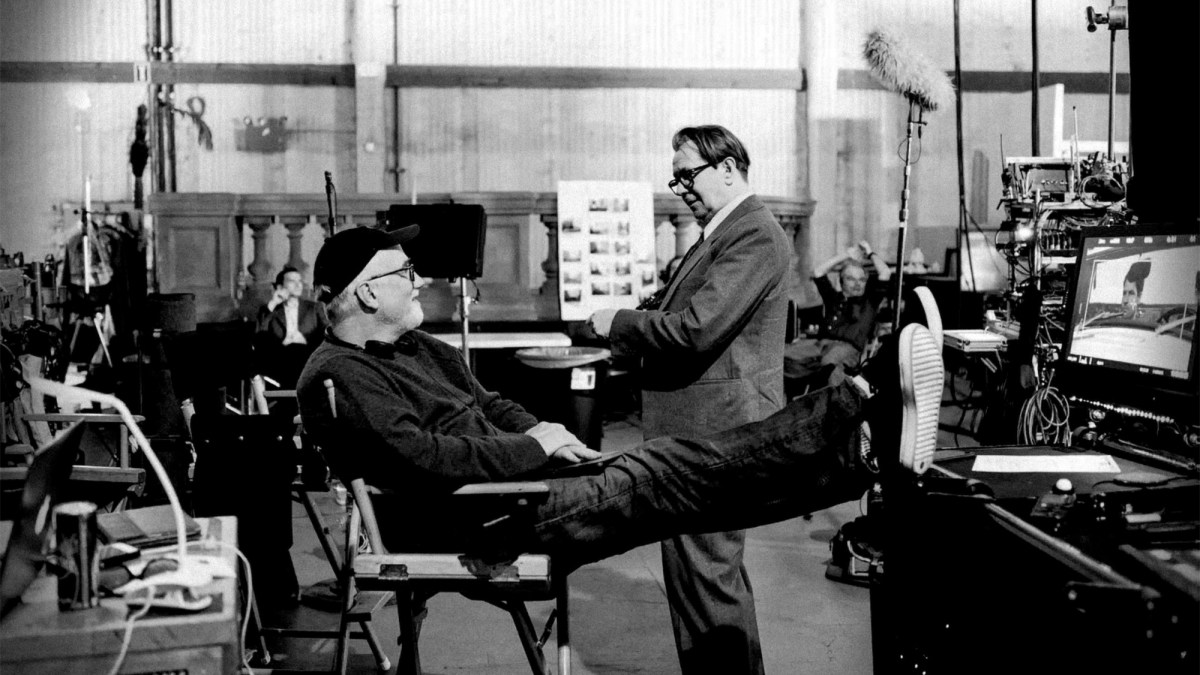
On David Fincher’s Mank, sound designer Ren Klyce was tasked with crafting a monaural soundtrack, similar to those heard in films of the ’30s and ’40s, engaging in a laborious, experimental process, in order to round out the world of one of the year’s most distinctive films.

Scripted by Fincher’s late father Jack, the director’s longtime passion project follows Herman J. Mankiewicz (Gary Oldman)—a washed up, alcoholic screenwriter from Hollywood’s Golden Age—as he endeavors to finish the screenplay for the iconic Citizen Kane.

The goal with Mank was to immerse viewers in its period world through the creation of visual and sonic ‘patinas,’ each working in concert with the other. While cinematographer Erik Messerschmidt shot the black-and-white film digitally, at extremely high resolution—allowing Fincher to degrade the image in post—Klyce would tinker with sonic degradation, tapping into all of the characteristics that gave early 20th century soundtracks their unique feel.

One of Fincher’s closest collaborators—who has worked with him on 10 features and two television series since 1995—Klyce had experimented only briefly with mono sound in the past, on a handful of Fincher films. “But we never did it with the conviction of, ‘This is the purpose,’” the sound designer notes, “‘because we want it to feel like it was made using the technology of the time.’”

Below, the seven-time Oscar nominee recalls his earliest conversations with Fincher about Mank, and the multifaceted process of fashioning its vintage sonic palette.

Read the full interview

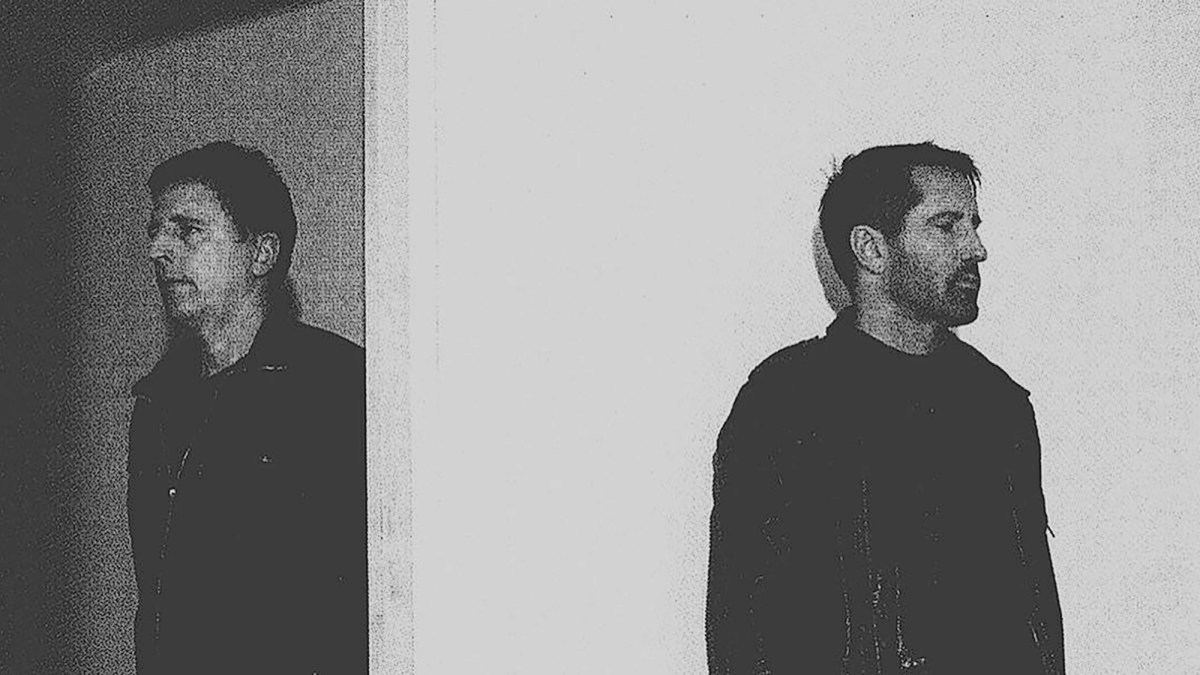
Crew Call Podcast: How Composers Trent Reznor and Atticus Ross Went From Sonic To Jazz in ‘Mank’

Anthony D’Alessandro
February 3, 2021
Deadline

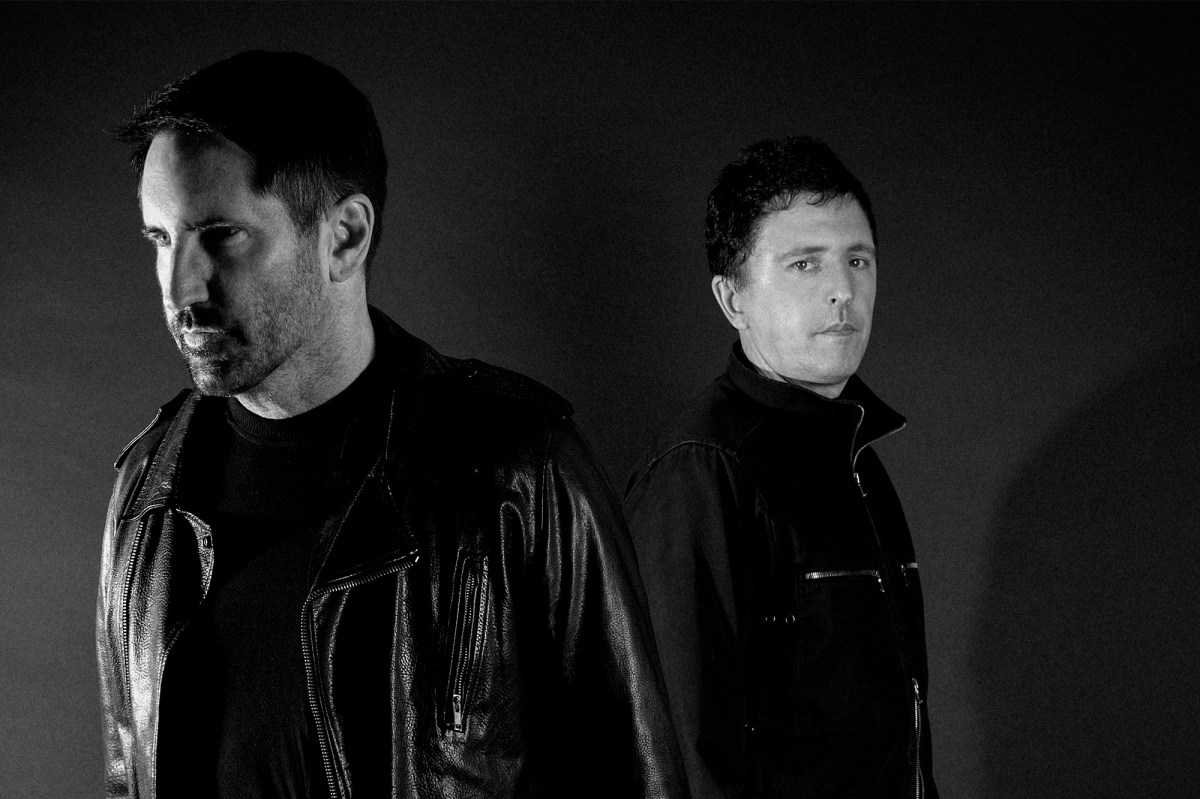
Netflix’s drama Mank led all Golden Globe feature nominations this morning with a count of six, and one of those belonged to composers Trent Reznor and Atticus Ross’ score for the David Fincher film. Mank reps the fourth feature between the filmmaker and the composers, the latter who immediately took home the Oscar and Golden Globe in the first noms for their score of 2010’s The Social Network.

Fincher’s new age noir in Social Network, The Girl With the Dragon Tattoo and Gone Girl is continually heightened by Reznor and Ross’ synthetic, metallic, pulsating tonal stylings, but in Mank the two composers pull a 180 and deliver a lively jazz score that pays deep homage to the cinema of the 1930s and 1940s.

We talk with them both on Crew Call today about their shorthand with Fincher, and how they sparked a fascinating rhythm about embattled scribe Herman J. Mankiewicz’s rage against Hollywood, and his once mentor and friend, media titan William Randolph Hearst.

Reznor and Ross were a double Golden Globe nominee today, also nabbing a second score nom for Disney/Pixar’s Soul.

Listen to the podcast

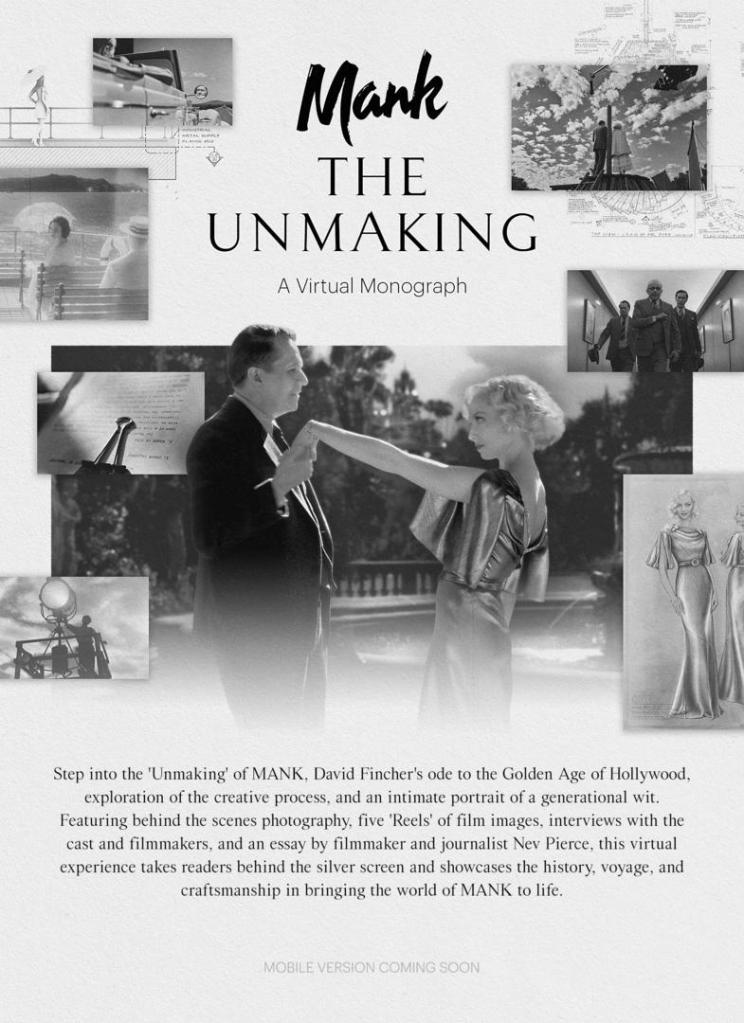
Mank, The Unmaking

January 28, 2021
Netflix

manktheunmaking.com [Old Domain]

mank.aristidebenoist.com

Text by:

Nev Pierce

Photography by:

Erik Messerschmidt
Miles Crist
Gisele Schmidt-Oldman
Gary Oldman
Ceán Chaffin
Nikolai Loveikis

Design and development by:

Watson Design Group, Inc.
Aristide Benoist

Composer Roundtable: Pros From ‘Mank,’ ‘Soul,’ ‘Minari’ and More Talk Remote Recording Sessions and Finding Creativity in Isolation

Scott Roxborough
January 26, 2021
The Hollywood Reporter

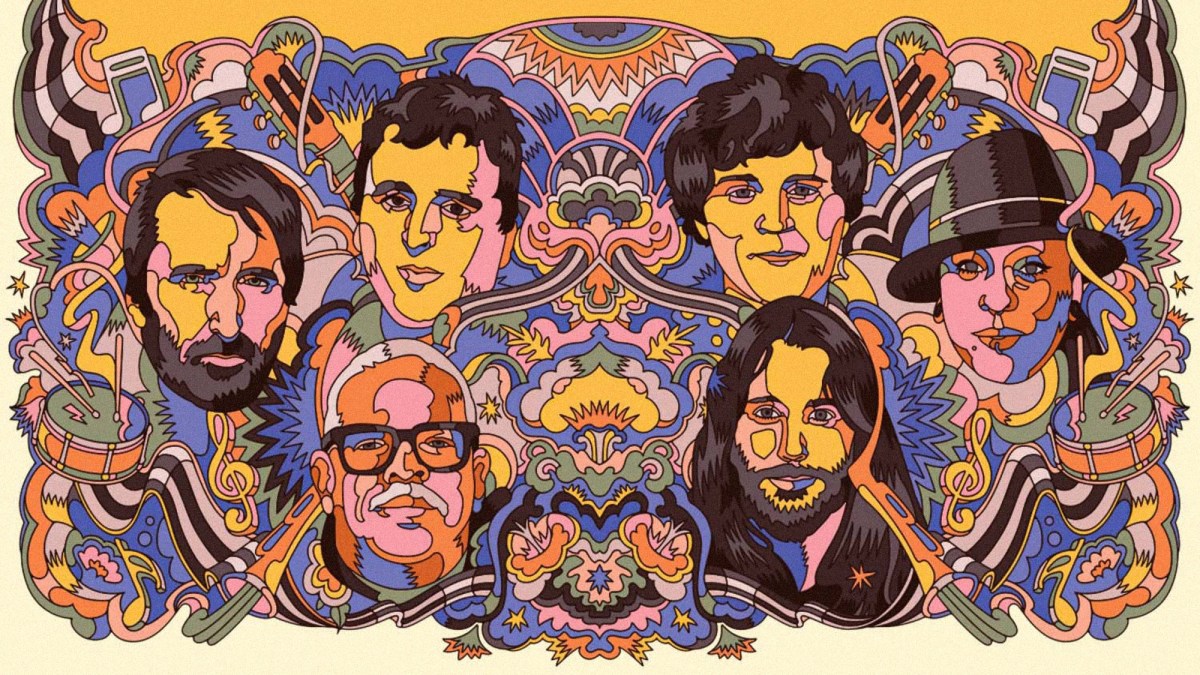
Film composers may be accustomed to working alone, but they weren’t immune to the tumult of 2020. Six film music specialists came together — virtually — to discuss the key to writing an effective score, even when creatively challenged by the pandemic: “What I really miss is playing music with human beings.”

2020 was a year like no other, so it’s fitting that The Hollywood Reporter’s Composer Roundtable was unlike any that had gone before.

On Jan. 8, six of Hollywood’s leading film composers came together via Zoom, across three continents, to talk shop: Ludwig Göransson followed up his Oscar-winning Black Panther score with a thumping, time-shifting soundtrack to Christopher Nolan’s Tenet; Tamar-kali offered up a dissonant, daring soundscape for Shirley that won praise from the likes of Iggy Pop; Trent Reznor and Atticus Ross had a busy year with work that included the wall-to-wall 1940s orchestral score for David Fincher’s Mank and the ethereal, synthetic sound of Pixar feature Soul; Terence Blanchard, Spike Lee‘s go-to composer, delivered the majestic musical backdrop for the war drama Da 5 Bloods; and Emile Mosseri, who has quickly established himself as one of indie cinema’s most in-demand music makers, created an affecting, ethereal soundscape for Lee Isaac Chung‘s Minari.

In a lively discussion, this eclectic group of film music veterans and newer talents who find themselves — and their music — in the awards-season conversation discussed the art and craft of film composing, the value of defying expectations and how each of them would score 2020.

Read the full roundtable

Trent Reznor and Atticus Ross (‘Mank,’ ‘Soul’ composers): Working with David Fincher and Pete Docter because they are ‘geniuses’

Chris Beachum
January 26, 2021
Gold Derby

2020 was certainly a tough year for everyone, but there were some bright spots for Trent Reznor and Atticus Ross. The composer duo won their first Emmy Award in September for “Watchmen.” Their band Nine Inch Nails was inducted (although virtually) into the Rock and Roll Hall of Fame in November. And the end of the year brought the film releases of “Mank” for Netflix and “Soul” for Disney/Pixar, for which they composed the score of each.

In our recent webchat (watch the exclusive video above), Reznor says, “When I heard you say that about the list of accomplishments this past year, set against the backdrop of the brutality and relentlessness of the pandemic and politically what’s happening. As parents trying to keep our kids safe and sane and happy and some sense of normality, it has been a weird juxtaposition of accolades set against this year we’d all like to put in the rear-view mirror.”

Reznor and Ross won an Oscar for Best Original Score on their first feature film (“The Social Network,” 2010). They have teamed with that movie’s director, David Fincher, several times, including for “Mank,” the behind-the-scenes story of writer Herman J. Mankiewicz and his work on the classic 1941 film “Citizen Kane.” They have collaborated for the first time with Pixar chief Pete Docter on his animated feature “Soul,” about a jazz musician who wants to navigate his way back to his body from the afterlife.

On working with two such distinctive and varied directors, Reznor adds, “The similarities of Pete and David are that they’re both geniuses, different styles of genius, but they’re both the very best at what they do. Being around them is… that we thrive on that. We’re searching out excellence because we are inspired by it.”

Soundtracking with Edith Bowman: Trent Reznor & Atticus Ross On Mank, Soul, and Other Things!

Edith Bowman
January 22, 2021
Soundtracking with Edith Bowman

Our latest guests on Soundtracking are a duo Edith’s been chasing since we started this podcast, so it’s an absolute thrill to finally lure them on.

Trent Reznor and Atticus Ross burst onto the film-composing scene with their score for David Fincher’s The Social Network, for which they won an Oscar in 2010. The trio have since joined forces on The Girl With The Dragon Tattoo and Gone Girl.

Trent and Atticus’s most recent work can be heard on Fincher’s Mank and Pete Docter’s Soul, which you can watch right now on Netflix and Disney + respectively.

The two films couldn’t be more different and had wildly contrasting musical requirements – which is testimony to the range of their talents.

Listen to the podcast:

edithbowman.com
Audioboom
Apple Podcasts
Spotify

deezer

Soundtracking Extra with Edith Bowman (YouTube)

Trent Reznor and More on Scoring a Movie During COVID: ‘Like Trying to Be Intimate in Hazmat Suits’

Reznor, Atticus Ross, Daniel Pemberton and George Clooney talk about the challenges of recording music during a pandemic.

Steve Pond
January 12, 2021
The Wrap

When it comes to the postproduction process on movies during a pandemic, much of the work doesn’t have to change dramatically. Film editors, after all, are used to sitting in dark rooms, often by themselves; sound editors and visual-effects artists can also do their work in front of computer screens and share it with co-workers without needing to be in the same room.

But recording a movie’s musical score is different. Unless a composer both writes and performs everything him or herself, a film score involves getting people together to play music — in the case of orchestral scores, getting lots of people together to play music. 

Trent Reznor, composer of the score to David Fincher’s “Mank” with Atticus Ross, had a succinct and evocative phrase for working on the music to that film in the early days of the pandemic. “It wasn’t impossible, but it felt like trying to be intimate in hazmat suits,” he said.

Read the full profile

How Trent Reznor and Atticus Ross Became 1930s-Style Tunesmiths for ‘Mank’

TheWrap magazine: The Nine Inch Nails composers were hired to write the score but ended up also creating music to play over radios in David Fincher’s film, “(If Only You Could) Save Me,” a big-band ballad with a sultry vocal by Adryon de León.

Steve Pond
January 15, 2021
The Wrap

A version of this story about Trent Reznor, Atticus Ross and “Mank” first appeared in the Race Begins issue of TheWrap’s Oscar magazine.

Making of ‘Mank’: How David Fincher Pulled Off a Modern Movie Invoking Old Hollywood

The director had to employ digital advances to achieve a vintage aesthetic in telling the tale of ‘Citizen Kane’ screenwriter Herman Mankiewicz: “If we had done it 30  years ago, it might’ve been truly a bloodletting.”

Rebecca Keegan
January 11, 2021
The Hollywood Reporter

Screenwriter Herman Mankiewicz never sought credit for conceiving one of the all-time great ideas in the history of cinema — the notion that the Kansas scenes in The Wizard of Oz should be shot in black and white and the Oz scenes in color. In fact, for much of his career in Hollywood from the late 1920s to the early ’50s, Mankiewicz seemed to view his scripts with about as much a sense of ownership as a good zinger he had landed at a cocktail party.

But what fascinated David Fincher was that when it came time to assign credit on the screenplay for Citizen Kane, which Mankiewicz wrote with Orson Welles in 1940 (or without, depending on your perspective), the journeyman screenwriter suddenly and inexplicably began to care. Precisely why that happened is the subject of Fincher’s 11th feature film, Mank.

“I wasn’t interested in a posthumous guild arbitration,” Fincher says of Mank, which takes up the Citizen Kane authorship question reinvigorated by a 1971 Pauline Kael essay in The New Yorker. “What was of interest to me was, here’s a guy who had seemingly nothing but contempt for what he did for a living. And, on almost his way out the door, having burned most of the bridges that he could … something changed.”

Shot in black and white and in the style of a 1930s movie, Mank toggles between Mankiewicz (Gary Oldman) writing the first draft of Citizen Kane from a remote house in the desert and flashback sequences of his life in Hollywood in the ’30s, including his friendship with newspaper tycoon William Randolph Hearst (Charles Dance), who inspired Citizen Kane, and Hearst’s mistress, actress Marion Davies (Amanda Seyfried).

A filmmaker known for his compulsive attention to detail, Fincher had even more reason than usual to treat every decision with care on Mank, as he was working from a screenplay written by his father, journalist Jack Fincher, who died in 2003. Jack had taken up the subject in retirement in 1990, just as David was on the eve of directing his first feature, Alien 3, and the two would try throughout the 1990s to get the film made, with potential financiers put off by their insistence on shooting in black and white.

Read the full profile

Composers of the Year Trent Reznor and Atticus Ross: “It’s Been an Intimidating Journey”

With Mank and Soul, the two musicians stepped out of their comfort zone in 2020

Michael Roffman and Spencer Kaufman
December 18, 2020
Consequence of Sound

Our Annual Report continues today with the announcement of Trent Reznor and Atticus Ross as our Composers of the Year. Stay tuned for more awards, lists, and articles in the days and weeks to come about the best music, film, and TV of the year. If you’ve missed any part of our Annual Report, you can check out all the coverage here

“You’re naming us Best Composers of All Time, right,” Trent Reznor asks over the phone. His partner-in-crime Atticus Ross laughs on another line. He’s joking, of course, but he’s also not exactly out of his element. While all-time might be a stretch — at least, for now — the two are certainly in contention for the last decade. After all, it’s been a wild 10 years for Reznor and Ross, one that began with a deafening bang.

That big bang arrived at the 83rd Academy Awards in 2011, when Reznor and Ross triumphed over the likes of Hans Zimmer and Alexandre Desplat to win Best Original Score for David Fincher’s The Social Network. Their debut score wound up being an opening salvo as Hollywood came calling — and fast. Since then, they’ve amassed an eclectic resume that most composers spend decades building up.

They’ve worked with veterans (Peter Berg, Susanne Bier), they’ve gone indie (Jonah Hill, Trey Edward Schulz), they’ve even found success on television (HBO’s Watchmen). Yet none of their collaborations have felt more succinct than their ensuing work with Fincher. They’re the Bernard Herrmann to his Alfred Hitchcock, the Giovanni Fusco to his Michelangelo Antonioni, the John Williams to his Steven Spielberg.

It’s a fitting marriage, not only in sound, but also in mind. Fincher is a perfectionist — meticulous for details, particular with pictures — and that ideology is right in line with Reznor and Ross (see: Nine Inch Nails, How to Destroy Angels). The two parties are carnivorous for challenges, and their working relationship has been nothing but a series of hurdles. Hurdles that have only notched higher and higher as the years pass them.

Mank is by far their most arduous collaboration yet. As if making a movie about the greatest movie of all time wasn’t tough enough, Reznor and Ross tasked themselves in using only period-authentic instruments from the 1940s. It’s a major departure from anything the two have done up to this point, eschewing their industrial minimalism for a dusty assortment of horns, swinging tempos, and nostalgia-tinged sounds.

Yet Fincher wasn’t the only call Reznor and Ross received, as far as 2020 movies are concerned. Pixar also rang for their latest spirited venture, Soul. Working alongside Inside Out director Pete Docter, the two composers dove headfirst into the sprawling, animated underworld. Together, they dreamed up a specific piece of music for each one of the film’s imaginative locales: The Great Before, The Great Beyond, The Astral Plane, and The You Seminar.

So, yes, it’s been a year for Reznor and Ross. In celebration, Consequence of Sound spoke to the award-winning composers about their outstanding run through the past and purgatory. Together, they weighed in on their long-storied history with Fincher, flexing new muscles with old instruments, the differences in working with animation, and past scores that inspired them. Needless to say, there are many decades to come.

Read the full interview

Netflix Playlist: Trent Reznor and Atticus Ross “Anatomy of a Score”

Netflix
December 9, 2020

Composers Trent Reznor and Atticus Ross discuss the unique style, sound, and authenticity of the music in Mank and their approach in tackling the unique challenges presented while scoring during the COVID-19 pandemic.

𝙸𝚗 𝚜𝚎𝚕𝚎𝚌𝚝 𝚝𝚑𝚎𝚊𝚝𝚎𝚛𝚜 𝙽𝚘𝚟𝚎𝚖𝚋𝚎𝚛 𝚊𝚗𝚍 𝚘𝚗 Netflix 𝙳𝚎𝚌𝚎𝚖𝚋𝚎𝚛 𝟺