Art of the Cut: “The Killer” with Kirk Baxter, ACE

Steve Hullfish, ACE
November 23, 2023
Art of the Cut (Boris FX)

Today on Art of the Cut, we’re talking with Kirk Baxter, ACE, about editing David Fincher’s latest: The Killer, which is now on Netflix.

Kirk’s been on Art of the Cut before – for Gone Girl and for Mank. He was nominated for an Oscar, a BAFTA and an ACE Eddie for The Curious Case of Benjamin Button. He won an Oscar, a BAFTA and an ACE Eddie for The Social Network. He was nominated for an ACE Eddie and won an Oscar for The Girl with the Dragon Tattoo. Was nominated for an Emmy for House of Cards. Was nominated for an ACE Eddie for Gone Girl. Was nominated for an ACE Eddie for Mindhunter. Was nominated for an ACE Eddie for Mank and won an ACE Eddie for Love, Death and Robots.

Listen to the podcast:

Apple Podcasts
Spotify
Amazon Music
Google Podcasts

Follow Steve Hullfish, ACE, and the “Art of the Cut” podcast on Ex-Twitter. Buy his book “Art of the Cut. Conversations with Film and TV Editors” (Routledge, 2017).

Read the transcription of this interview:

The Killer

Kirk Baxter, ACE, director David Fincher’s long-time editor, talks about the power of believing in the process, pacing, and voiceover changes on the action-packed thriller.

Steve Hullfish, ACE
November 23, 2023
Art of the Cut (Boris FX)

The Editing Podcast: David Fincher’s Editor Reveals The Key To Make ANY Edit Work

Jordan Orme and Hayden Hillier-Smith
November 22, 2023
The Editing Podcast

Welcome to The Editing Podcast, where storytelling meets the art of post-production. In this riveting episode, hosts Hayden Hillier-Smith and Jordan Orme sit down with none other than the master editor behind the brilliance of David Fincher‘s cinematic wonders—Kirk Baxter.

We delve deep into Kirk’s illustrious career, spanning iconic films that have left an indelible mark on the world of cinema. From “The Social Network” to “Gone Girl” to his most recent thriller, “The Killer”, Kirk Baxter’s editorial prowess has shaped some of the most memorable moments in film history and has influenced the editing landscape forever.

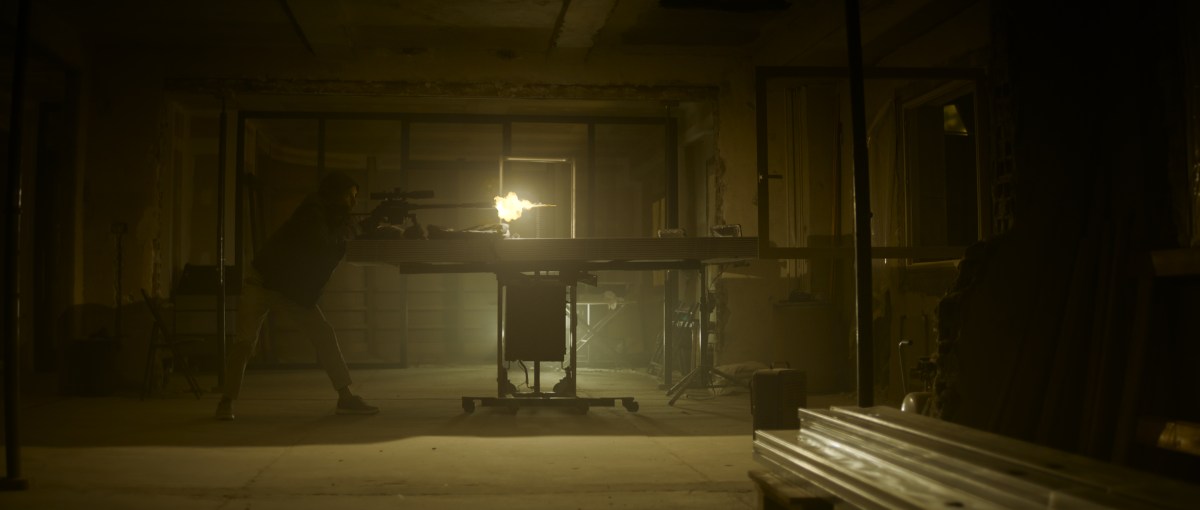
In this episode, we dissect the mesmerizing opening sniper scene, a sequence that hooks audiences from the first frame. Kirk takes us behind the scenes, sharing the secrets of crafting tension and suspense that keep viewers on the edge of their seats. We also explore the intricacies of “The Killer‘s” visceral fight scene, a jaw-dropping display of editing finesse that elevates the film to a new level of intensity. Kirk Baxter’s insights into the creative decisions behind each cut and the rhythmic flow of the sequence offer a rare glimpse into the mind of a true editing maestro.

00:00: David Fincher’s Editor Kirk Baxter
01:00: Use Riverside
02:18: Why Hiding Blinks Creates Intention
05:05: The David Fincher Editing Style
09:50: Choreographing The Vicious Fight Scene in The Killer
12:29: Letting Sound & Music Guide Your Edit
13:57: Comment “Storyblocks is cool”
15:00: Hooking Your Audience In The First 5 Minutes
16:23: How To Cut With Intention
18:14: Breaking Down The Sniper Scene in The Killer
25:15: The Magic Of Vertical Sound Cutting
27:53: Breaking Down The “Cool Girl” Sequence in Gone Girl

Editor: ​⁠ Tyson Pellegrini and Hayden Hillier-Smith
Executive Producer: Vishnu Vallabhaneni
Thumbnail: David Altizer

Listen to the podcast:

Apple Podcasts
Google Podcasts
Spotify

Follow The Editing Podcast: YouTube, Twitter, Instagram

The Filmmakers Podcast: David Fincher’s Cinematographer Erik Messerschmidt, Editor Kirk Baxter, and Sound Designer Ren Kylce, on “The Killer”

Giles Alderson and Dom Lenoir
November 14, 2023
The Filmmakers Podcast

We have a bumper episode for you with not one, not two, but three Oscar-nominated or Oscar-winning filmmakers who work with David Fincher. We have Cinematographer Erik Messerschmidt, Editor Kirk Baxter, and Sound Designer Ren Kylce, who have all worked with Fincher multiple times. We talk about their latest collaboration, The Killer, which starring Michael Fassbender and Tilda Swinton.

Listen to the podcast:

The Filmmakers Podcast
Apple Podcasts
Google Podcasts
Spotify

Follow the podcast on Twitter and Instagram. Support it on Patreon and access bonus episodes, industry survival guides, and feedback on your film projects!

“The Killer” Cinematographer Erik Messerschmidt on Re-Teaming with David Fincher

Jack Giroux
November 14, 2023
The Credits (MPA)

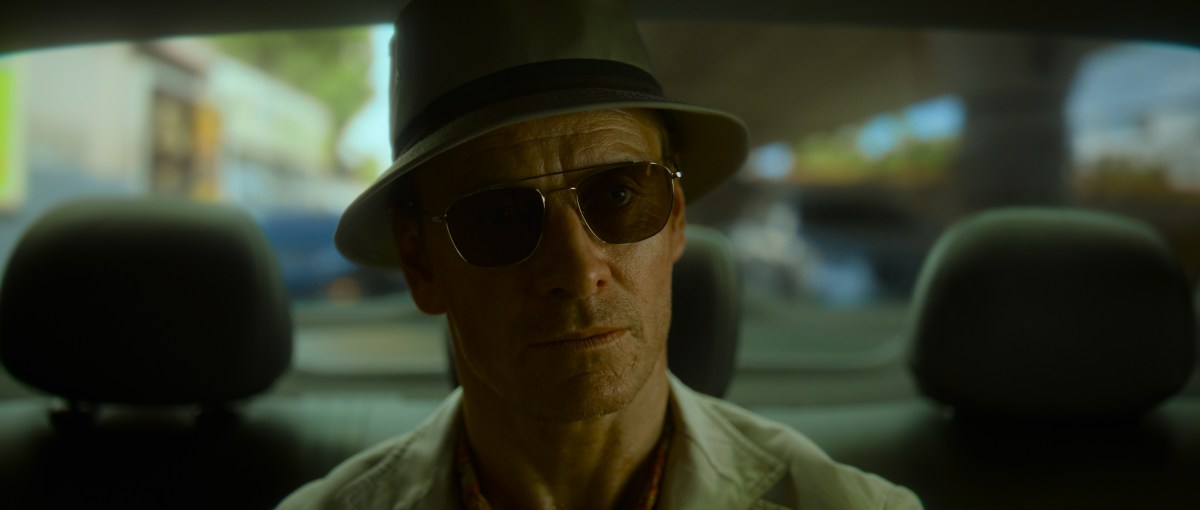
David Fincher’s lean, mean The Killer is a film stripped down to its bare essentials, much like the work of its titular assassin. Based on a French graphic novel and adapted by Andrew Kevin Walker (Se7en), Fincher’s adaptation tells the story of an unnamed killer (Michael Fassbender) and the strict, self-imposed protocols of his trade. It’s the rules of the process that concern the titular character, not moral dilemmas, yet they become unbearably intertwined after he botches an assignment, and the fallout affects someone he loves.

On the surface, The Killer is a revenge story. Once the job goes terribly wrong and his partner, Magdala (Sophie Charlotte), suffers violent consequences, Fassbender’s nameless assassin breaks his own rules to track down those responsible. The Killer is a world of shadows, sociopaths, and the people they prey on. For Fassbender’s antihero, feeling like the prey is a novel concept, and he’s determined to do anything to realign the world so he fits back in as a proper predator.

Once again, the director collaborates with cinematographer Erik Messerschmidt, who has been Fincher’s DP on Mindhunter and Mank. With The Killer, Messerschmidt helps Fincher place the viewer into the cramped, icy perspective of the titular character with a grace that belies the chaos he creates. We spoke to Messerschmidt about his working relationship with Fincher and what it was like to bring The Killer to life.

Read the full interview

Editing ‘The Killer’ So That ‘We Crawl Into His Ears and Sit in the Back of His Eye Sockets’

David Fincher’s Oscar-winning go-to editor, Kirk Baxter, helped achieve a new kind of subjective cinema with Michael Fassbender’s assassin character.

Bill Desowitz
November 12, 2023
IndieWire

[Editor’s note: The following interview contains spoilers.]

David Fincher’s The Killer is his most experimental film since “Fight Club”: a subjective, cinematic tour de force in which we get inside the mind of Michael Fassbender’s titular assassin after he experiences his first misfire in Paris. Fully exposed for the first time, the hunter becomes the hunted and he’s forced to cover his tracks while stepping outside of his comfort zone. In the process, the film becomes a noirish existential journey from nihilism to faith, which is what first attracted Fincher to adapting Alex Nolent’s graphic novel.

For go-to editor Kirk Baxter (the Oscar-winning “The Girl with the Dragon Tattoo” and “The Social Network”), it was one of the hardest Fincher films to cut. It’s divided into six chapters, each with its own look, rhythm, and pace tied to Fassbender’s level of control and uncertainty, and the editorial process necessitated the creation of a visual and aural language to convey subjective and objective points of view for tracking Fassbender. In fact, it’s reminiscent of what Hitchcock called “pure cinema,” only much bolder.

“It was like a ’70s film and I found it to be one of the more challenging movies to make because it’s not sort of juggling a bunch of different character lines or going back and forth from past to present and that sort of thing,” Baxter told IndieWire. “It’s just a straight line, but the exposure of that with nowhere to hide, like you can’t kind of jazz hands your way out of something. It’s like everything is just under the spotlight and you’re not having dialogue and interaction to kind of dictate your pace. It’s a series of shots and everything has to be manhandled and manipulated in order to give it propulsion, or how you slow it down. But just by its very nature, it had to be sort of let’s go [and see how much Fassbender has to break his own rules to survive].”

Read the full profile

Editing David Fincher’s ‘The Killer’ on Premiere Pro

Netflix has another hit movie on its hands with David Fincher’s The Killer. We spoke to the film’s editor, Kirk Baxter, and Assistant Editor, Jennifer Chung, about how they put it together using Adobe Premiere Pro.

Andy Stout
November 10, 2023
RedShark

Kirk Baxter ACE picked up two Oscars working on previous Fincher titles you will probably have heard of, The Social Network (2010) and The Girl with the Dragon Tattoo (2011). In other words, The Killer has some serious pedigree behind it, and much like this year’s Academy Award for Editing winner Everything Everywhere All At Once, it was cut on Adobe Premiere Pro.

Jennifer Chung ACE was one of the Assistant Editors on The Killer and represents a 14-strong editing department. Chung is currently cutting her first indie feature (“It’s a different kind of stress,” she says laughing), but looking back on The Killer, is there any particular sequence that stands out as her favorite?

“I think it has to be the fight sequence,” she says. “The fight sequence is pretty epic. And it just goes on. I think Kirk did an incredible job with that; it’s just really fun to watch.”

“I watched something on TV which had a big fight sequence two nights ago, and I couldn’t follow it,” says Kirk Baxter, who edited The Killer and put the movie’s signature fight scene together. “I knew people were fighting, but I couldn’t track who owned what fist and what thing. It was just a jumble of limbs edited quickly.”

No such failure to follow the action in The Killer’s own fight scene, which Baxter says is essentially a sequence of 18 scenes with multi-camera setups depicting a single fight all strung together in a row. He was cutting the sequence as Fincher was shooting it. The shoot would break at lunchtime when he’d start cutting the first half of the day, getting the second half later at the end, then cutting into the evening and sending it to Fincher to see if any pickups were needed.

“It was this crazy, relentless week of all of us going around the clock to know that we had the thing,” he says. 

Read the full profile

“I Don’t Think Directors Should Be Amenable”: Erik Messerschmidt on Shooting The Killer and David Fincher’s Simple Process

Nick Newman
November 8, 2023
The Film Stage

One of my most-read pieces last year revolved around two films that hadn’t shown a single frame. Strange except for the fact that it was a conversation with Erik Messerschmidt, whose recent time’s been devoted to shooting new films by David Fincher and Michael Mann––exactly the subjects who will earn eyeballs with just a mention. One year later, with The Killer winding down its limited release before a Netflix debut on Friday, I spoke again with Messerschmidt about the intensive, exhaustive, rewarding process behind one of 2023’s supreme entertainments, and how being guided by modern American cinema’s most-obsessive auteur was the only way to get it right.

The Film Stage: I made a point of seeing The Killer at New York’s Paris Theater––it’s a nice-sized screen, well-projected, a Dolby sound system. The unfortunate truth is that most watching it on Netflix won’t have a comparable experience.

Erik Messerschmidt: Sure.

Millions of people can see it, but then you think about people’s set-ups––let alone competing for their attention. How do you generally feel about this dichotomy, and specifically with this film?

I think the cinema is an extraordinary community experience, and it’s for that reason that it’s worth protecting. I think there is something really extraordinary about being in the room and experiencing something at the same time, and there is something equally extraordinary of being a director and experimenting whether or not you can control the audience response en masse. You know? Which is something you can only really test in the cinema environment. Look: there’s a real thing about being able to pause it and go to the bathroom, or pause it and go grab another glass of wine or whatever––pause it and watch it later. The “captive audience” part of the cinema is what makes it unique and important. I don’t necessarily agree that the technology is the reason to go to the cinema. I think the immersive nature of being in the black room with the single screen without screaming kids and your phone sitting there––all the other distractions––that’s a real thing. And I think the sound is a real thing, although people have home theaters in their homes now and surround sound and stuff. But it’s not the same as being in a calibrated environment.

I sort of go back to my childhood and think… I didn’t see Star Wars projected until I was, probably, 19 years old, but I had seen it 50 times on my parents’ VHS. In the wrong aspect ratio. And it’s the movie that made me want to make movies. As a cinematographer––as a student of cinema––I think it’s vitally important to project cinema and encourage people to see movies in a cinema. This movie in particular is especially well-appreciated in a cinema, but I would argue more for the sound, to be honest––because of what Ren Klyce is doing with the sound. I hope people enjoy the picture, too, obviously. I don’t put much stock in the idea of “Oh, well, it’s going to be on Netflix so people are going to see the film on television.” I just think people see films on television anyway.

Half the movies I see, by the way––and I’m hesitant to admit it, but it’s true––are on airplanes. [Laughs] I think the goal of filmmakers is to reach the audience, and you want to reach as many as possible, and hope people see your movie in the cinema. That’s where it’s intended. But you have to accept the reality that there are many avenues to view the image, and if someone sees it on Netflix, hopefully next time there’s a screening they get up and go. When there’s a screening of Lawrence of Arabia I jump at the opportunity because there are so few opportunities, but it doesn’t mean I don’t enjoy it at home on my Apple TV either. [Laughs]

Read the full interview

From Gone Girl gaffer to Oscar winner: In conversation with David Fincher’s cinematographer Erik Messerschmidt

EXCLUSIVE: We speak to the award-winning cinematographer ahead of the release of Fincher’s new Netflix thriller The Killer.

Emily Murray
October 26, 2023
Total Film (GamesRadar+)

As we begin to discuss his prolific career and latest film The Killer, Erik Messerschmidt admits that he’s surprised to be here. After working on several commercials and television shows, Messerschmidt ended up on the set of director David Fincher’s hit film Gone Girl, working as a gaffer – for those who don’t know, that roughly means chief lighting technician. The duo bonded, with Fincher then recruiting him as director of photography on several of his projects, including beloved TV series Mindhunter and biographical drama Mank, for which Messerschmidt won the Academy Award for Best Cinematography.

Going from gaffer to Oscar-winning cinematographer in such a short period of time is quite the impressive career trajectory, and is something Messerschmidt confesses he wasn’t chasing, telling Total Film (GamesRadar+) in our interview: “It wasn’t at all – it was never my goal, really. I was happy as a gaffer, and while I did want to be a cinematographer it felt far away and wasn’t something I was pursuing. But on Gone Girl, I had never experienced a director with such skill before and I fell in love with it. I just thought ‘God, if I can just keep making movies with this person I’d be so thrilled.’ The care and attention David [Fincher] gives to everything is infectious.”

Read the full profile

The Killer cinematographer says film should be seen in cinema

The film is released on the big screen this weekend before coming to Netflix next month.

Patrick Cremona
October 26, 2023
Radio Times

‘The Killer’: DP Erik Messerschmidt, Editor Kirk Baxter & Sound Designer Ren Klyce On “The Joy” Of Working With David Fincher

Antonia Blyth, Senior Awards Editor
October 7, 2023
Deadline

In the David Fincher-directed film, The Killer, from a screenplay by Andrew Kevin Walker, and based on a graphic novel, Michael Fassbender stars as an assassin battling his employers when a hit goes terribly wrong.

Speaking during a panel at Deadline’s Contenders London event, editor Kirk Baxter addressed a rumor that the role required Fassbender to not blink at all.

There were many times watching the dailies where he heard Fincher’s voice saying, ‘That’s terrific, but let’s see that once again without the f—ing blinking.’ Baxter added, “Not so much that Fassbender needing that direction, it’s just been a thing.”

Watch the full interview

Look at the Deadline Contenders Film London Studio Photos

Venice Film Festival: “The Killer” World Premiere

September 3, 2023
Venice Film Festival (YouTube)

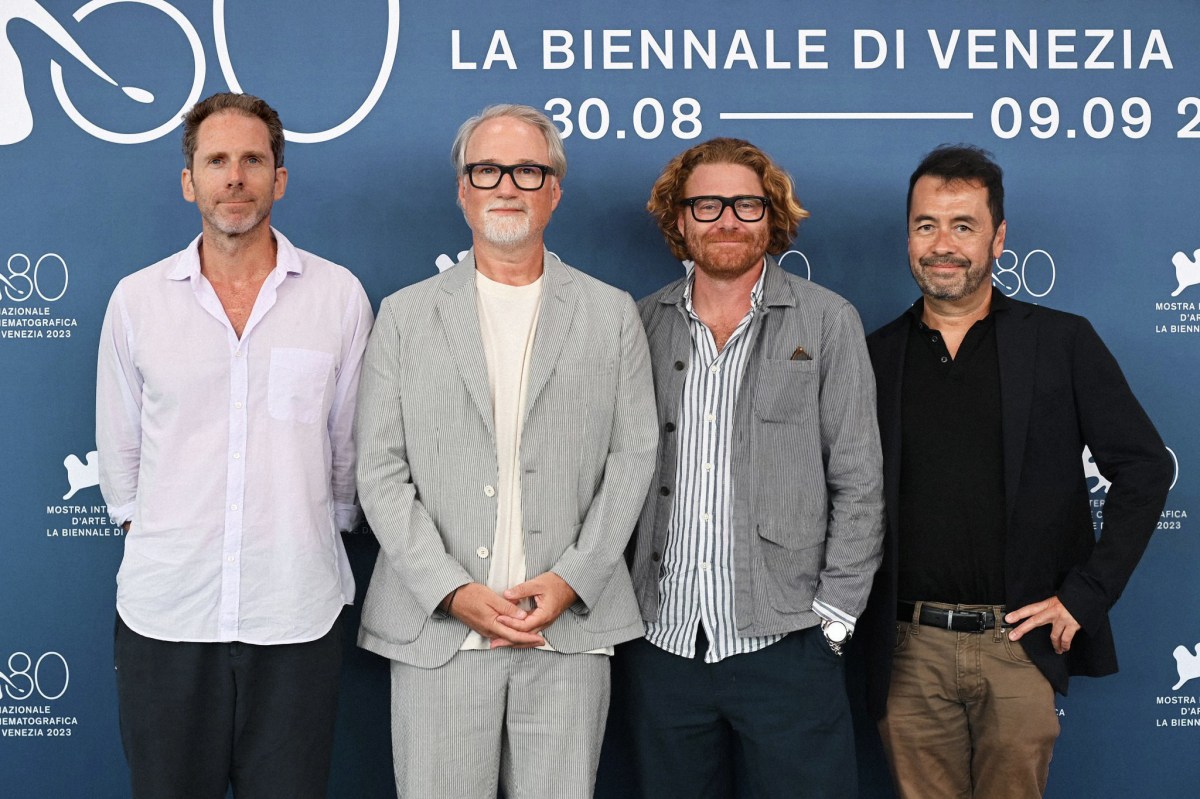
Press conference featuring Director of Photography Erik Messerschmidt ASC, Sound Designer Ren Klyce, Director David Fincher, and Editor Kirk Baxter ACE.

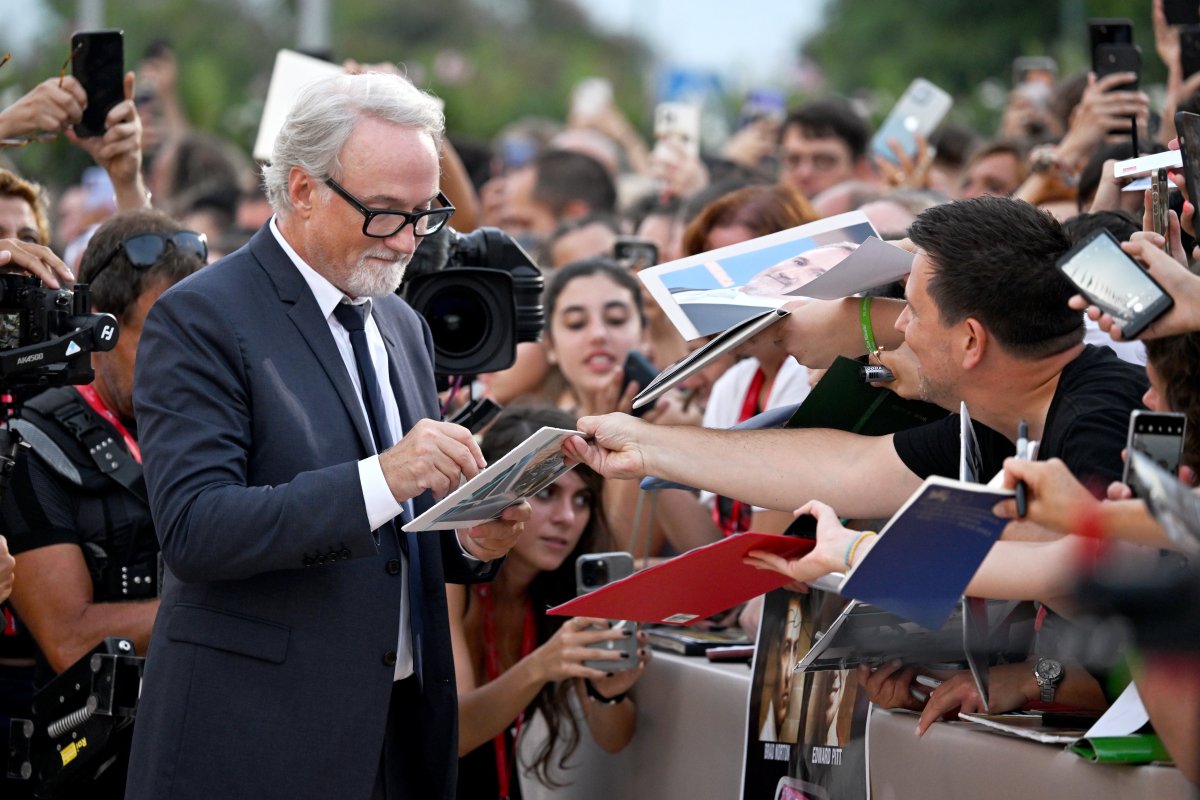
Red Carpet featuring Producer Peter Mavromates, Director of Photography Erik Messerschmidt ASC, Writer of the original “The Killer” (“Le tueur”) comic Alexis “Matz” Nolent, Editor Kirk Baxter ACE, Sound Designer Ren Klyce, Director David Fincher. The original stream has the ambient sound turned down to a minimum because it is too busy and noisy, and only barely intelligible in the close-ups.