
Thomas A. Walsh
February 5, 2021
Netflix Awards FYC
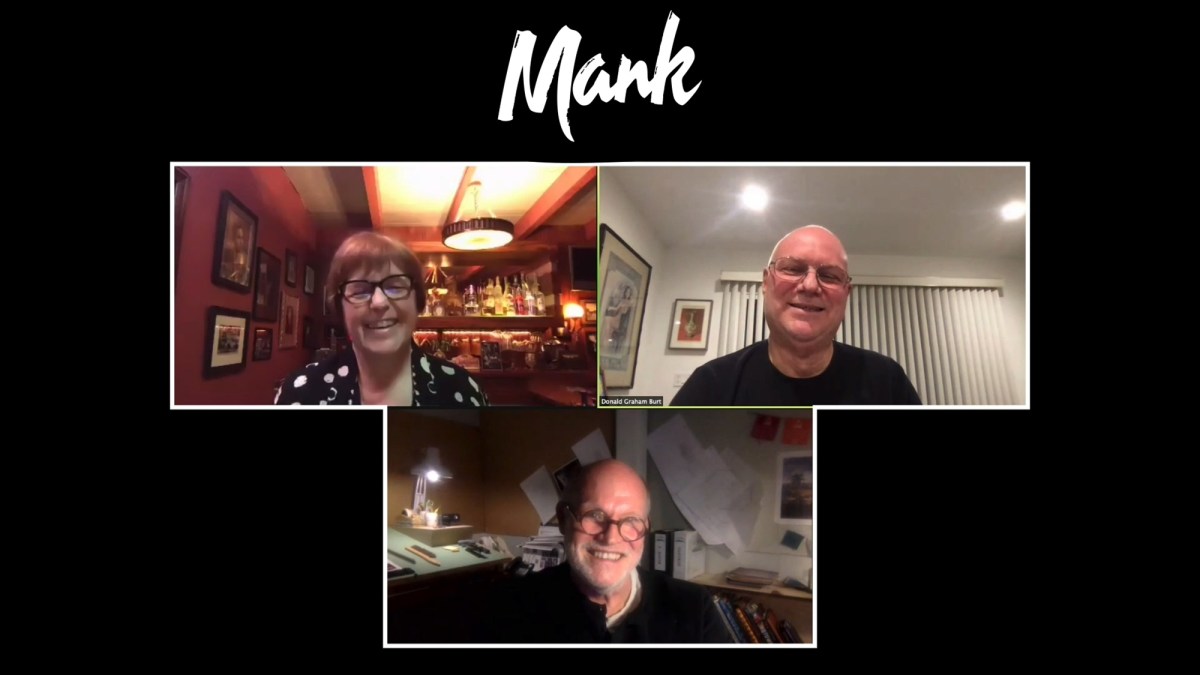
A conversation with Production Designer Donald Graham Burt and Set Decorator Jan Pascale on behalf of Mank. Moderated by Thomas A. Walsh.
Thomas A. Walsh
February 5, 2021
Netflix Awards FYC
A conversation with Production Designer Donald Graham Burt and Set Decorator Jan Pascale on behalf of Mank. Moderated by Thomas A. Walsh.
Netflix’s film starring Gary Oldman, Amanda Seyfried, and Lily Collins has been nominated for a host of accolades, including a Golden Globe for Best Motion Picture.
Lauren Wicks
February 9, 2021
Veranda
For those in the television and film industry with dreamy job titles like production designer or set decorator, the fun begins long before filming, deep in the throes of research. And that was especially the case for Netflix’s Mank, a period piece filmed in black and white in 2020.
“Any opportunity to work on a period film has everybody in our business, especially those in our department, salivating to hear that we get to go back in time, discovering how society functioned and the nuances of the period: the furnishings, the architecture, the lifestyles,” says Donald Burt, the film’s production designer. “It felt like we were living in the film, and that’s what it’s all about: presenting a story in a format that feels like it was actually made then.”
Burt spent much of his design preparation time at the Academy of Motion Pictures library, scouring through documents from filming methods to formal letters, sorting out old gambling debts between executives to decipher thought processes regarding films from nearly 100 years ago.
“This is not a documentary, so we needed to take some license, but I always say I put research and information into a blender and see what comes out to best help tell the story we are trying to tell,” says set decorator Jan Pascale. “It’s so exciting to not only do a black-and-white film but to dive into the history of Hollywood and L.A., learning how people communicated back then.”
Pascale recalls offering typewriters to the casting agents, and it proving a greater challenge than originally thought to find people to type efficiently on them. Though “QWERTY” was created long ago, managing a modern keyboard is much easier than the models of yesteryear. The same goes for making a movie in color.
Krista Smith
February 10, 2021
More Like This (A Netflix Queue Podcast)
A podcast from Netflix Queue, the journal that celebrates the people, ideas, and process of creating great entertainment on Netflix and beyond. Host Krista Smith is joined by a different co-host each episode – Franklin Leonard, Tre’vell Anderson, and others – to give an insider’s peek into the creation of your favorite films, series and documentaries and the incredibly talented people who make them.
More Like This gets the Mank treatment! In this very special episode, Krista takes us behind the scenes of David Fincher’s Mank, sharing interviews with key members of the creative team. Composers Trent Reznor and Atticus Ross talk about the power of storytelling through music, how they pulled inspiration from composers of the past, and how pandemic restrictions forced them to record a 70-piece orchestra one instrument at a time; set decorator Jan Pascale demonstrates how the smallest details make the biggest impact; cinematographer Erik Messerschmidt details how he combined classic and modern techniques to transport a 21st century audience back in time; and editor Kirk Baxter explains why David Fincher once called him 50% blacksmith and 50% poet. Enjoy this deep dive into the process of making movie magic with film collaborators at the top of their game, and be sure to see their work in Mank, now streaming on Netflix.
Listen to the podcast:
Apple Podcasts
Spotify
Google Podcasts
Stitcher
Simplecast
PodBean
Excerpt with Erik Messerschmidt:
Joyce Eng
January 29, 2021
Gold Derby
“Mank” set decorator Jan Pascale is no stranger to black-and-white films: She received an Oscar nomination for George Clooney‘s “Good Night, and Good Luck” (2005). But those two monochrome films couldn’t be more different.
“When I first met with [‘Mank’ production designer Donald Graham Burt] about it, I said, ‘I’ve done black and white. I can do this.’ And Don said, ‘No, no, no, this is different.’ The way the images were captured was quite different,’” Pascale tells Gold Derby at our Meet the BTL Experts: Film Production Design panel. “On ‘Good Night, and Good Luck,’ we shot on film … and we had a really limited budget on that one — $7 million the whole movie — so I couldn’t paint anything or really paint anything, so everything was shot as is. But it sort of worked.”
“Mank,” however, was shot in black and white on a RED digital camera, completely changing the way images and details came off onscreen. But Pascale got some very modern assistance to help her do color-testing. “David [Fincher] and Don had done some testing with the camera that we were going to be using. And they discovered if we used our iPhones with the noir filter and photographed everything, that’s how it would appear in our movie,” she shares.
Film Production Design Panel: David Crank, Jan Pascale, Mark Ricker, Barry Robison
Joyce Eng
January 29, 2021
Gold Derby
Mehruss Jon Ahi and Armen Karaoghlanian
January 13, 2021
Interiors

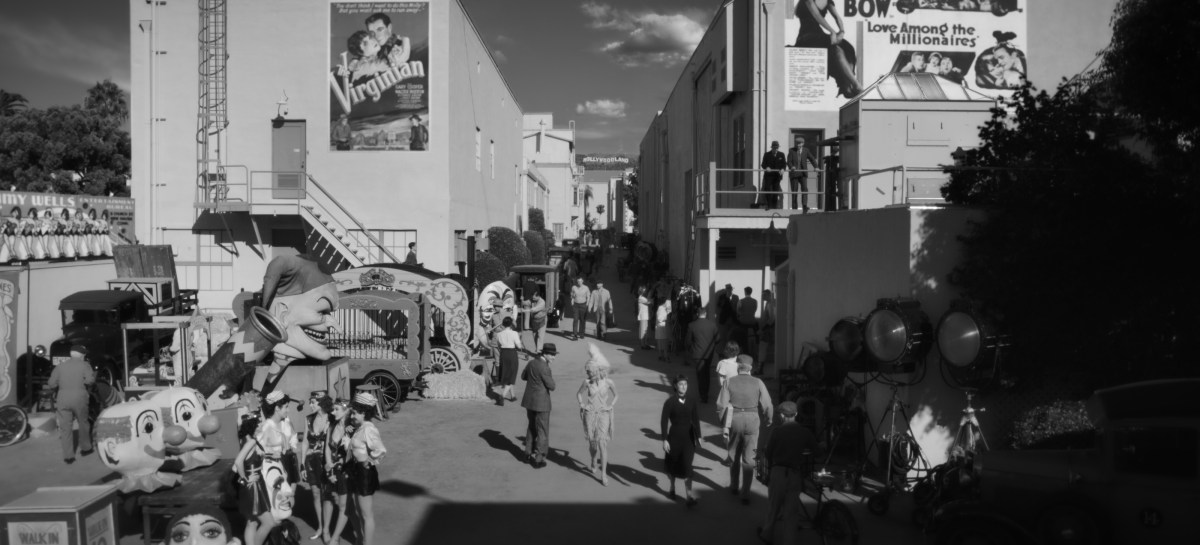
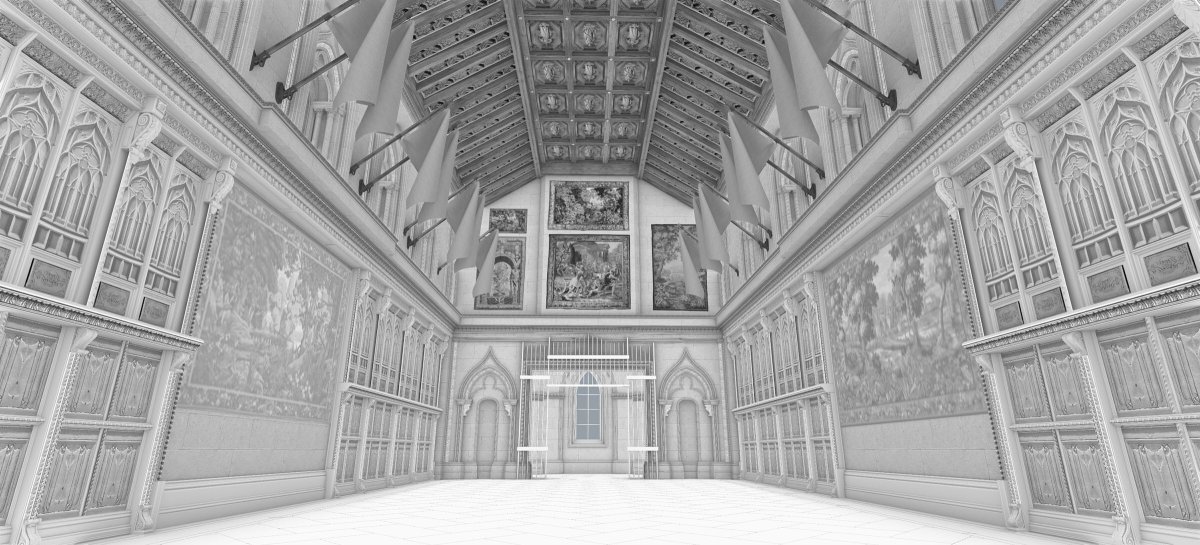
David Fincher’s Mank (2020) depicts 3 incredibly unique locations in California with a multitude of interior and exterior architectural spaces. The visual presentation of the film, combined with the Art Direction and Set Decoration, creates a masterful, multifaceted level of Production Design that is rarely seen in cinema. It is a film that warrants multiple viewings and its attention to architectural details should be commended.
In an exclusive interview with Interiors, we spoke with Donald Graham Burt, who is the Production Designer for Mank.
INT: You’re a longtime collaborator of David Fincher‘s but what was it about Mank specifically that interested you in taking on the project?
DGB: First and foremost it was an opportunity to work on a project that was a period Los Angeles project – and even more specifically a period project about the film industry. To be able to delve into the history of the studios and the roots of the industry in its early years in Los Angeles – when portions of the city were still undeveloped – was an experience to cherish. David’s projects are always of high caliber and there is a professional level at which he works that is rewarding to be a contributor to.
Set Decorator & Production Design Talk. And lots of it.
September 3, 2020
Burning Sofa (Twitter, Facebook)
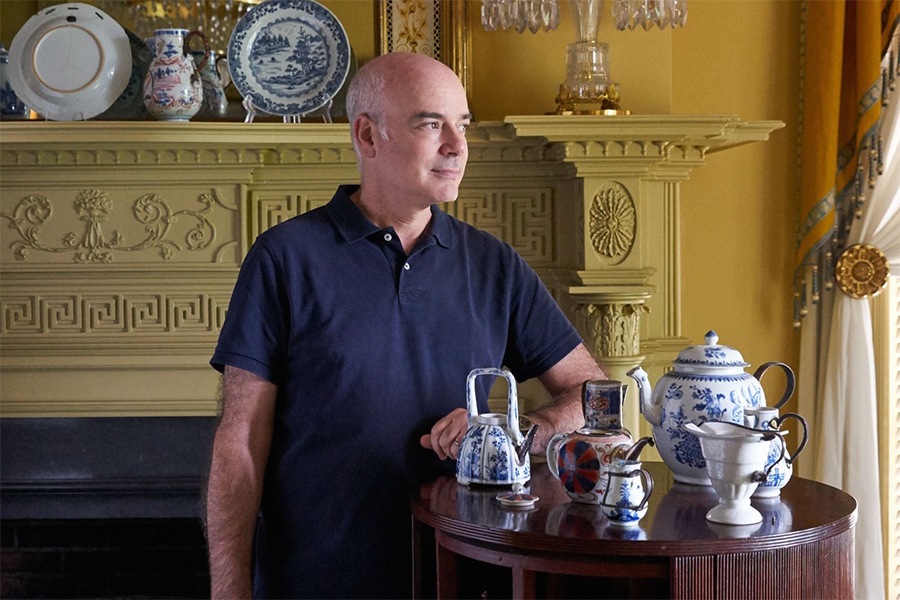
From the inky shadows to red-hot festivals and everywhere in between, Set Decorator Andrew Baseman gives us an up-close-and-personal tour of Mindhunter Season 2 and Gotham, and sneak-peeks into upcoming projects In The Heights and Trial of The Chicago Seven.
Steve Arnold, Production Designer
November 13, 2018
Perspective (Art Directors Guild)
While I was finishing the fourth season of House of Cards, David Fincher called me to say he was planning another series with Netflix and to ask if I would be interested in designing it. Of course I jumped at the chance, not knowing exactly what Mindhunter would be, but certain that with Fincher involved it would be a quality project. I soon found out that it was based on the John Douglas book of the same name and that it would be shooting in Pittsburgh, a city I knew quite well since I received my graduate degree from Carnegie Mellon University there, and where I got my start in the film business while still a student in the CMU theater department.
The series is somewhat different than many crime shows in that it’s not a who-done-it, or even how’d they do it, but more of a psychological exploration of why’d they do it.
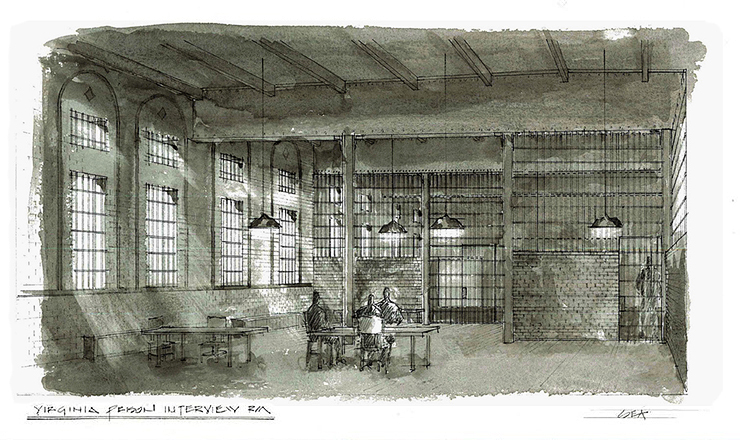
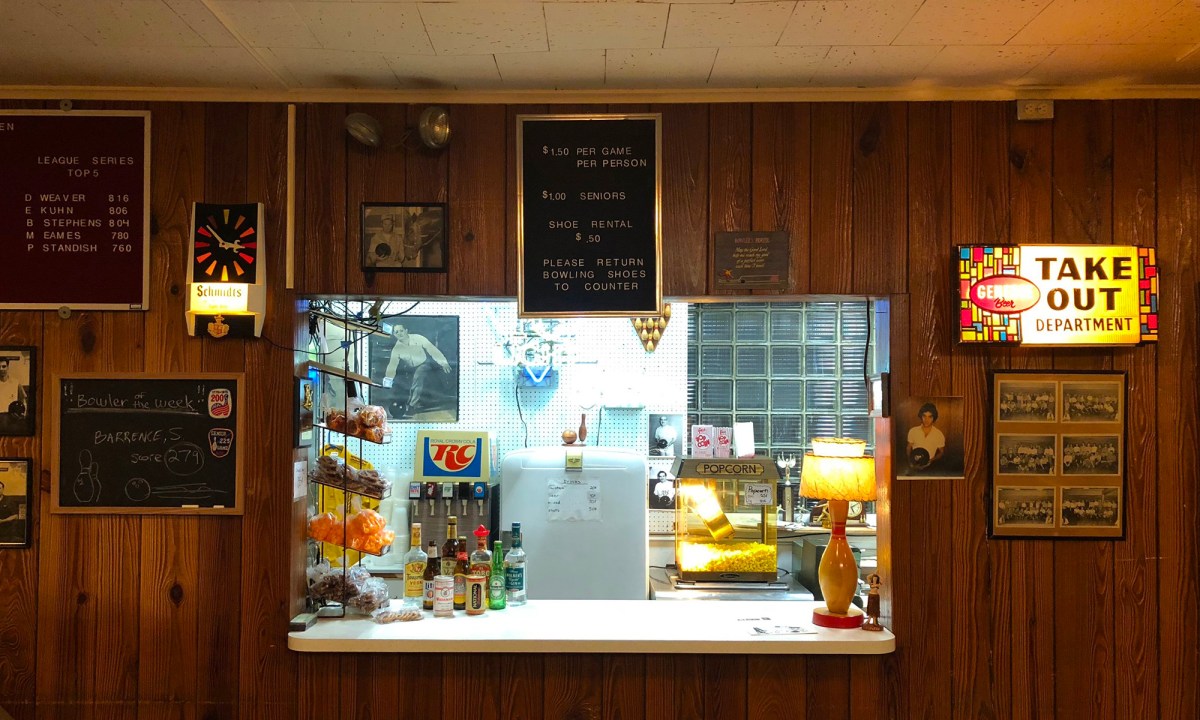
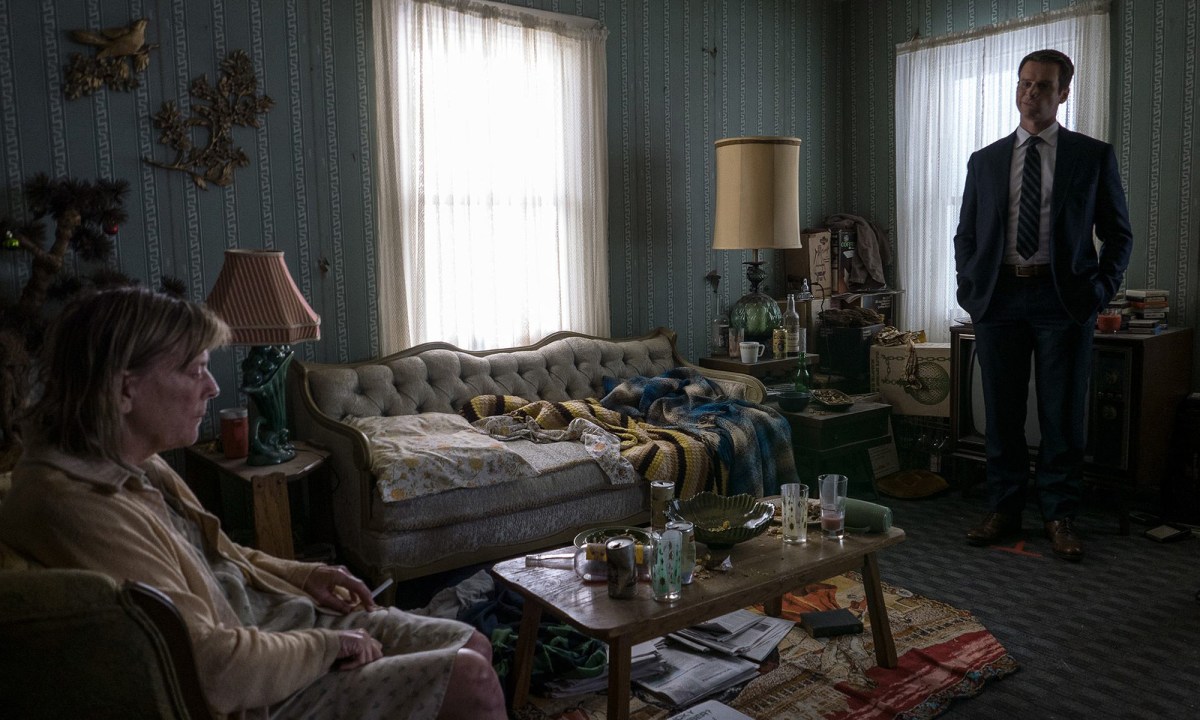
Mindhunter is a period show set in the late 1970s, so I knew the choice of Pittsburgh as a location would simplify much of the exterior design work. Many rust belt cities like Pittsburgh were hit particularly hard by the collapse of the steel industry, and all the ancillary businesses that supported steel have suffered as well. The small towns that surround a city like Pittsburgh are often stuck in the past, sometimes for forty years or more. A lot of the exterior street sequences required were possible and looked appropriate with a minimal amount of redesign because there just hasn’t been an influx of business dollars to do architectural upgrades; there were very few modern structures to modify extensively or hide. This, and the fact that there is a wealth of great period dressing elements to be had at reasonable prices at the many local flea markets, estate sales and antique stores, made the task of recreating the period much more manageable.
One of the first things I remember David Fincher saying about the look of the series was that he did not want it to look like other films or series set in this same period where the style of the time is pushed so far that it becomes exaggeratedly over the top and starts to seem camp. The focus would be on the more mundane and ordinary look of American life in the late 1970s. I knew a lot of the characters were from the lower social strata, so there were few places for high style or the cutting edge fashion of the time. One big influence on the design was photographs from the time by people like Stephen Shore, particularly for our many on the road scenes in motel rooms.
ADG Perspective
November-December 2018 Issue
June 15, 2018
SDSA International (Set Decorators Society of America)
In the late 1970s two FBI agents expand criminal science by delving into the psychology of murder and getting uneasily close to all-too-real monsters.
Catching a criminal often requires the authorities to get inside the villain’s mind to figure out how he thinks. That’s the job of FBI agents Holden Ford [Jonathan Goff] and Bill Tench [Holt McCallany]. They attempt to understand and catch serial killers by studying their damaged psyches. Along the way, working with Boston University psychology professor Wendy Carr [Anna Torv], the agents pioneer the development of modern serial killer profiling.
The crime drama has a strong pedigree behind the camera, with Oscar-nominated director David Fincher and Oscar-winning actress Charlize Theron among the show’s executive producers, and Fincher directing the first episodes. — Netflix
Add in Production Designer Steve Arnold and Set Decorator Tracey Doyle SDSA, and you know it will have a carefully curated stylized realism mixed with fully realized layered reality. Sets that could be paintings, except they seem so real.
We checked in with the duo for snippets about the making of MINDHUNTER, Season 1…
Hint of Film (YouTube)
May 21, 2018
What better way to pay tribute to a movie about obsession than to obsessively track down every single book in the movie?
Video Credits:
Edited by H. Nelson Tracey
H. Nelson Tracey (Twitter)
Hint of Film (Twitter)
Director of Photography: Tommy Oceanak
Original Music by Bryan Hume
“Graysmith’s Remix” end credits song by Unofficial B
The Complete List:
– Yertle the Turtle and Other Stories (1958) by Dr. Seuss
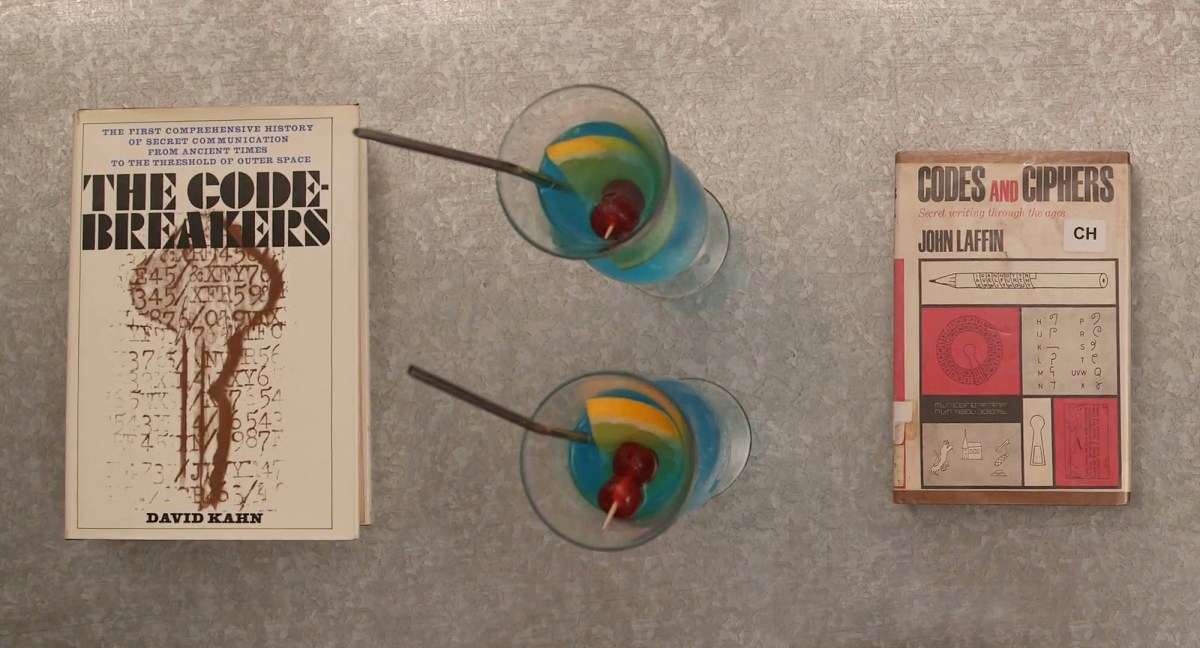
– The Code Breakers (1967) by David Kahn
– Codes and Ciphers: Secret Writing Through the Ages (1964) by John Laffin
– Secret Writing: The Craft of the Cryptographer (1970) by James Raymond Wolfe
– The Beast from 20,000 Fathoms (1953) film directed by Eugene Lourie
– Dick Tracy Lunchbox, 1967
– Animal Crackers (cookie)
– The Most Dangerous Game (1932) film directed by Irving Pichel and Ernest B. Schoedsack
– Hair, original musical poster, show debut in 1967
– They Laughed When I Sat Down: An Informal History of Advertising in Words and Pictures (1959) by Frank Rowsome, Jr.
– McElligot’s Pool (1947) by Dr. Seuss
– TIME Magazine “Race and Reform on Campus,” Volume 93 No. 16, April 18, 1969
– The Asphalt Jungle (1950) film directed by John Huston
– The Wrong Man (1956) film directed by Alfred Hitchcock
– The Celebrated Cases of Dick Tracy, 1931-1951 (Anthology, 1970) by Chester Gould
– Fox in Socks (1965) by Dr. Seuss
– Curtain and The Mysterious Affair at Styles (1975) by Agatha Christie
– An Artist in America (1951) by Thomas Hart Benton
– Drawing: Seeing and Observation (1973) by Ian Simpson
– Drawing the Female Figure (1975) by Joseph Sheppard
– Mainstreams of Modern Art: David to Picasso (1961) by John Canaday
– Homicide Investigation (first published 1944) by Lemoyne Snyder
– Rescued in the Clouds (1927) by Franklin W. Dixon
– LIFE Magazine “Confrontation in Harvard Yard,” Vol. 66 No. 16, April 25, 1969
– Slinky Toy Commercial from the 1960s
– Slinky Toy
– I Died A Thousand Times (1955) film directed by Stuart Heisler
– Star Trek, Season 3 Episode 4 “And the Children Shall Lead” (1968) guest starring Melvin Belli, portrayed by Brian Cox in Zodiac
– Aquavelva (alcoholic drink)
– Reprise: The Code Breakers (1967) by David Kahn
– Reprise: Codes and Ciphers (1964) by John Laffin
– Richard Nixon Presidential Campaign Button, 1968
– “I Am Not Avery” button
– 6 extremely rare first edition covers of Ian Fleming James Bond Novels: Dr. No (1958), For Your Eyes Only (1960), Moonraker (1955), On Her Majesty’s Secret Service (1963), You Only Live Twice (1964), The Spy Who Loved Me (1962)
– Six Crises (1962) by Richard M. Nixon
– San Francisco (first published 1969) edited by Jack McDowell and Dorothy Krell
– The Selling of the President, 1968 (1969) by Joe McGinniss
– Rubber Life Magazine, Vol. 01, No. 01, (1972)
– Dirty Harry (1971) film directed by Don Siegel
– Pong (1972) video game by Atari
– I Looked and Listened: Informal Recollections of Radio and TV (1970) by Ben Gross
– The Crime Vaccine: How to End the Crime Epidemic (1996) by Jay B. Marcus
– The FBI in Our Open Society (1969) by Harry & Bonaro Overstreet
– Kidnap: The Story of the Lindbergh Case (1961) by George Waller
– The Property Man (1914) film directed by Charlie Chaplin
– McCall’s Sewing Book (1968) by McCall Corporation
– Them! (1954) film directed by Gordon Douglas
– Illegal (1955) film directed by Lewis Allen
– The World Almanac – Centennial Edition (1968)
– The Rink (1916) film directed by Charlie Chaplin
– Conquest (1937) film directed by Clarence Brown and Gustav Marchaty
– Key Largo (1948) film directed by John Huston
– Zodiac: The Shocking True Story of the Nation’s Most Bizarre Mass Murderer (1986) by Robert Graysmith
Zodiac (2007) Credits:
Directed by David Fincher
Production Design by Donald G. Burt
Art Direction by Keith Cunningham
Set Decoration by Victor J. Zolf0


 The Fincher Analyst