The People Who Can See Inside David Fincher’s Head

The famously meticulous Mank director is surrounded by collaborators tasked with turning his most ambitious ideas into reality.

David Sims
December 9, 2020
The Atlantic

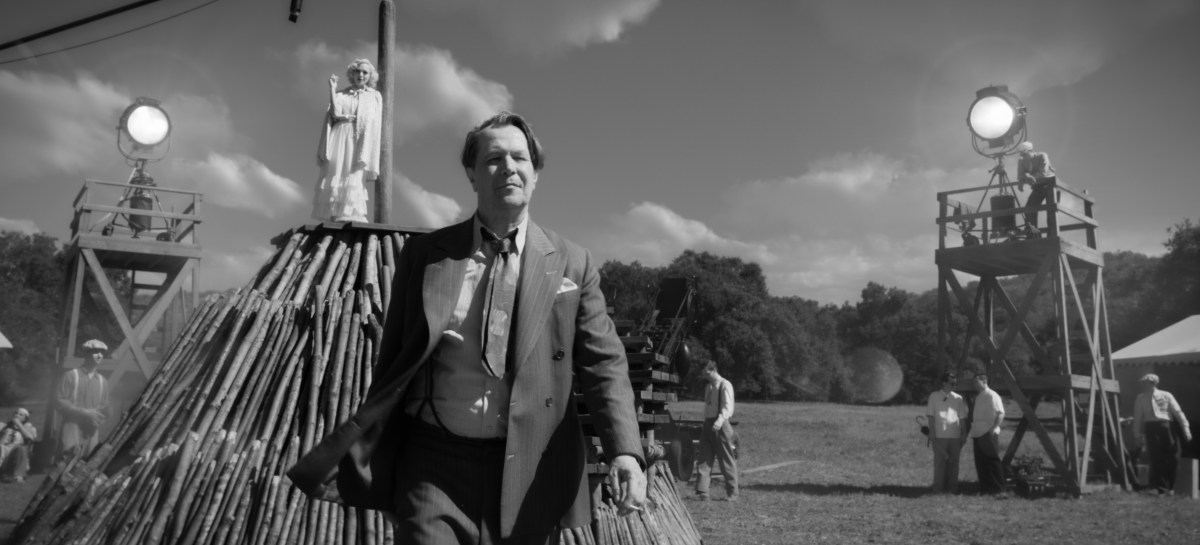
Early in Netflix’s Mank, the screenwriter Herman J. Mankiewicz (played by Gary Oldman) ambles onto an outdoor movie set, where he bumps into an array of glamorous characters. In a scene full of repartee with real-life figures such as the actor Marion Davies, the film honcho Louis B. Mayer, and the mogul William Randolph Hearst, the visual details of the environment might seem unimportant. But to Mank’s director, David Fincher, they mattered. “The grass was not to David’s liking, and the sky was not to his liking, so all that’s been replaced,” Peter Mavromates, his co-producer, told me. When making a movie, Fincher literally controls heaven and earth.

That example sums up the capricious-sounding, godlike power of a director, especially in the age of digital filmmaking, which allows for total command of every frame. But as with all of his movies, Fincher’s vision for Mank was realized by a group of dedicated collaborators, most of whom have worked with the director for many years across projects. This film, which Fincher mulled for nearly three decades, is unlike anything he has made before. An unusual-looking-and-sounding film set in the Golden Age of Hollywood, Mank reflects the aesthetic of the 1930s with its black-and-white cinematography; an echoey, old-fashioned sound mix; and a brassy, orchestral score. But Fincher also wanted it to be a distinctly modern film, which posed many unique and fascinating technical challenges to the creators charged with bringing his lofty ideas to life.

Read the full profile

How ‘Mank’ Shot Day for Night, and in Hi-Dynamic Range Black-and-White

Cinematographer Erik Messerschmidt had two challenges shooting the moonlight stroll at San Simeon: black-and-white and day for night.

Bill Desowitz
December 7, 2020
IndieWire

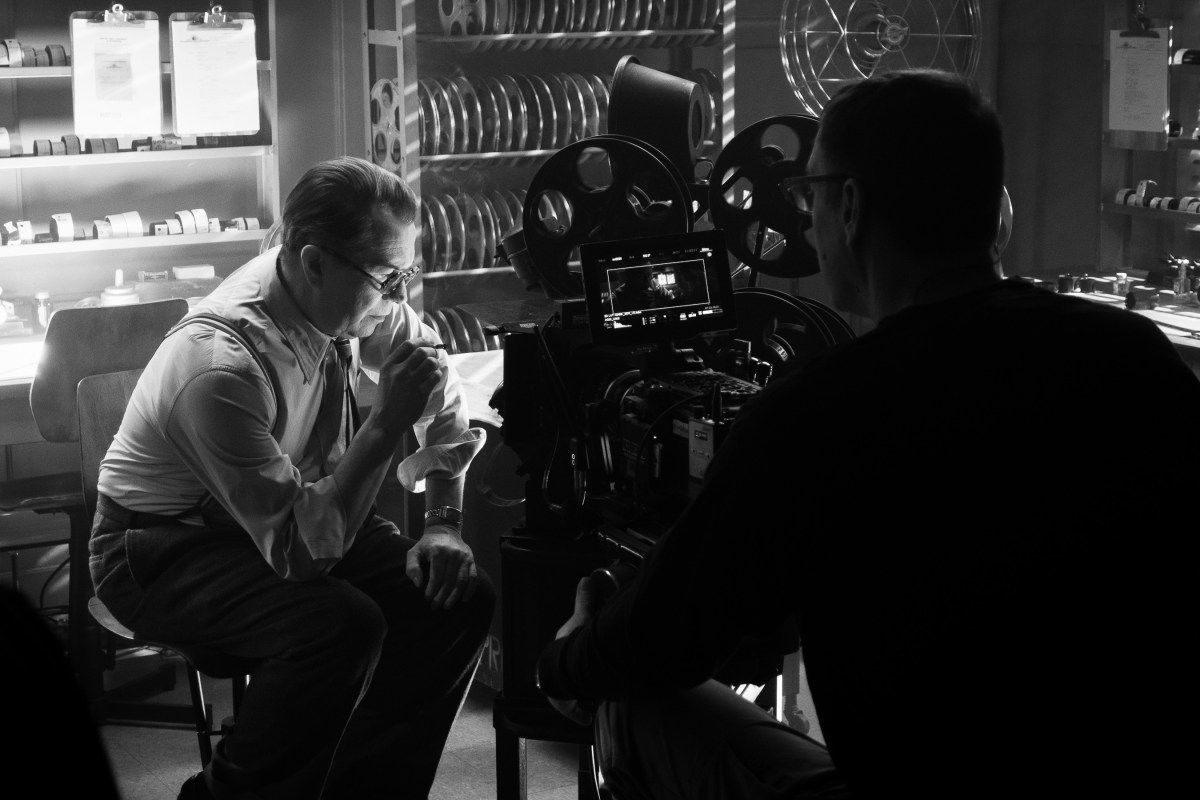
There was never any doubt that David Fincher was going to shoot “Mank” in black-and-white. His biopic about alcoholic and acerbic screenwriter Herman J. Mankiewicz (Gary Oldman) struggling to churn out a first draft of “Citizen Kane” cried out for monochromatic treatment. And yet Fincher and cinematographer Erik Messerschmidt (“Mindhunter”) were not about to indulge in a “Kane”-like re-enactment, or be confined to shooting on film, or composing in the period accurate aspect ratio of 1.37:1. Not with Fincher’s digital prowess and penchant for the 2.39: 1 widescreen format.

So Fincher and Messerschmidt struck a balance between retro and modern, taking advantage of the director’s efficient digital workflow to approximate the look of a movie made around the time of “Kane” in 1940 yet “Photographed in Hi-Dynamic Range” (as the title card proclaims).

“Filmmaking has always been a medium where we selectively employ the techniques that are available on the day,” Messerschmidt said. But shooting in black-and-white was a lot to unpack for the cinematographer, who had only done a few music videos and commercials outside of still photography and film school projects.

Read the full profile

David Fincher reclaims ‘Citizen Kane’ with political spin on father’s ‘Mank’ screenplay

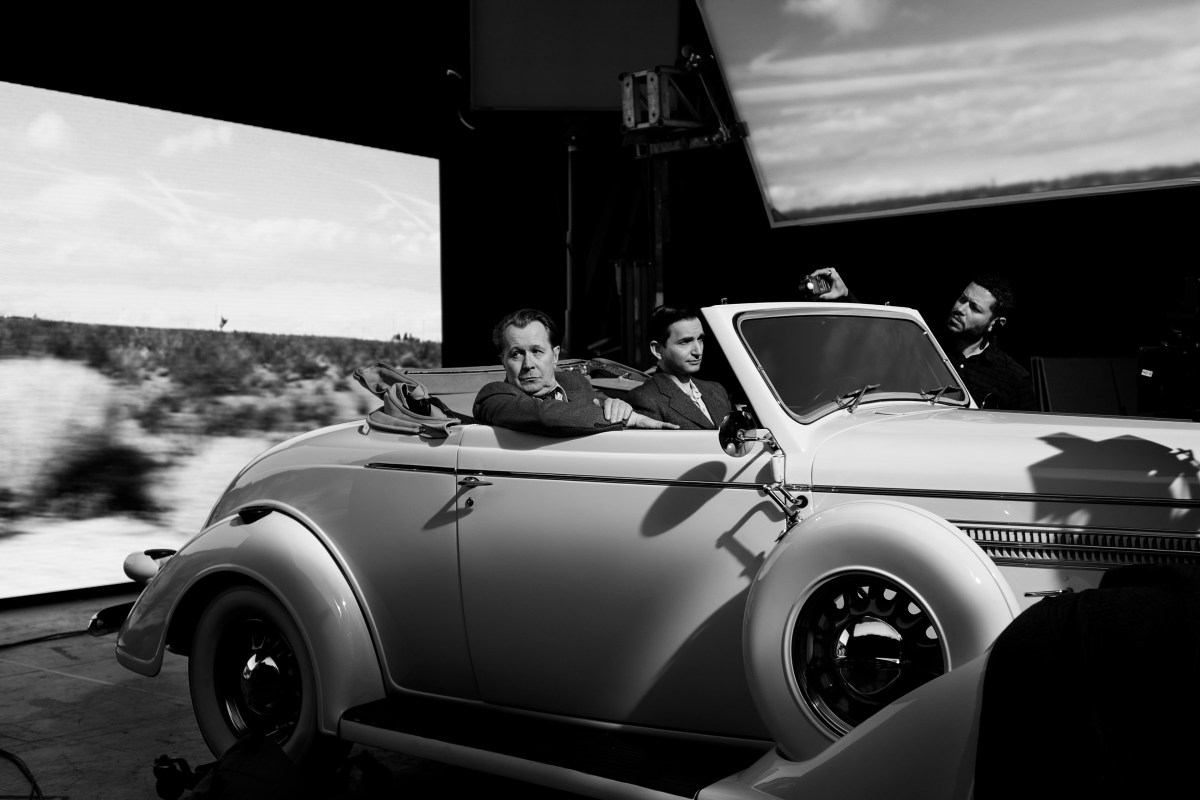
Gary Oldman and camera operator Brian Osmond (Nikolai Loveikis)

Bob Strauss
December 2, 2020
Datebook (San Francisco Chronicle)

Technically, “Mank” is the story of how the script for what’s often considered the greatest movie ever made, “Citizen Kane,” may have been written. But there’s a lot more to David Fincher’s deep-focused, black-and-white, flashback-filled Netflix movie, which starts streaming on the service Friday, Dec. 4.

Built on a screenplay written by the director’s father, the late Bay Area journalist Jack Fincher, “Mank” is a speculative swirl of 1930s Hollywood and California history. The new film has already rekindled the controversy over whether veteran screenwriter Herman Mankiewicz (played by Gary Oldman) or 25-year-old, first-time director/star Orson Welles (Tom Burke) was the primary author of “Citizen Kane.”

The main show, however, revolves around alcoholic Mankiewicz’s memories. Some of those involve his friendship with the actress Marion Davies (Amanda Seyfried) and, at more of a remove, her powerful lover, newspaper baron William Randolph Hearst (Charles Dance). The model for Welles’ fictional Charles Foster Kane, Hearst — whose company owned the San Francisco Examiner at the time and now runs The Chronicle — famously exerted his considerable clout to have “Citizen Kane” squelched before it was released in 1941.

Speaking to The Chronicle by phone from Los Angeles, the Marin County-raised Fincher responded nimbly when informed he was talking to a Hearst publication.

Read the full profile

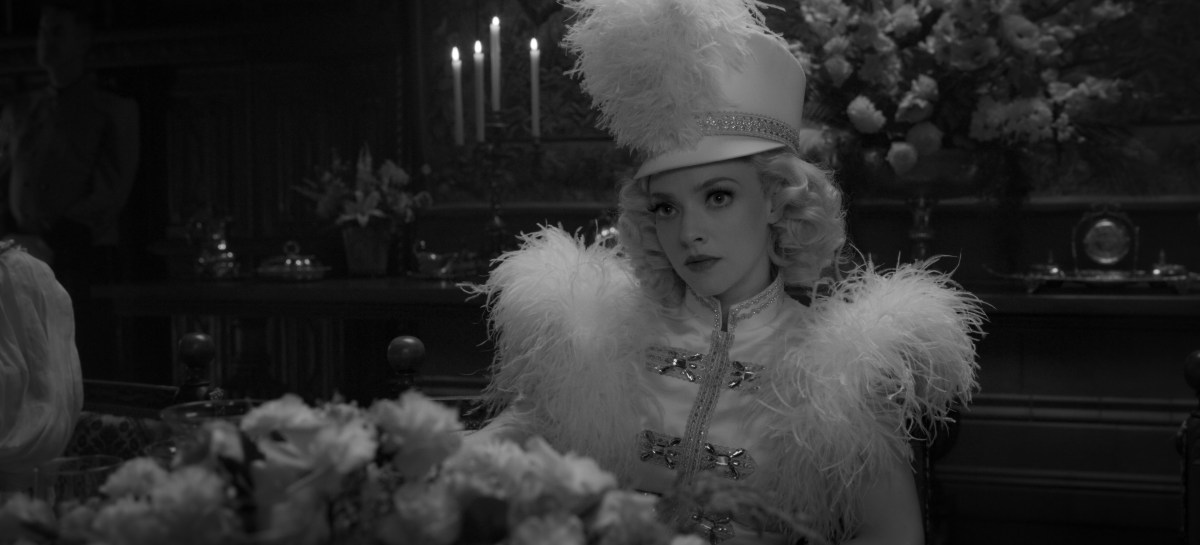
Costume Designer Trish Summerville on the Glamorous Looks of ‘Mank’s’ Amanda Seyfried

Summerville discusses creating the stylish looks in black and white for the actress, who plays star Marion Davies in the new David Fincher film.

Degen Pener
December 7, 2020
The Hollywood Reporter

When costume designer Trish Summerville first started working on David Fincher’s new Netflix film Mank, “even people in my crew and friends were like, ‘This would probably make things so much easier.” That’s because the film is shot in black and white. In fact, though, the opposite was true. “It actually made it a bit more difficult,” says Summerville. “When you shoot in color, you have all these different shades and tones you can work with and you can do stuff that’s tone on tone.”

What she found out — while researching the period and visiting costume rental houses, where she took photos of garments in black and white — is that not only are many options are no-go but that other problems present themselves.

Read the full profile

Avec « Mank », David Fincher sur les traces de « Citizen Kane » et de son père

C’est l’événement cinématographique de cet hiver. Avec « Mank », en ligne sur Netflix vendredi 4 décembre, David Fincher signe le portrait de Herman J. Mankiewicz, scénariste de « Citizen Kane ».

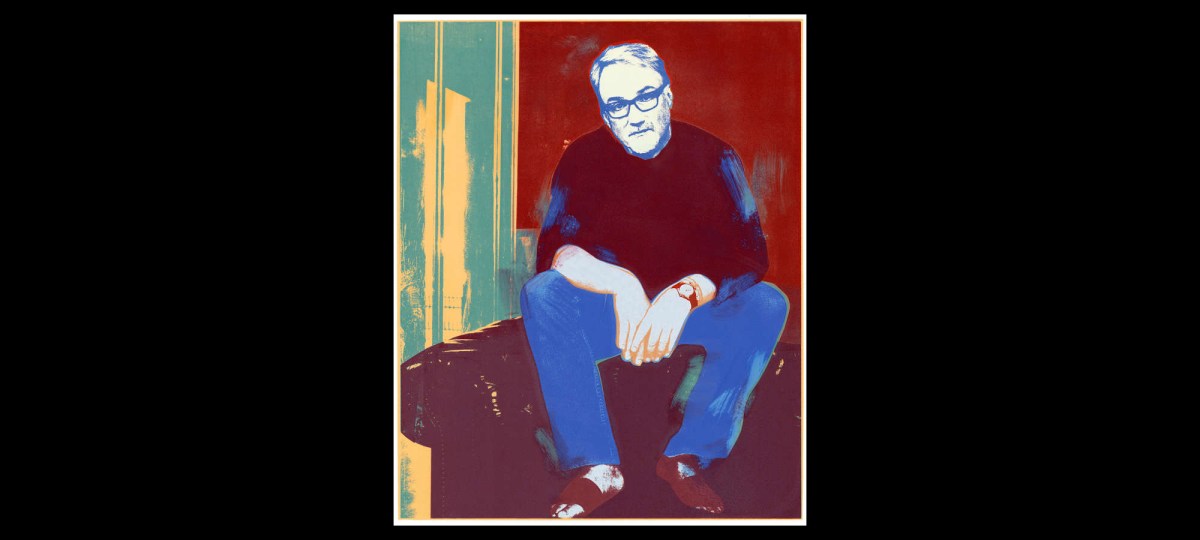
Le cinéaste David Fincher (Kate Gibb à partir d’une photo de Frank Ockenfels)

Samuel Blumenfeld
4 décembre 2020
Le magazine du Monde

Quand, au début des années 1990, son père a posé un scénario sur la table, David Fincher s’est contenté de regarder le titre inscrit sur la couverture. Mank. Il n’avait pas besoin d’en savoir plus. En un instant, il avait compris le sujet du récit que son père, Jack Fincher, journaliste, avait écrit. Une référence au diminutif par lequel ses pairs, à la cantine de la MGM – le studio hollywoodien le plus prestigieux des années 1930 et 1940 (Autant en emporte le ventLe Magicien d’Oz…) –, désignaient l’un des plus brillants scénaristes de sa génération, Herman J. Mankiewicz.

Ce dernier, frère du célèbre réalisateur Joseph L. Mankiewicz, oscarisé pour Chaînes conjugales (1949) et Eve (1950), était un touche-à-tout de génie. Un scénariste capable de proposer d’instinct que les séquences au Kansas du Magicien d’Oz soient tournées en noir et blanc et celle à Oz en couleurs, assurément l’utilisation la plus judicieuse d’un effet spécial à l’écran. Herman J. Mankiewicz était aussi l’auteur du scénario qui donnerait, en 1941, naissance à ce qui est communément désigné comme le plus grand film de l’histoire du cinéma : Citizen Kane.

A 7 ans, David Fincher avait entendu son père parler du chef-d’œuvre d’Orson Welles. S’il n’avait pas compris grand-chose, l’enfant avait saisi l’admiration portée au film, quasiment une dévotion. Alors, en ce début des années 1990, à presque 30 ans, le réalisateur de clips vidéo et de films publicitaires le plus talentueux de la planète pouvait légitimement prétendre devenir le destinataire de ce scénario. Mais ses états de service n’apparaissaient pas assez convaincants aux yeux de son père.

Ce journaliste, qui venait de prendre sa retraite – il dirigeait le bureau à San Francisco de l’hebdomadaire Life –, avait écrit ce scénario et discuté du projet avec son fils mais sans jamais rien mettre en branle pour le voir adapté à l’écran. Il s’était contenté de rêver ce film, imaginant le voir réalisé par un cinéaste de sa génération, un aventurier comme John Huston, par exemple. Le réalisateur du Trésor de la Sierra Madre (1948) et d’African Queen (1951) avait été boxeur, chasseur d’éléphants et collectionnait l’art précolombien. « Moi, en comparaison, soupire Fincher, j’avais fait quoi ? Réalisé des vidéos avec Madonna et des publicités pour Pepsi et Nike ? Ce n’est pas l’image du réalisateur qu’il se faisait. »

Article réservé aux abonnés

How Mank director David Fincher found his perfect Orson Welles

Maureen Lee Lenker
December 05, 2020
Entertainment Weekly

Few figures from Hollywood’s Golden Age loom as large as Orson Welles.

The mercurial wunderkind first made a name for himself with his voice, in his Mercury Theater‘s Shakespeare productions and his iconic radio adaptation of The War of the Worlds. Then he took Hollywood by storm as a creative force, acting, directing, and producing his own work, including his most famous film, Citizen Kane, which is central to David Fincher‘s new movie Mank.

As Welles aged, he became larger than life, both in his increasing girth and his tempestuous approach to filmmaking, a realm in which he was often at odds with studio brass and even himself (see: the long-unfinished The Other Side of the Wind).

How then do you find the right person to portray such a towering figure? It’s been done before several times, by the likes of Vincent D’Onofrio, Angus MacFadyen, and even Jack Black.

Read the full profile

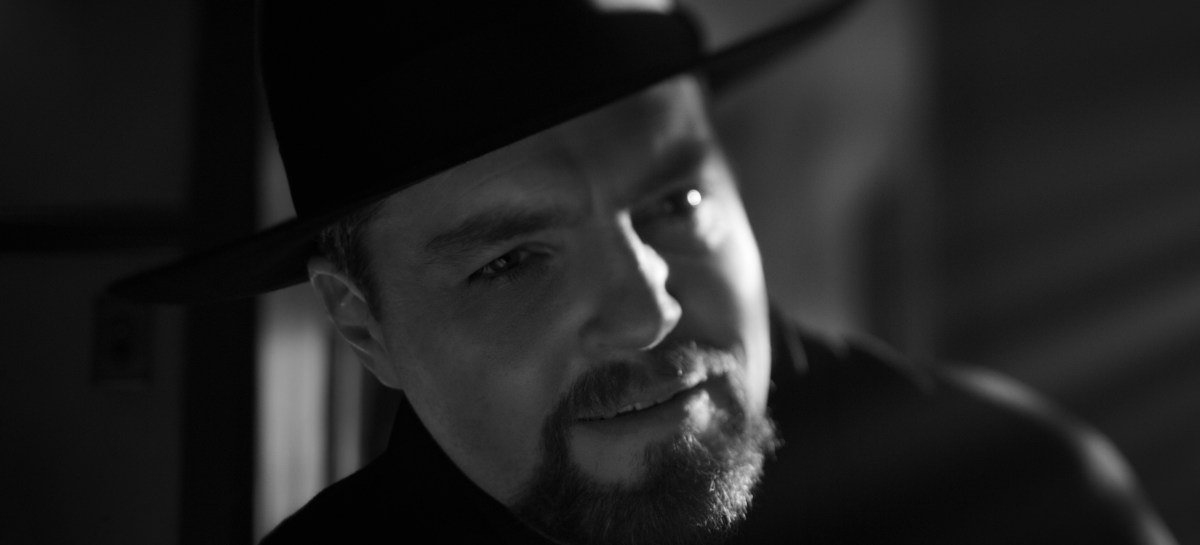
Tom Burke on Orson Welles

Antonia Quirke
December 3, 2020
The Film Programme (BBC)

Actor Tom Burke reveals how he perfected the voice of Orson Welles for his new film, Mank, and Rob Savage explains how he made lockdown horror movie Host.

Listen to the podcast

David Fincher: Hollywood’s Most Disturbing Director

With films including Se7en, Zodiac and Fight Club, David Fincher has explored the darkest edges of humanity. Yet there’s more to his unique vision, writes Gregory Wakeman, as the director’s film Mank is released.

Gregory Wakeman
December 3, 2020
BBC Culture

David Fincher fans have had plenty to celebrate over the past few months. September marked the 25th anniversary of Se7en, Fincher’s deeply disturbing psychological thriller that established the then 33-year-old as one of the most iconoclastic young directors in Hollywood. Then, just a couple of weeks later, The Social Network, Fincher and screenwriter Aaron Sorkin’s searing exploration of Mark Zuckerberg and the origins of Facebook, turned 10. Most exciting of all for Fincher aficionados, though, is the fact that, more than six years after the release of his last feature film Gone Girl, Mank will finally arrive on Netflix on 4 December.

Fincher has waited around 20 years to find the perfect home for the film, which was originally written by his father Jack in the late 1990s. But while most major Hollywood studios were put off by the idea of a black and white biopic of Citizen Kane screenwriter Herman J Mankiewicz, Netflix gave Fincher carte blanche to fulfil his vision.

The early reviews for Mank have been extremely positive, and Fincher has immediately become one of the main contenders for the best director Oscar. Covid-19’s disruption of the 2020 cinematic calendar means that Fincher’s competition isn’t quite as strong as it could have been. But it’s to the Academy Awards’ great shame that this titan of modern filmmaking has somehow only received best director nominations for The Curious Case of Benjamin Button and The Social Network. Despite this oversight, Fincher’s place in the cinematic pantheon has long been secure. No other modern filmmaker has examined alienation, depression, obsession, and the dark side of intelligence like he has, while keeping a stylish, visceral, and, most importantly of all, entertaining approach. 

But what is it that sets Fincher’s work apart from that of his peers?

‘Mank’ Production Team on Creating a Feast for the Eyes and Ears for the Netflix Period Film

Jazz Tangcay
December 4, 2020
Variety

In David Fincher’s “Mank,” bowing Dec. 4 on Netflix, a key sequence takes place at Hearst Castle, when Gary Oldman’s Herman J. Mankiewicz shows up drunk and unannounced at a lavish dinner party thrown by newspaper tycoon William Randolph Hearst, played by Charles Dance.

Filming is normally not allowed at the actual estate, with Lady Gaga’s “G.U.Y.” video the rare exception. So production designer Donald Graham Burt and Fincher spent months tracking down locations around Los Angeles that could stand in for the grand mansion. Interiors and exteriors were shot at a Pasadena estate, the Huntington Gardens, in Malibu and on soundstages, all carefully decorated to give the feel of San Simeon if not the exact details.

It was up to sound mixer Ren Klyce to capture the extravagance that Fincher sought when filming those scenes. Klyce reverse-engineered the mix — distorting sounds, lowering the dynamic range and limiting the high frequency to take audiences back to 1930s Hollywood and the “Citizen Kane” era.

Burt and Klyce break down how they re-created the estate and captured the aura of wealth.

Costume Designer Trish Summerville Breaks Down the Looks of ‘Mank’

Framing the Scene: Costume Designer Trish Summerville on Designing for Black and White

Jazz Tangcay
December 4, 2020
Variety

When it came to designing the costumes of David Fincher’s “Mank,” both costume designer Trish Summerville and production designer Donald Graham Burt used the noir and monochromatic filters on their iPhones to see how color would convert for Fincher’s black and white film.

The film, which tells the story of Herman J. Mankiewicz and how he developed the script for Orson Welles’ “Citizen Kane,” was shot on digital and filmed in black and white, rather than converted after shooting. That meant Summerville had to use wardrobe colors that would pop onscreen.

In looking at photos from the ‘30s, Summerville says she found that the Hollywood executives and glamorous actresses dressed in salmon hues, greens and aubergine, which she used to build texture when it came to dressing Amanda Seyfried and Gary Oldman.

“We wanted to show the varying degrees and levels of socioeconomic status in Hollywood at the time,” says Summerville, who breaks down key costumes from “Mank,” now streaming on Netflix.

Read the full profile

Best of 2020 (Behind the Scenes): Why Mank recreated the ‘Rosebud’ shot from Citizen Kane

Maureen Lee Lenker
December 04, 2020
Entertainment Weekly

From its unique sound profile to its lush black-and-white cinematography,  Mank is a love letter to the Golden Age of Hollywood and one of its most enigmatic raconteurs, Citizen Kane screenwriter Herman J. Mankiewicz. The fingerprints of the era are everywhere, but nowhere is the homage more noticeable than in a shot of Mank with an empty Seconal bottle that perfectly mirrors that of Charles Foster Kane holding a snow-globe in the opening moments of Citizen Kane

Here, director David Fincher reveals the personal history behind the shot.