In the late 1970s two FBI agents expand criminal science by delving into the psychology of murder and getting uneasily close to all-too-real monsters.
Catching a criminal often requires the authorities to get inside the villain’s mind to figure out how he thinks. That’s the job of FBI agents Holden Ford [Jonathan Goff] and Bill Tench [Holt McCallany]. They attempt to understand and catch serial killers by studying their damaged psyches. Along the way, working with Boston University psychology professor Wendy Carr [Anna Torv], the agents pioneer the development of modern serial killer profiling.
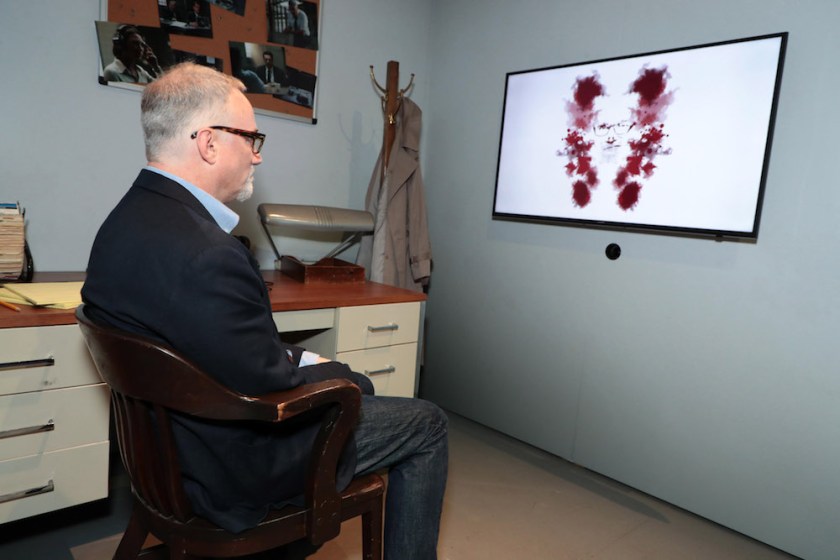
The crime drama has a strong pedigree behind the camera, with Oscar-nominated director David Fincher and Oscar-winning actress Charlize Theron among the show’s executive producers, and Fincher directing the first episodes. — Netflix
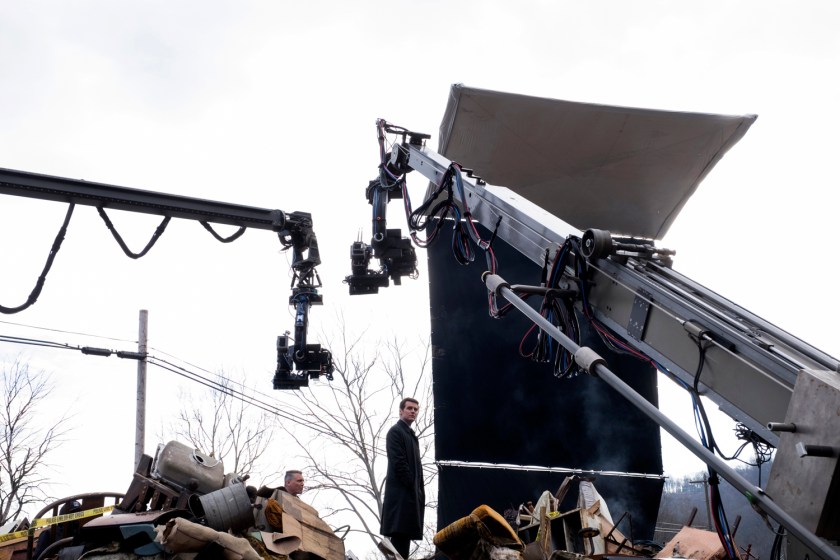
Add in Production Designer Steve Arnold and Set Decorator Tracey Doyle SDSA, and you know it will have a carefully curated stylized realism mixed with fully realized layered reality. Sets that could be paintings, except they seem so real.
We checked in with the duo for snippets about the making of MINDHUNTER, Season 1…
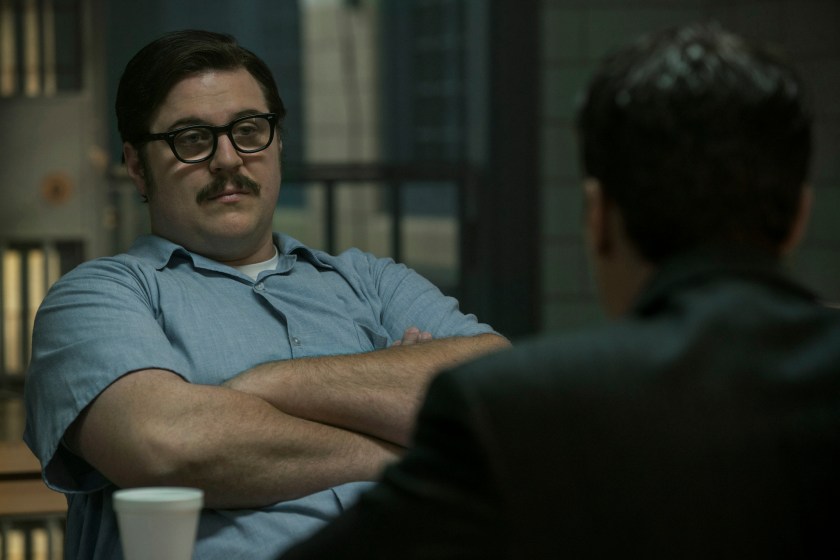
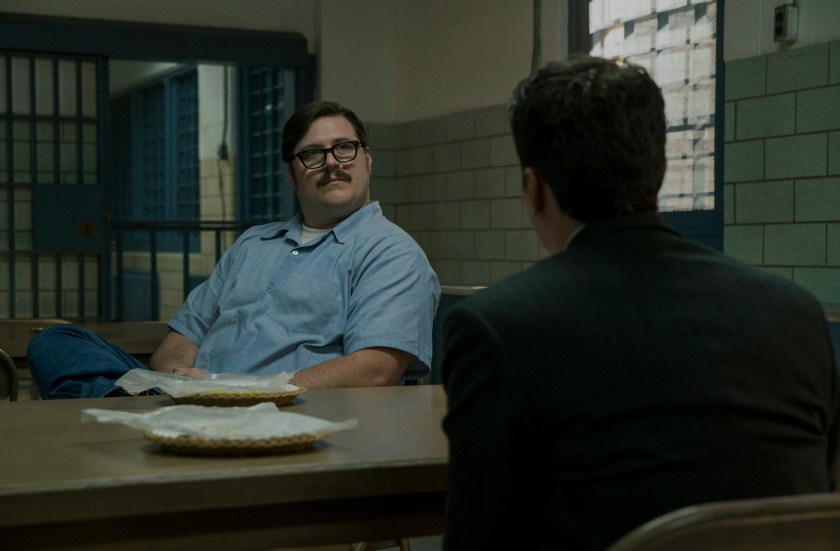
Breaking through with his first guest star role on David Fincher’s Netflix crime drama Mindhunter, where he would play terrifying serial killer Edmund Kemper, Cameron Britton found both an incredible artistic opportunity and a challenge that would daunt any actor, coming face to face with one of the industry’s most formidable auteurs.
In his first experience playing a real-life figure, Britton couldn’t have found a more deliciously complicated character than Kemper, who is still alive, living out his remaining years at California Medical Facility. Towering over his victims at 6’9” (Britton is 6’5”), Kemper’s dominance wasn’t only physical. Murdering 10 people, including his mother and his paternal grandparents—before desecrating their bodies—Kemper also possessed great intelligence and a knack for manipulation that made him a nightmare for his opponents, in life and in prison, where FBI agents (played in the series by Jonathan Groff and Holt McCallany) tried to come to grips with his psychology.
“What drew me to the role was this dynamic where he’s this horribly violent, narcissistic, selfish person with no remorse, and yet he’s well spoken, he’s polite, he’s engaging,” Britton explains. “That sort of ‘Speak softly and carry a big stick’ concept, it’s always been interesting to me. If you are threatening and your opponent knows it, why flaunt it? Why not offer them the path of least resistance?”
To play Kemper effectively, Britton would have to dig uncomfortably deep into the psyche of a murderer who viewed himself as the hero of his own story, figuring out what it was that baffled psychologists—what made him tick.
Cameron Britton Breaks Through Playing Real Life Serial Killer Ed Kemper in Mindhunter
Hugh Hart
June 14, 2018 MPAA (Motion Picture Association of America), The Credits (Profiles Below the Line)
Netflix true crime drama Mindhunter moves efficiently in tracking the origins of forensic science as experienced through FBI odd couple (Jonathan Groff and Holt McCallany) until midway through its second episode. Then, Cameron Britton makes his entrance. Playing real-life 70’s-era serial killer Ed Kemper, Britton strolls into an interrogation room and takes the show in utterly unnerving new direction through his embodiment of folksy evil incarnate.
If you’ve seen classic David Fincher films like Seven, Zodiac, or even The Girl with the Dragon Tattoo, you know the infamously exacting director has a type: the obsessive who tries to solve a crime in the library or the archives, nimbly combing through databases and warehouses full of forgotten evidence. The Fincher obsessive starts their work unblemished—but by the end, it has upended their lives.
In the case of Fincher’s 10-episode Netflix series Mindhunter, that obsessive is Holden Ford, played by Tony-nominated actor Jonathan Groff. Holden starts as a textbook Groff character: neat, bookish, pretty, an F.B.I. choirboy who becomes a teacher and researcher after a hostage situation goes wrong. But soon, alongside behavioral scientist Bill Tench (Holt McCallany) and anthropologist Wendy Carr (Anna Torv), Holden falls down the rabbit hole of a new line of thinking about killers, one that brings him a little too close to the murderers themselves.
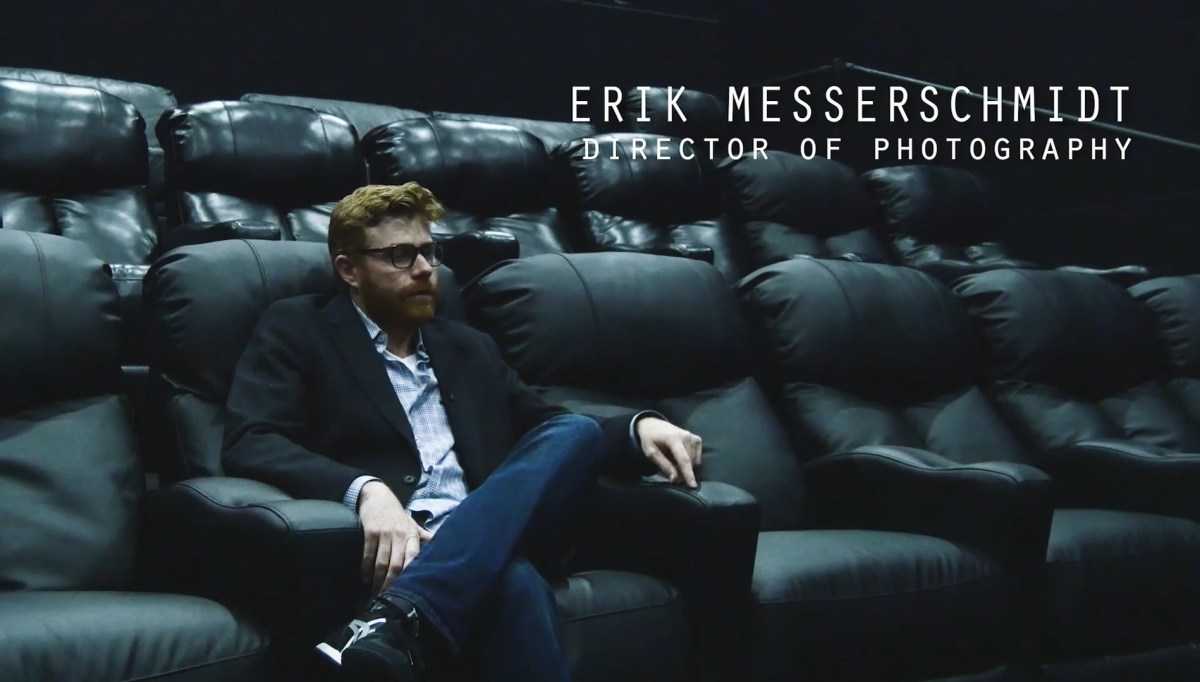
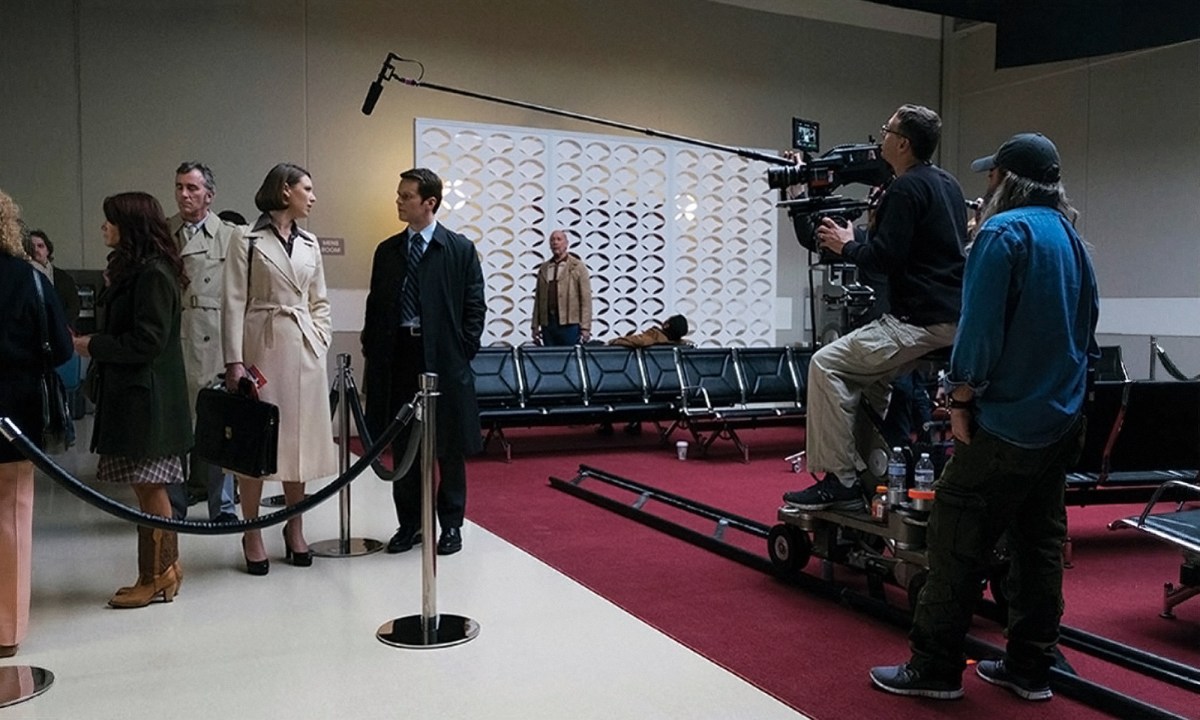
Erik Messerschmidt first worked with David Fincher as a Gone Girl gaffer—in collaboration with DP Jeff Cronenweth. But Messerschmidt got his chance to mine the auteur’s rich, iconic aesthetic as cinematographer of Netflix’s crime drama Mindhunter.
Created by Joe Penhall, with Fincher on as a director and executive producer, the 1970s-set series follows two FBI agents (played by Jonathan Groff and Holt McCallany) who look to expand criminal science by delving into the psychology of murder, coming uncomfortably close to the real-life monsters who would later be deemed “serial killers.”
Messerschmidt has been praised this season for the striking, atmospheric visuals he brought to Mindhunter—his first full series as a DP— though he prefers that his work remain invisible, operating beneath the surface:
“The second the audience is aware that a human is operating the camera, subconsciously there’s an awareness that someone else is in the room. Hopefully, the audience doesn’t notice the operating, they don’t notice my work, they are only seeing what’s happening on-screen between the characters. That’s the goal.”
Ted Sarandos (Netflix Chief Content Officer), David Fincher (Director/Executive Producer), Anna Torv, Jennifer Starzyk (Costume Designer), Steve Arnold (Production Designer), Erik Messerschmidt (Director of Photography), Cameron Britton, Laray Mayfield (Casting Director), Holt McCallany, Jonathan Groff. (Frazer Harrison / Getty Images)
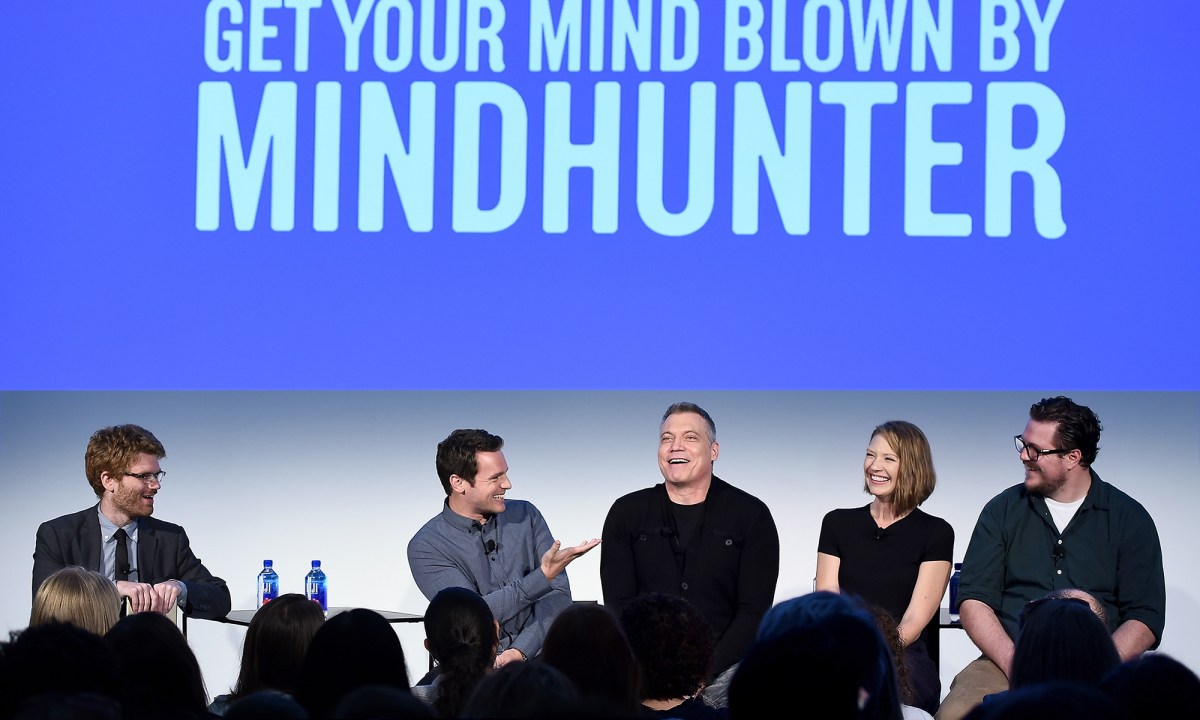
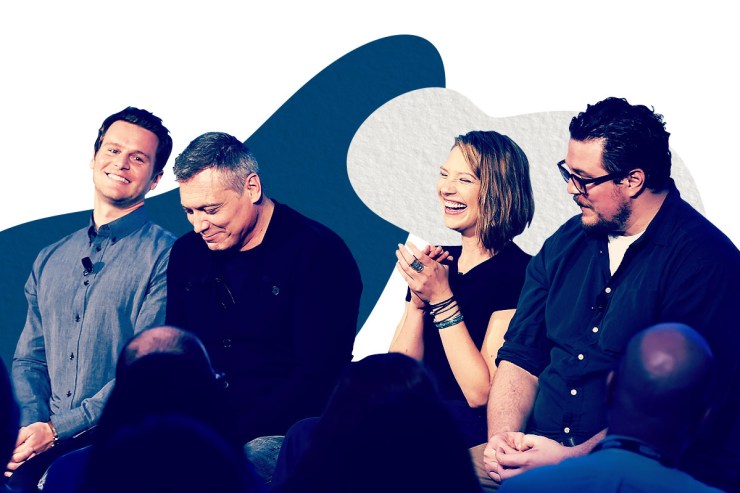
Jonathan Groff, Holt McCallany, Anna Torv, and Cameron Britton sat down with Vulture‘s Abraham Riesman for a conversation about the critically acclaimed series’ first season, the series’ real-life inspirations, and exactly what level of creepiness fans can look forward to enjoying in season two.
Despite being a 1970s period piece, Mindhunter feels eminently of the present moment. We’re living in the midst of a true-crime renaissance, and the David Fincher–helmed Netflix series stands out not only as a (heavily fictionalized) example of the genre, but as a critique of it. As FBI agents Holden Ford (Jonathan Groff) and Bill Tench (Holt McCallany) and psychologist Wendy Carr (Anna Torv) delve into the brains and motivations of serial killers — especially real-life murderer Ed Kemper (Emmy nominee Cameron Britton) — we’re given a window into why humans have such a fascination with individuals who engage in death and destruction. But just as interesting as the tales on the screen are the tales of what it takes to tell them, as an audience learned during a panel discussion with Groff, McCallany, Torv, and Britton at this year’s Vulture Festival. Over the course of the conversation, the actors talked about Fincher’s notorious obsessiveness, whether Ford is a sociopath, and how Britton learned to play Kemper partially thanks to his own time as a schoolteacher.
The Netflix original series Mindhunter is, by far, one of the best new shows currently running. The true story-based, 1977-set drama chronicles the early days of criminal psychology and criminal profiling primarily through the eyes of three people at the FBI’s Behavioral Science Unit: eager newcomer Holden Ford (Jonathan Groff), somewhat jaded veteran Bill Tench (Holt McCallany), and brilliant psychology professor Wendy Carr (Anna Torv). That this show is immaculately crafted from top to bottom will come as no surprise to those aware that it’s the brainchild of David Fincher, who serves as executive producer and directed nearly half of the series’ first season.
This is without doubt one of the best looking pieces of entertainment released in 2017, regardless of medium, with classical framing, motivated camera movement, and a tremendous palette that gives a mere peek into the darkness inside the minds of the criminals and serial killers who are the subject of the Behavioral Science Unit’s interviews.
So when I got the chance to speak with cinematographer Erik Messerschmidt about his work on the series, I was thrilled. Messerschmidt shot eight of the first season’s 10 episodes, including the Fincher-directed closing installments, and as he revealed during our interview, this was essentially his first major gig as a cinematographer. Messerschmidt had worked previously as a gaffer on shows like Mad Men and Bones, and then later the feature film Gone Girl where he first came into contact with Fincher. Based on their work together on that film, Fincher called Messerschmidt up when they were looking for a new DP for Mindhunter after the show’s original cinematographer exited over creative differences.
This promotion from gaffer to DP is a familiar refrain with Fincher’s cinematographers, as he did the same with his The Game and Fight Club gaffer Claudio Miranda, who was brought on as DP for The Curious Case of Benjamin Button and went on to win the Oscar for Best Cinematography for his work on Life of Pi.
Messerschmidt’s rise to the primary cinematographer of Fincher’s brand new TV show elicits similarly spectacular results, as the DP’s work on Mindhunter is elegantly classical and incredibly motivated by character and theme. During the course of our conversation, Messerschmidt talked about the road that led to him becoming the cinematographer on Mindhunter, the specifics of his working relationship with Fincher, what it’s like to serve as a DP in the world of episodic television, how the work of production designers and costumes designers goes under-appreciated, and trying to maintain a consistent aesthetic with multiple directors. He also teased a bit about Mindhunter Season 2, including revealing their extensive shooting schedule.
With Mindhunter, Netflix reunites with director David Fincher for the first time since he helped the streaming service launch into original programming with their first series, House of Cards. In Mindhunter, Fincher’s attention to detail proved a perfect match for creating the dark world of obsession and intrigue that is the true story of the origin of the FBI Behavioral Science Unit. Based on the real-life experiences of FBI special agent, John Douglas, who pioneered the practice of psychological profiling, Mindhunter takes place in the 1970’s and follows two FBI agents who radically expand criminal science as the study the methods and motivations of serial killers. But getting so close to real world monsters has consequences, and their encounters with the darkest of humanity begin to change them and the way they work.
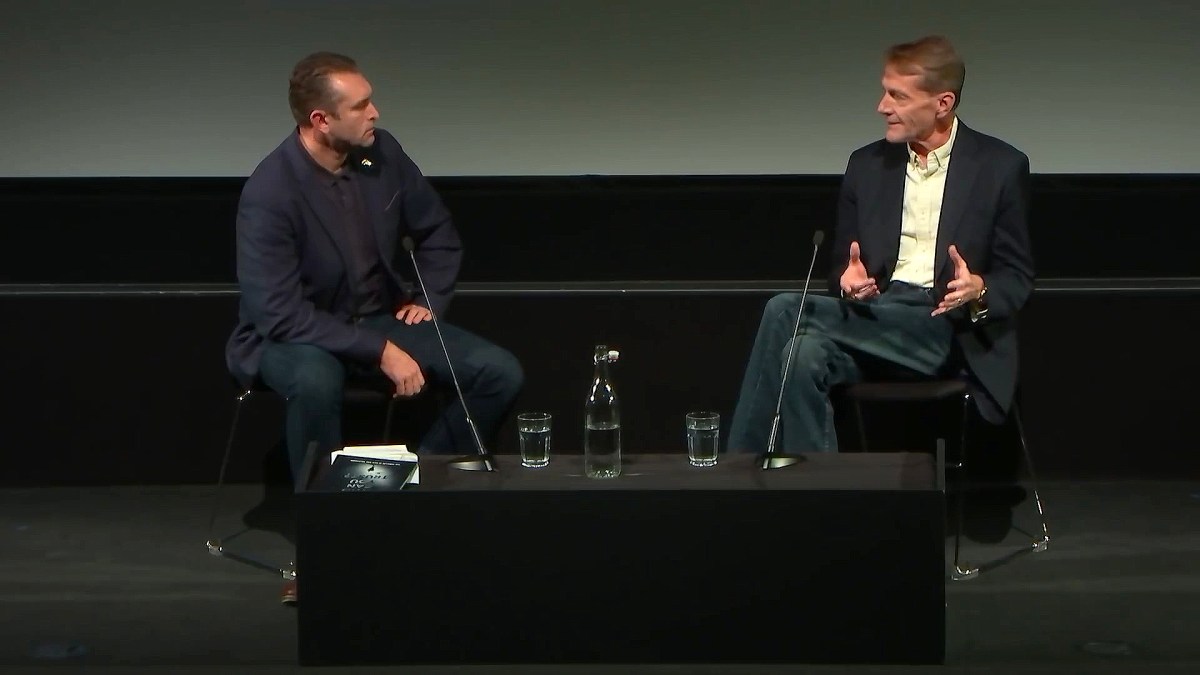
A video of Lee Child’s intro to last year’s BFI screening of “SE7EN“. I was there that night for the specially imported, ‘privately owned’ (QT?), original CCE 35mm print. I would have preferred a 4K DCP…
Thriller author Lee Child talks to the BFI‘s Stuart Brown about David Fincher’s dark crime thriller, which follows a detective duo who find themselves pursuing a serial killer who uses the seven deadly sins to theme his murders. With a great ensemble cast and Darius Khondji’s camerawork helping to bring out the bleak, urban landscape, Se7en was a worldwide success.
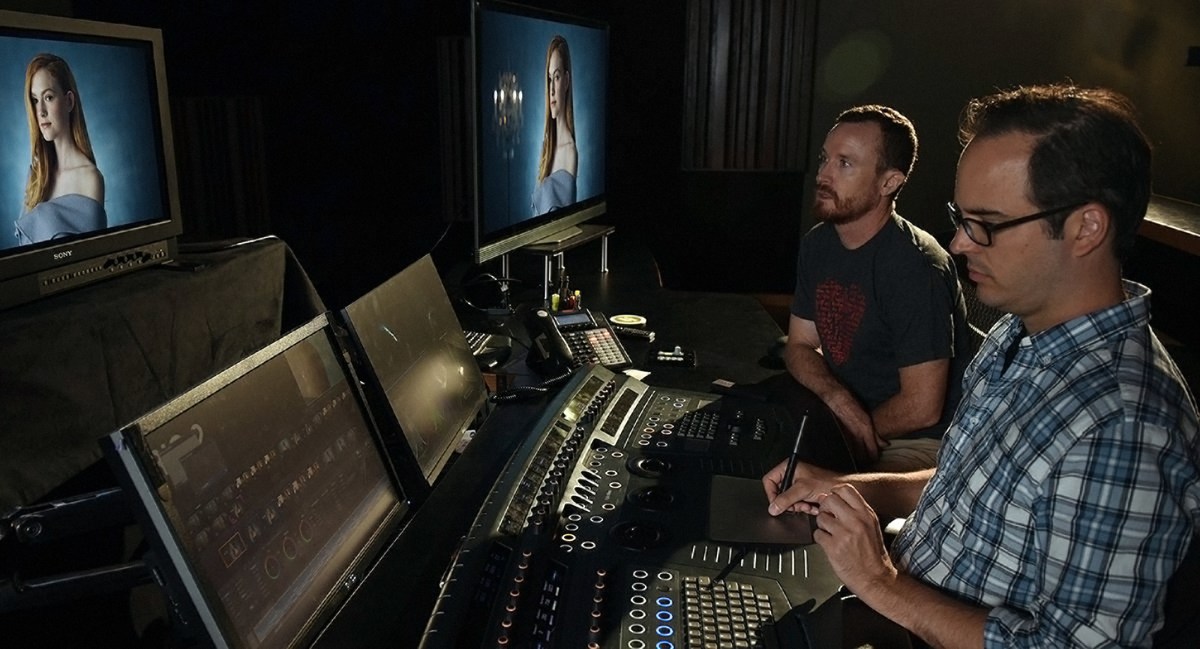
On this episode of the colorist podcast, I talk with Ian Vertovec, Co-Founder, and Senior Colorist at Light Iron.
Ian has colored major films “The Social Network,” “The Girl with the Dragon Tattoo,” and “Gone Girl.” And more recently, he has colored the TV shows “Baskets” for FX and “Glow” on Netflix.
Originally from Chicago, Ian focused on photography, then moved on to digital compositing. He later co-founded two post facilities in Los Angeles: Plaster City, then Light Iron. Out of necessity, he moved on to color at his company. He found his combination of photography and compositing matched perfectly for a career as a colorist.
In this podcast, we talk about:
Coloring David Fincher films and working with extremely dark images
The challenges of working on VFX heavy projects
Making HDR look both cinematic and realistic
Advantages of working with high-end systems like Quantel Pablo
The difference between working on TV and films
How experience with compositing served him as a colorist
Colorist Ian Vertovec from Light IronDigital takes us through the ins and outs of color grading one of this year’s biggest hit films “The Social Network”.





 The Fincher Analyst